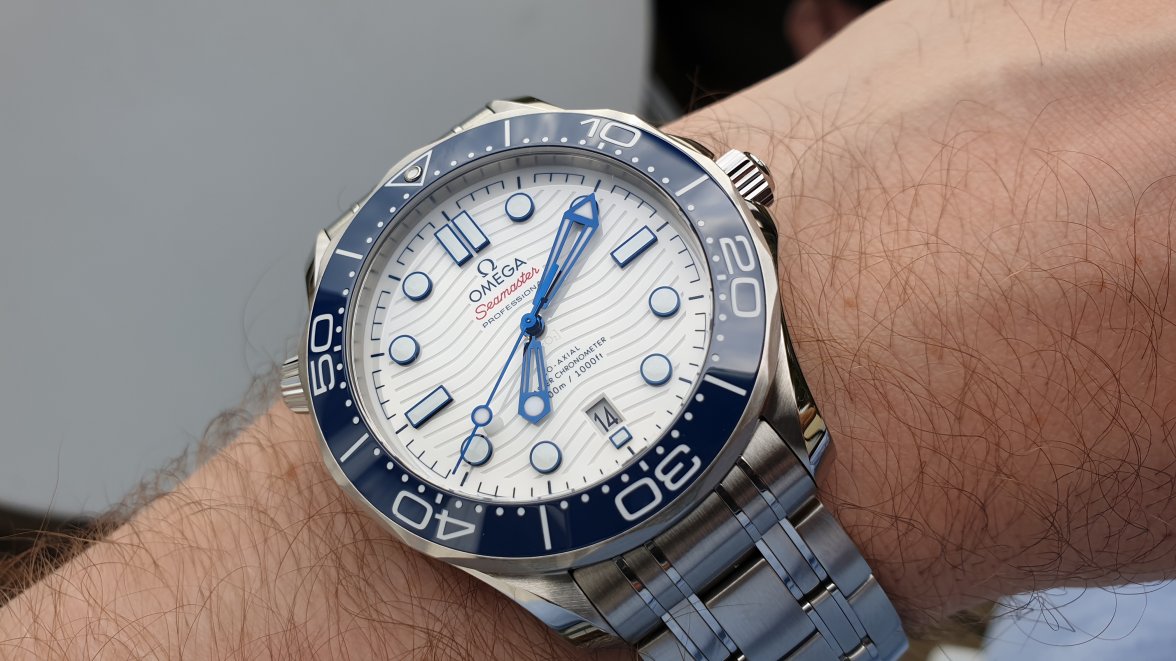
Seamaster exposed to water with unscrewed crown

Posts
228
Likes
147
For unknown reasons first time in 8 years my watch somehow crown got unscrewed and I taken shower with the watch.

The Crown was not pulled out to the date settings

At what point of operating crown the seal gets exposed ?

No visible water damage currently
 
Posts
2,702
Likes
3,599
It should be okay because there are gaskets to protect it even with the crown open, but …

That assumes the gaskets are in good working order. Don’t know when the last time was you had it serviced pressure tested. If it was 8 years ago, you should keep an eye on it, just in case.
 
Posts
1,144
Likes
3,112
Someone will be by to yell at you for showering with it on 😉 but in the meantime it might make sense, if you’re comfortable doing it, to open the case back and let anything that made it inside evaporate… that could also be the wrong thing to do, I don’t really know, it’s just what I’d probably do.

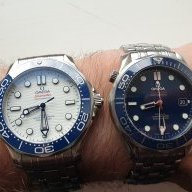
edit: also maybe a photo of the watch because that’s always fun to see 😀
 
Posts
3,385
Likes
8,921
but in the meantime it might make sense, if you’re comfortable doing it, to open the case back and let anything that made it inside evaporate… that could also be the wrong thing to do, I don’t really know, it’s just what I’d probably do.

That's interesting advice right there 😉
 
Posts
24,230
Likes
53,961
If there is water inside, you may see condensation inside the crystal. If you're not sure how to test for water intrusion, best take it to a watchmaker and have it checked out.
 
Posts
263
Likes
559
Someone will be by to yell at you for showering with it on 😉 but in the meantime it might make sense, if you’re comfortable doing it, to open the case back and let anything that made it inside evaporate… that could also be the wrong thing to do, I don’t really know, it’s just what I’d probably do.

edit: also maybe a photo of the watch because that’s always fun to see 😀
Open the caseback, maybe not, but I would?
 
Posts
140
Likes
208
If there is water inside, you may see condensation inside the crystal. If you're not sure how to test for water intrusion, best take it to a watchmaker and have it checked out.

Note: this is definitely what NOT to do, but I can vividly remember my father taking a Geneve from the 60s or 70s he had, and after seeing condensation inside the crystal, opening the stem all the way and … placing it in the oven to dry out. Yes, putting it in the oven around 350 or so… I’m imagining @Archer falling out of his chair while reading this…

Anyway, hopefully no damage done and definitely don’t take my father’s advice on this one. And in case you’re wondering, I’ve still got that Geneve, and there might be a wee bit of moisture damage to the dial.
 
Posts
5,521
Likes
9,436
Someone will be by to yell at you for showering with it on 😉
I volunteer!

It's a SEAmaster, not a SHOWERmaster, so you are probably screwed. Seawater has sodium content, and the negative ions form a protective barrier on the case of the watch -- sort of a force field if you will, that keeps out the water. That is why you can easily get Seamasters rated to depths of 300M. They don't even need much in the way of gaskets, as the deeper the Seamasters go under, the stronger the resisting barrier of the seawater ions grows. But when you shower, it is usually with fresh water, so all of the advantages of a Seamaster are lost. In fact, you are extra screwed if you wash with shampoo and soap, as that makes the molecules of fresh water slipperier, and the water will slide right into the case. Showermasters do not rely on the force-field mechanism that Seamasters use, and are designed by Omega to resist the influx of slippery water molecules. This all explains why an Omega Seamaster rated for 300M depths is understood by many to not be safe to wear when washing one's hands, because it offers no resistance to slippery water molecules. and let's not forget about the additional kinetic forces introduced by the shower head, of the vapor pressure from the steam.

Moral of the story? Showermasters for showers, and Seamasters for swimming/ diving in the sea.

j/k -- I hope the watch is okay. Not because of the stem, but because it may have been 8 years since the seals/ gaskets were checked.
 
Posts
714
Likes
719
I had a similar experience with my Breitling Colt. Unscrewed the crown to set the time, and forgot to screw it back down.
Ended up noticing only AFTER I had washed my hands in the sink. The watch was fairly old (6 or so years?) and never serviced so I expected that the gasket around the crown stem wasnt great.

A few hours later that day... I noticed condensation on the inside of the crystal. Didn't toss it in an oven... but I did try using a blowdryer on it (with crown unscrewed again) and no luck. Ended up taking it in for service before the moisture caused any more damage inside.
 
Posts
792
Likes
918
Warm it up to the touch with a hair dryer, then put a large drop of water on the crystal. If there's water in it, you will see condensation under the crystal where the water is in contact with it.

Ignore the advice about a showermaster, it's designed to keep ALL water out even when unscrewed. The screw-down just provides additional protection by assuring it stays centered.
 
Posts
348
Likes
345
I volunteer!

It's a SEAmaster, not a SHOWERmaster, so you are probably screwed. Seawater has sodium content, and the negative ions form a protective barrier on the case of the watch -- sort of a force field if you will, that keeps out the water. That is why you can easily get Seamasters rated to depths of 300M. They don't even need much in the way of gaskets, as the deeper the Seamasters go under, the stronger the resisting barrier of the seawater ions grows. But when you shower, it is usually with fresh water, so all of the advantages of a Seamaster are lost. In fact, you are extra screwed if you wash with shampoo and soap, as that makes the molecules of fresh water slipperier, and the water will slide right into the case. Showermasters do not rely on the force-field mechanism that Seamasters use, and are designed by Omega to resist the influx of slippery water molecules. This all explains why an Omega Seamaster rated for 300M depths is understood by many to not be safe to wear when washing one's hands, because it offers no resistance to slippery water molecules. and let's not forget about the additional kinetic forces introduced by the shower head, of the vapor pressure from the steam.

Moral of the story? Showermasters for showers, and Seamasters for swimming/ diving in the sea.

j/k -- I hope the watch is okay. Not because of the stem, but because it may have been 8 years since the seals/ gaskets were checked.

You got me going for a bit on that one. Nice post.
 
Posts
18,201
Likes
27,508
Someone will be by to yell at you for showering with it on 😉 but in the meantime it might make sense, if you’re comfortable doing it, to open the case back and let anything that made it inside evaporate… that could also be the wrong thing to do, I don’t really know, it’s just what I’d probably do.

edit: also maybe a photo of the watch because that’s always fun to see 😀
That is unique advice… which I can see about a hundred problems with.
 
Posts
415
Likes
1,088
Some years ago I got caught biking home in a torrential Midwest downpour whilst wearing a vintage monocoque Seamaster (Yes, I know). It took on moisture so I hovered it over a low wattage bulb and let the condensation collect to the crystal. I then popped the crystal and wiped it clean. Moisture problem solved… or so I thought. 2 weeks later, it stopped running and was subsequently serviced. All’s well that ends well.

Your watch on the other hand, is probably just fine 😀
 
Posts
714
Likes
719
Ignore the advice about a showermaster, it's designed to keep ALL water out even when unscrewed. The screw-down just provides additional protection by assuring it stays centered.

Your watch on the other hand, is probably just fine 😀

I'd agree if the watch has been serviced at least once in the OP's 8 years of ownership. Interested to see how this turns out.
 
Posts
228
Likes
147
i been diving into shower with my Seamasters for last 8 years and this happened to my couple months old one, still unsure how the crown got unscrewed as i didnt touch it internationally on the day.

I dont see any problem this morning with the watch

So maybe its okay

 
Posts
5,979
Likes
28,586
i been diving into shower with my Seamasters for last 8 years and this happened to my couple months old one, still unsure how the crown got unscrewed as i didnt touch it internationally on the day.

I dont see any problem this morning with the watch

So maybe its okay

you're good:

 
Posts
34
Likes
71
If you can't shower with a 5k+ diving watch what has the world come to.

Just maby make sure its all screwed shut but as stated previously they are water resistant even when unscrewed so hopefully it is fine.
 
Posts
2,702
Likes
3,599
i been diving into shower with my Seamasters for last 8 years and this happened to my couple months old one, still unsure how the crown got unscrewed as i didnt touch it internationally on the day.

I dont see any problem this morning with the watch

So maybe its okay


wasn’t clear from your first post if this was an 8-year old watch or a newer one. Now it is clear. Since it is 2 months old, don’t worry about it. It’ll be fine. And definitely don’t follow the advice given here to remove the caseback and let it dry out - not on a new watch! Unless you have the right tools and know what you are doing, you are more likely to cause problems than solve them AND you have technically voided the warranty.
 
Posts
18,201
Likes
27,508
If you can't shower with a 5k+ diving watch what has the world come to.

Just maby make sure its all screwed shut but as stated previously they are water resistant even when unscrewed so hopefully it is fine.
Because heat has no effect on the gasket life and lubricants. Not to mention the rapid temperature cycling on the gasket interfaces.
 
Posts
8,711
Likes
14,617
I have an idea: if you're concerned, take it to a watchmaker.