
- Posts
- 3,862
- Likes
- 8,353
ErichPryde
··Seamasters ForeverPeople who believe illogical things in all aspects of life rarely ever question those beliefs, unfortunately

A statement as accurate as it is heartbreaking, unfortunately.
Please consider donating to help offset our high running costs.
People who believe illogical things in all aspects of life rarely ever question those beliefs, unfortunately


That drop, or rather the entire report and its methodology, is strongly disputed by Swatch Group, apparently.
https://revolutionwatch.com/swatch-group-responds-to-morgan-stanley-report-in-open-letter
Interesting read.

As an aside, I'd recommend that anyone confused by why Omega having more choices seems to be a bad thing also check out some material on "The Paradox of Choice." It's actually a known, studied phenomenon. In sum, past a certain point, having more choices tends not to increase satisfaction. Larger selections tend to actually be less effective at driving sales.
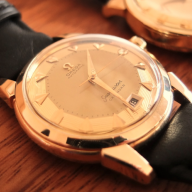


Omega may be more exposed to paradox-of-choice problems today than it was in the past because the luxury watch market itself has changed. The recent Morgan Stanley report highlighted an important shift: the Swiss mechanical watch industry now operates on lower volumes, higher prices, and a much smaller pool of wealthier buyers than it did a decade ago. At the same time, social media has become the dominant discovery channel, and its algorithms reward simple, recognizable, frequently repeated products—not sprawling, fragmented catalogs. That combination creates a tough environment for a brand like Omega, which has long relied on a very broad range of models that are sometimes hard to distinguish.
Brand dilution and fragmentation aren’t a problem—until suddenly they are. What worked for Omega ten years ago could become a liability today. There are many historical examples where paradox-of-choice dynamics hurt companies, especially in technology where markets can shift quickly. Apple in the 1990s is a classic case. The company had dozens of Macintosh models, plus printers, handheld devices, and endless vendor-specific variations. The complexity worked for a while—until it didn’t. When Steve Jobs returned in 1997, one of his first moves was to cut roughly three-quarters of Apple’s product portfolio, eliminating entire divisions (including the profitable printer business) to focus the company around a small number of clear, iconic products. Rolex tends to follow a similarly disciplined approach to their product line, and they regularly purge models (and in some cases entire product lines) from their catalog to keep some semblance of focus.
It's not clear how Omega is going to respond to the new market conditions in which it finds itself, but I was surprised when they discontinued their sprawling Planet Ocean collection and replaced it with a single model with three different colorways, no doubt attempting to emulate the simplicity of the Rolex Submariner line. But history suggests that even after simplification, Omega will likely move back toward proliferation.

eliminating entire divisions (including the profitable printer business)

As an aside, I'd recommend that anyone confused by why Omega having more choices seems to be a bad thing also check out some material on "The Paradox of Choice." It's actually a known, studied phenomenon. In sum, past a certain point, having more choices tends not to increase satisfaction. Larger selections tend to actually be less effective at driving sales.
Looks now like we are in a repeat of the 1970s.
There’s no confusion really. Again Omega has always offered a very large selection of watches, and people who claim over and over again that “this is the problem” are not really looking at the bigger picture.
I don’t really believe that paradox of choice is a significant factor when someone is actually buying a watch. If you are going in to buy a Speedmaster, are you going to be “unsatisfied” by there being an Aqua Terra and a Constellation in the same display case? This is a very popular talking point on forums, but in real life I don’t think it’s all that relevant.
You are certainly on the right track with your comments on how people look at Rolex. In fact the idea that you should make money or break even on a watch you are selling, and that this is influencing what you buy is slowly killing this hobby, and it’s largely due to Rolex and the crazy market of the pandemic era.
There was a time when really no used watches made money, unless you were selling something really special. And by that I don’t mean a DateJust with a different coloured dial, but something truly special. You nearly always lost money when selling a used watch, and if you were lucky enough to break even or maybe make a few bucks it was a rare win, not an expectation.
The fact that so many decisions to purchase by noobs are made with the resale value being so important (pumped up by social media talking heads) is not a good thing, and the broader influence of that is coming home to roost. Very few brands will be immune to it…
The closest analogue in Omega’s world would be replacing the sprawling Planet Ocean collection with a single model with three different colorways, no doubt attempting to emulate the simplicity of the Rolex Submariner line. But history suggests that even after simplification, Omega will likely move back toward proliferation. If past patterns hold, we may well see dozens of new Planet Ocean variants in the coming years.

The real divergence is where there are entirely new models that riff on the mainline products: Aqua Terra small seconds, 300M chronograph, and the entire 'Two Counter' category of Speedmaster. These models necessitate the production and maintenance of entirely new case designs, dials, hands, and bracelets for 20-30 years. I would also argue that they dilute the unique identity of the mainline models they are based off of, wear too large for a large portion of buyers.



I’m not sure the issue is paradox of choice—if that means what I think it does: that we think we want more choices, but that having them actually makes us less decisive and less happy.
I think it might be something much simpler.
First, I take Archer’s point that Omega has always had lots of models available—this is nothing new. Though I do wonder if that’s simply more visible to consumers now than it used to be because of how information gets presented online, both via their website and via YouTube, etc. But that’s just conjecture.
Anyway, it could just be that we find it hard to accept that one brand could make so many different things well—well enough to be luxurious. Toyota makes 40 models; Rolls Royce makes 4? The greasy diner has a 12-page menu; the 3-Michelin-star restaurant doesn’t even give you a choice.
This could be closer to what some folks here mean by “diluting the brand,” but to me that suggests that the brand itself is diminished by a lack of coherence or focus. What I’m saying is actually just a bit of psychological fallacy on the consumer’s part: more options = less luxurious.

People have convinced themselves that having choice is a bad thing, when in reality no one here goes in to buy a watch and sees the variety, and thinks "This brand is out of control! I'm not buying!" It's useful for arguing the market analysis every single time this report comes out and panties are bunched, but other than that I doubt it's much of a influence in the actual buying decision of actual watch buyers.
The point about Omega not being able to do a lot of different watches very well, well I think the evidence clearly contradicts that. Since we always compare them to Rolex, Rolex uses a very small selection of movements (mostly variations on a couple of movements) and a case style that varies very little. Omega is able to make a wide variety of movements, complications (far exceeding what Rolex has produced), and uses many different case materials. Their watchmaking prowess is not in question by anyone who looks at it objectively.
One man's "coherent" design language is another man's "boring and stagnant."
The question is, for those who believe this paradox of choice is the real issue here, what lines should they get rid of? The thing is you don't know what sells for Omega in what markets, so your bias towards say sport models might cost Omega a bundle of money by eliminating the Constellations that are big sellers in a particular market.
And I think people need to realize that it's not just goofy people on YouTube who are influencers. These people primarily reflect the watch community social media - they are not on the leading edge of critical thought for the watch collecting community. The more people repeat this narrative that Omega "makes too many models" the more people will believe this to be some big problem, and the bigger issue it becomes,. The more people that push the narrative that resale value is critical to your purchase decisions, the more it will become so. So if people really want a return to the good old days, I'm reminded of that old nugget of wisdom - if you find yourself in a hole you want to get out of, rule #1 is stop digging.


