- Posts
- 365
- Likes
- 2,777
HamDoctor
·Hi everyone,
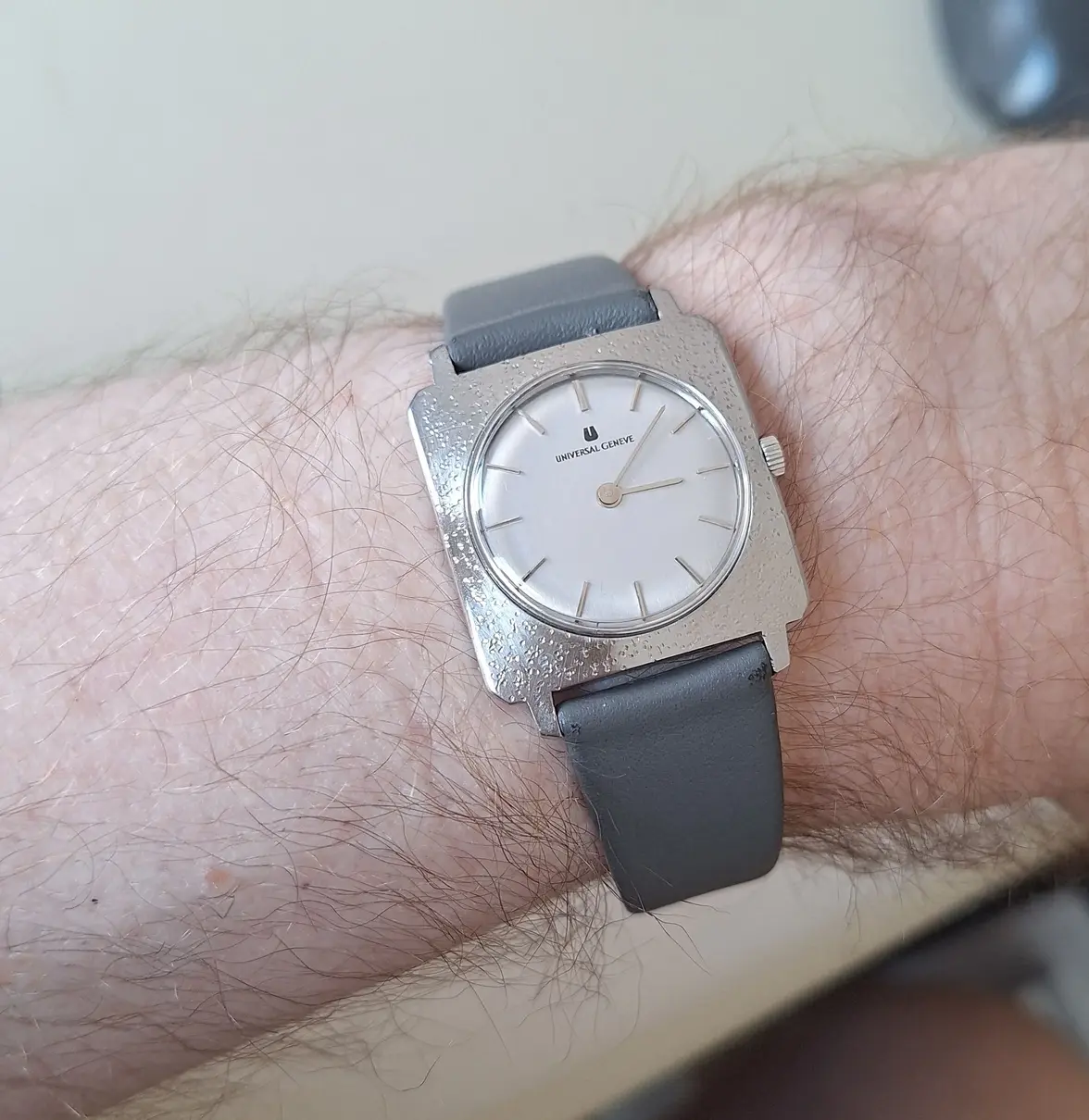
I'm wondering if anyone knows a bit more about this model, specifically the case finish.
What I found out so far is that it is an "Altesse" 842106/04, a very thin dress watch (6.8mm including crystal) with caliber 42. This example was manufactured between 1963 and 1965 (leaning towards late 1964, serial no. 2367246).
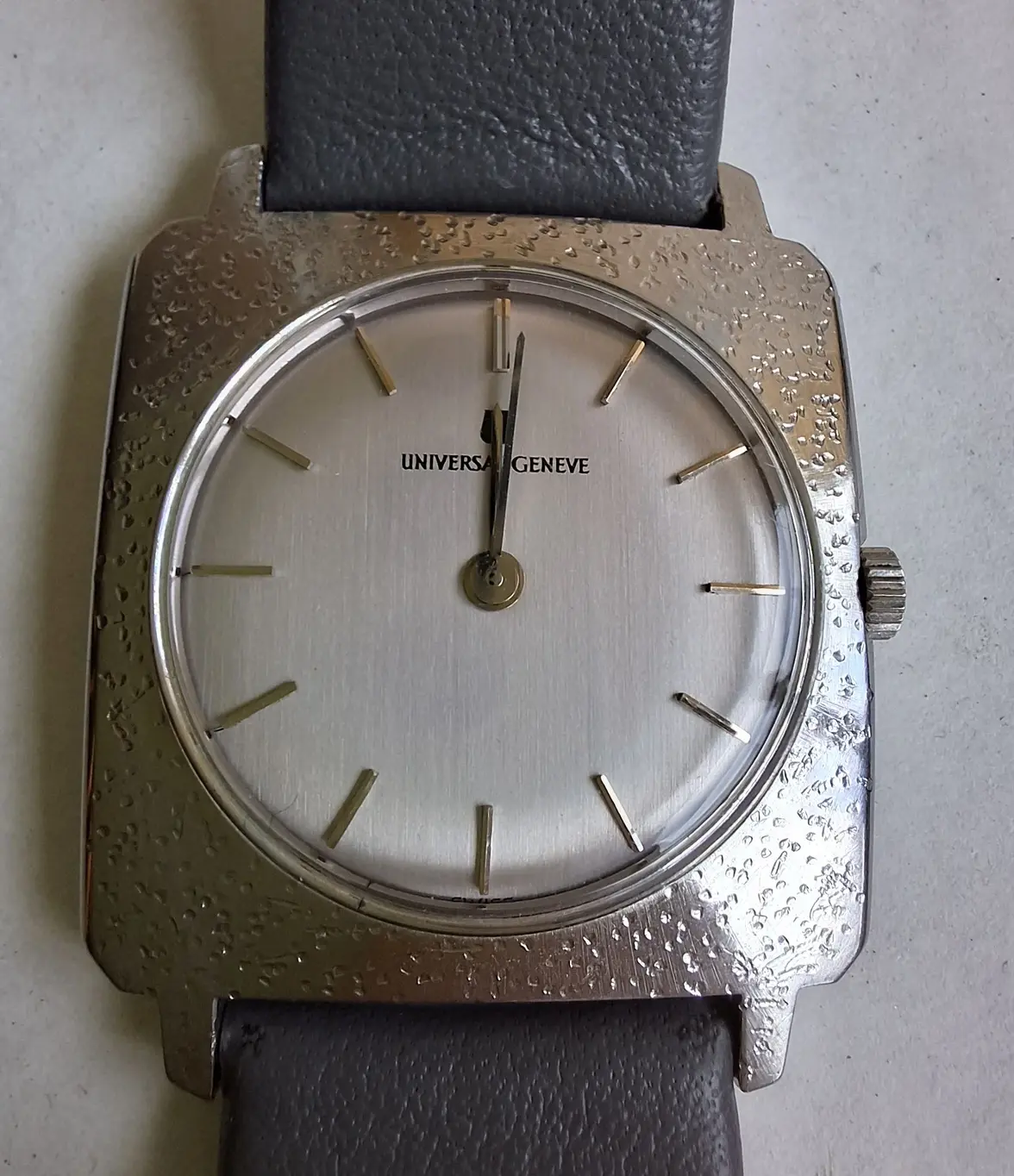
What is unusual about this watch is that the case is not radially brushed, as in most examples I have seen on the net, but instead the finish is chiseled (or "stippled"), using a graver maybe? The quality of the work done here is very good to my layman eyes, the distances between the chisel marks are such that it has a "starry night" appearance, and they are of a uniform depth. Otherwise, the case finish seems original to me.
So, my question is: is it possible that the watch came from the factory in this way? Or do you think that a jeweller polished off the usual brushed finish, and went to work with a chisel?
Here are some pictures:
Macro shot (phone camera):
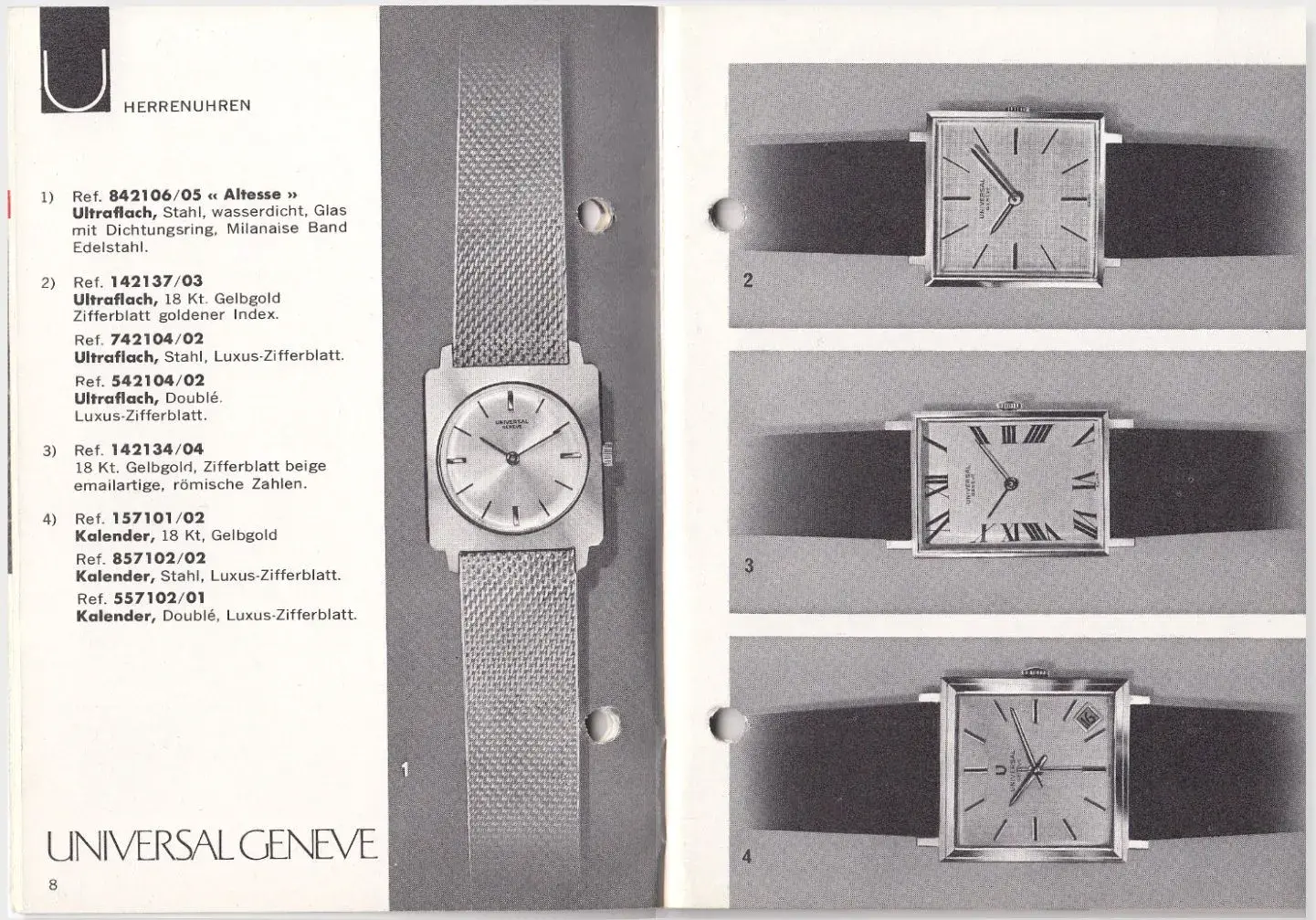
A picture from a 1965 UG catalog (German language):
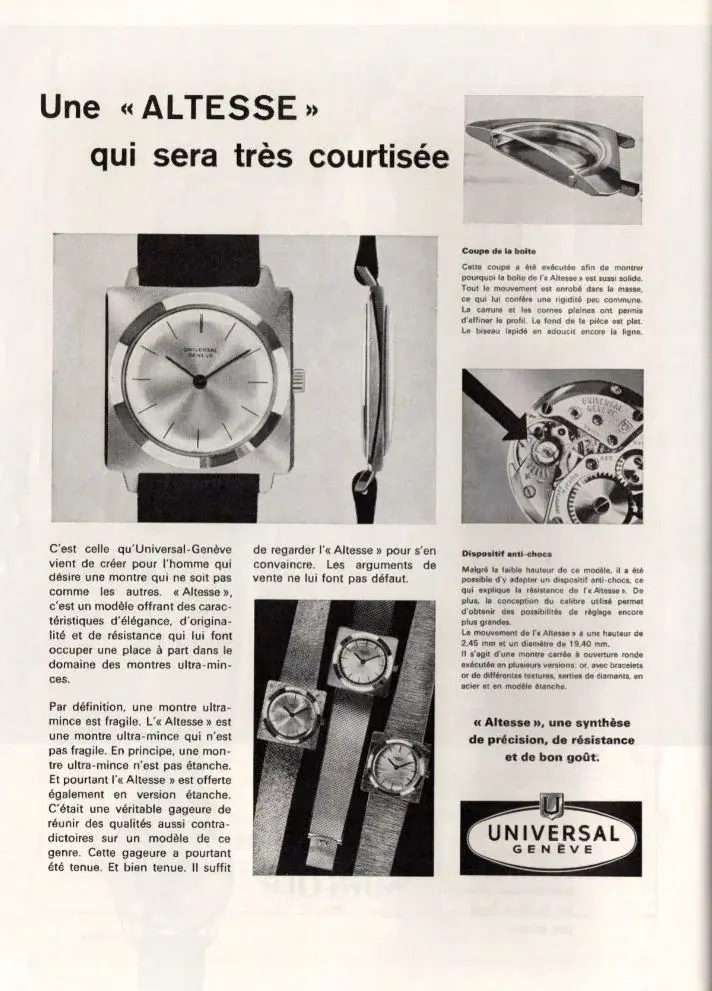
And an ad from 1963:
Watch has been serviced a year ago, but somehow I neglected to take a shot of the movement. Anyway, I'm interested in hearing your thoughts.
I'm wondering if anyone knows a bit more about this model, specifically the case finish.
What I found out so far is that it is an "Altesse" 842106/04, a very thin dress watch (6.8mm including crystal) with caliber 42. This example was manufactured between 1963 and 1965 (leaning towards late 1964, serial no. 2367246).
What is unusual about this watch is that the case is not radially brushed, as in most examples I have seen on the net, but instead the finish is chiseled (or "stippled"), using a graver maybe? The quality of the work done here is very good to my layman eyes, the distances between the chisel marks are such that it has a "starry night" appearance, and they are of a uniform depth. Otherwise, the case finish seems original to me.
So, my question is: is it possible that the watch came from the factory in this way? Or do you think that a jeweller polished off the usual brushed finish, and went to work with a chisel?
Here are some pictures:
Macro shot (phone camera):
A picture from a 1965 UG catalog (German language):
And an ad from 1963:
Watch has been serviced a year ago, but somehow I neglected to take a shot of the movement. Anyway, I'm interested in hearing your thoughts.
Edited:


