Pressure test every time the watch is opened?

Posts
1,668
Likes
5,908
I always pressure test any watch that I have opened which belongs to someone else, like if I'm changing a crystal or battery.

You do have to be careful when testing though, I've popped the crystal off a Speedmaster once while doing the pressure test, but this was while testing the empty case 馃榿
 
Posts
2,675
Likes
7,487
I'm in the SE USA. There has to be a ballpark figure out there. Anyone? What do you guys pay for pressure testing?
For most of us with a number of watches, it's a good idea to find a good local watchmaker we trust and can use for services, questions, and occasional pressure testing. I've had watches pressure tested for "free" by my watchmaker, but then I also have him service many watches for me. Point is simply that my experience won't necessarily mean anything for you.

Range is likely between $10 and $50 for a standard dry pressure test. If you're looking to confirm true 4000m depth, might be more...

Also, your initial question seems to focus on opening of the caseback. Personally, I tend not not to open my own casebacks partially to prevent dust/dirt/debris getting in the movement and partially to avoid me damaging the seal.

However, I worry as much about the seal between the crown and pushers as I do the caseback. Since I don't open casebacks, I think the chance of a leak developing there is perhaps lower than from a crown that a wind regularly...
 
Posts
16,863
Likes
47,901
I'm in the SE USA. There has to be a ballpark figure out there. Anyone? What do you guys pay for pressure testing?


Get my dive watch changed every time my water sports watch gets a new battery

Diver all seals changed pressure test usually $135


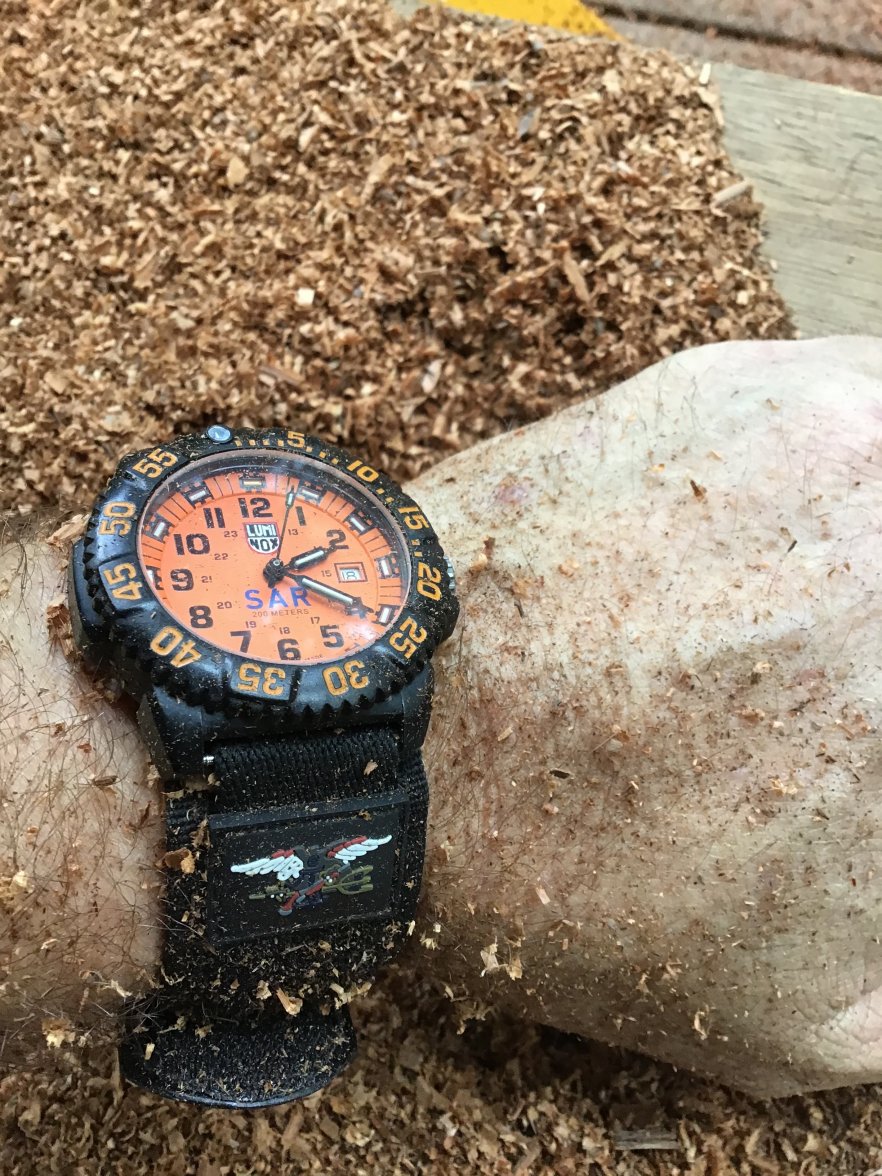
Luminox $85 with a new battery included ($10)

with shipping 2 watches seals changed and pressure tested $250-$265
 
Posts
15,477
Likes
45,828
I once had a wannabe diver鈥檚 watch for repair. The owner had been wearing it for swimming, and he insisted that it be water tested when I was finished with it. I advised him that, even though the dial said 100 meters, it would not withstand a water resist test. He wanted me to do it, and water test it anyway. It had a typical friction fit crystal with neoprene gasket. I did what I had to do with the movement, and left it out of the case as I buttoned it down, and put it into my tester. Guess what! POP, out comes the crystal, I cleaned up the case, re-fitted the crystal, finished the job, and readied it for him. I told him there was no way for me to prove it was as water resistant as before, and there was absolutely NO coverage for water damage. Cheap watch, cheap repair, cheap owner. No idea how he made out. I shoulda turned the job down!
 
Posts
355
Likes
392
For most of us with a number of watches, it's a good idea to find a good local watchmaker we trust and can use for services, questions, and occasional pressure testing. I've had watches pressure tested for "free" by my watchmaker, but then I also have him service many watches for me. Point is simply that my experience won't necessarily mean anything for you.

Range is likely between $10 and $50 for a standard dry pressure test. If you're looking to confirm true 4000m depth, might be more...

Also, your initial question seems to focus on opening of the caseback. Personally, I tend not not to open my own casebacks partially to prevent dust/dirt/debris getting in the movement and partially to avoid me damaging the seal.

However, I worry as much about the seal between the crown and pushers as I do the caseback. Since I don't open casebacks, I think the chance of a leak developing there is perhaps lower than from a crown that a wind regularly...

My initial question was about an Omega SMP 2264.50 which is quartz that is opened only for battery changes.
 
Posts
15,477
Likes
45,828
My initial question was about an Omega SMP 2264.50 which is quartz that is opened only for battery changes.

Quartz or mechanical. You asked about pressure testing after opening. Same goes, other way. The question remains.
 
Posts
2,675
Likes
7,487
My initial question was about an Omega SMP 2264.50 which is quartz that is opened only for battery changes.
Yes, and your question was thoroughly answered by @Archer earlier on this thread.

There are really two questions to address here...

One is more about disturbing the seal when you open the watch, and yes this can result in a seal that inadvertently gets pinched or otherwise damaged, so it's good practice for any competent watchmaker to pressure test the watch after opening. It's something I do every time I open a watch.

The second is more about regular testing, and how a watch leaks. Omega recommends pressure testing once per year, and if you are regularly getting the watch wet, that would be my advice also. The seals in these watches will fail eventually, and when they do it won't really matter what depth you go to - on a serious dive or just a dip in the pool will have the same result.

Cheers, Al

I stand by my point, and that is that the overall seals (crown included) are as much a concern for failing between caseback openings as the actual act of having the case back opened. Your question focused on whether a pressure test might be warranted after a battery change. I would be just as worried that something might fail at any time (I rotate watches, so often turn crown to reset the watch, thereby causing friction in the seal...). If the watch is valuable and you鈥檇 really regret it if it filled with water, then I would recommend following the guidance of annual pressure testing to confirm basic water resistance. If this isn鈥檛 important, well, I guess you wouldn鈥檛 have started this thread... 馃槈