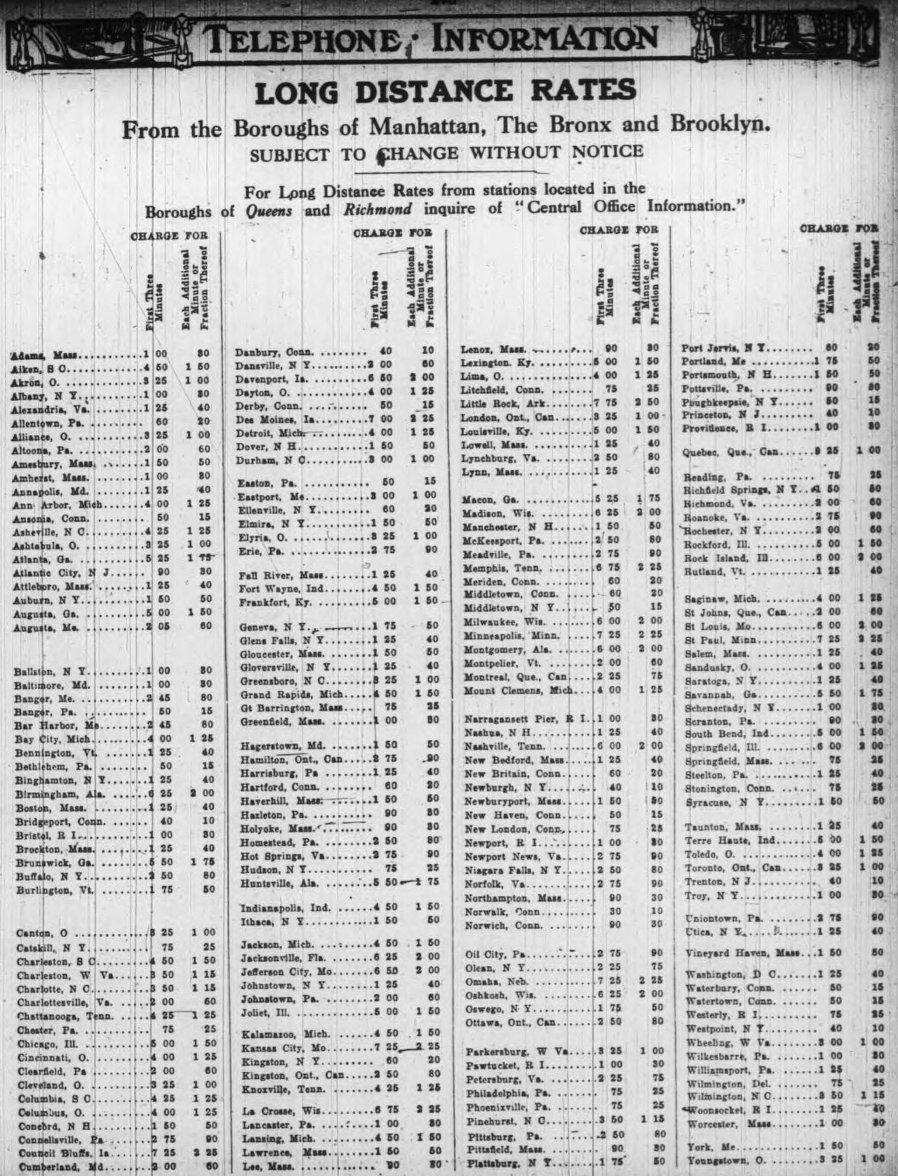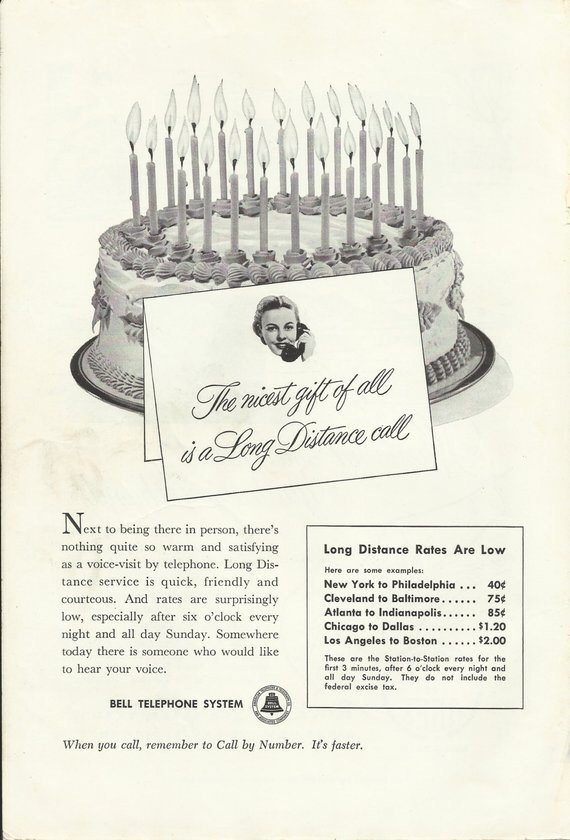
pre internet long distance telephone communication.

Posts
2,693
Likes
4,294

Rather than continue a digression on an old thread about Zenith flyback watches
https://omegaforums.net/threads/the-furio-flyback.114473/#post-1537748
I thought I would make a new thread to continue some thoughts on the subject of long distance telephone charges.

The Zenith thread posting pointed out extra long marks on the minute register dials. This seems to have been a comon practice.

The old Phone company AT&T was broken up in the late 1970s early 1980s for anti-trust practice. Long distance calls other than to 800 numbers were expensive. Most buisnesse had something called a Watts line which did reduce the charges somewhat.

Famously some of the early hackers, Including jobs and woz were called phone freeks. One well known hacker used a toy whistle from a cerial box to imitate the tones, that would mark the charge routing. A subject unto itself.

Rates were marked in 3 minute intervals.

I have a whole shelf full of old trade magazines. Well more than one shelf. One of the shelves stores back issues of the 'American Horologer and Jewler.' These contain a colome from one Jesse Colman, who was a sort of protoblogger/influencer. A book which I have was produced called the best of J. E. Colman.

Colman would fill his column with folksy antidotes about members of his community. He would refer to his bench as the 144, which is the square inches on the green mat. He would always state that he liked getting long distance phone calls from his freinds, who would then get mentioned in the column. It was pointe out that collect calls (where the charges were reversed) would not be accepted.

The anthology leaves most of this out and focuses more on the clock repair side of things, which is part of the reason I kept the old back issues.

In the 1970 or so the name was changed as some of the mail cariers on semi rural areas refused to deliver magzines relating to the sordid topic of Horology, as we have none of that in this town. As I recall the letters to the editor made a lot of fun of this.

The later issues have a column called 'The jewler and the law.' Which would make anyone run from running a jewlry business with a side watch shop as a profession. Seems in the 1970s and 1980s america became a litigious society. A lot of this was to protect shop owners from sharp scams. But it did make me think that one has better odds winning a lawsuit than winning the lottery.

The editor of the rag was a bit of a plagerist. Taking drawings and translating text from the mostly swiss publications. I think he got into a bit of trouble for this when the 1976 copyright act came into force. the issues got thinner and thinner, till it was basically just an advertiser with no technical content.

As for the phone companies. Eventually one of the so called baby bells (SBC, run by texans) bought all the other baby bells and put AT&T back together, (but without the teeth of a sanctioned monoply.) One can see that many do want to take the net back to a charge by minute equipment rental model.

It does seem amuzing that the more things change the more they stay the same.

😉 please remember to like and subscibe 😉 and do nor forget to ring the bell ::facepalm1::
-j
 
Posts
3,504
Likes
8,771

Rather than continue a digression on an old thread about Zenith flyback watches
https://omegaforums.net/threads/the-furio-flyback.114473/#post-1537748
I thought I would make a new thread to continue some thoughts on the subject of long distance telephone charges.

The Zenith thread posting pointed out extra long marks on the minute register dials. This seems to have been a comon practice.

In Europe (including UK) that was common too. 3 minute charge intervals and so marked on chronographs too. The markings died out by the late 1960s.

The old Phone company AT&T was broken up in the late 1970s early 1980s for anti-trust practice. Long distance calls other than to 800 numbers were expensive. Most buisnesse had something called a Watts line which did reduce the charges somewhat.

I think that was WATS, "Wide Area Telephone Service", but AFAIK that was a Bell/USA thing. I do not recollect anything like like that --- but then I was pushing a pencil round a drawing-board not negotiating the company's phone contract.....

... that came decades later wearing a different hat.
 
Posts
18,099
Likes
27,413
There is a long thread at https://omegaforums.net/threads/3-minute-marks-on-pilot’s-chronographs-partially-debunking-myths-and-some-dead-reckoning.138286/ which contends that the three-minute marks on chronographs have to do with pilot navigation aid, not telephone calls. I'm mostly amazed that in such a short period of time, a few decades, we could lose track of the intent of something so widespread.
TLDR in the end it was confirmed to be long distance charges and not airplane navigation.
 
Posts
1,646
Likes
3,221
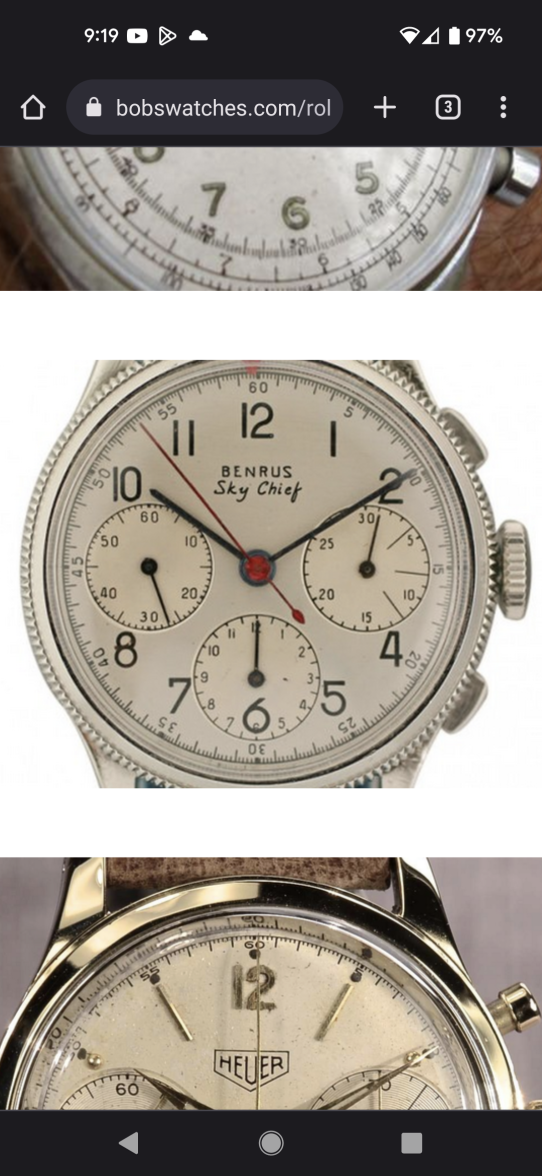
It appears that some watches, such as the Benrus Sky Chief, had marks every 4 minutes on the minute register of the chronograph. So that probably means that in some countries, long distance calls were charged in 4 minute intervals.
 
Posts
3,998
Likes
9,015
TLDR in the end it was confirmed to be long distance charges and not airplane navigation.

Not quite, instead:

(1) Certain markings on certain watches - especially more desk-oriented dress watches - do seem to have been for long distance telephone calls, but only for some European markets where telephone calls were in fact billed in 3min increments

(2) However in US and many other markets calls were not billed in 3min increments, and so those very same watches, when sold instead to other markets like the U.S., made the three minute markings basically vestigial

(3) however in a separate category of watches, there are many, many, pilot’s chronographs where 3min (or 6, 4, or 5 minute) markings were emphasized not only by such indices as seen on other watches, but moreso also with enlarged “big eye” like minute subdials, adding lume on the 3/6 minute marking indexes, and even modifying the movements to display 15 rather than 30 minute totalizers - all in order to aid pilots in more prominently seeing the elapsing 3 or 6 minute intervals

it’s no different, and overlapping in function, with Breitling’s two-scale slide-rule functionality allowing flyers to calculate time, speed, and distance by reference to the 1/20th and 1/10th integrals of the 60-minute hour
 
Posts
3,998
Likes
9,015
I'm mostly amazed that in such a short period of time, a few decades, we could lose track of the intent of something so widespread.

Particularly because I think noone has found or produced a single period piece of marketing, news, manual, or otherwise from a manufacturer describing the intended use of these emphasized minute marks.

Instead, there is a single period source with any such mention: a period marketing pamphlet from the Swiss Watch Federation (predecessor) that more generally describes various functions of a chronograph, and in passing states the markings are for timing calls.

Aside from this single pamphlet, though the only other corroborating information was finding confirmation that, unlike in the Americas, certain European countries did in fact charge long distance calls in 3 minute intervals.

completely agree with an amazement of losing track with the intent, and the people of the period did us no favors by never appearing to discuss it!
 
Posts
2,693
Likes
4,294
Wow! that is quite a thread! These forums do not fail to unearth some amazing gems and tidbits of information.

I was particularly taken with this post in the long thread:
https://omegaforums.net/threads/3-minute-marks-on-pilot’s-chronographs-partially-debunking-myths-and-some-dead-reckoning.138286/#post-1881048
For the last few weeks I have been using this book as a bedside reader. I also have Francois LeCoultre out. The latter book deals more with pocket watch masterpieces.

I may have a copy of de Carle somewhere. https://omegaforums.net/threads/3-minute-marks-on-pilot’s-chronographs-partially-debunking-myths-and-some-dead-reckoning.138286/page-3#post-1881639

In my backup folders I should have the postscript dialing program somewhere. I was using these techniques sometime in this century to make Dr Who timelord watch graphics onto cheap dollar pocket watches.

I noticed on one of the test dial repaints I did that I copied the three minute demarcation. So I must have run into it before.


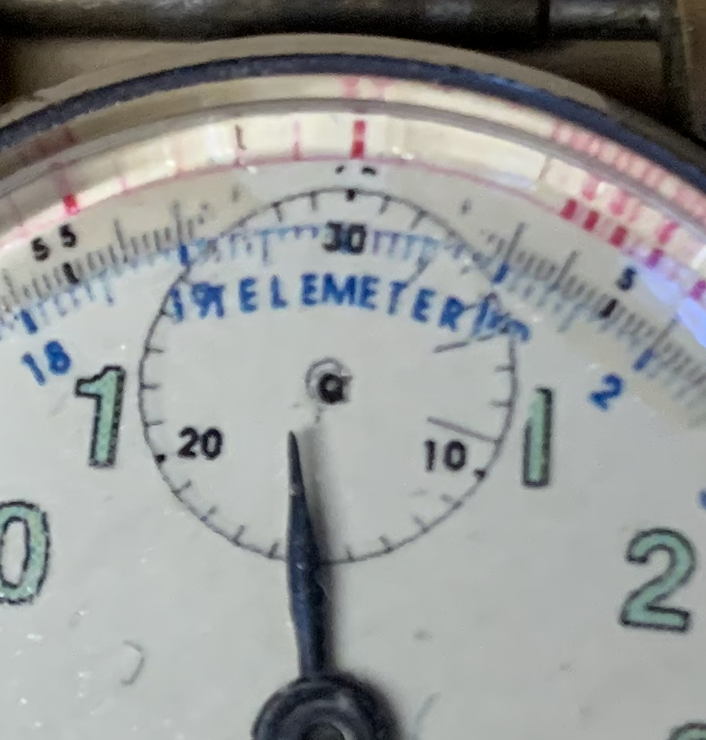
Seeing the de Carle graphics again I probably used that as a reference. I wonder what I dial I overprinted to make this. (probably an Orator, although I still have one of those dials.) Currently this is sitting on an uncleaned Venus 170 that seems to be missing a center seconds jewel and some of the set lever springs. The center wheel bridge is unmarked. Surprisingly I wound this watch and what is left of it is actually running.

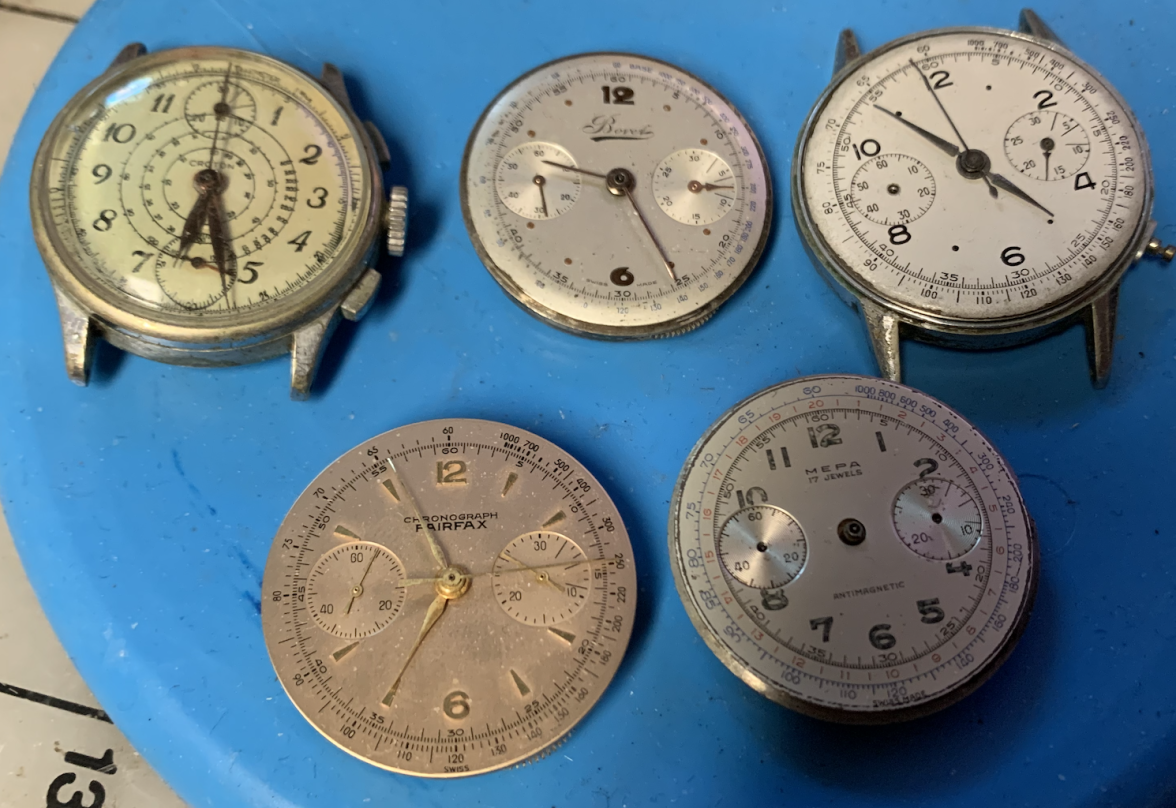
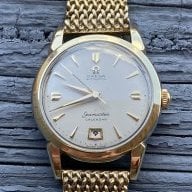
An interesting observation is that there is no import stamp on the balance bridge. So if these marks are intended for the European market, telephone billing, that might make sense. I checked the 5 watches in the top photograph in this thread. 4 of them do not have import stamps on the balance bridge. The watches that do not have three minute marks do have import tuples. POH was the importer for the Farfax dialed watch. Ranfft give this at Perfine Watch Co. I suspect given how clean this movement is, It was probably in a now scrapped gold case. The Fairfax movement seem to be a Landeron 48 (can not be certain without removing the dial.)

It was also interesting to see in the last pages of the long thread, A reference to Amy Johnson. As a Nevil Shute (Norway) fan I am one of the few Americans who have heard of her. Shute or his partner Tiltman may have been involved in the spy running operation. He was infatuated with her and used some of her tragic story for female aviatrix in his books. I would love to be interested in aviation but one has to draw a limit line somewhere.

-j
 
Posts
18,099
Likes
27,413
Not quite, instead:

(1) Certain markings on certain watches - especially more desk-oriented dress watches - do seem to have been for long distance telephone calls, but only for some European markets where telephone calls were in fact billed in 3min increments

(2) However in US and many other markets calls were not billed in 3min increments, and so those very same watches, when sold instead to other markets like the U.S., made the three minute markings basically vestigial


Except that US market calls where billed in 3 minute increments...


1910


1960's ( based on time offset billing)

The US did not take 1 minute initial minute billing untill the 1970's so it was not vestigial in the US untill at least the early 70's.

1970's?

International-phone-calls-1965.jpg
 
Posts
2,067
Likes
4,210
I used to be on BBSes back in the day of 1200bps modems and up. We would get "selective calling" to semi-long distance exchanges and it would charge as local rates for a low monthly fee. It didn't help when running the minutes up to Texas or California but I only got in trouble once or twice.
 
Posts
2,693
Likes
4,294
Except that US market calls where billed in 3 minute increments...

Domestic or international?
I wonder if the international rates were billed according to rules of the country of destination.

When I visited England in the 1980s. Before mobile phones, I had to use they pay phone and would keep a stack of coins ready for when the the timeout happened. There were huge banks of pay phones in paddington station. (When I went to Switzerland in June, the first thing I did was purchase a prepaid sim card for my old iPhone 6. how the times have changed.)

I learned on the Volcano forums that most undersea cables are privately owned (90+) percent of the internet travels over deep sea cable because it is a shorter distance than satellite due to speed of light delays. These cables in turn are paid for by stock traders, where milliseconds can make huge difference in stock trading.

It could be that both uses of the three minute markers, were valid applications. If it works ...

-j
 
Posts
5,636
Likes
5,800
There is a long thread at https://omegaforums.net/threads/3-minute-marks-on-pilot’s-chronographs-partially-debunking-myths-and-some-dead-reckoning.138286/ which contends that the three-minute marks on chronographs have to do with pilot navigation aid, not telephone calls. I'm mostly amazed that in such a short period of time, a few decades, we could lose track of the intent of something so widespread.
No, it didn't. Read the whole thing first, please.

Edited to add:

There are a cubic buttload of US movies where some mope is talking on a pay telephone and the operator breaks in and says, "your three minutes are up, please deposit more to continue."

You might think you have all of the answers, but you don't. The best position to take is, "I don't know, and this is plausible...".

The first person to tell me what a "dashboard" really was, I will praise you.
Edited:
 
Posts
5,636
Likes
5,800
It could be that both uses of the three minute markers, were valid applications. If it works ...

-j
How else would you time your three-minute egg? 😁
 
Posts
18,099
Likes
27,413
What’s amazing is how much info is lost as it was just common knowledge and not recorded.

how much info will be lost because it’s not google able.
 
Posts
3,998
Likes
9,015
Except that US market calls where billed in 3 minute increments...

Except that it wasn’t.

What you’ve posted describes that fact.

In the US, there was an initial 3min time block, but thereafter calls were billed in single minute intervals. Accordingly, there would be no reason to design a watch face to mark every three minute interval for the first 9 minutes.

But elsewhere - such as where these watches were being designed and produced - billing was in 3 minute intervals for the duration of a call.

If there was utility in the US to having that first 3 minute marked, the utility was not only marginal it was incidental.

Obviously, I’m only using deduction and the scant evidence to arrive at what is the most plausible view.

But one thing is for certain: when people ask a version of, “why do so many chronographs of the era mark the 3, 6, and 9 minute lines?” the answer is not “because long distance calls in the US billed for the initial 3 minutes but then every one minute thereafter”

Edited to add: the photos you’ve posted I’d already posted and discussed in the thread; off putting to simultaneously say “TLDR” but also then sort of just post things out of ignorance of the thread’s contents.
 
Posts
18,099
Likes
27,413
Except that it wasn’t.

What you’ve posted describes that fact.

In the US, there was an initial 3min time block, but thereafter calls were billed in single minute intervals. Accordingly, there would be no reason to design a watch face to mark every three minute interval for the first 9 minutes.

But elsewhere - such as where these watches were being designed and produced - billing was in 3 minute intervals for the duration of a call.

If there was utility in the US to having that first 3 minute marked, the utility was not only marginal it was incidental.

Obviously, I’m only using deduction and the scant evidence to arrive at what is the most plausible view.

But one thing is for certain: when people ask a version of, “why do so many chronographs of the era mark the 3, 6, and 9 minute lines?” the answer is not “because long distance calls in the US billed for the initial 3 minutes but then every one minute thereafter”

Edited to add: the photos you’ve posted I’d already posted and discussed in the thread; off putting to simultaneously say “TLDR” but also then sort of just post things out of ignorance of the thread’s contents.

Still useful as minute 4-6 costs the same as the first 3. Also the ch age in the US was mid 60’s or so? About the same time it stopped appearing on chronos.

Also let’s look at watches that have it vs date vs if the have US MFG codes on the movements.
 
Posts
2,693
Likes
4,294
But elsewhere - such as where these watches were being designed and produced - billing was in 3 minute intervals for the duration of a call.
...
I think this is the best option. Most of the movements I have the ones without US import marks have these lines. Most of the movements with three letter marks do not have the extra lines. Such would imply these marks were not for the US market (although there are exceptions.)

Of course my sample size is small. I only have a dozen complete chronograph movements with dials, which probably have had their dials mixed up. Does however make for a plausible hypothesis.

-j
 
Posts
3,998
Likes
9,015
I wonder if the international rates were billed according to rules of the country of destination.

based on everything I researched, including congressional records of senate debates and the like, the billing relevance was tied to the caller’s location (after-all, it’s from where their bills would come).


There are a cubic buttload of US movies where some mope is talking on a pay telephone and the operator breaks in and says, "your three minutes are up, please deposit more to continue."

You’re right that pay phones had operators (and later systems) both policing and verbally warning (later beeping/breaking call) regarding 3 minute initial intervals, etc.

Which operators/warnings are also why watches didn’t need 3 minute marks for timing pay phone calls.
 
Posts
5,636
Likes
5,800
Which operators/warnings are also why watches didn’t need 3 minute marks for timing pay phone calls.

I don't know about you, but I'm not 150 years old. Yanking stories out of your butt to make you believe some story or another is not useful.

The documentation is out there, somewhere. I thought it was in the other post we beat to death, or perhaps not.

In any event, it is an interesting artifact of our older watches, and doesn't bother me which explanation makes sense to you... let's just appreciate it for what it is, and some day we'll know for sure.