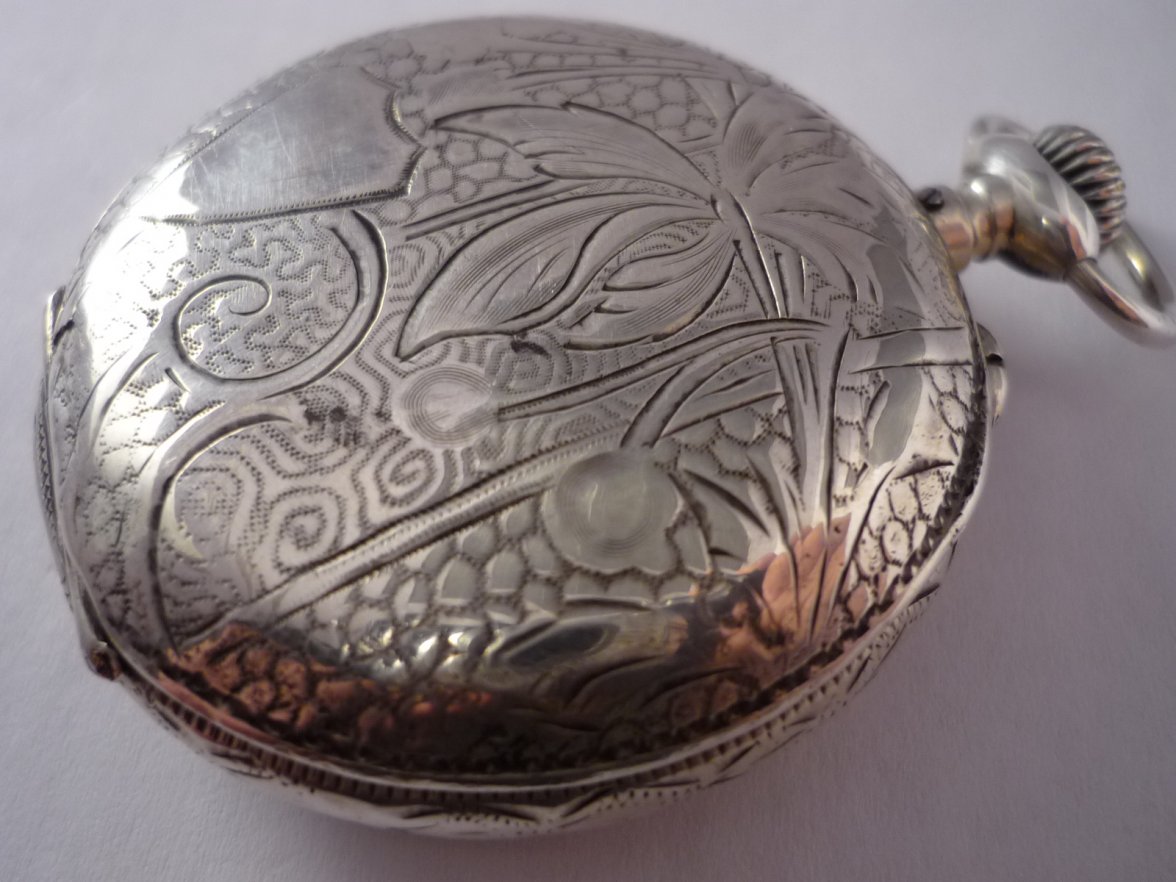
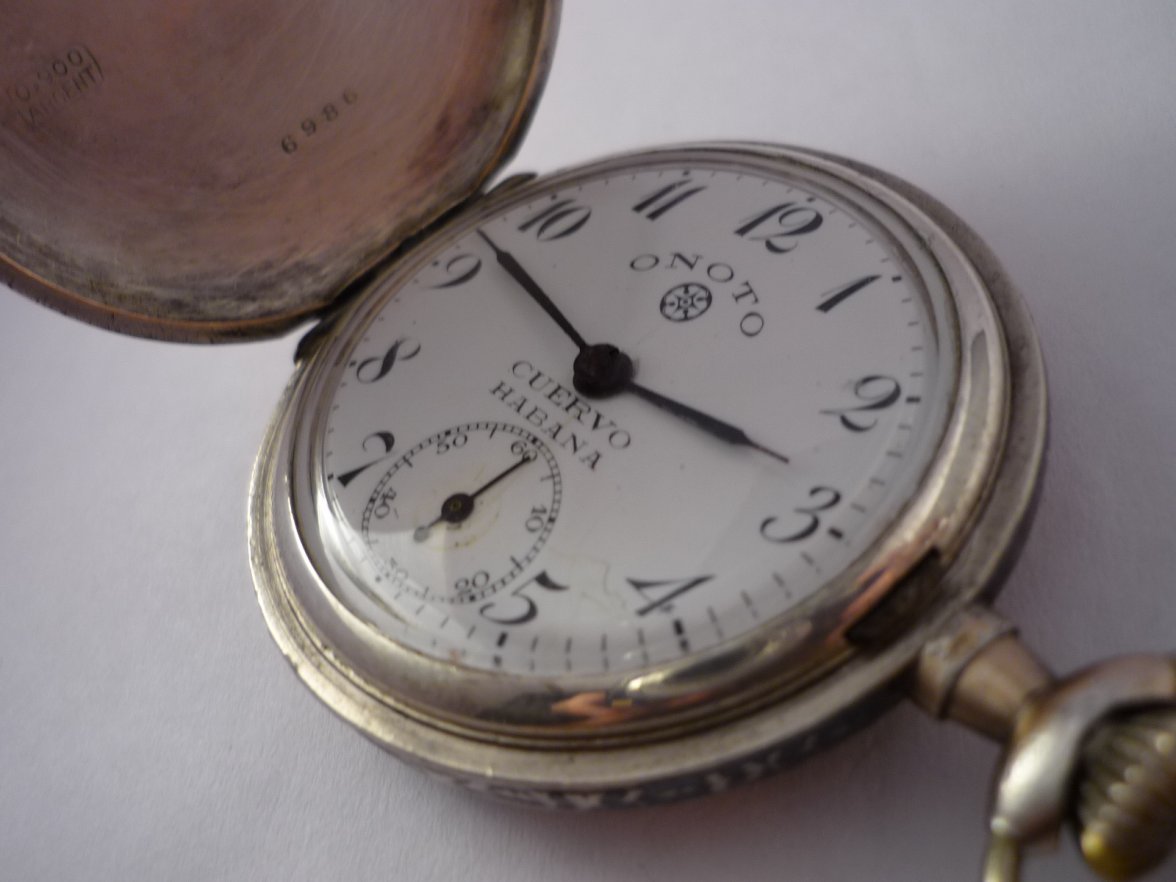
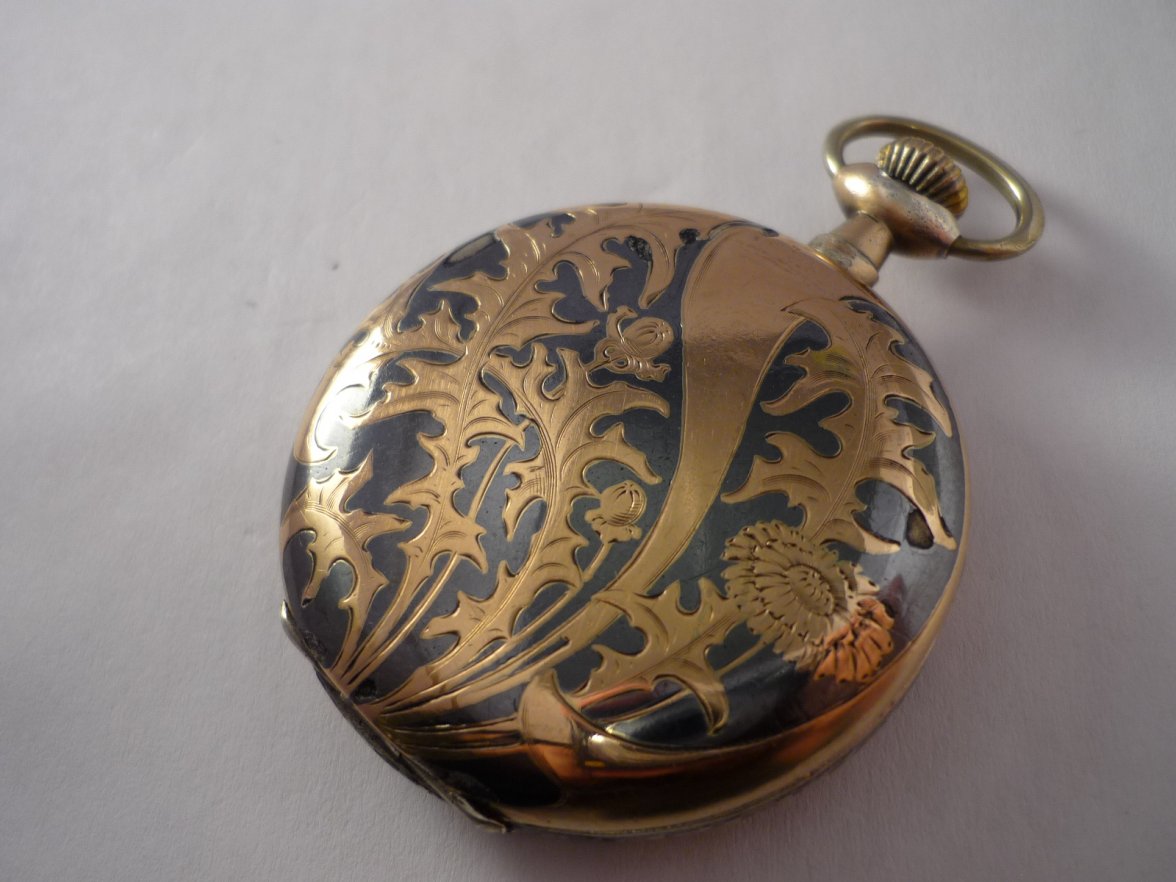
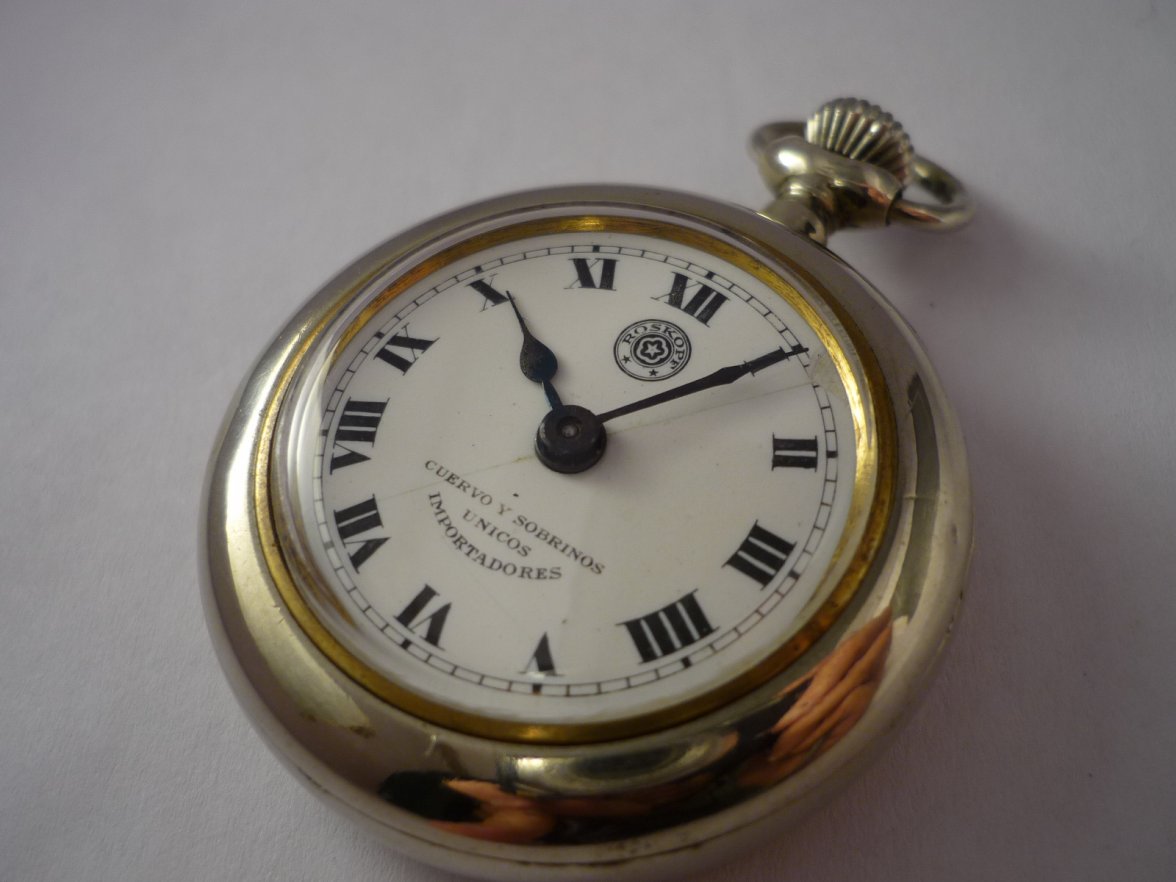
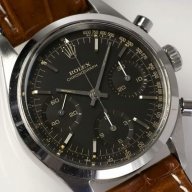
"Pocket watches"... out with 'em! Come on, lets see them!

Posts
7,991
Likes
28,003
A unique Longines, and, for the benefit of those who may have have missed it, a link to an article that I wrote about it.

https://omegaforums.net/threads/a-u...n-to-one-of-the-“princes-of-precision”.77020/

LG37c.jpg

LG37h.jpg
 
Posts
1
Likes
0
Cool watches but the last picture with the “action figure”... they don’t pay her enough to have her picture plastered all over the internet... keep in mind she cannot say “no” to a picture... those dead eyes... but cool watches.
 
Posts
456
Likes
729
Referring to the Meggers and Ehrhardt “blue book” on Illinois, your Watch was produced early in 1927. Hamilton acquired Illinois n 1928. Your watch is a 12-size, 17-jewel, model 3, grade 405. It was Illinois’ highest production grade, with over 400,000 made. Not rare, but nice.
Is this said blie book more reliable than the online portals that give these details about pocket watches ?

I ask this question coz when I tried fo search about the age and other details of the pocket watches on web portals, I get the details after giving their serial no. BUT the problem is, you enter any serial no and the portal still returns the details of the watch. which sounds rather funny to me.

For e.g go to below link and enter any random no that you can think of as the serial no of the watch, and the portal still returns the details of that watch.
https://pocketwatchdatabase.com/search
 
Posts
15,221
Likes
44,698
Is this said blie book more reliable than the online portals that give these details about pocket watches ?

I ask this question coz when I tried fo search about the age and other details of the pocket watches on web portals, I get the details after giving their serial no. BUT the problem is, you enter any serial no and the portal still returns the details of the watch. which sounds rather funny to me.

For e.g go to below link and enter any random no that you can think of as the serial no of the watch, and the portal still returns the details of that watch.
https://pocketwatchdatabase.com/search

The “Blue” book by Meggers and Ehrhardt was compiled by Bill Meggers who was THE acknowledged go to guy for information on Illinois watches. Roy Ehrhardt was widely known as very knowledgeable in collectible watches as well. There were other experts who contributed to the book as well. I am not certain I truly understand what knowledge you are seeking. But I will say that there is (in my opinion) no better reference for Illinois watches, than the “Blue” book. How it compares to other on line references that you make vague reference to, I have no idea.
 
Posts
51
Likes
86
Don't know anything about this one other than its been in the family longer than me! Looks unused, with box. Dated 1932


Alan
 
Posts
511
Likes
2,180
January 1999...This is the first pocket watch I ever bought, just happens to be an Omega!

Silver case approx. 35mm diameter, London 1909, gilt split quarter plate,
 
Posts
511
Likes
2,180
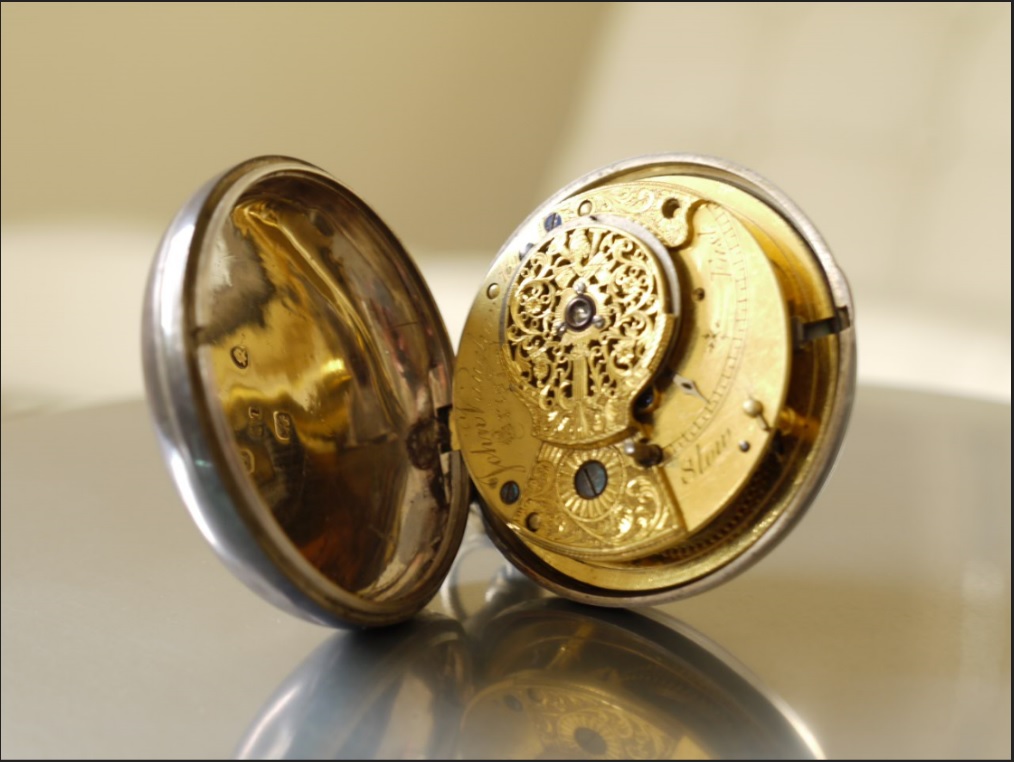
April 1999...I bought Probably the oldest, working, pocket watch I have

Silver pair cased verge (missing outer case), John Vaughan of Bristol #769,

London 1810-11, Fusee & chain, bullseye glass, diameter approx. 51mm

 
Posts
15,221
Likes
44,698
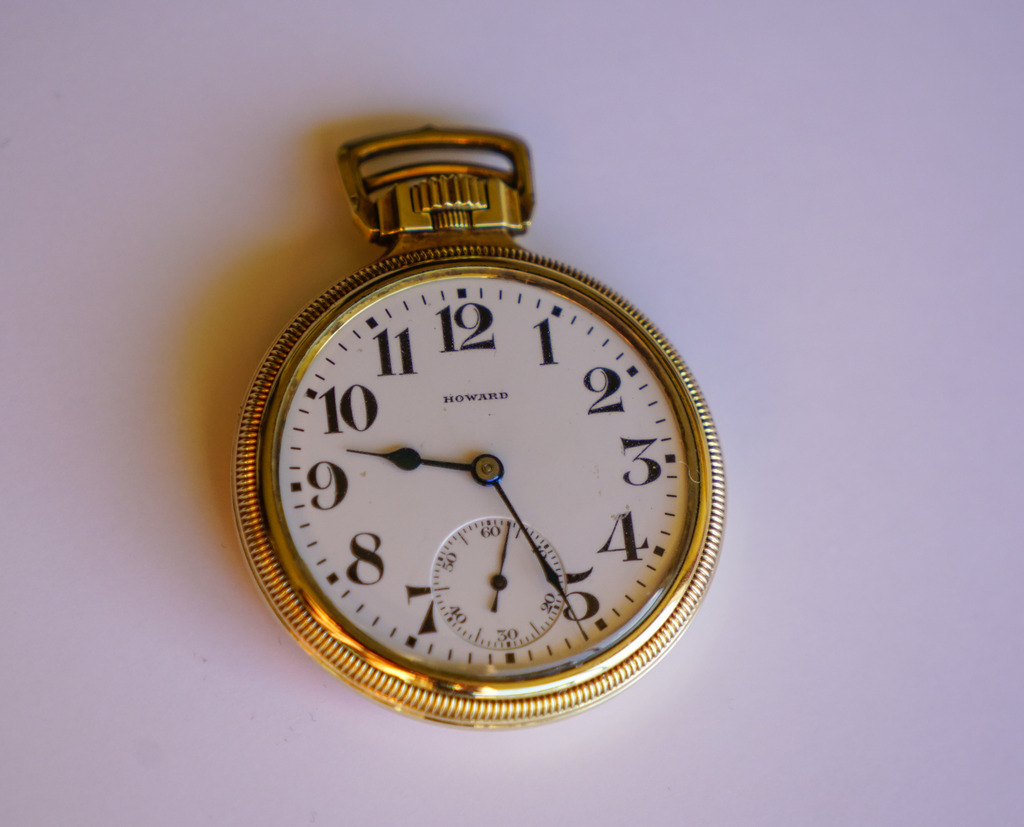
1910 Howard

Keystone Howard series 5. Some are marked NO 5. I have one. Others are not marked with the grade. I don’t see the grade marked on yours. These are very easy to love. First one of these I saw belongs to a friend. He inherited a basket case from his late grandfather. The watch went through a house fire, and was so bad that it was beyond use. It took 18 months, but we located a donor movement (no dial or case). The serial numbers were 22 numbers apart. The only parts of his grandfather’s watch that we re-used was the case and dial (both which survived the fire). With new hands, stem, crown, and glass crystal, I returned the watch to health. It is his favourite.
 
Posts
8,347
Likes
59,698
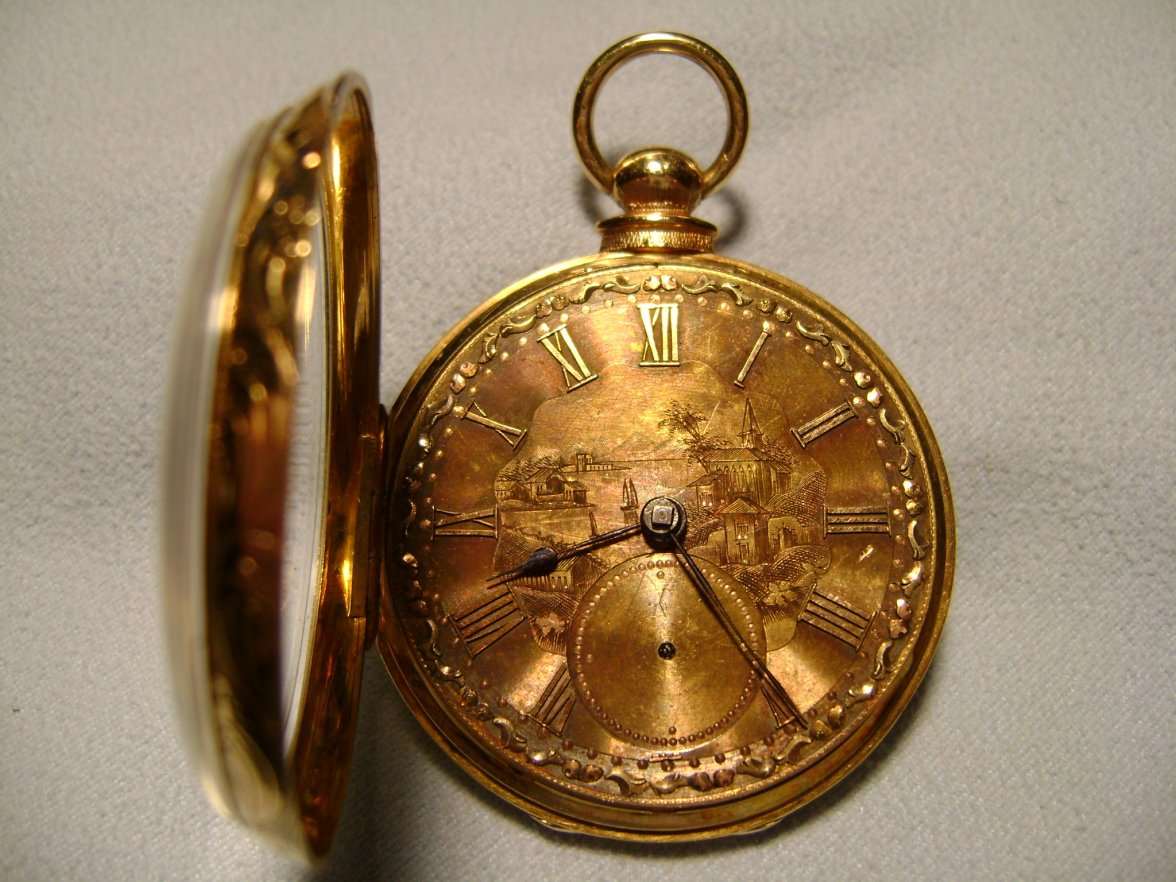
My brother inherited this mid 1800's English Hunter in 18kt gold via marriage.
This was a before pix, my WM reattached the second hand during service.
Roughly equivalent to a US size 18

 
Posts
445
Likes
1,721
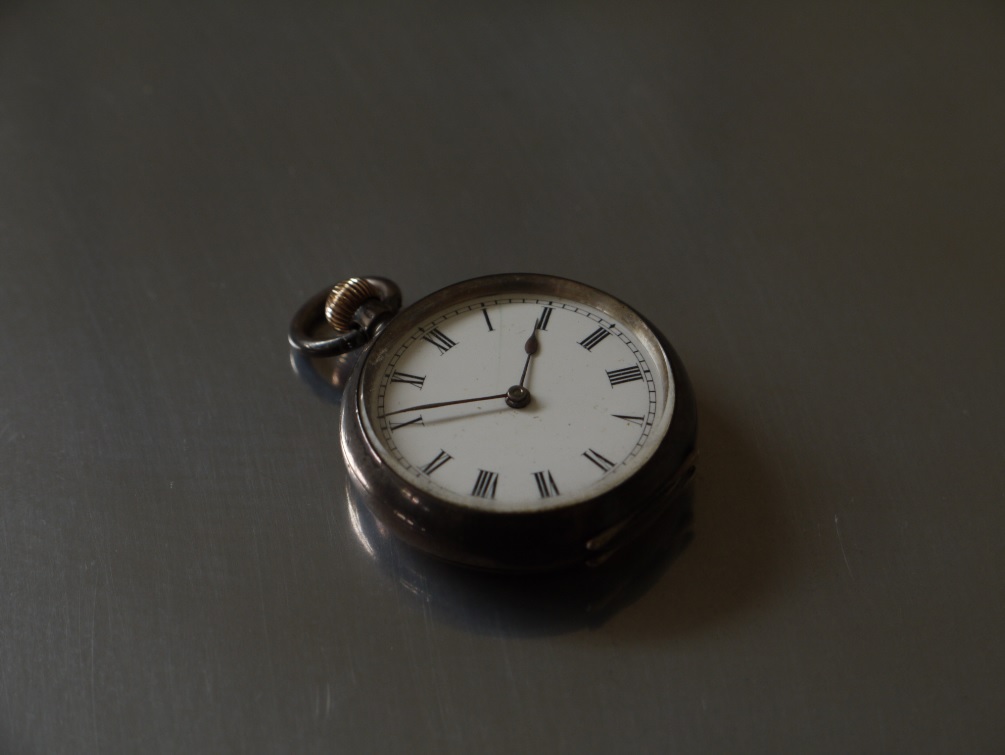
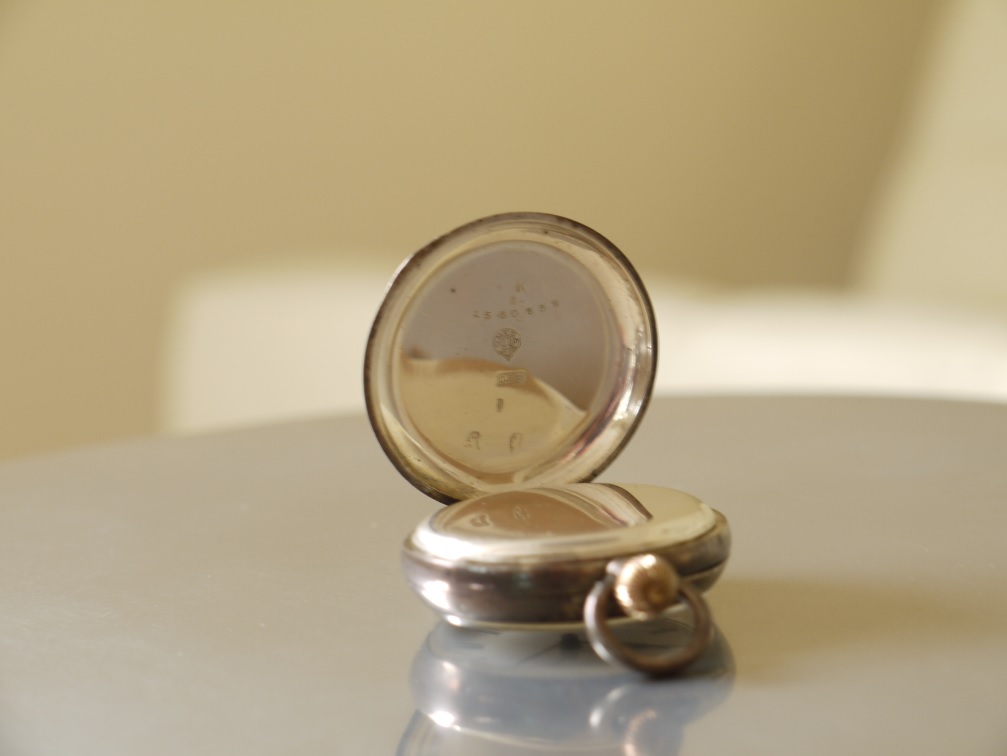
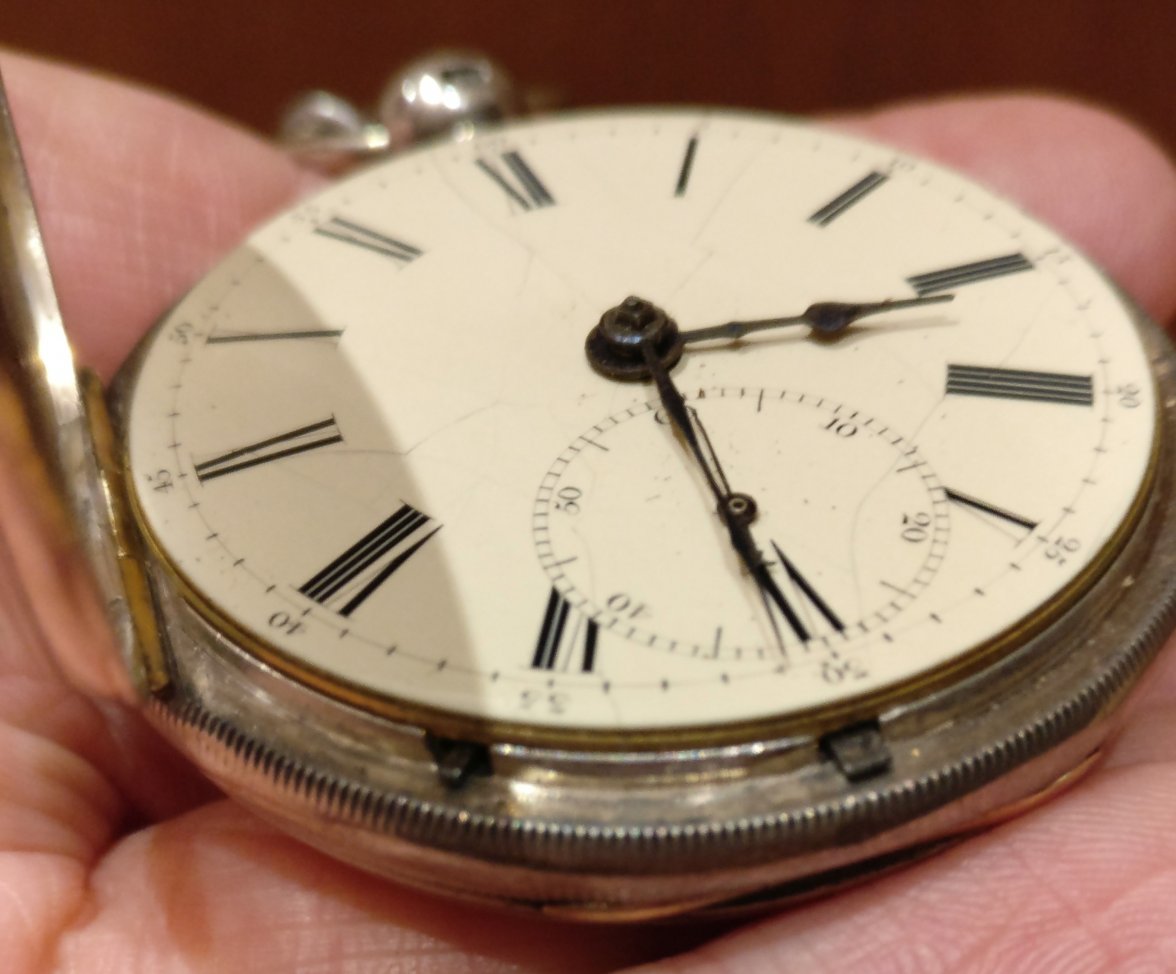
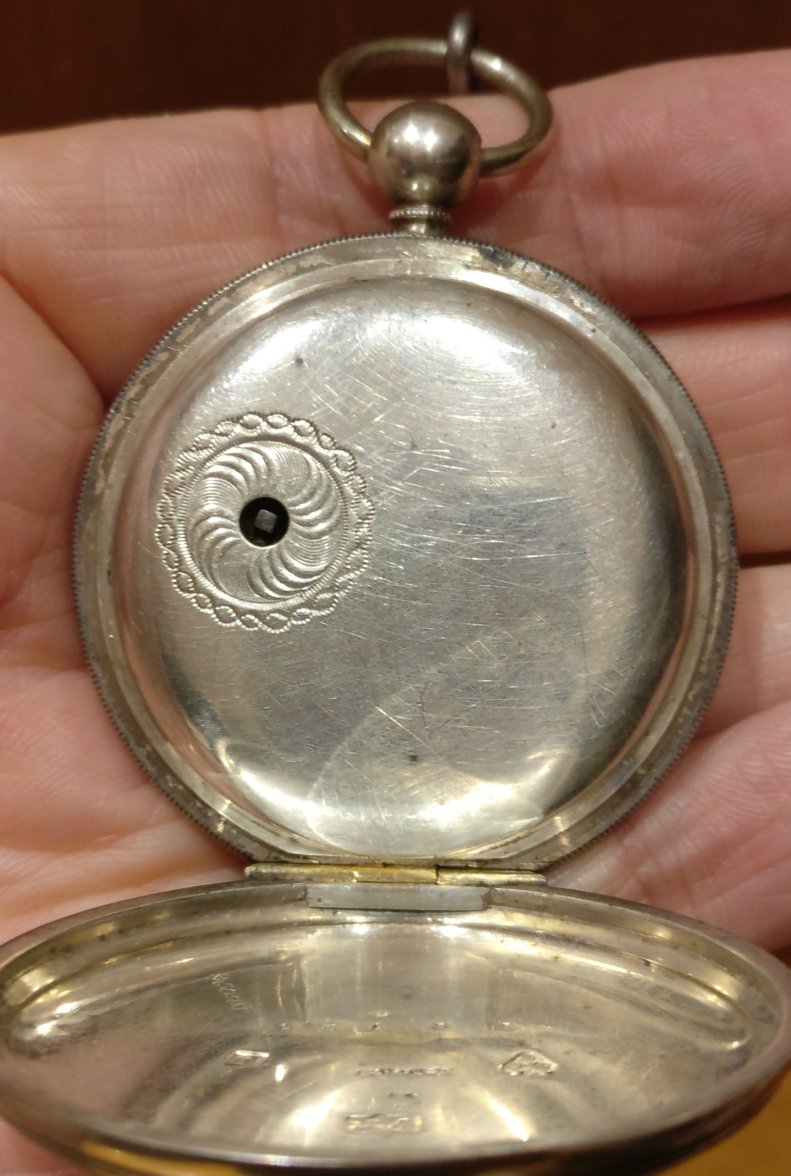
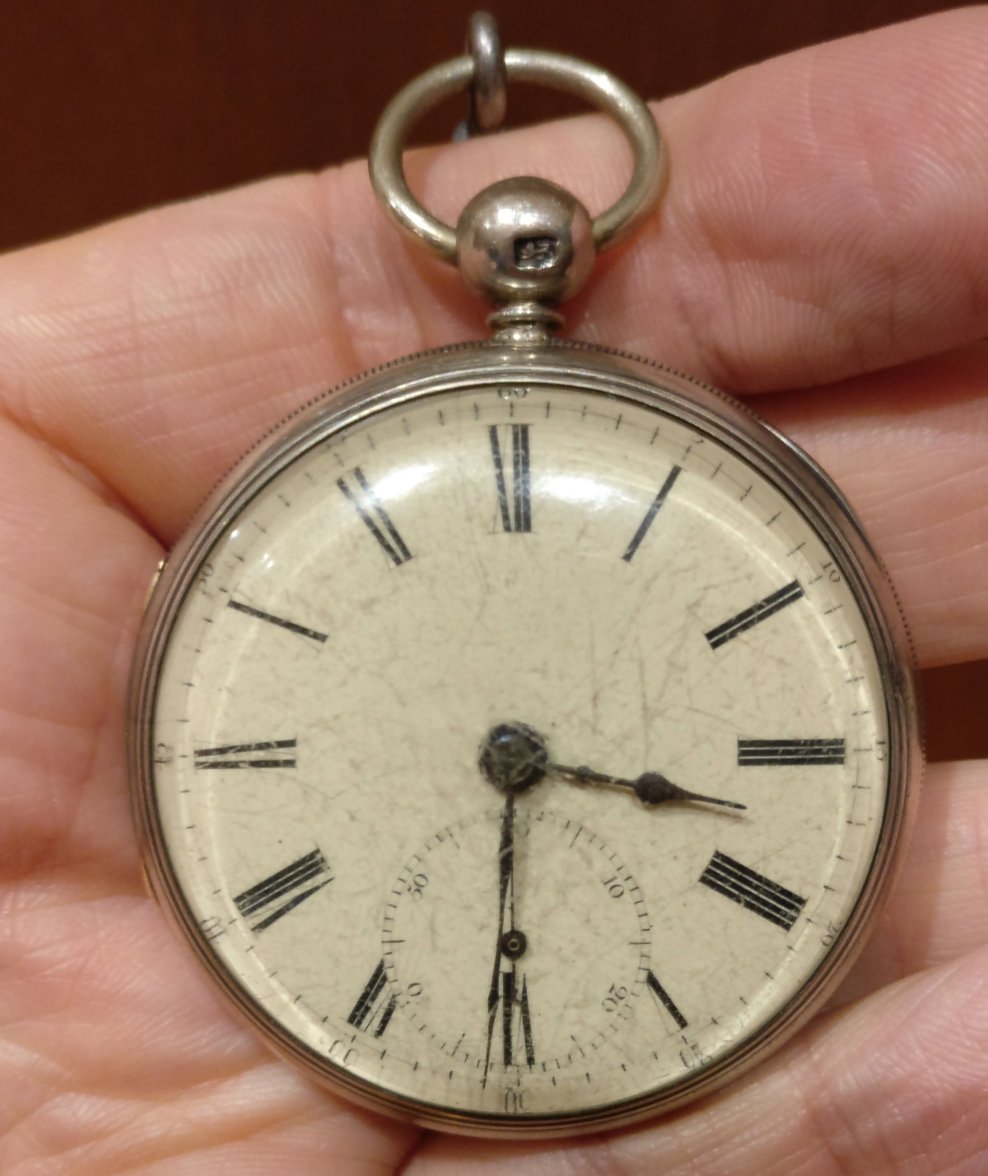
The old pocket watch pictured below came to me by way of my grandfather and I suspect to him from a great aunt. It's seen some things ... Unfortunately, none of its previous owners are with us any more. I've been trying to learn something about its origins, so I began looking into the interesting world of hallmarks using resources such as silvermakersmarks.co.uk, hallmarkwiki.com, and 925-1000.com. The hallmarks on the inside of the caseback can be seen in the second photo below. Some I have been able to decode, some not.
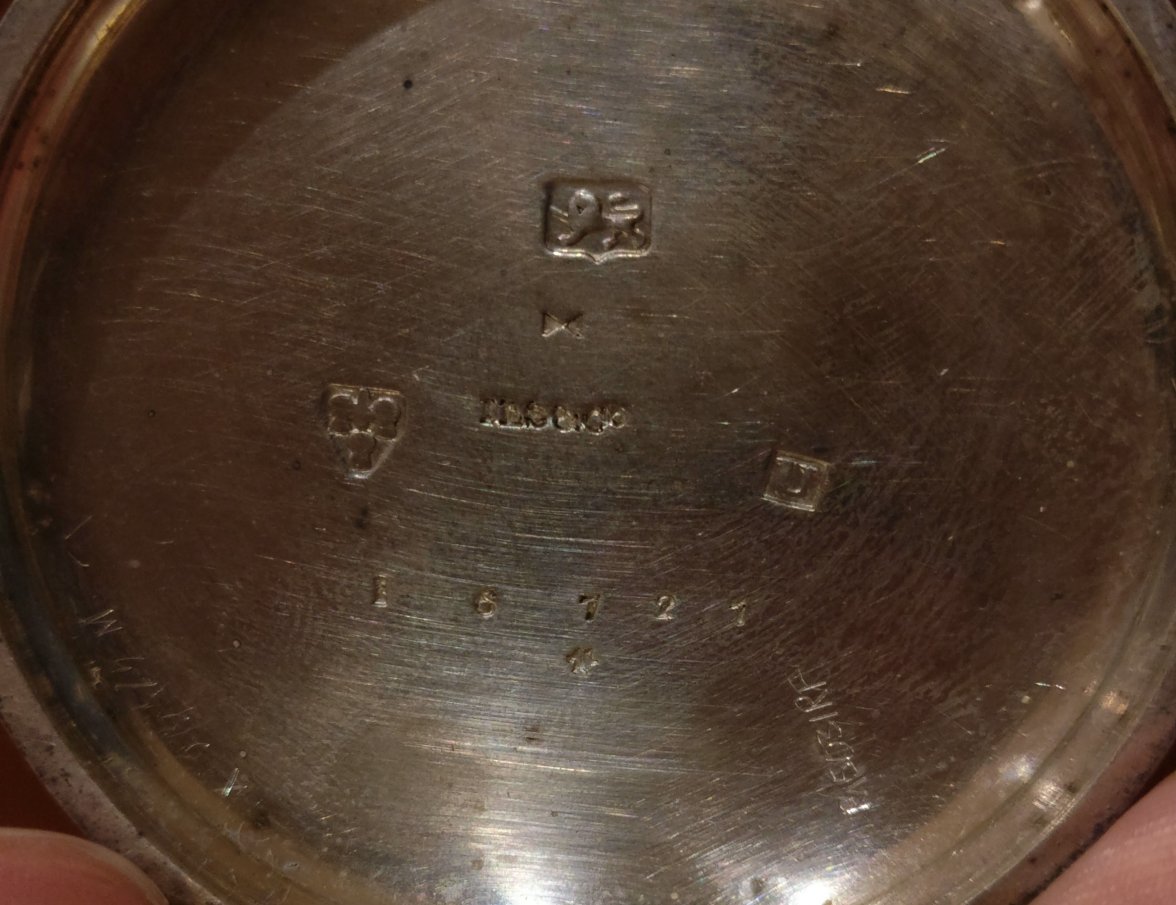
With apologies in advance to those more knowledgeable than I, here's what I think I've learnt and what I still don't know: From what I've read, the lion passant (top centre) indicates that the watch case is made of sterling silver (92.5% purity). Apparently, each sterling silver piece should have four marks: (1) the lion passant, (2) a city mark indicating where the item was assayed, (3) a date letter indicating the year it was assayed, and (4) a maker's or sponsor's mark indicating who sent the item to the assay office. Each of these four marks can be seen here. The city mark in this case is the mark of the city of Chester, UK; shown on the left as three wheat sheafs and a sword. Each assay office used a different series of letters to record the year. Letters were re-used over and over in a different way in each city. So in order to decode the year accurately, one needs to note not only the city and the letter, but also the font and the shape of the shield around the letter. This is where a little bit of mystery starts to sneak in. The Chester date chart from 925-1000.com is shown below.
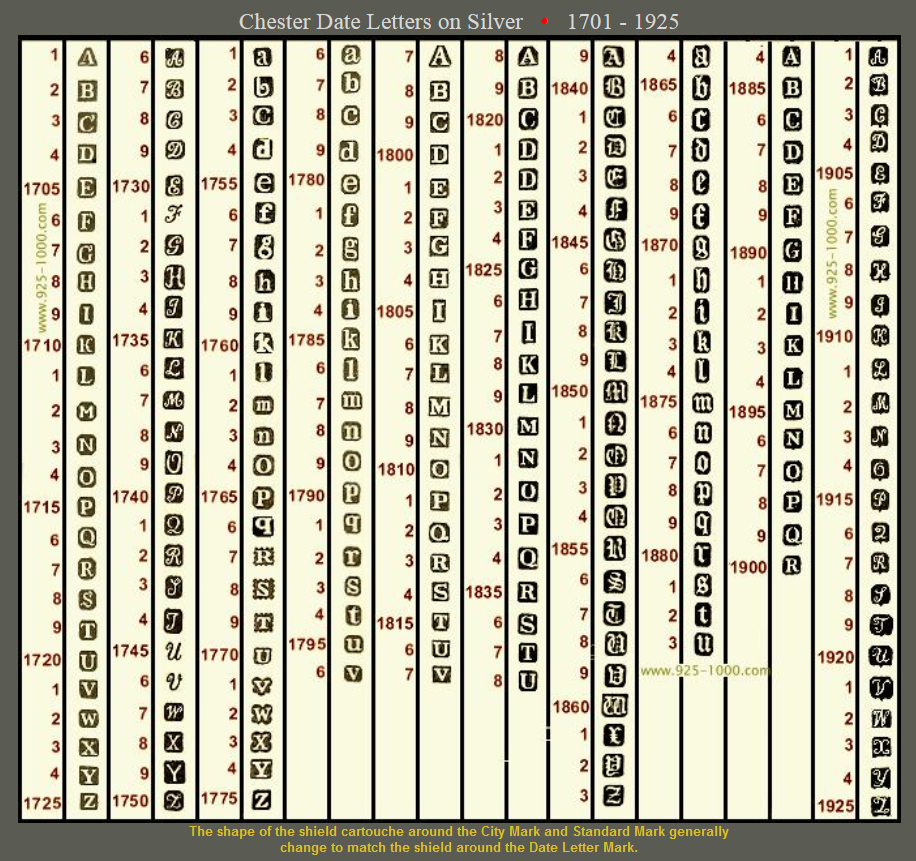


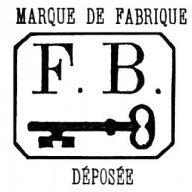
To my eye, the stamp on the watch could match either the mark for 1816 or that for 1838. Another mystery pops up in relation to the maker's/sponsor's mark (the series of letters in the centre). While there are online lists of these by city, I've run into two problems. The first is that it's difficult to actually make out the initials in the mark. My best guess is that the mark reads "ILS&Co", but I would not bet my house on it. The second problem is that I've not found any record of an ILS&Co or any image of a Chester maker's mark that looks similar to this in the online resources I've consulted. So, while I think I've traced this watch to a particular city of origin, the date of manufacture and maker remain something of a mystery.

There are also two sets of letters/numbers and what appears to be a serial number on the inside of the caseback that I have no clue about. The serial number can be seen in the centre of the photo above. The other marks (bottom left and right) seem to read: R^5031RF or RA5031RF and X3372M. Possibly made during servicing?

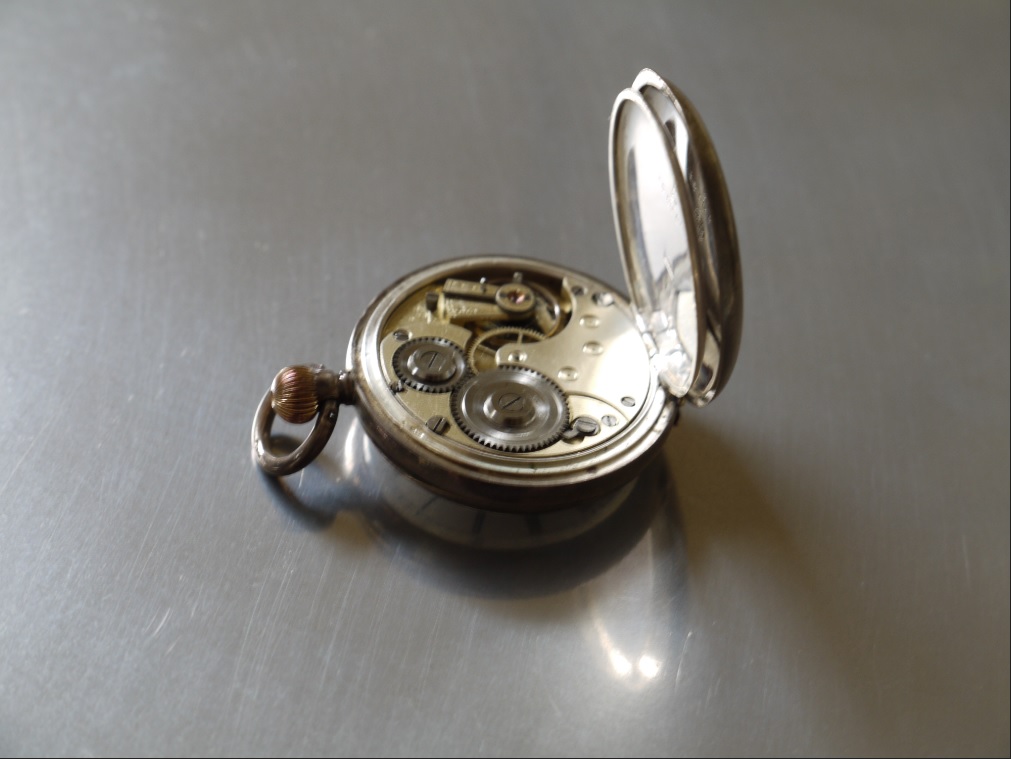
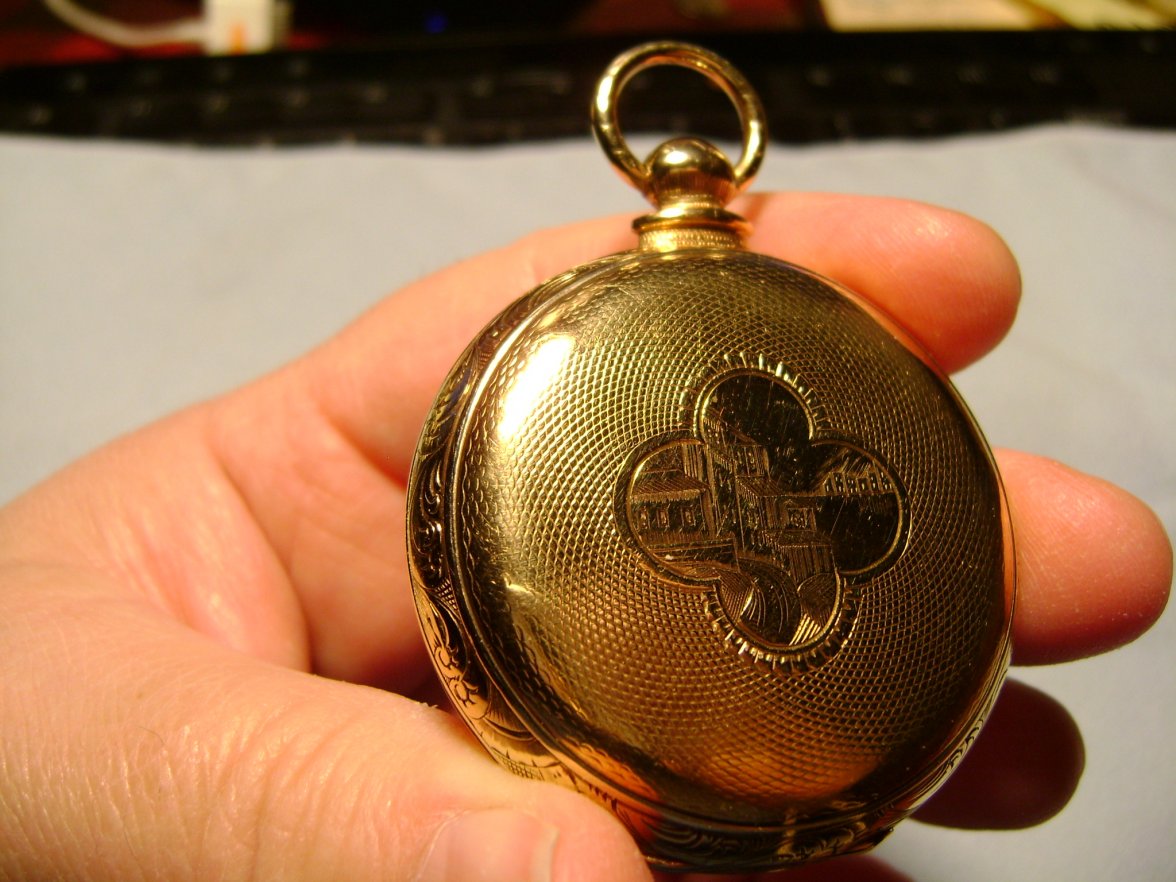
A couple of other things that have me scratching my head about this watch can be seen in the picture below. First, it appears that in order to get a look at the movement, one would have to remove the hands by unscrewing the small, square screw, then remove the dial and go in from the front. The case back does not appear to open or be be removable. I am not going to attempt this. Second, there are two small switches or levers at about 6-o'clock and 7-o'clock. I don't know what these are for and of course I do not want to fiddle with them given the unknown condition of the internals.


Apart from what I have discovered above, I am utterly clueless about these old pieces. This has become a fun little project and I find the watch endearing so I will continue digging. I'd be interested and most grateful for any leads or to hear any thoughts from members who have more experience with these pieces. Cheers!
 
Posts
639
Likes
3,066
The squre in the centre of the dial, above the hands is for setting the time, the catch at the bottom, if you push it inwards should allow the case to open revealing the movement. You will need a square hollow key for the hands. Is there a hole in the case back, this would be for the key for winding the watch?
 
Posts
445
Likes
1,721
The squre in the centre of the dial, above the hands is for setting the time, the catch at the bottom, if you push it inwards should allow the case to open revealing the movement. You will need a square hollow key for the hands. Is there a hole in the case back, this would be for the key for winding the watch?

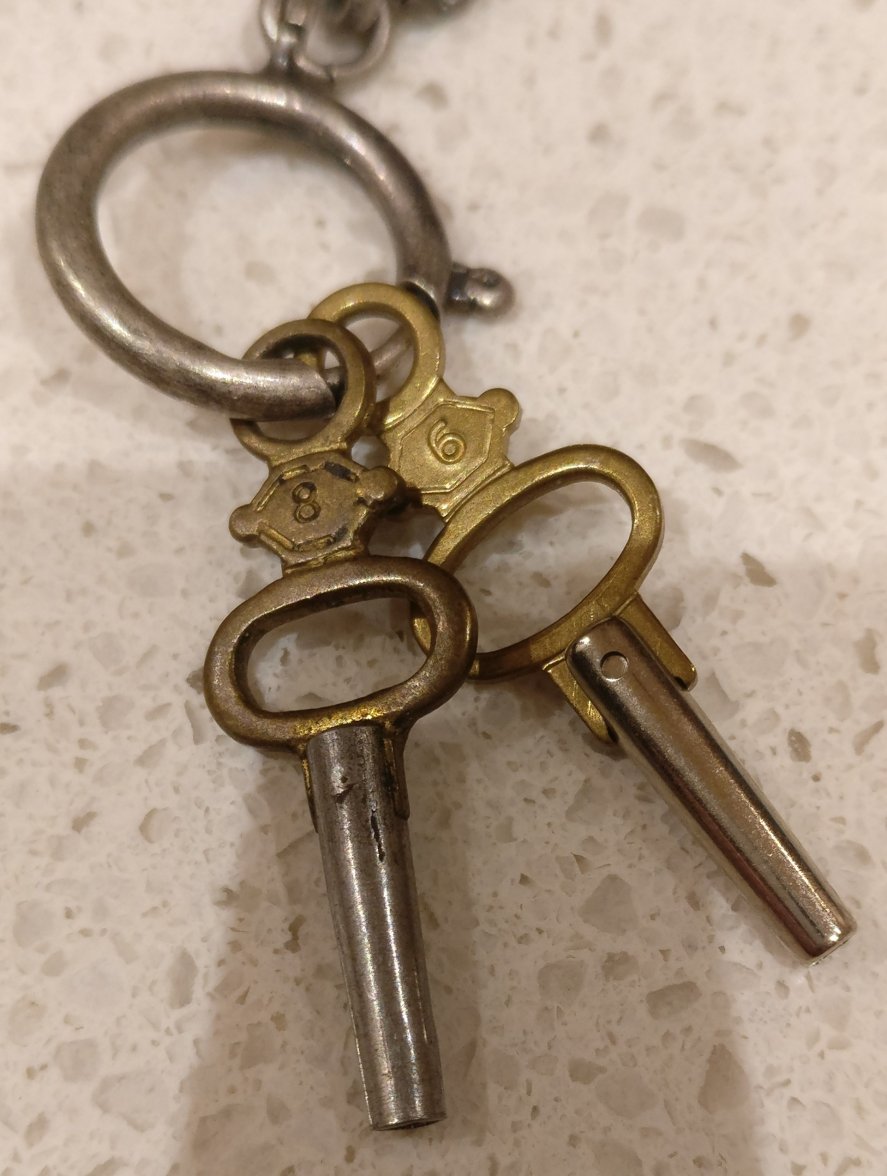
Thank you very much for your reply! Yes, there is indeed a hole in the case back. The watch also has two keys on a chain, each with a hollow square end of different size. Given what you mentioned about setting the time, I suppose one would be for that purpose and the other for winding. Thanks also for pointing out that the movement can be revealed using the catch at the bottom. I have just noticed that there is a hinge at 12-o'clock which now makes sense. Given that opening the watch seems to be more straightforward than I had thought, I may just be able to pluck up sufficient courage to open her up and take a peek later on. I shall report back if I find anything interesting. Thanks again.
 
Posts
75
Likes
408
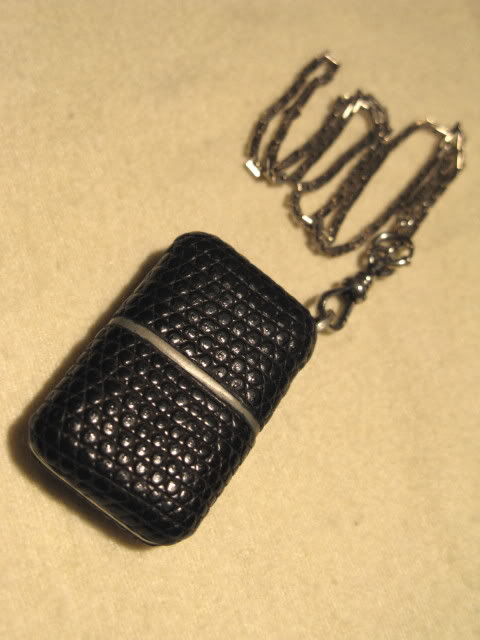
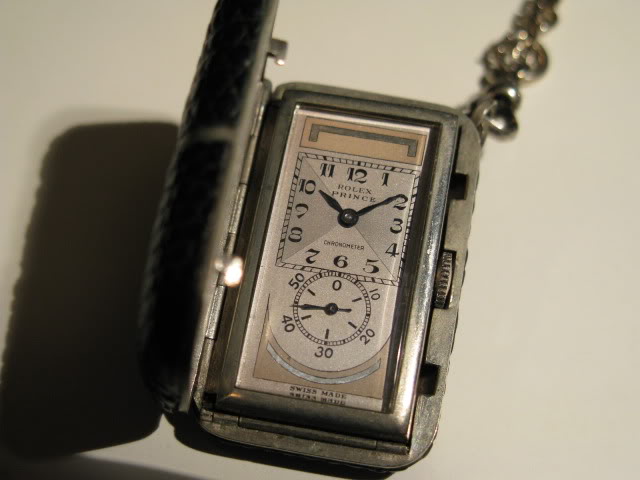
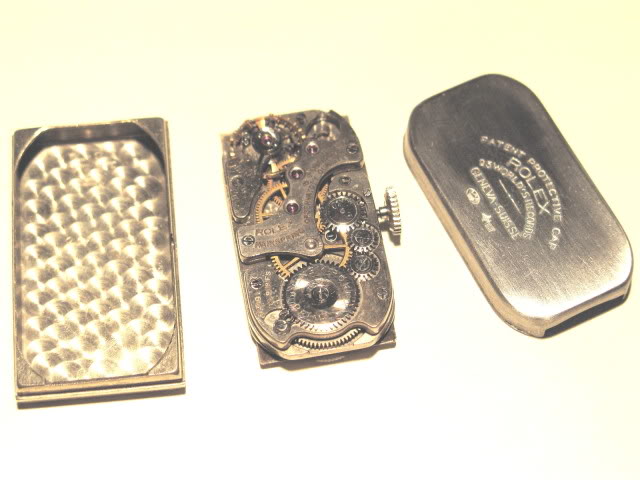
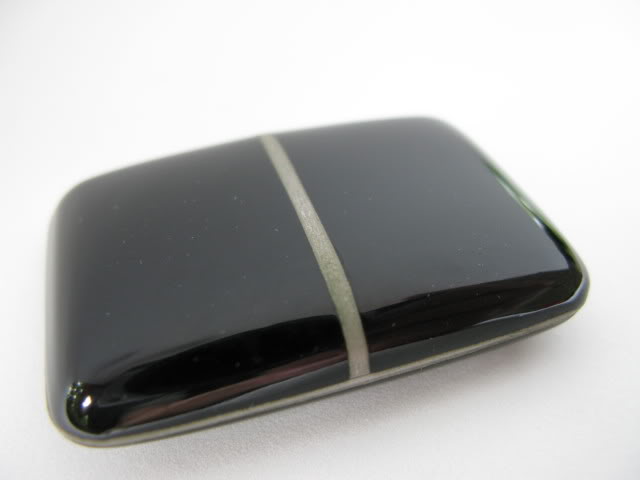
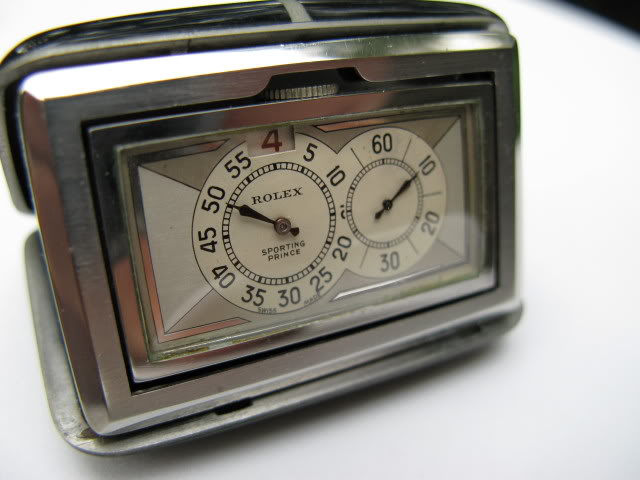
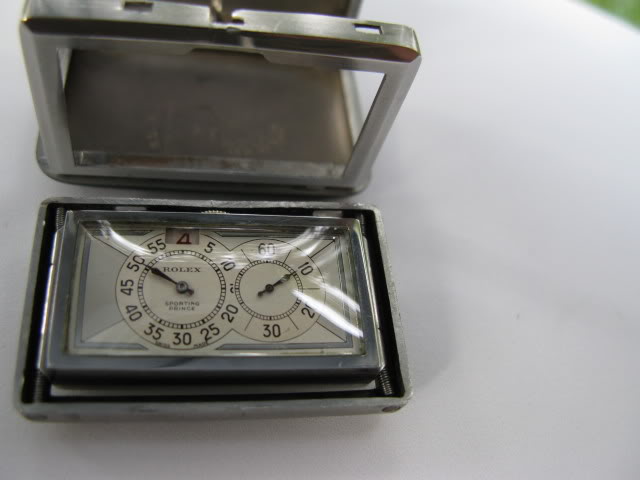
Rolex Sporting Prince jump hour
The movement is mounted on springs at the corners of the frame shown here removed from the watch. This was an early type of shock proofing for the watch.
 
Posts
4,512
Likes
9,329
Hi

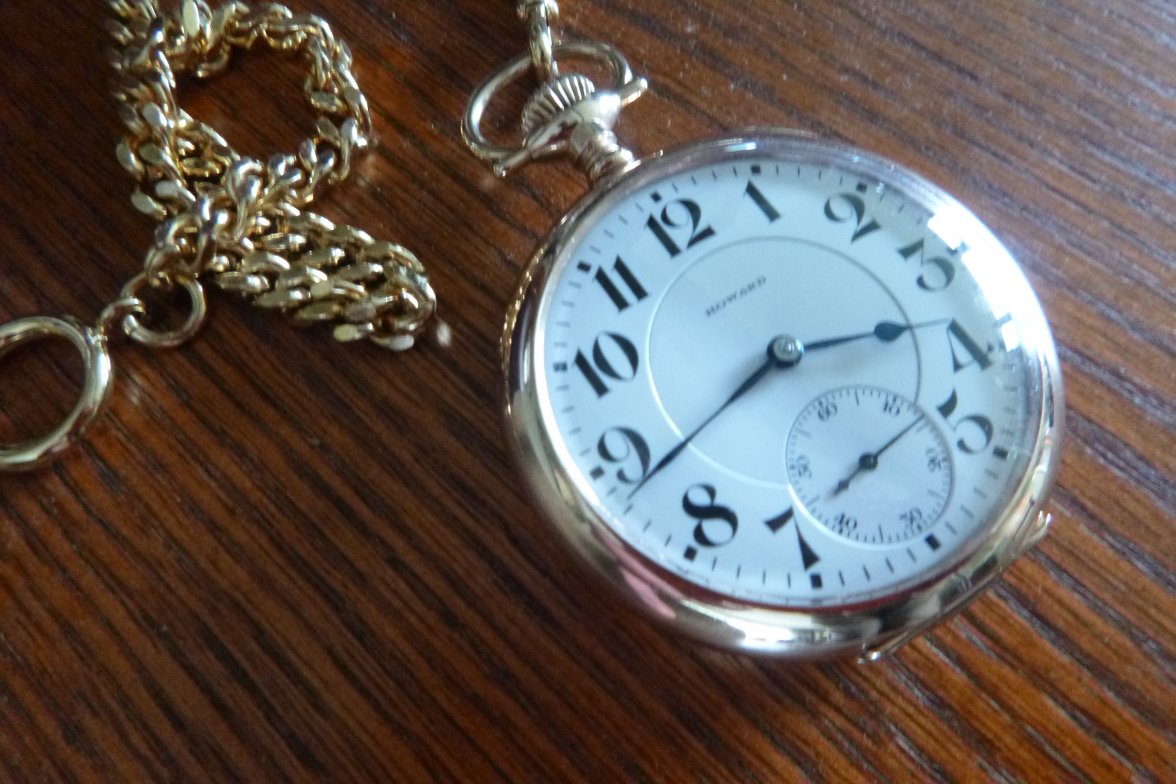
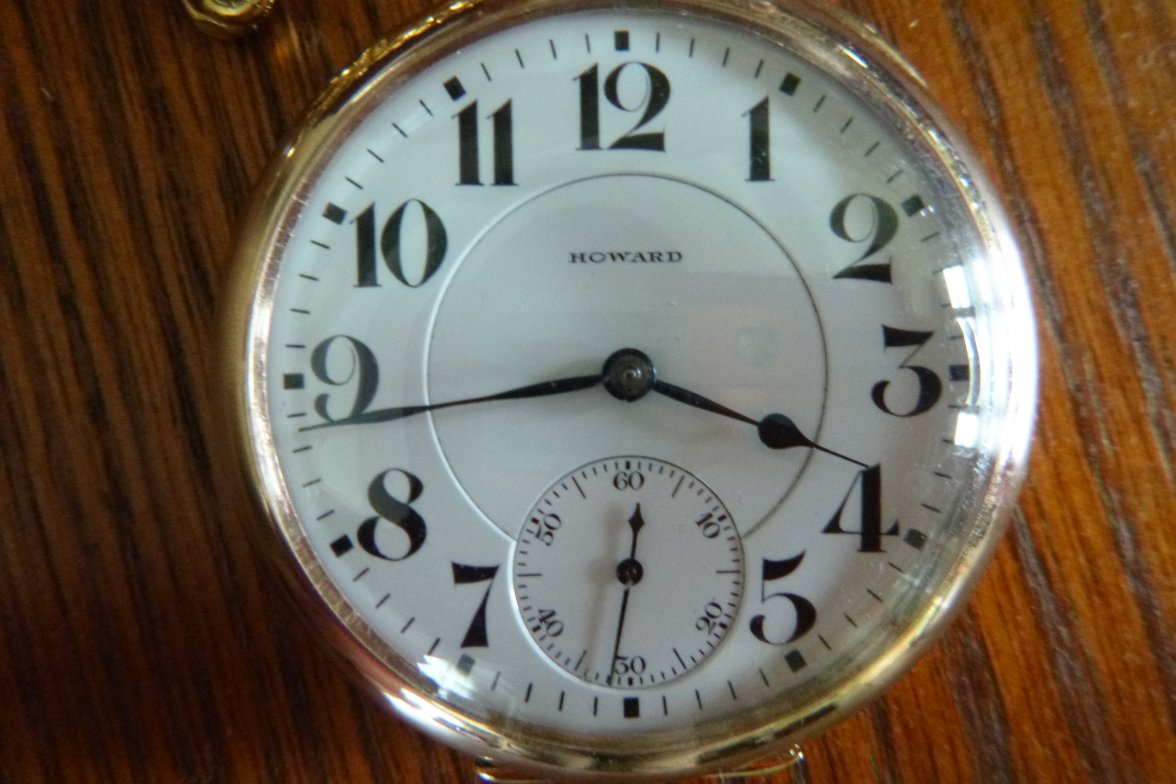
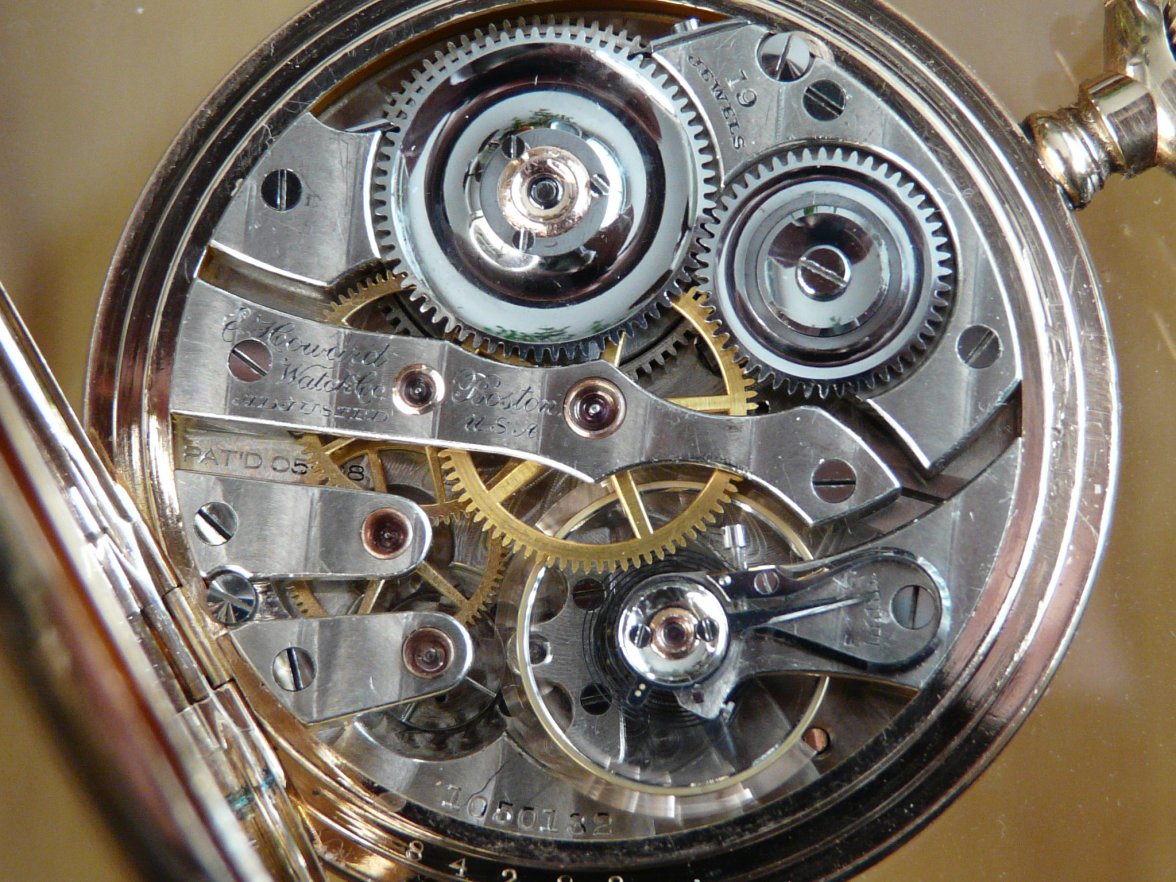
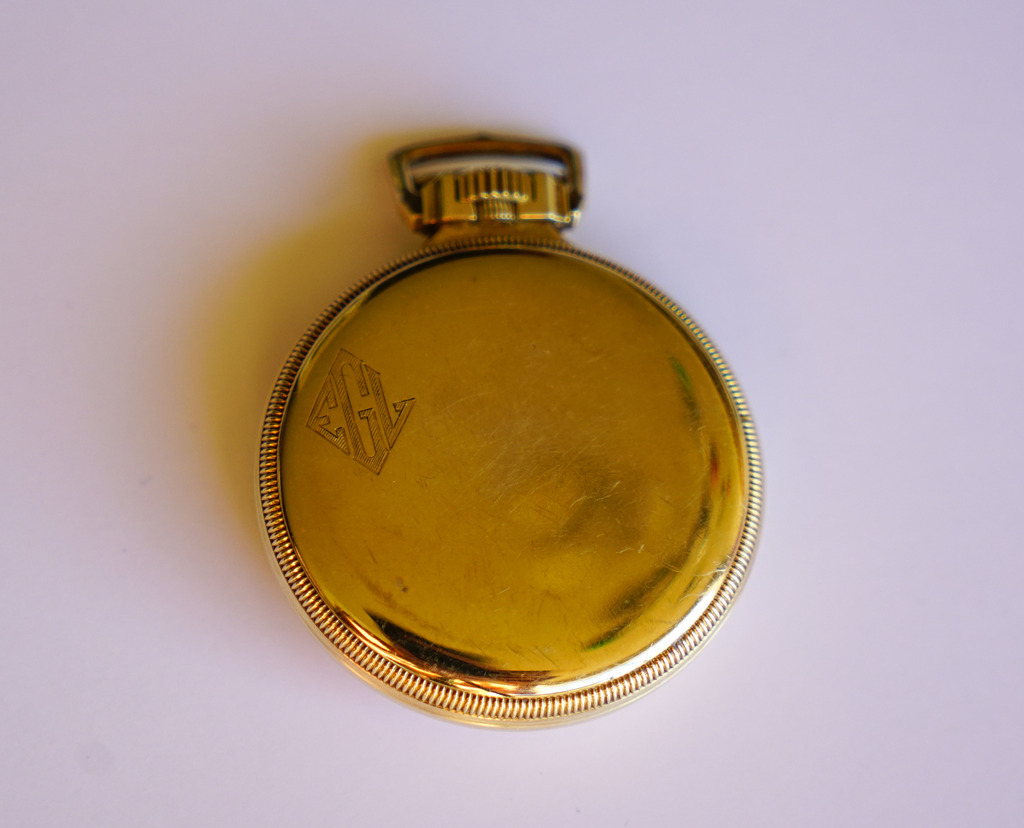
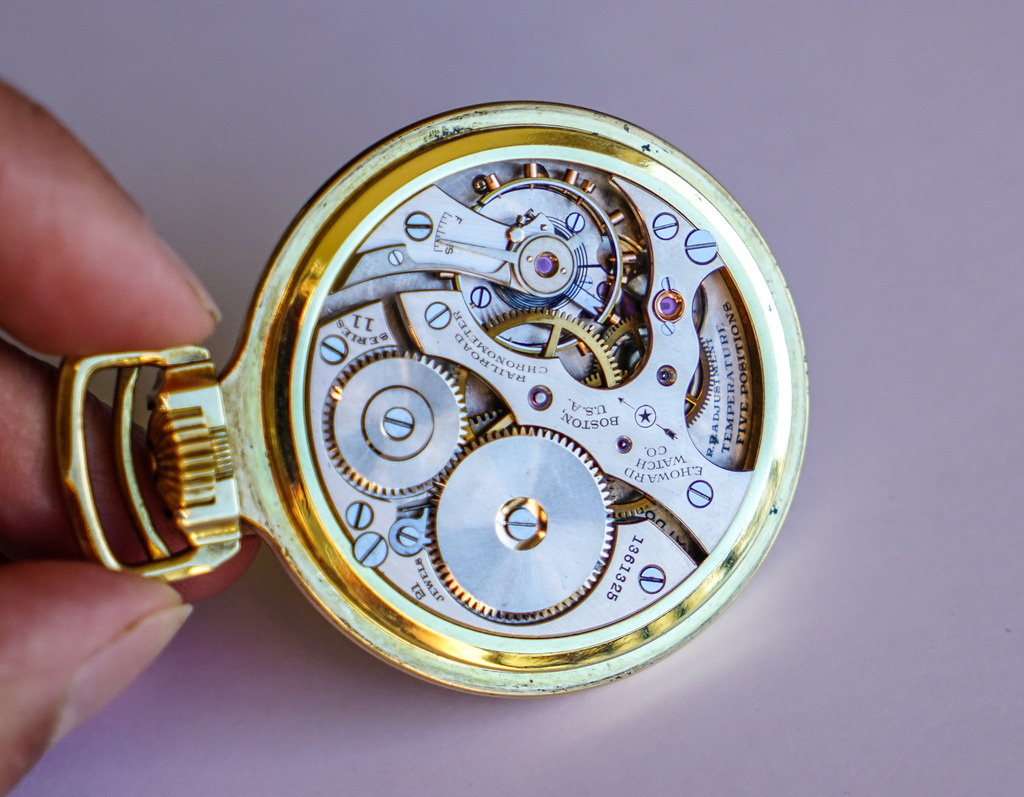
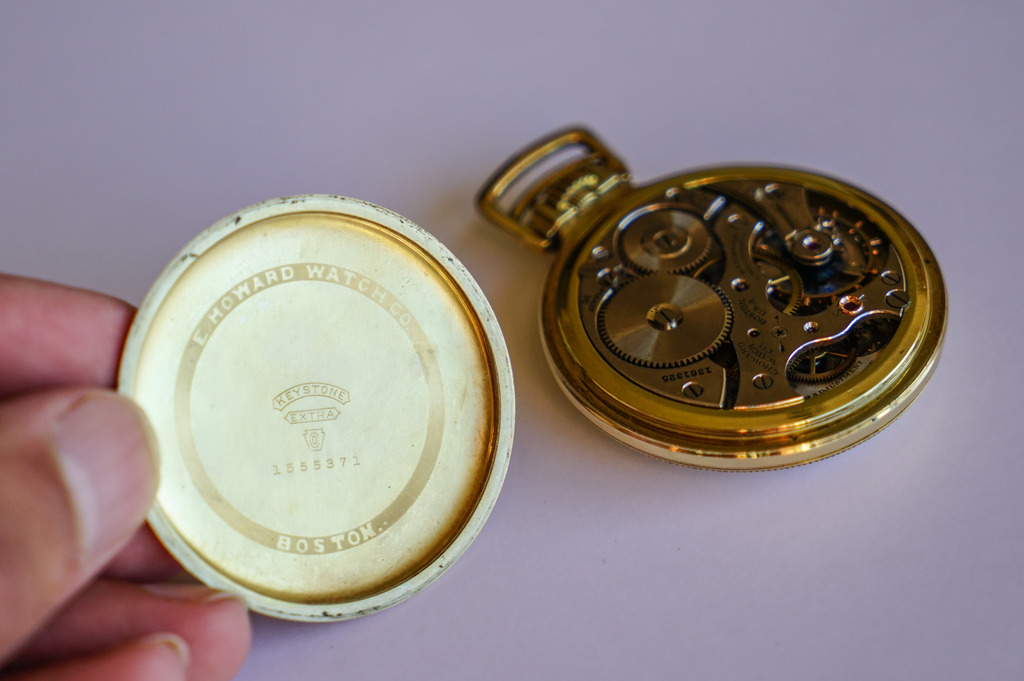
came across this E. Howard Railroad chronometer !!


That is an " All Business " Pocket watch... AKA Old School Tool Watch ...

Good Hunting

Bill
 
Posts
23,343
Likes
51,952
Hi

came across this E. Howard Railroad chronometer !!


That is an " All Business " Pocket watch... AKA Old School Tool Watch ...

Good Hunting

Bill

All business for sure. They didn't even bother to brag about the chronometer grade on the dial.