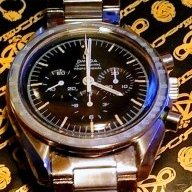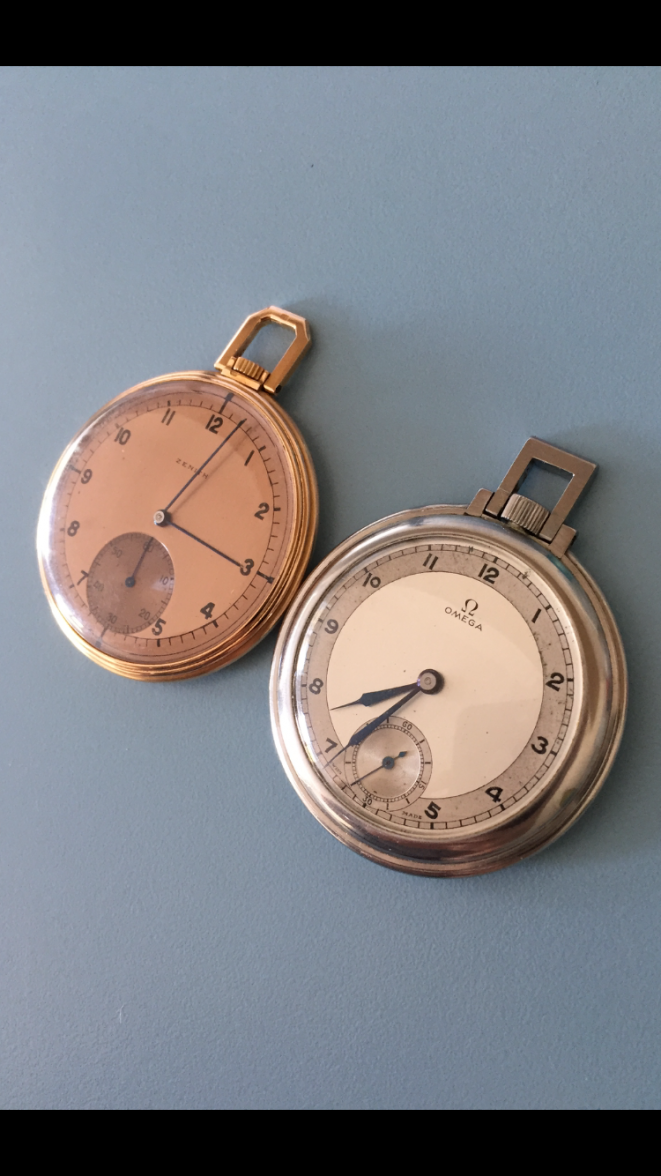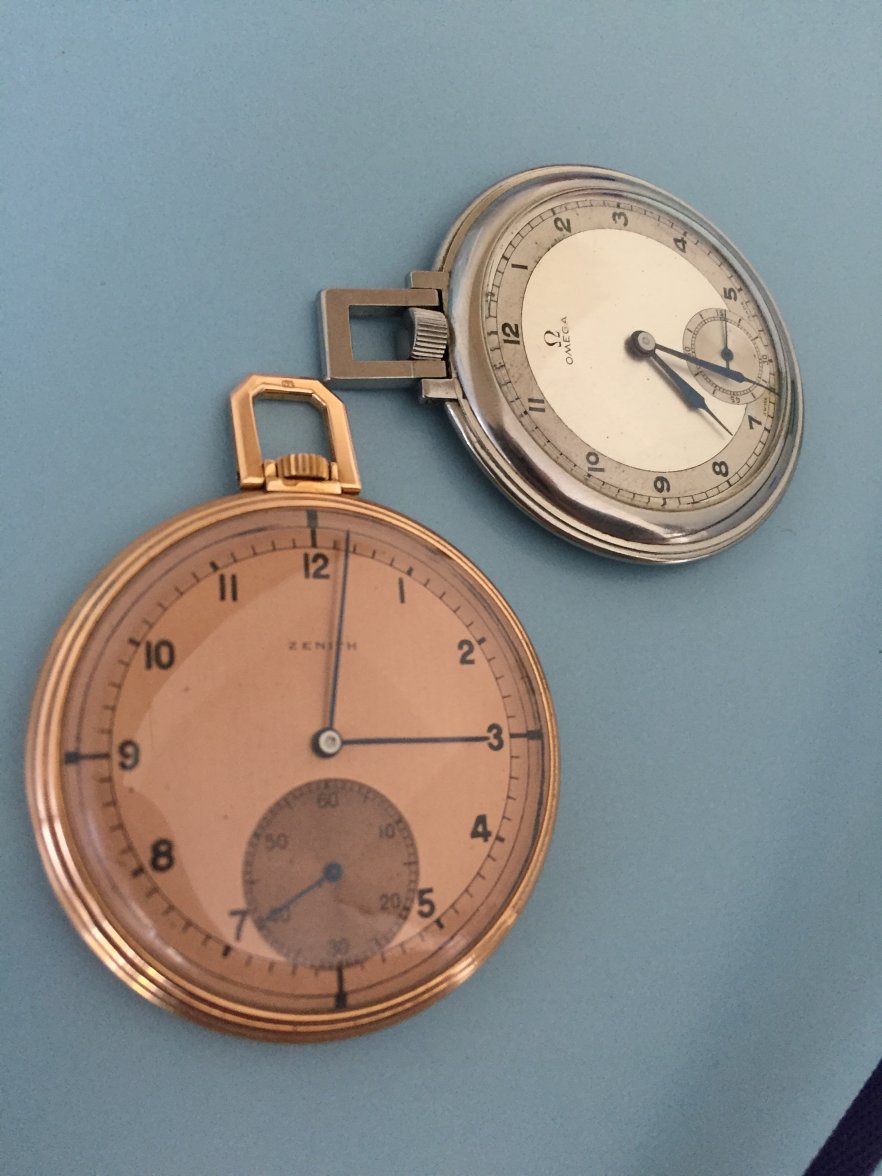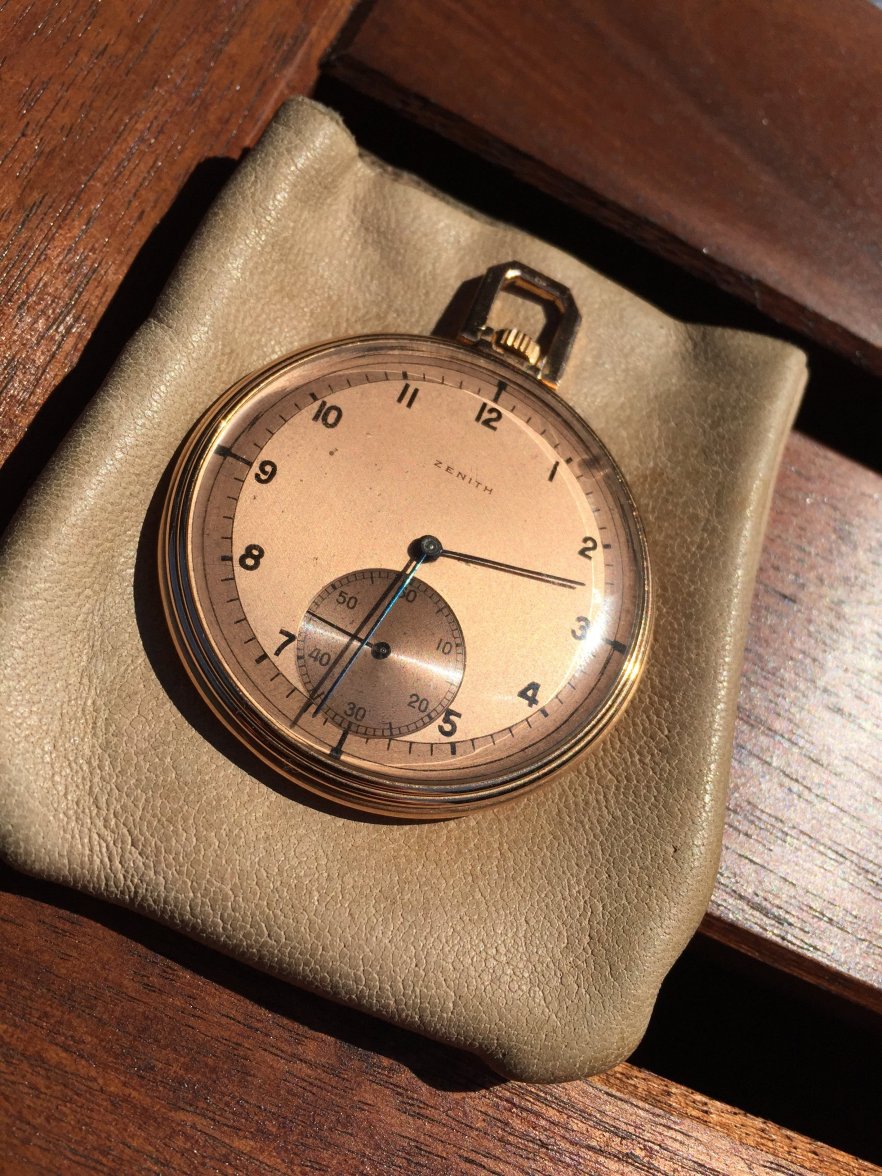
"Pocket watches"... out with 'em! Come on, lets see them!

Posts
560
Likes
1,440
the 47.7 I think is a 24'" movement and would not be comparing " apples to apples " .
Bill, the 47.7 was a 21''' - it was the 1919 development of the original 21’’’ from 1911. Unlike the 60.8, this was NOT produced just for competition. To quote AJTT, ‘This calibre was not only intended for competitions, it was also a commercial calibre that equipped first class chronometers that could be purchased from retailers’. So I think I AM comparing apples with apples.

However, if you look at my earlier post in which I showed the same Omega (30’’’ ‘Goliath’) movements with completely different decoration for the US market - and a plain gilded finish for other markets (for UK as illustrated), you will see that I am only supporting the facts as already presented: that the US market was different. And this only supports what Canuck has written.

Tom
 
Posts
560
Likes
1,440
I remember when Omegamania was in NYC for the Preview and my #1 pick was the 60.8 it was all business ( everyone I talked with at the event passed it by not giving it another thought) ...I even chatted with steve g before the auction, it went cheap at under 5 k used if my memory serves me correctly.
Bill,
The 60.8 in Omegamania (Lot 108) sold for CHF 18,880 (at that time about $15,350).
And since only 88 were made, I’m not surprised! In my opinion a beautiful watch - as exemplified by Steve G.

Tom
 
Posts
4,510
Likes
9,329
Bill, the 47.7 was a 21''' - it was the 1919 development of the original 21’’’ from 1911. Unlike the 60.8, this was NOT produced just for competition. To quote AJTT, ‘This calibre was not only intended for competitions, it was also a commercial calibre that equipped first class chronometers that could be purchased from retailers’. So I think I AM comparing apples with apples.

However, if you look at my earlier post in which I showed the same Omega (30’’’ ‘Goliath’) movements with completely different decoration for the US market - and a plain gilded finish for other markets (for UK as illustrated), you will see that I am only supporting the facts as already presented: that the US market was different. And this only supports what Canuck has written.

Tom
Hi Tom

Right 21'" not 24"' I was thinking of my obs 21"'/24"' DeBord .
Early link to a post I did about it .......
http://www.chronomaddox.com/omega/articles/omega_chronometre_debords.html

Also agree that the 47.7 was produced for consumption outside of chronometre competitions.( I have a early 47.7 with original receipt from Omega to the jewler . I bought the unit from his grandson who is considerably older then myself. ) This was a grammatical error on my part... thanks... typed this his am after a red eye flight into Rome.

The "apples to apples" comparison I thought you were talking about timekeeping ability and not movement finishing.... it would not be fair to compare timekeeping between a American 16 or 18 size pocket watch to the 20'" deck chronometre .... that I my point...

Getting back to movement finishing , the US WATCHMAKERS did raise the level of "fancy" finish and the US based consumers look at this fancy finishing as a tale tail of over all movement quality and timing ability... there are diminishing returns to this but that I different discussion. So to compete in the US market Omega had to adjust accordingly... as an example of the pair of Omega (30’’’ ‘Goliath’) you posted to show the difference.

Regards

Bill
 
Posts
4,510
Likes
9,329
Bill,
The 60.8 in Omegamania (Lot 108) sold for CHF 18,880 (at that time about $15,350).
And since only 88 were made, I’m not surprised! In my opinion a beautiful watch - as exemplified by Steve G.

Tom
Yup your right.... I checked the old PDFs that Chuck and I compiled after the auction....

Thanks
Bill
Edited:
 
Posts
558
Likes
1,047
circa 1899....and most uncommon for various reasons....still need a micro-regulator spring if you have an extra or can point me towards somebody who might.

Mr. Cote will recognize the characteristics I'm referencing and maybe a few others.

Beautiful dial and movement. This is a scarce version of the 18s Ball Hamilton. It is going to be very difficult to find a regulator spring. They show up on eBay from time to time but usually you will have to find someone with a junk movement.
 
Posts
558
Likes
1,047
Hi you all, Looking back a 100-150 years, how do the American pockets and the Swiss stack up. With accuracy so desired, I can imagine these companies were eyeing each others work. The few pictures I've seen show fancy American metal work but which kept better time? An American Co. a Swiss Co. (Go Team OMEGA), or the...?

Looking back 100-150 years you can find the two grades of Elgin 21jewel convertibles and the 21jewel Waltham American Grade model 1872's. These are without much argument the most finely finished pocket watches ever made in the US. The story is told that the president of Vacheron Constantin visited the Waltham factory in the late 1870s. At the end of his plant tour the president of Waltham took a 21j '72 American grade out of the safe to give to the man from VC. He told the guy that he wanted to sent the watch back to the adjustment room to make sure it was perfect but the man from VC askde, "Is it now the way it would be sold to the public?" The Waltham man said "yes." The VC man asked if he might have it just the way it was. He took it back to the head of his adjustment dept and asked him to analyze the watch and make a report. As the story goes the report said that there was no way VC could produce a watch of equal quality at a price anyone would accept.

I heard the above story first from my dad 50 years ago but I have heard it many times from other sources since. Who knows if it is true but there surely can't ever have been many time only watches to equal the 21j '72 American Grade Wally.

Here is a link to an article I wrote for Hodinkee more or less on this subject.

https://www.hodinkee.com/articles/american-pocket-watches-a-primer-for-the-wristwatch-collector

JohnCote
 
Posts
15,221
Likes
44,697
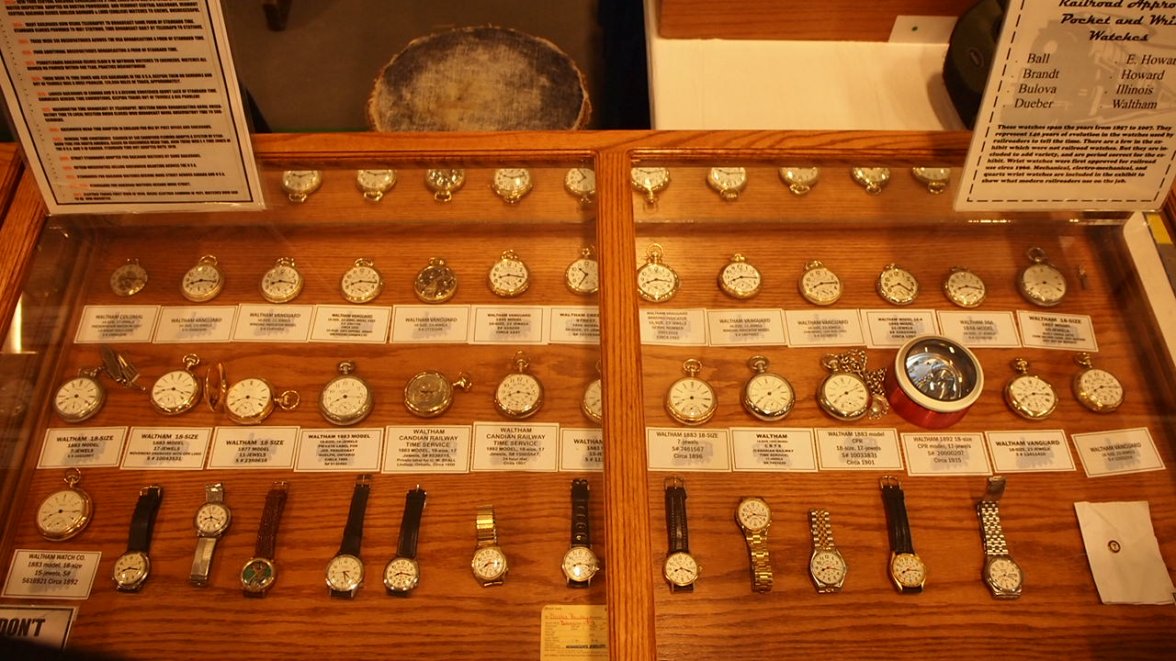
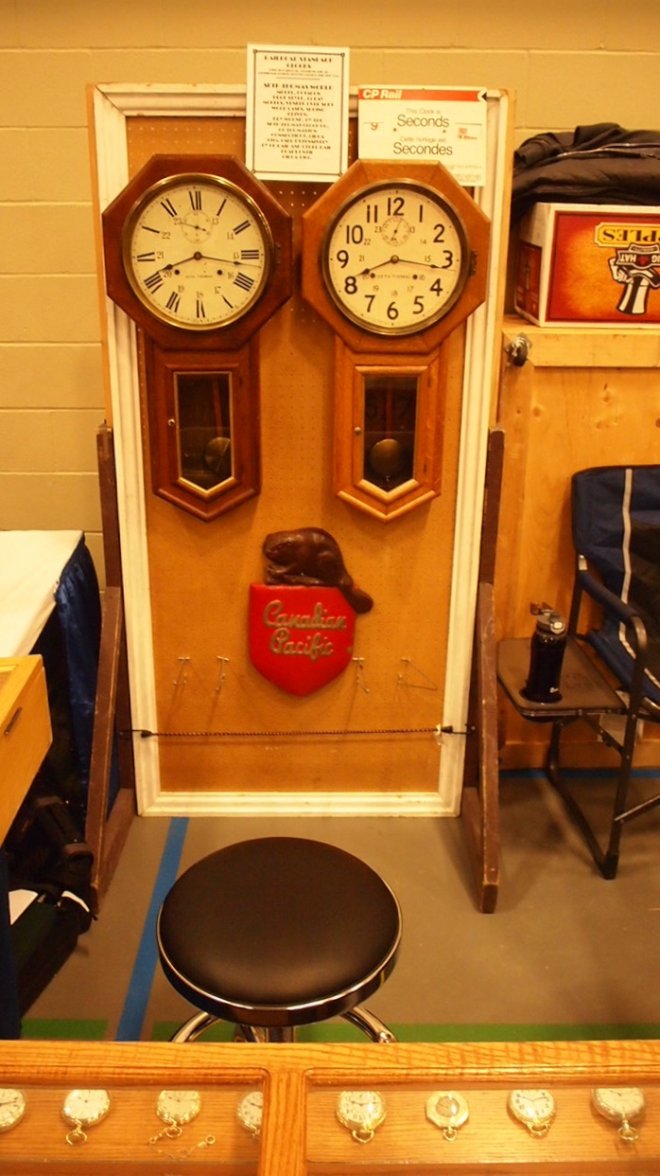
This week end was the annual Supertrain show sponsored by the Calgary Model engineering Society. It is the largest model train shown in Canada at 60,000 square feet, and may compare with other large model train shows anywhere. This was its 26th year, and two of us have exhibited railroad watches and clocks at all,of them. It is a two day event which draws approx. 15 to 16 thousand people. We exhibited 88 pocket watches (90% railroad standard), all American, except for two Swiss Omegas (Brandt CCRs), 12 railroad wrist watches, and two Seth Thomas World clocks. Pictures included.

 
Posts
3,174
Likes
7,326
I'd just like to thank all of you above for a very informative discussion and an interesting read.
 
Posts
15,221
Likes
44,697
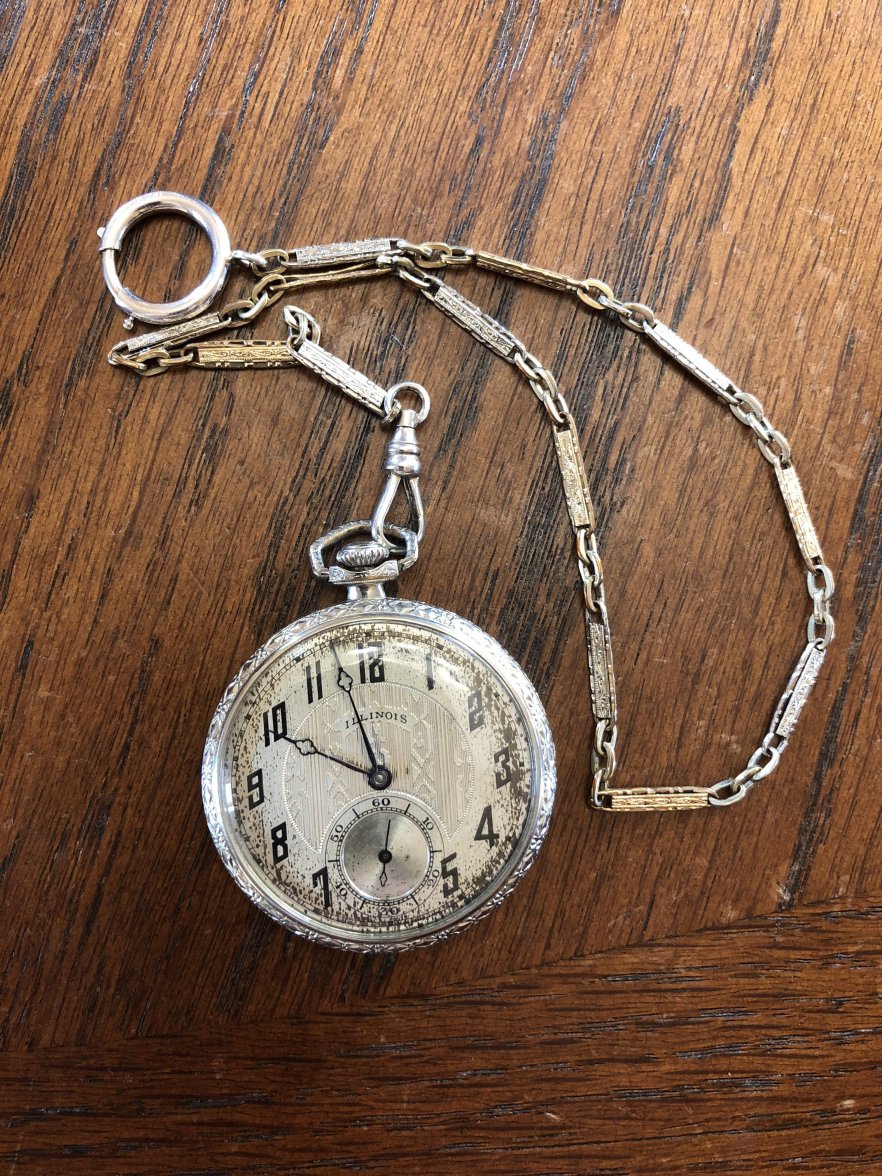
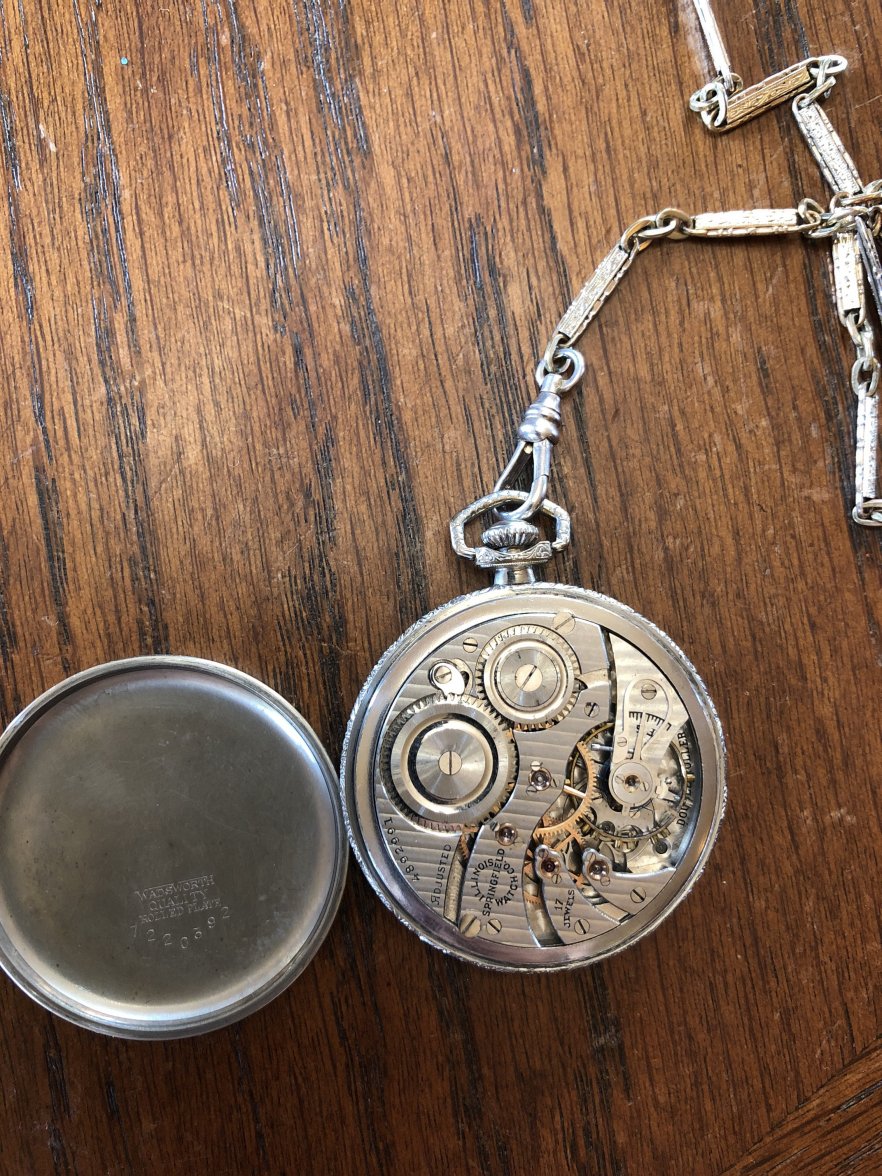
1930s I think, Illinois pocket watch I got for Christmas a few years ago.

[/QUOTE

A bit earlier, I think. Likely 1927~28. Thr Hamilton Watch Co. acquired Illinois in 1929, just about the time Illinois serial numbers reached 5 million. Later today, after I retrieve my books, i’ll Look that up for you. Nice!
 
Posts
15,221
Likes
44,697
Referring to the Meggers and Ehrhardt “blue book” on Illinois, your Watch was produced early in 1927. Hamilton acquired Illinois n 1928. Your watch is a 12-size, 17-jewel, model 3, grade 405. It was Illinois’ highest production grade, with over 400,000 made. Not rare, but nice.
 
Posts
55
Likes
108
Thanks Canuck! That’s very interesting, I really didn’t know much about it nor where to look for the info, except to spend some hours on google, which I never had the inclination to do.
 
Posts
15,221
Likes
44,697
Thanks Canuck! That’s very interesting, I really didn’t know much about it nor where to look for the info, except to spend some hours on google, which I never had the inclination to do.

The Meggers and Ehrhardt book I referred to is THE bible on Illinois watches. The grade 405 is listed in the Illinois records as having been made in 17-jewel (yours), 21-jewel (though there have been no recorded sighting of that one), and 23-jewels of which there has been one seen. Illinois also produced a virtually identical 12-size in grade 404, but your grade 405 was adjusted to a higher standard than the 404. Illinois used the grade 405 in a lot of “private label” watches. A private label watch is one on which the manufacturer placed the name of the retailer or distributor on the dial, and sometimes on the movement, itself. The retailer or distributor paid extra to have the private label applied. One frequently seen grade 405 Illinois is private labeled “the Autocrat”. Enjoy.
 
Posts
639
Likes
3,066
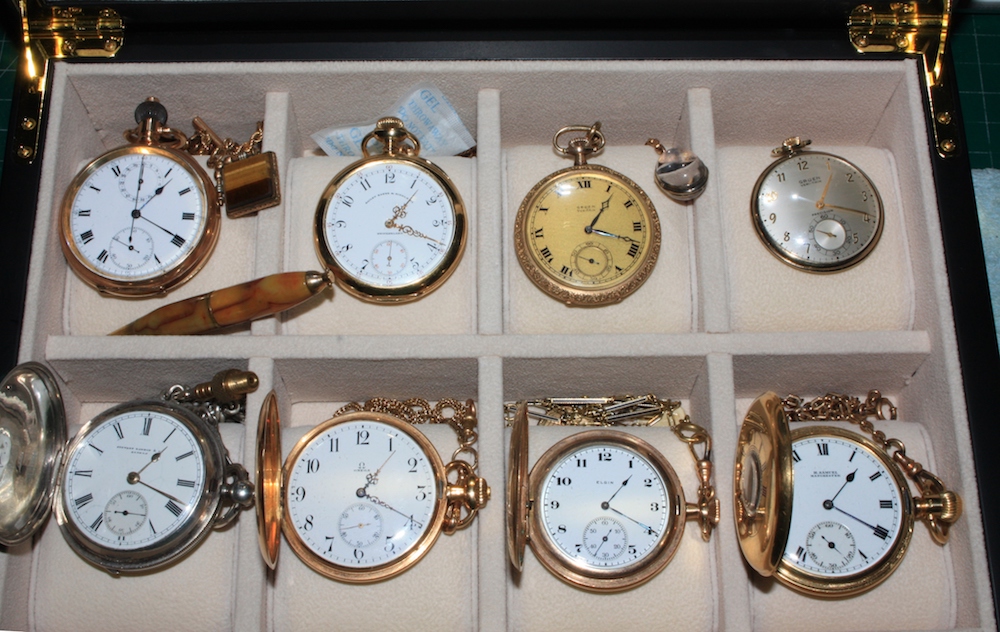
I have a small collection of pocket watches, here's a picture of them together aussie-emoticon1%20copy.gif
From top left:
Le Phare single pusher
Patek Philippe, Porcelain dial signed Bailey Banks & Biddle Co
Gruen VeriThin
Gruen Verithin Wadsworth case
Stewart Dawson, key wind and time set from front
Omega Grande Prix inscribed dated 11 August 1919 from the extract
Elgin from 1927
H. Samuel Pocket Watch - Solid 18K gold case, English made 1917
If anyone's interested I can post photos of the individual watches
 
Posts
2,327
Likes
2,541
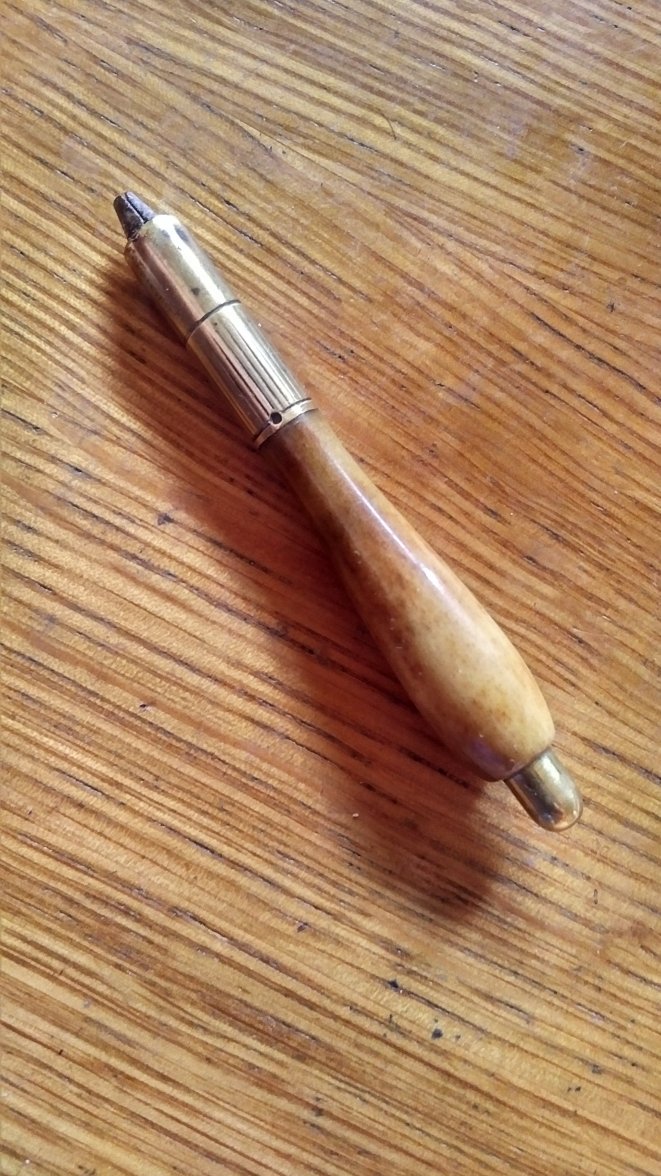
Is that a mechanical pencil that doubles as a plumb bob.
I have one nearly identical only made of walnut.
 
Posts
639
Likes
3,066
I think this is tortoise shell, never seen a plumb bob like this and I have used many different ones over the years. This came to me as a fob on a watch chain aussie-emoticon1%20copy.gif
 
Posts
2,327
Likes
2,541
There are quiet a few variations on the plumb bob shape.
My Combo mechanical pencil/plumb bob has a bit more the classic shape fat and rounded at the rear and tapering to the point. The rear is drilled through for a short loop of chain.

I suspect these were something an engineer or architect might carry .
 
Posts
3,174
Likes
7,326
There's alsorts of variations on watch chain accoutrements from fobs to vesta, Stanhopes, watch keys, pencils. The ball to Cross metamorphic masonic pieces are hot right now ... I have a nice silver compass which is just gorgeous but my favourite is probably this universal watch key:

It's just so tactile.