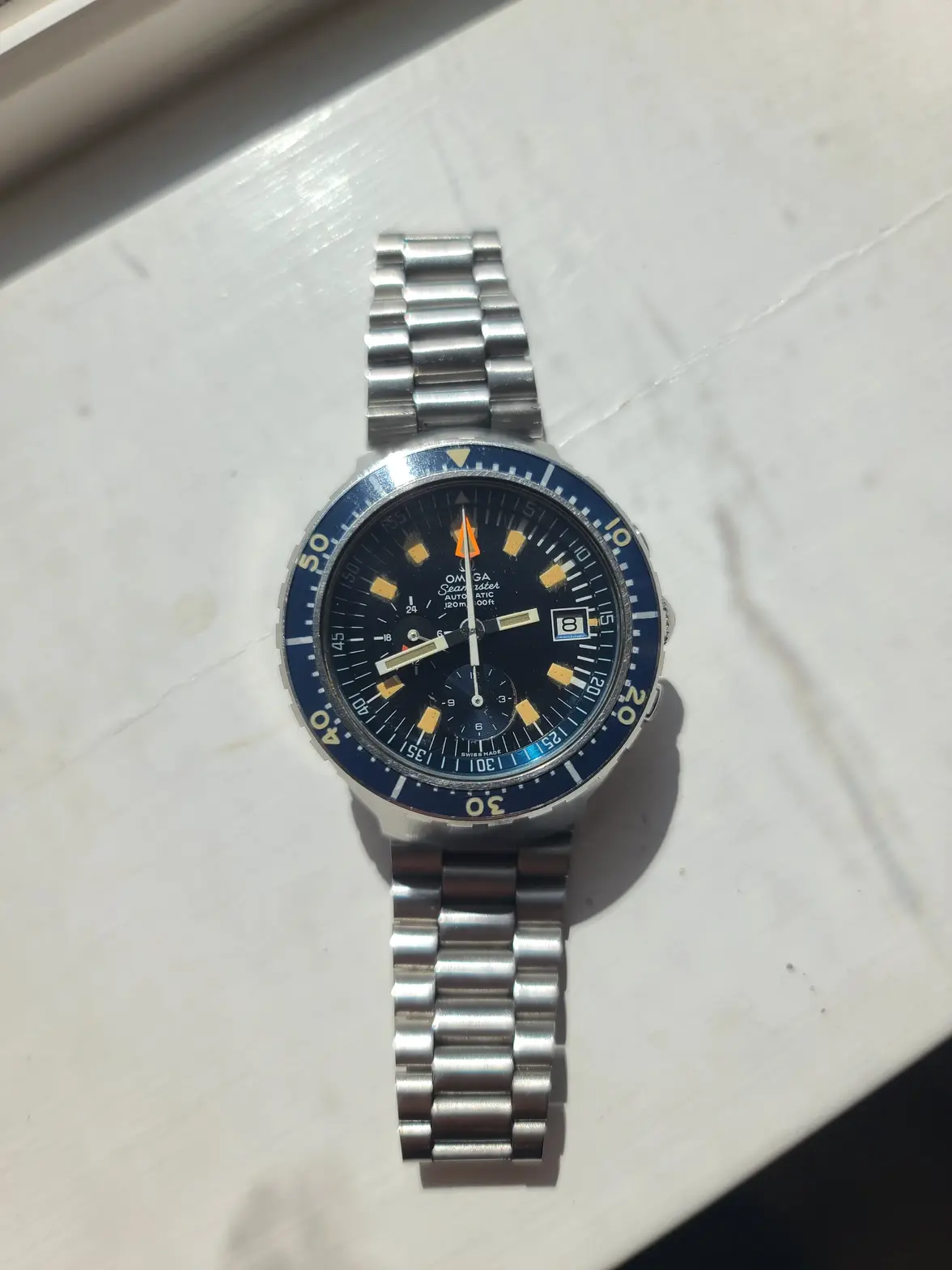
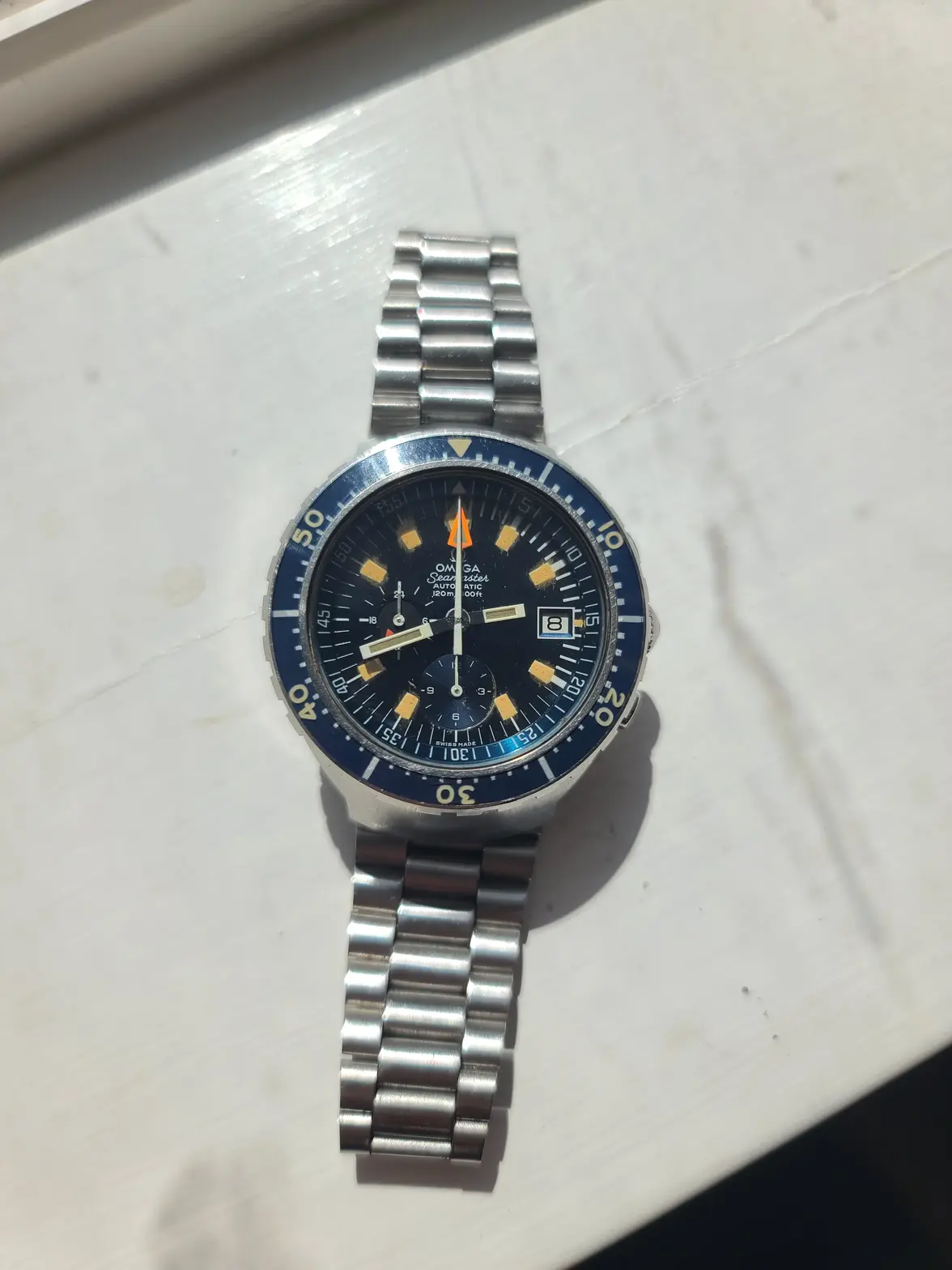
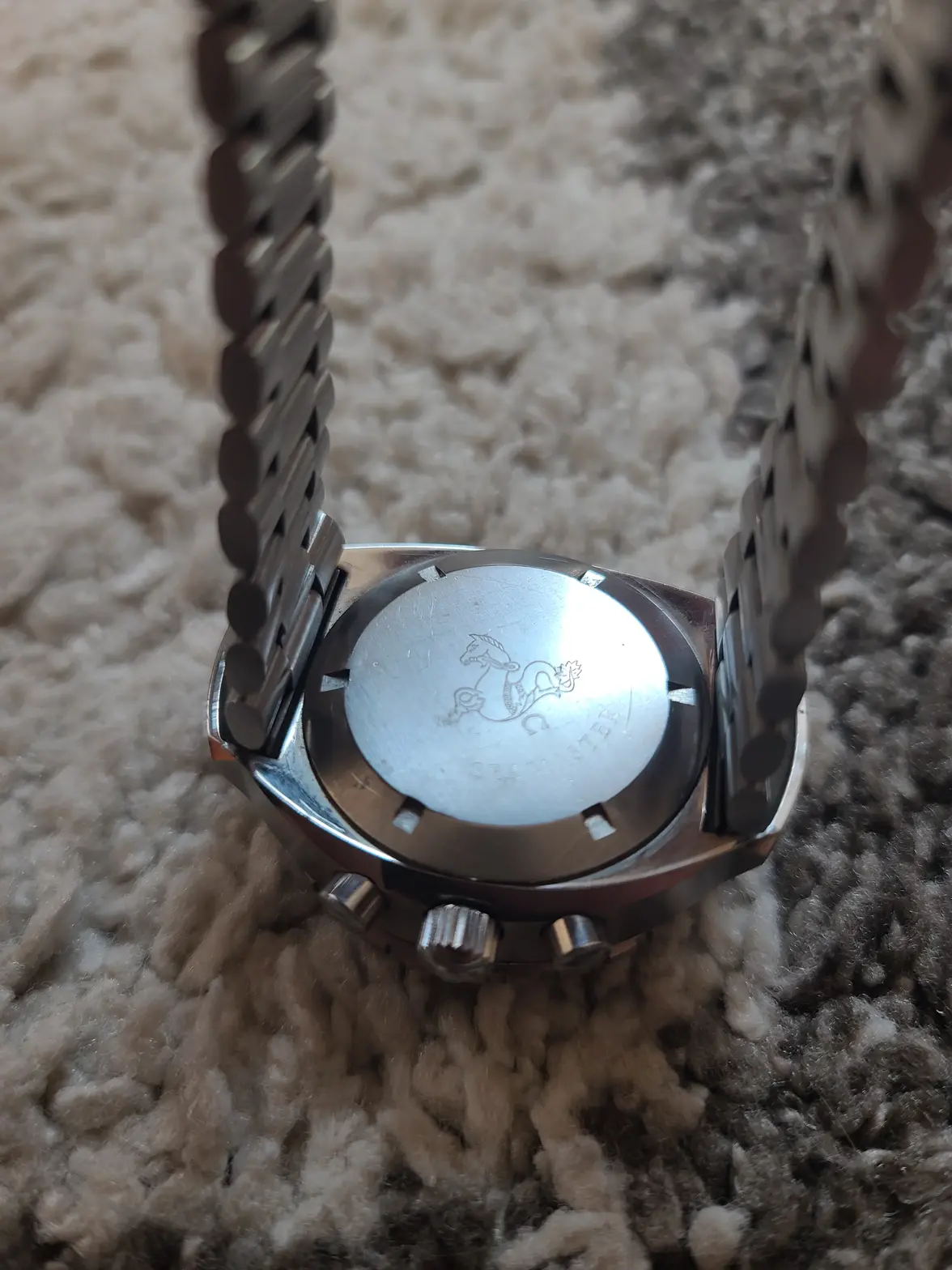
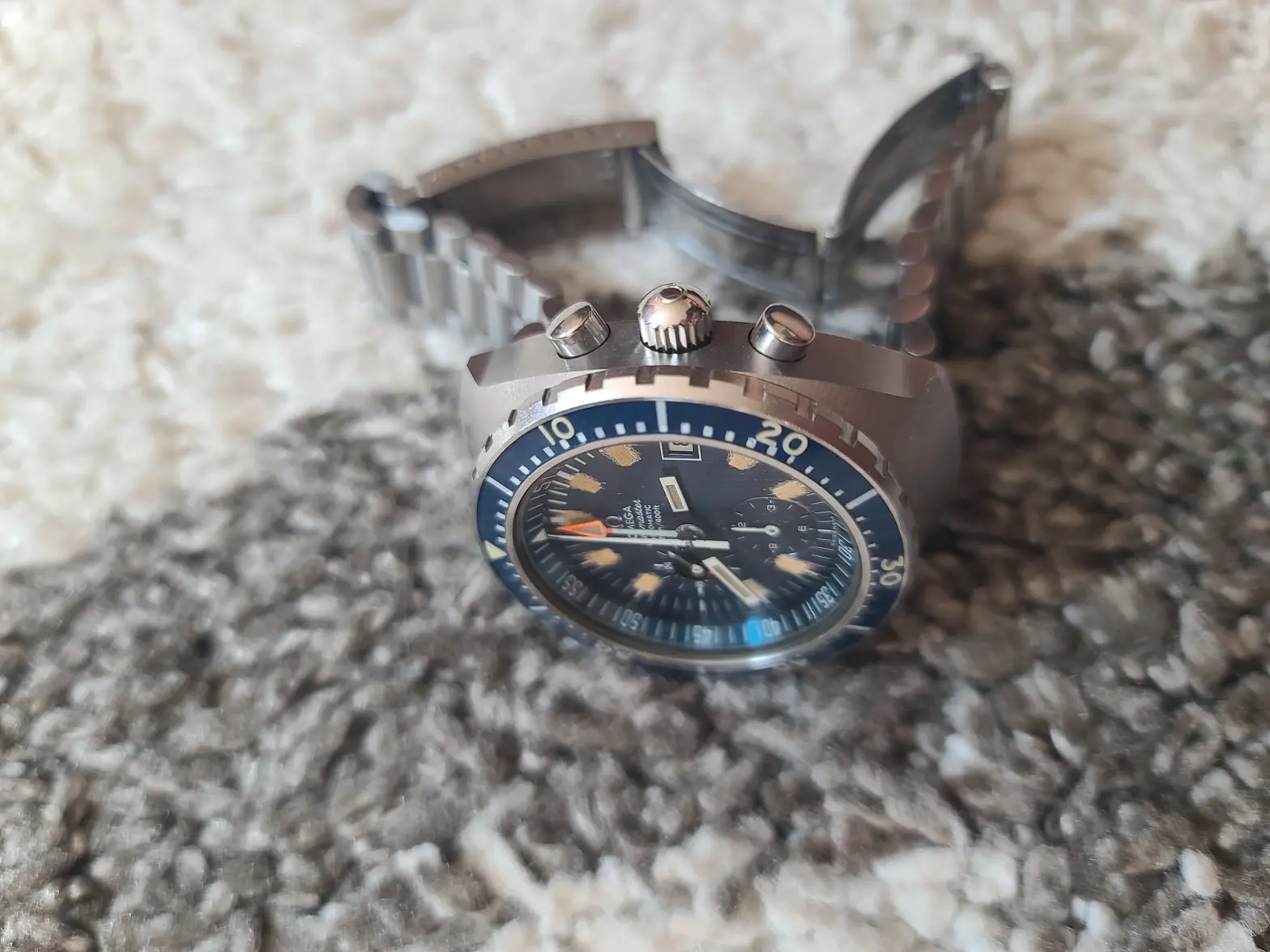
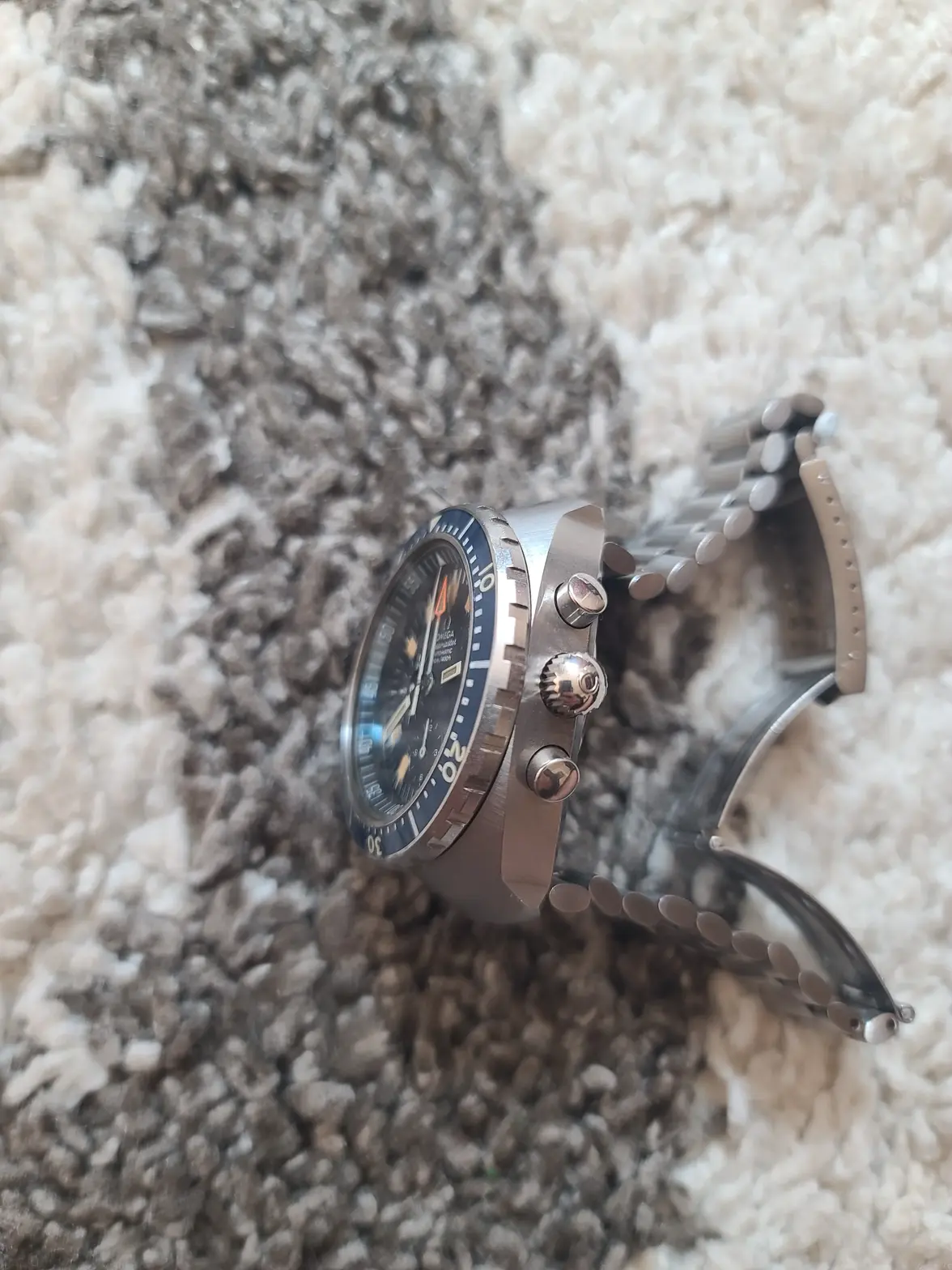
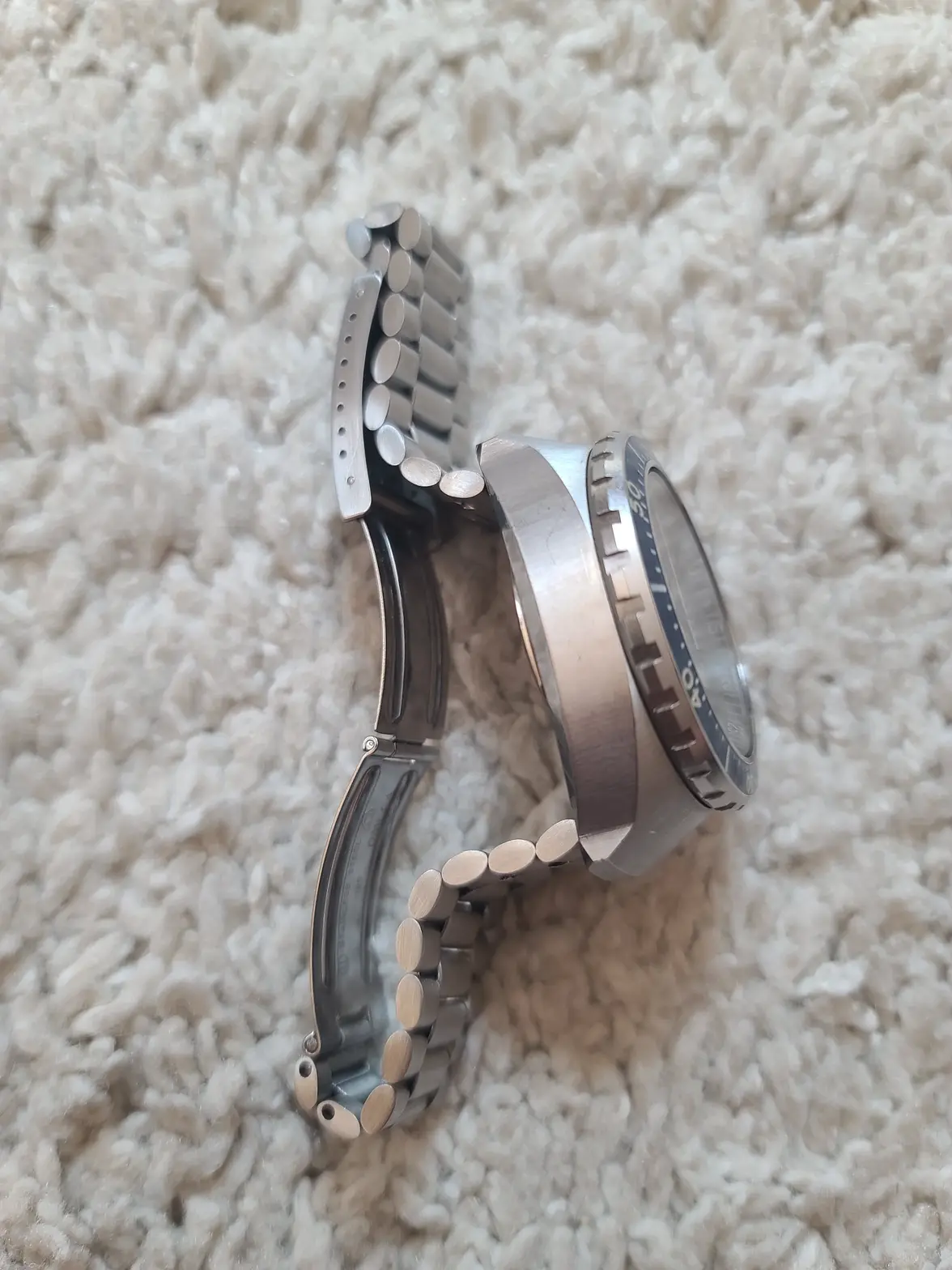
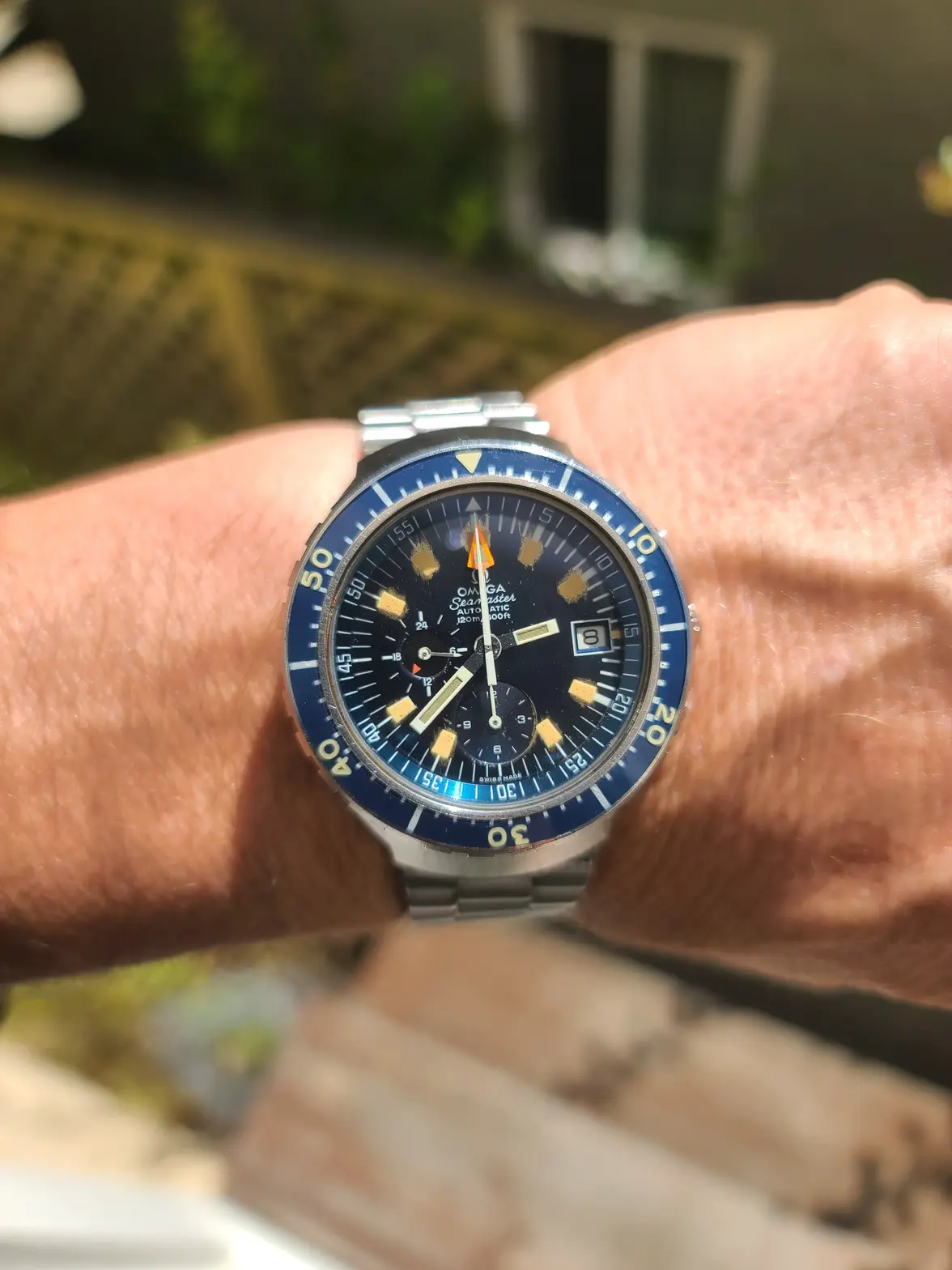
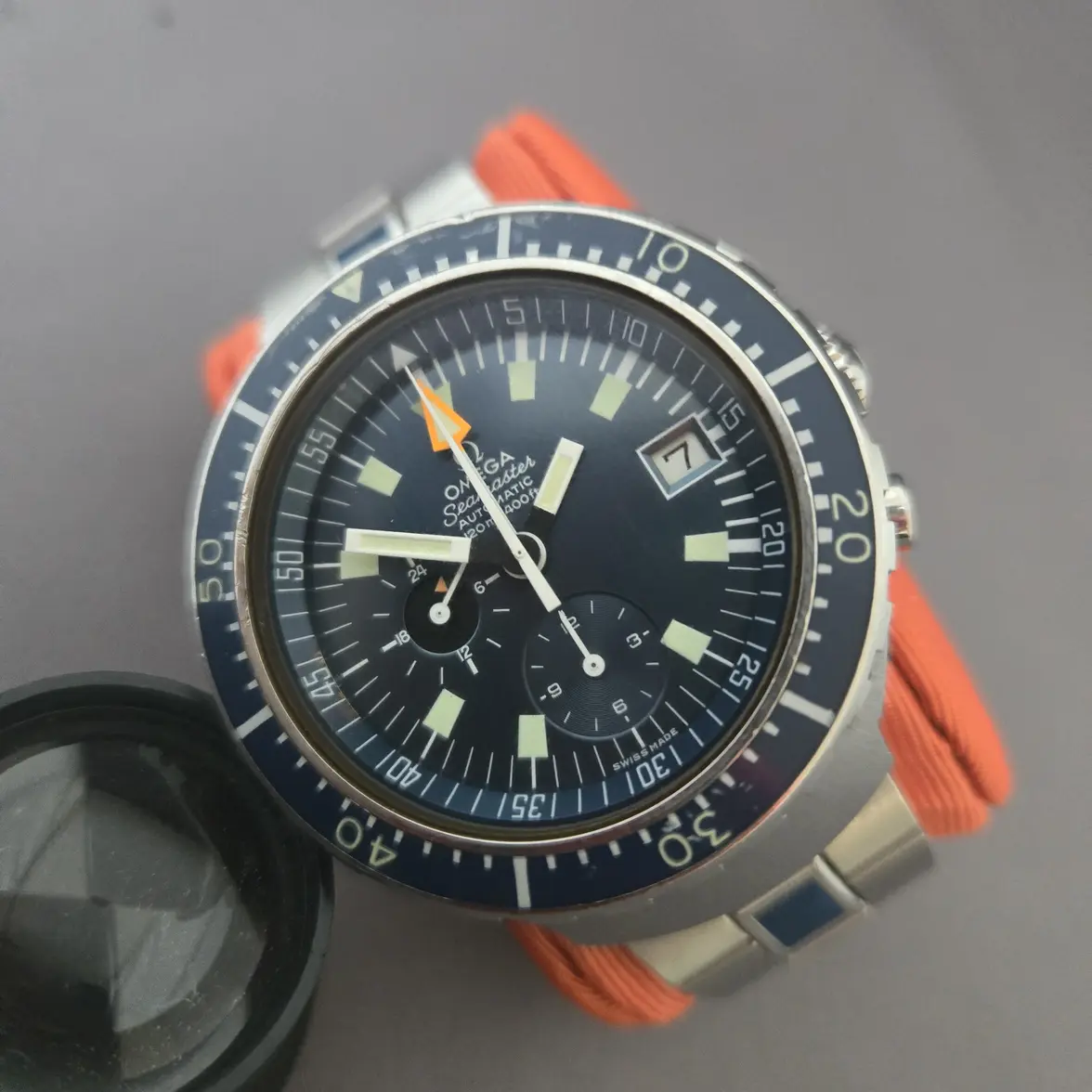
Omega seamaster 176.004 "big blue" chronograph from 1973

Posts
304
Likes
317
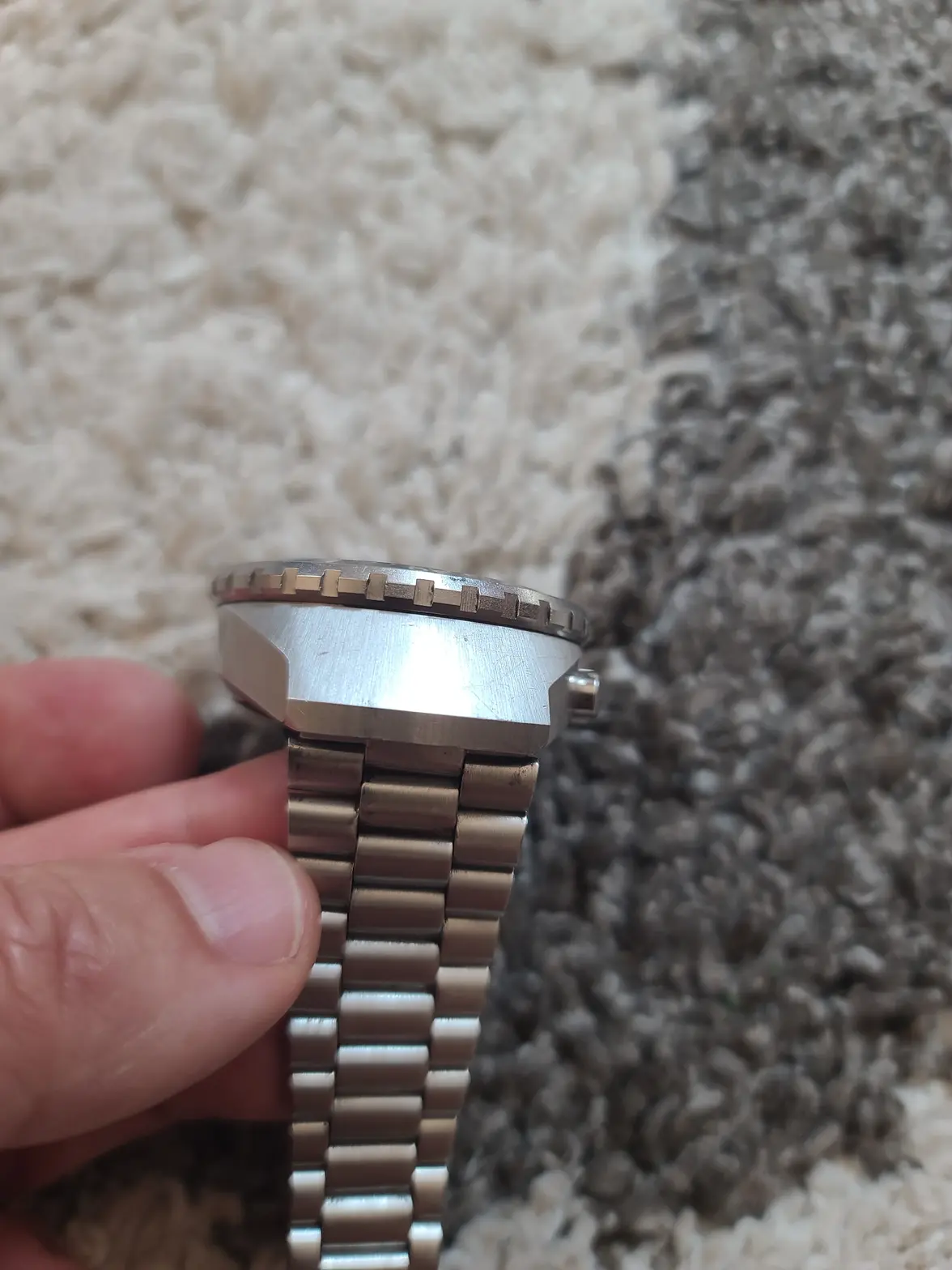
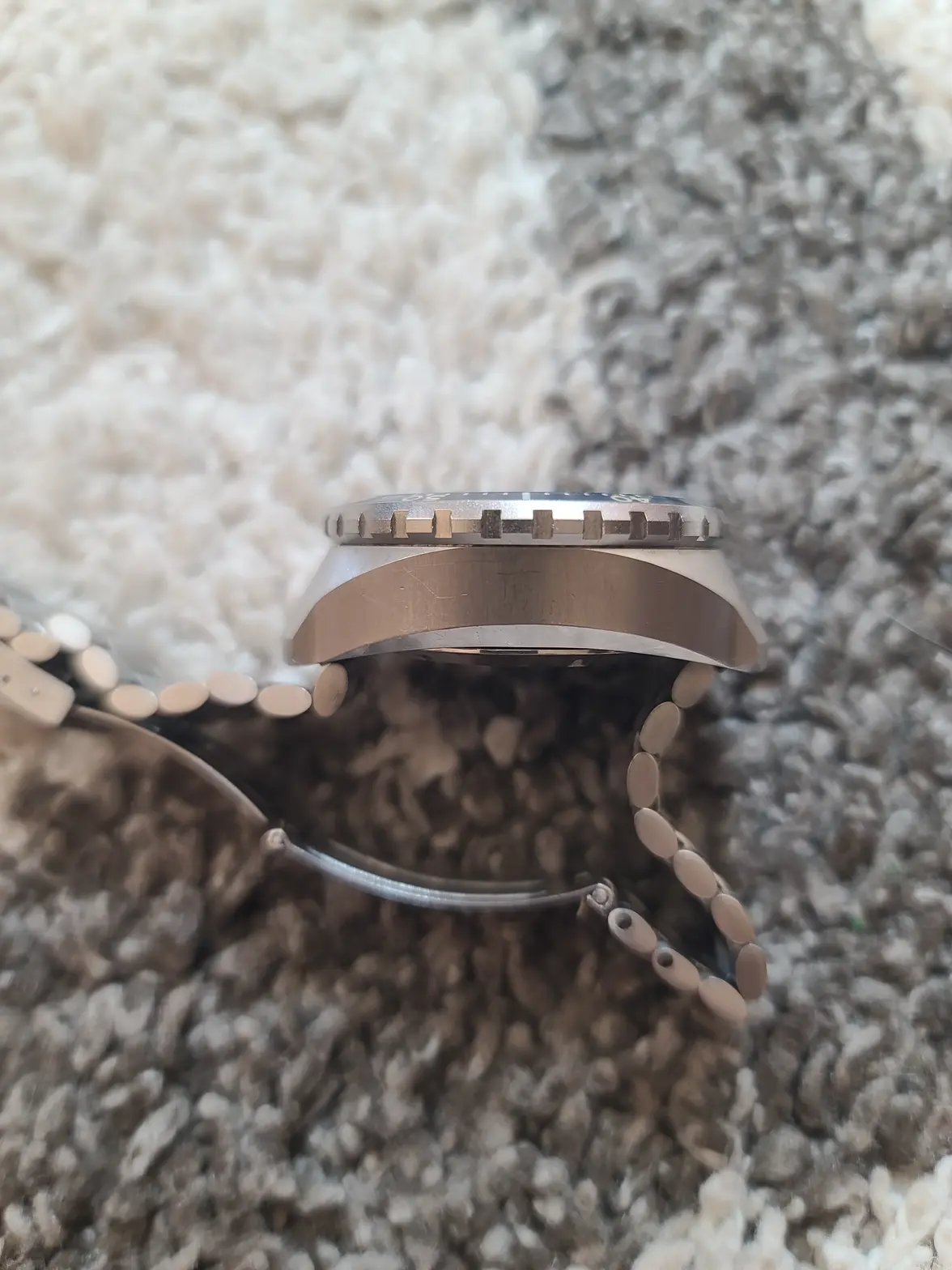
I just purchased this watch and everything is 100% original and is in excellent shape. Most of the ones you see nowdays are sporting superluminova service dial and hands and a service bezel. It still has its original 1162 bracelet and the case has never been polished and retains its original finish. I have been looking for a while for this specific watch in all original condition and the search is over (which is half the fun really).
This is not a big watch per se but the thickness certainly makes it unique.

 
Posts
9
Likes
1
That’s a very nice example, congratulations. I can completely understand why you were looking specifically for an original one - I think we’re actually on much the same page there, even though our two watches are at rather opposite ends of the condition spectrum!


Yours has clearly survived remarkably well, whereas mine has had a much harder life, but for me that surviving originality is part of the appeal in both cases. If I wanted a fully restored Big Blue there are several on the market to choose from.


You mention you’ve been looking for the right one for a while. During your search did you happen to come across any loose original bezels, or perhaps a parts watch with a decent one? I’m looking for a complete, structurally sound original - it certainly doesn’t need to be mint and some fading and wear would actually suit mine rather well.


And yes, I agree - the search is half the fun!
 
Posts
304
Likes
317
Thank you. Yes this one is in great shape. I just timed it over the last 24 hours and it hasn't gained or lost even 1 second, it is spot on in accuracy.
Unfortunately i haven't seen a bezel for sale. I felt like i had seen one but i checked and it was for a Ploprof. Those bezels are rarer than hen's teeth unfortunately, that is why i wanted the bezel on the watch I was going to buy to be perfect and not cracked or damaged. Once they are cracked they are a lot more fragile and can fall off in pieces. They did not make many of those watches (I read somewhere they were $800 and a Rolex at the same time was $150, so that was a pricey watch) so finding parts is next to impossible (except for the movement of course)
 
Posts
9
Likes
1
Thank you. Yes this one is in great shape. I just timed it over the last 24 hours and it hasn't gained or lost even 1 second, it is spot on in accuracy.
Unfortunately i haven't seen a bezel for sale. I felt like i had seen one but i checked and it was for a Ploprof. Those bezels are rarer than hen's teeth unfortunately, that is why i wanted the bezel on the watch I was going to buy to be perfect and not cracked or damaged. Once they are cracked they are a lot more fragile and can fall off in pieces. They did not make many of those watches (I read somewhere they were $800 and a Rolex at the same time was $150, so that was a pricey watch) so finding parts is next to impossible (except for the movement of course)
Thanks, that’s very useful and rather confirms what I suspected—the bezel is going to be the difficult part. Mine doesn’t need a perfect one at all; an evenly faded or worn original would actually suit the watch, but it does need to be structurally sound. If you ever happen across one, or even a rough parts watch carrying a decent bezel, I’d be extremely grateful if you’d keep me in mind.

Kind. Regards
Jamie
 
Posts
504
Likes
818
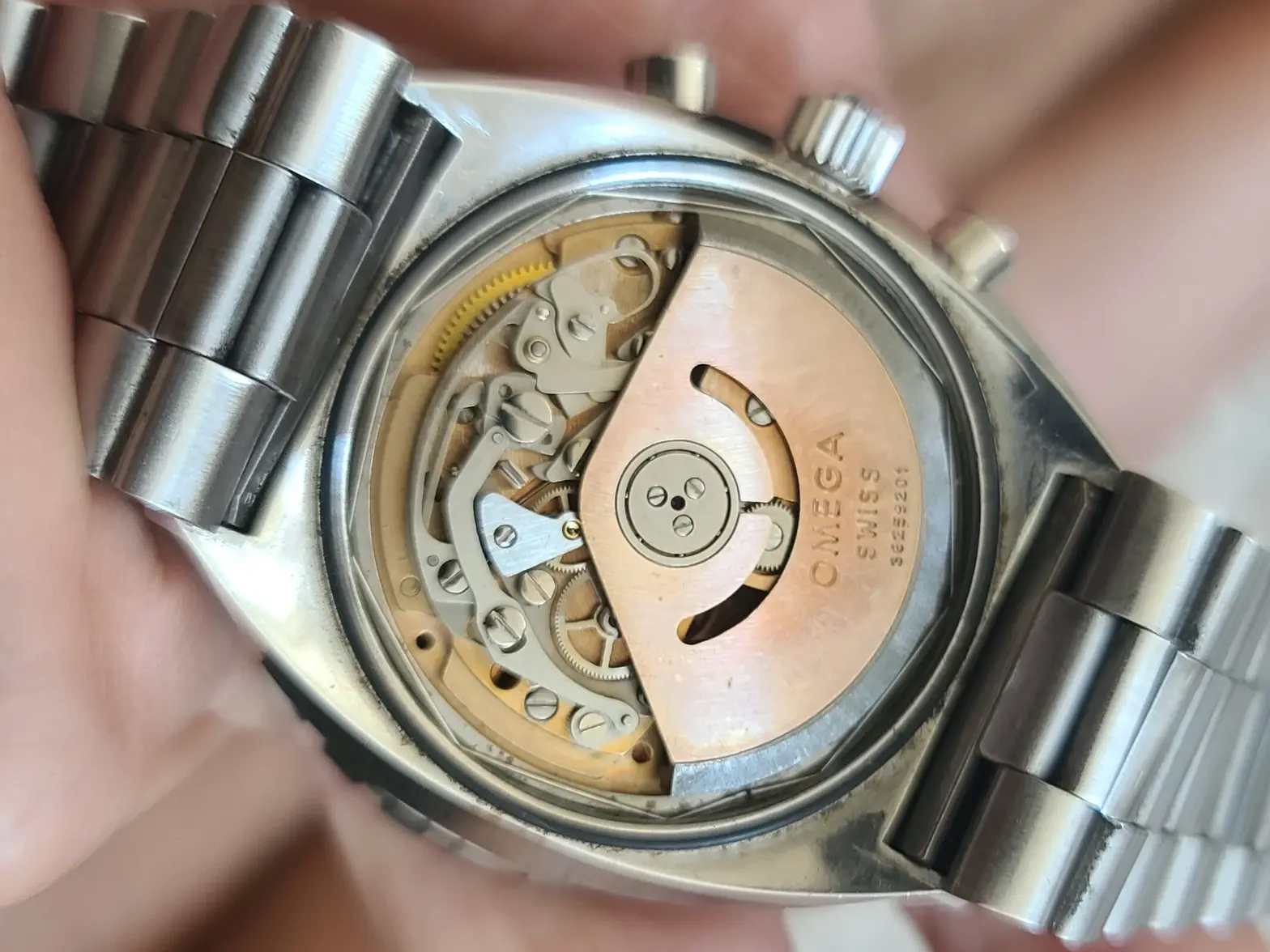
I will post a picture of the inside of the case back
Very nice watch. Please explain the differences between original dial and bezel with service replacements. TIA.
 
Posts
9
Likes
1
Very nice watch. Please explain the differences between original dial and bezel with service replacements. TIA.
Broadly speaking, service dials and bezels are later replacement components, whereas originals are those fitted when the watch was made. However, an original dial isn’t necessarily untouched: many have been relumed, and this can sometimes be detected by the silhouette or “ghost” of the original lume plots remaining visible beneath or around the replacement compound. Fonts, printing, lume application, bezel typography and construction all need to be considered together. I’m sure the knowledgeable members here can explain the finer details better than I can.
 
Posts
504
Likes
818
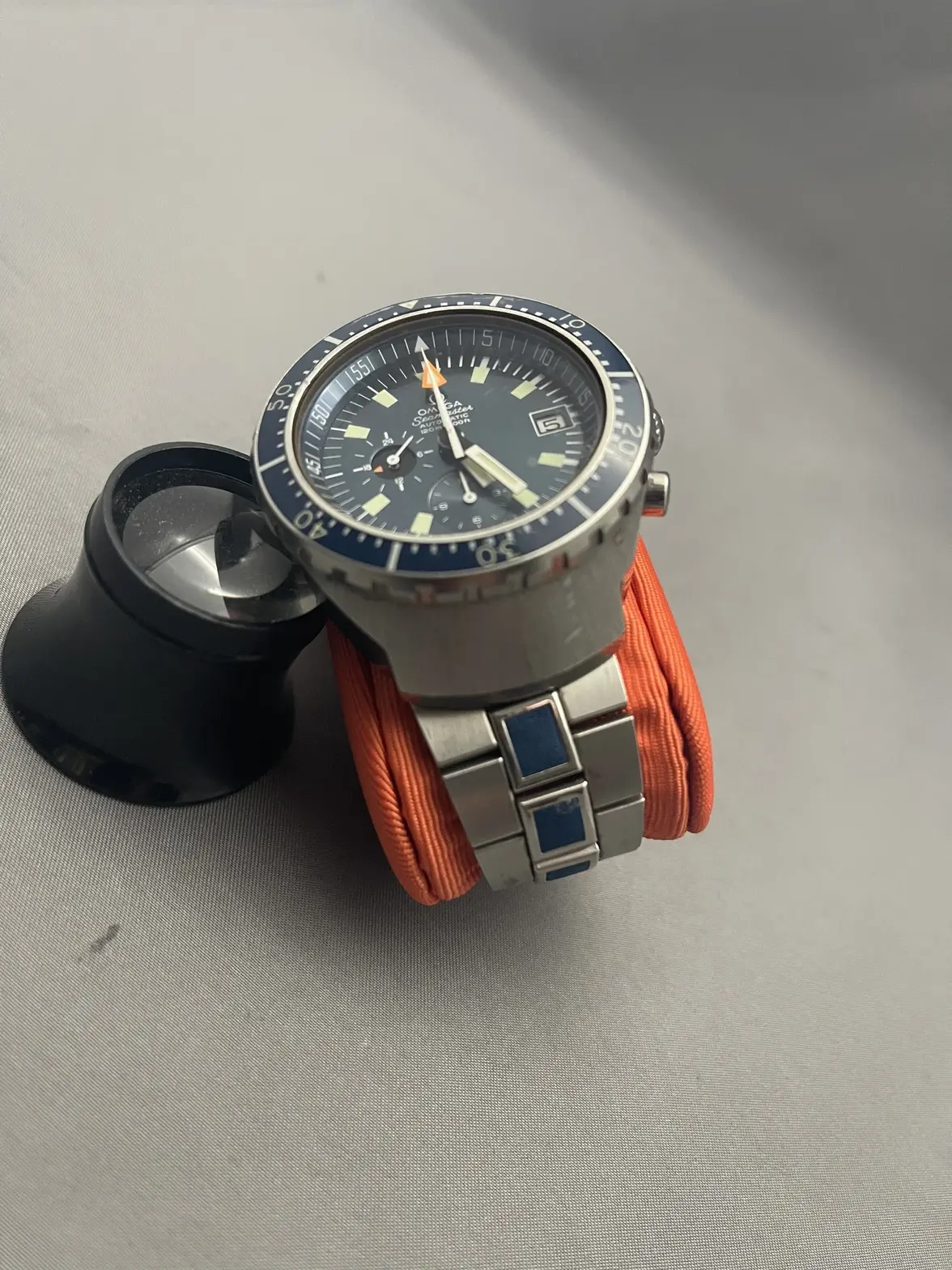
Thanks, but was referring to this specific watch. I own one of these, and suspect the dial, and possibly the bezel, are service replacements. How can I tell?
I posted about the unusual bracelet here:
 
Posts
9
Likes
1
Do you have a straight on shot of the dial, II have an article somewhere about service dials. Totally dig that strap though.
 
Posts
304
Likes
317
Bezel is easy to tell but the dial is harder because they did not put the T on it for Tritium for god knows what reason. An easy way to tell is to test the lume, does your watch glow in the dark (very faintly) without putting it in sunlight? If you put it in the sun and bring it back to a dark spot does it glow the same way? Then it is an original Tritium dial.
Now if you put your watch in the sunlight and then take it to a dark location does it glow a lot? Then it is superluminova and is a replacement dial. Tritium fades over time and I think its half life is 12 years so since those watches are around 55 years old, you can tell that the Tritium has lost most of its efficacy.

There are also older tritium replacement dials which are harder to spot.

Basically, for those watches in particular i would stay away from the immaculate green plots as I have always equated them to replacement dials. One way to be sure if to go through the steps above. Usually a tritium dial dial will turn yellow with age (just like the one i have and you will see some interaction between the Tritium and the lacquer of the dial (on the 176.004 it happens a lot on original dials) that will form some sort of halo around the plots. Some Tritium dials stay bright green though, especially in the very early 70s (1970-72 as seen on some Speedmaster moonwatches) but to have a dial that stays unblemished by time is quite difficult. Again, the sun test will solve that.
This should in no way be taken as gospel and I am sure there are things I don't know or am wrong about and I welcome any feedback.

Please post a High Resolution front picture of your watch so we can see it better and be better able to judge what you have.
 
Posts
504
Likes
818
Bezel is easy to tell but the dial is harder because they did not put the T on it for Tritium for god knows what reason. An easy way to tell is to test the lume, does your watch glow in the dark (very faintly) without putting it in sunlight? If you put it in the sun and bring it back to a dark spot does it glow the same way? Then it is an original Tritium dial.
Now if you put your watch in the sunlight and then take it to a dark location does it glow a lot? Then it is superluminova and is a replacement dial. Tritium fades over time and I think its half life is 12 years so since those watches are around 55 years old, you can tell that the Tritium has lost most of its efficacy.

There are also older tritium replacement dials which are harder to spot.

Basically, for those watches in particular i would stay away from the immaculate green plots as I have always equated them to replacement dials. One way to be sure if to go through the steps above. Usually a tritium dial dial will turn yellow with age (just like the one i have and you will see some interaction between the Tritium and the lacquer of the dial (on the 176.004 it happens a lot on original dials) that will form some sort of halo around the plots. Some Tritium dials stay bright green though, especially in the very early 70s (1970-72 as seen on some Speedmaster moonwatches) but to have a dial that stays unblemished by time is quite difficult. Again, the sun test will solve that.
This should in no way be taken as gospel and I am sure there are things I don't know or am wrong about and I welcome any feedback.

Please post a High Resolution front picture of your watch so we can see it better and be better able to judge what you have.
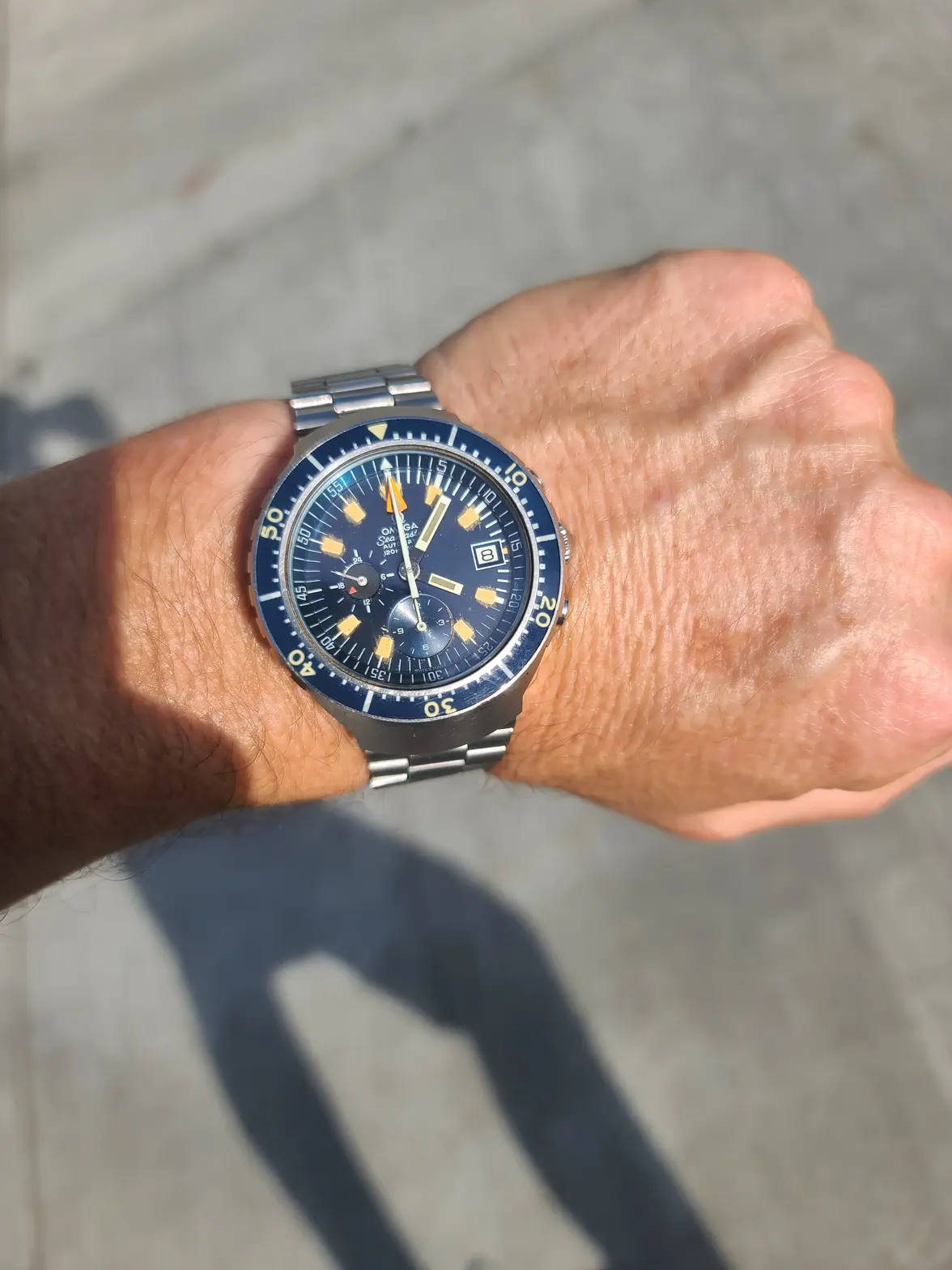
"Bezel is easy to tell". Please elaborate. Am doing the "sun test" now 😀
 
Posts
304
Likes
317
Your bezel is 100% correct. There is a good reference thread on this forum for this:

Your dial looks really really clean but on pictures alone it is hard to tell. Even superluminova from the 90s or early 2000s can get mold spots on them.
 
Posts
504
Likes
818
Your bezel is 100% correct. There is a good reference thread on this forum for this:

Your dial looks really really clean but on pictures alone it is hard to tell. Even superluminova from the 90s or early 2000s can get mold spots on them.
Thanks for the link. Mine seems to be an original type 2.
After 1 hour in the sum, the glow is unchanged. So this would suggest the dial is in fact original.
Also, FYI, the bracelet shown was not originally on the watch when I bought it. Don't recall where I got it, but it is an Omega/ Duchess I have seen on at least two other Omega f300Hz's. I just thought the inlays matched the Big Blue bezel nicely. I have the original 1162/172 bracelet as well.

Will post better pics later........
 
Posts
504
Likes
818
Thanks for the link. Mine seems to be an original type 2.
After 1 hour in the sum, the glow is unchanged. So this would suggest the dial is in fact original.
Also, FYI, the bracelet shown was not originally on the watch when I bought it. Don't recall where I got it, but it is an Omega/ Duchess I have seen on at least two other Omega f300Hz's. I just thought the inlays matched the Big Blue bezel nicely. I have the original 1162/172 bracelet as well.

Will post better pics later........

 
Posts
304
Likes
317
Yes, it looks like your dial is a tritium dial. It looks perfect, your watch is truly in outstanding condition