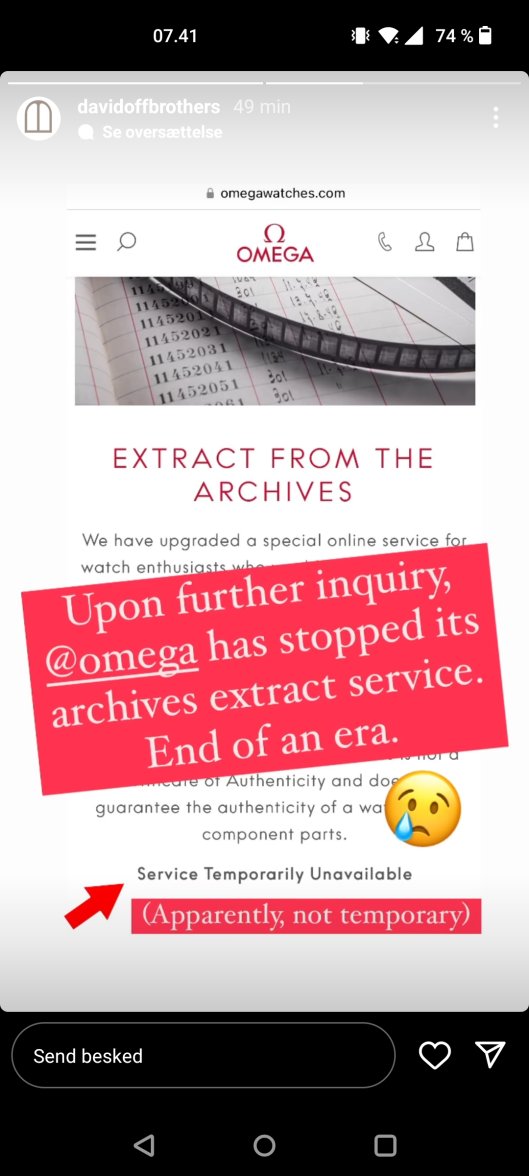
I really hope this turns out to be untrue.
I'm a bit spoiled because on the Longines side of things, an Extract from the Archives is free ... and sure, it doesn't offer that much information, but it does tell me whether movement and case originally belonged together, and when the watch was originally sold and where. This gives me a lot of context that I otherwise wouldn't have, and that is worth quite a lot to me. Knowing that, for example, my Longines was sold in 1974 in Romania, by a company that still exists and is still a Longines partner, gets my mental gears churning and lets me think about that country at that point in time, and who might have bought this watch in the first place. The story that develops in my head is half the fun in collecting vintage for me.
Does a service like this make it more likely that I will buy a "new" Longines in the future? I would say yes, because I have really been impressed by the helpful and friendly correspondence with Longines that I had.
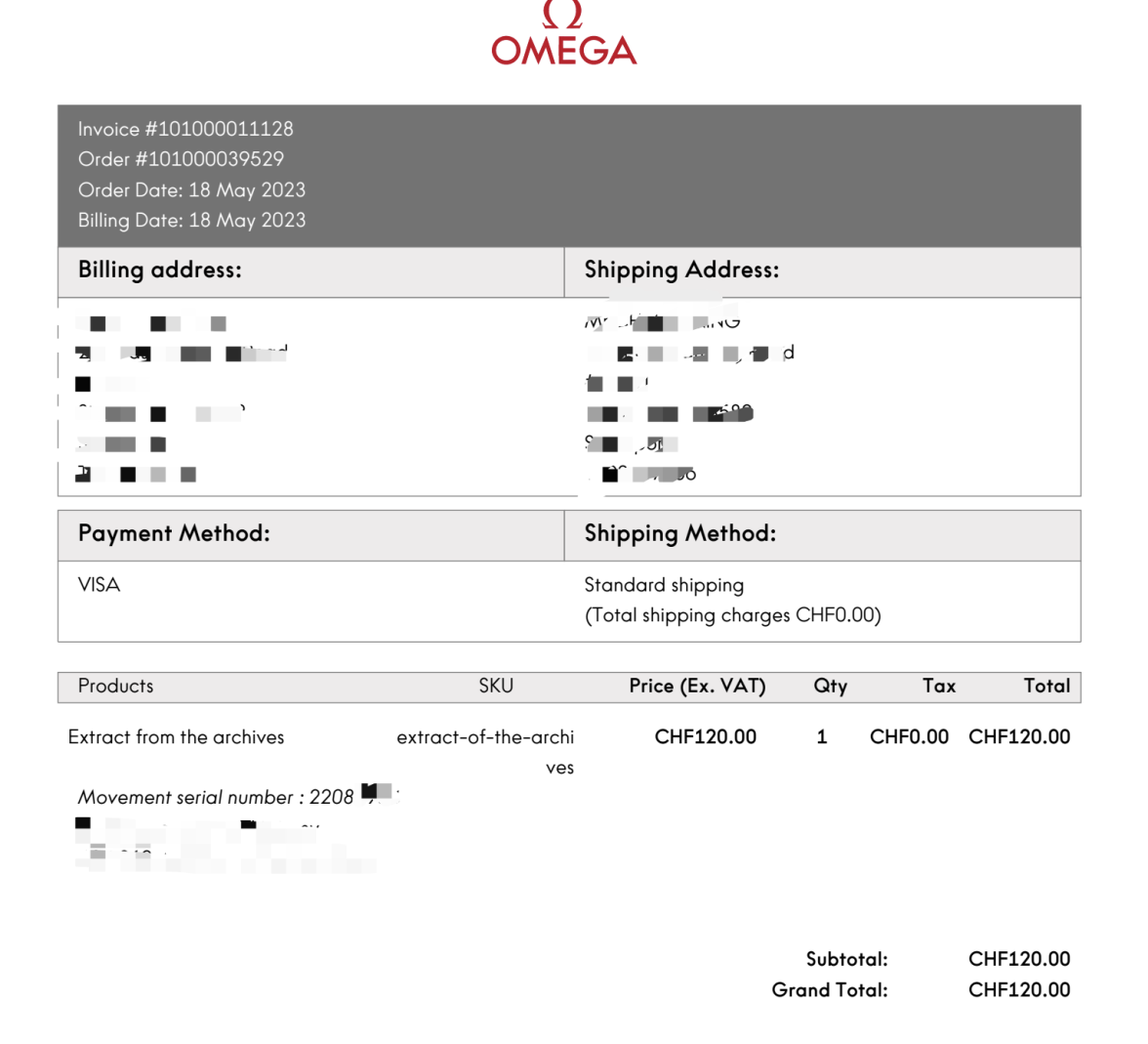
Maybe Omega want to shut down this service because quite a few watches have been sold with Extracts from the Archives that turned out to be ... well, somewhat unrelated to the watch, thereby leading people to pay a lot more for a watch that isn't 100%. And maybe they want to move more "upmarket" by only having the option remain to authenticate the watch with them, and then issuing a Certificate of Authenticity. Still, not every Omega around is worth going through the entire game and cost of having it authenticated...
In a way, they would be cutting themselves off from the "lower end" of the market. Sort of what Jaguar is planning with only selling cars north of $100k+ starting in 2025 ... I'm a bit torn about this. Omega has a long history, and in my eyes, that history should be accessible, not hidden behind an even higher paywall.
Good thing is, serial numbers will still allow us to date the watches fairly precisely. So it's not a spectacular catastrophe, only a slightly highbrow move ...