Omega bumper dial doubts

Posts
27
Likes
5
Hello to the community of Omega collectors and enthusiasts.

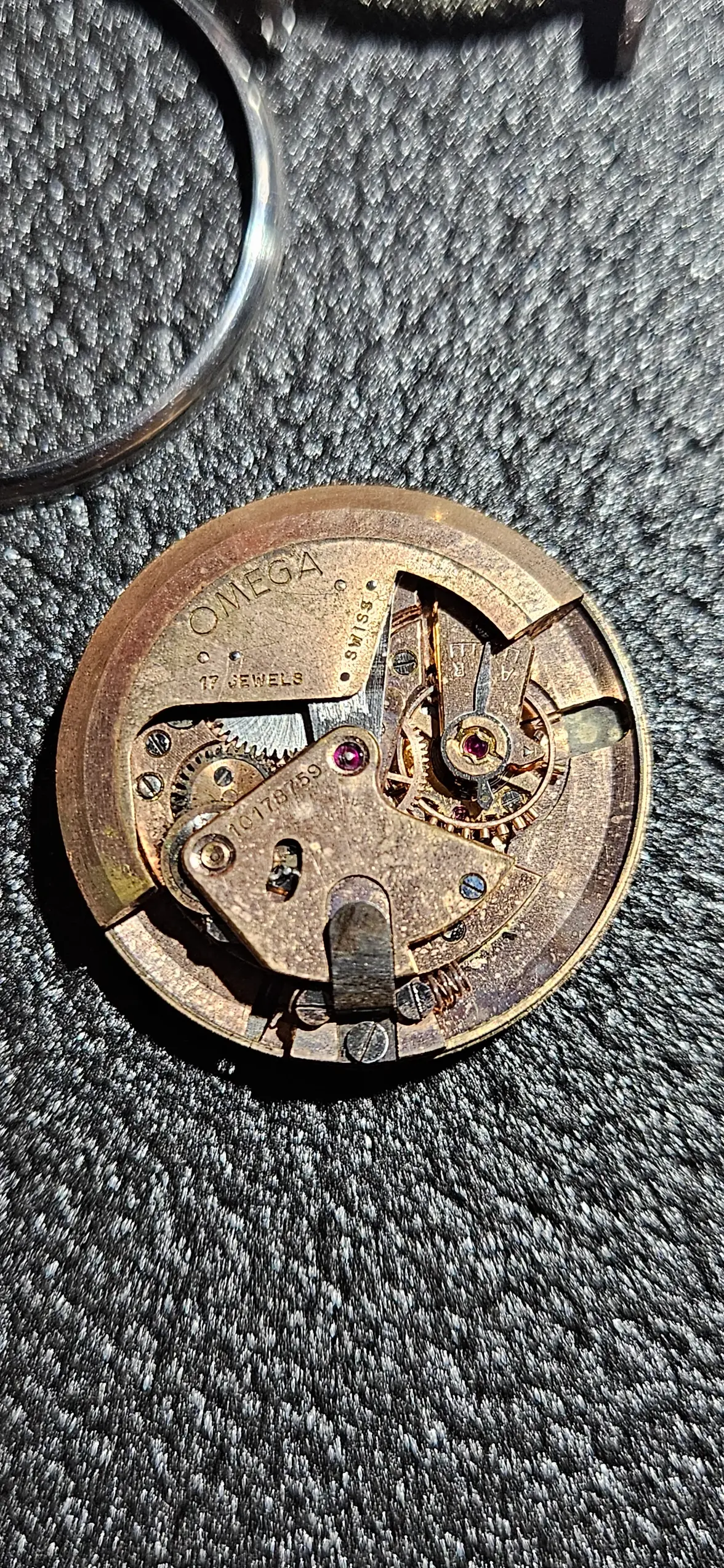
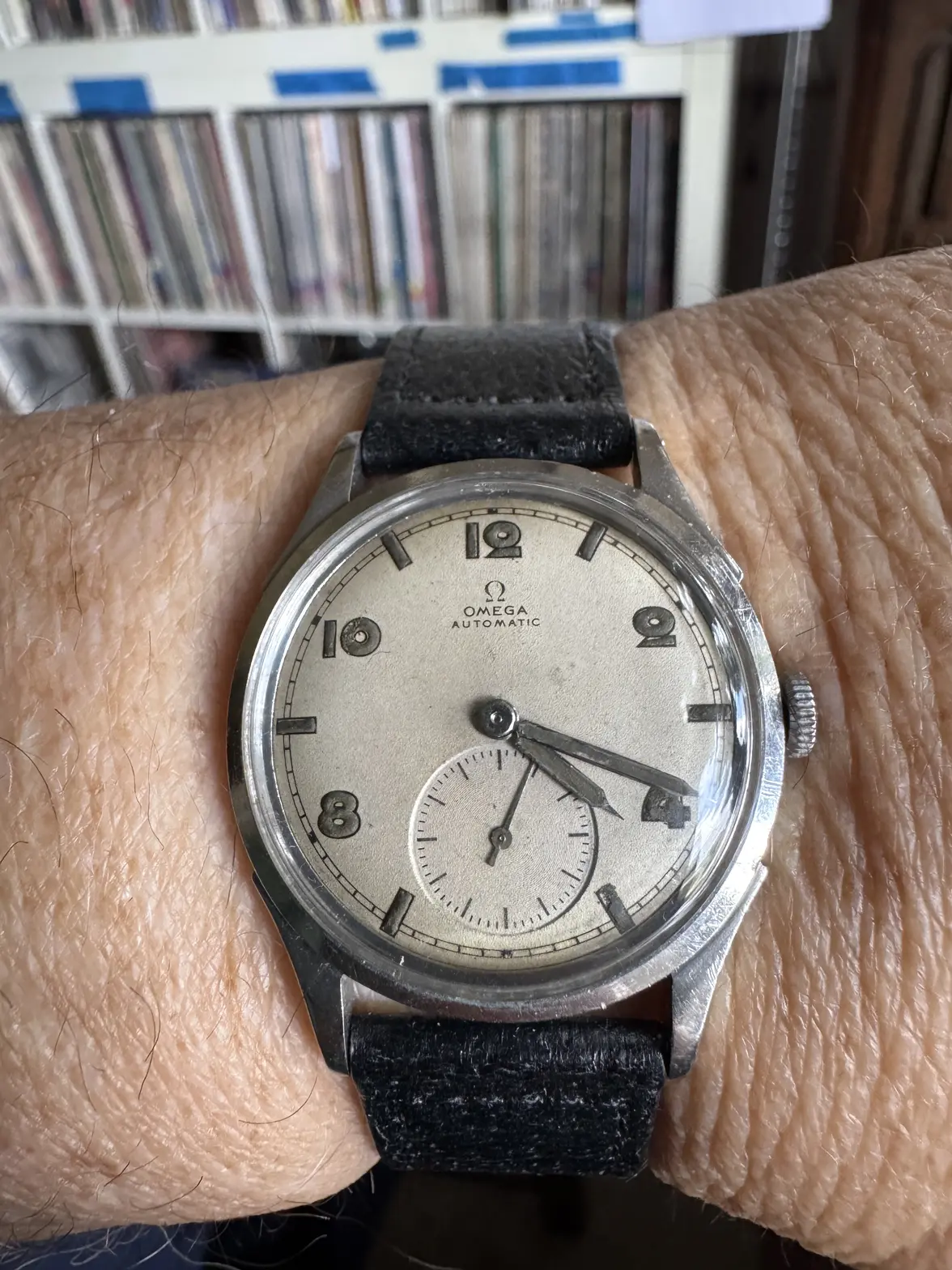
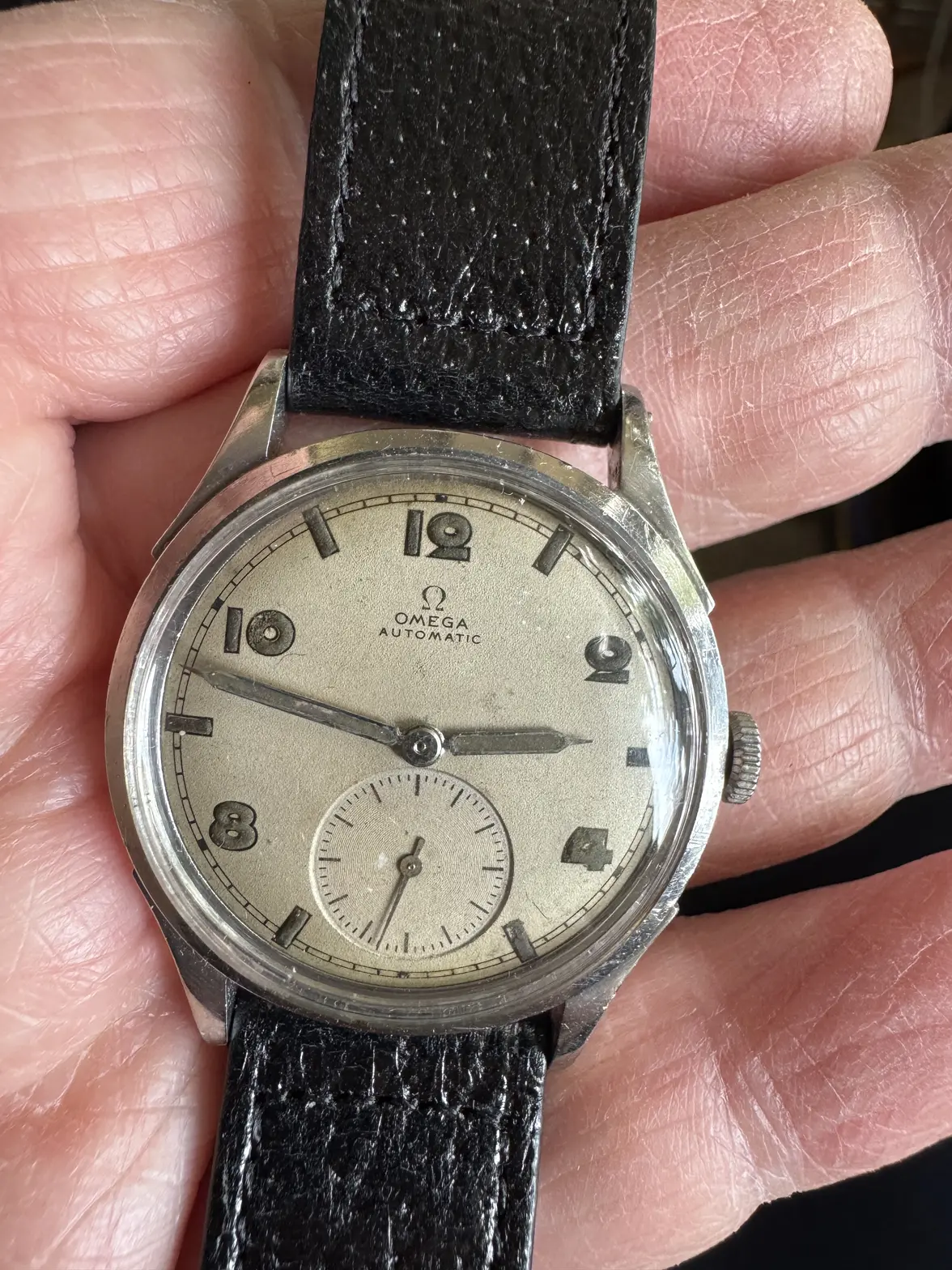
I own this old Omega bumper, which unfortunately is not in very good condition.
I recently started thinking about restoring it, and a few questions came to mind. I will list them below:

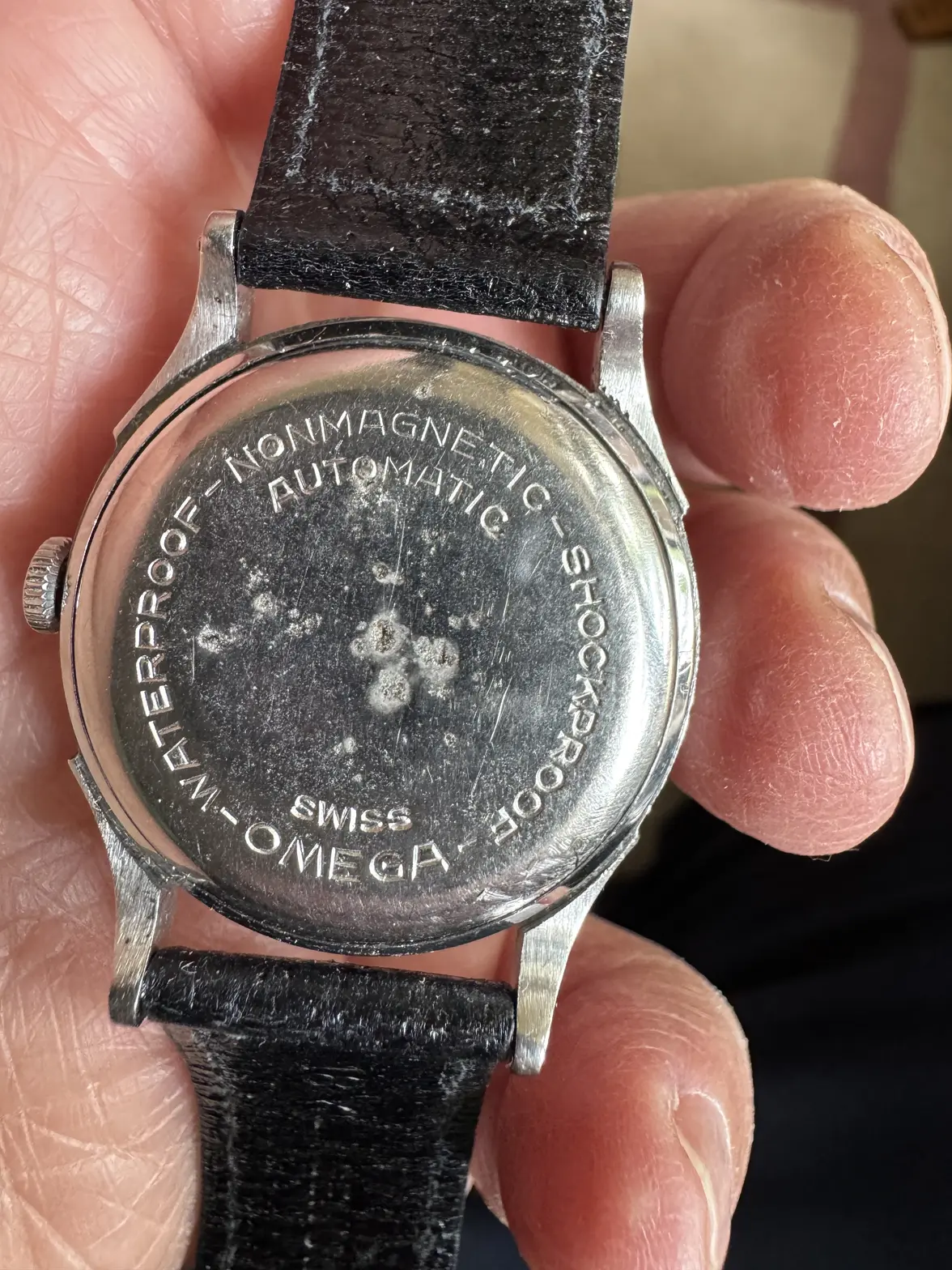
1 - Case back:
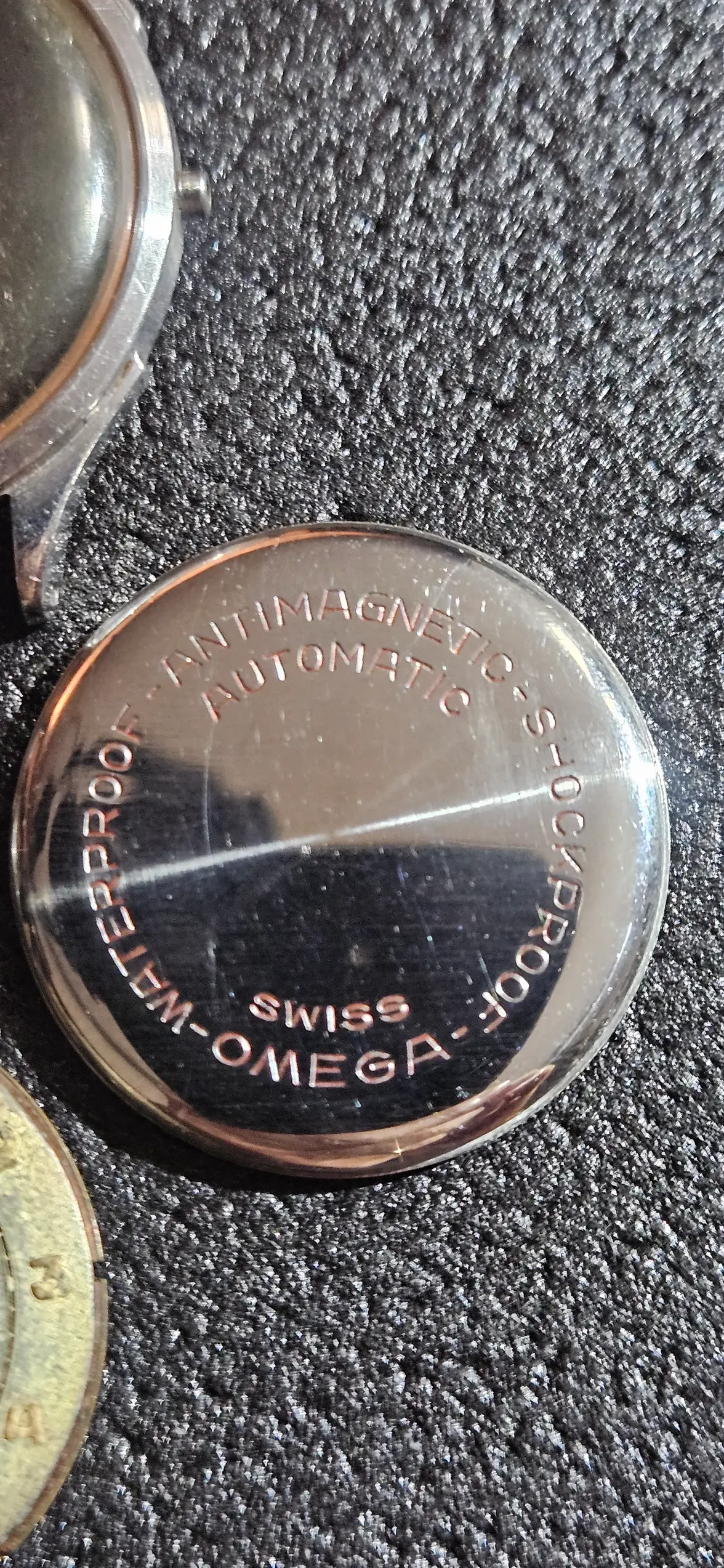
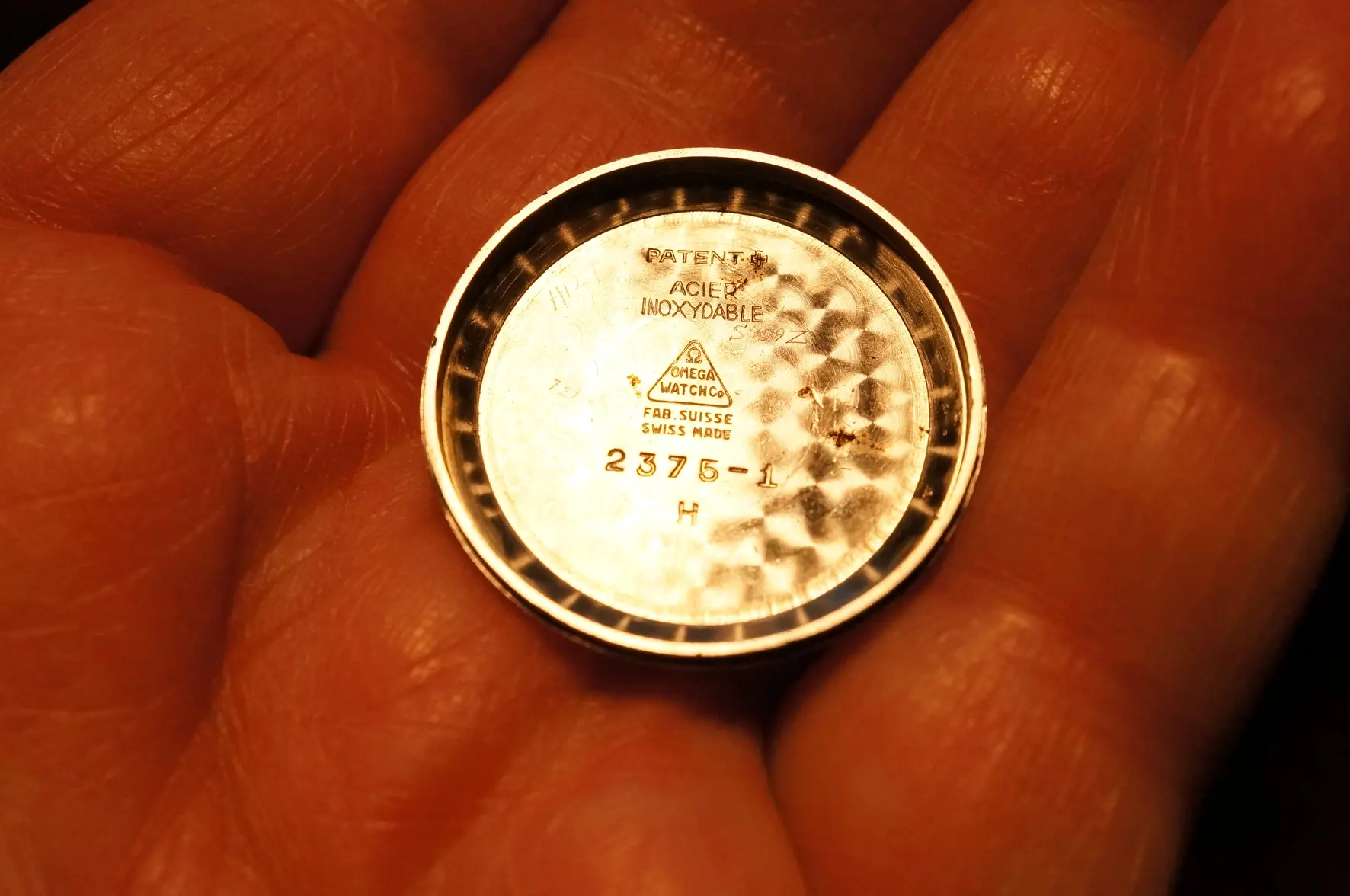
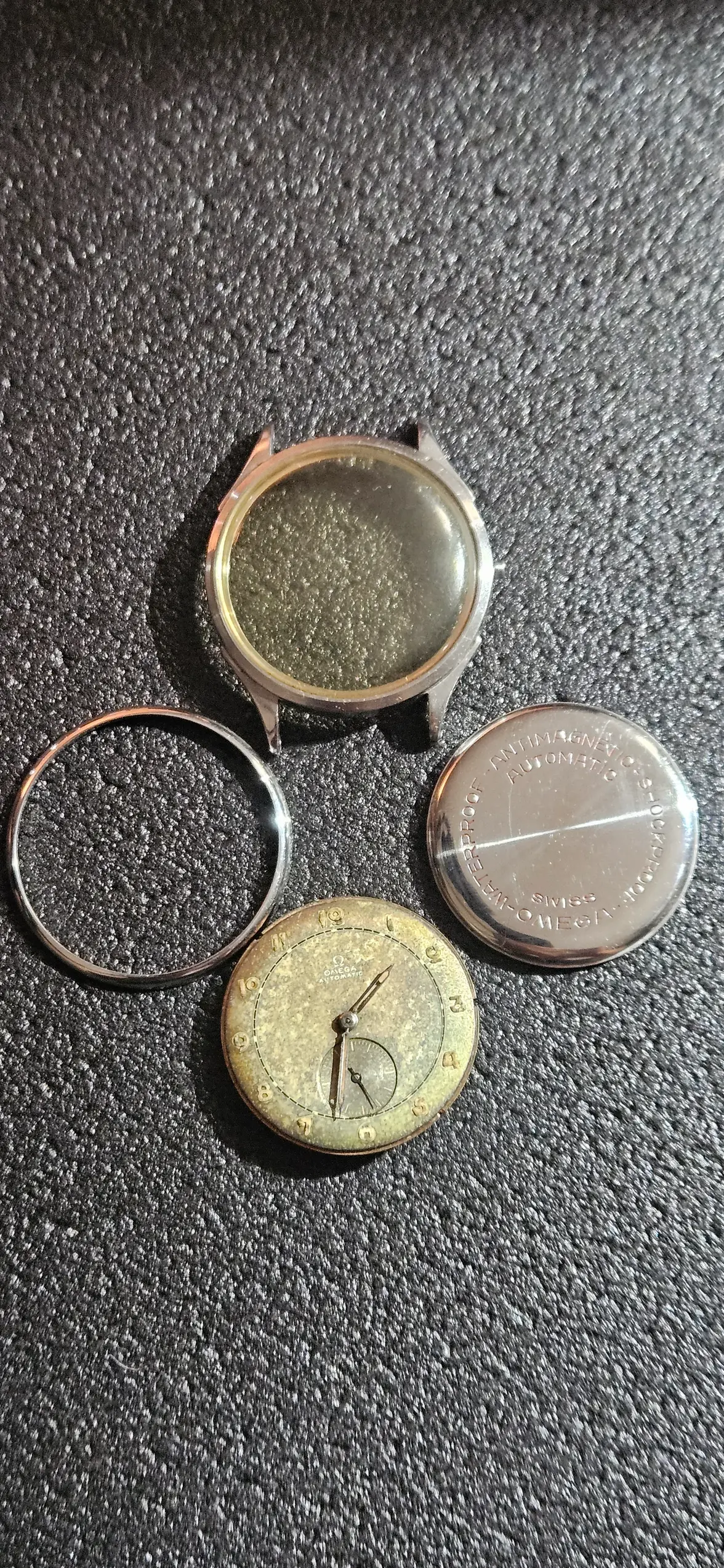
First of all, it is composed of two parts: the back cover itself and a retaining ring.
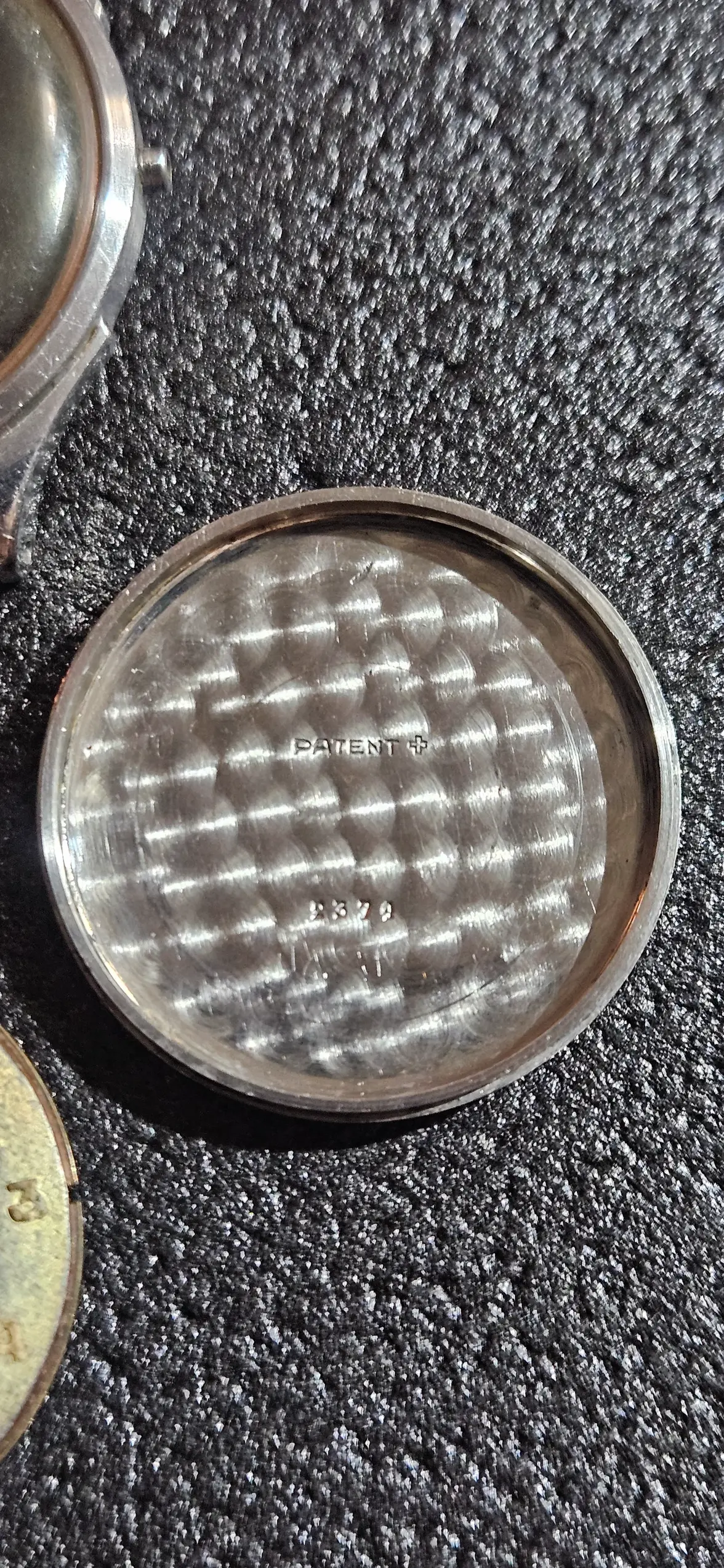
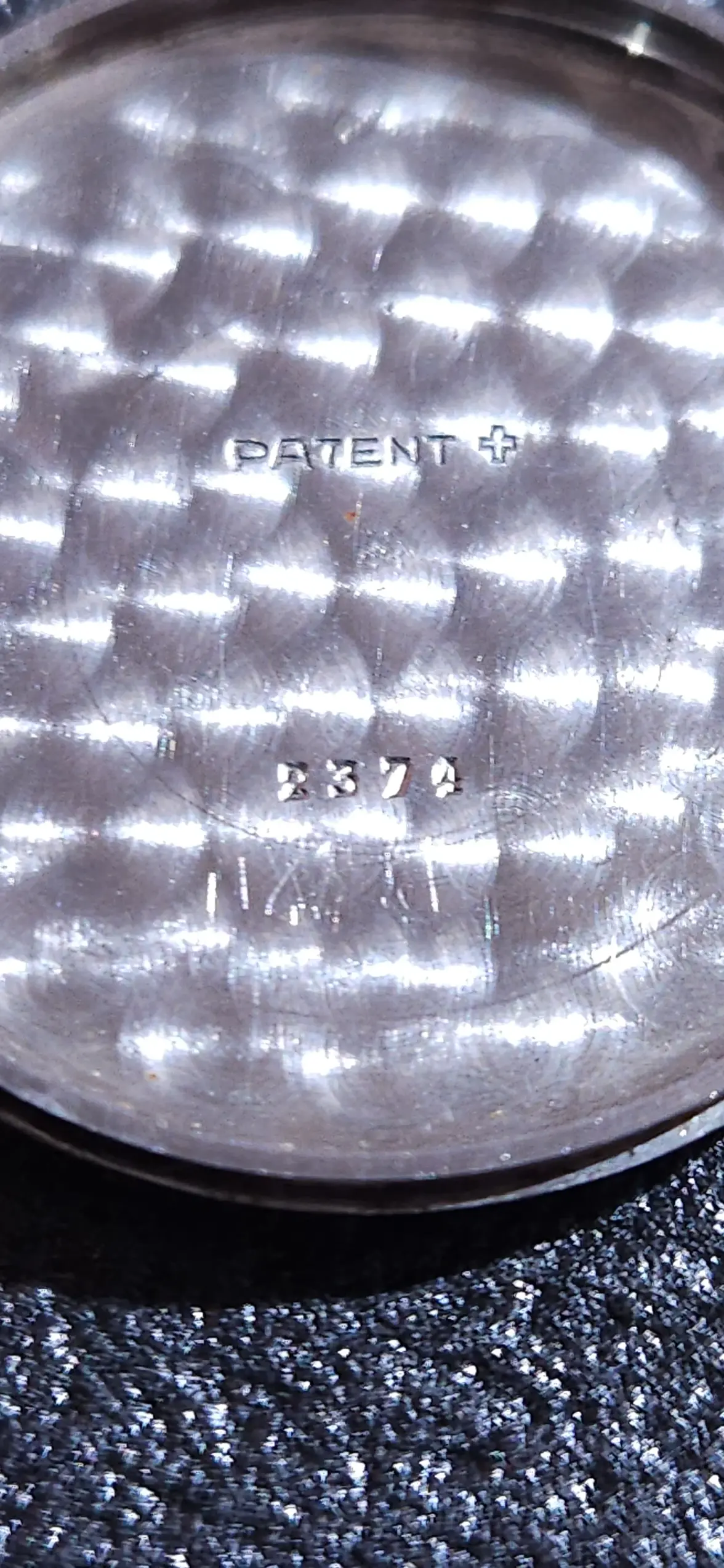
Strangely, the outer cover has all the engravings found on some examples on the internet, but internally it has only two inscriptions.

2 - Dial:
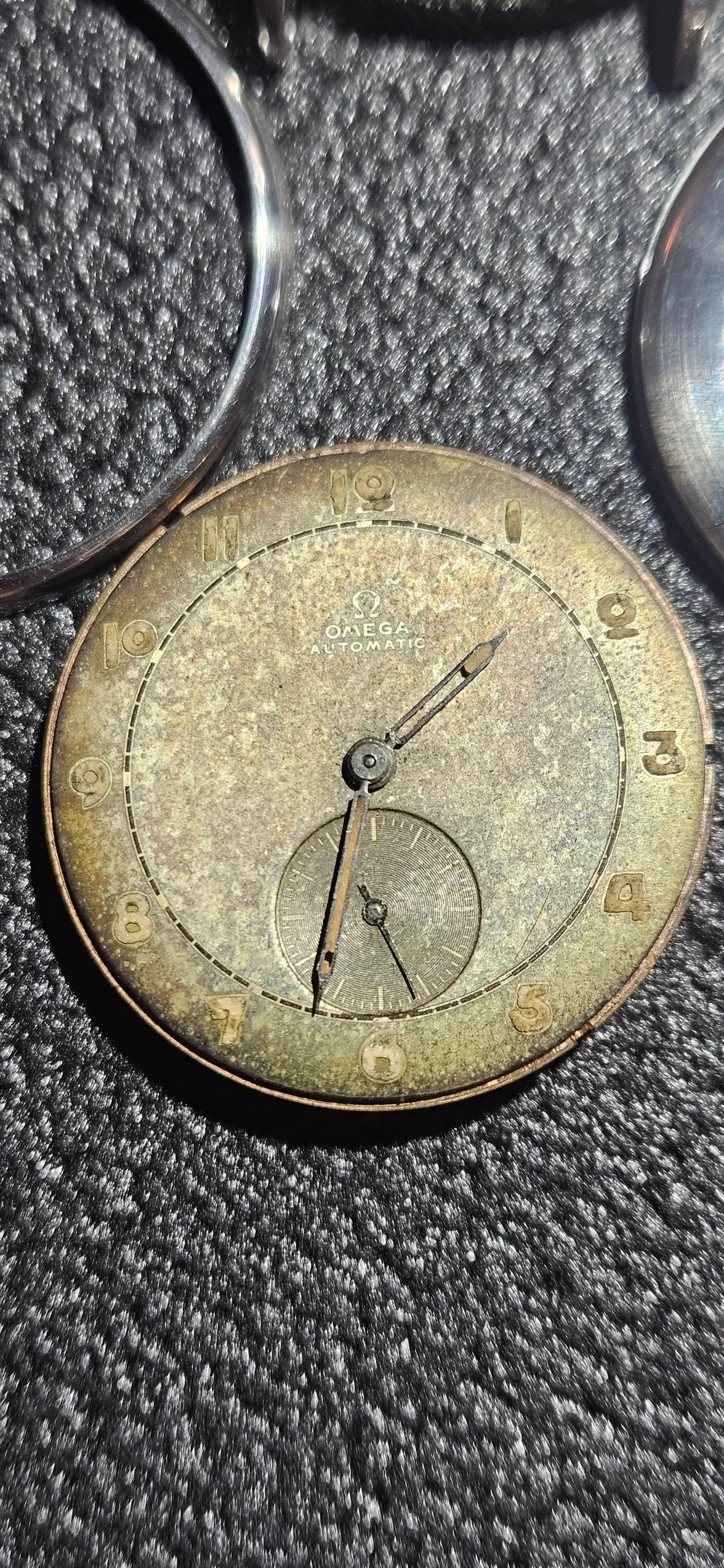
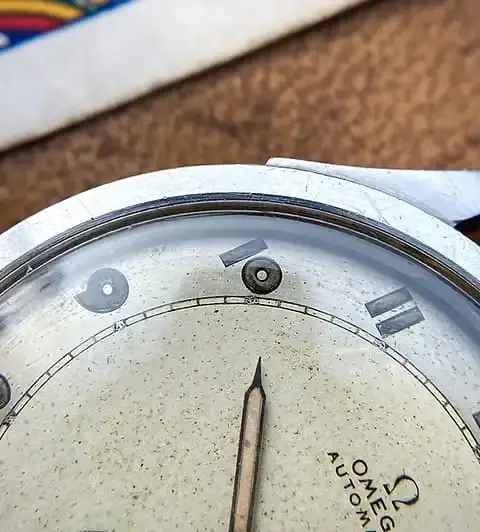
This is the point that intrigues me the most.
I know it is original and has never been refinished or altered, but I cannot find anything similar on the internet.
The luminous material appears to be the famous radioactive compound used during that period, so that part seems correct.
However, my doubts begin with the colors.
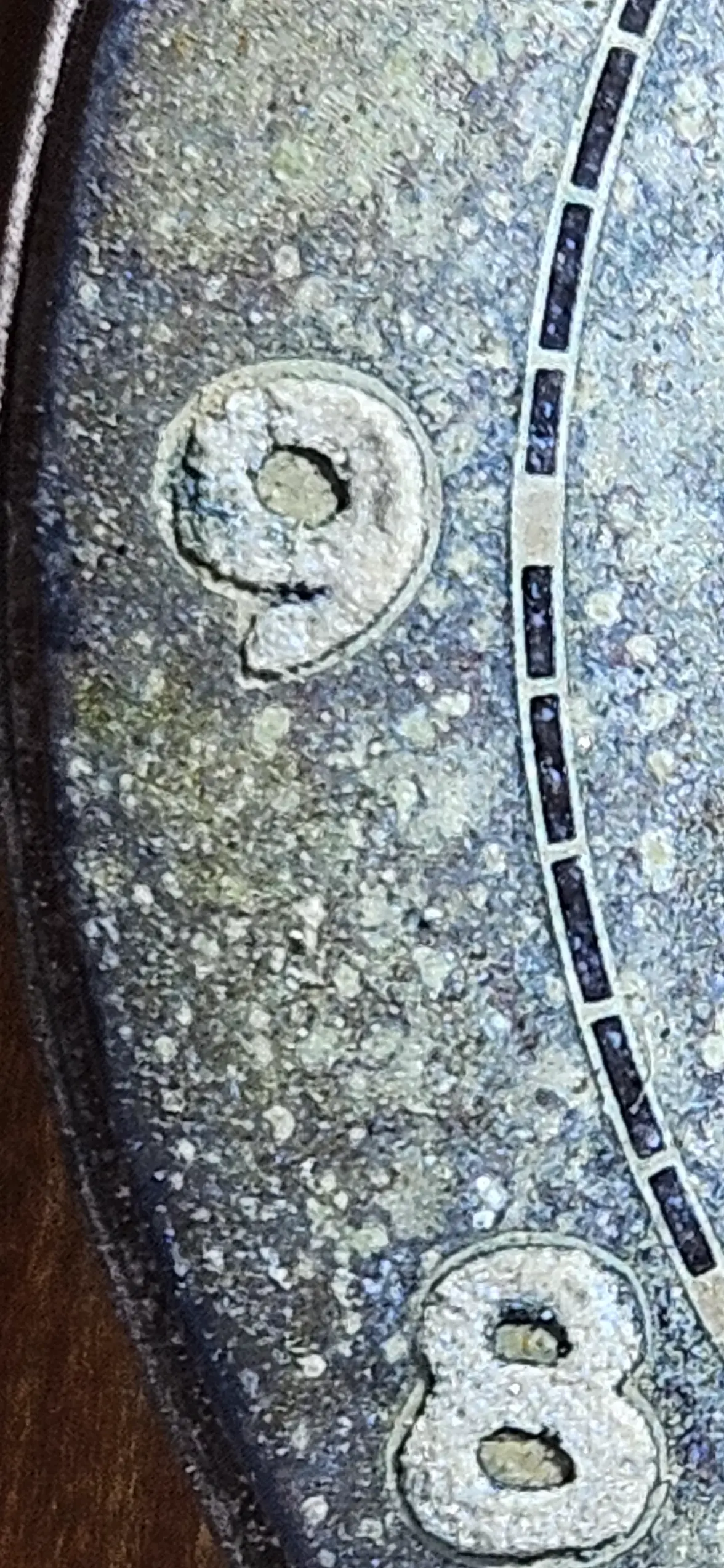
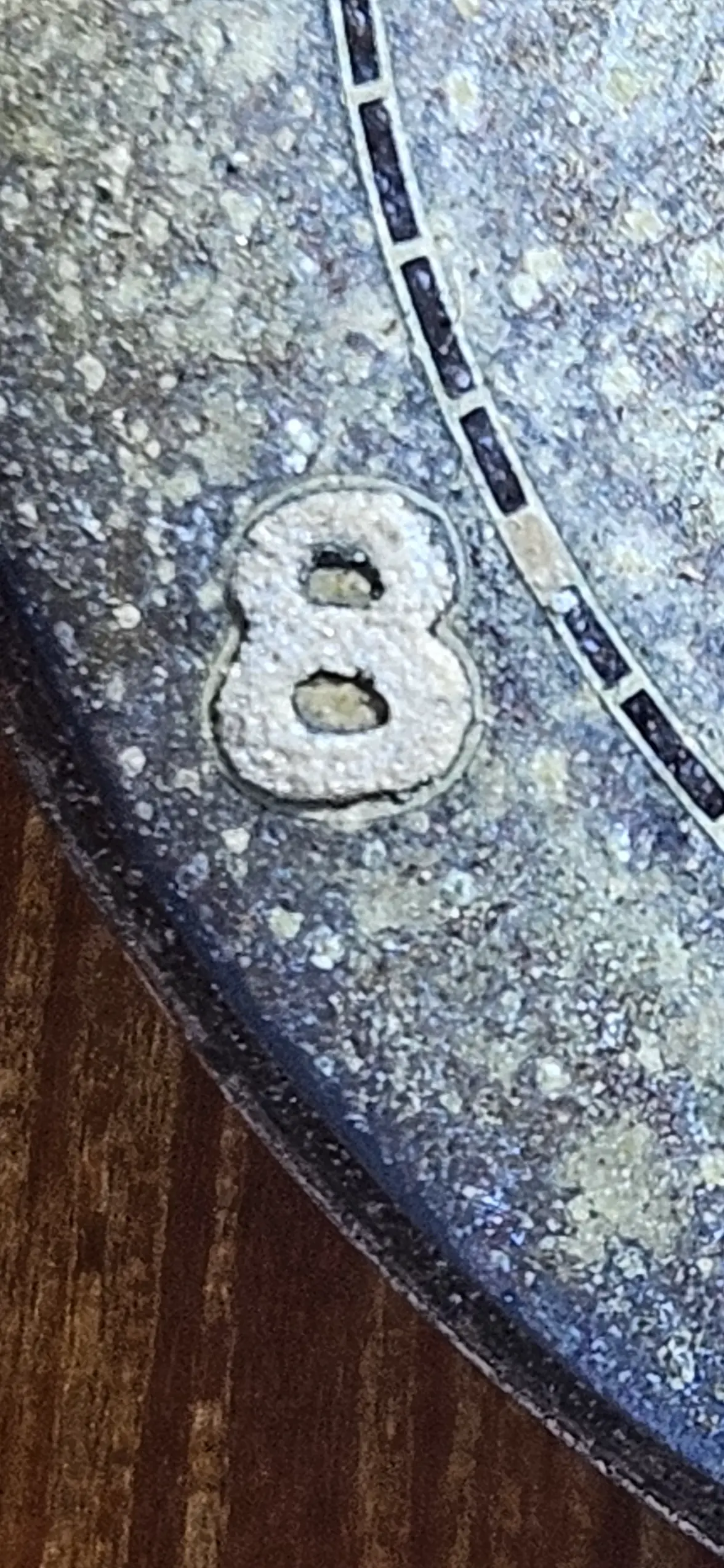
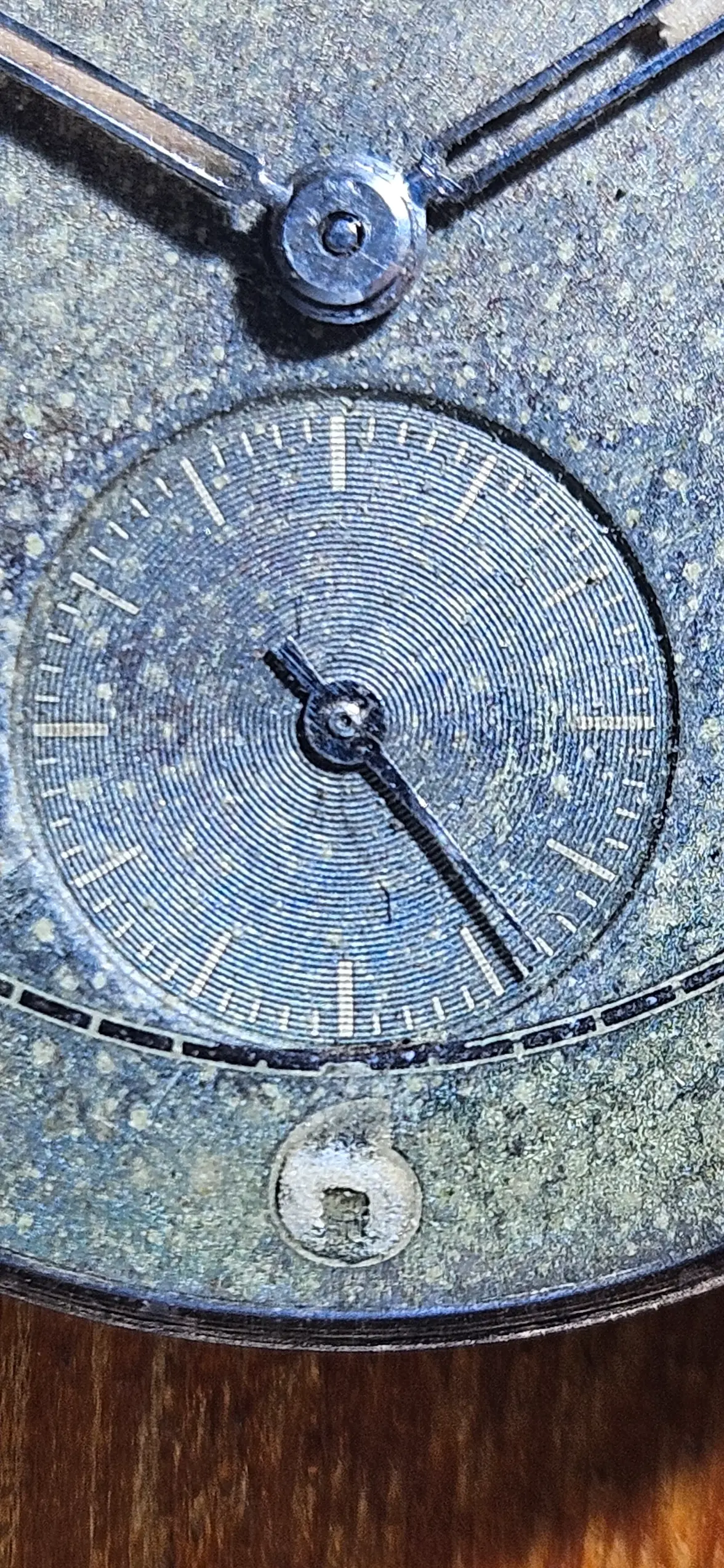
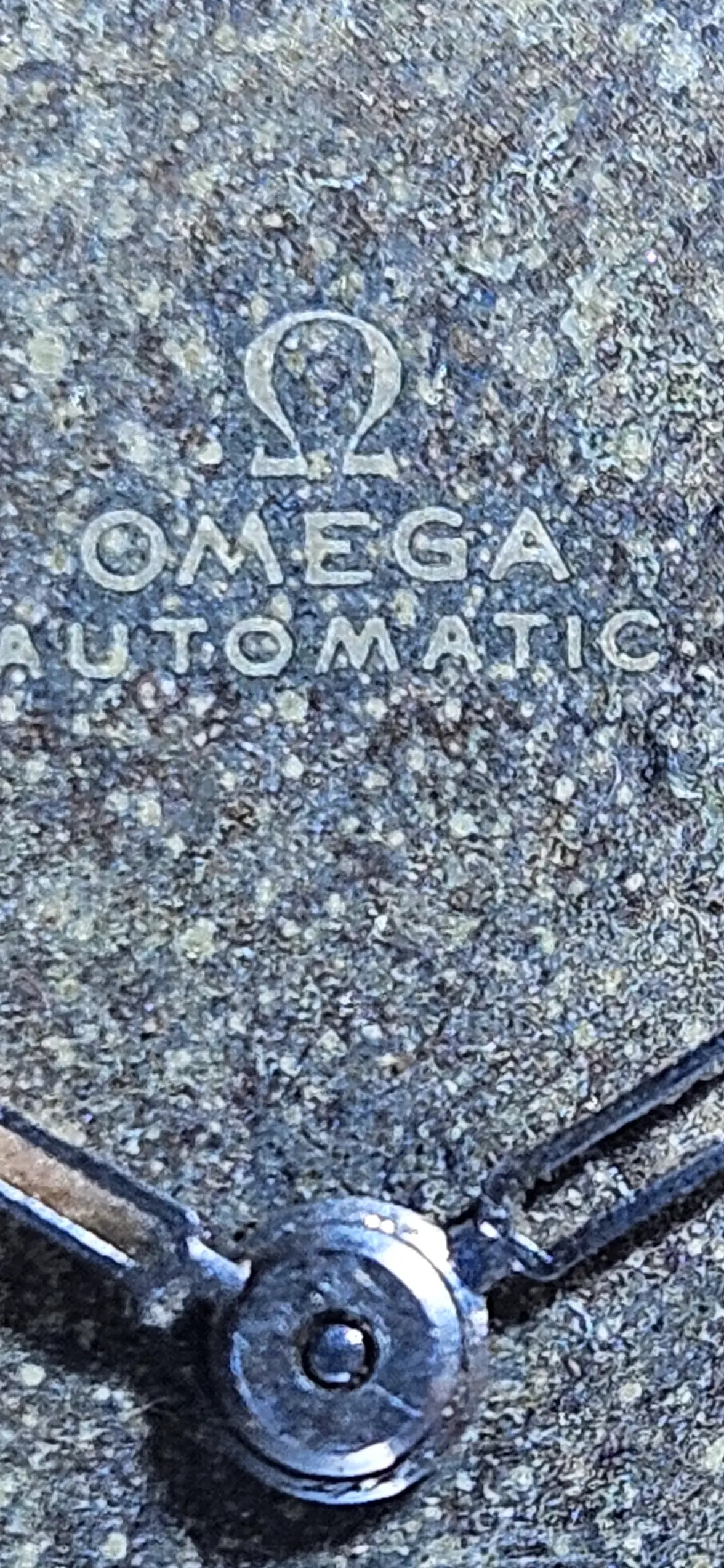
Even with all the oxidation present on the dial, it is very different from anything I have found online. The dial is completely dark with light-colored lines.
I know Omega produced some models with dials like this, but I have not found any in this particular model.
Looking at it under a microscope, it is possible to see that all the lines have a light silver tone, although this is very difficult to capture in photographs.

My questions to the community are:

Does anyone happen to know anything about this dial?
Was there ever a variation with a dark background and silver lines?

And regarding the case back, does anyone know anything about the absence of the Omega logo on the inside?

Thank you all for your attention.

Kind regards,
Fulvio
 
Posts
24,658
Likes
54,773
I think that your dial has simply aged in a very interesting way. The dial may be galvanic, it's hard to be sure.

This appears to be an early bumper cal 30.10RA from the mid-1940s in a fairly early waterproof case. I think it's an interesting and appealing watch. Thanks for posting and welcome to OF.
Edited:
 
Posts
27
Likes
5
I think that your dial has simply aged in a very interesting way. The dial may be galvanic, it's hard to be sure.

This appears to be an early bumper cal 30.10RA from the mid-1940s in a fairly early waterproof case. I think it's an interesting and appealing watch. Thanks for posting and welcome to OF.
Thank you for your opinion.
I really appreciate god discussion about watches

I own many watches from the same period and have never seen this type of oxidation before.


What intrigues me the most is that the lines are silver in color. The complete absence of paint on the lines is very unusual.


I have a good understanding of dial manufacturing processes because, besides being a watch enthusiast, I am a mechanical engineer, a precision mechanics technician, and I have training in the field of electroplating.


My humble opinion regarding this particular dial is the following:


As we all know, white dials are generally not painted—they are silver-plated. Therefore, when I look at this black dial, I wonder if it might originally have been a silver-plated dial that was intentionally oxidized to create the dark background, while the silver lines were left untouched.


Over time, this process of chemically darkening the silver may have caused the rough, raised oxidation that now resembles sandpaper. In the areas where this process did not occur—the lines—the surface remained smooth and silver.


But this is only a hypothesis.


As I said, I have never seen this black dial with white or silver lines before.
 
Posts
24,658
Likes
54,773
Are you familiar with the galvanic dial printing process?
 
Posts
27
Likes
5
I think that your dial has simply aged in a very interesting way. The dial may be galvanic, it's hard to be sure.

This appears to be an early bumper cal 30.10RA from the mid-1940s in a fairly early waterproof case. I think it's an interesting and appealing watch. Thanks for posting and welcome to OF.
By the way, I am seriously considering having this dial restored.

🤦
 
Posts
27
Likes
5
Are you familiar with the galvanic dial printing process?
I'm not exactly sure what you mean by that term.


I'm not American, and English is not my native language, so we may either be talking about the same thing or about something completely different.


I am quite familiar with electroplating processes for depositing silver, gold, and other metals. I also understand the use of masking techniques to create different types of finishes.


If that's what you mean.
 
Posts
24,658
Likes
54,773
It is a masking process, so that the printing is the underlying polished dial material, and the rest of the dial is colored black. It was the typical way that black dials were prepared at the time. Most of the time, the printing looks more golden, but sometimes it is silver.

Try using google to learn more about the process.

Here is one thread:
 
Posts
27
Likes
5
It is a masking process, so that the printing is the underlying polished dial material, and the rest of the dial is colored black. It was the typical way that black dials were prepared at the time. Most of the time, the printing looks more golden, but sometimes it is silver.

Try using google to learn more about the process.

Here is one thread:
That's exactly how I had imagined it.


So, do you believe that this dial could originally have been black with silver lines, or something similar?
 
Posts
24,658
Likes
54,773
Yes, I think it's possible. Often the dark color degrades over time.

 
Posts
27
Likes
5
Yes, I think it's possible. Often the dark color degrades over time.
That's really interesting. I'm happy to hear that.


Yesterday I discussed this with a watchmaker friend of mine. He's quite stubborn and believes that the paint on the lines simply flaked off over the years.


I disagreed immediately because for all the lines to disappear so uniformly across the entire dial seems very strange to me.


I told him that I believed the dial was originally dark with silver lines. However, because I couldn't find any images on the internet, I wasn't able to prove my point.


We sent the photos to an Omega representative, who forwarded the question to the factory, but we still haven't received an answer.


Now I'd like your opinion:


Should I have the dial refinished, or should I leave it as it is?
 
Posts
27
Likes
5
Yes, I think it's possible. Often the dark color degrades over time.


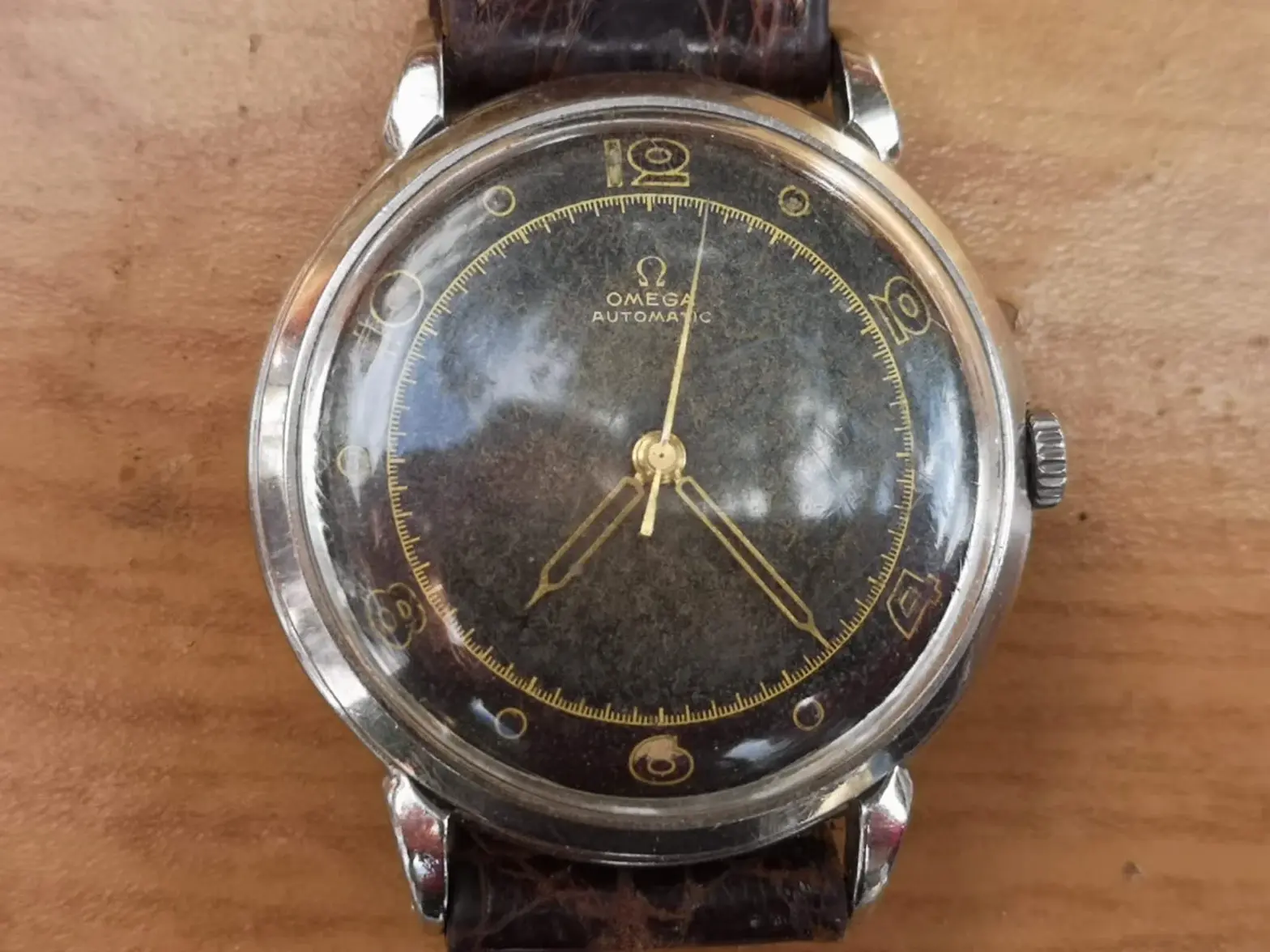
I had found a black dial version, but in a different caliber.

 
Posts
24,658
Likes
54,773
I would leave the dial as it is. I think it is original and honest and has interesting character.
 
Posts
27
Likes
5
I would leave the dial as it is. I think it is original and honest and has interesting character.
I really appreciate our chat

Thanks for your opinion.
I will leave as it is

Thank you very much
 
Posts
27
Likes
5
I would leave the dial as it is. I think it is original and honest and has interesting character.
Another question for my friend.


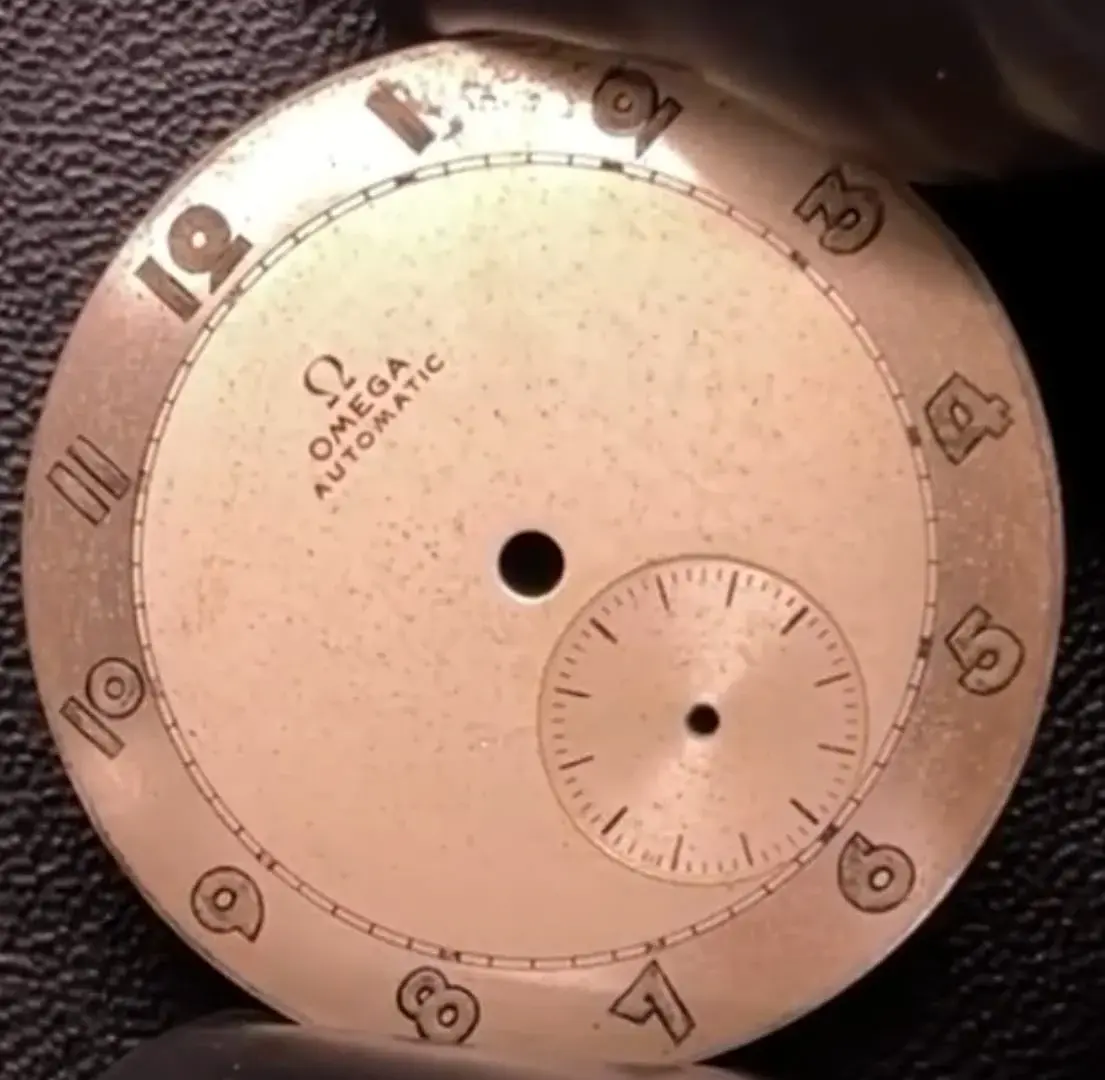
Looking at the white dials I found on the internet, I noticed that they always seem to have two different tones.


However, after examining some photos more closely, it seems to me that these may actually be two different finishes rather than two different colors.


The center of the dial appears to have the traditional smooth finish, while the outer area around the numerals seems to have a circular brushed finish.


Do you know anything about this?

 
Posts
24,658
Likes
54,773
I think that the outer section on those dials originally had a shiny metallic finish. But yes, they also may have had circular brushing. The center was probably matte.
 
Posts
8,661
Likes
61,595
My silver dialed ref 2375-1 cal 28.10

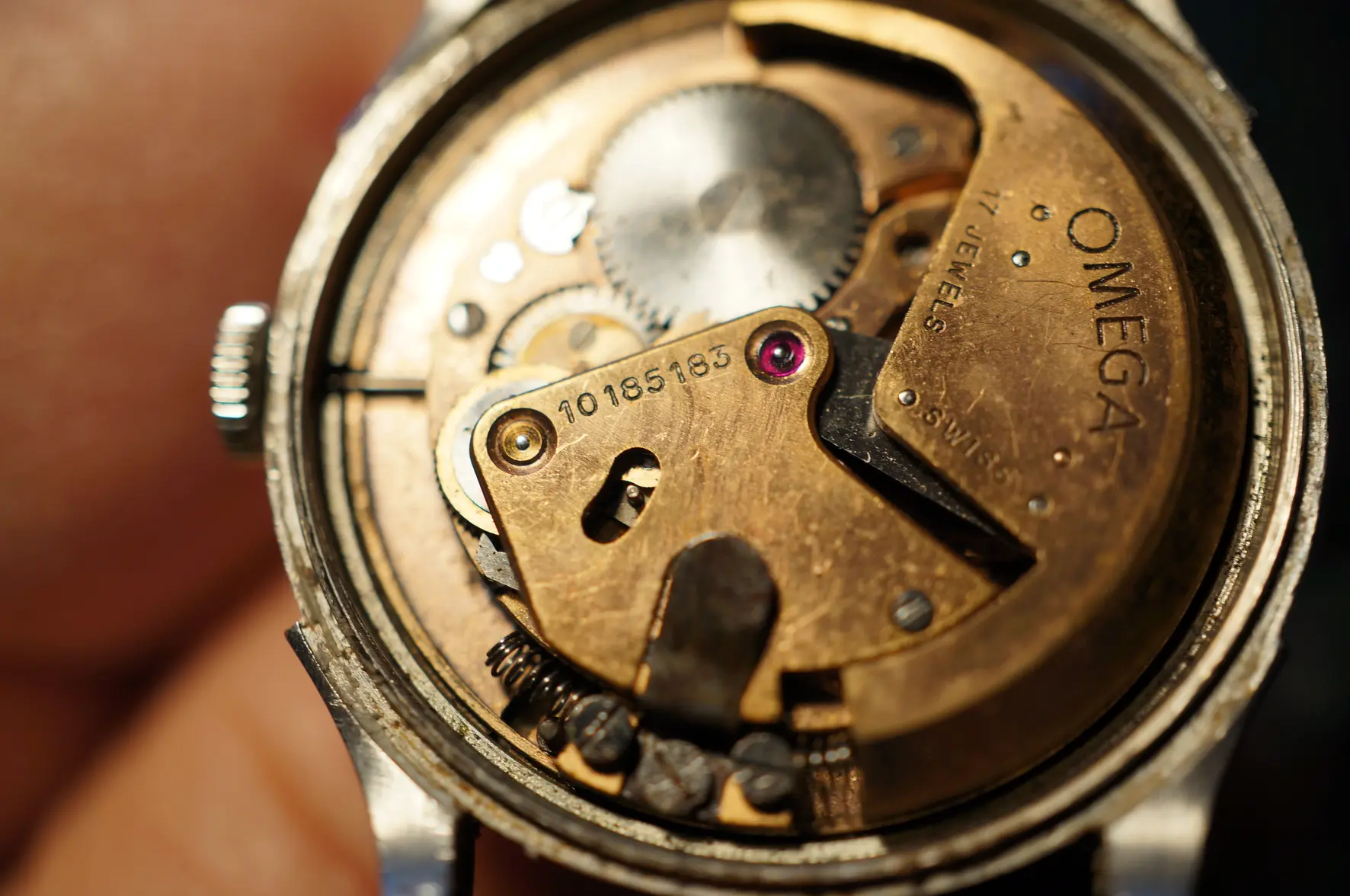
The OP's serial and ref puts if squarely in the first run of these 1st gen automatics.

From the appearance of the dial and movement, it appears long term moisture has caused severe degradation.

A survivor. I would not remake the dial.

 
Posts
27
Likes
5
My silver dialed ref 2375-1 cal 28.10

The OP's serial and ref puts if squarely in the first run of these 1st gen automatics.

From the appearance of the dial and movement, it appears long term moisture has caused severe degradation.

A survivor. I would not remake the dial.

Beautiful watch.

Why do you think my case back doesn't have the characteristic Omega triangle with the inscriptions inside?


Do you have any suggestions?
 
Posts
27
Likes
5
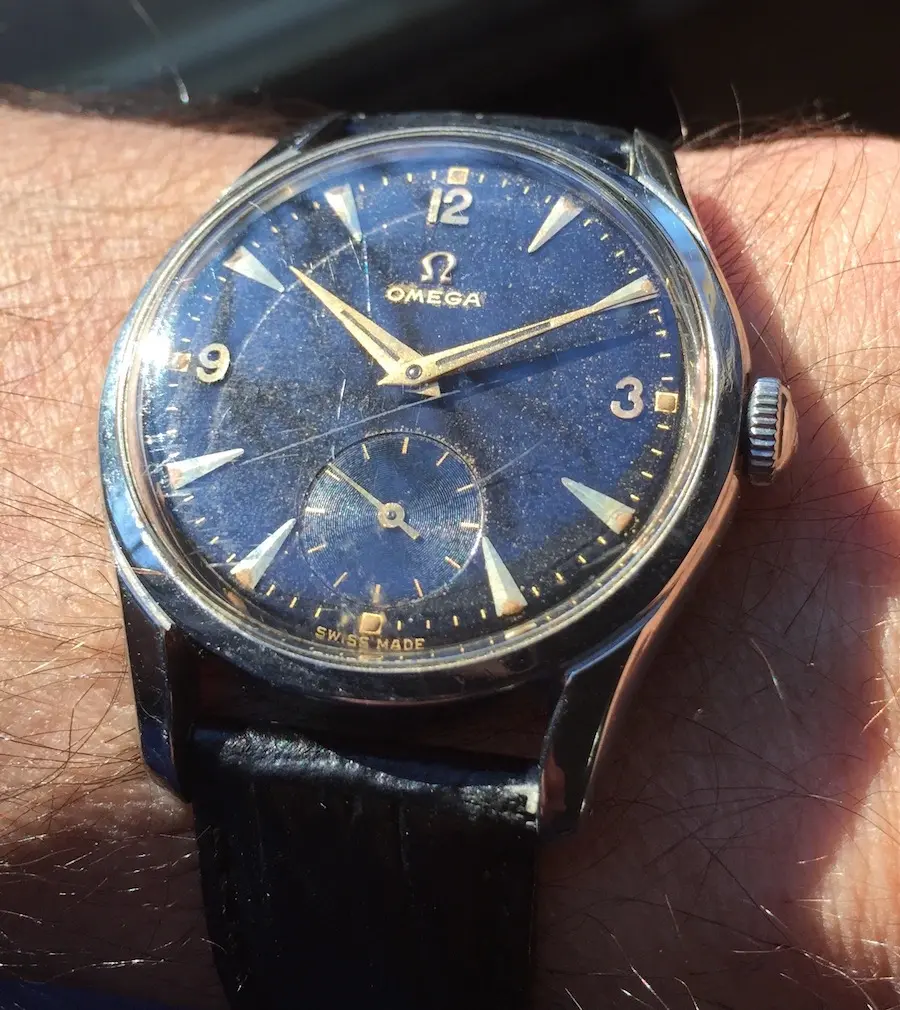
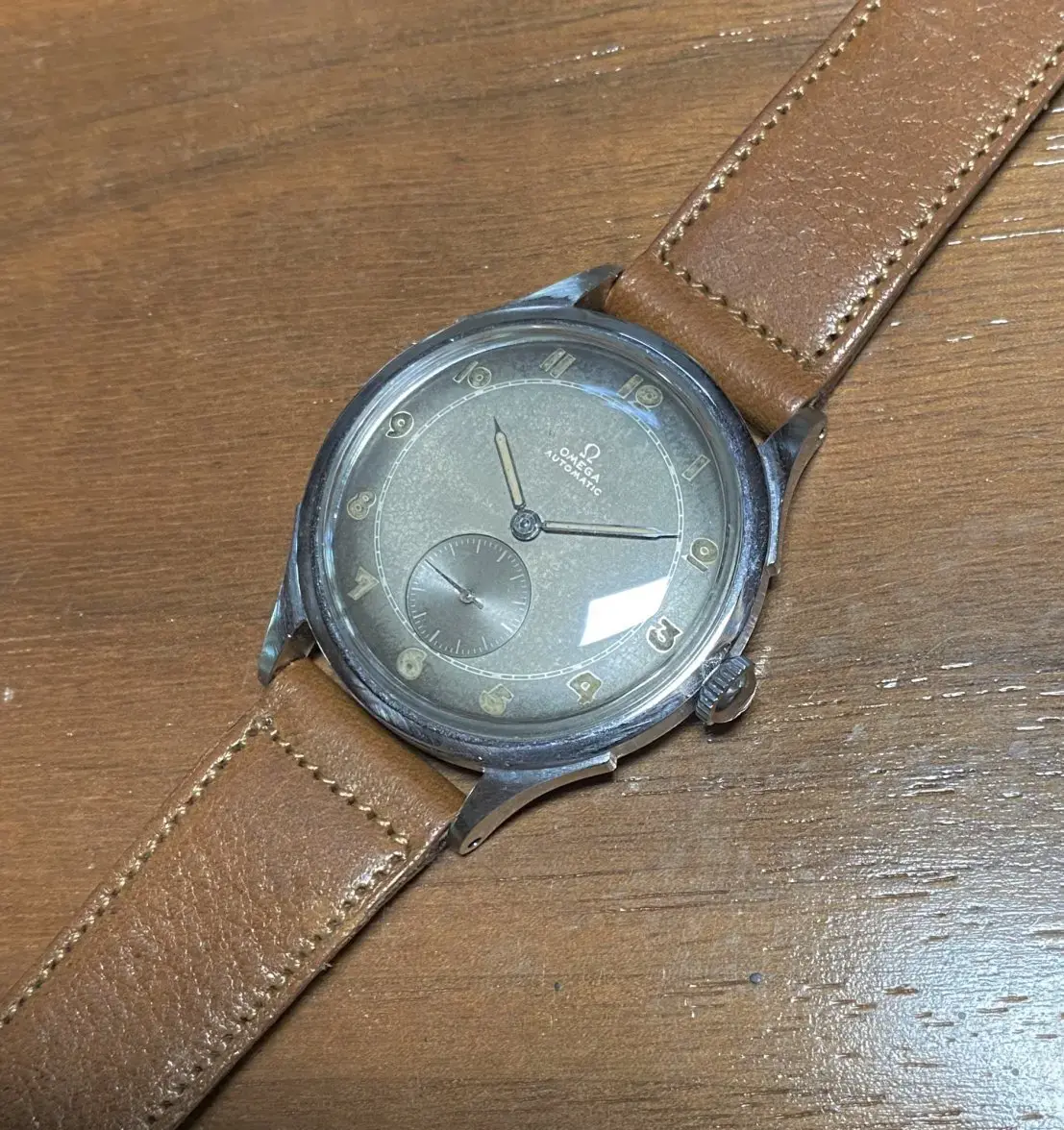
Interesting thread here about these watches. Post #8 shows the OP watch in better condition.


Here is @Rman's watch photo from that thread.
Wow...


Look at that—the first image I've seen of this model with a dark dial.


That's really fascinating.


Thank you very much for the information.
 
Posts
8,661
Likes
61,595
Beautiful watch.

Why do you think my case back doesn't have the characteristic Omega triangle with the inscriptions inside?


Do you have any suggestions?


no idea, just guesses.