Omega Bumper 342.... Need a hairspring, or repair original?

Posts
10
Likes
2
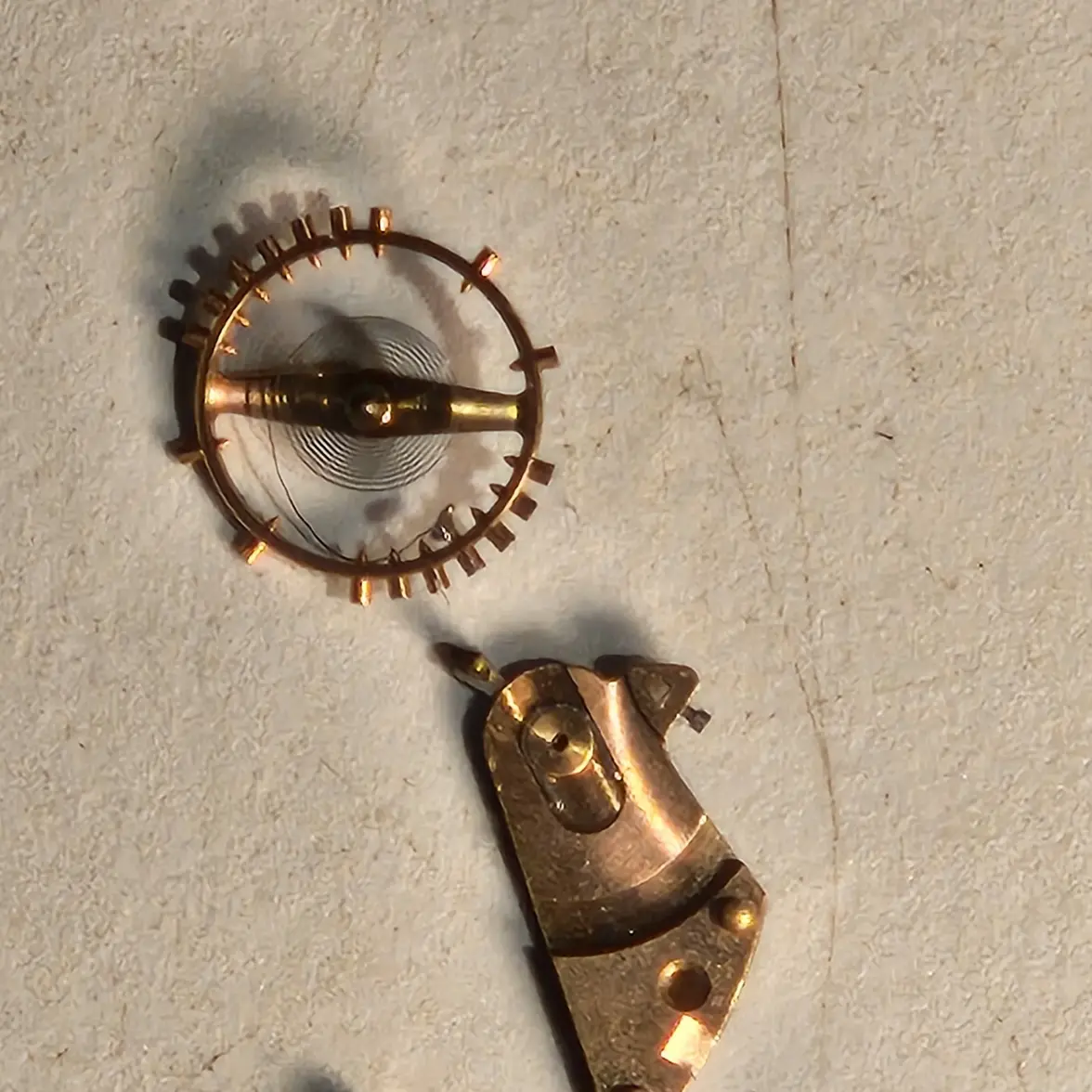
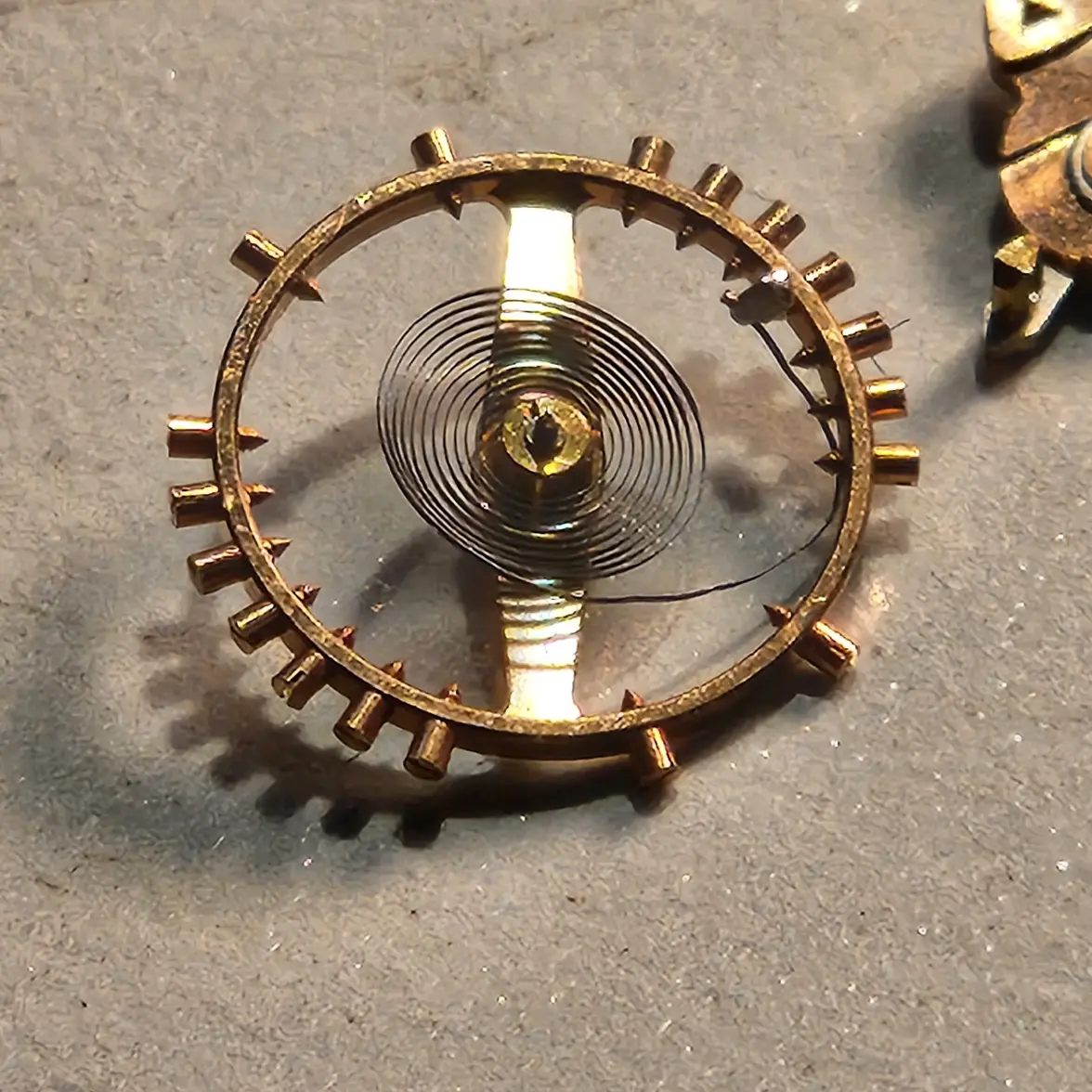
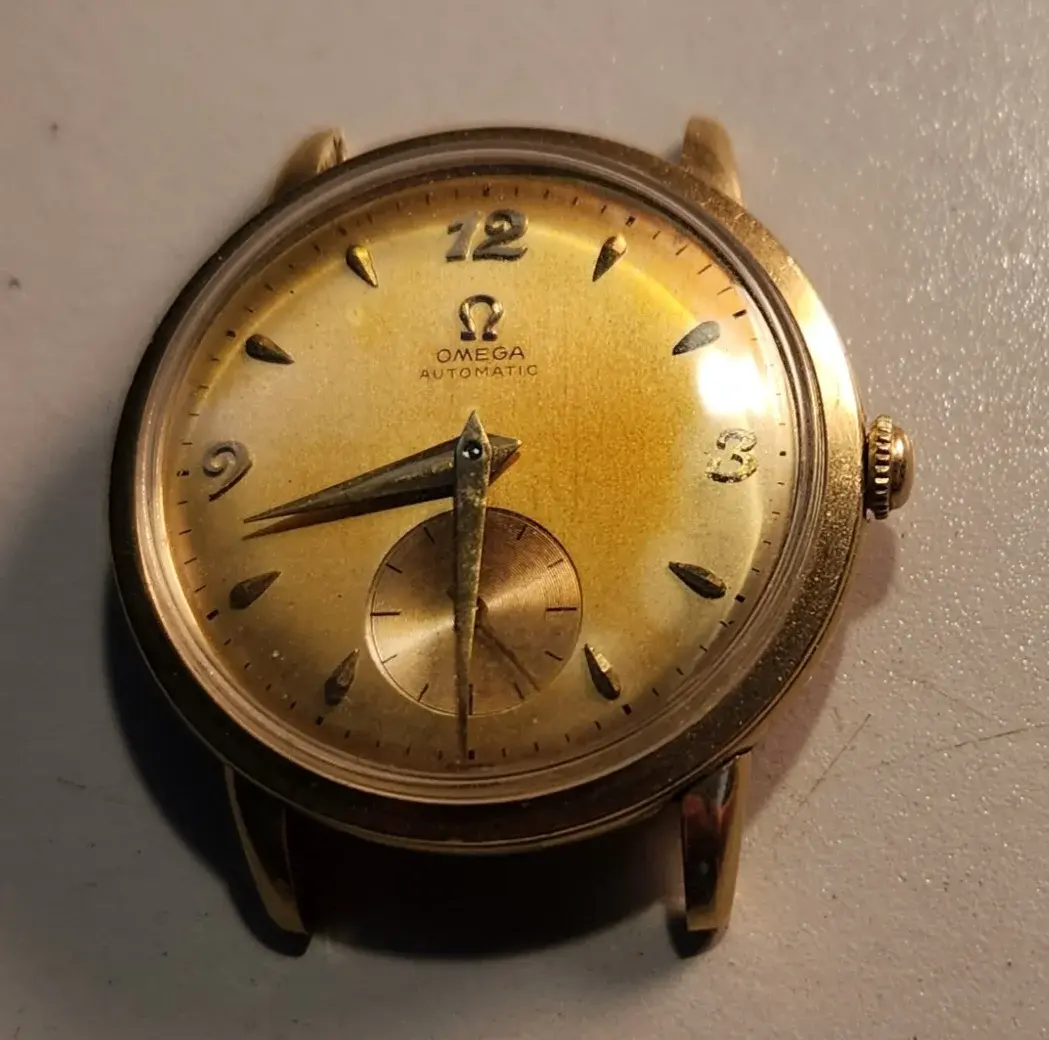
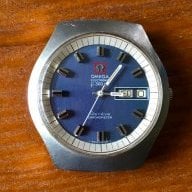
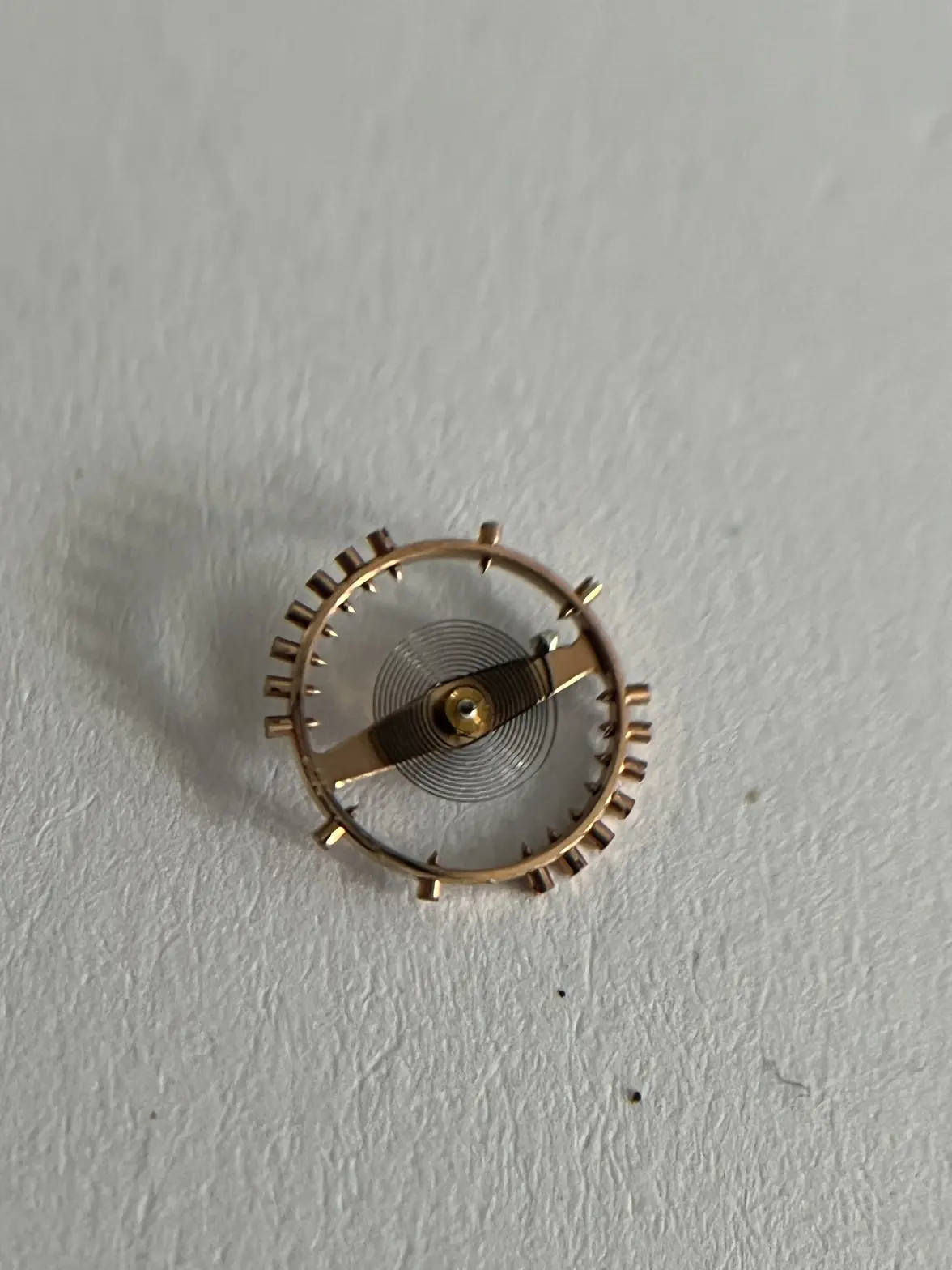
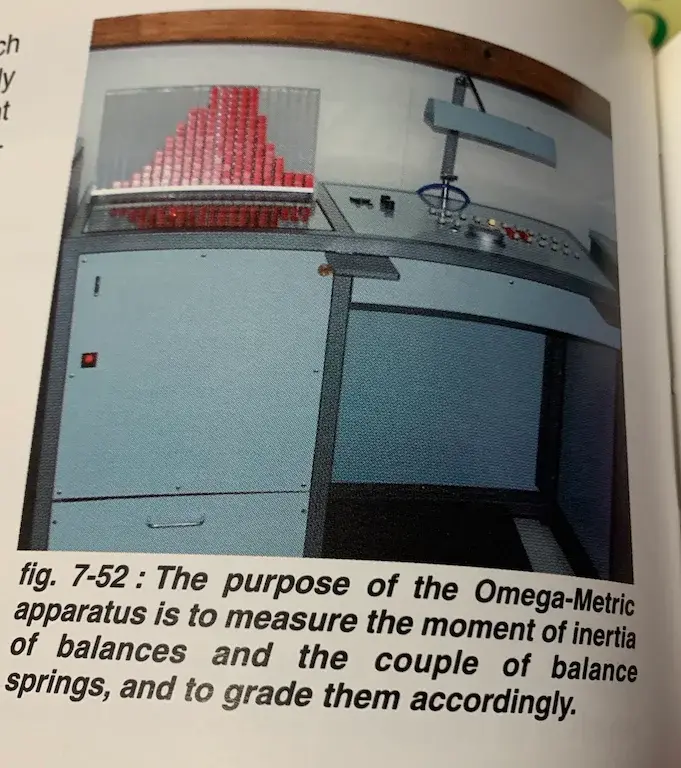
I have inherited a ~1951 cal 342 bumper, and the hairspring is really messed up. It is bent out of shape, which I could possibly fix, but it's crowned (dished) also, which I've never been able to correct. I've looked at buying a donor movement, but they're pretty expensive just to scalp a hairspring. Are there alternative, cheaper movements that use the same hairspring? Is there a place I can purchase a NOS hairspring, or should I just sell as is and let a seasoned professional handle the repair?
Sincerely, Alexsmt

 
Posts
10
Likes
2
Just looked up the serial number, and it appears to be a 1947. The inscribed date on the case when it was given to my gramps was 1951.
 
Posts
2,749
Likes
4,393
I have at least 4 bumper movements missing the hairsprings.

That hairspring might be salvageable. The tweezers are not cheap, and the hours to learn the skill are immense. @samweldspoorly recently took the AWI class, so this skill is still being taught. There is also the cost of acquiring 100s of cheap watch lots to practice on. Not practical for a one off.

There used to be services what did this, and watchmakers who specialized in nothing else. I think that went away with the quartz watch.

These do turn up from time to time on eBay. With patience and perseverance, a new balance complete can be had for between 65 and 140USD. Often cheaper as a parts watch that was stripped of other parts, so like the 4 mentioned above, such projects tend to beget more projects.
 
Posts
2,127
Likes
1,316
Let me check my parts and will see what I have. If I find something. Will post

Found a few, but not great. Bowl in one and angled on another. 3rd is marked as bad
Edited:
 
Posts
10,357
Likes
16,210
Just looked up the serial number, and it appears to be a 1947. The inscribed date on the case when it was given to my gramps was 1951.

11.8m is nearer 1949-50 in my experience. A 1947 serial would be at the lowest end of 11m
 
Posts
158
Likes
44
Omega not able to supply replacement parts for this I'm guessing?
 
Posts
13,169
Likes
18,091
Omega not able to supply replacement parts for this I'm guessing?
Not mere mortals like us.

You need to be a watchmaker certified by Omega to purchase parts from them.
gatorcpa
 
Posts
646
Likes
1,318
i have some balances for these with broken staffs. Maybe you can use the hairsprings
 
Posts
10
Likes
2
i have some balances for these with broken staffs. Maybe you can use the hairsprings
If the hairspring is decent, I would be happy to purchase it from you.
 
Posts
718
Likes
752
You can’t really swap hairsprings. Afaik, they’re adjusted/vibrated to the balance wheel.

I’m not good at fixing hairsprings, but this looks like a fixable spring damaged by somebody while improperly handling the part.

If you can’t do it yourself, or replace a balance staff from one of @trash_gordon’s balances, your best option is a balance complete.
 
Posts
646
Likes
1,318
this is it. pivot of staff is broken. you may swap the old staff to this instead of changing spiral. 50€ shipped

 
Posts
29,339
Likes
75,883
You can’t really swap hairsprings. Afaik, they’re adjusted/vibrated to the balance wheel.
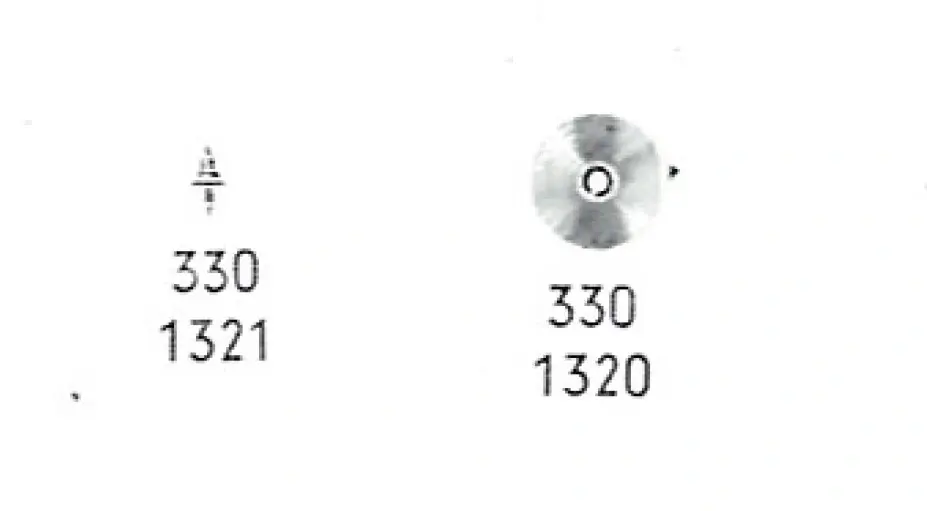
Well, this is a bit of a myth. By the time this watch was produced there was enough standardization that any adjustments that would be required to make a different spring work would be very minor of any were needed at all. In fact, Omega once sold the balance spring assembly as a replacement parts...330.1320

 
Posts
2,749
Likes
4,393
Probably not a good idea to post an email to an open forum.

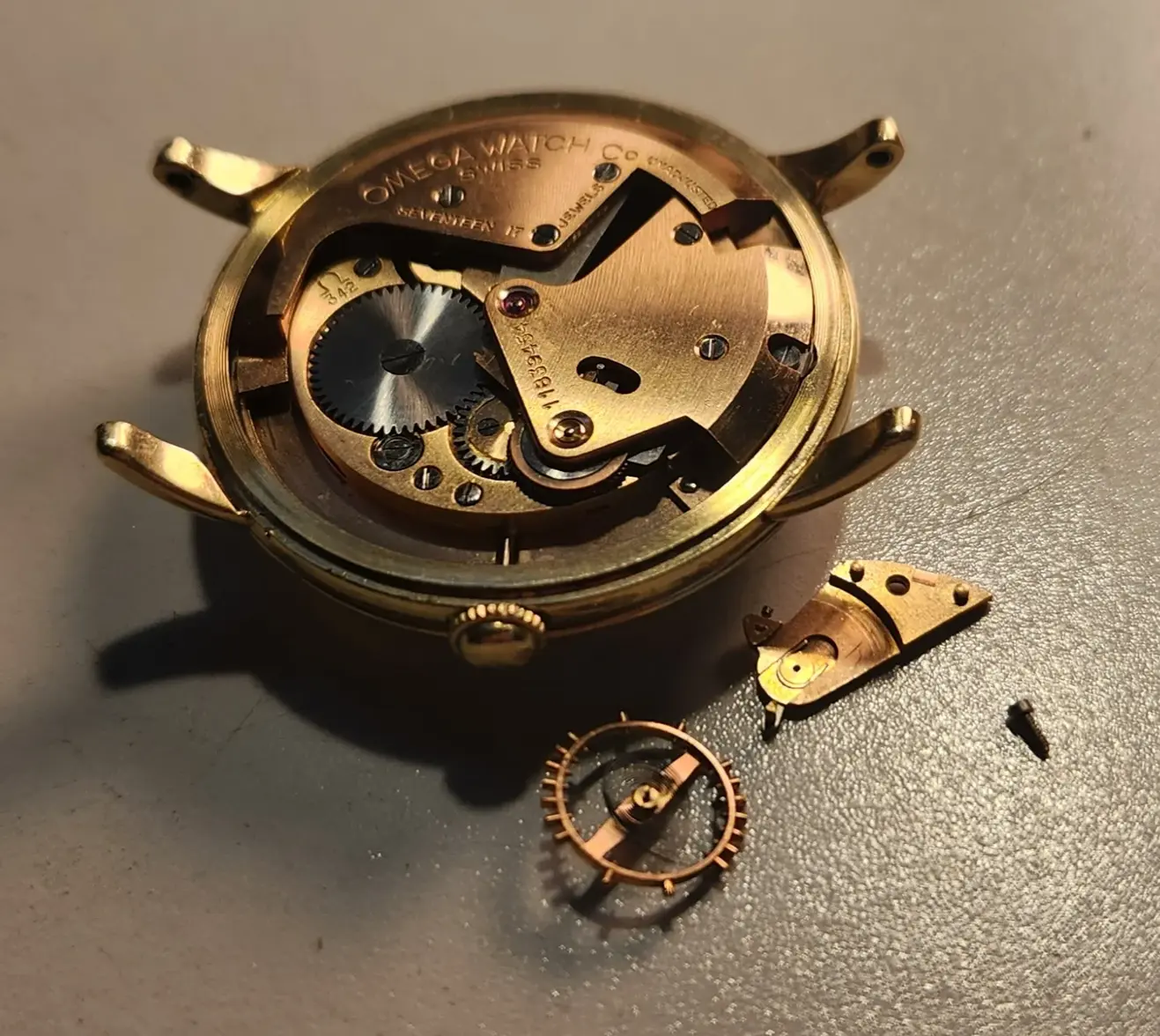
I also agree with @Archer by the time these were made Omega was using statistical grading by machine using laser measurements. New packaged hairsprings are a bit overlong so that the proper length can be pinned to. Fiddly process though. I have yet to master enough practice to get satisfactory results. I have some cronographs what are the ultimite goal for this.

Curiously I was looking at the requirements for the AWCI courses. The textbook is the same as the one my friend Derick Pratt edited.

Over the last year I collected a number of 55x balances staffs and hairsprings. Plus a number of A Schild and Enicar stuff to practice with. These are often sold as job lots and watchmaker estate materials. More recently I got more 33X materials. I did successfully restaff one of the 33X balance wheels. The next step is to plant a hairspring onto it and see what the timegrapher says. When possible I do keep the balance and spring together, a number of my hairsprings are tangled, so that remains an issue.

@Archer method of using alum to remove the staff works well, So I have removed staffs on a number of balances.


since @trash_gordon is quoting EU I did not bother to PM to see if the offer is open to all. In my case I need hairsprings since I have 4 balances with what appear to be good pivots.
 
Posts
2,415
Likes
6,960
by the time these were made Omega was using statistical grading by machine using laser measurements.
Nope! I’m a laser guy. The first laser was invented in 1960. Instruments using lasers as you describe likely came at least a decade later.
 
Posts
2,749
Likes
4,393
My guess is that the machine was developed in the 1960s from the cabnet design.


I would expect Omega, especially with the precision timing of the Olympics, was one of the first users of laser technologies. I also have the W. R Bennit Jr. textbook Scientific Problem solving with the computer which is from 1976 so is a decade later.

I was in Elementary School in the 1960s and laser were a thing. The ExplorOtorum was full of them. They could be ordered through the Edmond Scientific catalog. I have had an obsession my whole life with lasers. Although ever since Frank Oppenheimer, in self same musuem, showed me a lathe I was more impressed with the latter as it could duplicate itself. Both were equally impressive to a 7 or so year old in the third grade. Ironically some weekends and evenings were spent during that time with an Aunt who lived near Haight and Ashbury, so my memory is not always as clear as it could be.

I got sidetracked with my Kodak Scanner driver software PCD restoration (a story unto itself) At the start of the pandemic I did get an Acoustical Optical modulator to see if I could build a MIT/BYU holographic projector. For which I purchased most of the surplus parts used in the prototype. I think they have made significant progress in the last 6 years. According to the holography textbook the theory goes back quite a while. Even if the first pracical (patented one) dates to around 1960.

My tool and Die maker mentor, Had a lot of optical comparators. These sometimes used photo multiplier tubes for edge detecting. They were still used into the 1990s. Apple scrapped one that was used for a color printer prototype and I was allowed to remove parts from the trash bin for use in Hobby projects. Not sure what I did with the PM tube, was hard to figure out how to make it work. The X/Y stage was donated to the MakerSpace.

So the machine may have first used structured light inferomitry. Simplest to just call it a laser.

What ever the case, this is probably lost institutional knowledge. Proprietary information. Would that I could get into the Omega Archives and study this firsthand.

Omega prides itself on being the company (for the last 100 years or more) with the ability to do the most precise timing measurements possible. So I suspect their R&D department includes a few physicist. Who probably have access to some pretty cutting edge technologies.

So I like to think Omega is more than marketing hype.

And my work with the scraps suggest they they really did make the better watch.

And "they" did leave a Laser retro reflector on the Moon. So by 1969 lasers were in everyday use. Pretty fast industry adoption I would think.
 
Posts
2,415
Likes
6,960
I would expect Omega, especially with the precision timing of the Olympics, was one of the first users of laser technologies.
I'm not disputing Omega didn't use the finest tools for evaluating their parts, but the timeline of using lasers for such tools.
Perhaps so, but the OP says his watch dates from 1951. The laser was invented in 1960.
Also, the Omega-metric invented in 1962 by Pierre-Luc Gagnebin you show in your post did not use lasers.
 
Posts
1,488
Likes
1,516
I'm not disputing Omega didn't use the finest tools for evaluating their parts, but the timeline of using lasers for such tools.
Perhaps so, but the OP says his watch dates from 1951. The laser was invented in 1960.
Also, the Omega-metric invented in 1962 by Pierre-Luc Gagnebin you show in your post did not use lasers.

Nothing to say about that, but as long as the hairspring is "close" there is sufficient adjustment with the stud to get it adjusted to rate.

TBH, other than the insane number of sizes one would need to make available (collet, end, balance weight, wire sizes, etc), generic balance springs would be reasonable.

I am somewhat amazed bestfit/etc never did...
 
Posts
23,662
Likes
52,599
There were precision optical metrology devices long before lasers. I don't have the slightest idea whether Omega used anything like that.
 
Posts
2,749
Likes
4,393
I guess this is a problem with modern pedantry. I use 'laser' to represent optical inferometry as they layperson will understand 'Laser' as the secret sauce. Corporations intentionally obfuscate trade secrets and their own history. All the AI misinformation I see on social media and none of this really matters.

I still need 4 33x hairsprings which at the moment are basically unobtainum. Erich and the OP also need hairsprings.

If there is a way modern tech can be used to grade job lot assortments of parts, then what does it matter when or who's ego claimed to invent something that was going to be invented anyway.