
[Newbie] Servicing Vintage C-Case Constellation - Waterproofing

Posts
29,704
Likes
76,892
That would be for modern models, not for a ‘60s Connie.

It's almost like I was waiting for the "does not apply to vintage" disclaimer, eh?

It's not a Constellation, but it is a 1969 Speedmaster...


Off to the room where my wet testing equipment (approved by Omega) is located, along with the lathe, cleaning machines, etc.:

The testing chamber is filled with water, the case is placed in the holder, and the holder is placed into the chamber:

The water level is topped off:

The lid is placed on the chamber and clamped in place:


Now Omega only requires that this test is done on watches that have much higher water resistance than a Speedmaster does, so the gauge is not great at low pressures, so depending on how you read this, it's either 7.5 bar, or 12.5 bar...so either way well in excess of the 5 bar rating that Omega states:

Shot of the watch in the chamber with the gauge visible:

Since this is not a dive watch, I leave it in for 15 minutes

Here it is before I remove the watch:

I place the watch on the heating plate, and over the next 30 minutes the temperature will rise to approx. 47 C:

After 30 minutes, I place a drop of room temperature water on the crystal, and let it sit for 1 minute:

I then wipe it away and look for condensation - none seen using a loupe, and the vintage watch passed the testing:


Cheers, Al
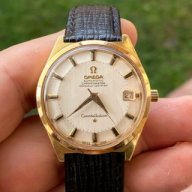
 
Posts
9,596
Likes
27,706

Water resistance has been discussed previously here numerous times - had you looked it up before writing your first post, you would most likely have written something different...

Btw, what do you mean by "empirical test"? Does it mean something else than your first definition of "send me a ‘60s Connie pressure tested to 30m..." ? And do you believe that water resistant means something different depending on what type of watch you discuss?
 
Posts
214
Likes
424
Water resistance has been discussed previously here numerous times - had you looked it up before writing your first post, you would most likely have written something different...

Btw, what do you mean by "empirical test"? Does it mean something else than your first definition of "send me a ‘60s Connie pressure tested to 30m..." ? And do you believe that water resistant means something different depending on what type of watch you discuss?

No, my answer would not have been different because it is based on my experience with vintage watches.

To make a vintage watch water resistant to its original rating is not that easy. As Archer said it implies changing many other parts, not jst gaskets. Are the parts always available, are owners willing to pay for them?

My point is to never take the chance with a ‘60s watch. Omega, Rolex or any other brand.
It may pass a pressure test but would you risk swimming with it?!
To much at stake to get a vintage watch near the water, let alone submerge it.

Desmond put it very well and I side with him:

“with the hermetically sealing crown, caseback gasket and tight crystal fitment, they would have been as water resistant as one would get then. Omega, generally, has never felt the need for screw-down crowns, correctly believing IMO that hermetic crowns did the job well.

That said, hermetic crowns need replacing at each service generally, and I wouldn't even try to test fate in the water with an early 60's Constellation now.”
Edited:
 
Posts
9,596
Likes
27,706
@Verdi... Any amount of back pedalling you do does not change your previous posts in this thread.

A pressure test done on a vintage watch is the same as on a modern one.

A watch that is water resistant to 30m is water resistant to that depth.

What YOU feel about swimming with a waterproof watch is irrelevant to these facts.
 
Posts
29,704
Likes
76,892
Thats great. Thanks for sharing.

Is that the case with all ‘60s models, do they all pass the test after service? Based on your experience?

That being said, my offer/bet for an empirical test remains.

LE: this has been discussed here before:
https://omegaforums.net/threads/how-water-resistant-were-60s-constellations.54020/

The ability of any watch (modern or vintage) to pass a pressure test and withstand water intrusion depends on a number of factors. Does it even use gaskets of any kind - many older watches don't even have gaskets, and snap together metal on metal - these obviously were never designed for water resistance and of course will not have any after service.

What condition is the case in - if the case back or the groove that the O-ring sits in are all pitted, then even a new seal isn't going to fix the problem...


If the case tube has a huge groove worn in it, then even using a new crown with a new seal won't make it water resistant.

So there are plenty of ways a watch won't end up water resistant, and I'm not saying (nor have I ever said) that every watch can be made water resistant. But I service plenty of watches where the case is in good shape, the case tube is either okay or easily replaced, and with new seals and a new crown, they pass fine. Many people choose not to make their watches water resistant by not having parts replaced - again that's fine with me. I do as my customers ask, but the watches still get pressure tested and I give them a copy of the results, even if it fails.

Now if you or anyone else chooses to get the watch wet is another thing entirely. I say this is almost every thread where this subject gets debated (and trust me there are many of these threads) that it's up to each person to determine their own level of risk tolerance, and act accordingly. Personally I don't care if people get their watches wet or not. But because you aren't comfortable with getting a vintage watch wet, doesn't mean they actually can't get wet and be fine.

BTW, since I've already done a test that proves the very thing you are offering, there's really no point in any additional testing, but if you have a Constellation you want tested and you want to send it to me, I'll do the entire series of tests and post it all in this thread.

Cheers, Al
 
Posts
16
Likes
3
Your watchmaker will advise you as to what needs to be done- just don’t be afraid of replacing the rear seal as “not original”, that is always part of a regular service. The crowns are factory parts so he needs access to an Omega parts account or another watchmaker he knows that cab supply him with the correct part.

I wear 1930’s-40’s snap back watches all the time and never have an issue with moisture- I’m just careful about not getting sink washing crazy above the wrist line and not wearing them on hot, humid summer days.

Thank You!
 
Posts
214
Likes
424
An
The ability of any watch (modern or vintage) to pass a pressure test and withstand water intrusion depends on a number of factors. Does it even use gaskets of any kind - many older watches don't even have gaskets, and snap together metal on metal - these obviously were never designed for water resistance and of course will not have any after service.

What condition is the case in - if the case back or the groove that the O-ring sits in are all pitted, then even a new seal isn't going to fix the problem...

BTW, since I've already done a test that proves the very thing you are offering, there's really no point in any additional testing, but if you have a Constellation you want tested and you want to send it to me, I'll do the entire series of tests and post it all in this thread.

Cheers, Al

And I completely agree with you.....To pass a pressure test its quite hard for a vintage. Case is 40-50yrs old, it was subjects to hits, metal alteration etc
You gave us one example of a watch that passed it...I am sure you have many others examples of watches that did not.

I am happy when my watches pass the test and my watchmaker writes the 30m rating on the report......but will I risk getting the watch wet?! Hell, no.
It is more of a matter of having a little piece of mind if I do get the watch wet unintentionally (when I do the dishes 😀 )

And thanks again for sharing all this.
I have participated in this discussion before many times. My view does not change:
Whether a vintage watch passes the pressure test, do not risk getting it wet. Avoid exposure to water, too much at stake.
 
Posts
29,704
Likes
76,892
To pass a pressure test its quite hard for a vintage. Case is 40-50yrs old, it was subjects to hits, metal alteration etc
You gave us one example of a watch that passed it...I am sure you have many others examples of watches that did not.

If the customer wants it to be water resistant, and is open to replacing the seals and other parts I've mentioned to make it so, then I would say approx. 8 out of 10 watches can be made water resistant to their original rating again. It's not as hard as you are making it out to be, at least in my experience.
 
Posts
340
Likes
417
That would be applicable for modern models, not for a ‘60s Connie.

Silly challenge or not that would be the only way to answer the question. Very empirical and relevant, imo.

PS: myth busters became very wealthy with the silly challanges!
wait, why won't a chart concerning simple physics apply to modern watches but not vintage watches? I bet the physics of fluid pressure hasn't change since the 60s
 
Posts
214
Likes
424
Let me put it this way.
I dare anyone to swim with their vintage Connies after it passed a 3 atm pressure test. If you think its all that straight forward....go for it.

Why the water resistance certification is not the same now as it was 50 years ago? Because there were different standards. ISO 22810 came into effect in 2010.

I cannot put it better than this guy:
[url]https://www.vintagewatchstraps.com/blogwaterresistance.php


The term ‘waterproof’ is not used for watches today, recognising that such an absolute standard cannot be achieved. Instead it is replaced by ‘Water Resistant’, usually along with a pressure rating in atmospheres, or metres or feet of water, which gives an idea of just how water resistant the watch is. There are two international standards that regulate the testing of watches, ISO 22810:2010 Horology - Water-resistant watches, and ISO 6425:1996 Divers' watches.

The normal pressure of the atmosphere atmosphere at sea level is about 14½ pounds-force per square inch (psi) or 1 bar - a standard atmosphere is 1.01325 bar. This is equivalent to a column of mercury in a barometer of 29.92 inches or 33.9 feet of water, which is about 10.3 metres of water. So one bar pressure is equivalent to about 10 metres water gauge or depth under water.

A watch that is described as water resistant might be less waterproof than you might think. A watch rated at 3 atmospheres (3 atm) or 30 metres / 100 ft water depth might seem at first sight to be more than adequate for swimming or showering. After all, you are hardly likely to get 100 feet deep in a swimming pool! However, this rating is a static pressure that the watch was tested to when it was new. There are all sorts of reasons why a watch of this rating is not suitable for swimming, such as the pressure is increased by movement - diving into water, or the jet from a shower create a much higher dynamicpressure. Also, the tests allow a certain amount of leakage, so the watch cannot stand even the static pressure for long time without filling up with water. And that was when it was new - over time the seals deteriorate and need to be renewed.

  1. Watches rated at 3 atmospheres / 30 metres are resistant to rain or splashes from hand washing, but are not suitable for swimming or wearing in the bath or shower.
  2. A watch rated at 5 atmospheres / 50 metres will tolerate gentle swimming, but not jumping or diving into the water, or showering.
  3. For vigorous swimming and diving, water resistance of at least 100m is required, and for sub-aqua at least 200m.
[/URL]

 
Posts
5,525
Likes
9,444
Ok, send me a ‘60s Connie pressure tested to 30m and I’ll take a boat out and submerge that puppy to 30m depth for 5 min.

I’ll video it. If you win I shall send you a bottle of Dom...if I win I ll just have a Sam Adam! ‍♂️
How about you source him the watch and pay him to service it? A bottle of DOM is an insult, and barely covers a fraction of the costs.

Also, I find it a bit numerous you are quoting a write-up on water resistance of a watch that was posted by a watch strap maker, and you use this to dispute a maker who preps and tests watches on a daily basis.
 
Posts
29,704
Likes
76,892
Let me put it this way.
I dare anyone to swim with their vintage Connies after it passed a 3 atm pressure test. If you think its all that straight forward....go for it.

Why the water resistance certification is not the same now as it was 50 years ago? Because there were different standards. ISO 22810 came into effect in 2010.

I cannot put it better than this guy:
https://www.vintagewatchstraps.com/blogwaterresistance.php


The term ‘waterproof’ is not used for watches today, recognising that such an absolute standard cannot be achieved. Instead it is replaced by ‘Water Resistant’, usually along with a pressure rating in atmospheres, or metres or feet of water, which gives an idea of just how water resistant the watch is. There are two international standards that regulate the testing of watches, ISO 22810:2010 Horology - Water-resistant watches, and ISO 6425:1996 Divers' watches.

The normal pressure of the atmosphere atmosphere at sea level is about 14½ pounds-force per square inch (psi) or 1 bar - a standard atmosphere is 1.01325 bar. This is equivalent to a column of mercury in a barometer of 29.92 inches or 33.9 feet of water, which is about 10.3 metres of water. So one bar pressure is equivalent to about 10 metres water gauge or depth under water.

A watch that is described as water resistant might be less waterproof than you might think. A watch rated at 3 atmospheres (3 atm) or 30 metres / 100 ft water depth might seem at first sight to be more than adequate for swimming or showering. After all, you are hardly likely to get 100 feet deep in a swimming pool! However, this rating is a static pressure that the watch was tested to when it was new. There are all sorts of reasons why a watch of this rating is not suitable for swimming, such as the pressure is increased by movement - diving into water, or the jet from a shower create a much higher dynamicpressure. Also, the tests allow a certain amount of leakage, so the watch cannot stand even the static pressure for long time without filling up with water. And that was when it was new - over time the seals deteriorate and need to be renewed.


    • Watches rated at 3 atmospheres / 30 metres are resistant to rain or splashes from hand washing, but are not suitable for swimming or wearing in the bath or shower.
    • A watch rated at 5 atmospheres / 50 metres will tolerate gentle swimming, but not jumping or diving into the water, or showering.
    • For vigorous swimming and diving, water resistance of at least 100m is required, and for sub-aqua at least 200m.

::facepalm1::
 
Posts
1,615
Likes
3,859
There is some kind of deja vu in this thread... Snorkel?

I won't bother trying to explain this time.

::stirthepot:: 😁
Edited: