Longines Flagship manual chronometer year of manufacture 1957

Posts
6
Likes
3
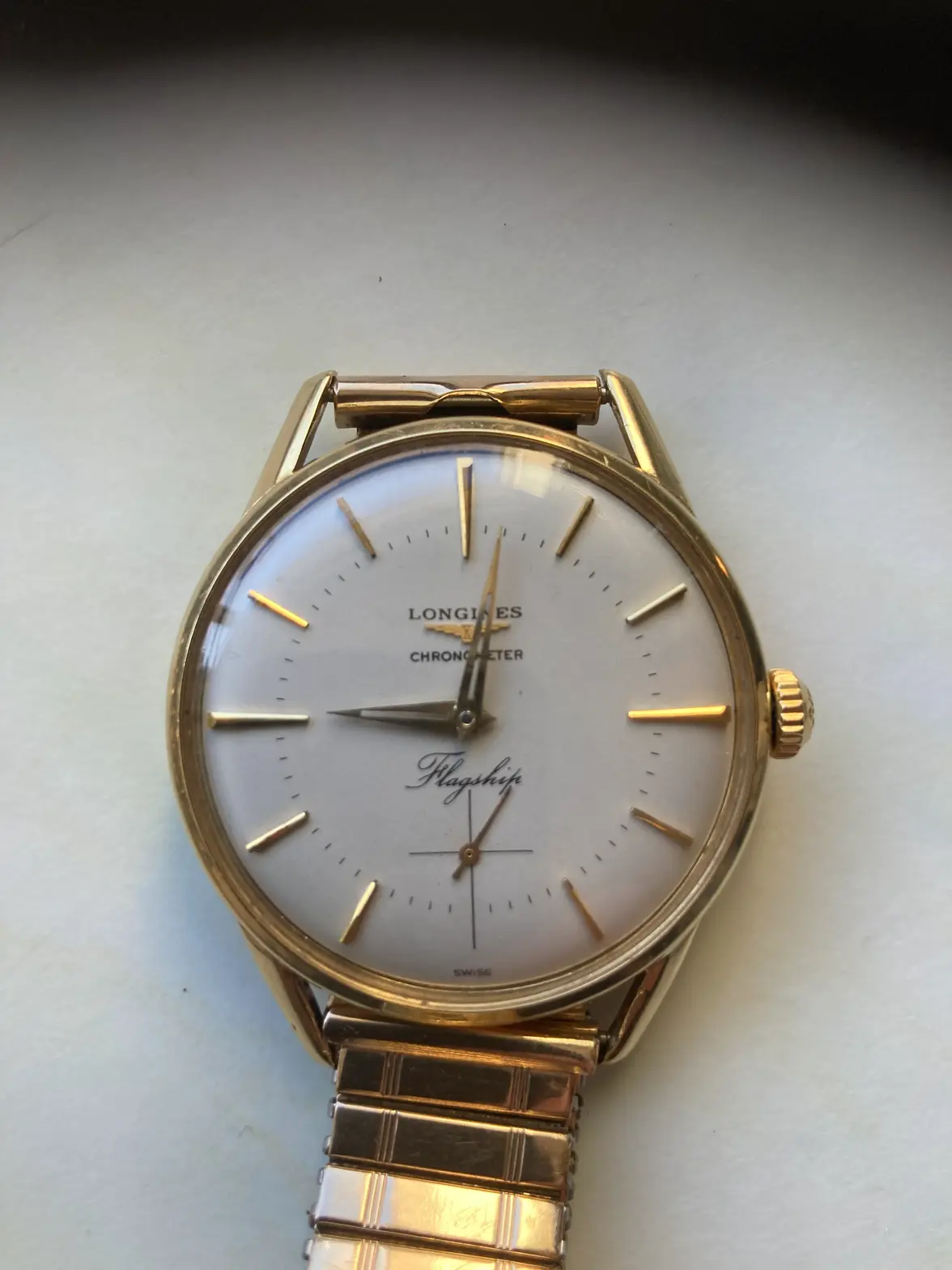
I own an 18ct yellow gold Flagship chronometer wristwatch 30L movement year of manufacture 1957. It was my fathers and I now wish to pass on it to my grandson . How can I get a true insurance valuation for it , any advice out there ?
 
Posts
24,246
Likes
53,992
Can you indicate what is required by your insurance company? Some companies will allow you to set your own value and insure it for that amount. If that's the case, we can give you a valuation for it if you post lots of good photos. Other companies require a professional appraisal, which will involve a fee. We don't know what you need.

I'd suggest that you should also give some thought as to whether insurance is really necessary. Let's say the watch is worth $3k USD. It's not a life-changing amount and I doubt that you insure every possession that's worth that amount. Insurance will not reimburse the sentimental value if something happens to the watch. Personally, I don't see the point in insuring watches in that range of value, although it's obviously a personal decision. The best way to secure it is to keep it in a safe or bank deposit box.

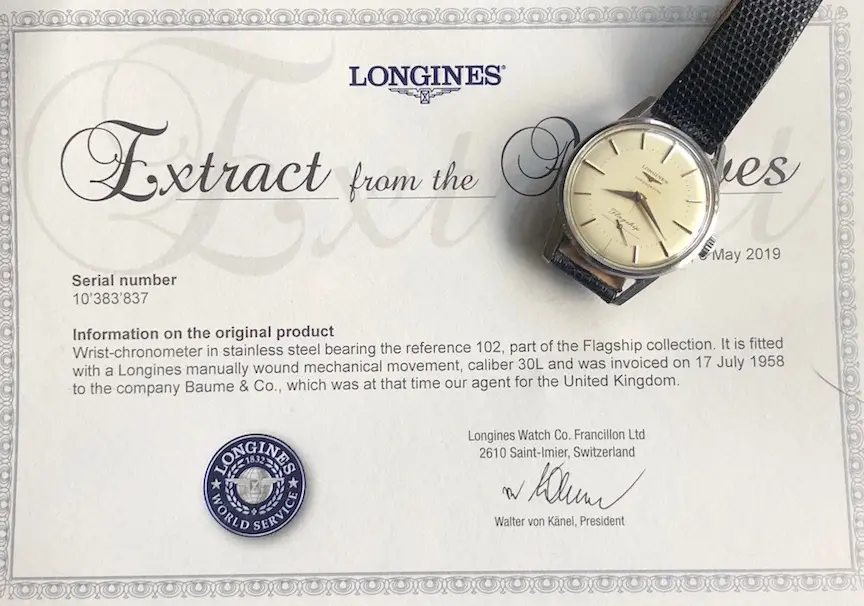
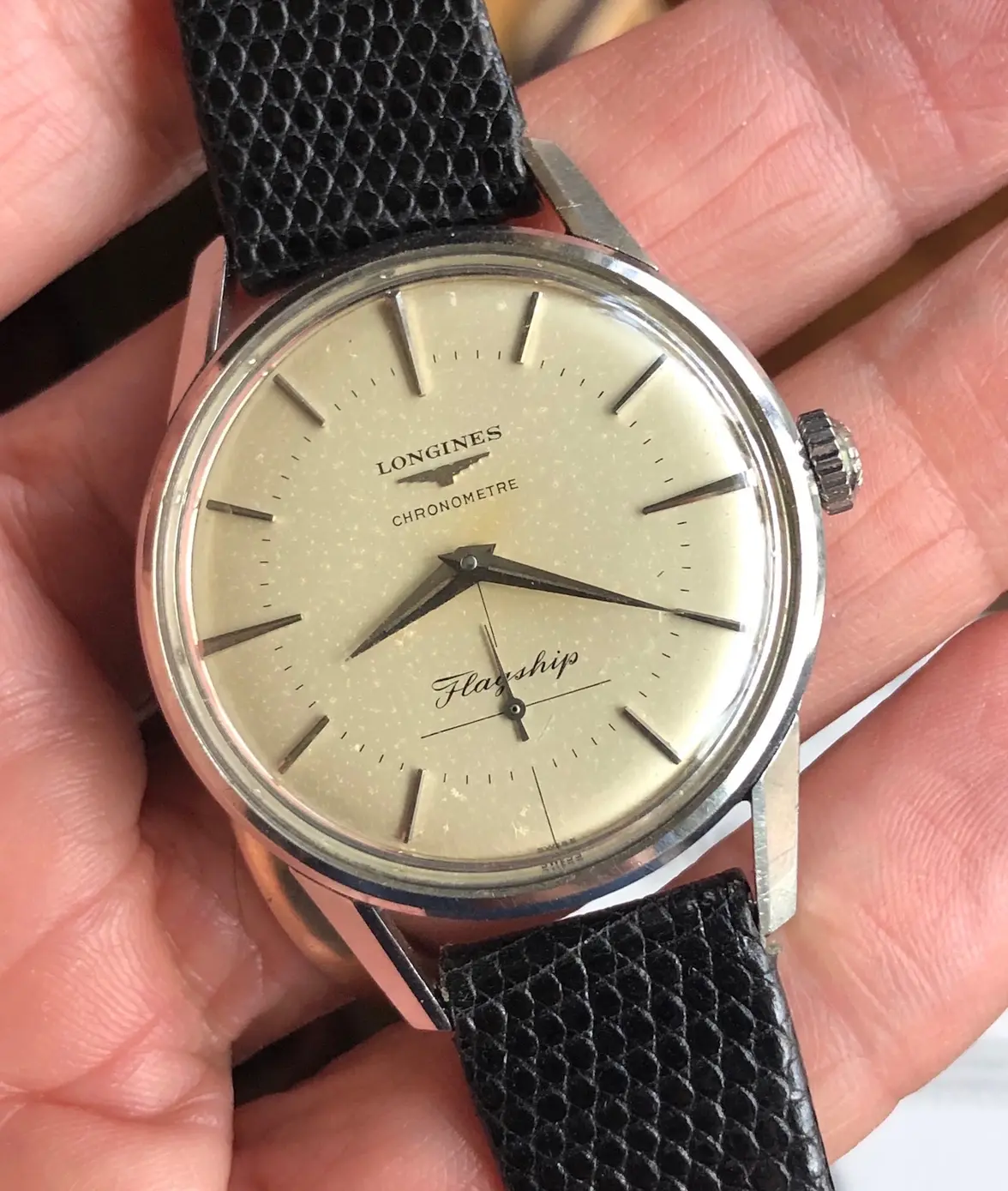
BTW, this sounds like a nice watch and it would be appreciated if you would please post some photos for the community, while asking for our assistance. The 30L chronometers are uncommon watches overall, and an 18k gold example is particularly special. The current value of the gold is significant, but the collectible value will depend greatly on originality and condition, which will require good photos to judge. Here is my SS Flagship chronometer, in original condition, so people can see what you are talking about.

Edited:
 
Posts
6
Likes
3
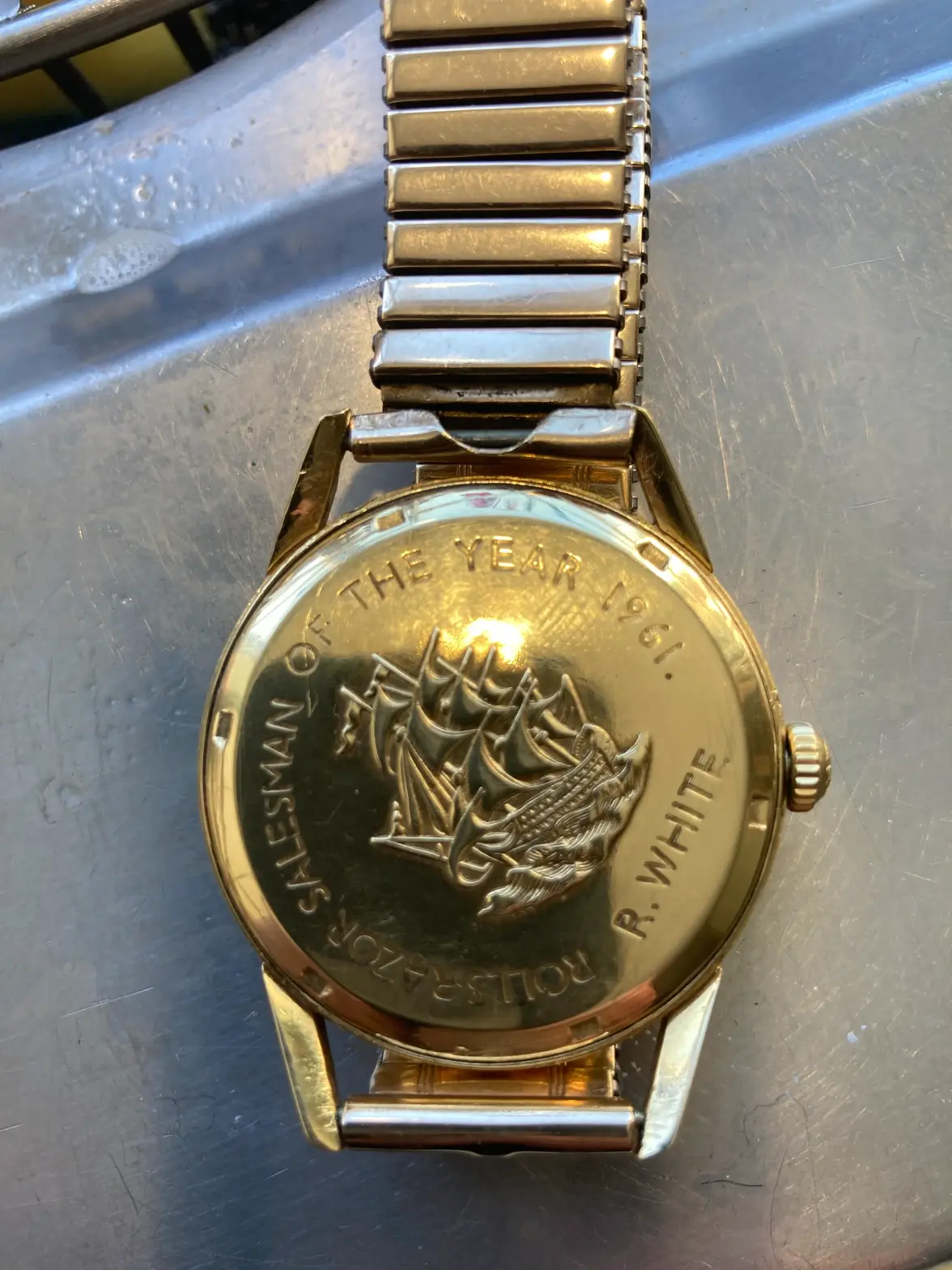
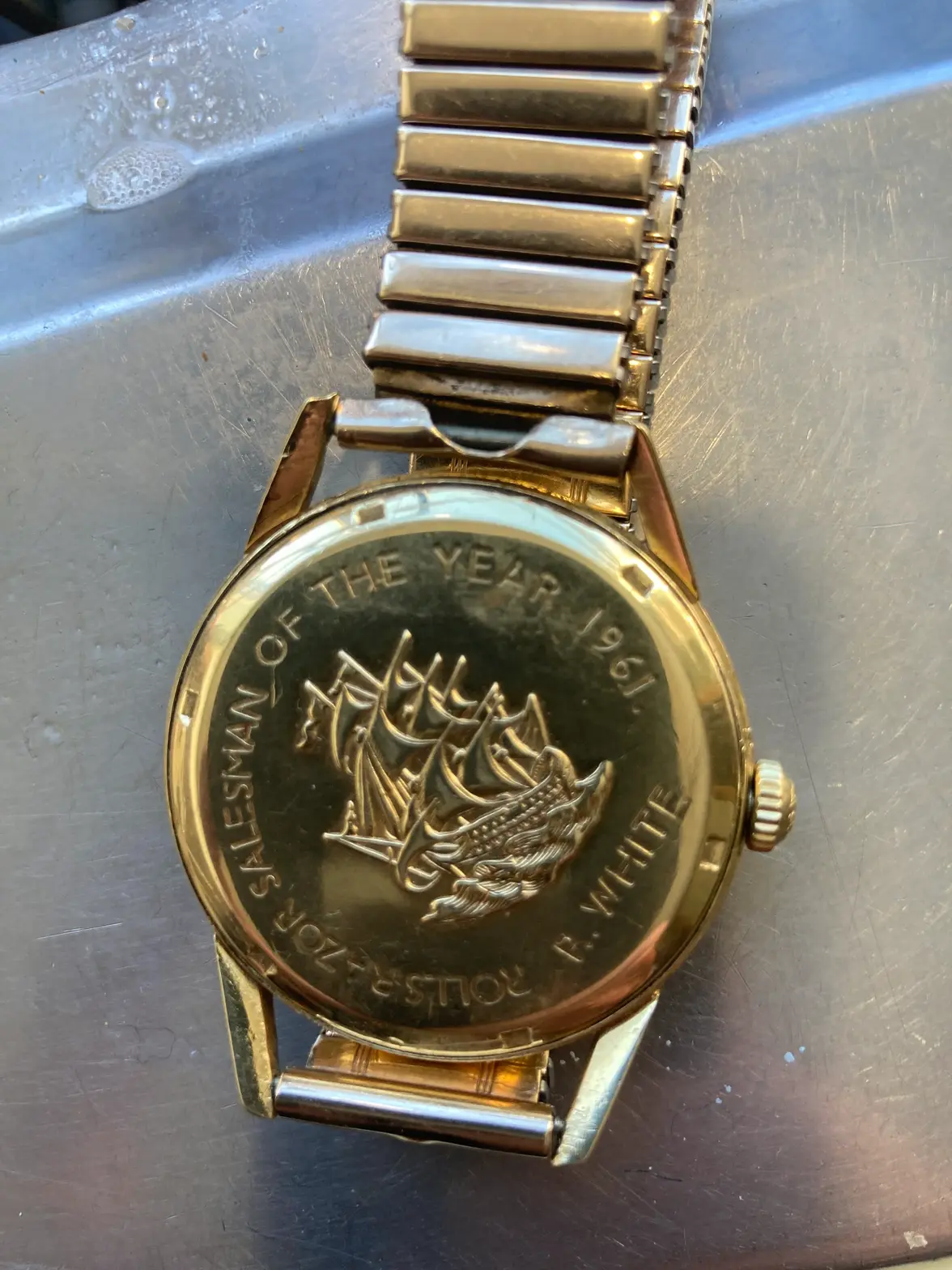
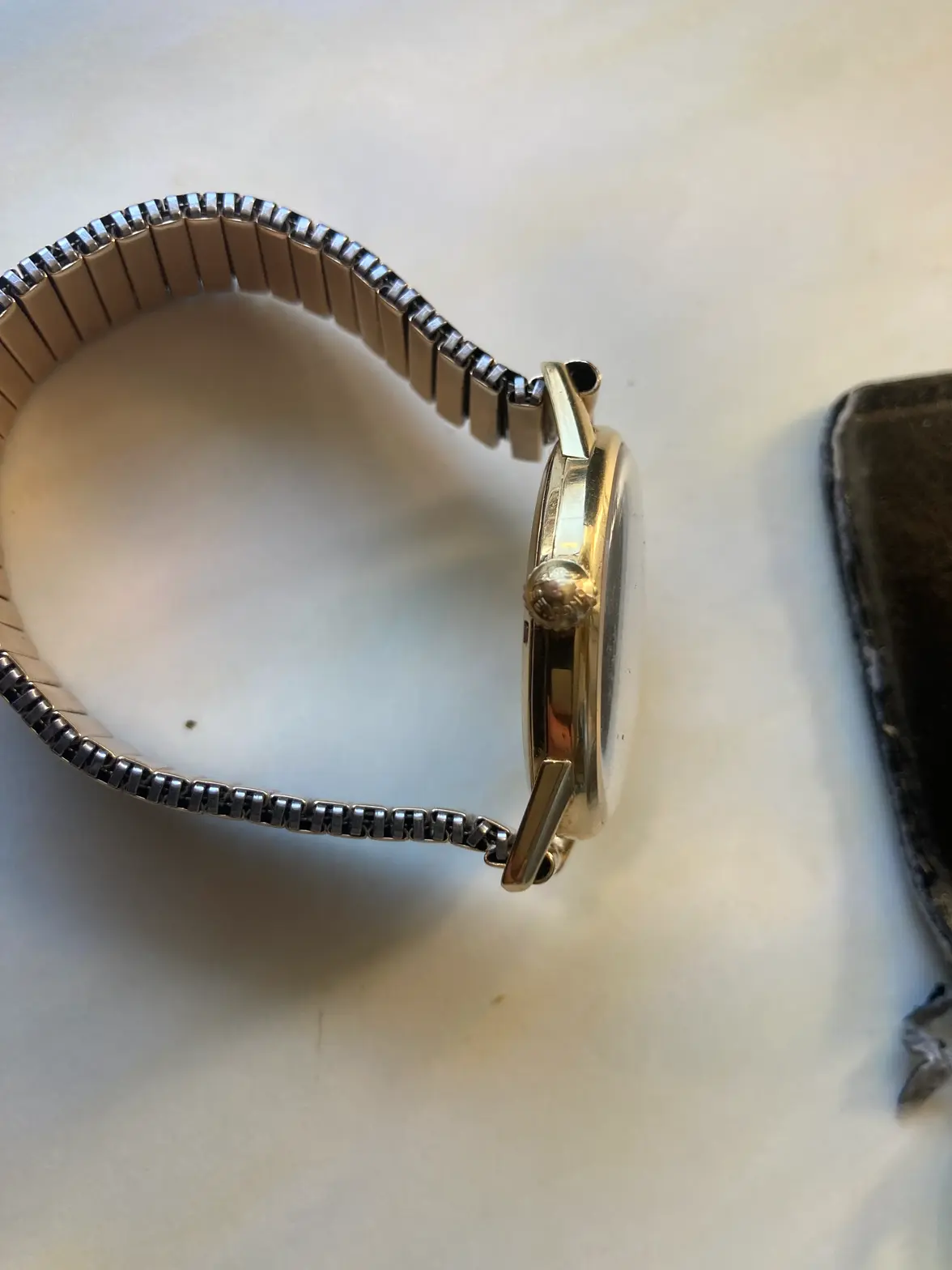
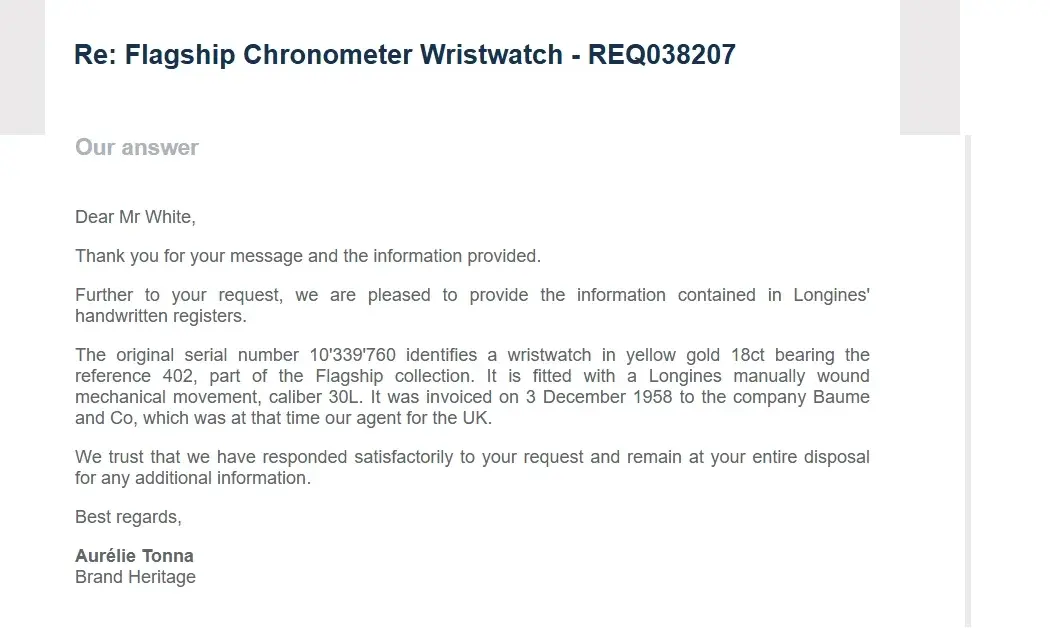
Thanks for you're very quick reply , I am adding pictures and a copy of the watch details I obtained from Longines in 2015 . I had the watch serviced by a very reputable watch specialist in Birminghams Jewellery Quarter not long after my fathers death in 2002 , The watch strap is not the original as my father found it " too flash " and unfortunately we don't know what became of it . He rarely wore it except on special occasions , as is the case myself , two or three times a year . He was presented with it by the entrepeneur John Bloom along with a weeks holiday for him and my mother in Mr Blooms villa in the South of France , he thought a lot of my father , who was his top salesman. To us in the family it was always just dad's gold watch , but it was only when the man who serviced it told me it was a special watch that I endeavoured to find out about it . Apart from the information fron Longines I have not got much further until my son found this forum and I enrolled . I have not contacted any particular insurance company as it is always kept in a very secure place but as it will be going to my grandson who is a modern young man I feel it will need to be properly insured , hence my enquiries from this knowledgable forum . Many thanks .
 
Posts
8,096
Likes
28,524
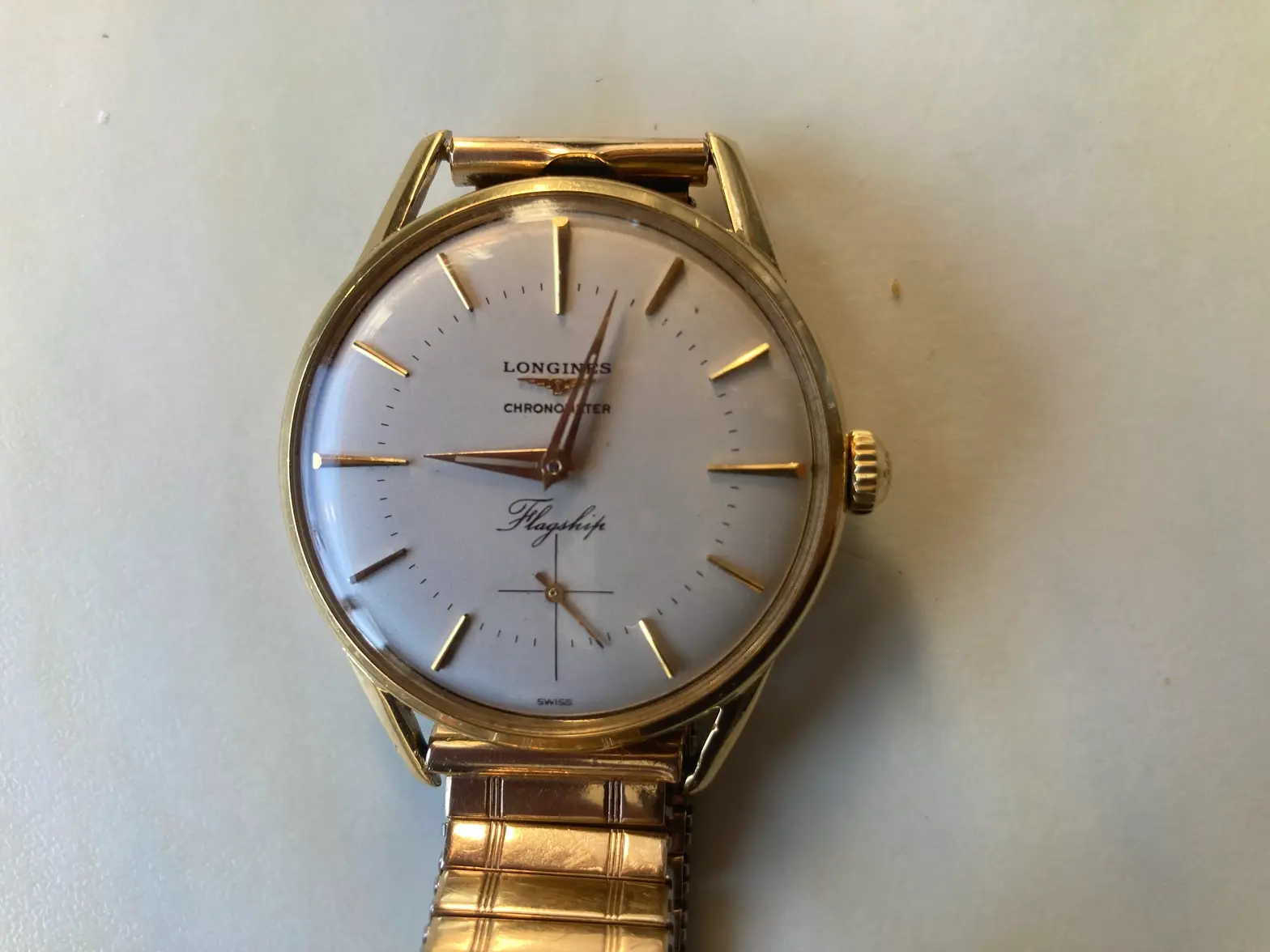
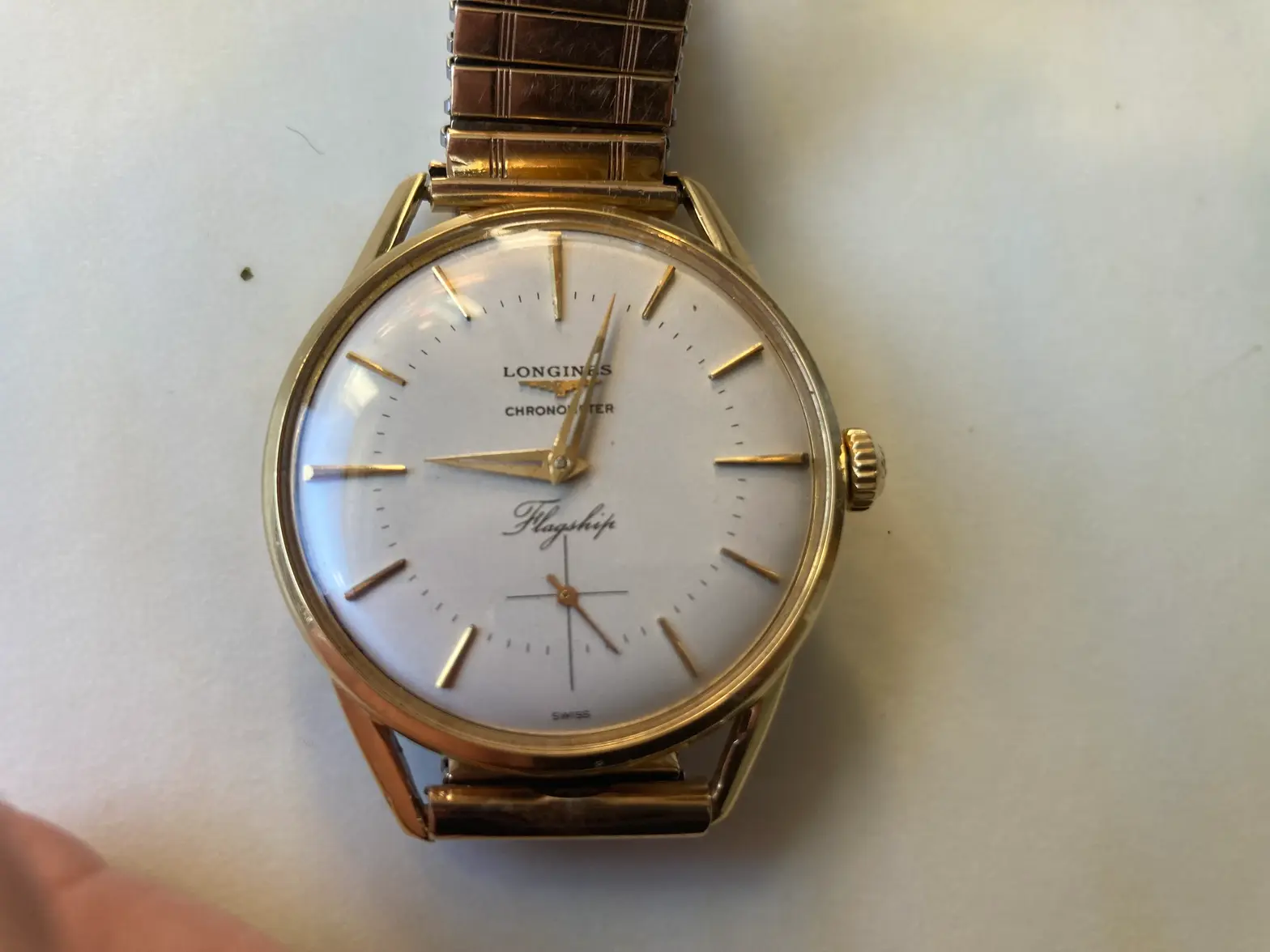
It appears that the dial has been refinished, You can compare and contrast the lettering with Dan's original example.

Also, it is not likely to be a genuine Chronometre, as if it were, Longines would have, or certainly should have noted it in its reply. A photo of the movement would be helpful in making a more confident assessment.

The value of the watch would be impacted up or down depending on whether it is a genuine chronometre, but given the dial refinishing, I'm sorry to say that its value has been degraded fairly significantly. The quality of the gold (i.e., 9k, 14k, or 18k) will also have a real impact on the value of the watch.
 
Posts
1,981
Likes
2,144
Tony is right, that dial is sadly refinished, which removes all collect-ability from it. So the value is basically gold-melt-value. So probably ~25g (a bit of a WAG) of 18k, so that would be ~$2500 of value, which is probably about right (the amount that you could SELL it for is less, since you get ~80% max for gold, but perhaps the movement/WAG makes up for that).
 
Posts
24,246
Likes
53,992
As noted above, the collectible value is greatly reduced because of the condition. And as Tony indicated, Longines would generally have indicated wrist-chronometer instead of wristwatch if it were actually one of the uncommon chronometer grade examples. The chronometers have some distinctive features of the movement, so we can double-check if you post movement photos.

Your watch has tremendous sentimental value, but I'm sorry to say that the actual financial value is mostly due to the gold. It's interesting that the watch was apparently purchased three years after delivery, based on the 1961 engraving.

 
Posts
6
Likes
3
It appears that the dial has been refinished, You can compare and contrast the lettering with Dan's original example.

Also, it is not likely to be a genuine Chronometre, as if it were, Longines would have, or certainly should have noted it in its reply. A photo of the movement would be helpful in making a more confident assessment.

The value of the watch would be impacted up or down depending on whether it is a genuine chronometre, but given the dial refinishing, I'm sorry to say that its value has been degraded fairly significantly. The quality of the gold (i.e., 9k, 14k, or 18k) will also have a real impact on the value of the watch.
 
Posts
6
Likes
3
Thanks once again fo you're quick response . What does refinished mean ? In 2017 I contacted a collector in Norway I found called Havi (www.Longines30L) . He also queried the English spelling of Chronometer but said it it may have been that the Longines London retailer Baume and Co. could have had it certified in the UK to avoid excess import charges. Could this have reflection on the date anomaly?
In the communication from Longines in 2015 they refer to it as an 18ct yellow gold Flagship Chronometer Wristwatch-REQ038207 . from series REQ038207-REQ03824 . The serial number 10'339'760 would fit with a year of 1958 compared to Dan's number also for 1958 . This does not seem to be as straight forward as I thought . As you say by todays standards the monetary value is probably not worth the insurance premium but an interesting watch . I intend to contact Longines again and see if there was this practice of getting imported watches certified though of course it would mean changing the face ,which does seem tenuous , many thanks once again for your knowledgeable information , we still have Grandads gold watch and that's great !
 
Posts
24,246
Likes
53,992
Thanks once again fo you're quick response . What does refinished mean ? In 2017 I contacted a collector in Norway I found called Havi (www.Longines30L) . He also queried the English spelling of Chronometer but said it it may have been that the Longines London retailer Baume and Co. could have had it certified in the UK to avoid excess import charges. Could this have reflection on the date anomaly?
In the communication from Longines in 2015 they refer to it as an 18ct yellow gold Flagship Chronometer Wristwatch-REQ038207 . from series REQ038207-REQ03824 . The serial number 10'339'760 would fit with a year of 1958 compared to Dan's number also for 1958 . This does not seem to be as straight forward as I thought . As you say by todays standards the monetary value is probably not worth the insurance premium but an interesting watch . I intend to contact Longines again and see if there was this practice of getting imported watches certified though of course it would mean changing the face ,which does seem tenuous , many thanks once again for your knowledgeable information , we still have Grandads gold watch and that's great !
The dial has been wiped clean and completely repainted, presumably because it had been damaged in the past. The dial is not as it came from the factory, it was repainted by someone independently, and the luminous paint was also removed from the hands.

I don't see any date anomaly.

If you have further information from the email chain, please include it. For example, I don't see anything about "series REQ038207-REQ03824." It saves time if you can provide comprehensive information, instead of parceling it out bit by bit.

Based on what you posted, Longines did not refer to it as a chronometer. The word chronometer is only in the subject line of the email, and their email is a response to a previous email (sent to them) that used the word chronometer in the subject line. As you know, when you reply to an email, the email client simply copies the old subject line with "Re:" in front. Longines did not confirm that it is a chronometer, and did not use that word in the actual extract. Longines does have that information, and you can pay for them to do more research to determine if it is indeed a chronometer. If so, they can provide an updated Extract from the Archives.

 
Posts
13,309
Likes
18,419
In the communication from Longines in 2015 they refer to it as an 18ct yellow gold Flagship Chronometer Wristwatch-REQ038207 .
I think you are trying to reach for something that simply isn’t there.

The “REQ” number in your email has nothing to do with your watch. It is a serial number assigned by Longines to your request for an extract. You would refer to it in the case you needed to revise information and have Longines re-issue the extract.

He also queried the English spelling of Chronometer but said it it may have been that the Longines London retailer Baume and Co. could have had it certified in the UK to avoid excess import charges.
Regarding the chronometer rating, I have never heard of a case where a Swiss watch was sent to another country for chronometer certification. The Swiss are pretty proprietary about the use of the term “chronometer”. I think it far more likely that a well meaning watchmaker had the dial refinished as part of a routine service. This was a common practice back in the 1960’s.

What is possible is that the watch case was produced in the UK and mated to a Swiss made Longines movement to save local customs duties. This is called “National Production”, and was done in many countries at the time, especially the USA.

Are there UK hallmarks on the case, either inside or outside?

Hope this helps,
gatorcpa
 
Posts
1,981
Likes
2,144
To be clear: The 'chronometer' on the dial isn't the evidence that it is a repainted/redialed watch. It is very clear just from the picture that it is. The fact that the redialer marked it as chronometer isn't particularly relevant.
 
Posts
6
Likes
3
The dial has been wiped clean and completely repainted, presumably because it had been damaged in the past. The dial is not as it came from the factory, it was repainted by someone independently, and the luminous paint was also removed from the hands.

I don't see any date anomaly.

If you have further information from the email chain, please include it. For example, I don't see anything about "series REQ038207-REQ03824." It saves time if you can provide comprehensive information, instead of parceling it out bit by bit.

Based on what you posted, Longines did not refer to it as a chronometer. The word chronometer is only in the subject line of the email, and their email is a response to a previous email (sent to them) that used the word chronometer in the subject line. As you know, when you reply to an email, the email client simply copies the old subject line with "Re:" in front. Longines did not confirm that it is a chronometer, and did not use that word in the actual extract. Longines does have that information, and you can pay for them to do more research to determine if it is indeed a chronometer. If so, they can provide an updated Extract from the Archives.
 
Posts
6
Likes
3
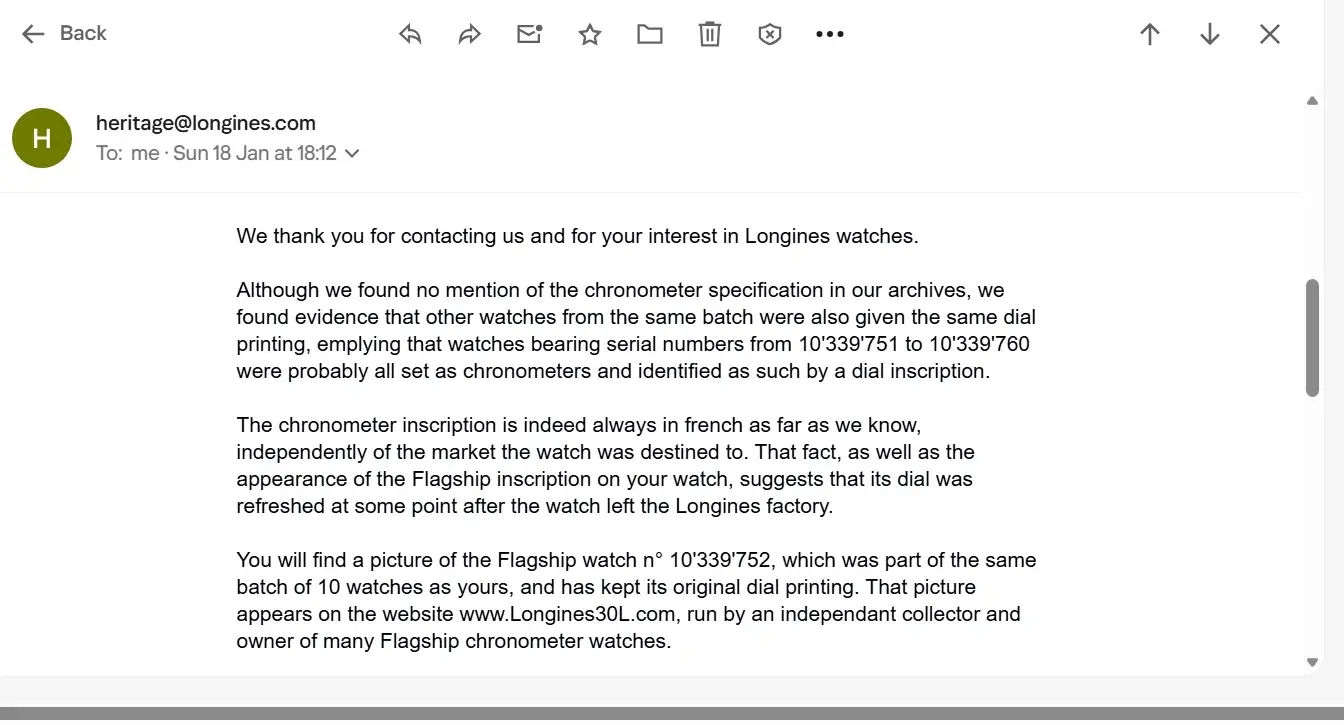
Many thanks again for all the knowledge you have imparted , I am beginning to see some light at the end of the tunnel . I have again been in contact with Longines and am forwarding a copy of their reply in which they say from their records the implication is that the watch was the last in a batch of ten that had chronometre marked on the face and thus set as chronometres . The different spelling was also suggested the same as you're own that the dial was resurfaced . You also picked up the lack of luminous coating on the hands , reinforcing this. This leads me to believe at some time in my fathers time the watch suffered some mishap (water ingress?) requiring some work , the big clue being the spelling " chronometer " . I am putting together a copy of all the correspondence I have collected including with your permission that from your excellent forum and it will be kept with the watch when handed on to my grandson , no longer a collectable timepiece but nevertheless a much treasured heirloom , my thanks once again for your time ,
Phil White

 
Posts
24,246
Likes
53,992
If you can show a clear photo of the movement, we would be able to give you a definitive answer. A different balance was used for the chronometer version.
 
Posts
2,820
Likes
4,924
If you can show a clear photo of the movement, we would be able to give you a definitive answer. A different balance was used for the chronometer version.
A few years ago, @Rumar89 started a thread that seemed to suggest that a Breguet overcoil hairspring was neither necessary or sufficient to confirm that a particular 30L was a chronometer. It would certainly be interesting to see the movement, as this watch could serve as another data point given that Longines' archive seems to indicate that it is a chronometer.
 
Posts
24,246
Likes
53,992
A few years ago, @Rumar89 started a thread that seemed to suggest that a Breguet overcoil hairspring was neither necessary or sufficient to confirm that a particular 30L was a chronometer. It would certainly be interesting to see the movement, as this watch could serve as another data point given that Longines' archive seems to indicate that it is a chronometer.
I see, so the movement might not be definitive. Although, according to that thread, the special balance would still have been in use at the time the OP watch was delivered.
 
Posts
8,096
Likes
28,524
A few years ago, @Rumar89 started a thread that seemed to suggest that a Breguet overcoil hairspring was neither necessary or sufficient to confirm that a particular 30L was a chronometer.
That is a useful reference thread. I tend to side with this opinion provided by @707mm2 :

On a personal note, I don't quite buy that flat spirals where as accurate as overcoils. Longines were still using the later ones in their observatory chronometers up until the end of competitions in the end of the 1960s, so they were still much in favor for tight regulation. But flat spirals were accurate enough for the much larger tolerances of the Bureaux Officiels, and above all were cheaper to produce. It's interesting to note that most of the major manufacturers got rid of the overcoil around the mid to late 1950s, like Omega, Zenith, Eterna, JLC, etc. and this is all linked with a decrease of finish quality in their higher end range : their movements got less bevels, less polish, less elegant bridges and various decorating touches. It seems obvious to me they were all cutting costs down.
 
Posts
2,820
Likes
4,924
I see, so the movement might not be definitive. Although, according to that thread, the special balance would still have been in use at the time the OP watch was delivered.
I wonder if there is really a hard cutoff date. If the special balance stopped being in use in 1959, maybe the OP's watch (invoiced in December 1958) was one of the first to use the regular balance? I am not sure.
 
Posts
2,820
Likes
4,924
That is a useful reference thread. I tend to side with this opinion provided by @707mm2 :
I vaguely recall asking @Archer about the benefit of a Breguet overcoil hairspring over a flat hairspring. From memory, my impression was that the theoretical benefit is small in comparison to the adjustments made by watchmakers. In other words, a well-adjusted movement with a flat hairspring could outperform a minimally-adjusted movement with a Breguet overcoil hairspring. So, the switch to a flat hairspring for 30L chronometers may have cut costs by standardizing production, but had little impact on performance. It would be fascinating to corroborate this.
 
Posts
8,096
Likes
28,524
I vaguely recall asking @Archer about the benefit of a Breguet overcoil hairspring over a flat hairspring. From memory, my impression was that the theoretical benefit is small in comparison to the adjustments made by watchmakers. In other words, a well-adjusted movement with a flat hairspring could outperform a minimally-adjusted movement with a Breguet overcoil hairspring. So, the switch to a flat hairspring for 30L chronometers may have cut costs by standardizing production, but had little impact on performance. It would be fascinating to corroborate this.
Almost certainly true. But I do believe that the "within specs" would have been more than enough for them to embrace the cost savings, as the target market only cared about the certification.