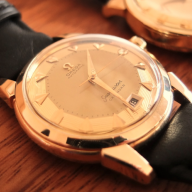
Issued watches generally...

Posts
16,305
Likes
45,004
I'm getting closer...
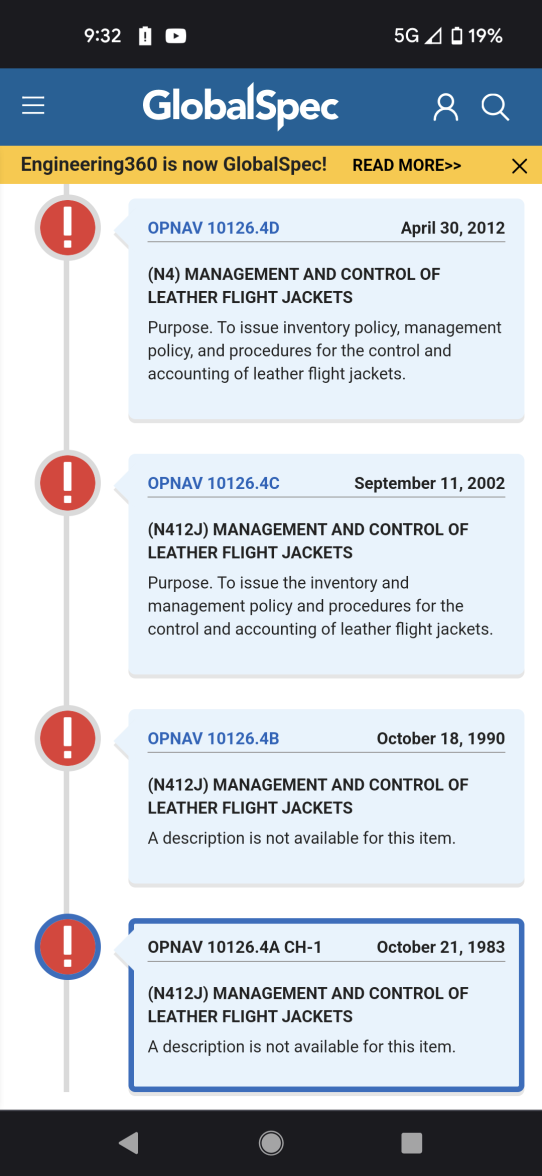
https://standards.globalspec.com/std/10377341/OPNAV 10126.4E


If you left the Navy after 18th October 1990 and before 11th September 2002, then the applicable document would have been OPNAV 10126.4B (the second iteration). As you can see, the original instruction was indeed issued in 1983.

As I've said earlier, I'm fairly certain there weren't huge changes with each revision of this document. So you can sleep easy knowing that you didn't steal your Type G-1. As long as you filled out the relevant paperwork of course...

Edit: Spelling error corrected.

If there is paperwork involved to make it legal, I’m sure if he contacted the ombudsman’s office for Naval veterans, they would help him through it.
 
Posts
34,852
Likes
39,423
The Australian army watches I inherited I don’t know a massive amount about but they were pocket watches with GSTP stamps and were dumped on the civilian market in the 50s along with other army surplus gear they didn’t want. For low income Australians they were good reliable watches at a bargain price and useful in the 50s.

I’m guessing a lot of it depends on the country, US and most European will likely be pretty strict, Eastern Europe and parts of Asia or South America would probably be a lot more lax. I doubt the Peruvian airforce is looking for any of their vintage Omegas, nor the Afghan airforce looking for their geneves.

Some of my in laws in asia have souvenired things that need to be accounted for far more seriously than watches yet their government doesn’t seem too concerned or good at counting.