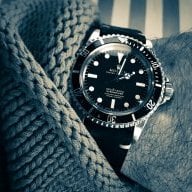
Not necessarily. Sizing can be very subjective, and your perception of what feels right or wrong can change depending on a number of variables such as other watches you wear, your expectations of how a watch “should” fit, size of watch based on style and function, what you see one social media, trends etc... If everyone around you are wearing 36mm watches on 7 inch wrists, that’s going to affect your perception, and if everyone was wearing 40mm on 7 inch wrists, that too will affect your perception. Keep in mind these variables can change your perception of the “right” fit and it’s not set in stone.
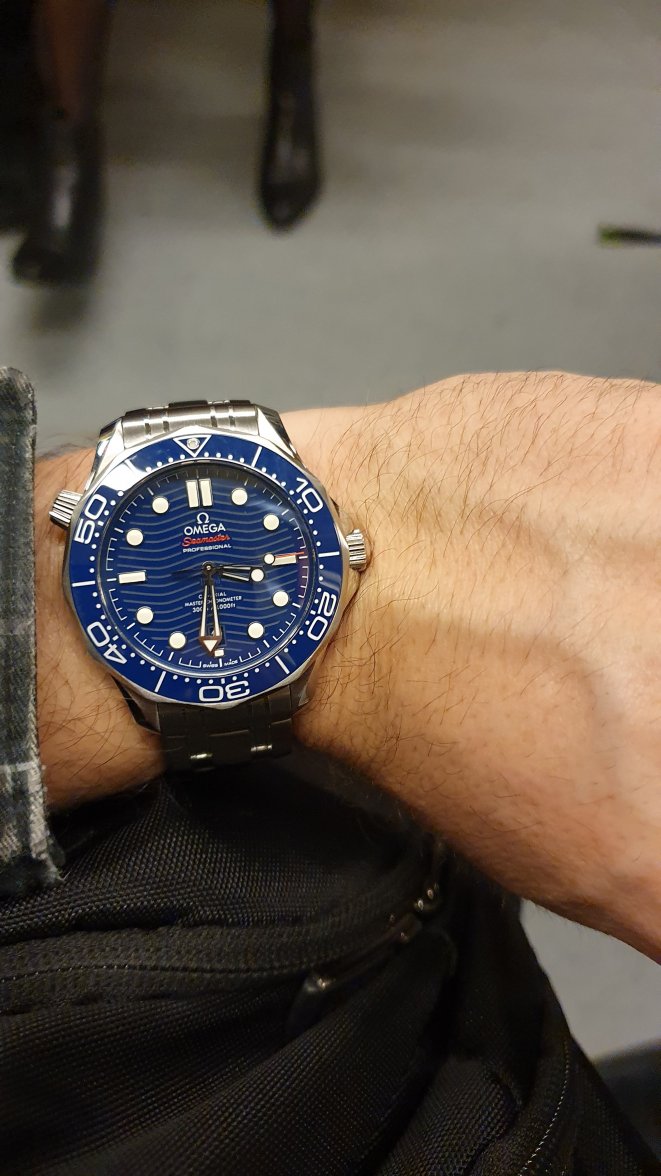
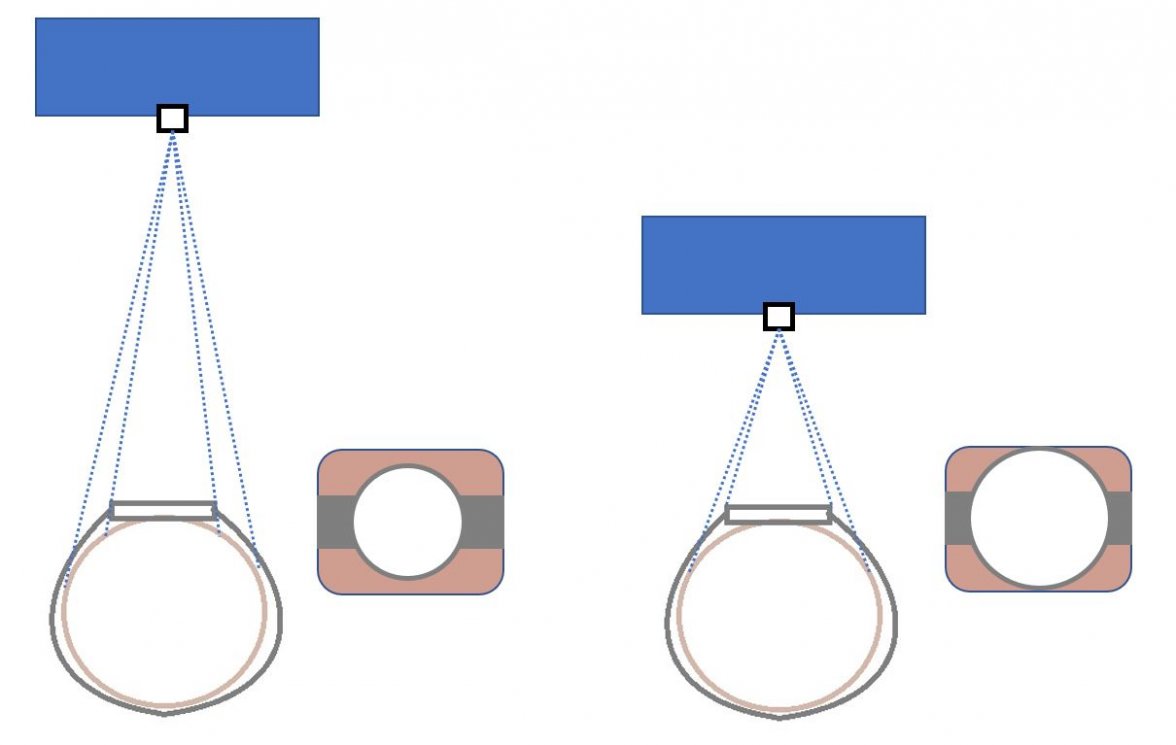
Next, when you take a wrist shot from close up on an iPhone it will have a fish eye effect which will make it appear larger than it actually is. Also, when you turn your wrist towards yourself, the diameter of your wrist shrinks compare to when your wrist is in other positions such as hanging by your side... so the shot you’re showing us is not a true representation of how the watch is actually wearing on your wrist. So keep that in mind when you’re asking for advice.
Considering how trends affect perception of size, think about how people into the vintage look generally prefer smaller look watches, where as modern watches are generally made larger for current trends. There is no right or wrong, just what you prefer, so when you ask someone what wears better, keep in mind that they too are under the influence of trends and everything else that affects their perception.
Traditionally dress watches were smaller and tool watches were larger because of their function. But who’s to say we have to conform to those standards?
Saying all that there are a few things you could try to use as guides such as lug to lug distance. People generally feel the lug to lug should fall under the diameter of the wrist, so if your wrist is 52mm wide, anything under that measurement would work. Some watches wear larger than others even is the case diameter are the same. Watches with smaller, darker, more busy dials with more bezel generally appear smaller. Watches where the hour markers are closer to the center of the dial tend to appear smaller. Watches with thicker cases with straight pigs tend to appear larger. Many design elements on the watch play into how it’s perceived.
Then there’s the whole thing about how some find smaller and thinner watches more refined and classy, larger watches exert more wrist presence where some feel are more ostentatious etc. again who cares about the judgement of others and their socially constructed tastes.
It’s good to know that there are all these forces that go into how we perceive size because then you can make a more informed decision as to what’s right for YOU. Do you care about following certain social norms, and if so which ones? Or would you prefer to disregard the “rules” and trends and arrive at what you like? I don’t think there’s a right or wrong answer there, it’s really more about what feels right to you whether that’s going with or against various grains.
Here’s an example of how photography with a phone can mess with perception.
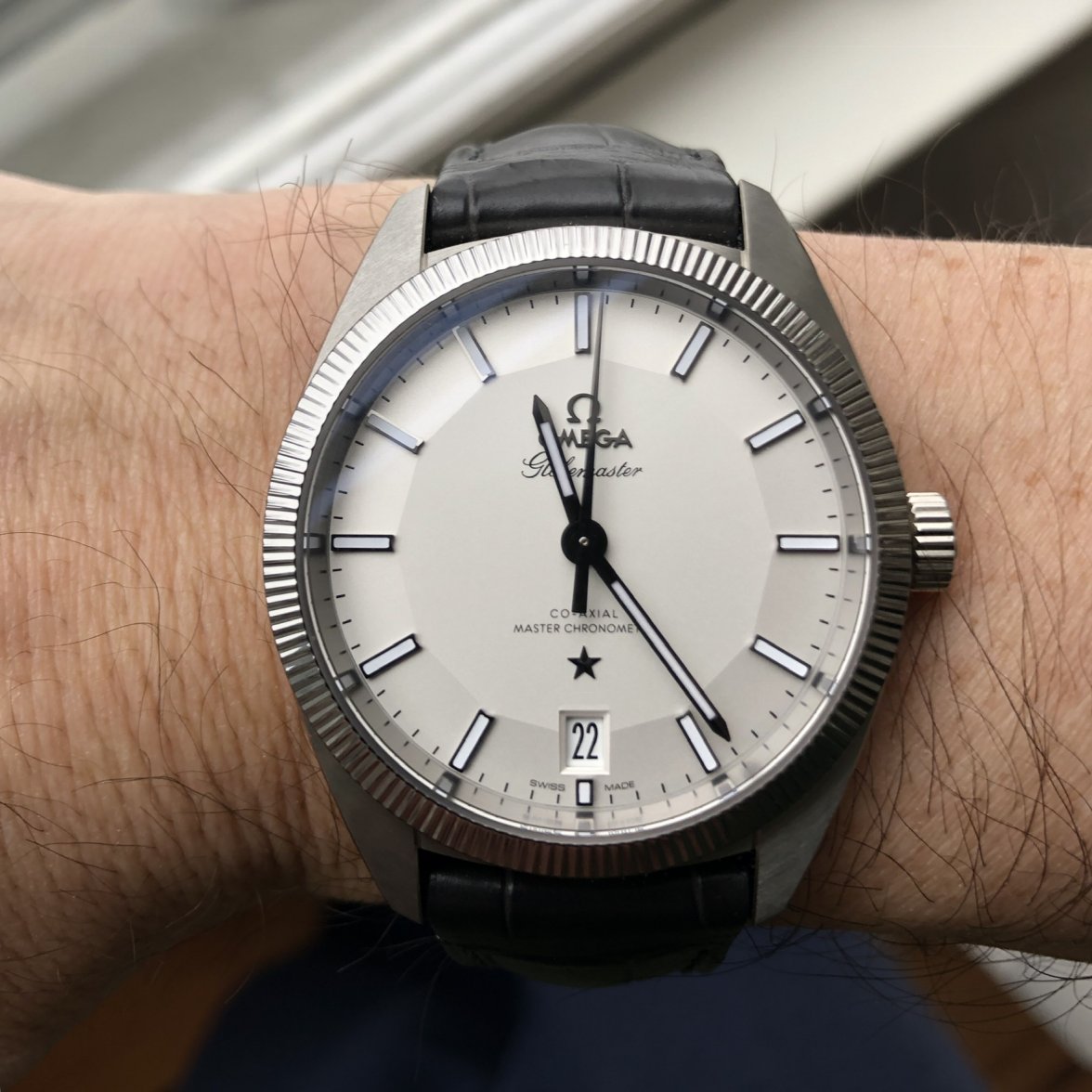
Here’s a shot of my Globemaster taken at a close distance with my Iphone. Notice the lugs are past my wrist, and to me it looks a little too large.
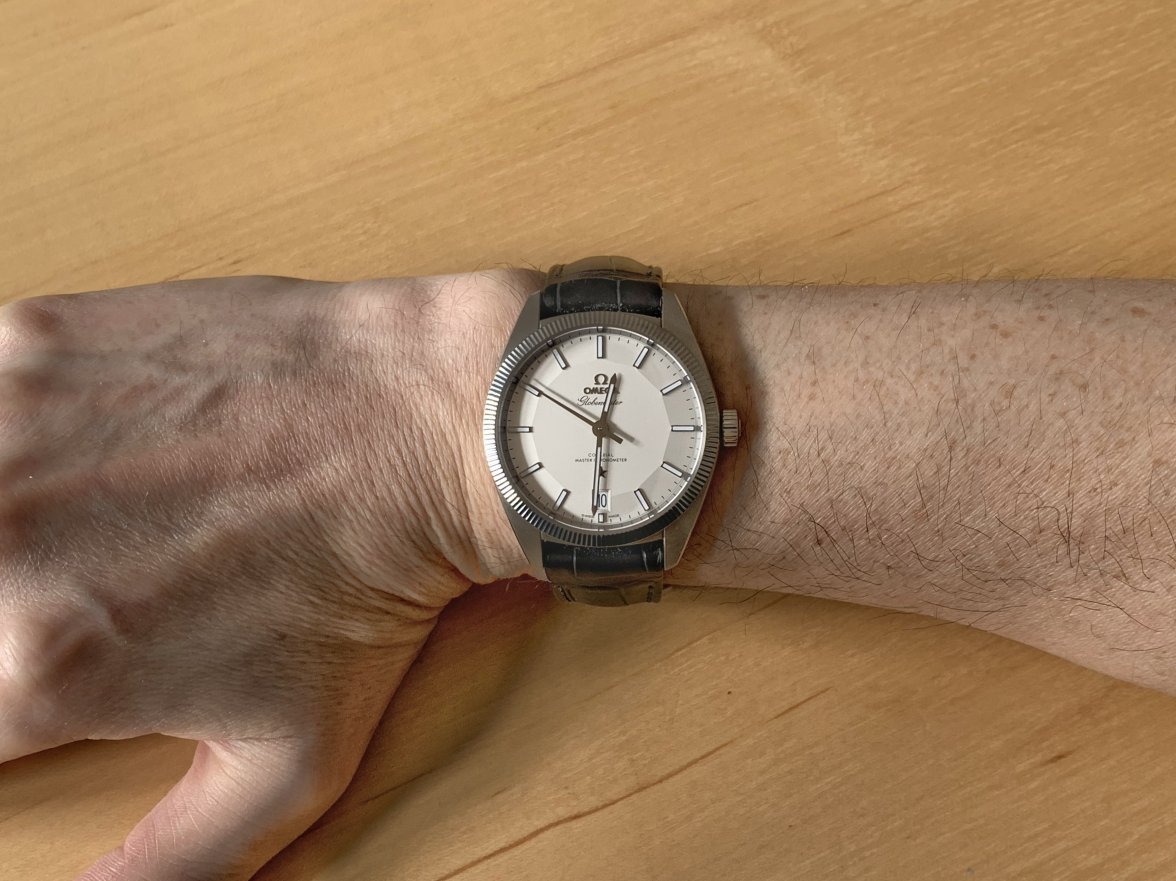
Here’s another photo of my Globemaster taken with my IPhone from the same angle, but my IPhone is further away. There’s still a fisheye effect and the watch looks smaller in person, but the size in the photo looks fine to me. Notice how the lugs are within the edges of my wrist compared to their previous photo.
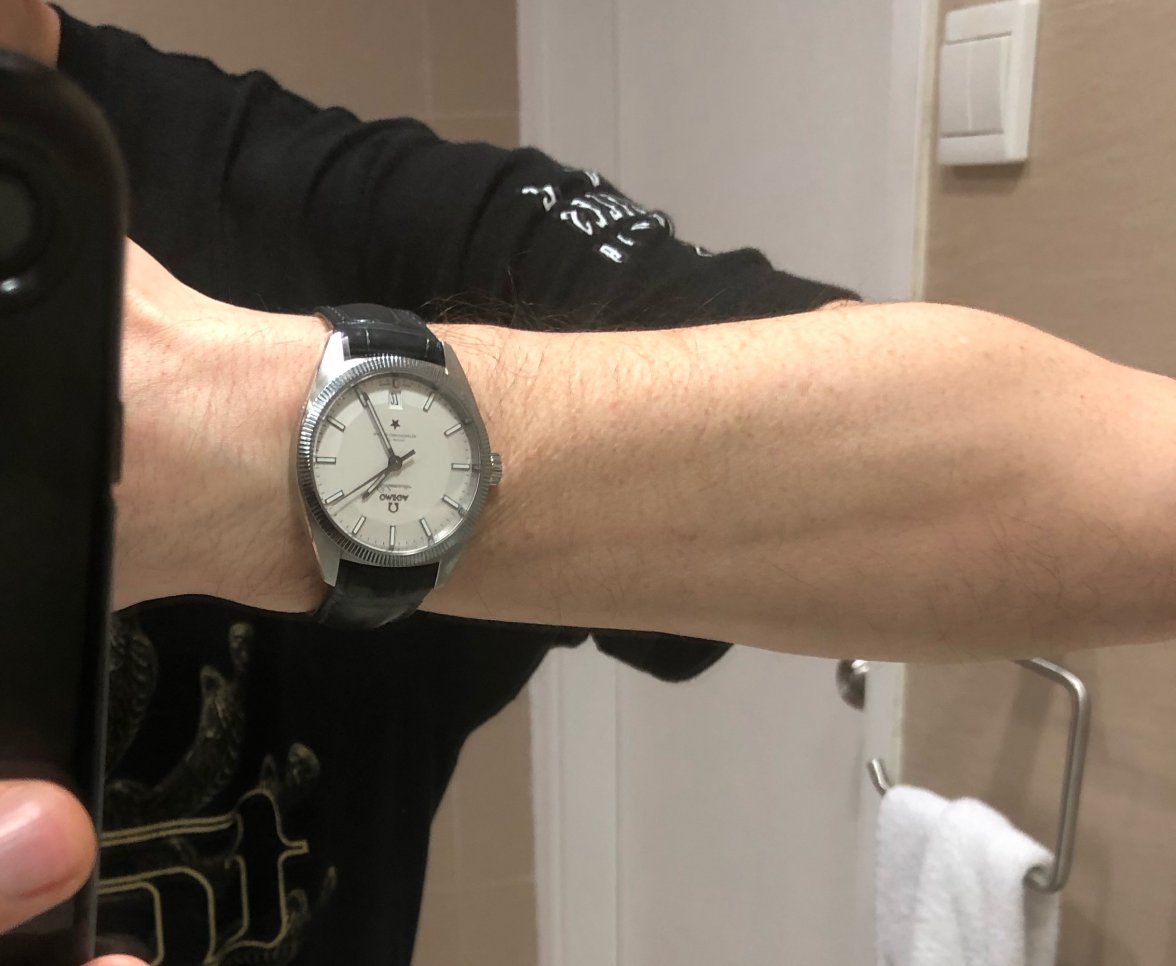
Now an iPhone photo from a different angle reflected in a mirror. Notice how the lugs are clearly within the edges of my wrist and the bezel and dial diameters appears significantly smaller than in the previous photos. There are a few mm of skin showing on either sides of the lugs and it actually looks much closer to what I see in real life when I turn my watch to face me without the fisheye.
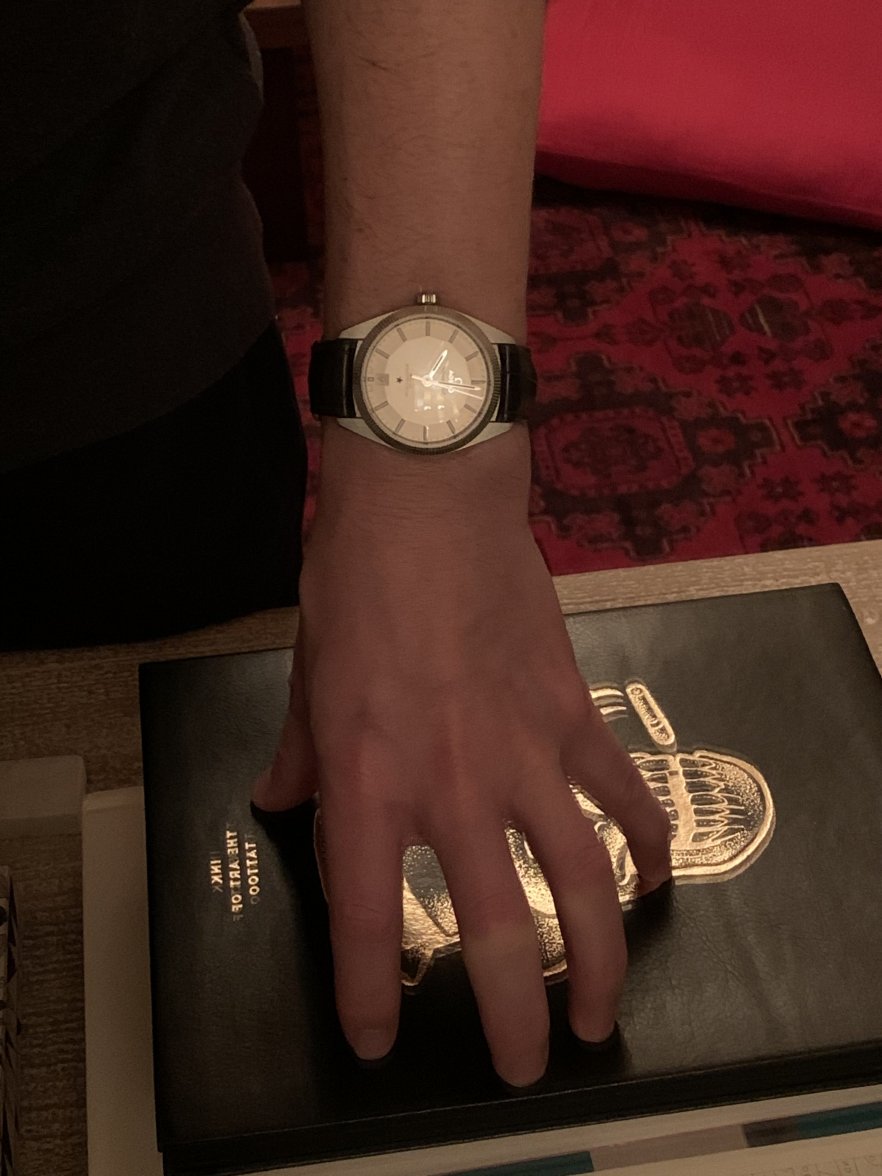
Now a photo with my wrist turned out. The watch looks even smaller relative to my wrist compared to the other shots because your wrist diameter is at its largest when it’s turn out and away from you. The circumference doesn’t change, but the diameter does. This is how your wrist appears most of the time when you arm is hanging by your side or pacing other people. It’s only when you turn your to face yourself that it starts to appear smaller.
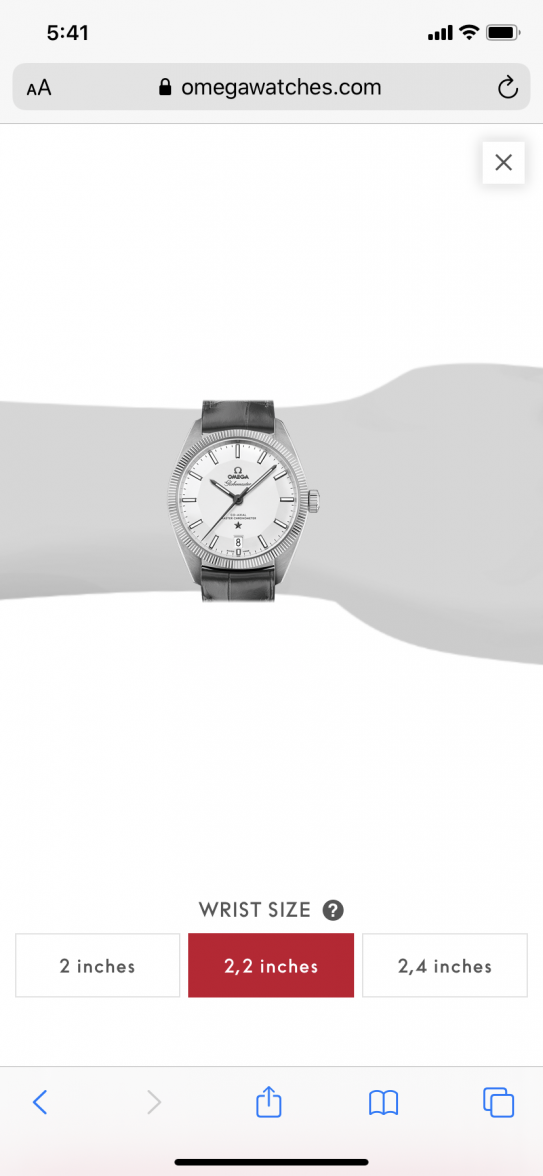
Now, by traditional dress watch standards, the sizing to some may appear larger, yet but the sizing images below from Omegas own website, the way the Globemaster wear on my wrist falls pretty much in line with their middle image:
So what’s a “good fit”? The traditional sizing where the smallest watches are considered “tasteful”, or the size above that seems to be the current standard of Omegas?
BTW, my wrist is 6 inches. The Globemaster is 39mm (though I measure it to be closer to 38mm), and the lug to lug is 46mm. To some this may seem on the larger end of the spectrum for my wrist, but in reality I personally feel it’s perfect for me. I wondered for a while how I’d feel if it was smaller, but considering everything about perception I find it’s perfect for my wrist.
Again, I don’t believe there’s a right or wrong answer here, just what you enjoy wearing. I also don’t think that if you’re asking whether it’s too big for you than it’s too big, because with a smaller watch your perception may change yet again and in time you may find the smaller watch too small. It’s important to know that perception is highly changeable depending on all the influences listed above. Hopefully that helps in making an informed decision, and you should consider this when getting the advice of other people.