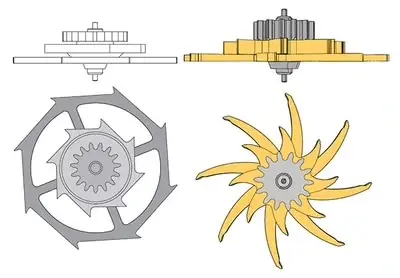
Is it weird that I wish the Speedmaster movement still had the traditional Swiss lever escapement?

Posts
1,479
Likes
3,005
I have yet to see any co-axial rust rats. Will stick with lever and Quartz for the time being.

I have Daniels book, and most of the HJ magazines from 1954 to around 2003. So there was a lot of ink spilled back in the day.

Henry in his last years wanted me to make an animated model of a co-axial Tourbion. The tech was a bit early for that. Then Henry and the other old guys passed away.

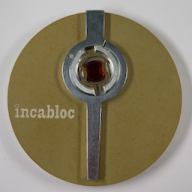
Now it would not be too much trouble fo make an acrylic model with a laser. I find playing with my Avatar incabloc model to be fun, So one could use that design to model the jewel pivots.

Priorities what seem interesting when one is in their mid 30s, Do not seem as important when one is in their mid 60s

Curios I never see much mention of cylinder escapements. Those were pretty popular back in the day. I took a bunch of photos of the manufacturing equipment in one of the museums. I have a whole tray of them somewhere. Also the remains of a repeater I was going to use CAD to model and restore ...
Makes me think, no one has drawn a 3D print of any of these yet? Thatd be cool.
 
Posts
2,842
Likes
4,536
This one is pretty neat; Came up when I viewed the one above.

I suspect others have drawn this stuff up. Probably in house or the tech schools.

I still have the CAD program Tissot was using in the mid 1990s (has not been bettered.) Have to run it on a vintage mac.
 
Posts
1,978
Likes
2,139
Makes me think, no one has drawn a 3D print of any of these yet? Thatd be cool.
There is a guy in the UK who has a couple of different coax escapement that he has for sale as 3d prints. Tempting if it wasn't for the shipping troubles.
 
Posts
29,669
Likes
76,828
@Archer
Do you think that there is a reliability difference between theese to styles of co axial wheels?
No
 
Posts
10,440
Likes
16,324
I feel kinda the same. I know most people love it but but I’ve said previously I think the coaxial escapement (at least in its current form) is the answer to a problem no one had. It’s just a marketing ploy.

It offers little/no benefits and hugely restricts who can service your watch now (coupled with potential parts issues in the future?).

No upside for me and a genuine downside and it’s one of the reasons I don’t have a modern Omega in my collection.

I understand your view and I have read enough of your posts to realise I respect your taste enormously but I do think you are missing out. Some of the modern stuff is really appealing. By modern I mean within the past 25 years. All things are relative of course. I have a recent FOIS which I really like, two 3313 Speedmasters I think streets ahead of the Lemania based stuff.

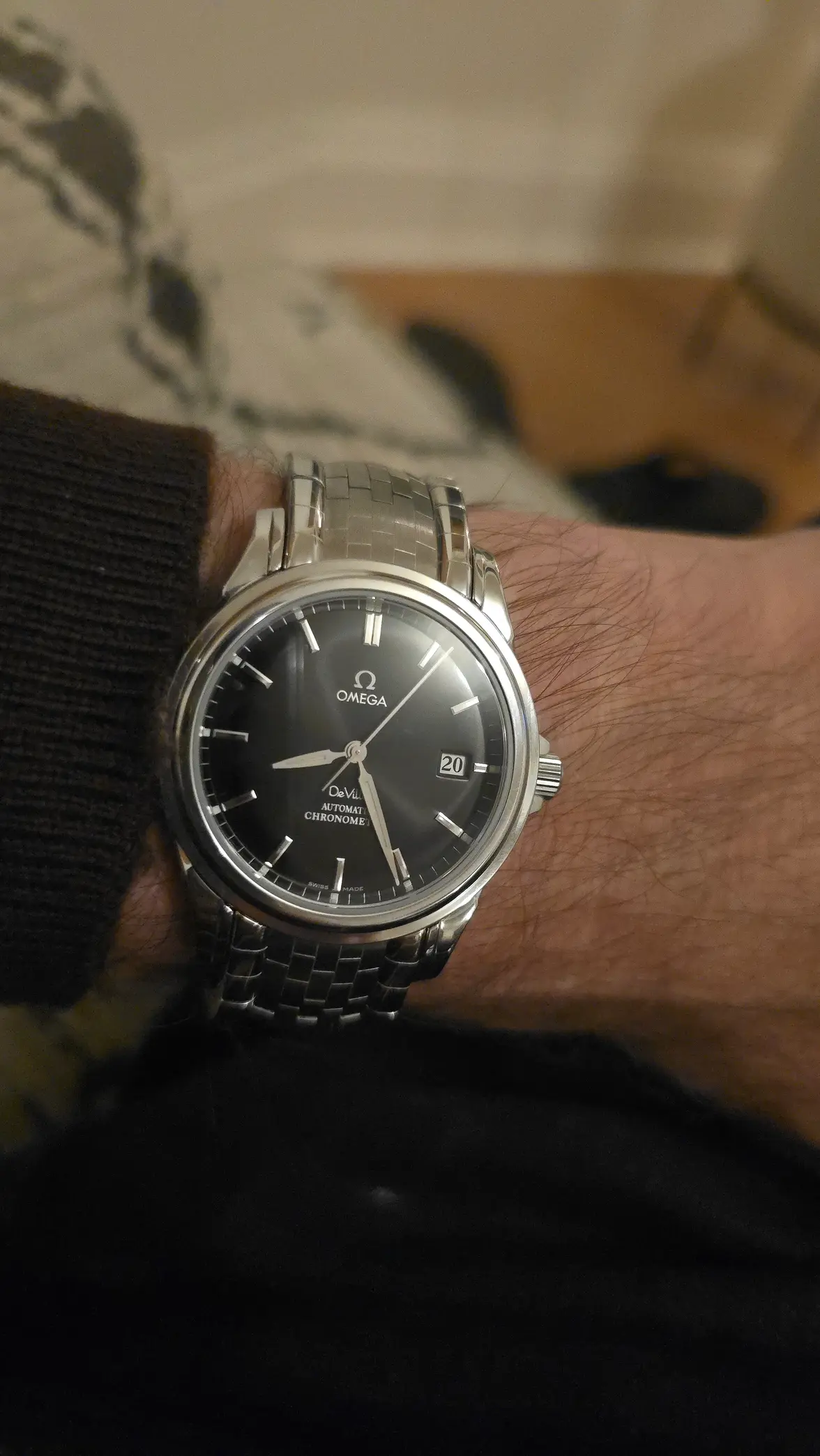
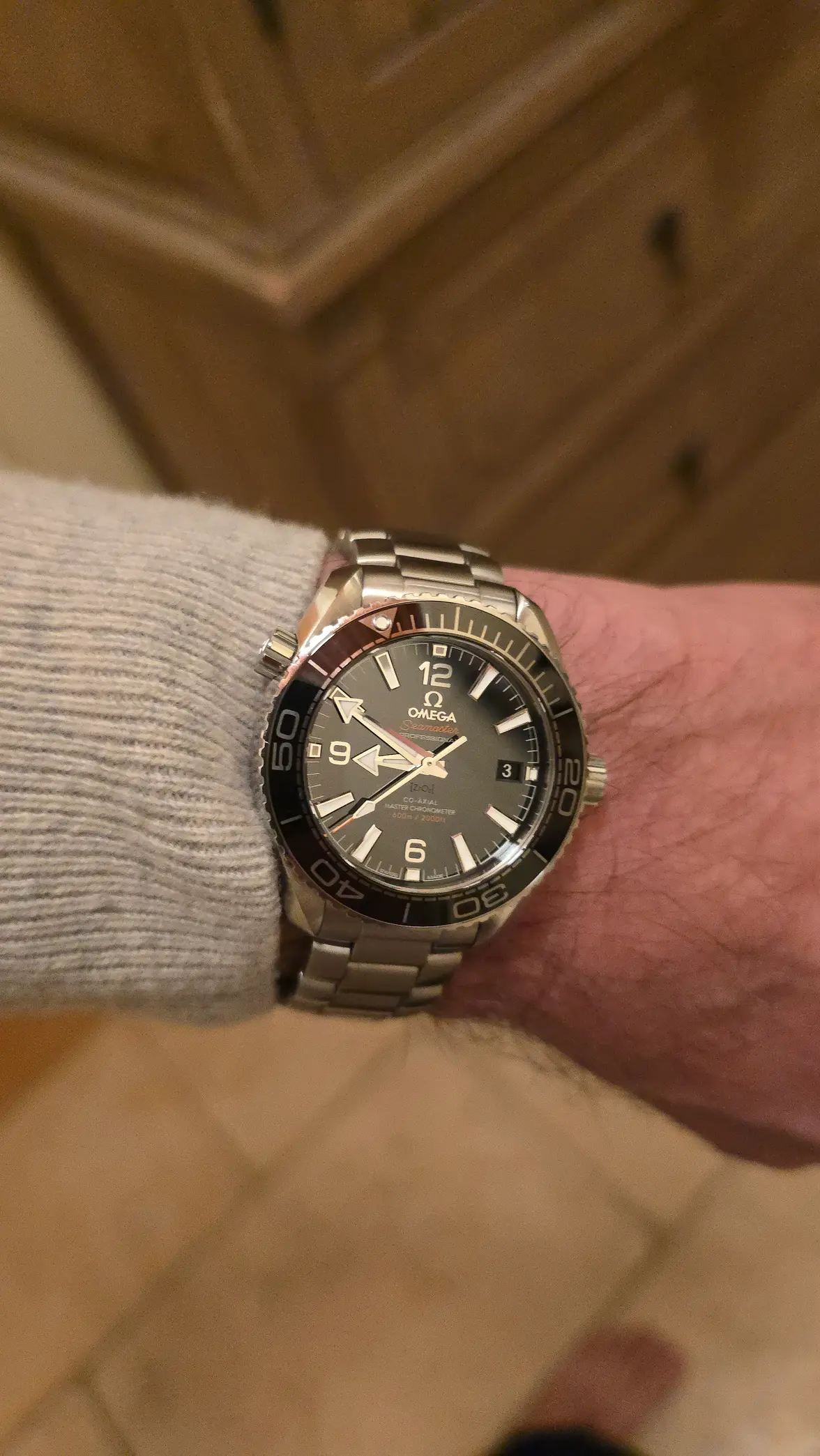
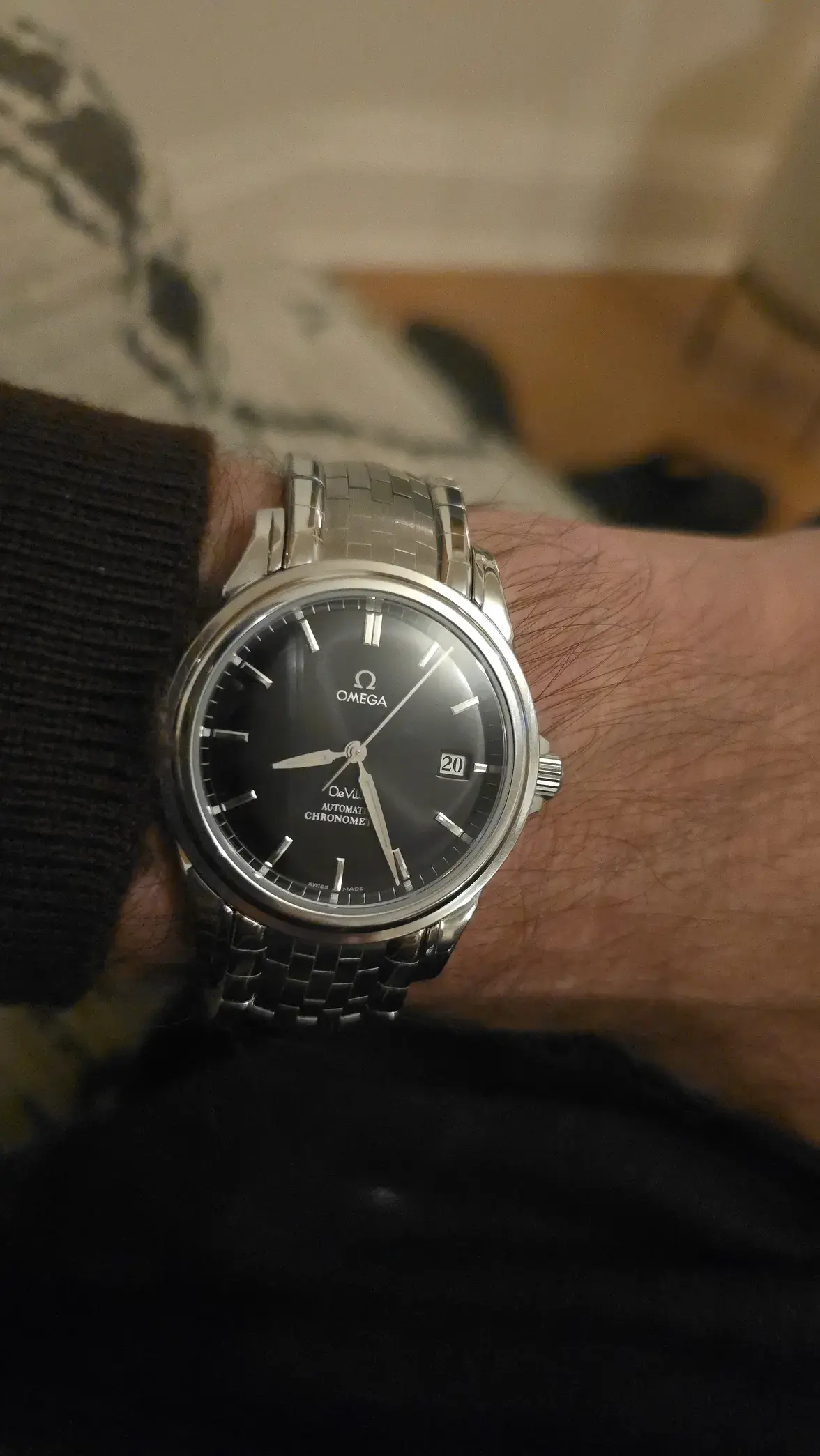
And then you have things like the sapphire cased DeVille, the 2201 Planet Ocean, the Railmaster AT, the Trilogy watches, etc etc. All are coax, all are great despite the marketing-led tech.

Don't cut your nose off etc. Omega didn’t stop making great watches in 1970, they just took a 20 year hiatus.
Edited:
 
Posts
291
Likes
313
Yes, while I currently own a FOIS, and I had a 3861 Speedmaster Professional for 4 years before recently selling it, my long term plan is to try and get a 321 Ed White Speedmaster. It's not just because it's a fantastic watch, it's also because it uses the original 321 movement.

Yes, the movement is the legendary movement that went to the Moon, but I also just prefer the older more traditional mechanical watches.

As an aside, I'm really not too bothered about a cam vs column wheel operated chronograph. I just think that the beauty of mechanical watches is the fact they're meant to last a long time and be relatively easy to maintain and service.

I don't think a coaxial fits into the latter.
 
Posts
6,188
Likes
21,187
Don't cut your nose off etc. Omega didn’t stop making great watches in 1970, they just took a 20 year hiatus.

Good opening for pics.

 
Posts
13,198
Likes
22,950
I understand your view and I have read enough of your posts to realise I respect your taste enormously but I do think you are missing out. Some of the modern stuff is really appealing. By modern I mean within the past 25 years. All things are relative of course. I have a recent FOIS which I really like, two 3313 Speedmasters I think streets ahead of the Lemania based stuff.

And then you have things like the sapphire cased DeVille, the 2201 Planet Ocean, the Railmaster AT, the Trilogy watches, etc etc. All are coax, all are great despite the marketing-led tech.

Don't cut your nose off etc. Omega didn’t stop making great watches in 1970, they just took a 20 year hiatus.

I think you make a fair point.

I’ve been very close to buying several new Omegas; the original Seamaster 300 heritage master coaxial, a 42mm PO, the Railmaster trilogy reissue and the recent SM300 diver no date with aluminium bezel.
I do tend to favour the 1120 Omegas over the current ones though, 2531.80 and 2254.50 Seamasters as an example.

We’ll see, I want a modern Omega, they’re pushing against an open door with me, they just haven’t done something that’s really grabbed me over the last few years.
 
Posts
10,440
Likes
16,324
I think you make a fair point.

I’ve been very close to buying several new Omegas; the original Seamaster 300 heritage master coaxial, a 42mm PO, the Railmaster trilogy reissue and the recent SM300 diver no date with aluminium bezel.
I do tend to favour the 1120 Omegas over the current ones though, 2531.80 and 2254.50 Seamasters as an example.

We’ll see, I want a modern Omega, they’re pushing against an open door with me, they just haven’t done something that’s really grabbed me over the last few years.
Oh I didn't even mention the 1120 SMPs since it must be a given those are great!

For me, the biggest drag on acquiring models from the current catalogue is the price which seems to have crept up to silly levels. A base model Bond Seamaster for approaching £6K? Basic Moonwatch above that figure? Insane. If losing the coax fairy dust knocked £2-3K off the price, I'd be all in favour!
 
Posts
1,479
Likes
3,005
Oh I didn't even mention the 1120 SMPs since it must be a given those are great!

For me, the biggest drag on acquiring models from the current catalogue is the price which seems to have crept up to silly levels. A base model Bond Seamaster for approaching £6K? Basic Moonwatch above that figure? Insane. If losing the coax fairy dust knocked £2-3K off the price, I'd be all in favour!

I tried and looked back at historical prices in the US from 2000 and while there was a marked increase in 2020 to 2021 for the Hesalite Moonwatch, if you annualize the percentage increase, it falls within 4.5-5% anyway. Despite the technology, the increased testing and certification, the taxes, tariffs, everything else, we'd probably still be at US$7800 for this watch in 2025. It'll probably go up in 2026 by a similar amount. It's still a large damn amount for a watch, no doubt.
 
Posts
1,077
Likes
1,097
I know most people love it but but I’ve said previously I think the coaxial escapement (at least in its current form) is the answer to a problem no one had. It’s just a marketing ploy.

I agree 100%. Don't get me wrong, I'm an Omega fan boy, but I can see the co-axial movement for what it is--a marketing ploy. When they first came out they were touting less wear and longer service intervals. Well they aren't saying that anymore so what's the benefit?

My favorite "modern era" Omega movement is the 1120. It's robust and relatively easy to service. I don't care that it's closely based on the ETA 2892-A2. It's thin and durable. Win-win.

I have two co-axial Omegas left in my collection (I had about 8 at one time) and I'm planning to sell those off in the near future. I'm happy with my 1120's. I think once I get the co-axials sold off I'll start looking for a pre-70's Omega with a 550 series movement. Another amazingly good Omega movement.
 
Posts
1,978
Likes
2,139
I agree 100%. Don't get me wrong, I'm an Omega fan boy, but I can see the co-axial movement for what it is--a marketing ploy. When they first came out they were touting less wear and longer service intervals. Well they aren't saying that anymore so what's the benefit?

My favorite "modern era" Omega movement is the 1120. It's robust and relatively easy to service. I don't care that it's closely based on the ETA 2892-A2. It's thin and durable. Win-win.

I have two co-axial Omegas left in my collection (I had about 8 at one time) and I'm planning to sell those off in the near future. I'm happy with my 1120's. I think once I get the co-axials sold off I'll start looking for a pre-70's Omega with a 550 series movement. Another amazingly good Omega movement.
The 550 movements are great! Though the automatic rotor pivot design leaves a lot to be desired IMO. There is good reason everyone has moved to the ball bearing design, and serviceability without a parts account is problematic.

Re the coax: Omega IS right, it very much adds less wear and longer service intervals.... to the escapement. But as Archer and i noted above (IIRC), the escapement was already not the part of the watch that causes a service to be required. I've had a few dozen watches apart so far, and always buy bad/no runners for my projects. I have never seen a 'worn out pallet jewel' or escape wheel tooth. So the friction ON those is obviously a wear point and unnecessary, but not a practical problem.

The coax movement is great engineering, but for no practical gain. BUT, Omega is an 'engineering' company (their #1 seller is to engineering/space geeks; also: you buy rolex to impress your friends, omega to impress your watchmaker 😀 ), so I can see why they thought it would help. I don't think they've done a great job taking advantage of that marketing though.

From my perspective: Coax is cool, but it doesn't affect my purchase. I figure anything I buy that recent, I'll have an Omega certified watchmaker (or Omega) service anyway, so it is irrelevant to me that it requires special training. As long as it is 'as good' as a swiss lever, it doesn't change my life. AND, based on longish term data (other than growing pains!), it seems to meet that mark.
 
Posts
29,669
Likes
76,828
The 550 movements are great! Though the automatic rotor pivot design leaves a lot to be desired IMO. There is good reason everyone has moved to the ball bearing design, and serviceability without a parts account is problematic.
Something is going to wear, so what do you want that to be, and how easily do you want to be to replace the worn part?

The 550 design wears the brass pinion, which is easily pressed out, and new one pressed in, and the hole reamed - easy.

Compare that to the traditional Rolex design - the axle is steel riding in a jewel. The axle wears and it is riveted to the rotor. You punch out the axle, which can distort the hole in the rotor if it doesn't shear off cleanly, causing the riveting of the new axle to sometimes be problematic. Axles come loose, causing the hole to wear even larger and winding to be poor - not difficult to do if everything is good, but the more you replace the axle the more likely you are that the entire rotor will need to be replaced.

Bearings - how friendly they are depends entirely on the execution...

2824 style - bearing is friction fitted and presses out and a new one presses in - easy.

2892 and Omega 1120 style - bearing is held in with a locking ring, so a tool unlocks the ring, new bearing is installed, the ring is locked in place - easy.

3301/3313 style - the bearing is not located in the rotor, but in the automatic winding bridge. When the bearing wears out it cannot be replaced, so an entire bridge needs to be replaced - $$

1150/1160/3330 series - the bearing is in the rotor, but is burnished in place - bearing is not sold separately so the entire rotor must be replaced - $$

New Rolex calibers with bearing - same as above and must replace the entire rotor - $$

Of the wat I'll call the vintage options, the Omega 550 style is the best IMO. It's easy to repair and doesn't risk you needing to replace the entire rotor because of the design. The Rolex style is much worse IMO.

Of the modern bearing styles, one where you can replace the bearing is ideal. The style where you cannot is IMO the worst of the bunch.

 
Posts
1,978
Likes
2,139
I like the ones like Seiko where you either press in the bearing into the rotor, or it is held in by a few screws 😀 easy swap and longer life.

Reaming the omega rotor and hoping I got it just right haunts me.
 
Posts
2,842
Likes
4,536
Reaming the omega rotor and hoping I got it just right haunts me.
I have been accumulating rotor parts. The part what tends to get lost is the locking gib. So I have not assembled as many as I could.

the 1400R inserts show up as often as not. The parts list has 1400 for the axle. Axels seem to come with the bearing. They often fit tight. So a light touch with the broach does seem to be in order. I think @Archer noted Omega makes a special broach. Until I get the watch back together will I know if I took off too much or not. I have also found these small brass winding gears loose in parts assortments. Whether or not they are usable is anyone's guess.

I do have a ladies movement with a snapped off axel. I forget it it is a 670 or 680. So far that is the only one I have seen like that. Rusted axles happen. Mostly though it is missing axles. The 1464 reversing gear is also often missing or rusted solid. That part is as expensive as any.

I got sidetracked with a bunch of 34x movements (most missing hairsprings.) Recently got a bunch of rotor jewels. Not having a jewel press makes it awkward to replace them. Bumpers do have, for the most part, jeweled rotors. It seems the lower jewel gets crushed as often as not.
 
Posts
29,669
Likes
76,828
I like the ones like Seiko where you either press in the bearing into the rotor, or it is held in by a few screws 😀 easy swap and longer life.

Reaming the omega rotor and hoping I got it just right haunts me.
Omega sells a reamer for this - it's a 45 second job for a perfect fit with that reamer.
 
Posts
1,978
Likes
2,139
Omega sells a reamer for this - it's a 45 second job for a perfect fit with that reamer.
This is unfortunately not available to non-parts account folks, so we're stuck doing it without that. While I'm not as anti-parts-account-only as others in this thread, I think this sort of thing (limiting TOOL availability as well) makes these much less 'nice' designs to me.
 
Posts
29,669
Likes
76,828
This is unfortunately not available to non-parts account folks, so we're stuck doing it without that. While I'm not as anti-parts-account-only as others in this thread, I think this sort of thing (limiting TOOL availability as well) makes these much less 'nice' designs to me.
It's not a proprietary design or anything like that - it's just a straight reamer of a particular size.

There are 2 of them. One is .702 mm (I use this one 99% of the time) and the other is .703 mm (I rarely use this one - I've used it maybe once so I would not focus on this size).

Go find a .702 mm reamer and you are all set...