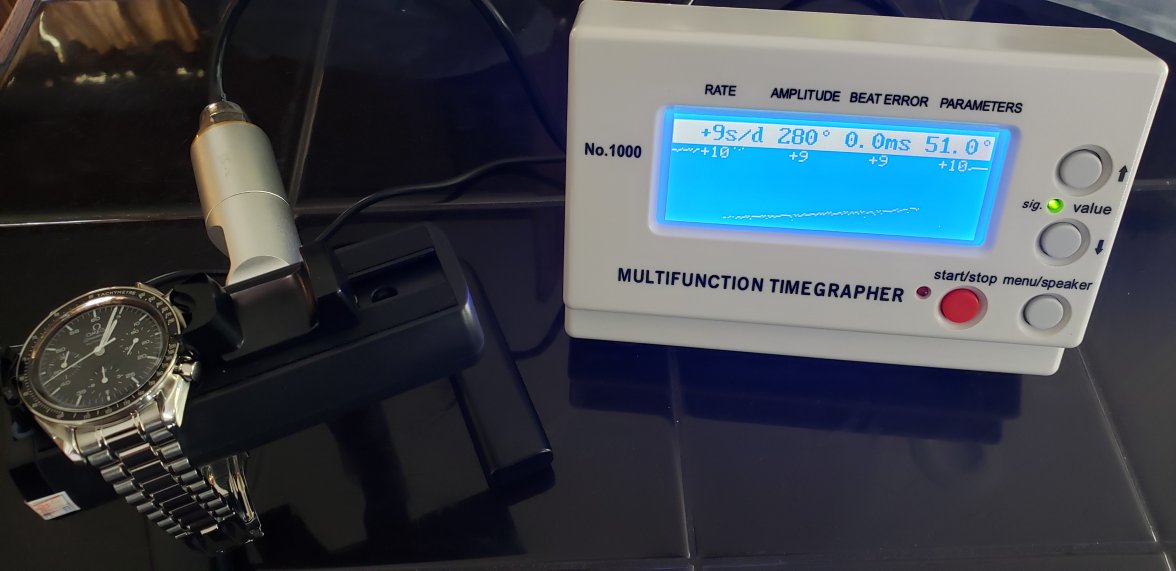
I just purchased a Omega speedmaster reduced 3510.50

Posts
1,988
Likes
3,686
+5 is great. 309= plenty of amplitude. Zero beat error.
You got yourself an awesome watch. 馃憤
 
Posts
1,988
Likes
3,686
My understanding is between 270 and 315 is to be expected. Waiting for @Archer to chime in.
 
Posts
334
Likes
739
I'm no expert but if the lift angle is correct for the movement and the amplitude variation between positions is small you've got yourself a winner
Also, make sure to understand that the timegrapher doesn't always tell the truth, it's a handy tool but there are a lot of variables. There is plenty of information about this on the internet and it definitely makes an interesting read
Enjoy!
https://omegaforums.net/threads/amplitude-debate.78234/
This is a good read
 
Posts
78
Likes
68
I'm no expert but if the lift angle is correct for the movement and the amplitude variation between positions is small you've got yourself a winner
Also, make sure to understand that the timegrapher doesn't always tell the truth, it's a handy tool but there are a lot of variables. There is plenty of information about this on the internet and it definitely makes an interesting read
Enjoy!
https://omegaforums.net/threads/amplitude-debate.78234/
This is a good read
That article helps cause I was checking my vintage Seiko 6309 that was serviced recently and it had a low amplitude.
 
Posts
29,675
Likes
76,836
Lift angle is 51 for this movement, so even if he's left it at the default of 52, it's still good amplitude. Rule of thumb is that for every 1 degree of lift angle error, there will be about 6 degrees of amplitude error, so this is likely overstated by 6 degrees, so not significant.

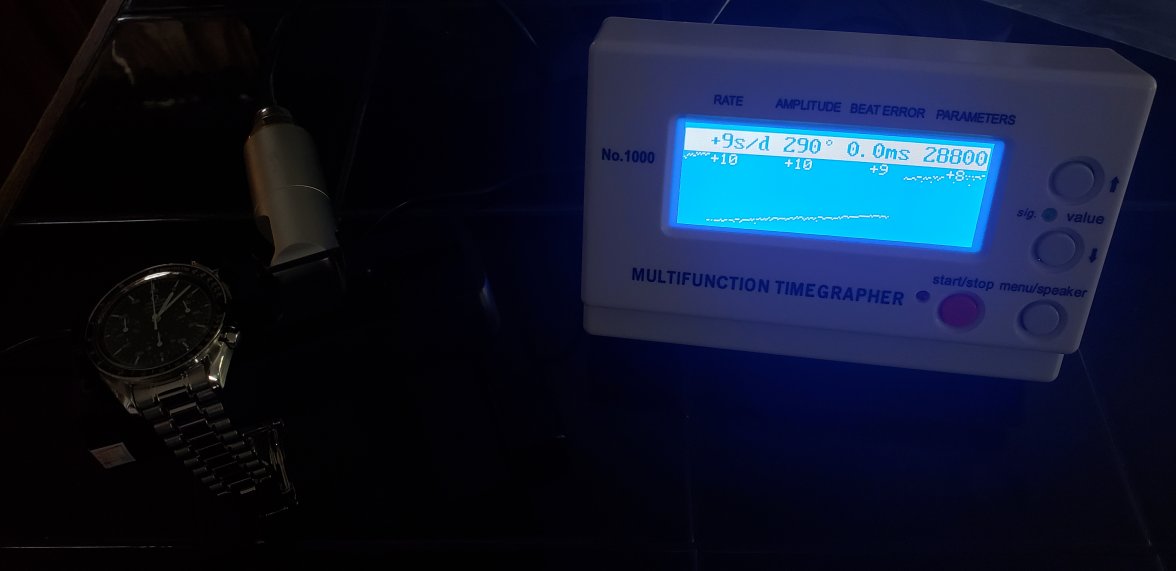
The next test is to check how much the amplitude drops when the chronograph has been started. The thing with these modular chronograph movements is that many watchmakers who claim to service them, only service the base 2892 and not the chronograph module. So you will want to be sure that the chronograph module doesn't create a large drop in balance amplitude when you have the chronograph running. So run that test and show us what it is with and without the chronograph running...and set your lift angle to 51 degrees.

Cheers, Al

 
Posts
78
Likes
68
Lift angle is 51 for this movement, so even if he's left it at the default of 52, it's still good amplitude. Rule of thumb is that for every 1 degree of lift angle error, there will be about 6 degrees of amplitude error, so this is likely overstated by 6 degrees, so not significant.

The next test is to check how much the amplitude drops when the chronograph has been started. The thing with these modular chronograph movements is that many watchmakers who claim to service them, only service the base 2892 and not the chronograph module. So you will want to be sure that the chronograph module doesn't create a large drop in balance amplitude when you have the chronograph running. So run that test and show us what it is with and without the chronograph running...and set your lift angle to 51 degrees.

Cheers, Al

 
Posts
29,675
Likes
76,836
With lift set at 51and chronograph running.

Fully wound? What is it with the chrono off - the difference is what matters.
 
Posts
408
Likes
355
Update: I no longer have this watch.

Curious, why did you get rid of it so soon if you don't mind sharing?
 
Posts
399
Likes
550
Sorry if this is a dumb question but what does reduced mean, i understand the meaning of the word
but in reference to what? In what way has the watch been reduced?