How to tell a service is due?

Posts
24,229
Likes
53,957
Thank you Jim and all!! 👍
It does seem that we have consensus that bringing the watch to a watchmaker for a quick look-over and a timegrapher assessment is a good idea and the recommended course of action.

Let’s try to take this a bit farther, if you guys don’t mind.

First, we can (hopefully) all agree that the severity of a “catastrophic failure” potentially involved with such a watch (however precious it may be to all of us…), is nowhere close to the ones possibly related with ships, airplanes or even automobiles breaking down.
So, having put out of the way the fact that we would not be faced with a breakdown that would be so dramatic that it could not be fixed anymore (since spare parts are readily available for cal. 861/863), let’s discuss when a complete overhaul would be truly warranted.

In your post, Jim, you mentioned that the preventative maintenance activities you performed were based on both inspections and/or knowledge gained. Same can be done with car engines or transmissions, amongst others, through inspections and analysis of oil samples. These will help you make an informed decision about oil change intervals that will land somewhere in between the insane “lifetime use” pushed by some manufacturers, and the unnecessary and costly (both for one’s wallet AND for Mother Earth) “old school maintenance schedules” that advocate for synthetic oil changes every 5,000 miles or 12 months, whichever comes first.

I am thus asking all watchmakers and experts out there who have experience with these 861/863 calibers: how often have you guys experienced premature (and costly) wear and tear on parts that would NOT have been otherwise replaced if the watch would have been serviced at regular intervals?

I am really curious and interested beyond ensuring accuracy of my watch, so thank you for your comments.

It would take a little effort to search for, but there have been a couple of threads on this exact topic, where watchmakers have shown photos of badly worn parts that needed to be replaced at extra expense. Perhaps they will respond again, and repost the photos, but it could be faster for you to search.
 
Posts
2,058
Likes
4,638
I try to get them in for service around every 7 years or when problems arise.
 
Posts
18
Likes
31
It's time to have my beater ( or what's left of it ) serviced. Thanks to all for your insight.
 
Posts
29,659
Likes
76,811
I am thus asking all watchmakers and experts out there who have experience with these 861/863 calibers: how often have you guys experienced premature (and costly) wear and tear on parts that would NOT have been otherwise replaced if the watch would have been serviced at regular intervals?

So this is an interesting question, and the way it's phrased is a bit strange to me. You describe wear and tear on parts in a watch that has not had regular service, but also describe it as "premature" and to me that doesn't make sense. If a watch isn't maintained, then the wear that happens is expected, not premature.

So the first thing we have to establish is when do we decide that watch movement "needs" service? That answer is different for different people, so for many as long as the watch is performing well (whatever that may mean) in the eyes of the owner, it doesn't "need" service. For me the answer is purely technical so when the lubrication inside the watch is broken down to a point where the parts are no longer protected, and wear is happening or is likely to happen. I add that last part because you can't always tell if wear is happening until you take the movement apart, and in that case you are already in the middle of servicing it.

So in the end if a watch comes in and I'm seeing if it needs service, I check the watch for water resistance, I fully wind it and place it on the timing machine to check beat error, amplitudes, and rates, then I open it up and put it under a microscope. I check the lubrication that is visible, and make a determination form there.

Here is a real life example of just that process, with a Speedmaster that I bought for myself and is on my wrist right now:

https://omegaforums.net/threads/if-...-does-that-mean-it-doesnt-need-service.20475/

This also illustrates that good timekeeping is most certainly not an indicator of a watch that is in good shape. Fortunately all that was needed on that watch was a regular service, and I don't think I replaced anything other than the mainspring.

So talking about the part of your question that relates to replacing costly parts, that's a more difficult question to answer, and it relates more to a financial decision than a technical one. I intentionally separate the two things, because often people muddy the waters about the technical side with the financial side of servicing. Not saying that the finacial side shouldn't be a consideration, but it's a separate question from when the watch actually needs a service - that is purely technical.

So when should you service your watch? That's a much more complicated answer than when it needs service.

It depends on how available parts are, if you use the brand or if you use an independent watchmaker, etc. Honeslty if it's a modern watch and you are going to use the brand service center, they already build in the replacement of so many parts into the prices they charge, most times running the movement into the ground likely won't cost you anything extra - you and everyone else who uses them is already paying for all those parts, if they are needed or not. Brands operate in w ay that they may lose on one repair that needs a lot of parts, but on others they more than make up for it - the local independent watchmaker simply can't operate that way and stay in business.

In an 861/863/1861/1863/1866...the really expensive wear parts would be the balance, the main plate, and the bridges. If Omega finds any of these parts worn, they just pull out new parts from the bin and carry on. The local watchmaker may not do the same, so for example even though I can buy all these parts, I typically repair what's there rather than getting new parts. If the pivot ends on the balance are flat, I'll burnish them back to being round, where the brand will replace the whole balance - their approach is very wasteful to be honest. The most common repair I do is to the main bridge for the barrel and most of the wheel train. The barrel arbor rides inside this brass bridge with no jewel or bushing, so wear happens during winding of the watch one the oil breaks down in this spot. Here's an 863 I finished recently. The red arrow indicates where the barrel arbor is on the main bridge:


The arbor doesn't go all the way through the bridge, so when this wears it causes a step inside the hole:


This side play allows the mainspring barrel tp tip inside the movement, and this will drag and cause loss of power. I ream the hole out for a bushing:


Press the bushing in place:


Check the final fit with the arbor:


You can see the bushing here on the udnerside of the bridge:


And here it is on the top side:


When the watch is assembled, the repair can't be seen:


So a new bridge would be approx. $350, and I do this repair often enough I can complete it in a few minutes, so the added cost to a service is minimal. So when you ask if wear is expensive, it depends on who is doing the service and if they repair or replace parts, and if those parts are included or not...like I said answering this gets complicated quickly...

The other end of the barrel arbor fits into a smaller hour recorder bridge, and it's much cheaper to replace, so often I will replace that bridge instead of doing the repair. The more difficult repair is to the center wheel hole in the main plate - a new main plate is nearly double what the main bridge is, so pushing $700.

My view is if the watch is modern, you are using the service center, and you are not particularly sympathitic to mechanical items, then letting it run into the ground is probably the most cost effective way to go. But the same can't be said for vintage where parts are scarce, so there is no one size fits all answer...it depends...

But again that is a whole different discussion than when a watch "needs" service. Hope I didn't drone on for too long, and that this helps.

Cheers, Al

 
Posts
29,659
Likes
76,811
In a previous life, I was involved in preventive maintenance on aircraft and ships.
We often only inspected/checked/tested items at regular intervals in order to identify potential failures and through knowledge gained, changed out items before their failure timeframe.
Leaving aircraft and ships to run on and on until something went wrong would eventuate in disaster of some kind.

While your watch may not need an "overhaul" right now, an inspection to establish condition would be a wise move.

I was in charge of preventative maintenance in a manufacturing plant with hundreds of machine tools. I had two industrial mechanics working with me full time to evaluate the machines, write up repair tickets, and in some cases perform the repairs (but usually they didn't have time for that).

We used many different tools in that time, but one was vibration analysis of things like machine tool spindles, and motors. By looking at the frequency of the vibrations and how they changed over time, we could predict failures before they happened - predictive maintenance rather than preventative maintenance.

I'm sure this technology has moved along a lot since my days using it, but even then it was a powerful tool to prevent downtime...
 
Posts
351
Likes
563
So this is an interesting question, and the way it's phrased is a bit strange to me. You describe wear and tear on parts in a watch that has not had regular service, but also describe it as "premature" and to me that doesn't make sense. If a watch isn't maintained, then the wear that happens is expected, not premature.

So the first thing we have to establish is when do we decide that watch movement "needs" service? That answer is different for different people, so for many as long as the watch is performing well (whatever that may mean) in the eyes of the owner, it doesn't "need" service. For me the answer is purely technical so when the lubrication inside the watch is broken down to a point where the parts are no longer protected, and wear is happening or is likely to happen. I add that last part because you can't always tell if wear is happening until you take the movement apart, and in that case you are already in the middle of servicing it.

So in the end if a watch comes in and I'm seeing if it needs service, I check the watch for water resistance, I fully wind it and place it on the timing machine to check beat error, amplitudes, and rates, then I open it up and put it under a microscope. I check the lubrication that is visible, and make a determination form there.

Here is a real life example of just that process, with a Speedmaster that I bought for myself and is on my wrist right now:

https://omegaforums.net/threads/if-...-does-that-mean-it-doesnt-need-service.20475/

This also illustrates that good timekeeping is most certainly not an indicator of a watch that is in good shape. Fortunately all that was needed on that watch was a regular service, and I don't think I replaced anything other than the mainspring.

So talking about the part of your question that relates to replacing costly parts, that's a more difficult question to answer, and it relates more to a financial decision than a technical one. I intentionally separate the two things, because often people muddy the waters about the technical side with the financial side of servicing. Not saying that the finacial side shouldn't be a consideration, but it's a separate question from when the watch actually needs a service - that is purely technical.

So when should you service your watch? That's a much more complicated answer than when it needs service.

It depends on how available parts are, if you use the brand or if you use an independent watchmaker, etc. Honeslty if it's a modern watch and you are going to use the brand service center, they already build in the replacement of so many parts into the prices they charge, most times running the movement into the ground likely won't cost you anything extra - you and everyone else who uses them is already paying for all those parts, if they are needed or not. Brands operate in w ay that they may lose on one repair that needs a lot of parts, but on others they more than make up for it - the local independent watchmaker simply can't operate that way and stay in business.

In an 861/863/1861/1863/1866...the really expensive wear parts would be the balance, the main plate, and the bridges. If Omega finds any of these parts worn, they just pull out new parts from the bin and carry on. The local watchmaker may not do the same, so for example even though I can buy all these parts, I typically repair what's there rather than getting new parts. If the pivot ends on the balance are flat, I'll burnish them back to being round, where the brand will replace the whole balance - their approach is very wasteful to be honest. The most common repair I do is to the main bridge for the barrel and most of the wheel train. The barrel arbor rides inside this brass bridge with no jewel or bushing, so wear happens during winding of the watch one the oil breaks down in this spot. Here's an 863 I finished recently. The red arrow indicates where the barrel arbor is on the main bridge:


The arbor doesn't go all the way through the bridge, so when this wears it causes a step inside the hole:


This side play allows the mainspring barrel tp tip inside the movement, and this will drag and cause loss of power. I ream the hole out for a bushing:


Press the bushing in place:


Check the final fit with the arbor:


You can see the bushing here on the udnerside of the bridge:


And here it is on the top side:


When the watch is assembled, the repair can't be seen:


So a new bridge would be approx. $350, and I do this repair often enough I can complete it in a few minutes, so the added cost to a service is minimal. So when you ask if wear is expensive, it depends on who is doing the service and if they repair or replace parts, and if those parts are included or not...like I said answering this gets complicated quickly...

The other end of the barrel arbor fits into a smaller hour recorder bridge, and it's much cheaper to replace, so often I will replace that bridge instead of doing the repair. The more difficult repair is to the center wheel hole in the main plate - a new main plate is nearly double what the main bridge is, so pushing $700.

My view is if the watch is modern, you are using the service center, and you are not particularly sympathitic to mechanical items, then letting it run into the ground is probably the most cost effective way to go. But the same can't be said for vintage where parts are scarce, so there is no one size fits all answer...it depends...

But again that is a whole different discussion than when a watch "needs" service. Hope I didn't drone on for too long, and that this helps.

Cheers, Al


Once again this is top quality information, very well-explained even for a non-native english speaker who doesn't know much about watch movements like me. 👍 Thank you!
 
Posts
411
Likes
264
Indeed!!

My personal approach:
- for a modern watch, wear the watch until it stops working or the precision is significantly affected (i.e., the watch gains/loses 30 sec per day);
- for a vintage one, IF service parts are difficult to source AND you plan on wearing it regularly, I would have it serviced before wearing out parts unnecessarily.
Seems logical
 
Posts
411
Likes
264
Thank you Jim and all!! 👍
It does seem that we have consensus that bringing the watch to a watchmaker for a quick look-over and a timegrapher assessment is a good idea and the recommended course of action.

Let’s try to take this a bit farther, if you guys don’t mind.

First, we can (hopefully) all agree that the severity of a “catastrophic failure” potentially involved with such a watch (however precious it may be to all of us…), is nowhere close to the ones possibly related with ships, airplanes or even automobiles breaking down.
So, having put out of the way the fact that we would not be faced with a breakdown that would be so dramatic that it could not be fixed anymore (since spare parts are readily available for cal. 861/863), let’s discuss when a complete overhaul would be truly warranted.

In your post, Jim, you mentioned that the preventative maintenance activities you performed were based on both inspections and/or knowledge gained. Same can be done with car engines or transmissions, amongst others, through inspections and analysis of oil samples. These will help you make an informed decision about oil change intervals that will land somewhere in between the insane “lifetime use” pushed by some manufacturers, and the unnecessary and costly (both for one’s wallet AND for Mother Earth) “old school maintenance schedules” that advocate for synthetic oil changes every 5,000 miles or 12 months, whichever comes first.

I am thus asking all watchmakers and experts out there who have experience with these 861/863 calibers: how often have you guys experienced premature (and costly) wear and tear on parts that would NOT have been otherwise replaced if the watch would have been serviced at regular intervals?

I am really curious and interested beyond ensuring accuracy of my watch, so thank you for your comments.
Good point...
 
Posts
2,037
Likes
7,169
Once again this is top quality information, very well-explained even for a non-native english speaker who doesn't know much about watch movements like me. 👍 Thank you!

I will echo this sentiment!! Thank you AGAIN @Archer for your detailed and clear answer... and especially for taking the time to educate the community and I. Much much appreciated. 👍👍

To quickly clarify my question above, I was assuming (how dangerous of me!!), that when a service is performed regularly:
1- some parts would always be changed because it is inexpensive and makes sense while you are already in there (for example a mainspring, similar to a release bearing when doing a clutch job), but may be this is more true when dealing with a brand's service center as you described,
2- and that, as a result of the new lubrication of movement, etc., and getting the watch in perfect working order, other (more costly) parts would not be damaged (just yet).

Conversely, I thought that NOT maintaining the watch in good enough working order (I.e., running it into the ground as you said) would at some point start inducing wear and tear on some parts that would not (or should not) be affected normally... thus my question and my labeling this "premature".

I am not sure if I am making a bit more sense now, but in any case, your answer did cover what I was wondering about!

Thank you again for your time and for sharing your wealth of knowledge. 😀
 
Posts
411
Likes
264
So this is an interesting question, and the way it's phrased is a bit strange to me. You describe wear and tear on parts in a watch that has not had regular service, but also describe it as "premature" and to me that doesn't make sense. If a watch isn't maintained, then the wear that happens is expected, not premature.

So the first thing we have to establish is when do we decide that watch movement "needs" service? That answer is different for different people, so for many as long as the watch is performing well (whatever that may mean) in the eyes of the owner, it doesn't "need" service. For me the answer is purely technical so when the lubrication inside the watch is broken down to a point where the parts are no longer protected, and wear is happening or is likely to happen. I add that last part because you can't always tell if wear is happening until you take the movement apart, and in that case you are already in the middle of servicing it.

So in the end if a watch comes in and I'm seeing if it needs service, I check the watch for water resistance, I fully wind it and place it on the timing machine to check beat error, amplitudes, and rates, then I open it up and put it under a microscope. I check the lubrication that is visible, and make a determination form there.

Here is a real life example of just that process, with a Speedmaster that I bought for myself and is on my wrist right now:

https://omegaforums.net/threads/if-...-does-that-mean-it-doesnt-need-service.20475/

This also illustrates that good timekeeping is most certainly not an indicator of a watch that is in good shape. Fortunately all that was needed on that watch was a regular service, and I don't think I replaced anything other than the mainspring.

So talking about the part of your question that relates to replacing costly parts, that's a more difficult question to answer, and it relates more to a financial decision than a technical one. I intentionally separate the two things, because often people muddy the waters about the technical side with the financial side of servicing. Not saying that the finacial side shouldn't be a consideration, but it's a separate question from when the watch actually needs a service - that is purely technical.

So when should you service your watch? That's a much more complicated answer than when it needs service.

It depends on how available parts are, if you use the brand or if you use an independent watchmaker, etc. Honeslty if it's a modern watch and you are going to use the brand service center, they already build in the replacement of so many parts into the prices they charge, most times running the movement into the ground likely won't cost you anything extra - you and everyone else who uses them is already paying for all those parts, if they are needed or not. Brands operate in w ay that they may lose on one repair that needs a lot of parts, but on others they more than make up for it - the local independent watchmaker simply can't operate that way and stay in business.

In an 861/863/1861/1863/1866...the really expensive wear parts would be the balance, the main plate, and the bridges. If Omega finds any of these parts worn, they just pull out new parts from the bin and carry on. The local watchmaker may not do the same, so for example even though I can buy all these parts, I typically repair what's there rather than getting new parts. If the pivot ends on the balance are flat, I'll burnish them back to being round, where the brand will replace the whole balance - their approach is very wasteful to be honest. The most common repair I do is to the main bridge for the barrel and most of the wheel train. The barrel arbor rides inside this brass bridge with no jewel or bushing, so wear happens during winding of the watch one the oil breaks down in this spot. Here's an 863 I finished recently. The red arrow indicates where the barrel arbor is on the main bridge:


The arbor doesn't go all the way through the bridge, so when this wears it causes a step inside the hole:


This side play allows the mainspring barrel tp tip inside the movement, and this will drag and cause loss of power. I ream the hole out for a bushing:


Press the bushing in place:


Check the final fit with the arbor:


You can see the bushing here on the udnerside of the bridge:


And here it is on the top side:


When the watch is assembled, the repair can't be seen:


So a new bridge would be approx. $350, and I do this repair often enough I can complete it in a few minutes, so the added cost to a service is minimal. So when you ask if wear is expensive, it depends on who is doing the service and if they repair or replace parts, and if those parts are included or not...like I said answering this gets complicated quickly...

The other end of the barrel arbor fits into a smaller hour recorder bridge, and it's much cheaper to replace, so often I will replace that bridge instead of doing the repair. The more difficult repair is to the center wheel hole in the main plate - a new main plate is nearly double what the main bridge is, so pushing $700.

My view is if the watch is modern, you are using the service center, and you are not particularly sympathitic to mechanical items, then letting it run into the ground is probably the most cost effective way to go. But the same can't be said for vintage where parts are scarce, so there is no one size fits all answer...it depends...

But again that is a whole different discussion than when a watch "needs" service. Hope I didn't drone on for too long, and that this helps.

Cheers, Al

Thank you! I also appreciate your effort and time to give us a well documented answer
Cheers!
 
Posts
29,659
Likes
76,811
I will echo this sentiment!! Thank you AGAIN @Archer for your detailed and clear answer... and especially for taking the time to educate the community and I. Much much appreciated. 👍👍

To quickly clarify my question above, I was assuming (how dangerous of me!!), that when a service is performed regularly:
1- some parts would always be changed because it is inexpensive and makes sense while you are already in there (for example a mainspring, similar to a release bearing when doing a clutch job), but may be this is more true when dealing with a brand's service center as you described,
2- and that, as a result of the new lubrication of movement, etc., and getting the watch in perfect working order, other (more costly) parts would not be damaged (just yet).

Conversely, I thought that NOT maintaining the watch in good enough working order (I.e., running it into the ground as you said) would at some point start inducing wear and tear on some parts that would not (or should not) be affected normally... thus my question and my labeling this "premature".

I am not sure if I am making a bit more sense now, but in any case, your answer did cover what I was wondering about!

Thank you again for your time and for sharing your wealth of knowledge. 😀

If you had left out the word "premature" then I would not have questioned what your meaning was, but to clarify if a watch is properly maintained, then replacing parts for wear is not a given. If regularly serviced parts can last indefinitely, so train wheels can last for 100 years if the watch is serviced and the lubrication renewed regularly.

Note that replacing a mainspring is common in the industry, and it's done because although some mainspring problems can be detected by inspection (bent out of flat, waviness in the surfaces, etc.) you can't really see the fatigue in the spring that may lead it to snap unexpectedly. You also often have no idea how long a spring may have been in the watch, so it might have been in there for decades. Since mainsprings are typically not costly items in the scope of a full service, and replacing one can mean taking the entire watch apart again, replacing it is the prudent thing to do - it is considered a consumable item, like seals.

Also when mainsprings break, they can sometimes cause collateral damage, like on this Nomos:


And on this Panerai:


You can see one of the missing barrel teeth laying on the jewel:


Cheers, Al

 
Posts
411
Likes
264
If you had left out the word "premature" then I would not have questioned what your meaning was, but to clarify if a watch is properly maintained, then replacing parts for wear is not a given. If regularly serviced parts can last indefinitely, so train wheels can last for 100 years if the watch is serviced and the lubrication renewed regularly.

Note that replacing a mainspring is common in the industry, and it's done because although some mainspring problems can be detected by inspection (bent out of flat, waviness in the surfaces, etc.) you can't really see the fatigue in the spring that may lead it to snap unexpectedly. You also often have no idea how long a spring may have been in the watch, so it might have been in there for decades. Since mainsprings are typically not costly items in the scope of a full service, and replacing one can mean taking the entire watch apart again, replacing it is the prudent thing to do - it is considered a consumable item, like seals.

Also when mainsprings break, they can sometimes cause collateral damage, like on this Nomos:


And on this Panerai:


You can see one of the missing barrel teeth laying on the jewel:


Cheers, Al
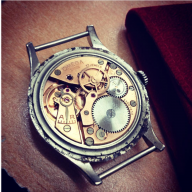
So a display back may prove to be useful to an amateur with a loupe... right?
Cheers
 
Posts
29,659
Likes
76,811
So a display back may prove to be useful to an amateur with a loupe... right?
Cheers

Provided you know what to look for, yes possibly.
 
Posts
1,210
Likes
3,905
I am grateful and truly humbled at the responses to this thread. Thank you all for your insights and willingness to help, not only me, but the OF community as a whole. I didn't really know what responses to expect, but to receive this Master Class is priceless.

Next steps for my Speedie is to get it inspected. I have found a local watchmaker to service a few vintage pieces, and trust that he'll let me know if he has the skills to work on this one if necessary. I may however come back to the community to ask if anyone has experience with, and can recommend, a quality watchmaker in/near the Wash. D.C. area if he does not feel he has the experience.

Cheers all, and thank you again!
 
Posts
7,651
Likes
21,950
Wow! My watch quit and I missed my freakin' dental appointment!
If you broke a rare part and then had to source a donor movement for 600 euros / dollars or what not you might be a bit less casual about it.

PS - oh and if that beater of yours last serviced in 1979 is a rare speedmaster from the 1960s worth 15k dollars you might also want to be more careful. If the last service was 1979 you had better believe it need oil, even if it’s not yet screaming for help you might be wearing it to death.
 
Posts
3,534
Likes
8,859
I'm sure this technology has moved along a lot since my days using it, ...

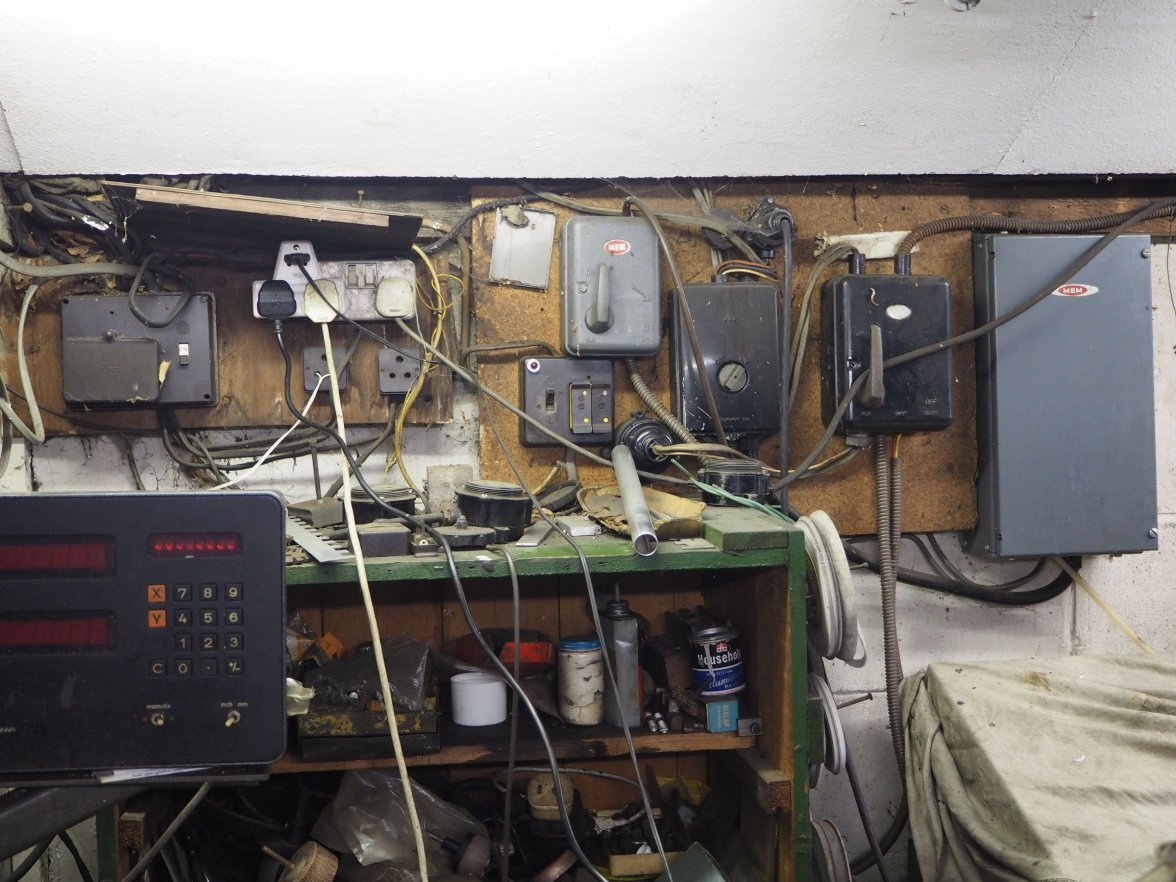
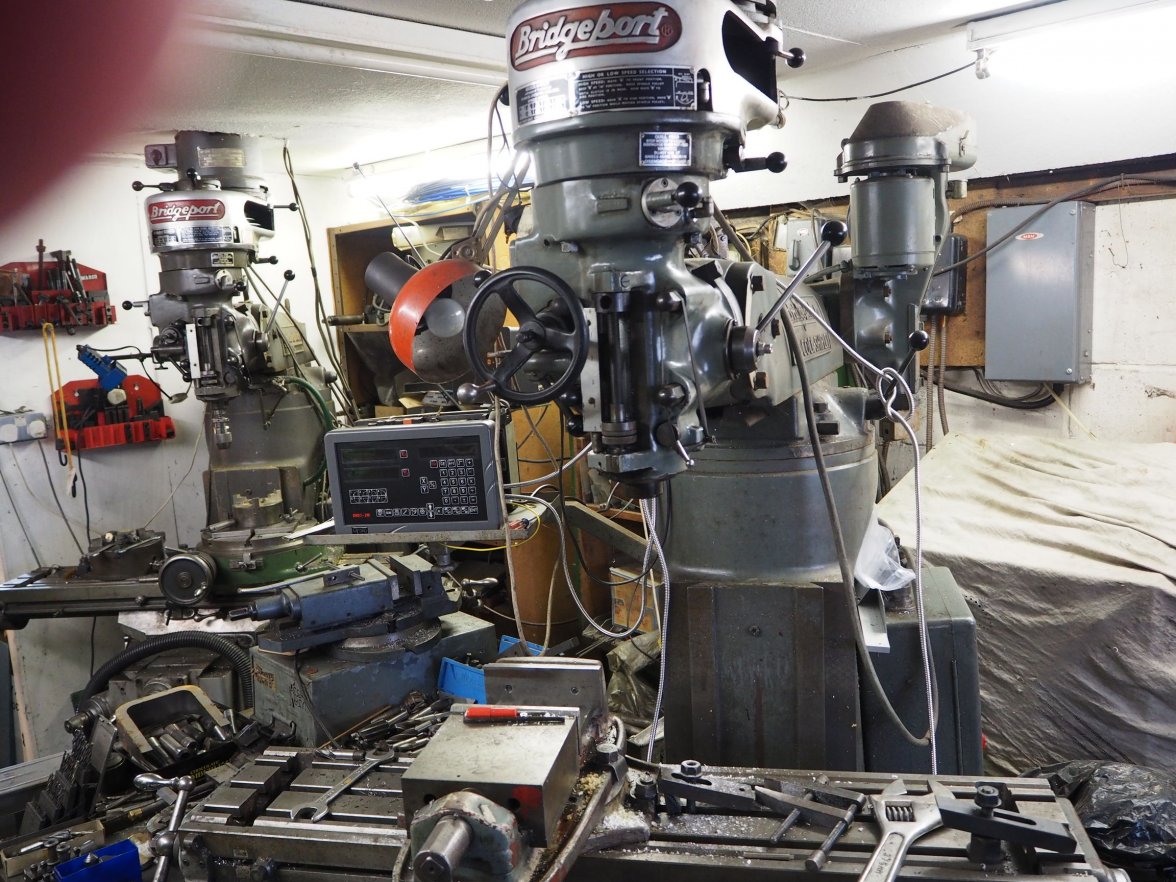
Absolutely! Here is state-of-the-art not far from here:


Actually the owner died 3 years ago, the machines have been sold and the place is about to be demolished. I know who bought all the machines (roughly 20 times more than you see here) and they are in no better environment. Haven't dared look at the wiring at their new home.
 
Posts
29,659
Likes
76,811
Absolutely! Here is state-of-the-art not far from here

They look state of the art...from when I was in high school back the 70's maybe... 😀

But my machine shop teacher was far more strict when it came to cleanliness...
 
Posts
3,534
Likes
8,859
They look state of the art...from when I was in high school back the 70's maybe... 😀

But my machine shop teacher was far more strict when it came to cleanliness...

Same when I was in the Apprentice Training School at British Steel Corp in the late 1960s. However all our tools were thown out from production for being worn-out. Nevertheless we had to get to 0.0005" with 30 thou of slop on every control. Those Bridgeports were nicely free of slack, no problem. Not everything in there was as good though. And the wiring, esp the 3-phase, was a Major Incident waiting to happen.