- Posts
- 5
- Likes
- 1
Please consider donating to help offset our high running costs.
I usually compare with photos of other specimens of the same model.
The usual suspects are lugs that are no longer well-defined.
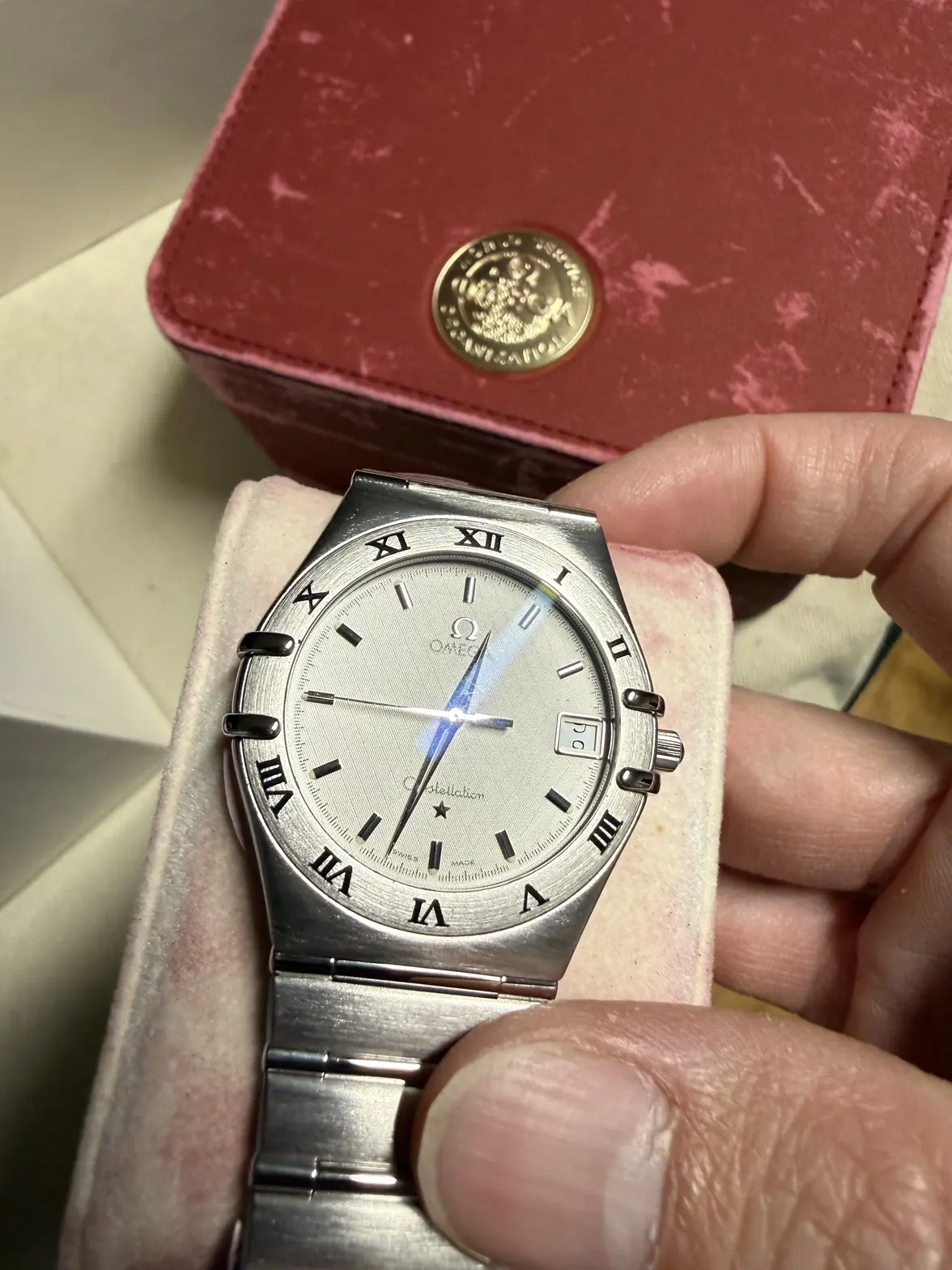
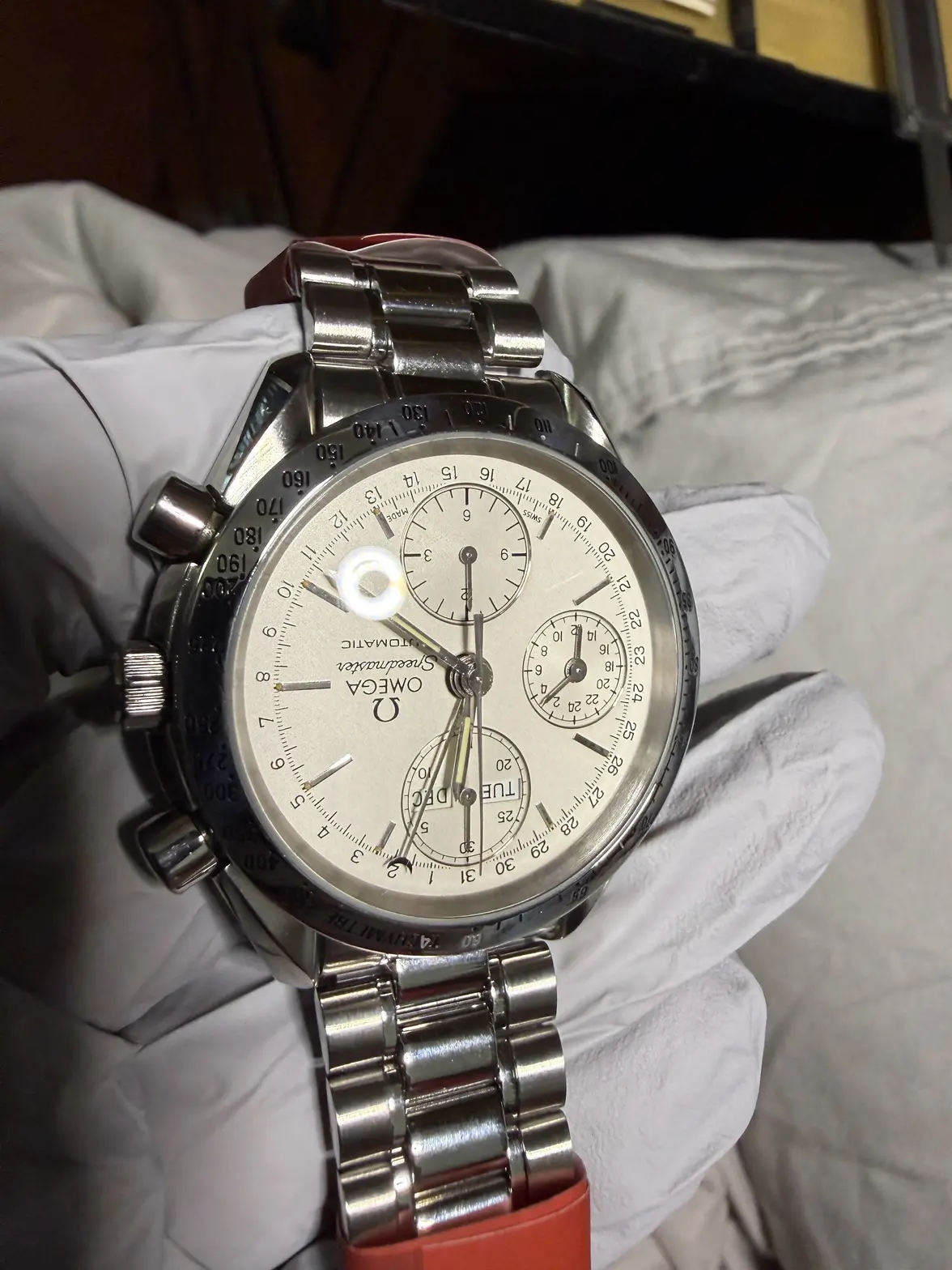
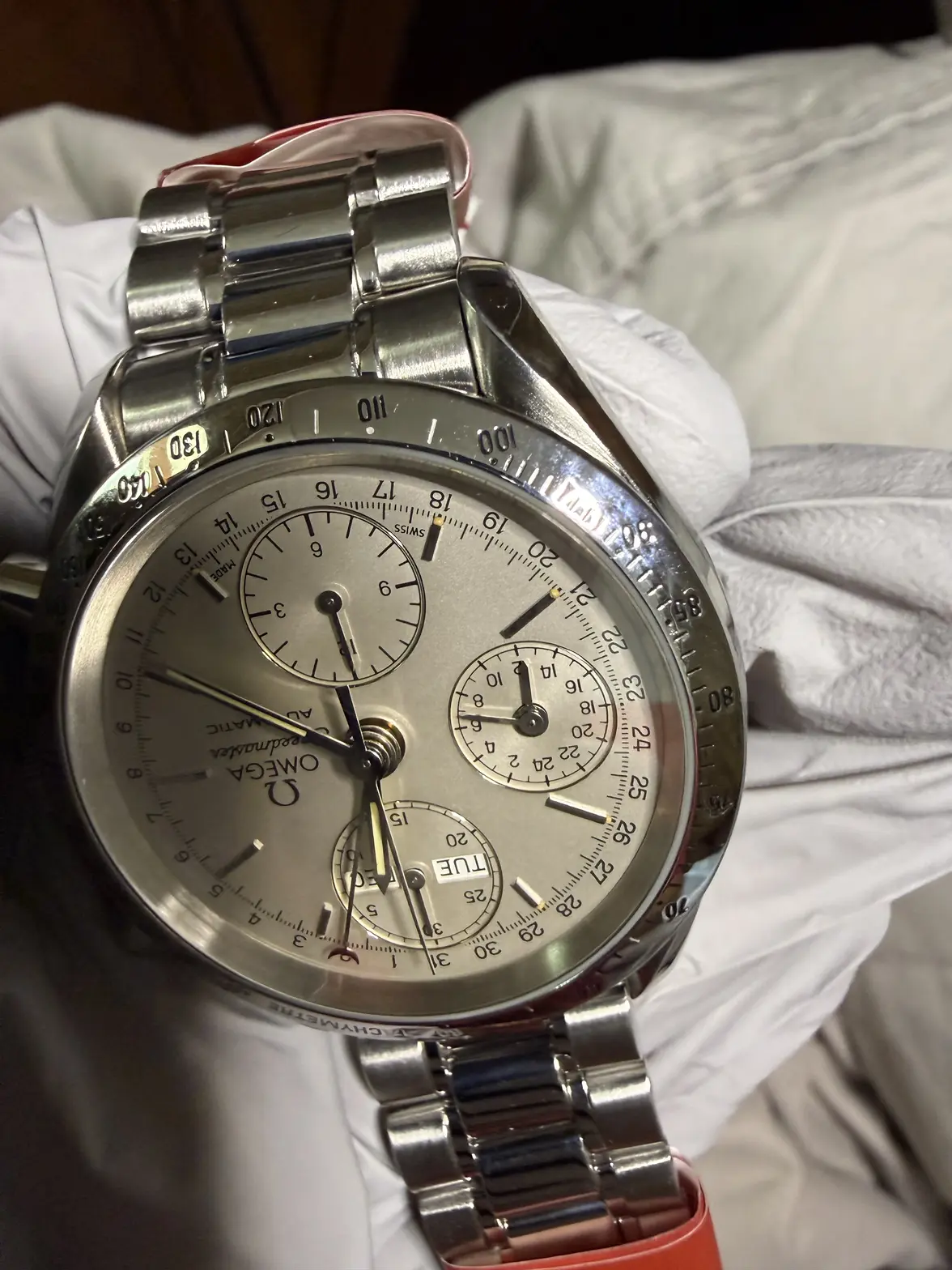
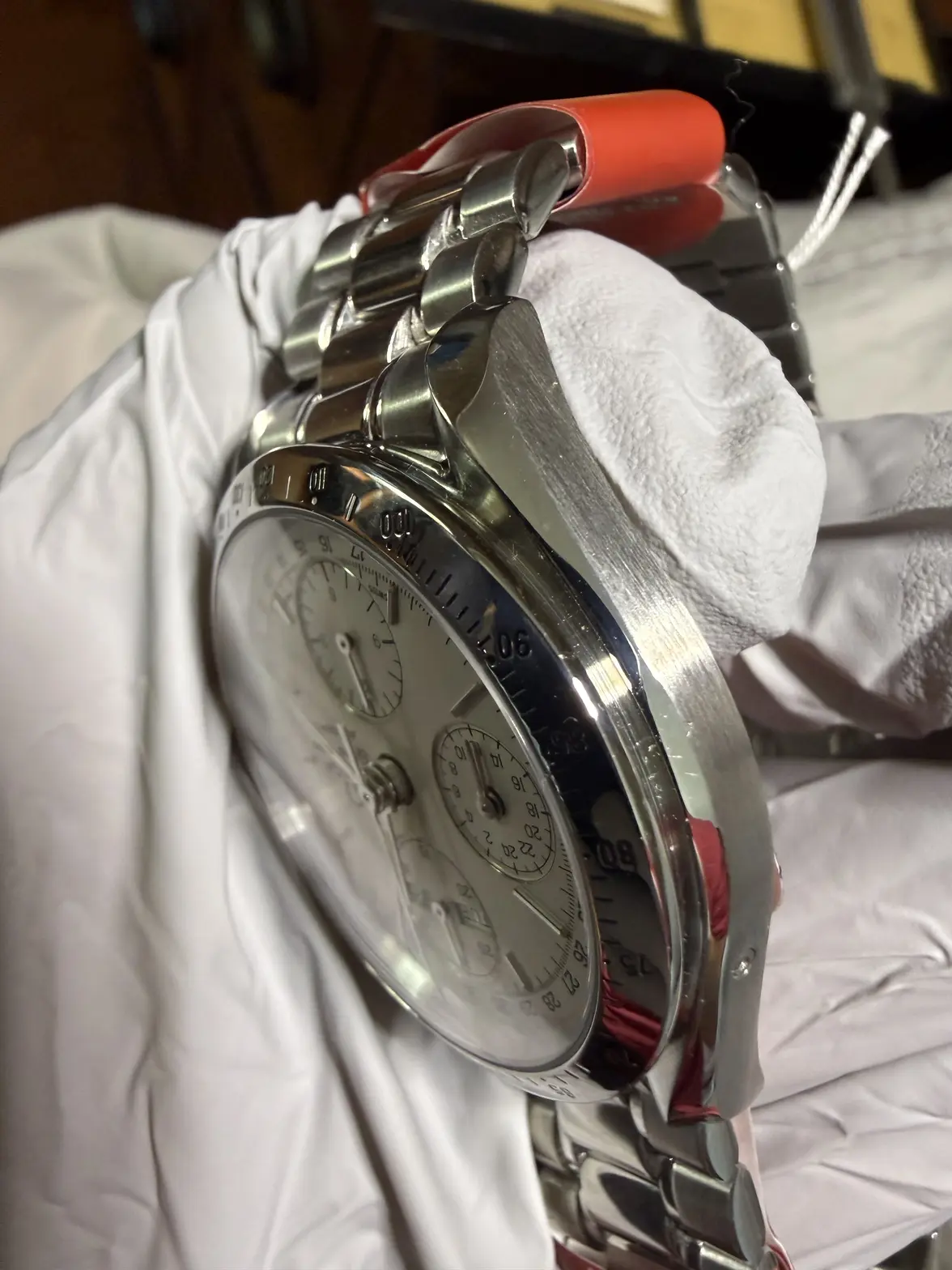
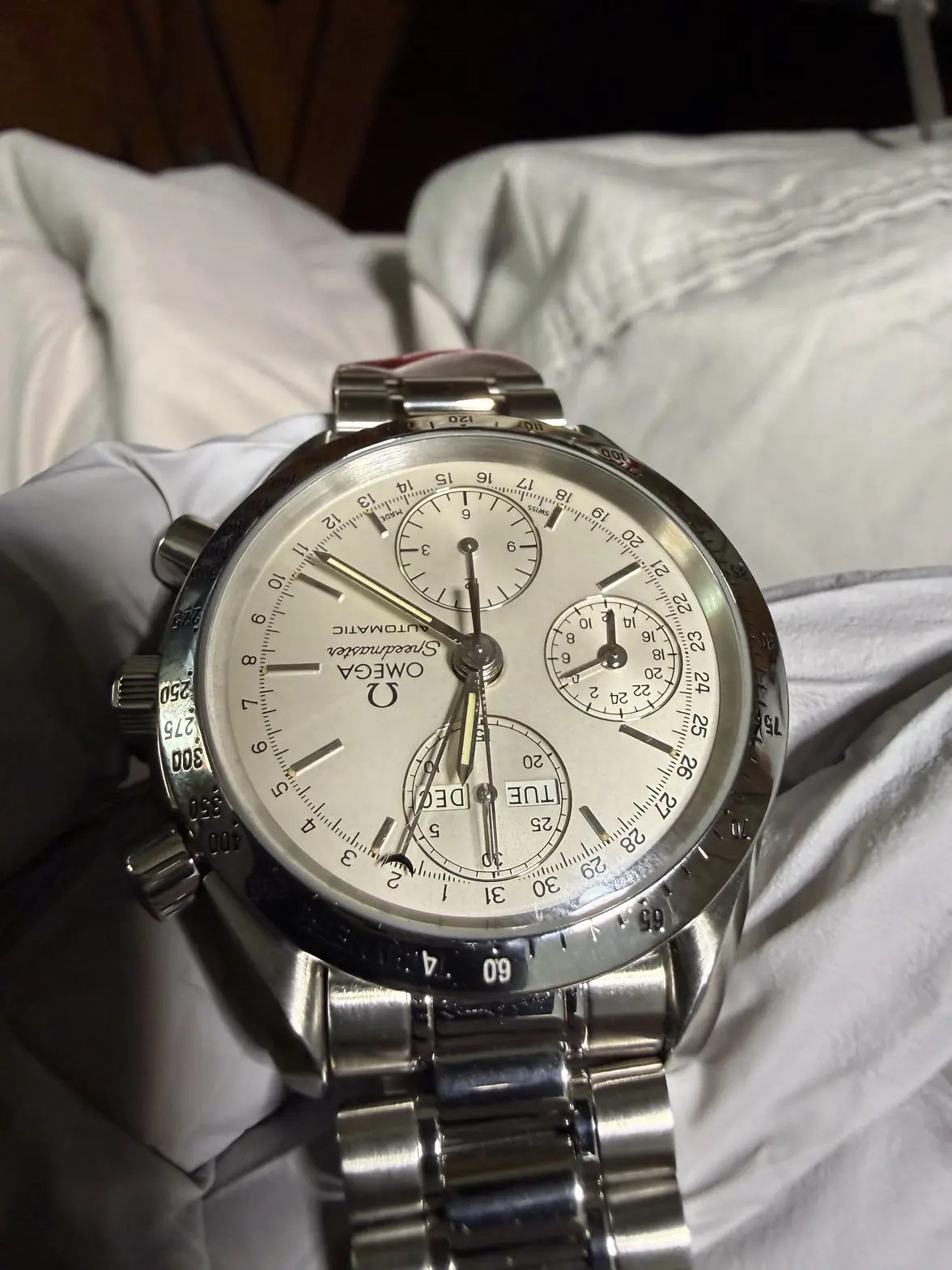
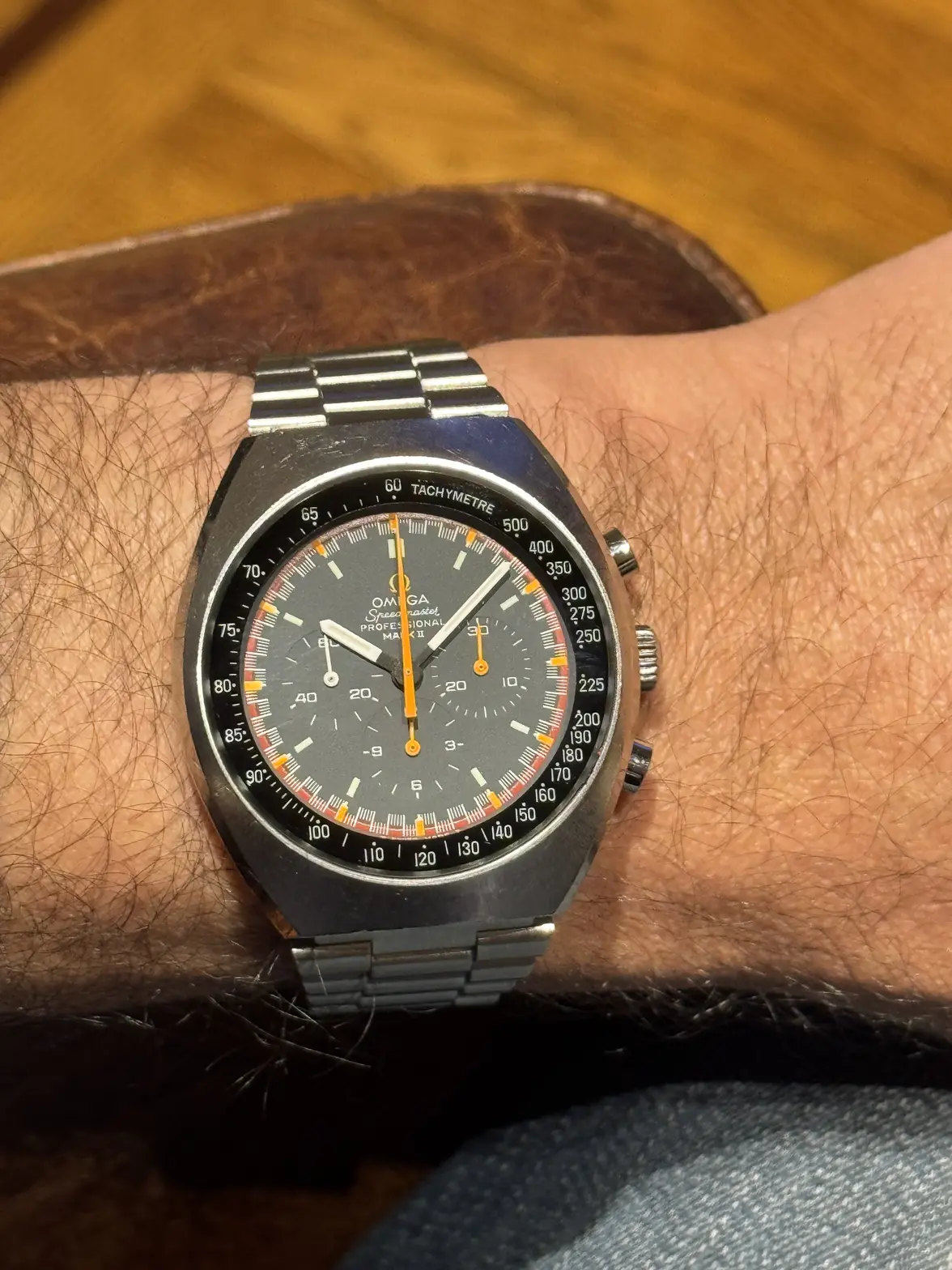
Looking at the Speedmaster above, while I don't know the age of this watch, the finish on the lugs is too perfect. A watch that has been worn shows wear.
Jewelers loupe. You’d be looking for overspill of the brushwork on the polished side and vice versa.
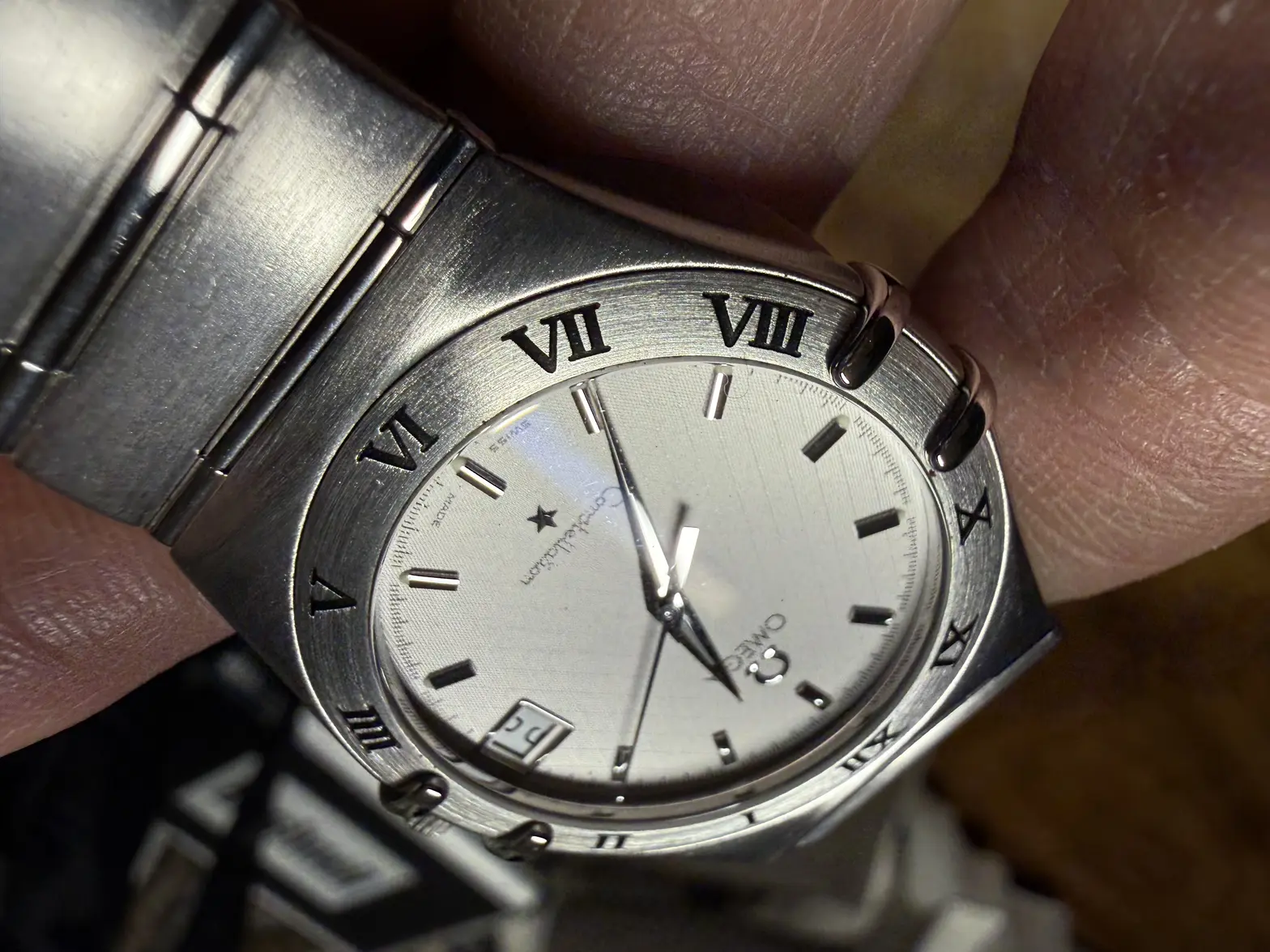
I doubt any refinishing work on these two would affect the value. The Constellation could have had a Scotch Brite treatment.
1. Lugs
2. Case shape
3. Finish (is it brushed when it should be polished, etc.)
A good refinishing will be almost impossible to tell. A bad one will stick out like a sore thumb.
In general, I look at the finish itself as there are many clues that do not require you to know what the specific finishes of that particular watch are supposed to look like. So although researching other watches of the same model can help, it's not strictly necessary.
For example transitions between brushed and polished surfaces - if you see evidence that these are not sharp and well defined, that is often a sign of refinishing.
If the sharp edges are rounded off, again that is a sign of refinishing.
If there are dents in polished areas that appear to have a "smeared" appearance, then this is a sign that they have been partially polished out.
Often the brushed finishes will give it away the most - the brushing should be well defined and not random in it's direction. So for example the second photo above, the lug/case at the top of the photo the brushing appears to be very inconsistent in it's direction - this is not typically what these finishes look like coming from the factory. They are typically very uniform in their direction.
Another is brushed finishes that look semi-polished. On the bracelet of the Speedmaster, in some photos the brushed portions of it look like someone has partially polished them, like when someone uses a Cape Cod cloth on the brushed finishes not really understanding that this will polish the brushed finish.
So if you learn to look for these types of things in the finish, you don't need to spend time searching for comparables that may have already been refinished themselves.
In general, I look at the finish itself as there are many clues that do not require you to know what the specific finishes of that particular watch are supposed to look like. So although researching other watches of the same model can help, it's not strictly necessary.
For example transitions between brushed and polished surfaces - if you see evidence that these are not sharp and well defined, that is often a sign of refinishing.
If the sharp edges are rounded off, again that is a sign of refinishing.
If there are dents in polished areas that appear to have a "smeared" appearance, then this is a sign that they have been partially polished out.
Often the brushed finishes will give it away the most - the brushing should be well defined and not random in it's direction. So for example the second photo above, the lug/case at the top of the photo the brushing appears to be very inconsistent in it's direction - this is not typically what these finishes look like coming from the factory. They are typically very uniform in their direction.
Another is brushed finishes that look semi-polished. On the bracelet of the Speedmaster, in some photos the brushed portions of it look like someone has partially polished them, like when someone uses a Cape Cod cloth on the brushed finishes not really understanding that this will polish the brushed finish.
So if you learn to look for these types of things in the finish, you don't need to spend time searching for comparables that may have already been refinished themselves.
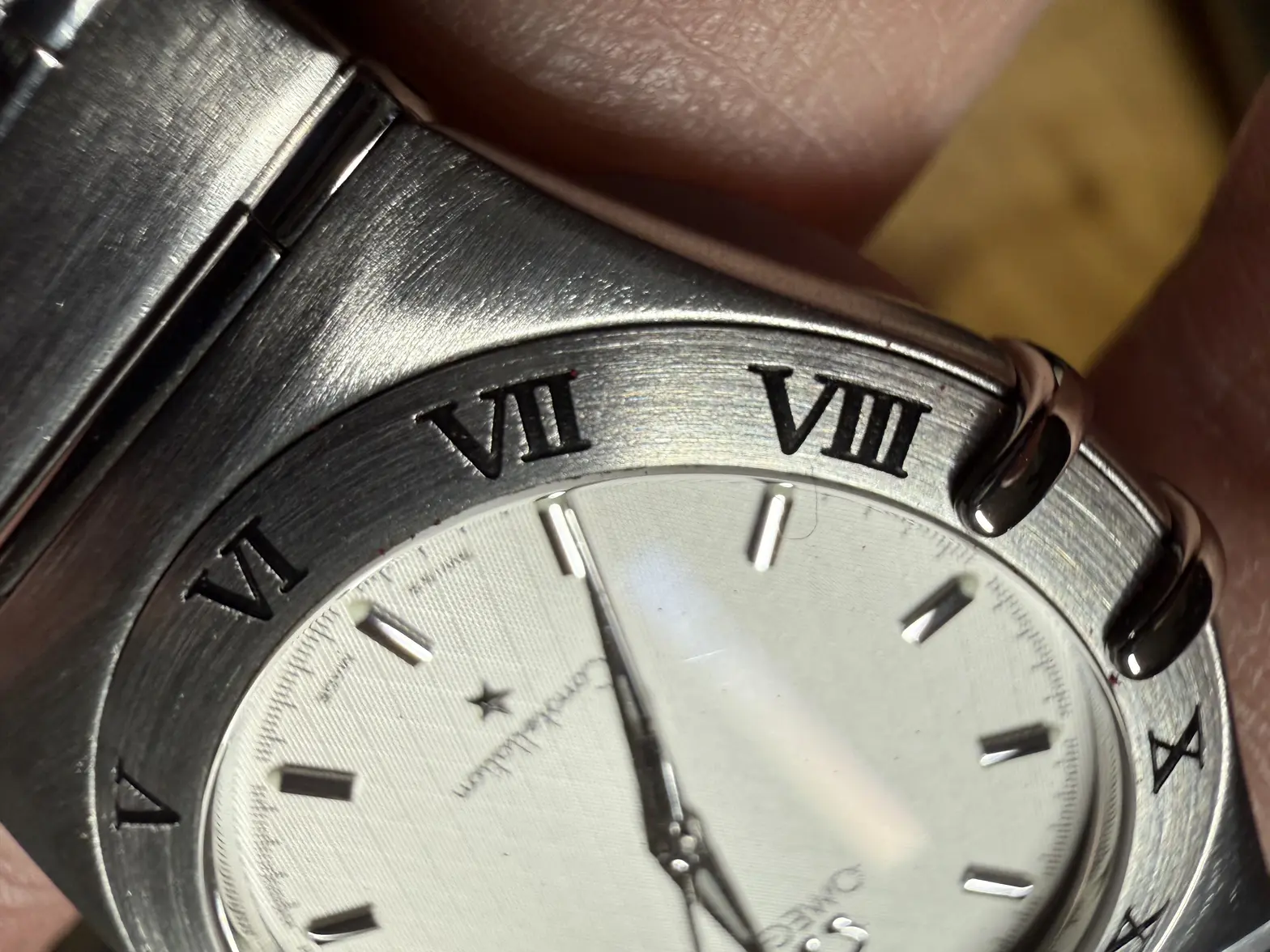
So for example the second photo above, the lug/case at the top of the photo the brushing appears to be very inconsistent in it's direction - this is not typically what these finishes look like coming from the factory.