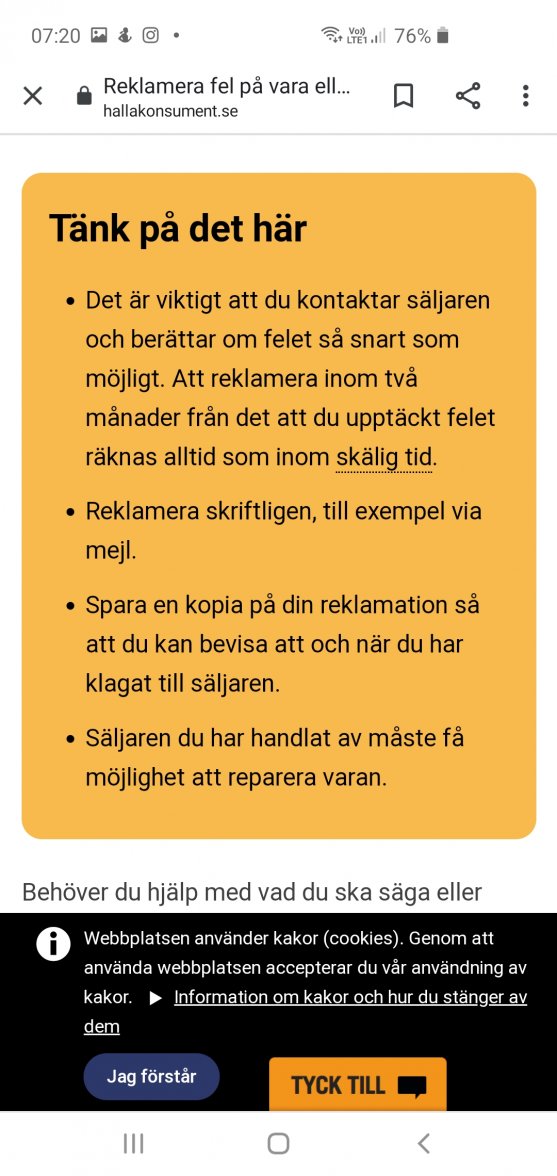
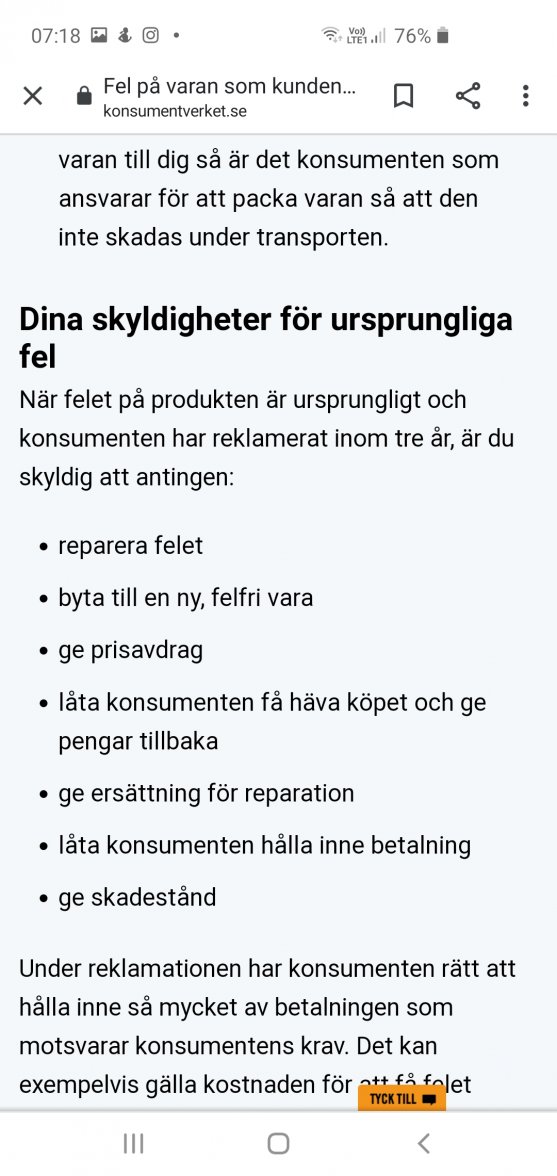
Encloses extracts of essential parts of the Consumer Agency that apply to sellers and buyers.
We read the same text, but interpret it quite differently, I see. I can understand why you say as you do, but you have to find some very different material than what you are quoting here in order to support your case, I am afraid.
Let me try to explain:
There are several ways of resolving a claim like yours. In the material you quoted there are listed:
a: repairing the item.
b: replacing the item.
c. give a partial refund.
d. give a complete refund.
e. pay for the consumer's repair of the item.
f + g. paying damages, etc.
You obviously go straight to option
d, even though option
b was offered to you. As I read the text from Konsumentverket (which is the correct authority for this in Sweden, am I right?) these options are all steps of escalation, which indeed is the case in
all international trade law. In the link I offered previously - and I am guessing it is the right place for this since you haven't said otherwise - it even says so, stating that the rule of thumb is that the buyer has the right to either getting a fault repaired or getting a replacement if this doesn't confer unreasonable expenses on the seller :
https://www.konsumentverket.se/glob...nd-konsumentkoplagen-2016-konsumentverket.pdf
Huvudregeln är att köparen har rätt att välja mellan avhjälpande och omleverans om valet inte orsakar säljaren oskälig kostnad.
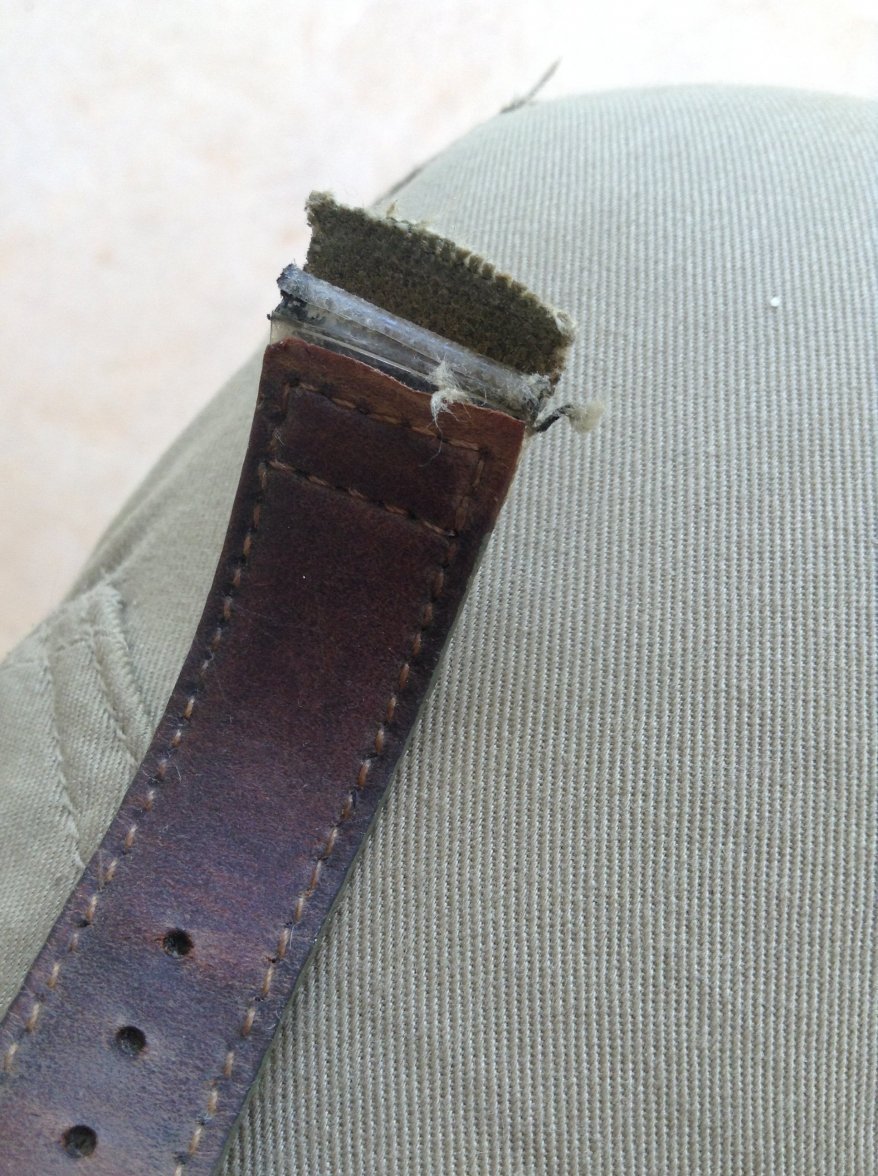
In order for the seller to not live up to the letter of the law, the seller's suggested solution would have to somehow not fully replace the item in some manner. It does in this case, but there are instances where it could be viable, for instance if the product had been purchased for use at a specific event or so and a replacement wouldn't make it to the buyer in time. In some instances (not necessarily here!) a different replacement item that would fulfill the original purpose of the purchased item could also be sufficient. Nothing you've stated here so far tells us that a replacement strap wouldn't fully replace your purchase.
Remember that these laws are also in place to give sellers some sort of protection from people raising unreasonable claims, which is one of the reason for the "give" in the wording of the law.
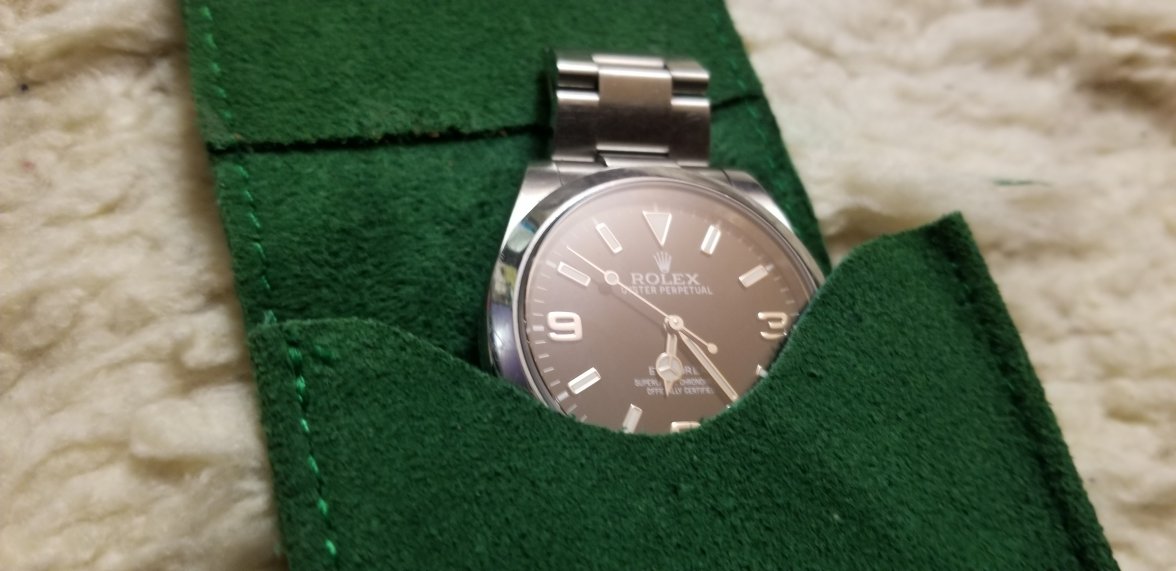
Another reason why I rejected her claim is that the band is also fake. Kvarnsjö made in Sweden. There is no tannery in Kvarnsjö. however, it is in Tärnsjö and it is a large and well-known tannery. CNS wants to imitate Tärnsjö by using a name similar to Tärnsjö. and I am not alone in this view. any opinion on it? Wearing a fake band is as bad as wearing a fake Rolex
First off, I am not the one to judge whether there is some sort of trademark infringement or similar here, but that is besides the point -
it has nothing to do with your case! The basis for your case is the faultily sized strap, not the trademark properties of the brand, these are two separate issues, one of which has little to do with the consumer law issue at hand. If you raised a trademark claim, it would be processed in a completely different way where the seller's advertising the look of the items, logos, etc would be compared and a comparison of the goods would be conducted. Cases concerning intellectual property are some of the most ridiculously difficult trade law cases to process and typically take years of lawyer work, expert statements, lab work and court time. And in all but the most open and shut cases they usually end up with the "copied" brand losing their case...
Secondly, if you had returned the watch within two weeks, you would have had your money back under a different set of consumer laws. However, since you chose to follow a different path of declaring the item faulty, the above options of resolving the issue are open and the way
the seller chose to act is fully within her right as a seller.
Finally: It was a cheap strap and it turned out to be a poor one. A replacement was offered. You are basically getting what you paid for.
This will be the last post I make on the subject, and if you still do not follow my reasoning or the way I have presented how trade law is interpreted, feel free to contact your own ombudsman and get them to explain it to you.