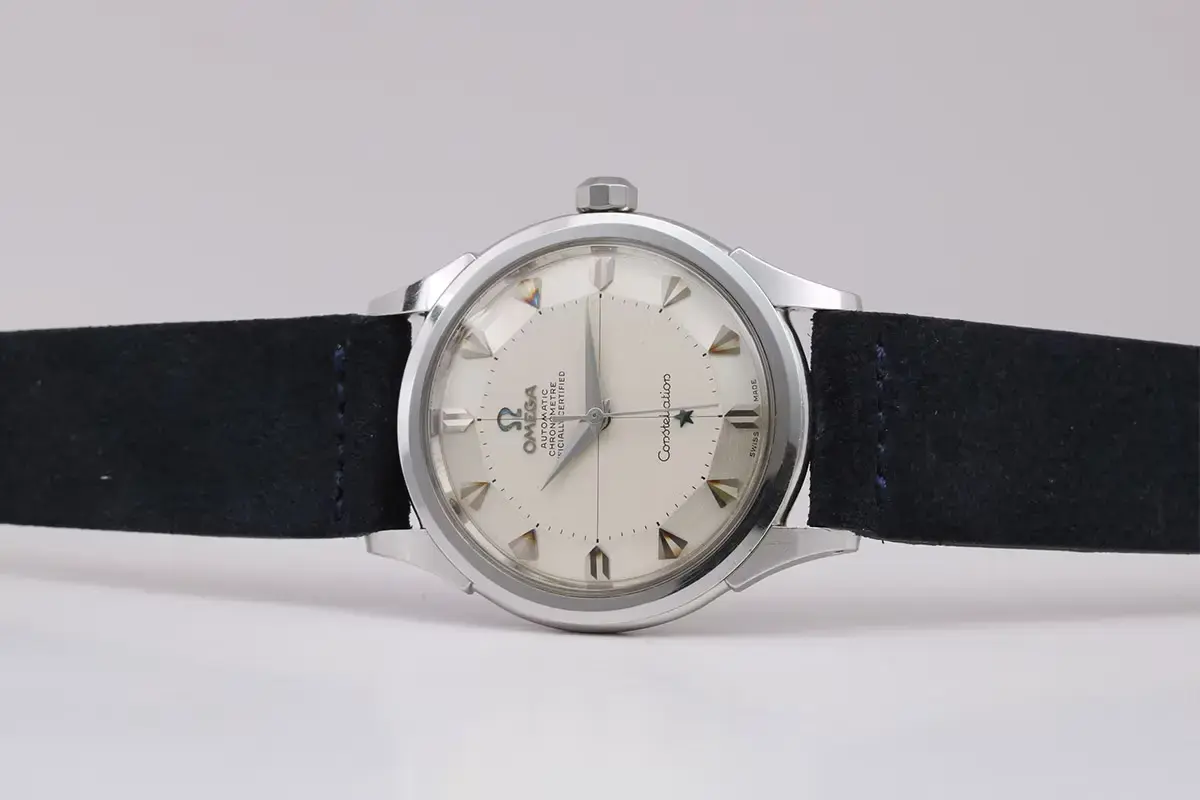
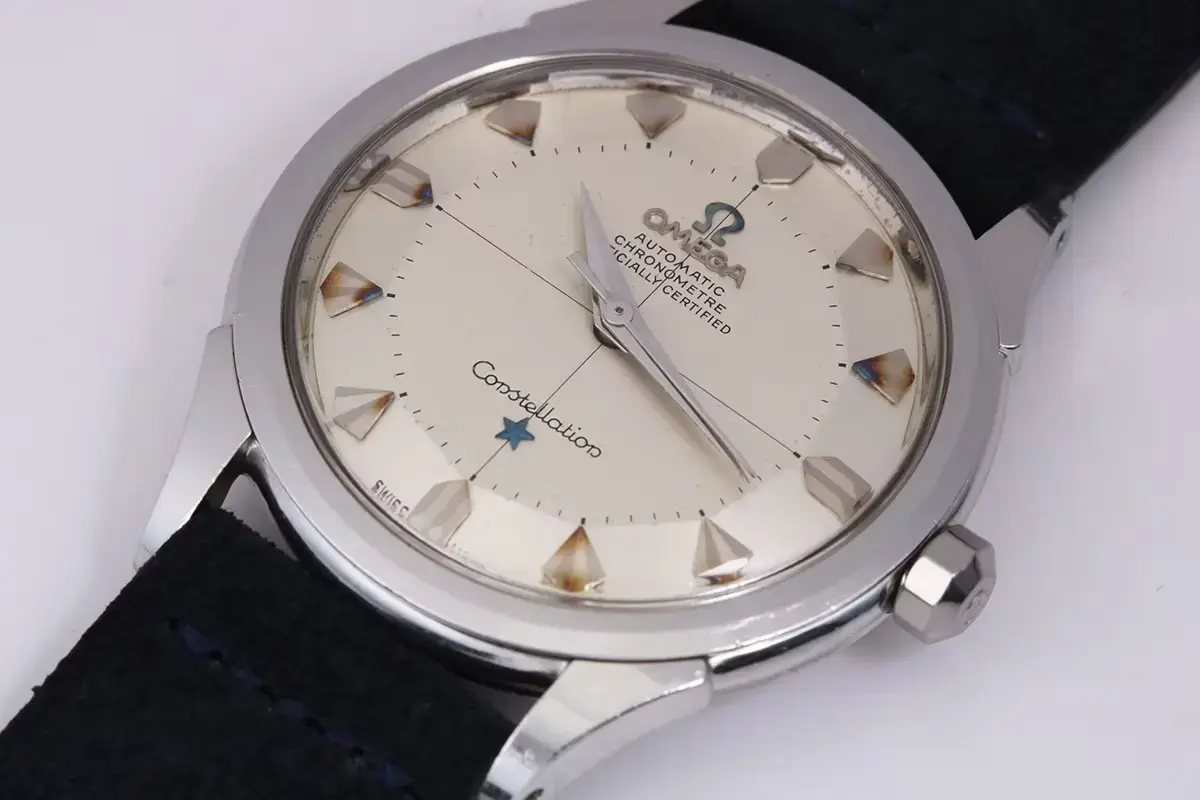
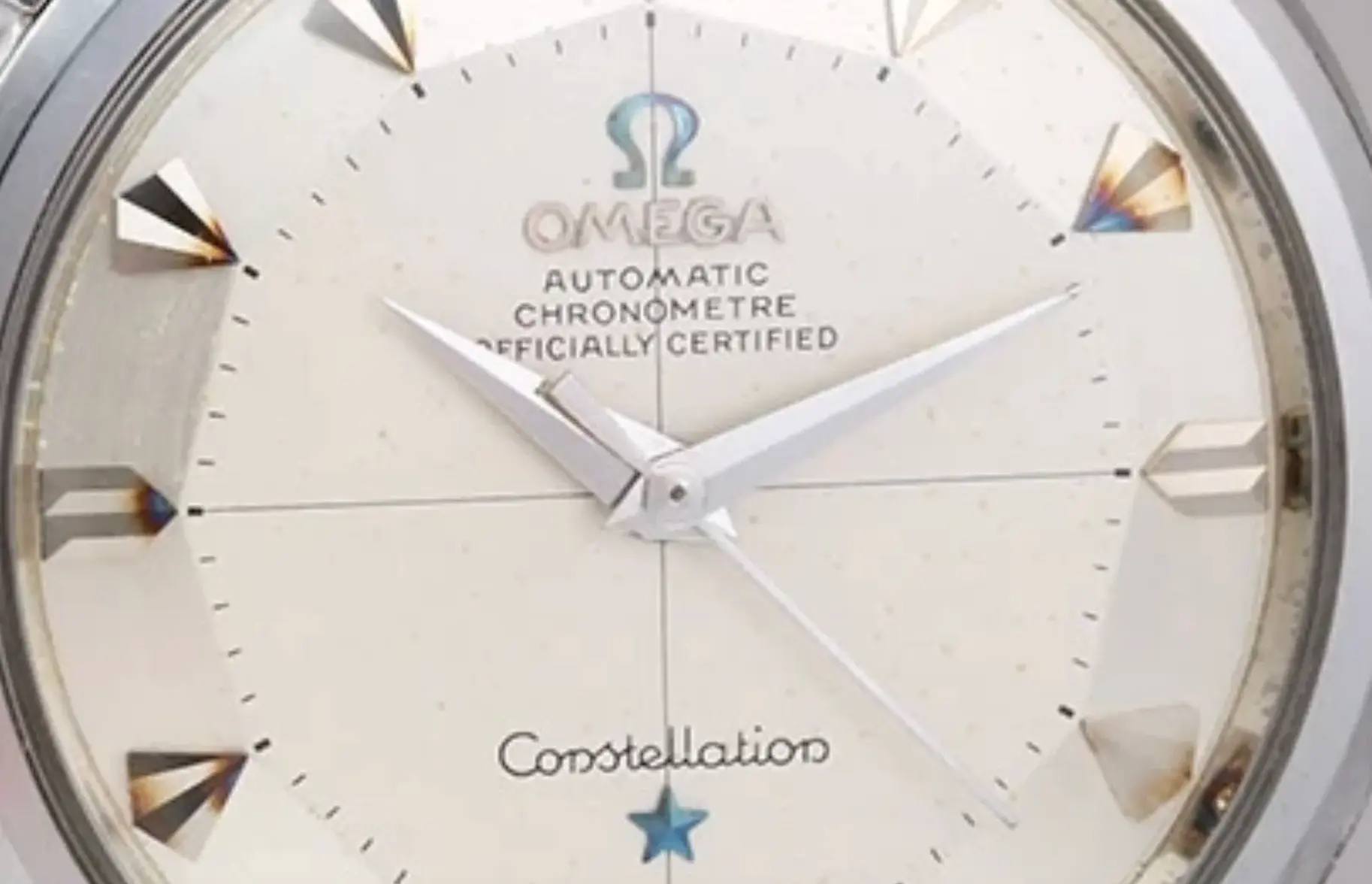
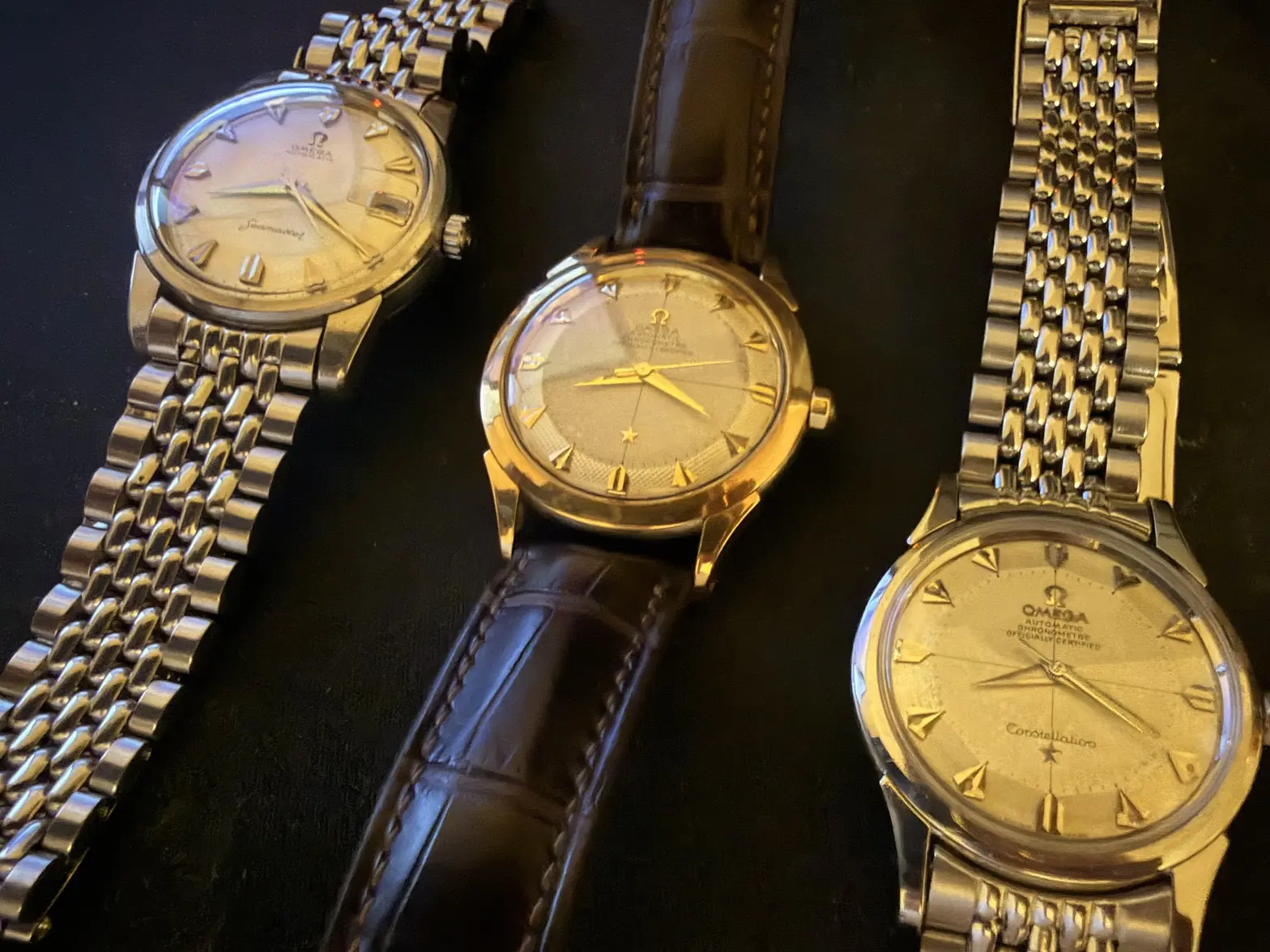
In my opinion, silver reacts with sulfur compounds in the air to form silver sulfide. The resulting tarnish usually progresses from a light yellowish tone to brown, and eventually to black.
White gold, on the other hand, does not normally oxidize in the same way because gold itself is highly resistant to oxidation. White gold is an alloy, commonly mixed with metals such as palladium or nickel, and is often rhodium-plated to give it a bright white appearance. As that plating wears with age, the underlying metal usually appears slightly warm or yellowish-grey rather than blue.
Another point worth considering is that the star appears to be made from the same, or at least a very similar, material as the hour markers. If the blue coloration were truly caused by oxidation, wouldn’t we expect the hour markers to show a similar blue coloration as well? In fact, several of the hour markers already seem to have some tarnish on them, and I wonder whether those areas might also appear bluish when viewed from a different angle. 🤩