- Posts
- 41
- Likes
- 36
Goldy
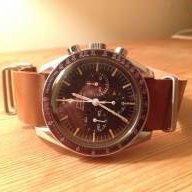
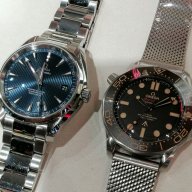
·Just watch the film Glass Onion on Netflix and has a nice shot of Daniel Craig wearing the 1948 Sub dial watch.
Please consider donating to help offset our high running costs.
Shows how well a product placement can work in a movie. I'm sure interest for the watch has peaked ever since the movie was released. And this is for a watch that was released 4 years ago. Such a good looking watch. Loved the small seconds version when it was first released but I remember not liking the display caseback that has been obstructed from view with the commemorative designs engraved over it.
![]()
Pretty much sums up my thoughts on all coaxial Omegas.
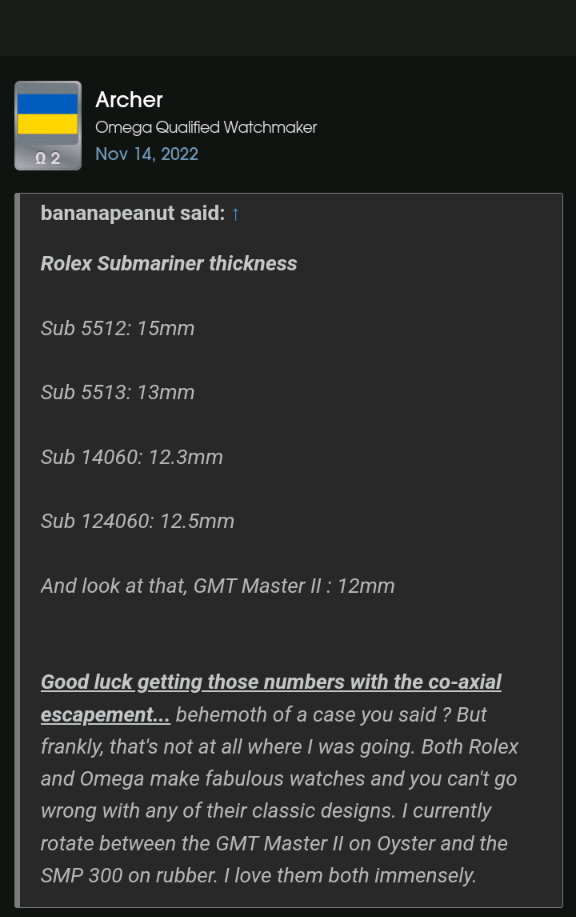
Yeah. It's the movement that makes all the modern Omega's thick.
There must be a reason why they made it thicker then. If it's not about the movement, then why? 😕
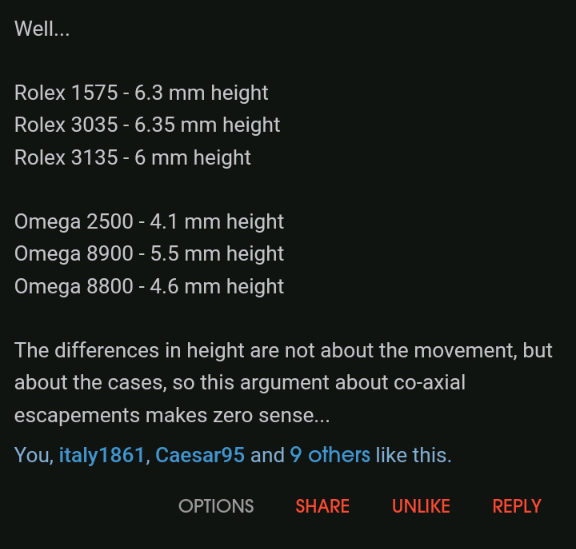
The pre-coax Omega 1120 movement (a modified ETA 2892-A2) was only 3.6mm deep so in fact coax does seem to add thickness, circa 0.5 - 1mm I would suggest. Not huge, but not nothing.
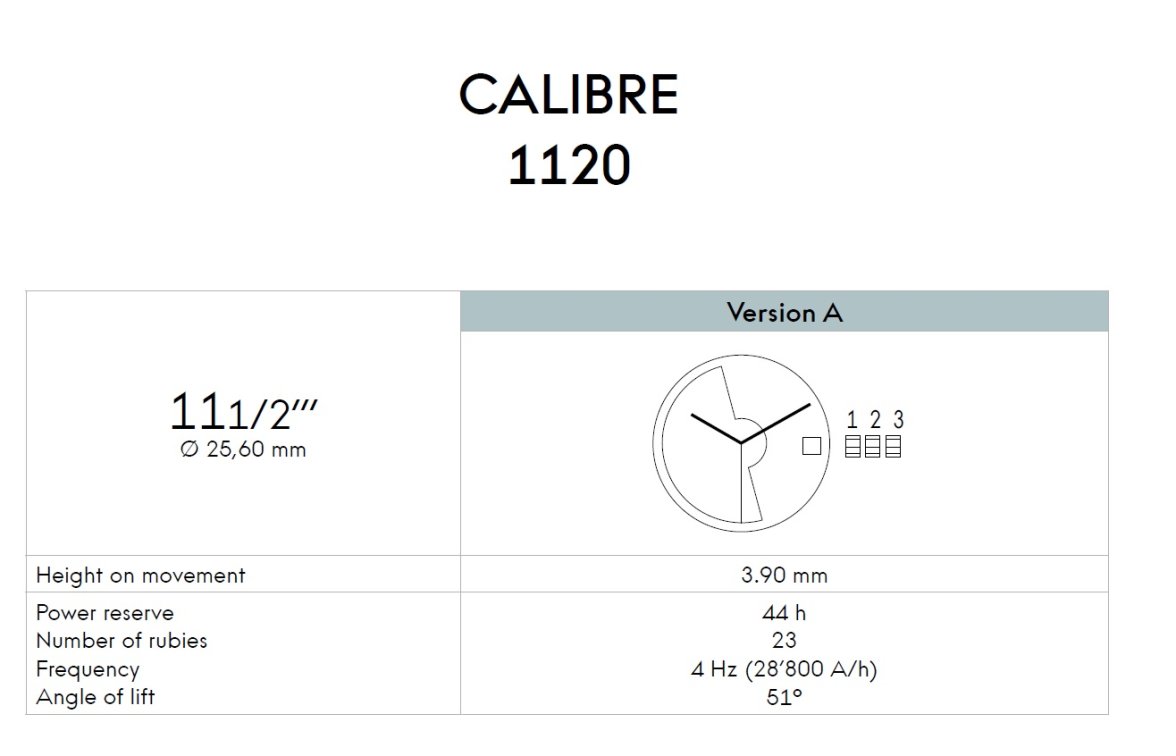
The 1120 is actually 3.9 mm, so the difference between that and a 2500 is 0.2 mm. I personally have not checked to see if this difference is due to the co-axial escapement, or the implementation of the free sprung balance with weights...my gut tells me it's likely more the balance than anything else.
Interesting. There seems to be conflicting info on that. I’ve seen an Omega data sheet on the 1120 that suggests 4mm but also this Omega makes one that states the same 3.6mm as the ETA sheet for the 2892:
https://gleave.london/content/TECH/Omega 1120.pdf
I realise I am splitting hairs.
I don’t think the insistence on sapphire casebacks on dive watches helps. Regardless, case thickness (and lack of options getting the coaxial escapement serviced) is the reason I don’t own a modern omega.