- Posts
- 211
- Likes
- 172
Lancaster
·I’ve had the opportunity to compare a genuine Omega Speedmaster chronograph model 176.0014 case with a similar case represented online as a NOS case for the same watch. The case can be seen at various outlets such as eBay, Etsy, and at least one dedicated business website all sold by the same merchant.
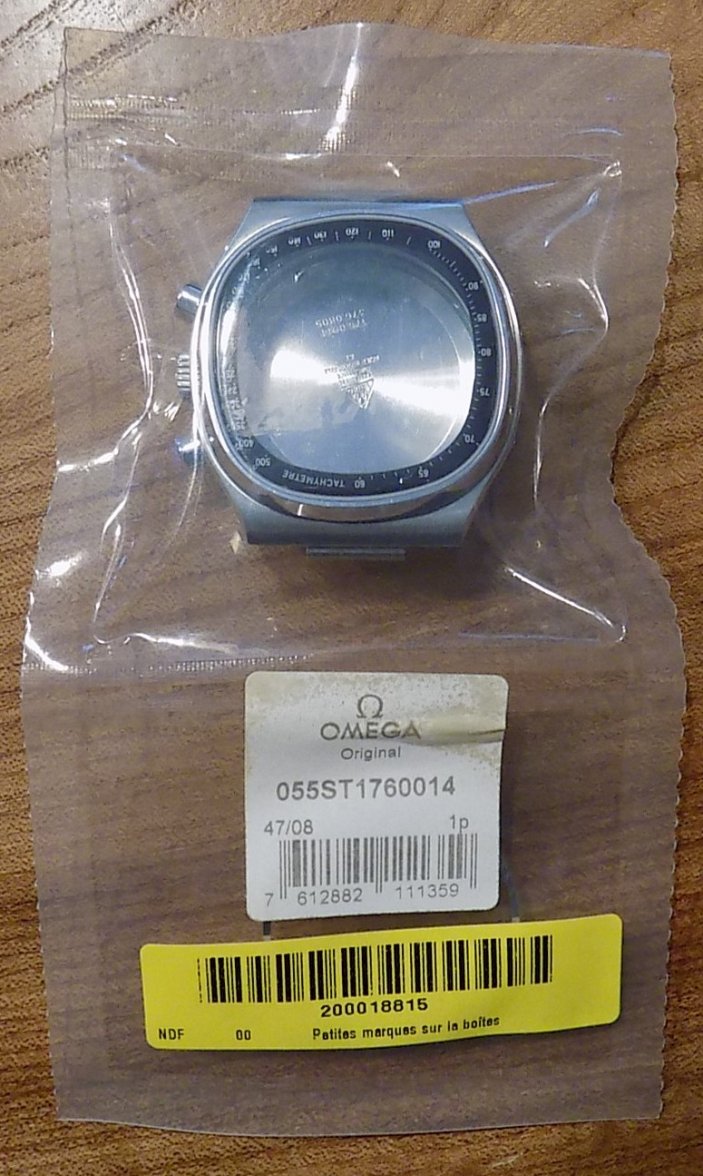
I’ll produce a side by side comparison here. First, Omega cases and other parts sold by Omega come in sealed packaging. These “NOS” cases do not, none of them. Instead, this case comes with clear plastic, peel off film similar to what comes on many microbrand watches when new. But instead of peeling off neatly and cleanly as they do on those watches, the film on this “NOS” case had to be torn off in pieces, and left a gluey residue on the case back. The genuine Omega comes packaged in a sealed, 2 part, thick plastic pouch with a movement retaining ring in the 2nd compartment. The other case doesn’t include a retaining ring. The genuine case was made by Schmitz Freres while the other has a Huguenin Freres trademark stamp. Here are 2 photos of the genuine Omega case sold by an Omega parts supplier, in it’s Omega packaging.
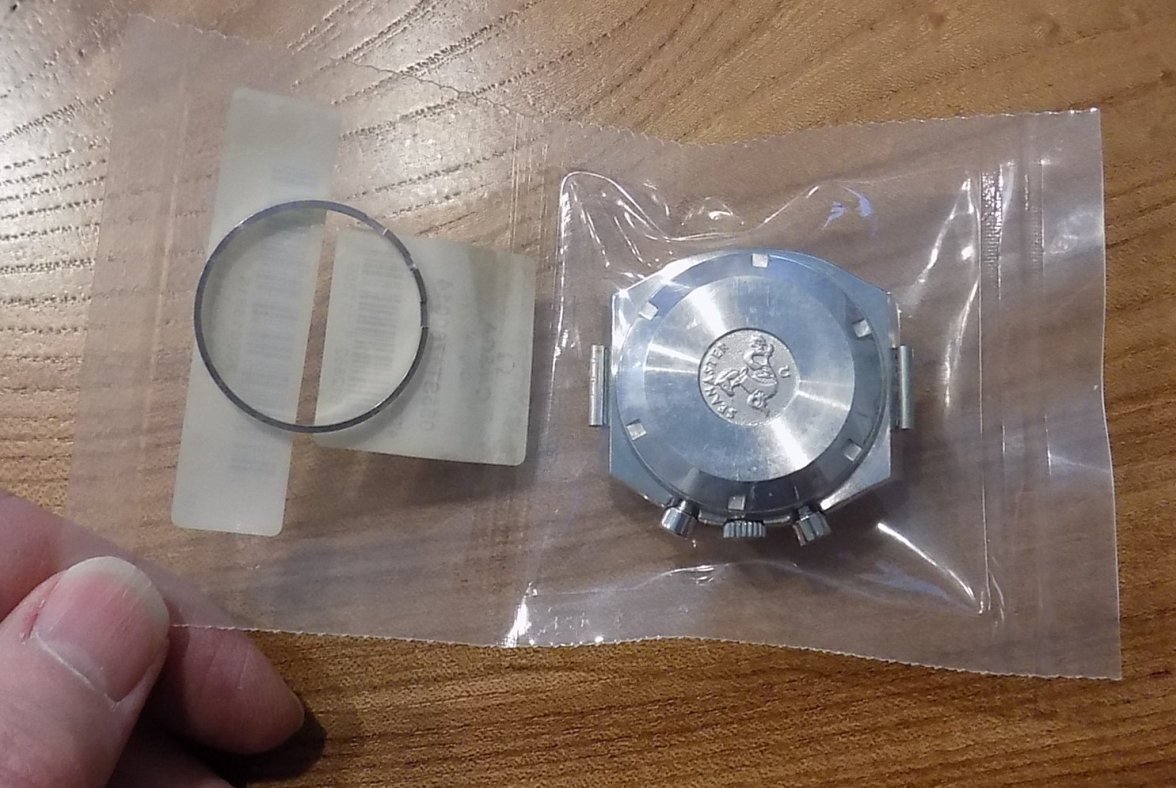
Photos of the “NOS” case back either still have the film in place or are shown with it removed but still having glue on it. In side by side photos that case will always be on the right, with one noted exception. This photo shows a profile comparison.
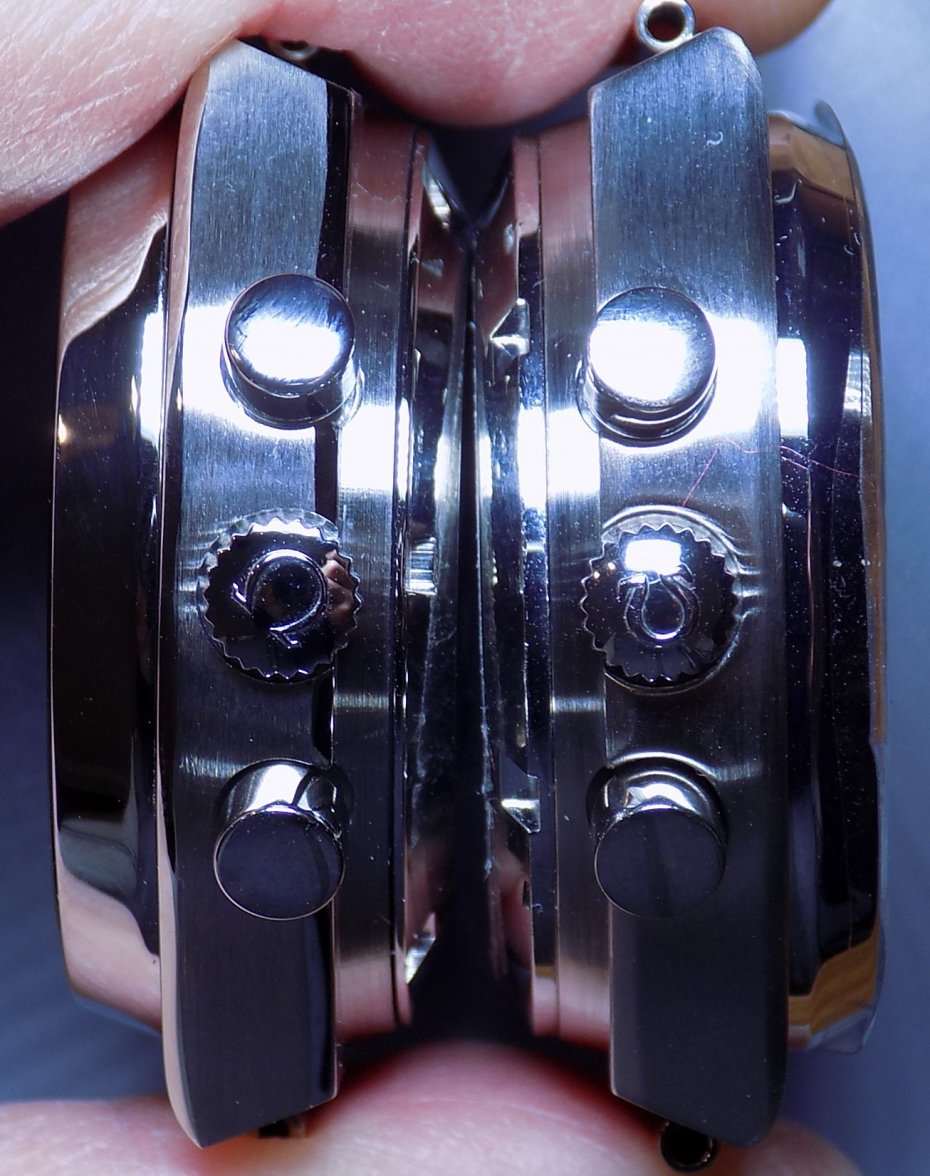
Many differences can be seen. The genuine case has a thicker polished bezel which is shaped slightly differently. The body of the genuine case is thinner and has polished, cut bevels at the top and bottom edges of the sides. It measures 6.7mm thick according to my micrometer. The “NOS” case bevels are brushed just like the rest of the case, and measures at 6.9mm. Also the case brushing is different. The Genuine back is thinner and has wrench notches contained entirely with the angled perimeter surface of the back. The “NOS” notches extend into the vertical edge of the case back perimeter, and that vertical edge is much thicker. This can be seen better in a photo further below. The crowns are different sizes (also seen better in a lower photo) and the Omega symbols are different.
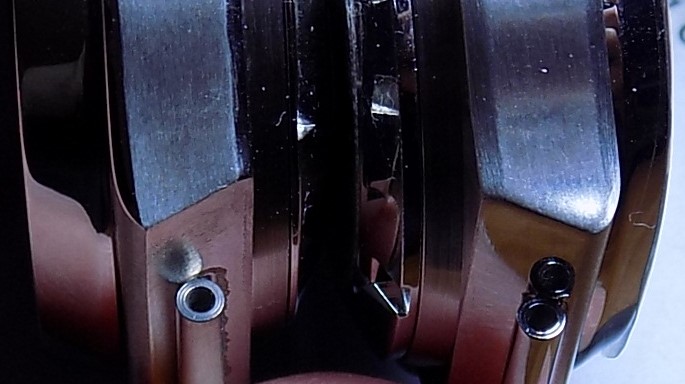
This photo below shows how the genuine case side has a more flat cut with sharper edges at the lug. The “NOS” has a more rounded shape. You can also see the different attachment point of the lug tube, and that the “NOS” lug tube is polished, while the genuine isn’t. Odd that they didn’t polish the case side edge bevels, but they polished the lug tube which won’t be seen with the bracelet on. The lug to lug measurement of the genuine case is 45.9mm, while the “NOS” measures 46.6.
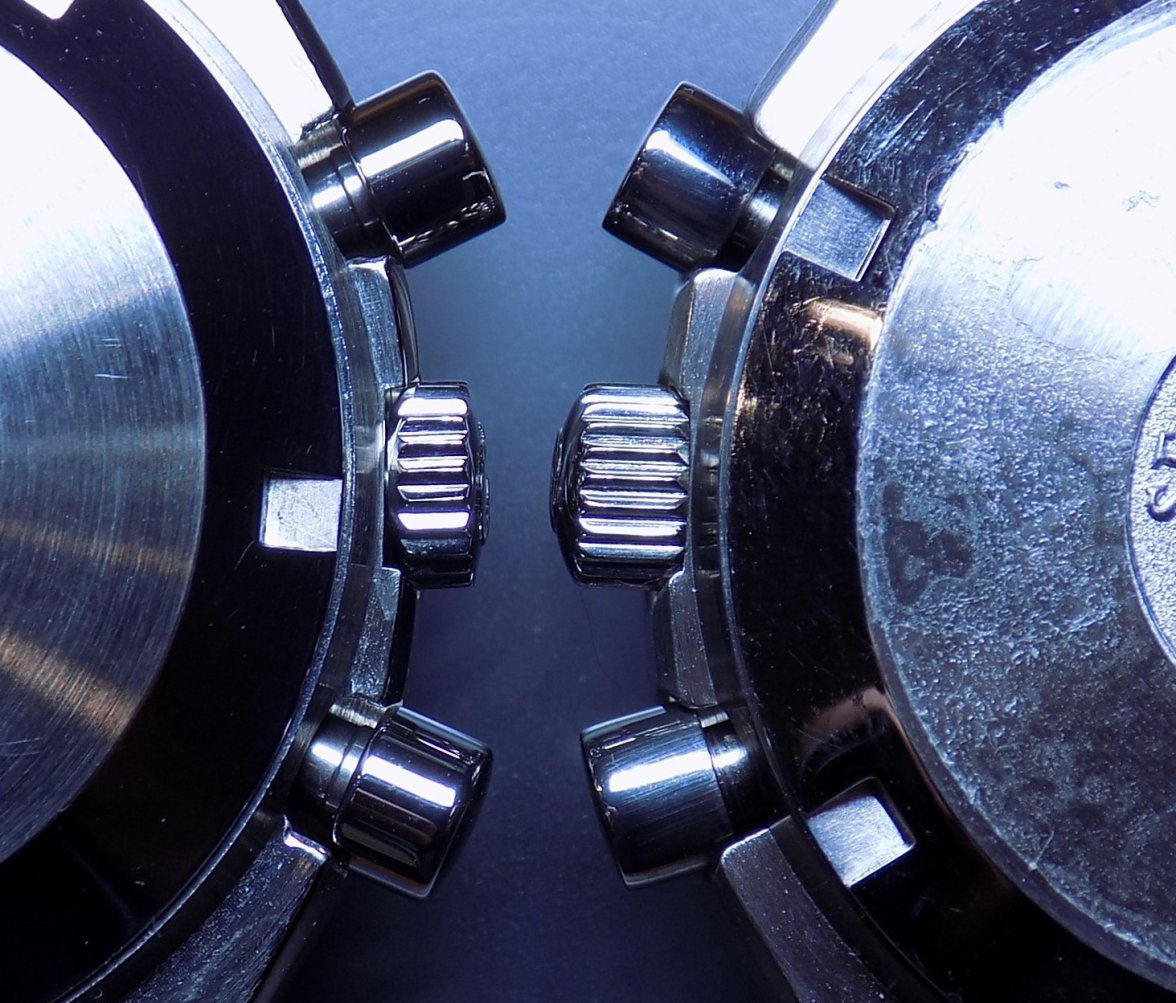
Below you can see that the genuine crown is much thinner than the “NOS”. The original 176.0014’s I’ve seen all have a thin crown. The pusher architecture is different. The stem under the cap is a 2 stepped design in the original, while the “NOS” is one piece. The pushers of both cases are spring loaded. Pushing and releasing the “NOS” pushers gives a creaky feel, similar to the springs of a cheap bed mattress. Doing so to the genuine gives a very smooth, almost hydraulic feel.
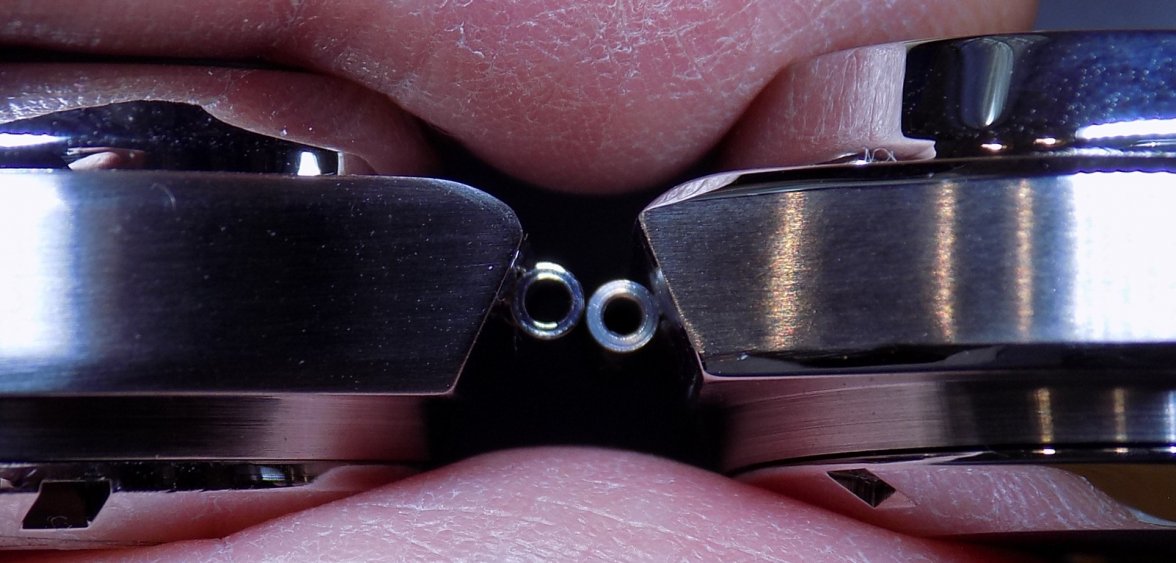
In the below photo the cases are reversed with the genuine being on the right. This photo more clearly shows the differences in the cut of the back wrench notches. This also shows the differing position of the lug tube, and the high polish of the “NOS” tube. That tube wall is also thinner and the pin hole diameter is larger.
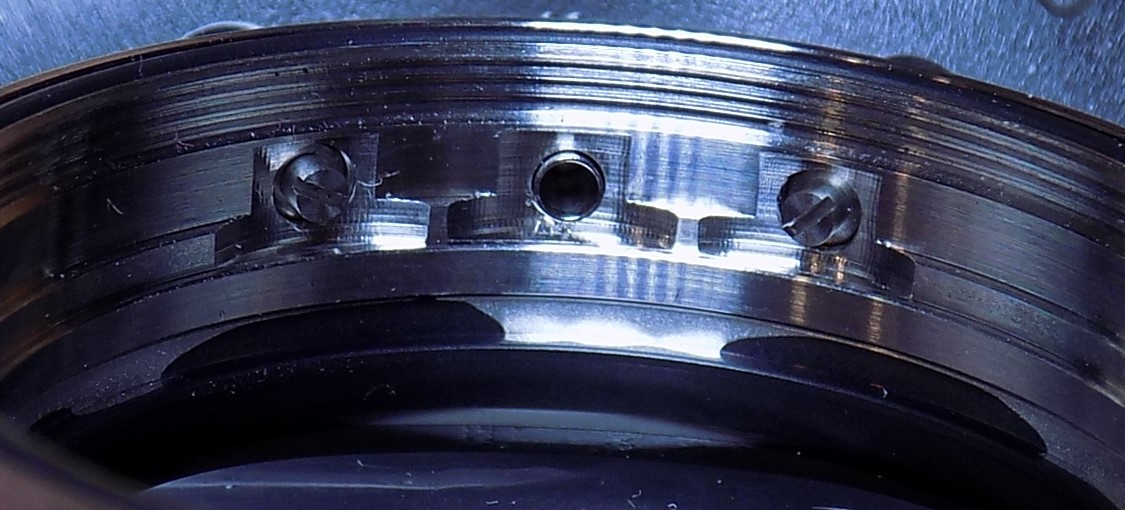
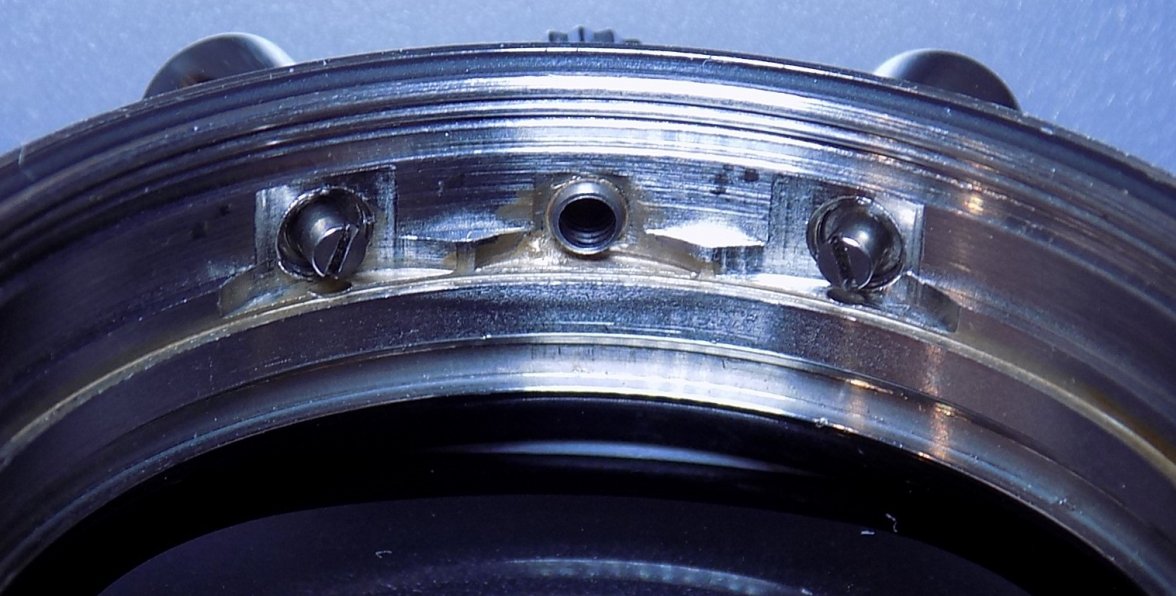
In these 2 photos below, the “NOS” case is the top one. They show the different types of cuts to the inner case. You can also see that the inner part of the pushers are different. The genuine case has narrower stems with thinner slots, and they’re longer. Below them you can see the black finished rehaut. The genuine rehaut has a clean finish to it, appearing to have an anodized finish likely applied with the rehaut removed from the case. The finish of the “NOS” case, however, has paint that has run down onto the case (or up in the photo since the case is upside down. Two long blobs of black can be seen, one under each pusher. These blobs are present all the way around the inside perimeter of the case (not shown).
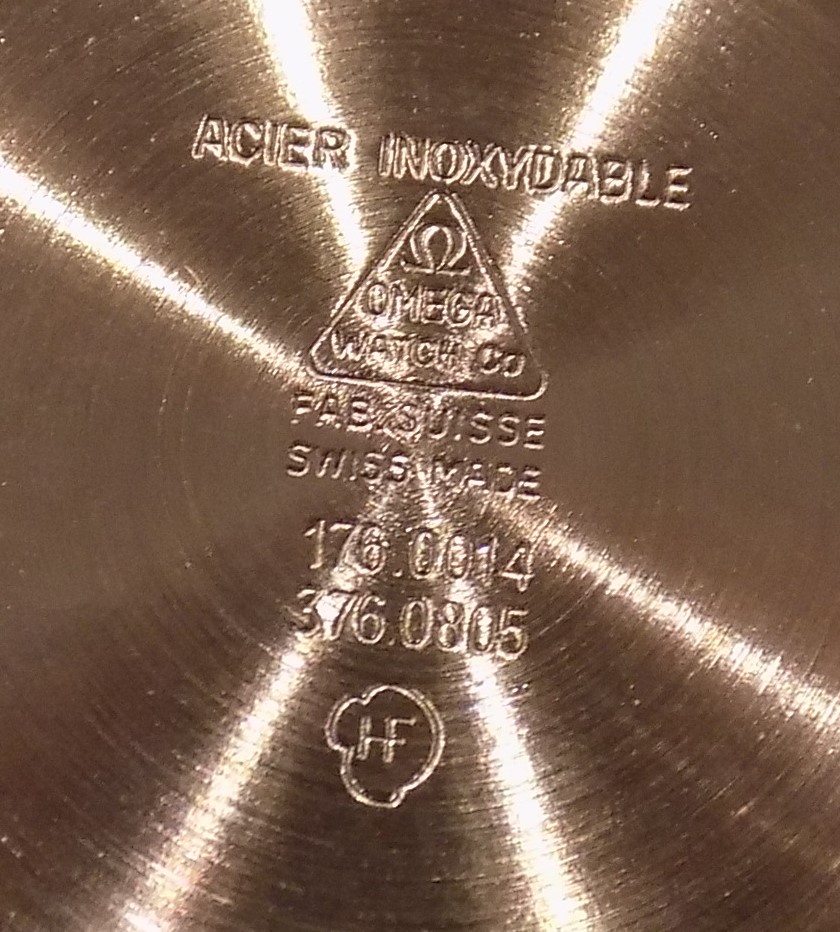
Finally, this photo shows that the inside case back of the “NOS” case has the trademark stamp (or facsimile of) Huguenin Freres, a renown case maker for Omega and other manufacturers. Would HF produce a case like this?
What do you think? Is this a genuine NOS case? Why would it be so different from the original? Did Omega, who made so few of these watches to begin with, send entirely different specifications to Huguenin Freres to make service cases? Did they lose their original specs and not really care that these replacements would be so different? Or did HF really screw up and somehow make a whole bunch of entirely different cases? And then maybe some employee absconded with them and sold them on the black market? The seller of these has had a seemingly endless supply, selling them for several years along with other Omega cases and parts he describes as NOS. I’ve seen 3 other private sellers list these on eBay, but each only had one for sale. They were all for sale for about $400 yet Omega would charge much, much more for one. Why so cheap? Did they buy these elsewhere and deem them to be non-genuine, and then resell them? I know these have been sold for as little as $350, maybe less, from the merchant the case in these photos came from.
Why fake such an obscure model? One reason could be that the lugs are much easier to make, having only to attach a tube to a flat lug end. But even that was executed wrongly.
I have my vintage Omega watches serviced by a very competent and experienced Omega specialist. He's seen some of the parts being sold cheaply by this seller, including Flightmaster pushers and an Omega Speedmaster Mark III case. He has a lot of experience servicing both of these models. He disassembled a Flightmaster pusher and found it to be very different. Omega used brass inside but these were all steel. There were other differences, and he found many differences in the case, saying that these were not genuine Omega parts.
Do you have a different point of view?
I’ll produce a side by side comparison here. First, Omega cases and other parts sold by Omega come in sealed packaging. These “NOS” cases do not, none of them. Instead, this case comes with clear plastic, peel off film similar to what comes on many microbrand watches when new. But instead of peeling off neatly and cleanly as they do on those watches, the film on this “NOS” case had to be torn off in pieces, and left a gluey residue on the case back. The genuine Omega comes packaged in a sealed, 2 part, thick plastic pouch with a movement retaining ring in the 2nd compartment. The other case doesn’t include a retaining ring. The genuine case was made by Schmitz Freres while the other has a Huguenin Freres trademark stamp. Here are 2 photos of the genuine Omega case sold by an Omega parts supplier, in it’s Omega packaging.
Photos of the “NOS” case back either still have the film in place or are shown with it removed but still having glue on it. In side by side photos that case will always be on the right, with one noted exception. This photo shows a profile comparison.
Many differences can be seen. The genuine case has a thicker polished bezel which is shaped slightly differently. The body of the genuine case is thinner and has polished, cut bevels at the top and bottom edges of the sides. It measures 6.7mm thick according to my micrometer. The “NOS” case bevels are brushed just like the rest of the case, and measures at 6.9mm. Also the case brushing is different. The Genuine back is thinner and has wrench notches contained entirely with the angled perimeter surface of the back. The “NOS” notches extend into the vertical edge of the case back perimeter, and that vertical edge is much thicker. This can be seen better in a photo further below. The crowns are different sizes (also seen better in a lower photo) and the Omega symbols are different.
This photo below shows how the genuine case side has a more flat cut with sharper edges at the lug. The “NOS” has a more rounded shape. You can also see the different attachment point of the lug tube, and that the “NOS” lug tube is polished, while the genuine isn’t. Odd that they didn’t polish the case side edge bevels, but they polished the lug tube which won’t be seen with the bracelet on. The lug to lug measurement of the genuine case is 45.9mm, while the “NOS” measures 46.6.
Below you can see that the genuine crown is much thinner than the “NOS”. The original 176.0014’s I’ve seen all have a thin crown. The pusher architecture is different. The stem under the cap is a 2 stepped design in the original, while the “NOS” is one piece. The pushers of both cases are spring loaded. Pushing and releasing the “NOS” pushers gives a creaky feel, similar to the springs of a cheap bed mattress. Doing so to the genuine gives a very smooth, almost hydraulic feel.
In the below photo the cases are reversed with the genuine being on the right. This photo more clearly shows the differences in the cut of the back wrench notches. This also shows the differing position of the lug tube, and the high polish of the “NOS” tube. That tube wall is also thinner and the pin hole diameter is larger.
In these 2 photos below, the “NOS” case is the top one. They show the different types of cuts to the inner case. You can also see that the inner part of the pushers are different. The genuine case has narrower stems with thinner slots, and they’re longer. Below them you can see the black finished rehaut. The genuine rehaut has a clean finish to it, appearing to have an anodized finish likely applied with the rehaut removed from the case. The finish of the “NOS” case, however, has paint that has run down onto the case (or up in the photo since the case is upside down. Two long blobs of black can be seen, one under each pusher. These blobs are present all the way around the inside perimeter of the case (not shown).
Finally, this photo shows that the inside case back of the “NOS” case has the trademark stamp (or facsimile of) Huguenin Freres, a renown case maker for Omega and other manufacturers. Would HF produce a case like this?
What do you think? Is this a genuine NOS case? Why would it be so different from the original? Did Omega, who made so few of these watches to begin with, send entirely different specifications to Huguenin Freres to make service cases? Did they lose their original specs and not really care that these replacements would be so different? Or did HF really screw up and somehow make a whole bunch of entirely different cases? And then maybe some employee absconded with them and sold them on the black market? The seller of these has had a seemingly endless supply, selling them for several years along with other Omega cases and parts he describes as NOS. I’ve seen 3 other private sellers list these on eBay, but each only had one for sale. They were all for sale for about $400 yet Omega would charge much, much more for one. Why so cheap? Did they buy these elsewhere and deem them to be non-genuine, and then resell them? I know these have been sold for as little as $350, maybe less, from the merchant the case in these photos came from.
Why fake such an obscure model? One reason could be that the lugs are much easier to make, having only to attach a tube to a flat lug end. But even that was executed wrongly.
I have my vintage Omega watches serviced by a very competent and experienced Omega specialist. He's seen some of the parts being sold cheaply by this seller, including Flightmaster pushers and an Omega Speedmaster Mark III case. He has a lot of experience servicing both of these models. He disassembled a Flightmaster pusher and found it to be very different. Omega used brass inside but these were all steel. There were other differences, and he found many differences in the case, saying that these were not genuine Omega parts.
Do you have a different point of view?
Edited: