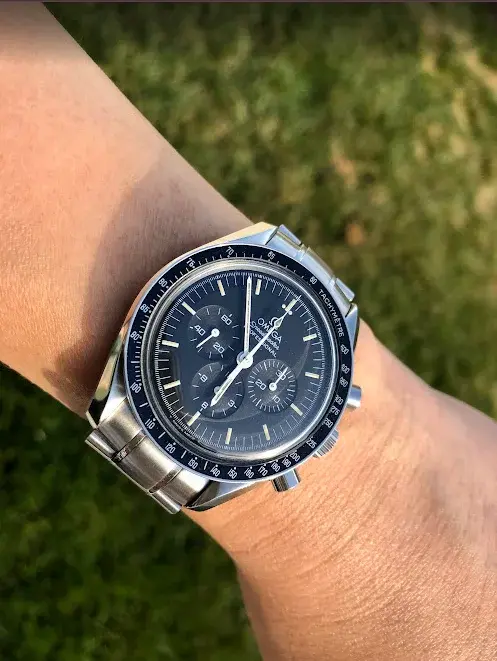
1998 tritium 3570.50 stopped working

Posts
16
Likes
5
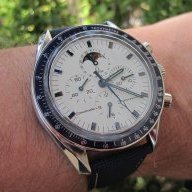
I have a 1998 3570.50 with a tritium dial (1499/842 bracelet). This morning, I wound it as usual with no issues. A few hours later, I noticed that it had stopped. When I attempt to wind it, the crown rotates normally with the ratcheting sound, but it just keeps spinning with no increasing tension. From what I've read, I'm guessing this is a broken mainspring, but I'm hoping it's something less serious. I've owned it for six years and never had it serviced - we were living in SC for the majority of that time and the times I attempted to find someone to service it, no one was willing to do it without mailing it off, so I just always put it off (obviously, I greatly regret that now). Would be happy to hear of any alternate theories / potential service providers in the DC area / ballpark estimates of cost. TYIA.
 
Posts
5,836
Likes
27,320
So when was it serviced before you got it 6 years ago?
 
Posts
7,636
Likes
14,103
A broken mainspring isn't the end of the world. It seems your watch needs a full service, just use an independent with an Omega account. No one knows when, if, it was ever serviced......it's time.
 
Posts
33,713
Likes
38,381
A broken mainspring isn't the end of the world. It seems your watch needs a full service, just use an independent with an Omega account. No one knows when, if, it was ever serviced......it's time.
Yep precisely this, if it's a '98 with no recent service history it's likely well overdue and it'll come back from service from a solid independent watchmaker running perfectly.
 
Posts
16
Likes
5
So when was it serviced before you got it 6 years ago?
Unknown service history when I purchased it
 
Posts
16
Likes
5
Thanks all, seems much less dire than "broken mainspring" originally sounded to my ears - I'm still open to suggestions for a good independent in the DC area, but I'm guessing I can search the forum and find one. Appreciate this community and the "speedy" replies!
 
Posts
10,357
Likes
16,210
At the risk of being a pedantic arse, what me you say? That is at the latest 1997, more likely 1996. By 1998 all production was SL lume. If yours has a 1998 date on the cards, it was made a little earlier.
 
Posts
16
Likes
5
At the risk of being a pedantic arse, what me you say? That is at the latest 1997, more likely 1996. By 1998 all production was SL lume. If yours has a 1998 date on the cards, it was made a little earlier
 
Posts
16
Likes
5
The original purchase date was 1998. It’s my understanding that the watch itself was likely manufactured earlier - as you point out, likely in 1997 or even earlier perhaps. The dial markings and lume, plus the condition of the hands suggest to my untrained eye that it is in fact a tritiim dial, and I don’t believe it’s out of the realm of possibility that it was perhaps made earlier than the purchase date.
 
Posts
23,702
Likes
52,670
Most often, a broken mainspring is just one more thing to be replaced during a service, which is due in any case.
 
Posts
1,513
Likes
1,555
Yep, mainspring is a common service item, and a part that ends up getting replaced at basically every service. OF the things that can fail, it is probably the least harmful, the mainspring is well captured, it can't 'harm' anything else when it breaks (in most cases, some watches actually don't have whole mainspring barrels, but those are rare).

All things considered, it sounds like you're well more than due on a service, so its just time! I'm not aware of anyone in the DC area, but hopefully someone else can chime in.
 
Posts
26
Likes
9
FWIW Tyson’s has an Omega “boutique” but that’s all I know of in that area. Not real helpful I’m afraid.
 
Posts
29,353
Likes
75,933
Yep, mainspring is a common service item, and a part that ends up getting replaced at basically every service. OF the things that can fail, it is probably the least harmful, the mainspring is well captured, it can't 'harm' anything else when it breaks (in most cases, some watches actually don't have whole mainspring barrels, but those are rare).

All things considered, it sounds like you're well more than due on a service, so its just time! I'm not aware of anyone in the DC area, but hopefully someone else can chime in.
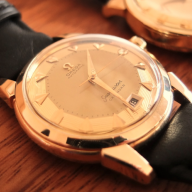
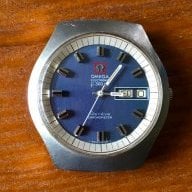
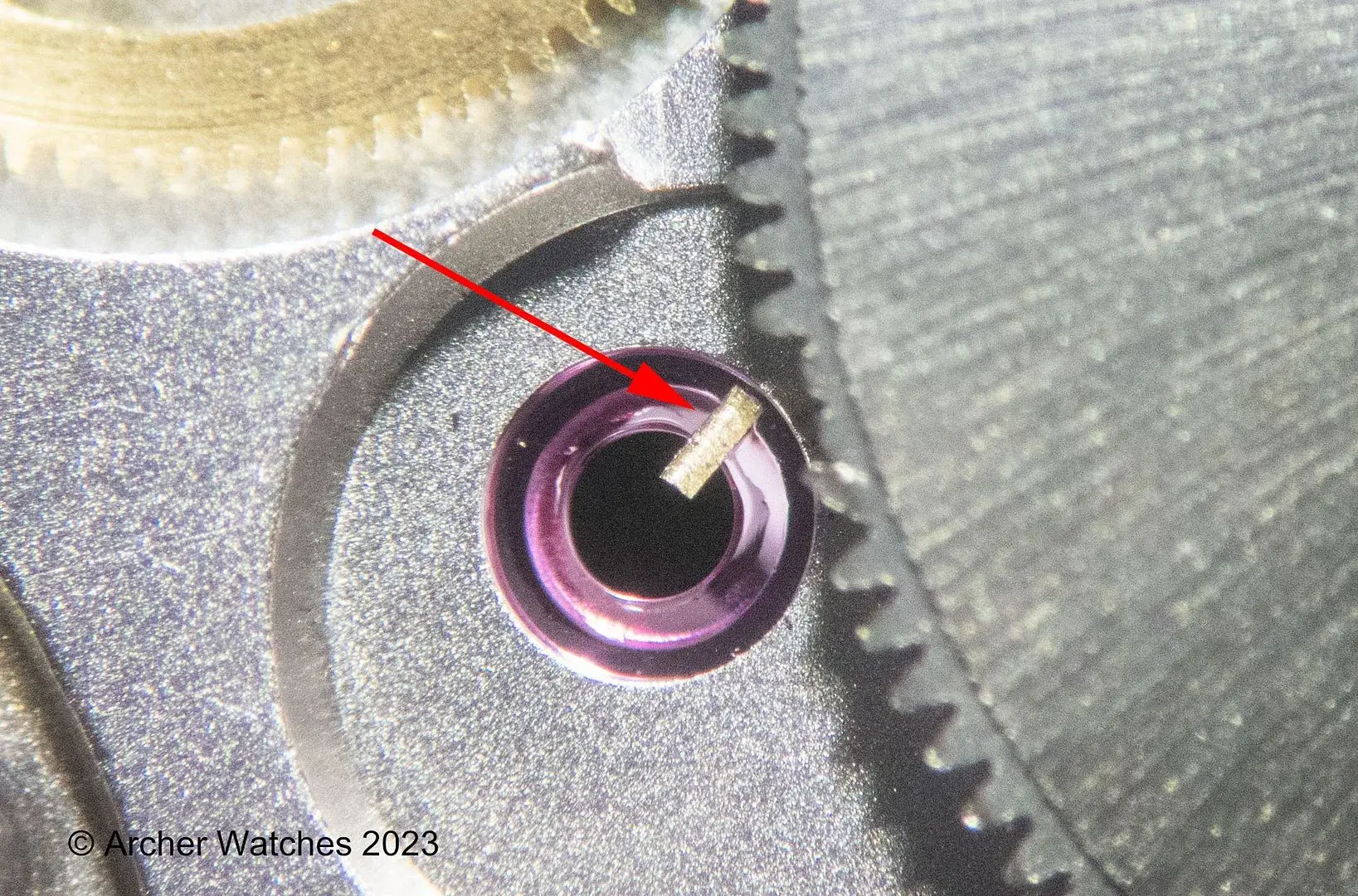
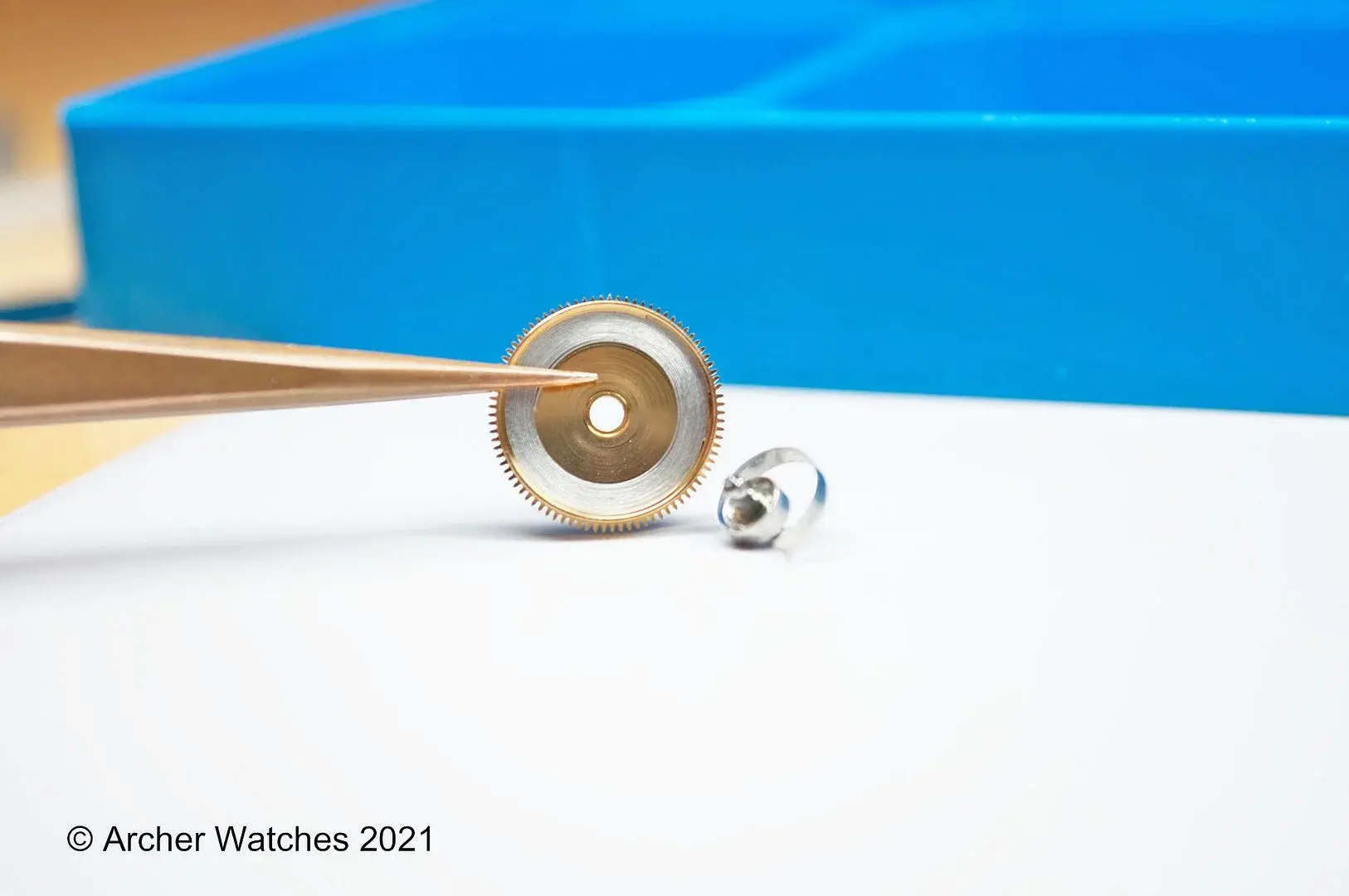
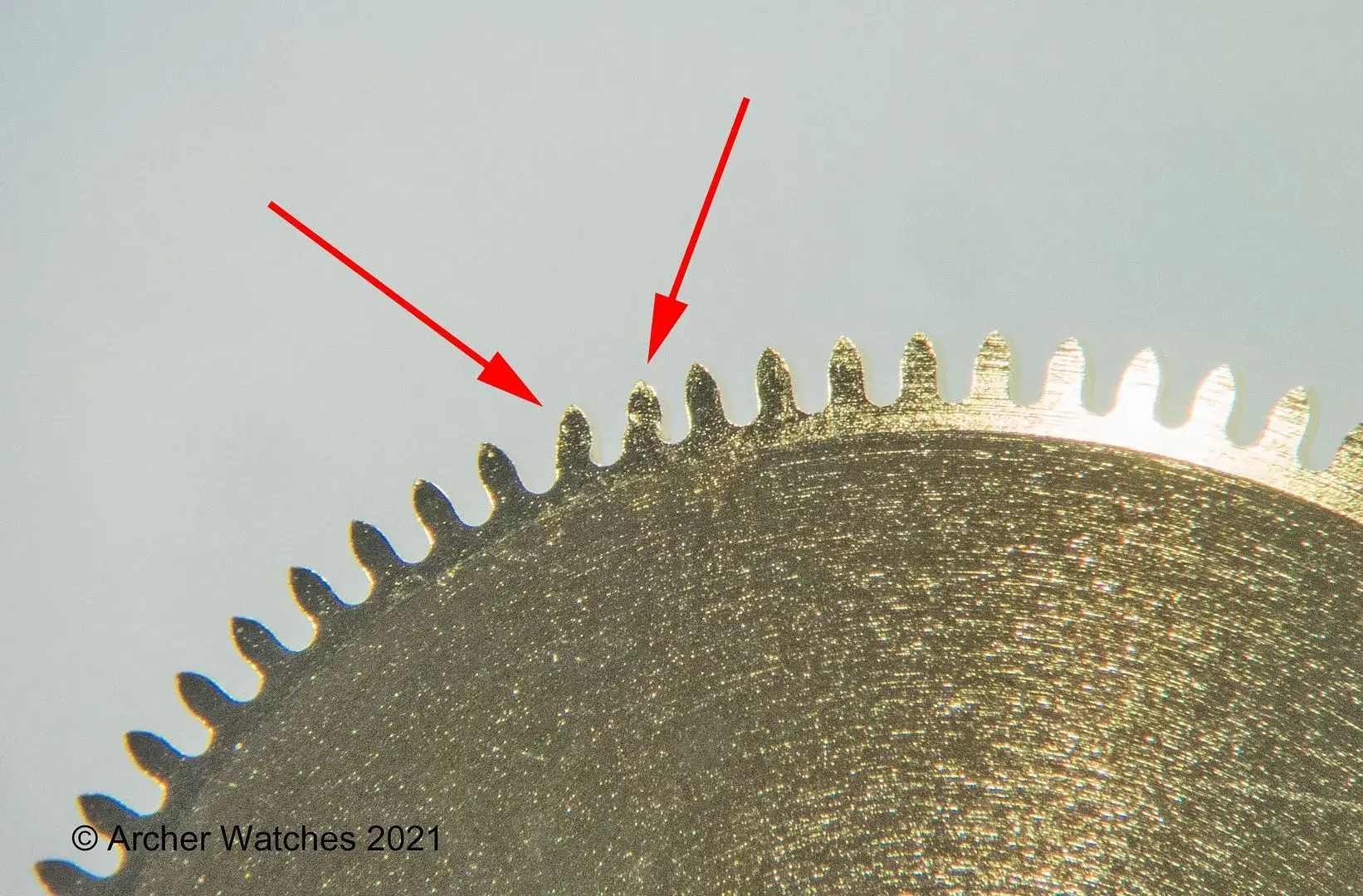
Well, it depends. If the spring breaks at full wind (where it normally does or close to it) the spring unwinds with a good deal of force. That torque is transmitted to the barrel drum, making it want to turn with a lot of force. Of course it cannot turn because the teeth on the barrel are engaged with the teeth on the center wheel (or whatever wheel is next).

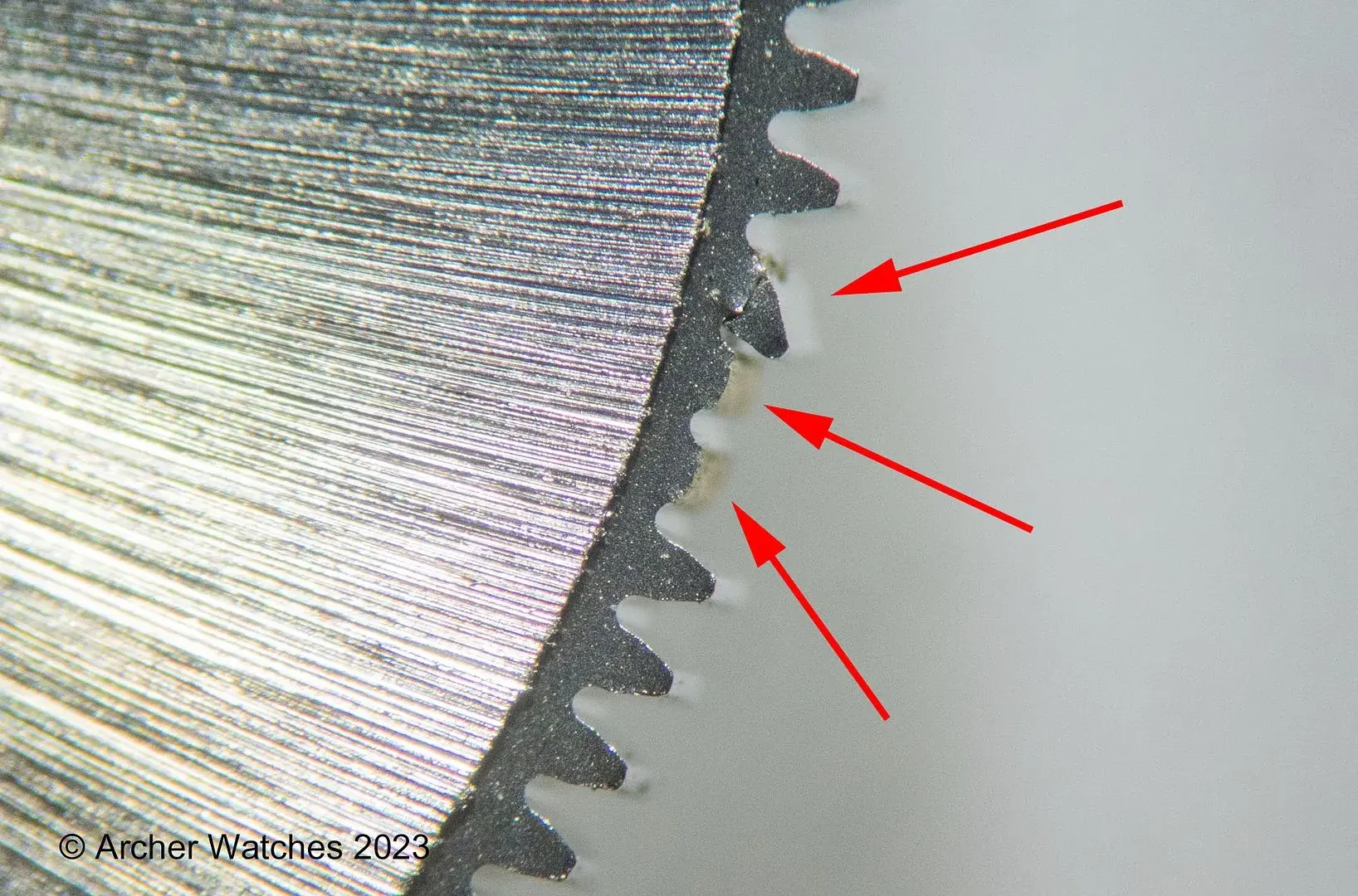
This can lead to damage to the barrel teeth and in some case shear those teeth right off:


Sometime it just bends the teeth on the barrel, like this:


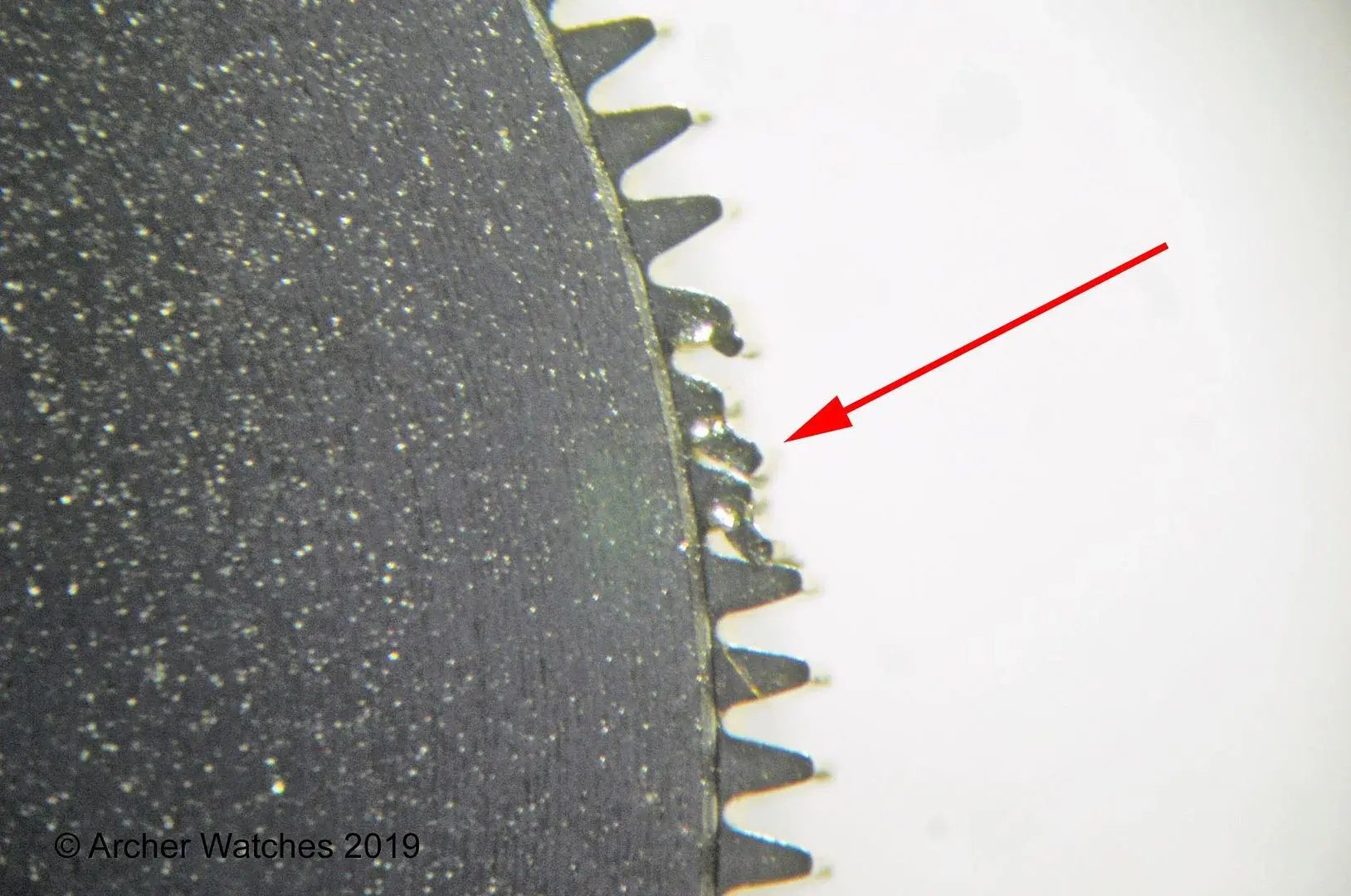
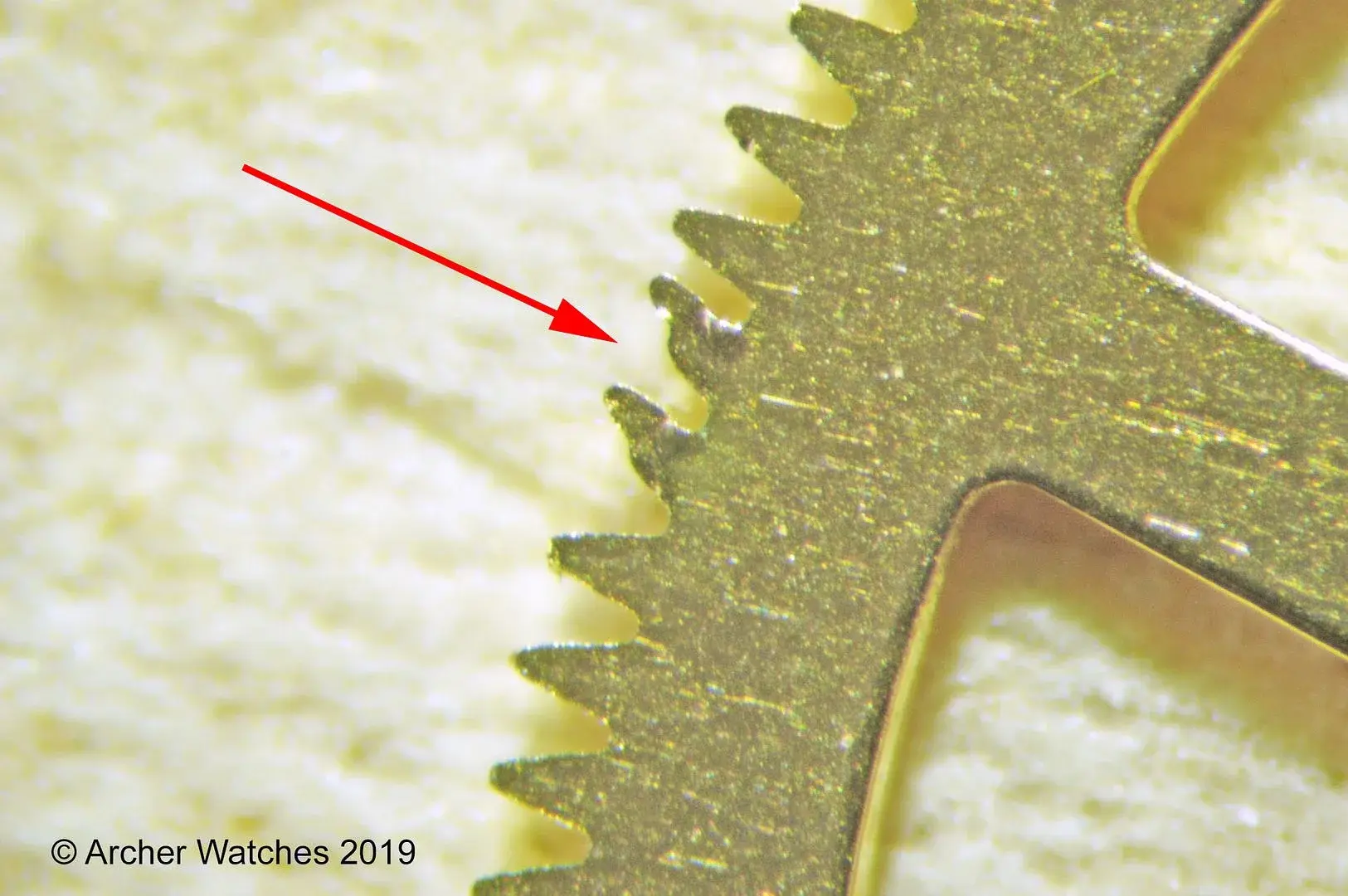
And it can carry that force through to the center wheel - not common but it does happen:


Neither of these examples (only a few of the many I've had over the years) are Speedmasters, but this one is:


Yes, often you get away with no damage, but every time a mainspring breaks, you really needs to look at all the teeth on the barrel quite closely to check for damage.
 
Posts
1,513
Likes
1,555
Well, it depends. If the spring breaks at full wind (where it normally does or close to it) the spring unwinds with a good deal of force. That torque is transmitted to the barrel drum, making it want to turn with a lot of force. Of course it cannot turn because the teeth on the barrel are engaged with the teeth on the center wheel (or whatever wheel is next).

This can lead to damage to the barrel teeth and in some case shear those teeth right off:


Sometime it just bends the teeth on the barrel, like this:


And it can carry that force through to the center wheel - not common but it does happen:


Neither of these examples (only a few of the many I've had over the years) are Speedmasters, but this one is:


Yes, often you get away with no damage, but every time a mainspring breaks, you really needs to look at all the teeth on the barrel quite closely to check for damage.
HOLY CRAP!

I'm surprised the spring tension HAS to go outside of the barrel and doesn't just internally unwind? Which is what it looks like happened on the ~5 or so ones I've seen so far. I've never seen that sort of damage! thats crazy... Thank you for sharing!
 
Posts
29,353
Likes
75,933
HOLY CRAP!

I'm surprised the spring tension HAS to go outside of the barrel and doesn't just internally unwind? Which is what it looks like happened on the ~5 or so ones I've seen so far. I've never seen that sort of damage! thats crazy... Thank you for sharing!
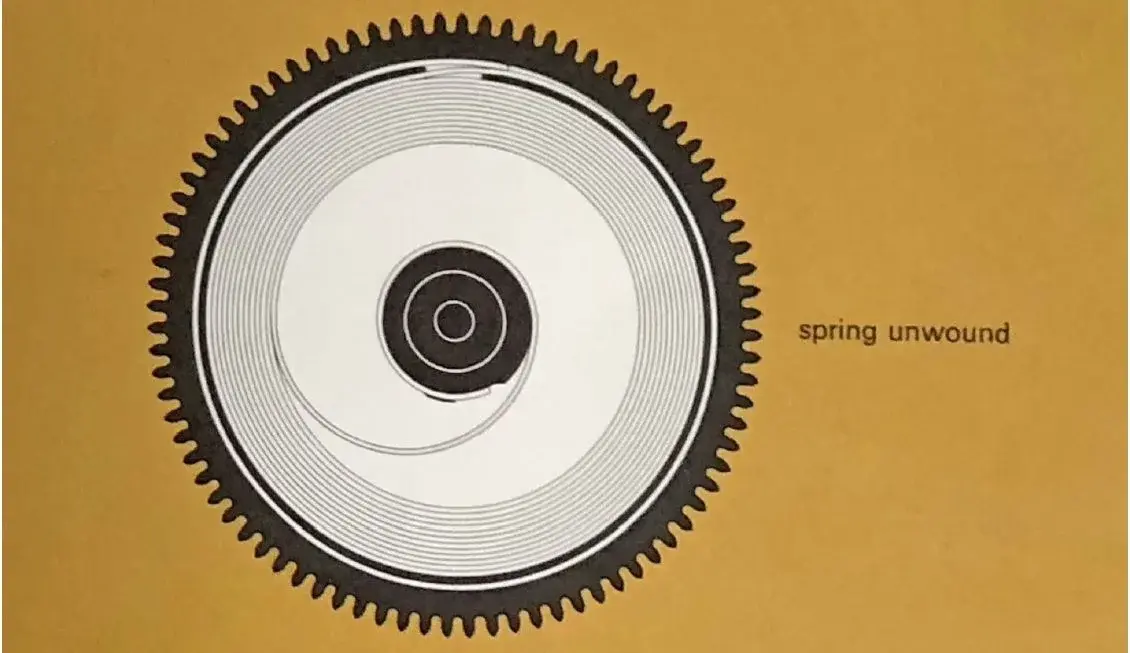
Here is an illustration of an unwound spring inside the barrel:


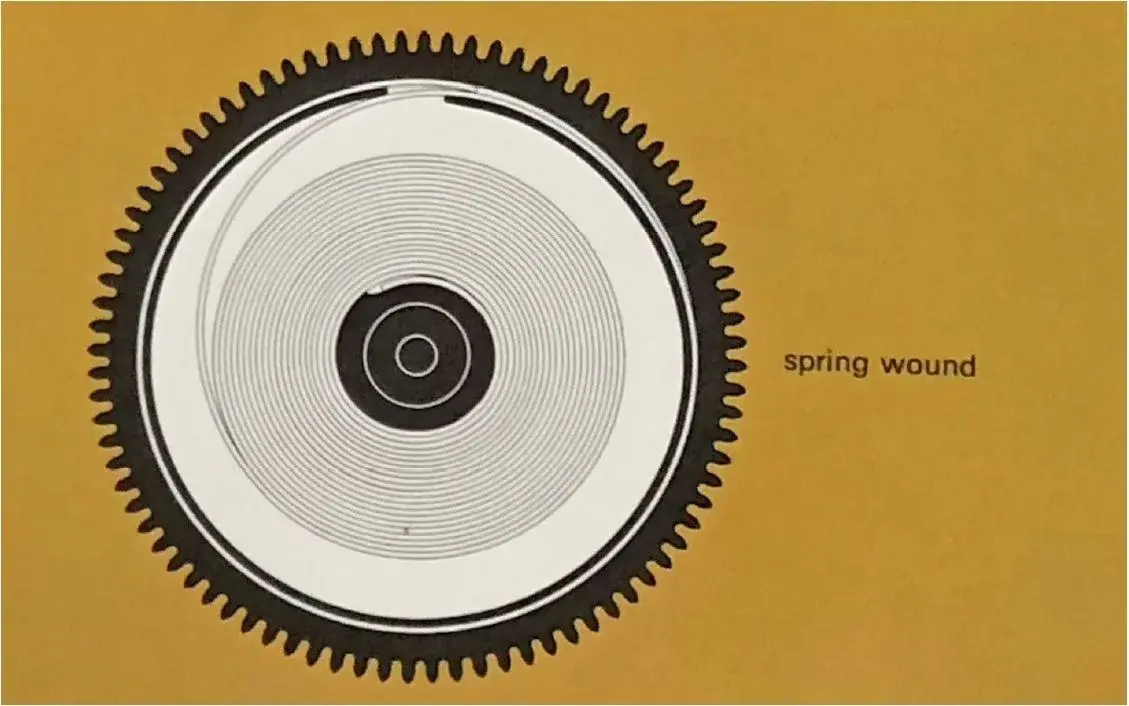
Here is a fully wound spring:


When the spring breaks near the arbor, nearly the entire mass of the spring is let loose to go from fully wound to fully unwound in an instant. It quickly unwinds until something stops it - what stops it is the outer coils slamming into the barrel wall, and this imparts a torque to the mainspring barrel, making it want to turn. Clearly the stronger the spring, the more torque this is going to create, which is why the most common movement I see damage like this on is the 6497/6498 movements, which are essentially pocket watch movements that have been used in wrist watches like Panerai.
 
Posts
1,513
Likes
1,555
Here is an illustration of an unwound spring inside the barrel:


Here is a fully wound spring:


When the spring breaks near the arbor, nearly the entire mass of the spring is let loose to go from fully wound to fully unwound in an instant. It quickly unwinds until something stops it - what stops it is the outer coils slamming into the barrel wall, and this imparts a torque to the mainspring barrel, making it want to turn. Clearly the stronger the spring, the more torque this is going to create, which is why the most common movement I see damage like this on is the 6497/6498 movements, which are essentially pocket watch movements that have been used in wrist watches like Panerai.
Oh, that makes a ton of sense, I see/can conceptualize how that works now. Thank you!
 
Posts
82
Likes
40
Well, it depends. If the spring breaks at full wind (where it normally does or close to it) the spring unwinds with a good deal of force. That torque is transmitted to the barrel drum, making it want to turn with a lot of force. Of course it cannot turn because the teeth on the barrel are engaged with the teeth on the center wheel (or whatever wheel is next).

This can lead to damage to the barrel teeth and in some case shear those teeth right off:


Sometime it just bends the teeth on the barrel, like this:


And it can carry that force through to the center wheel - not common but it does happen:


Neither of these examples (only a few of the many I've had over the years) are Speedmasters, but this one is:


Yes, often you get away with no damage, but every time a mainspring breaks, you really needs to look at all the teeth on the barrel quite closely to check for damage.
Wow didn't realize this could happen from a broken main spring, great to see the inspection images, super helpful