- Posts
- 4
- Likes
- 1
OmegaSheriff
·Hello all,
I am new to the forum so please do forgive me if this is a double, but I highly doubt this has happened to anyone else in the world.
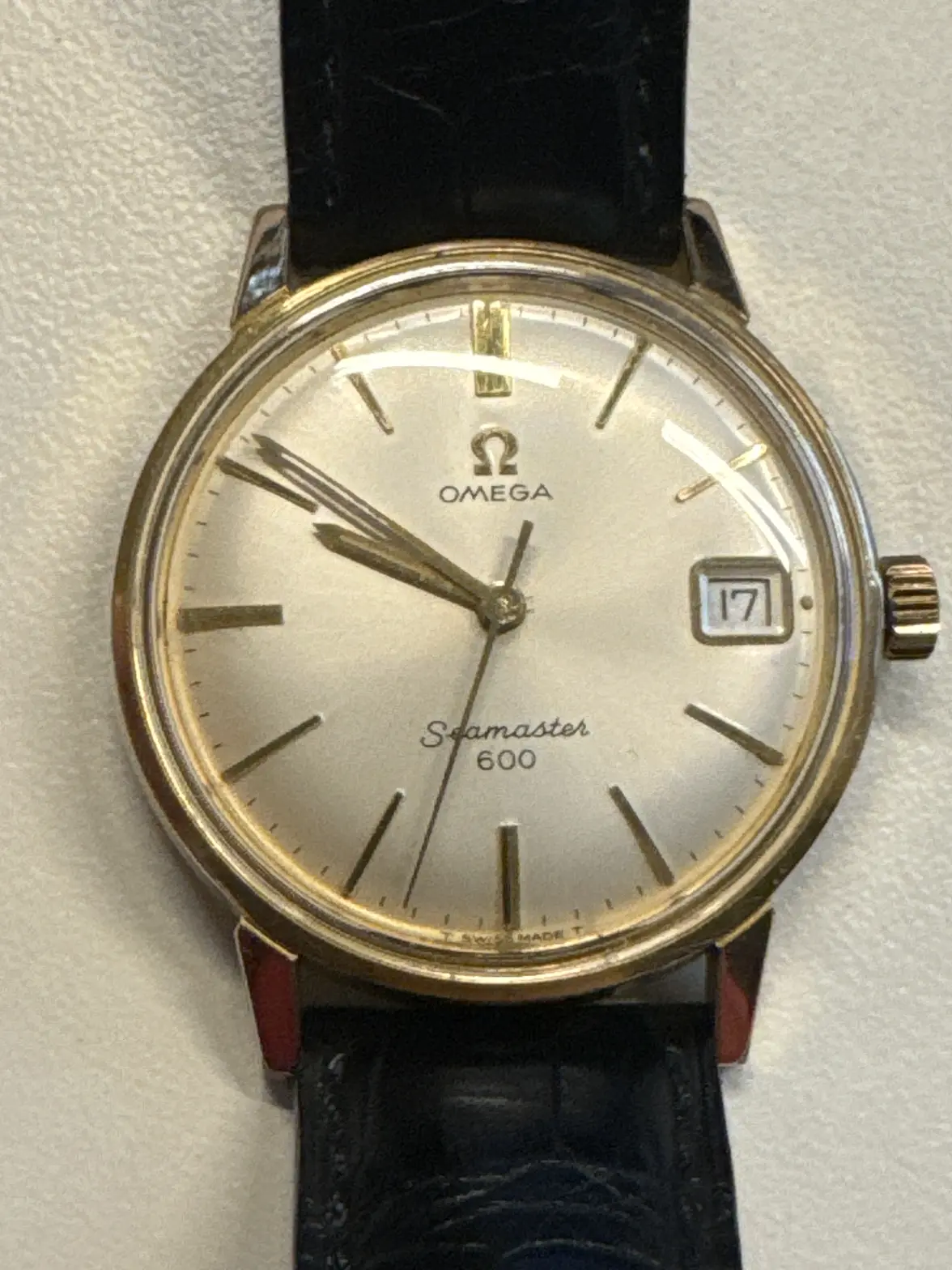
Last year, I took a small gamble and bought a 1960s hand wound Seamaster 600 off of Catawiki. It didn’t keep time that accurate when it arrived but I had already factored that possibility in.
Whilst it was a gamble, I asked a local vintage watch shop to have a look and they didn’t have any doubt as to the genuinity of it. I had it fully serviced for approximately EUR 500 and initially it was smooth sailing all along. However, after a couple of weeks it started losing time so I brought it back. It turned out that the ratchet wheel screw was loose/lost it threads. They replaced it and then it ran well for a while.
Unfortunately, the same problem (losing time and not keeping consistent time after setting) occurred again and they had a look. Thing is: the seconds dial always keeps running accurately, but after setting, the minutes dial seems to only engage after approximately 8-10 minutes. After that, sometimes the watch keeps running behind for 10 minutes accurately. When you try to set it 10 minutes in advance, either of two things happens: the watch loses even more time and then starts running and sometimes it keeps running consistently 10 minutes in advance. It is as if it has its own will.
The shop where I had it serviced is very helpful and asked me to come bring it in as it is still under warranty. This would be the fourth time I bring it back. Now before I do that again I tried something else: I let the watch run out of kts power reserve (24-36 hours) then wound and set it again (normally I just wound it every morning). It runs nice and accurate right now.
Now my question would be: do any of you have similar experiences with watches from this era? I am just looking to see whether this is normal behavior or that the full service may have lacked something.
I am new to the forum so please do forgive me if this is a double, but I highly doubt this has happened to anyone else in the world.
Last year, I took a small gamble and bought a 1960s hand wound Seamaster 600 off of Catawiki. It didn’t keep time that accurate when it arrived but I had already factored that possibility in.
Whilst it was a gamble, I asked a local vintage watch shop to have a look and they didn’t have any doubt as to the genuinity of it. I had it fully serviced for approximately EUR 500 and initially it was smooth sailing all along. However, after a couple of weeks it started losing time so I brought it back. It turned out that the ratchet wheel screw was loose/lost it threads. They replaced it and then it ran well for a while.
Unfortunately, the same problem (losing time and not keeping consistent time after setting) occurred again and they had a look. Thing is: the seconds dial always keeps running accurately, but after setting, the minutes dial seems to only engage after approximately 8-10 minutes. After that, sometimes the watch keeps running behind for 10 minutes accurately. When you try to set it 10 minutes in advance, either of two things happens: the watch loses even more time and then starts running and sometimes it keeps running consistently 10 minutes in advance. It is as if it has its own will.
The shop where I had it serviced is very helpful and asked me to come bring it in as it is still under warranty. This would be the fourth time I bring it back. Now before I do that again I tried something else: I let the watch run out of kts power reserve (24-36 hours) then wound and set it again (normally I just wound it every morning). It runs nice and accurate right now.
Now my question would be: do any of you have similar experiences with watches from this era? I am just looking to see whether this is normal behavior or that the full service may have lacked something.