Zenith prototypes and Movado

Posts
121
Likes
232
Zenith made the ”number series” of watches 250 S, 230 S, 2600 etc as some kind of prototype watches using Martel movements. At the same time, Zenith and Movado had co-operation where they launched similar types of watches and also used similar namings such as ”Sub sea” for their waterproof watches.

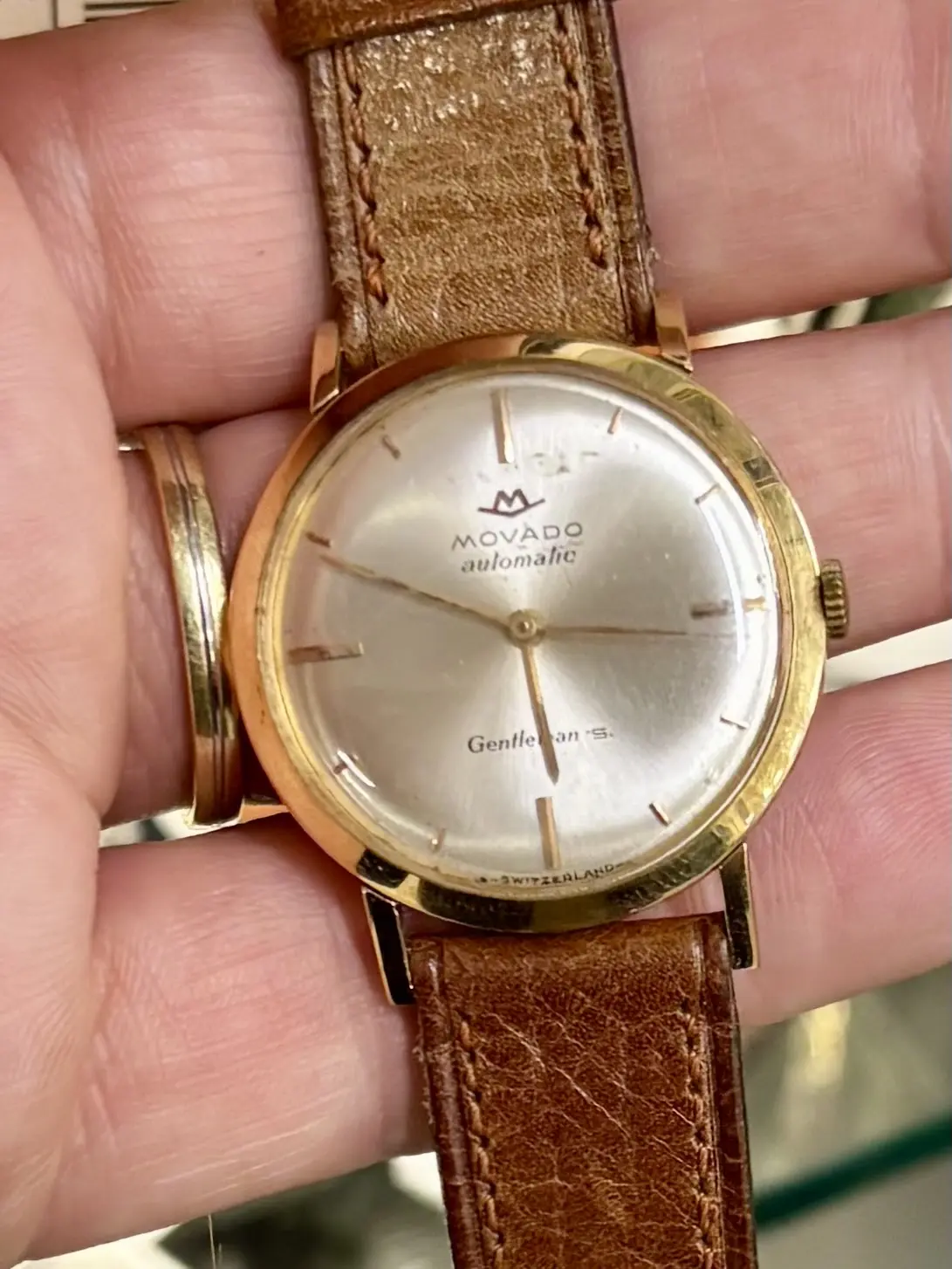
I found a, for me peculiar, Movado with the marking Gentleman ”S„. It’s an 18k gold watch.
I have seen Movado Gentleman and Kingmatic ”S„ but never, and haven’t found in searches, anything called Gentleman ”S„.

Q: What could this be then? Another prototype? A franken?
 
Posts
8,019
Likes
28,165
First, there is no evidence that I am aware of that any of them were prototypes. They may have been low-production, but there are plenty of 250 and 230 S that have circulated in the marketplace.

The movements found in those models may have been based on a Martel design, but they were in-house Zenith movements, and had presumably been refined. To my understanding, some Zenith chronograph movements were of Martel origin, and close to the original design.

I assume that the dial on the Gentleman is original, as it appears so, and adding an "S" would be unlikely to have produced any higher value. I don't know what it may have signified, however.
 
Posts
6,359
Likes
9,953
To my understanding, some Zenith chronograph movements were of Martel origin, and close to the original design.
In the 1930's Zenith and UG chronograph production was intertwined
 
Posts
121
Likes
232
First, there is no evidence that I am aware of that any of them were prototypes. They may have been low-production, but there are plenty of 250 and 230 S that have circulated in the marketplace.

The movements found in those models may have been based on a Martel design, but they were in-house Zenith movements, and had presumably been refined. To my understanding, some Zenith chronograph movements were of Martel origin, and close to the original design.

I assume that the dial on the Gentleman is original, as it appears so, and adding an "S" would be unlikely to have produced any higher value. I don't know what it may have signified, however.
Dials like 220 S, 230 S, 250 S or 28800 are not sub-brands or collections.
220, 220S, 230S, 2300, 250S, 2600 etc. are prototype movements that Zenith made when it started developing the caliber 2522 onwards. Most of the time they are the same movement as the official movement of the caliber, but there are also differences. The prototype movements were mainly made from the 2532 series.

The dial of the Gentleman is quite different from the other Gentleman dials. The Gentleman ”S„ marking on the dial is really odd. Only Kingmatics had that.
 
Posts
121
Likes
232
Zenith bought the majority of Martels shares in 1958 with an 80% stake and in the early 60s the entire share capital. Zenith's main goal was to obtain the patents for the production of a rotor automatic.

The 25xx is Zenith's most significant movement series, which was manufactured in the old Martel movement factory, where Zenith moved all of its production from its own factory. In the early 60s, the factory made one series for men's watches, on which all the movements of the factory's men's watches were based until 1978.
 
Posts
121
Likes
232
In the 1930's Zenith and UG chronograph production was intertwined
In the sense that UG owned Martel which chronographs Zenith used.
 
Posts
8,019
Likes
28,165
220, 220S, 230S, 2300, 250S, 2600 etc. are prototype movements that Zenith made when it started developing the caliber 2522 onwards.
Again, I know of no evidence that they are "prototypes", and the fact that there are numerous examples circulating in the marketplace suggests clearly that they were not. Do you imagine that "prototype" watches typically escaped manufacturers?

The "S" were model codes, though I do not know what they denoted.

These calibers were used in those models:

2300 = cal 2532
230 S = cal 2532
250 S = cal 2532 P (or PC)
2600 = cal 2532 PC

According to Ranffts database, these were the production numbers:

2532 - 120,000
2532P - 12,000
2532PC - 72,000

On what possible basis might watches that employed such high-production movements be considered "prototypes"?
Edited:
 
Posts
6,359
Likes
9,953
In the sense that UG owned Martel which chronographs Zenith used

More than that: the production was really intertwined on the chrono side
 
Posts
121
Likes
232
Again, I know of no evidence that they are "prototypes", and the fact that there are numerous examples circulating in the marketplace suggests clearly that they were not. Do you imagine that "prototype" watches typically escaped manufacturers?

The "S" were model codes, though I do not know what they denoted.

These calibers were used in those models:

2300 = cal 2532
230 S = cal 2532
250 S = cal 2532 P (or PC)
2600 = cal 2532 PC

According to Ranffts database, these were the production numbers:

2532 - 120,000
2532P - 12,000
2532PC - 72,000

On what possible basis might watches that employed such high-production movements be considered "prototypes"?
I do not imagine anything and I’m no authority on the subject, but I quoted one that has researched Zenith’s history and is very knowledgeable. On the matter of calling them prototypes, he refers to the fact that they were continuously evolving and were with different complications and without used in a number of models.
Here’s the original link. Use translation.
https://www.kellohuoltoloppela.com/

Edit:
” Before the release of the 2532 series, Zenith made a large number of so-called number Zeniths (prototypes) with numbers on the dial such as 230, 230S or 2300.”
https://www.kellohuoltoloppela.com/Zenith60.html
Edited:
 
Posts
121
Likes
232
More than that: the production was really intertwined on the chrono side
I found info that Universal owned 80% and Zenith 20% of Martel. When Universal got into financial difficulties, Martel became independent but subsequently Zenith bought it all.
 
Posts
23,586
Likes
52,442
I do not imagine anything and I’m no authority on the subject, but I quoted one that has researched Zenith’s history and is very knowledgeable. On the matter of calling them prototypes, he refers to the fact that they were continuously evolving and were with different complications and without used in a number of models.
Here’s the original link. Use translation.
https://www.kellohuoltoloppela.com/

Edit:
” Before the release of the 2532 series, Zenith made a large number of so-called number Zeniths (prototypes) with numbers on the dial such as 230, 230S or 2300.”
https://www.kellohuoltoloppela.com/Zenith60.html
So all of the information you are posting in this thread is taken from this web-page?
 
Posts
121
Likes
232
So all of the information you are posting in this thread is taken from this web-page?
Mostly so, yes.
 
Posts
23,586
Likes
52,442
OK, now I remember you, the troll from earlier this month.

 
Posts
121
Likes
232
OK, now I remember you, the troll from earlier this month.

This is your input to this subject?
 
Posts
8,019
Likes
28,165
I quoted one that has researched Zenith’s history and is very knowledgeable. On the matter of calling them prototypes, he refers to the fact that they were continuously evolving and were with different complications and without used in a number of models.
Then it is a semantic issue. Prototypes, by definition, tend not to be introduced into the marketplace. The watches that you mention were clearly manufactured to be sold commercially, and so again, by definition, could not have been prototypes.

As for them "continuously evolving and were with different complications", that could describe countless calibers manufactured by countless companies. In other words, it was common for calibers to evolve, and refinements to be made. Take the famous IWC cal. 85x automatic movements, for example. The original cal. 85 replaced the cal, 81, and 8,400 were reported to have been produced. The subsequent cal. 852, 853, and 854 were each slightly modified (or refined), and were produced in far higher numbers. But I don't think that anyone refers to the cal. 85 as having been a "prototype".