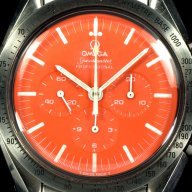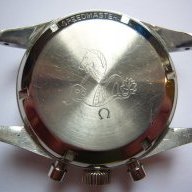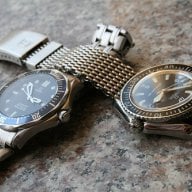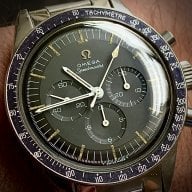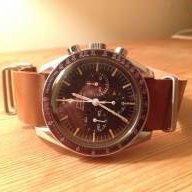
Yikes, I made a brown / tropical Speedmaster dial!

Posts
13,202
Likes
22,961
Good expose on creating fake patina on dials.
This is nothing new, people have been baking
dials and bleaching bezels for a long time in the
Rolex world.
But here is the caveat. With Rolex 1680 Submariner
for example, collectors know that only a small serial
range's dials turned brown "naturally". It is said to happen
because of a dial paint batch that was mixed improperly
or a coating that was defective. But it only occurred on
serials 2.2-2.3 million. Same with the 16520 Zenith powered
Daytona's, if I remember it's like only the S and T serials.
Those watches command ~100% premium or more.
The 2.5 million 1680 and a V series 16520 will not turn
brown "naturally" and collectors won't pay 100% premium
for one that is brown.
That said, are there collectors that will pay a premium for
dial or bezel patina? There sure are.
Here's a little tip on the plots. Buy yourself a pure UV
LED flashlight or a magnifier with one. The tritium plots
look completely different under this light. It's another
tool in the quiver of the collector. The Rolex guys have been using
them for years.


Isn't a similar situation with Speedmasters, in that although any watch could potentially turn brown naturally, it's much more likely to happen in the 2911xxxx serials.

 
Posts
1,210
Likes
1,690
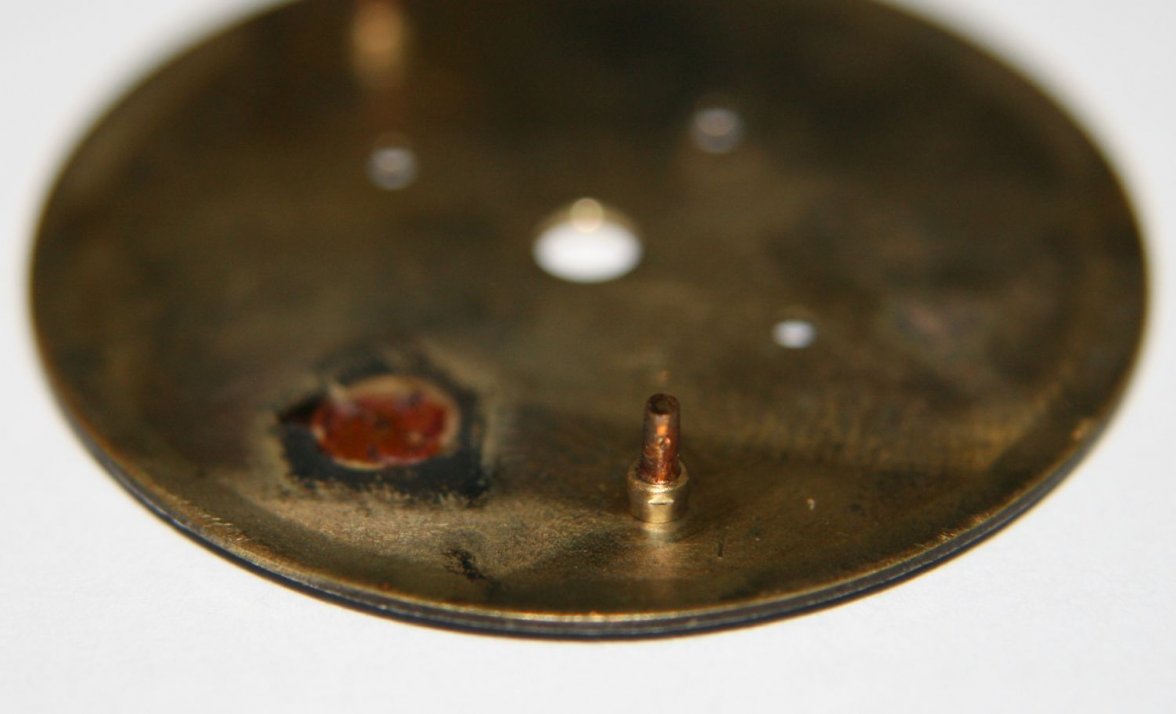
The 321 feet are longer and thicker than those for the 861. It was a matter of careful machining to bring them down to the correct size. The actual positions of the feet are the same for both movements so it was a fairly straightforward modification.
Been searching for this on the web last few days with no result. Thanks馃憤
 
Posts
649
Likes
839
Isn't a similar situation with Speedmasters, in that although any watch could potentially turn brown naturally, it's much more likely to happen in the 2911xxxx serials.

29.11, but also 29.6
 
Posts
542
Likes
1,518
Find on my Speedy Moon the lume is so bright by the end of the day it glows like it's a light. Keep watches airtight when not wearing more to preserve the leather.

Don't even think of rubber straps as lucky for any to last more than 6months. Do a lot of fishing in salt water and even beaters with plastic parts don't last long. Have a army mate that goes through a g-shock every 3-4 months in the build up season the worst.


I lived in Cairns for a while, everything just grew fungus - camera lenses, watches, any leather, inside photo frames and yeah rubber just turned to mush and disintegrated. 馃檨
 
Posts
542
Likes
1,518
Been searching for this on the web last few days with no result. Thanks馃憤

You're welcome Tritium, I used a Valorbe file and some french chalk plus a bit of patience. Best to mask off the back of the dial to prevent scratching too.
 
Posts
542
Likes
1,518
This entire thread is horrifying! Not because the results aren't good, but because the results are good.

From the guys who have experimented with this, are there any "tells" that you could share? For example, when I'm authenticating a piece, I always take the hands and dial off and look at the underside of the dial. Old engravings, stray paint, etc can all help me deduce a redial.

Well for me the back of the dial still looks out of the packet fresh. Having said that - if I wanted to deceive - that would be easy to change. Also you would expect a dial that has been part of a watch for x number of years to have been out during a service, plenty of them have marks from that thanks to careless watchmakers. Mine at least, apart from the colour change looks pristine. Again, I think it highly likely that all these aspects of the patina can be replicated given enough spare dials and time. The big tell on this dial is the lack of the two T's next to the Swiss made. Seems it's a kind of art to produce and a science to uncover 馃槈
 
Posts
5,317
Likes
24,330
You guys might try setting a dial by itself out in the sun on a very hot sunny day. That way it would be "naturally" aged 馃榿


Well I left a 1969 dial in a case, no movement, outside in the bangkok sun and humidity for three months.

zilch
 
Posts
3,091
Likes
3,595
29.11, but also 29.6
Exactly correct!
I have a personal database on both. 馃槈
There's actually a few more digits that can be added
to both batches
 
Posts
542
Likes
1,518
A better shot outdoors

ha6y9eze.jpg
 
Posts
1,887
Likes
3,831
Another 'tell' might be that luminova has a very smooth, almost shiny finish, whereas tritium and radium have an almost crystalline appearance.
I'm guessing the smooth finish survives the cooking?
 
Posts
124
Likes
151
Have you modified a 321 [service] dial to work with an 861. I will be trying to do it soon. How did it go?
 
Posts
390
Likes
676
I wouldnt be brave enough to try something like this but the outcome is suprisingly good.
 
Posts
1,303
Likes
3,088
Well I left a 1969 dial in a case, no movement, outside in the bangkok sun and humidity for three months.

zilch
I did the same with a Rolex GMT bezel , same result nothing to see here ! This was a later bezel (2003), they just don't seem to fade.
 
Posts
124
Likes
151
Now before people get upset and climb up onto their high horses, let me just say that while Bienne is allowing parts to be sold, I'm going to have myself some fun 馃榾 What you'll find below has not been done to deceive people, rather to see what is achievable.

I'm building a transitional Speedmaster, complete with a 1968 serial 861 and applied logo dial. All parts are new, except of course the movement.

I like the look of the patina that occurs with tritium dials but wondered if it might be possible to get the same effect with a new luminova version.

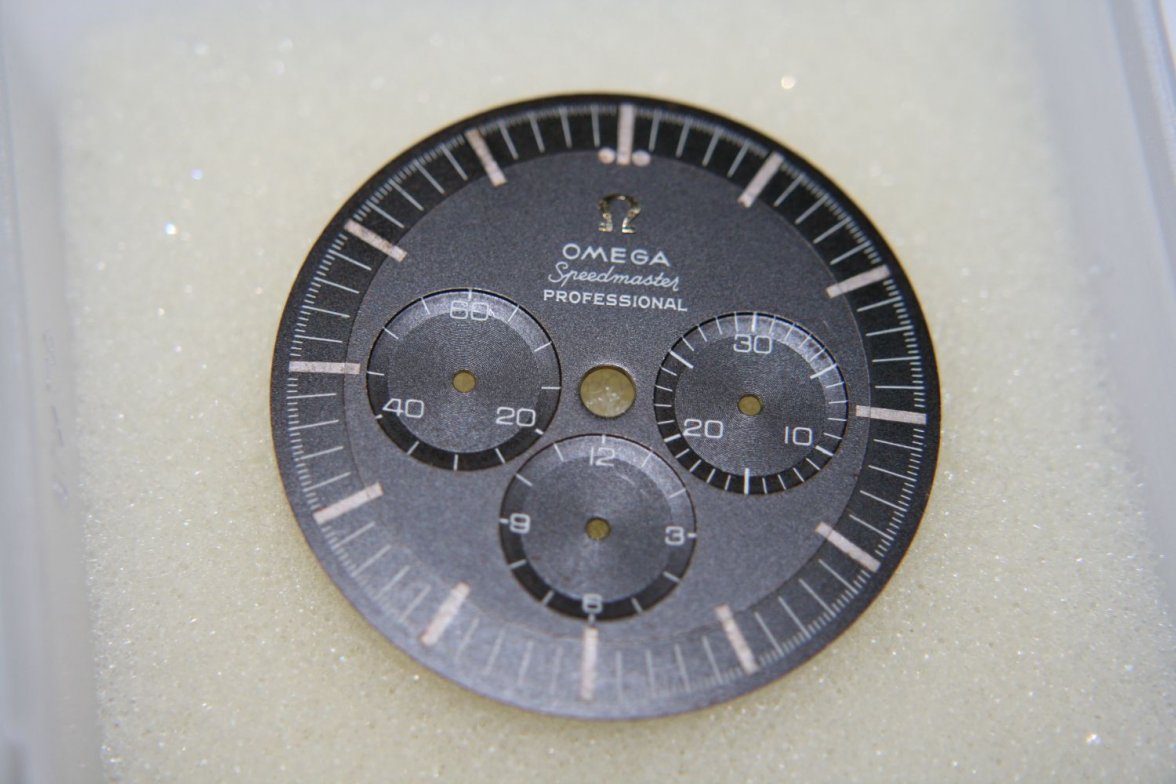
In the process of experimentation I seem to have turned the dial itself a subtle brown. It wasn't my intention to do this and I'm mightily surprised by the result.

It's been an expensive road to get to this point so I'm not keen on sharing the process itself but thought you all might like to see it. If I've been able to do this it makes me wonder what other watches might be out there with manufactured patina that are being passed off as something they are not?

Thoughts?

Before..
e6yjerav.jpg

After
ga7ajygu.jpg

Side by side
8apavysy.jpg

Have you modified a 321 [service] dial to work with an 861. I will be trying to do it soon. How did it go?
 
Posts
1,669
Likes
5,911
The pins on the 321 dial and longer and thicker, so they need to be shortened and thinned to fit the 861 movement
 
Posts
189
Likes
313
Interesting the browns are more prominent in 29///// serials, is there any earlier or later serials that can change?
 
Posts
124
Likes
151
The pins on the 321 dial and longer and thicker, so they need to be shortened and thinned to fit the 861 movement
I understand, I have seen photos, and held the two dials side by side - I'm looking for someone who has experience actually modifying the 321.
 
Posts
1,669
Likes
5,911
I understand, I have seen photos, and held the two dials side by side - I'm looking for someone who has experience actually modifying the 321.

I have fitted a 321 dial to the 861 movement and thats all I did was to shorten and thin the pins
 
Posts
124
Likes
151
I have fitted a 321 dial to the 861 movement and thats all I did was to shorten and thin the pins
Did you take pics / post anywhere? I'm going to attempt this..
 
Posts
1,669
Likes
5,911
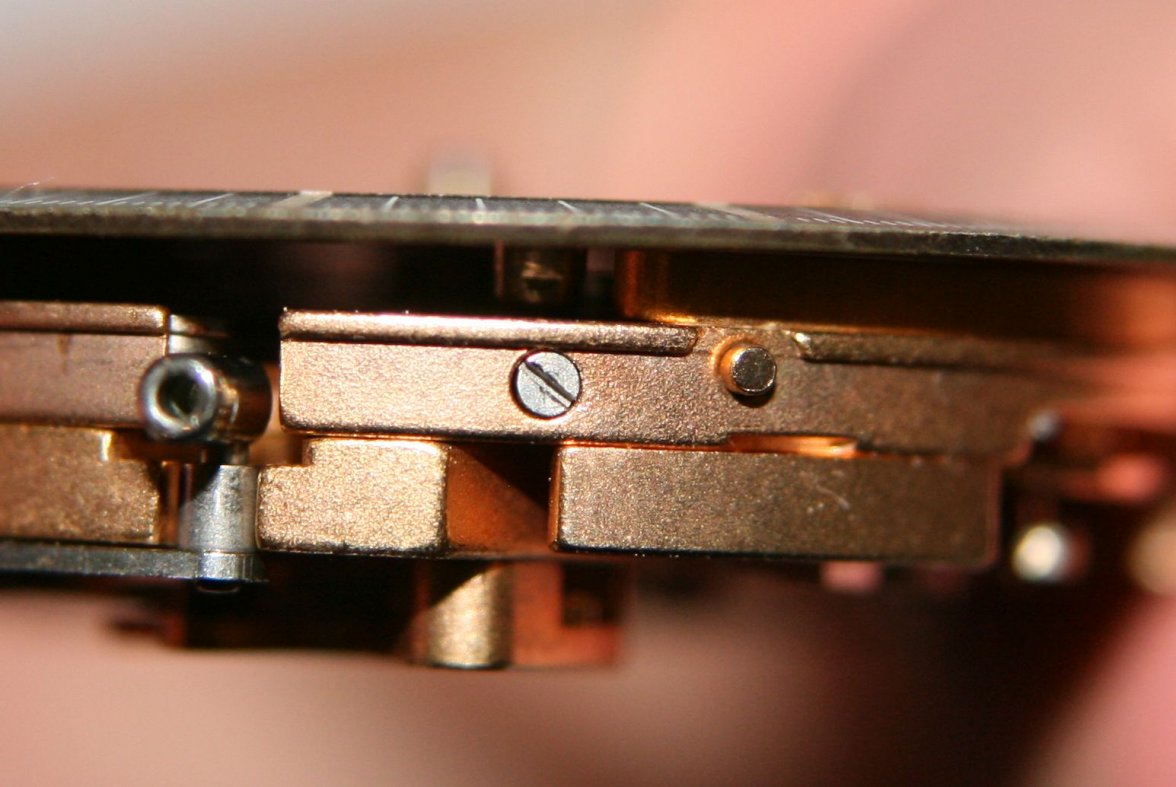
Not really too much to see......

Trimmed 321 dial foot, only the thinner part needs to be thinned down, and shortened


Fitted on 861 movement. The fat bit of the 321 pin isnt required to enter the hole in the 861 movement for the dial to sit flat but the fat part does come very close to where the pin mounts into the movement. The screw then secures it in place.


This is the dial..........which maybe in hindsight I probably shouldnt have modified the feet, the dial has started to turn brown, although it has no lume remaining. Looks fine under a crystal but a bit rough when viewed in normal light