All-Looking for some winter driving advice. My son goes to college in New England and I am buying him a Subaru (so much for the watch savings), which has all wheel drive. Questions:
1. Is all wheel drive with the all purpose tires safe for winter driving conditions, or will he need snow tires? He won't be doing a huge amount of driving since his school is in a very small town but maybe some ski weekends, etc.
2. What is the best way for him to learn how to drive in the snow and ice? Not a lot of practice time here in SoCal.
3. Any issue leaving the car outside for 5 weeks over winter break, or is it important to find a place to garage the car?
Any other thoughts will be appreciated as well. Thanks.
1. Yes, get winter tires - we have 4 Subarus and 1 Jeep for our family of 5 here in CO, and we usually swap to winter tires every Halloween and back to all seasons around Easter time, even though it doesn't snow constantly, because all season tires simply don't grip as well at below 30-40 degrees Fahrenheit. So, you don't even need snow to benefit from them if the temperatures are very cold.
We live at 6,600 feet on Cheyenne Mountain, with steep road leading to home and a steep driveway. We love the Subaru symmetrical AWD and the only car that my 3 kids have had an accident in the snow or ice since the first one started driving 10 years ago was our old RAV4 that I didn't approve of.
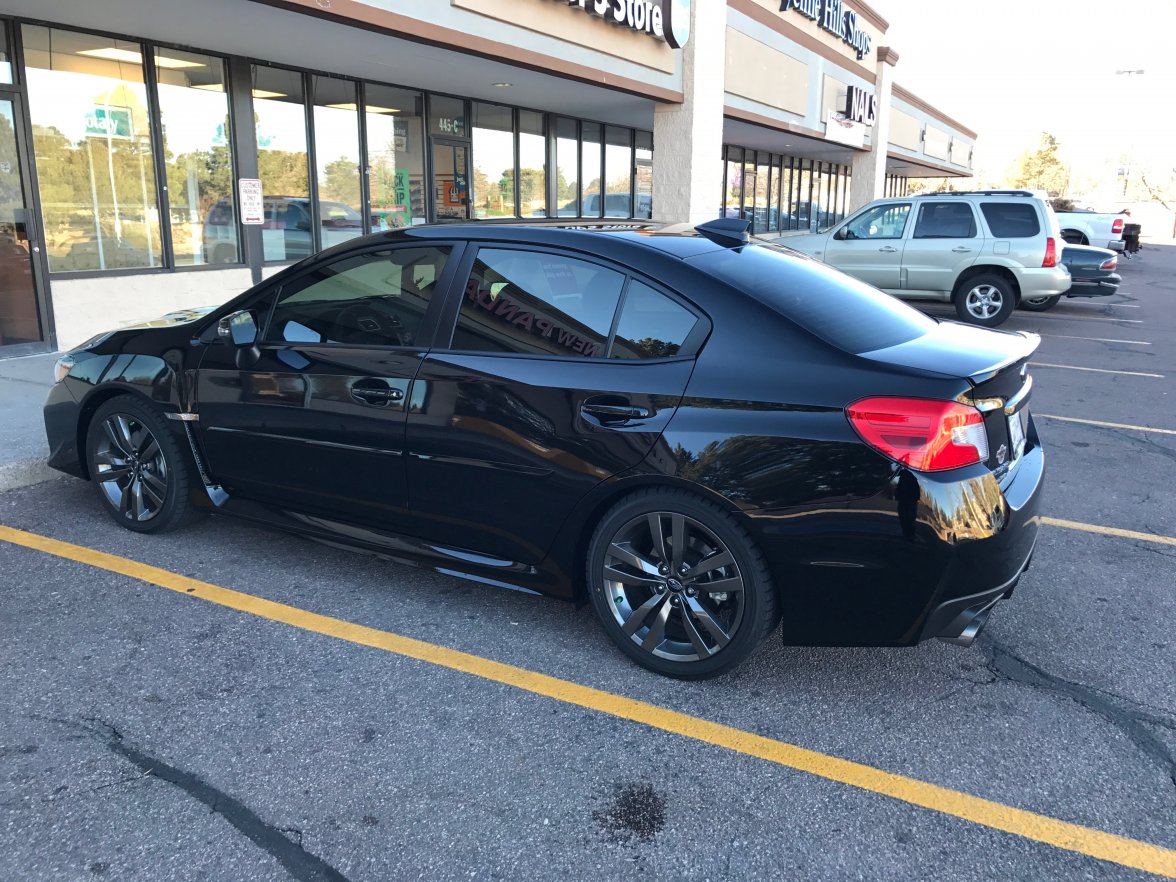
Here are my winter driving tips. In my experience, Blizzak WS80 tires have had the best grip but wear out the fastest with a turbo Subaru (my old 2004 STi and 2015 Forester XT). But with a tame driver or normally aspirated Subaru they'd be my pick. When I bought my 2017 WRX I switched the to same the Yokahama Ice Guard tires that my wife and kids drive on. They're 90% as good on snow and ice vs the Blizzak, at 80% of the cost. I've found the Yokahama are also a step ahead of the General Altimax Arctic on ice (but similar on snow), while the Altimax still blow away an all season tire on cold roads, snow and ice. They're just not as good on ice as the others.
The best all-season I've used on snow has been the Continental Extreme Contact DSW, but they'd still be best for places that you only occasionally have to drive on snow, or at least don't have to drive on hills - try emergency stopping on snow while going downhill with an all-season, and I promise you your shorts will be soiled. Gentle stopping on ice while going downhill is even scarier. No hills, maybe it would be fine.
This year I've actually bought the Continental Extreme Contact DSW tires to use just in the fall and spring, to be ready for the first snow of the year, but I switch to my winter tires after Thanksgiving and back around spring break in March.
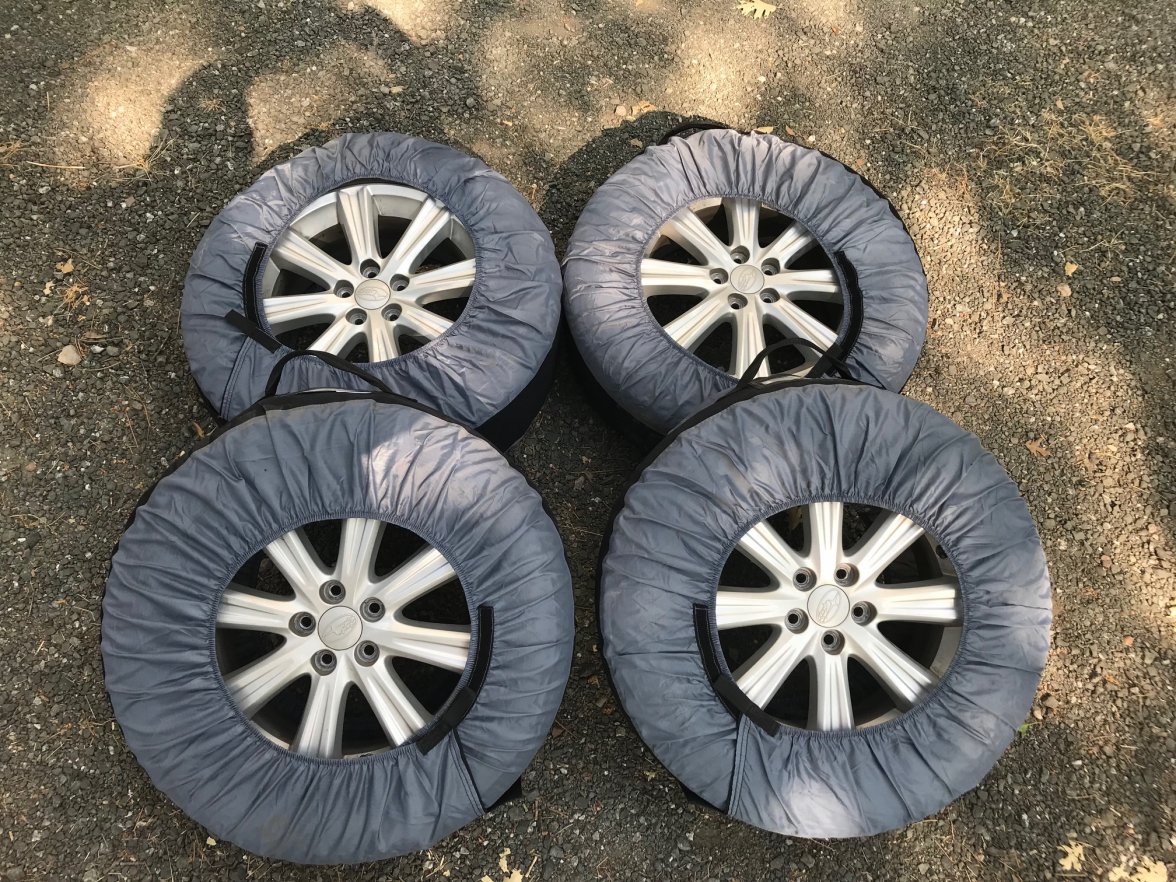
I know I'm nuts, but I have 3 sets of tires and 2 sets of rims - I run summer only tires on BBS alloy rims for 4 months from June - Sept, then swap out to all-Seasons for Oct/Nov, with a change to my OEM wheels with Ice guard for 4 months from Dec-March, then around spring break in March I reinstall the BBS rims that have the all-Seasons for April/May. After chances of snow are gone I have the dealer swap the race tires back onto the light weight summer rims around Memorial Day weekend. I want maximum performance at all times, with the most optimal tires for the season. I only have to take the car into the shop twice a year, when I unmount the all-seasons to install the summer only tires. The other times I have the tools to swap the wheels with tires pre-mounted at home.
Snow affects braking distances much much more than the distances that it takes to accelerate to the posted speed. My Subaru WRX can accelerate surprisingly quickly in the snow, but it still takes forever to come to a stop when going fast, especially with a layer of ice under the snow. Packed snow that is a few inches thick at the ski resorts, with no ice or wet road under it, is not not as bad.
One trick when driving on snow is that you really have to anticipate and start braking up to 3x sooner than normal, even with winter tires, if you are going the posted speed limit - stopping distances WITH winter tires on snow can still be 2x longer than when dry, and 3x longer on ice. But the winter tires will still outperform all seasons on ice every time!
Another trick is that if you make it a point to drive a bit slower than the posted speed limit, even with winter tires, and then when you have to emergency brake the stopping distance will be much shorter than when driving the posted limit. Here, if the roads are covered in snow, when the neighborhood's posted limit is 25mph we tend to go 15-18 mph.
So, have him start braking 2-3x sooner, and also driving a fraction of the posted speed limit in case he needs to do emergency braking. Drill this into his head. If one gets distracted and waits to start to brake at their normal spot they will slide past the stop sign and into traffic, or into the back of a car. A skilled driver could get away with all-season tires if they were skilled at doing this, until they have to slam on the brakes when another driver slides through the intersection and into their path. Also, there have been some roads that I've come across pure ice or black ice and without winter tires I'd be dead.
When the road is slippery and the Subaru starts to drift to the outside of a turn (pushing or understeer and isn't turning), it's AWD system is good enough that gentle pressure on the gas pedal (not enough to accelerate) will often pull the car back in line and into the turn.
Also - Antilock brakes can't help you stop sliding if you try to use engine braking to stop. If you drop the car into a lower gear and dump the clutch the tires can lose traction and the car wont slow down or steer as well on snow or ice.
Also, keep a big bag of kitty litter and a small shovel in the car, and maybe some scraps of carpet. Maybe some snow melt salt too.
2. He could join the SCCA and learn to autocross the car, and get some experience drifting and sliding the car on warm dry and/or wet pavement safely that way. Then he can learn how to recover the slide vs spinning the car. But this severely wears out tires if you do it more than 2-3 times. If you google it, there are also some driving schools up north for ice driving, and he could attend a weekend class when winter arrives. I think they had classes in Steamboat Springs CO for a while. And there's always scouting a safe parking lot without tire bump stops, so when it snows he can practice.
3. If he uses the correct winter weight oil he could leave the car outside and not have it get too thick when he goes to start it again, but it's always best to garage the car if possible.