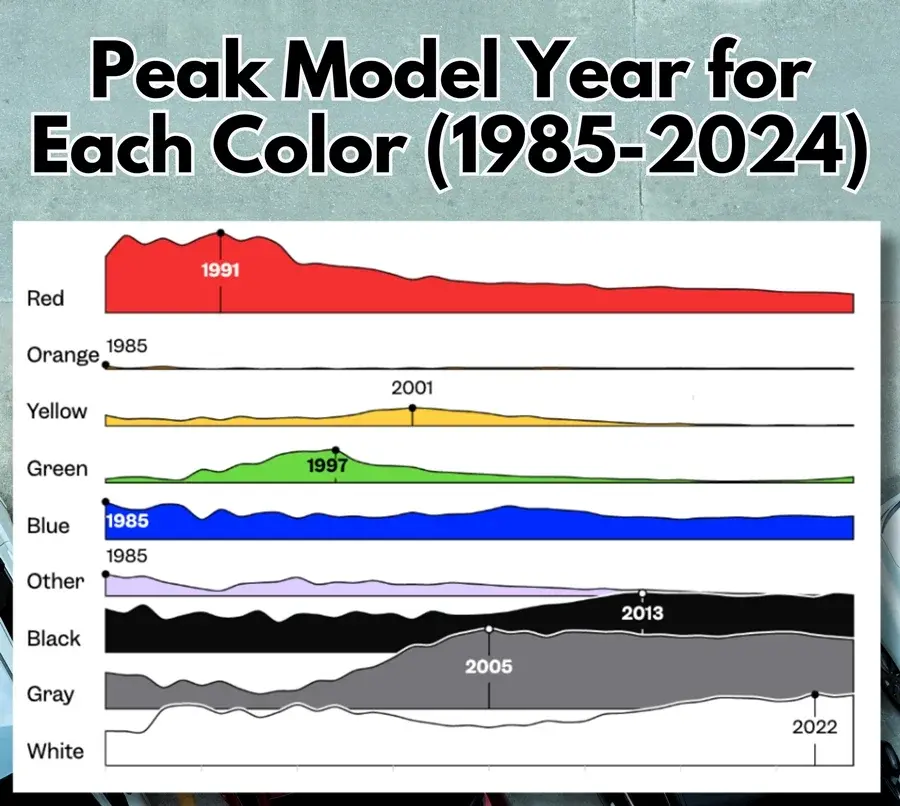
I agree. It's an interesting line of philosophy, especially within fashion/luxury.
I've sometimes wondered if color perception plays a role in Blue (and green) being somewhat less popular than Black and White; some form of color blindness effects somewhere in the ballpark of 1 in 10 or 1 in 12 men. The most common form of colorblindness involves perception issues in perceiving
green.
So- if about 1 in 10 men has difficulty perceiving green, how much impact does that have on its popularity as a watch color? And both of the more common types of color blindness
also impact the way in which blue is perceived (although it is still perceived). So again, how much impact does that play? But nobody is going to have an issue perceiving black.
Or is there no causal link in the popularity of those colors?