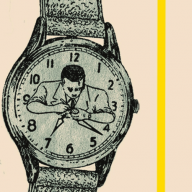
When was the Golden Age of the wristwatch?

Posts
455
Likes
773
The reason the present isn't the golden age is not technological.
People are not wearing watches any more, time is kept track of on phones and computers nowdays
 
Posts
212
Likes
207
The thing in my opinion is that the watchmakers used to be artists now they are engineers, is like comparing Leonardo Da Vinci with a modern copy machine…. Of course the modern results are better but the process is totally different… don’t get me wrong, there is nothing bad with modern watches is just a matter of what is important for you.
 
Posts
280
Likes
328
What is sure is that modern movements have most often greater frequencies. There is statistical reasons why it should increase the accuracy. But then you have to reduce the size of the balance and increase the power of the mainspring.

I prefer the other choice - the one that is no longer chosen generally speaking! That is to say a large balance with a great moment of inertia and "puissance réglante" (do not know how too translater that) - which could also imply large barrel like in the Zenith 135. It is an old debate - at least it dates back from the 18th c when, for instance Romilly argued for a moderate frequency of 14. 000 bph.

I like big balances (should maybe try a song with that...) not only because they are - at least to me - much more beautifull, but also because I find their technical choice more interesting. And because this technical choice can be seen, is even a key to look at and understand the movement, such movements are at the same time beautifull and acurate.

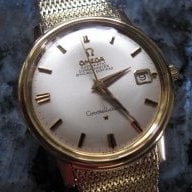
Actually, they are beautifull because they are efficient - which is an old philosophical idea that, maybe, only some watches can fully embody! The same could probably be said of every nicely made watch. But the construction of calibers such as the Z 135 or the Omega 30 has a rare equilibrium, where the elegance tries and succeed to embody the functionality. No more, no less. The idea what is beautifull is efficient and vice versa is a topos of technology - and often it is a legend - but sometimes it appears to be true!

So yes, the 1930 (hey, do not forget calibers such as the 26,5!)-1960 period is one of the very best one!

I enjoyed your reference. Read the rest of the paragraphs substituting balances for butts...
 
Posts
3,785
Likes
20,205
I would pick the time around 1968. EVERYBODY wore a watch except maybe a few hippies and some lost tribes in the Amazon so there was a BIG market and it was competitive. Aesthetic design was at a zenith, movement technology was very dynamic - highly accurate mechanicals, tuning forks and nascent quartz all competing for market space.

It was a groovy time, people.
 
Posts
7,177
Likes
23,253
Respectfully, Tony C., and most other members of this forum, know more about watch making and watches than I will ever know. I still regard the present era, -
and every subsequent measurable era, the finest. The master artists, crafts persons and technicians from the early and mid twentieth century would be dumbfounded by what is currently available. The breadth and depth of what is available is without precedent. Patek for some, G-Shock for others, Citizen Eco -Drive for many. Please don't misunderstand me. I long for an air-cooled, rear-engined sports coup with a manual transmission in my garage. I feel privileged to live in a time when I have the option of having the watch equivalents of a '72 911 alongside a Tesla Model S (I have neither btw)

The consensus seems, if we stretch it, to be between the 1920's and the 1960's. There are a wide variety of participants here who often disagree on almost everything, and the range of agreement for this is fairly narrow, and almost no one other than you believes the present is the Golden Era. Now, I want to be clear: I am in no way saying you are wrong, but given the collective wisdom represented, I would have to point out that your opinion is an outlier, and either you are on target, and everyone else is missing something, or...
 
Posts
8,096
Likes
28,523
The consensus seems, if we stretch it, to be between the 1920's and the 1960's. There are a wide variety of participants here who often disagree on almost everything, and the range of agreement for this is fairly narrow, and almost no one other than you believes the present is the Golden Era. Now, I want to be clear: I am in no way saying you are wrong, but given the collective wisdom represented, I would have to point out that your opinion is an outlier, and either you are on target, and everyone else is missing something, or...

I suspect that @Kofosu is neither right nor wrong, but rather viewing the question through a different lens. Those of us who are in rough agreement are using very similar criteria, and it is possible that @Kofosu is not.
 
Posts
381
Likes
759
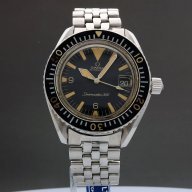
When answering this question for me, case size matters. While I understand the arguments many posters are making about design, the technical accuracy and robustness of movements, etc, I enjoy watches greater than 40mm in size -- preferably 42-45mm. Vintage Omega speedmasters, seamasters, and Seiko divers are perfect for me.
 
Posts
1,699
Likes
1,654
1960s. Great sense of design, watches were still being built to tell time first and as jewelry second, there were some extremely reliable automatics by then and there was competition for the most accurate movements.
 
Posts
29,671
Likes
76,828
The consensus seems, if we stretch it, to be between the 1920's and the 1960's. There are a wide variety of participants here who often disagree on almost everything, and the range of agreement for this is fairly narrow, and almost no one other than you believes the present is the Golden Era. Now, I want to be clear: I am in no way saying you are wrong, but given the collective wisdom represented, I would have to point out that your opinion is an outlier, and either you are on target, and everyone else is missing something, or...

Note that there is selection bias at work - you asked this specifically in the vintage section, on a forum that heavily leans towards vintage watches. The vintage section here has over 200k posts, - not other section comes close to that. I do believe the numbers would be different if asked in another section where more modern watch fans participate, and even on a large forum that is not nearly as vintage focused as this forum is.
 
Posts
7,177
Likes
23,253
I suspect that @Kofosu is neither right nor wrong, but rather viewing the question through a different lens.

Completely agree. My post, upon re-reading, seems harsher than intended, but I am still failing to appreciate the lens he is using, and what is being seen, which could very well be my shortcoming.
 
Posts
8,096
Likes
28,523
Note that there is selection bias at work - you asked this specifically in the vintage section, on a forum that heavily leans towards vintage watches. The vintage section here has over 200k posts, - not other section comes close to that. I do believe the numbers would be different if asked in another section where more modern watch fans participate, and even on a large forum that is not nearly as vintage focused as this forum is.

That's a fair point, but then again, should a more balanced sample produce a higher percentage of respondents choosing more recent times as the Golden Era, they'd still be wrong. 🙄
 
Posts
29,671
Likes
76,828
The thing in my opinion is that the watchmakers used to be artists now they are engineers, is like comparing Leonardo Da Vinci with a modern copy machine…. Of course the modern results are better but the process is totally different… don’t get me wrong, there is nothing bad with modern watches is just a matter of what is important for you.

I'm not clear what time period you are referring to, but I think this is a bit of an idealized view of watchmaking in the past. Going back to the 1850's when Waltham opened their factory along the Charles river, watchmaking has been done on a mass production scale, at least with the US makers of that time.

This is an Elgin film from 1931, which shows well established mass production techniques:


Similar films exist for many other US makers, so Waltham, Illinois, Hamilton, etc. If you go back to when people in Swizterland farmed during the summer and made watch parts as a cottage industry in the winter, it was all batch manufacturing where parts were made by different people and shipped to a central place where the final fitting and assembly was done. There is definitely some artistry involved in some aspects of watchmaking, but watchmakers were often some of the leading engineers and scientists of their times, solving real problems in design and manufacturing.

Cheers, Al
 
Posts
29,671
Likes
76,828
That's a fair point, but then again, should a more balanced sample produce a higher percentage of respondents choosing more recent times as the Golden Era, they'd still be wrong. 🙄

::facepalm1::

I made no judgement of anyone being right or wrong. I'll leave that to the pro's...
 
Posts
1,626
Likes
6,219
This is an Elgin film from 1931, which shows well established mass production techniques:
Crazy, it takes a year to make an Elgin watch, just like a Rolex! 🙄

mFfgnRn.jpg
 
Posts
29,671
Likes
76,828
Crazy, it takes a year to make an Elgin watch, just like a Rolex! 🙄

mFfgnRn.jpg

Clearly mass production and marketing (a.k.a. lies) are not new to the watch industry! 😉
 
Posts
25,980
Likes
27,706
Note that there is selection bias at work - you asked this specifically in the vintage section, on a forum that heavily leans towards vintage watches. The vintage section here has over 200k posts, - not other section comes close to that. I do believe the numbers would be different if asked in another section where more modern watch fans participate, and even on a large forum that is not nearly as vintage focused as this forum is.

There you go again Al, trying to be the voice of reason. There's no place for that on any internet forum. 😉

::facepalm1::

I made no judgement of anyone being right or wrong. I'll leave that to the pro's...

Okay then, everyone else is wrong except me & Desmond and anyone else who agrees with me. ::stirthepot:: 😜

Man, this is a fun day so far and it's barely noon! ::psy::
 
Posts
1,531
Likes
1,088
According to me, talking about the golden age of something is necessary a subjective matter, because we are talking about an ideal and from a particular retrospective point of view. I assume my point of view, but I know I have my criteria and some people may have other.

If I had plenty of money and could collect Vianney Halter ´s or Philippe Dufour ̀s watches, maybe I would chose the present time!

To follow up Acher ´s posts, I think the idea of an artistic and "artisanal" creation of watches in some "old good time" is most often a legend. But it is an intersting ideal as there were few real watches produced that may, and many others that got close to that ideal. I know pretty well 18th c "French" watchmaking (theory and practice): yes, we can talk of Bréguet´s watches and innovations, Caron ´s (Beaumarchais) "double virgules" escapement, Romilly ´s and Berthoud´s important writtings, Berthoud´s marine ´s chronographs, etc. But there were also and mainly simple watches, "ébauches" comming from Swiss cantons - Swiss made movements and gold cases were the cheap stuff at that time! - that French watchmakers used as a basis or sold as less end watches. At the end if the 18th c, there was also the begining of the watchmaking industry - which will end the French short leadership in watchmaking as French industries will not really succeed. So even at that time, watchmaking was not only an "artisan artiste" craft.

As far as I know, if you want watchmakers making there movement from a to b (or alpha to Omega!) on a regular basis, you have to look at 16th and 17th c... And watches were not that good at that time...

So maybe we have to aknowledge that the ideal of a nice piece of hand made craft is previous, and sometimes have met and still meets reality, but is most often a legend. And also that we can like well made industrial products (what is Omega if not that?) with some kind of true watchmaking Spirit.
Edited:
 
Posts
2,203
Likes
2,058
Without a doubt from the 1930's to the mid 60's.

I doubt that... 😁

E. g. The el primero, cal 11,Seiko chronograph death match was 69...😉
Edited: