Vintage Speedmaster Price Assessment Matrix (145.012 to start)

Posts
543
Likes
694
Hi OF! I'm putting together a "price-condition matrix" to better assess watches based on the condition of their individual components, based in large part on the price chart available at speedmaster101 (https://speedmaster101.com/price-chart-2/), and on sales data from OF and eBay.

I'm starting with the 145.012 since that's the current model I'm hunting for. The watch components I'm trying to estimate prices for are the: crystal, hands, pushers/crown, bracelet, bezel, dial, caseband/back/cover, and movement (in approximate order of value).

What I'm looking for from you all are opinions on what you think each of those above components is approximately "worth", individually, in speedmaster101 "very good" condition (and whether or not I've forgotten any major components, e.g. boxes/papers, and/or if you'd break them down in a different way). PS if your opinions are based on specific sales data, please also feel free to share details about that (where, when, etc.).

For example, what would an original, "very good" condition 145.012 movement (A3) be worth, on its own? Likewise for the corresponding caseband/back/cover (B1/A4)? And the dial (B3)? etc. I have my own draft estimates for each, like I said - based on previous OF posts and on previous and current eBay listings, but I'm looking to sharpen these estimates based on what you all as a community currently think!

The end goal is: 1) by assigning a value to each component (e.g. $300 for a "very good" condition crystal); and 2) by using the complete-watch price levels at speedmaster101 (https://speedmaster101.com/price-chart-2/) to map each condition level to a corresponding price (e.g. a "very good" condition watch is worth ~$13,500), a matrix can be built whereby each individual component can be assessed for its condition, and a corresponding component price and complete-watch price can be generated as a composite estimate of its value based on the value of its individually rated components.

If this end product sounds like something you'd be interested in me sharing once it's complete, feel free to let me know, and I can post a link to a public Google sheet.

Disclaimer: yes, watch prices are to some extent subjective and ever-evolving. But as someone with a quantitative analysis background, I'm trying to add a little more objectivity/rigor to the process. If you don't agree with this effort, by all means don't feel obligated to respond with any non-constructive comments. But I welcome all constructive opinions on component prices and the broader idea. Cheers!
Edited:
 
Posts
1,455
Likes
6,417
Hi!

Interesting thought, although I do think it will be very, very challenging to model a watches' value based on individual components. A lot of the value of a vintage watch, whether a Speedmaster or not, sits in the overal integrity of the components. At least for me. A slightly dented DON bezel where the state of the bezel is commensurate with the overall condition of the watch (case, crown, pushers) might be commanding a higher value compared to the same watch with a flawless, period correct drown and pushers as it is indicative of work having been done to the watch, instead of it being in fully original state.

That said, what might made a valuation by component a little bit more doable, would be to assign proportions of the overall watch value to those individual components. I.e.: 20% of a 105.012 sits in it's case condition, or something along those lines. That way, it would at least become a bit less 'fixed' and a change in the value of the watch as a whole is more easily reflected in your model.

I am afraid that would only work when detailed out by reference, as a bezel (DON) on a 145.022-69 (DON) of course represents a higher percentage of the total watches' value compared to a 145.022-69 (DNN)'s bezel does.

Either way; challenging task, but interesting to attempt regardless!
 
Posts
45
Likes
54
I’m more familiar with vintage Rolex than Omega, where 80% of the value is in the dial 🤦
 
Posts
543
Likes
694
Hi!

Interesting thought, although I do think it will be very, very challenging to model a watches' value based on individual components. A lot of the value of a vintage watch, whether a Speedmaster or not, sits in the overal integrity of the components. At least for me. A slightly dented DON bezel where the state of the bezel is commensurate with the overall condition of the watch (case, crown, pushers) might be commanding a higher value compared to the same watch with a flawless, period correct drown and pushers as it is indicative of work having been done to the watch, instead of it being in fully original state.

That said, what might made a valuation by component a little bit more doable, would be to assign proportions of the overall watch value to those individual components. I.e.: 20% of a 105.012 sits in it's case condition, or something along those lines. That way, it would at least become a bit less 'fixed' and a change in the value of the watch as a whole is more easily reflected in your model.

I am afraid that would only work when detailed out by reference, as a bezel (DON) on a 145.022-69 (DON) of course represents a higher percentage of the total watches' value compared to a 145.022-69 (DNN)'s bezel does.

Either way; challenging task, but interesting to attempt regardless!
Great points! Essentially, the whole may be worth more (or less) than the sum of the parts. For that reason, the intended purpose of this tool would just be as another data point to help make a decision, but certainly not a be-all-end-all.

As you touch on, the proportional approach, reference specific, is what I have in mind. And I think the commensurability issue can be reflected to some extent not in the baseline valuation against which a watch is being assessed, but in the condition assessment of the watch in question.

For example, let's say that a "very good" DON bezel is worth ~$2,500 of a 145.012, or approximately 18.5% of a $13,500 watch. Then, when it comes time to assess the watch with the dented DON bezel, you could decide that perhaps that dent, given the consistency with the originality of the rest of the watch, could still be rated as "good" or "very good" rather than "fair" or "poor". Still subjective? Yes. But more transparent than the alternative...
 
Posts
2,842
Likes
4,537
I’m more familiar with vintage Rolex than Omega, where 80% of the value is in the dial 🤦
As I have written elsewhere, dials are printed with a process that is similar to that used to print currency (bank notes) This process is hart to counterfeit. Numismatists spend lifetimes studying such marks. More so on coins.

My take is such a study of watch pricing would be more akin to how coins are rated than on how other objects, such as Bicycles,cars, or other mechanical is rated.

Doll collecting is another area, where similar comparisons can be made. I also have collected some automatons. Surprisingly dolls that were never played with have more value, than the loved one that was played with to death. Collectors are always wanting MIB. When I would go to the shows, a lot of the examples had extensive restoration. In the case of dolls, the value is in the head and face. Another area where the quality of the handwork shows. The old porcelains were either gas fired or fired with now lost (secret early electric furnaces.) Somehow they had understandings of how to prevent oxidation effects. Especially the Dresden work. There is a lot of Hydro in that area, so it is probable that there was cheap electric power through pump storage.

This tech also made possible the cheap smelting of aluminum, and the resulting oxides, which are sapphires aka 'Transparent aluminum.' Which is what makes the joke work as sapphire windows are used for inspection ports on spacecraft and now watches.

Rubies are also aluminum oxide. Glass and most ceramics are silicon-dioxide.

Something I have forgotten is the finest graveir[sp] plates are the ones etched into glass, which is going to be really hard to counterfeit.

These sorts of things are really going to affect watch vs parts value.

-j
 
Posts
24,257
Likes
54,014
Value as parts is rarely a useful way to appraise a watch. And certainly not for the type of examples most of us would be interested in.
 
Posts
543
Likes
694
Fair, but the idea is that this would just be A data point, not a be-all-end-all.
 
Posts
24,257
Likes
54,014
I think the idea of a matrix of prices based on the condition of individual components is a decent one. But putting values on the individual components and adding them up to get a total price won’t be accurate or even useful IMO. I think the relationship is highly nonlinear.

Only very unusual examples can be appraised this way, and generally these would not be collectible watches. For example, a frankenwatch with a lot of poor and mismatched parts. Or a watch with one decent component and the rest crap.
Edited:
 
Posts
6,190
Likes
21,195
Does anyone have any suggested modifications to these prices (again, for a "very good" 145.012)?

- Dial: $3,000
- Movement: $3,000
- Bezel: $3,000
- Caseband: $1,250
-- Caseback: $1,250
-- Dust cover: $300
- Bracelet: $1,300
- Crown: $500
-- Pushers: $300
- Hands: $600
- Crystal: $300

(Based in part on eBay sales and https://omegaforums.net/threads/ref-145-012-deconstructed-under-valued.57227/)

Your suggestions might be useful as deductions from an otherwise complete watch as opposed to cumulative.

You also need to consider how all the collective pieces match or work together. Then there's the factor for how many extant examples may exist and their expected condition compared to the pool.
 
Posts
8,485
Likes
60,617
I'd be interested in your "draft estimates for each" first.
 
Posts
44
Likes
34
Not sure having individual component value a watch as it is the completed package that is most important. Component condition consistency is important to many. But as previously suggested as a deduction may be more helpful.

What really would be beneficial to me at least are component samples for good, very good etc. it is always difficult ti know what is the difference between a good and very good case or bezel. Having a database of examples you could use to classify the overall condition from component parts would be very useful and perhaps then the values to reduce value off the Speedmaster 101 charts are what I would personally find useful.
 
Posts
1,887
Likes
3,829
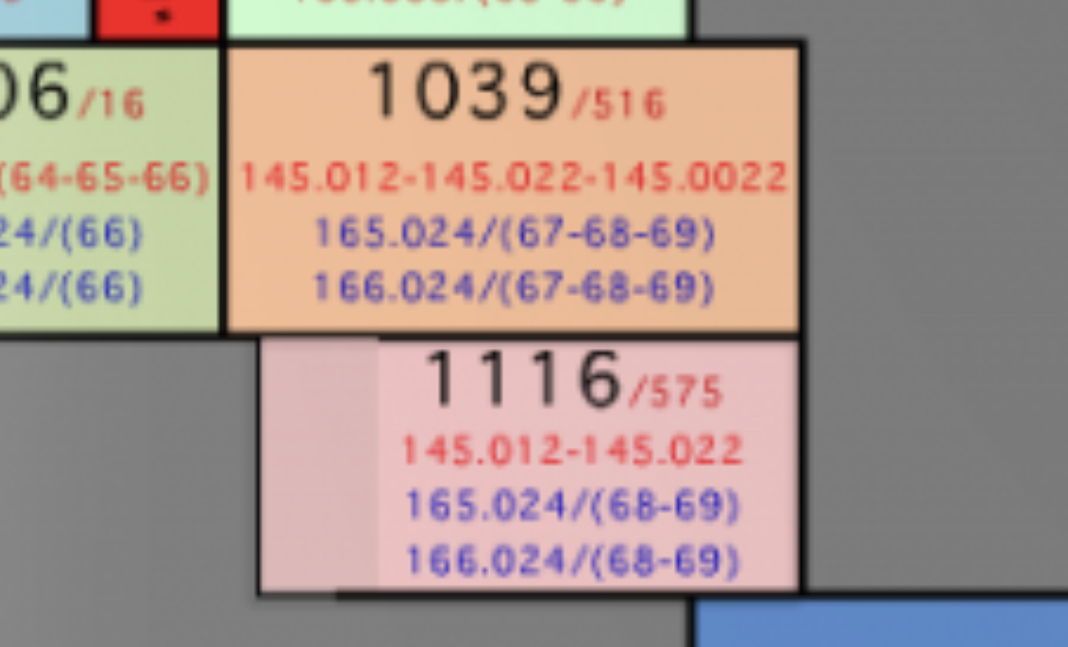
I think your prices are not far off, although I reckon a 1039 with 516 end links in good condition would go for closer to $2k and a complete set of hands with original tritium lume might fetch more like $800 to $1k (very hard to find good condition original hands in a complete set.)
 
Posts
2,640
Likes
3,093
My independent thought is that robust valuation metrics and systems could really bolster the hobby and the market, people today invest in intangible non-fungible tokens at the scale of billions, whereas we can enjoy collecting truly irreplaceable tangible limited artifacts

The only difference I think is that a person will directly bounce back getting into the vintage market, as it's so alien and full of pitfalls, so if valuations became a thing, it would definitely drive more people

Diamond valuations are a good example, white diamonds have an upheld value, while coloured ones that are more unique and in cases so much more rarer could go for much lesser values, only difference is that there's an easy way to evaluate whites while coloured and imperfect ones just don't have such anything so simple

With this said, I'm with more experienced members of the forum now, which are consciously or subconsciously against any attempt to improve the market, it's better this way, collecting is fun and the cheaper the watches, the better

My suggestions is to just attempt grading, as values will always change, for each item, there could be a grading questionnaire, a grade/point, and a final formula to determine the watch score

For a case it could be:
1) How rusted is the case? (0 - NOS, 1- one small pit on a lug 10 - deep surface pits) (Several photo examples for each level)
2) What is the scratch level? (0 - NOS - 10 - many bumps and deep scratches) (Several photo examples for each level)
3) Is the case polished?
4) Is the case coating wearing off?

And so on, depending on the answers you'd get 100 for a NOS case, 75 for an average good case, 30-40 for a case with rust on the surface and so on

If you think about it, this could kinda apply to any watch, and the value scaling would be non-linear

Bezel grading would be separate

For movements if there's an archive extract, a base score would come from just the serial

For bracelets, again a base score would just come from if the mainplate is undamaged

Then you need to ask vague questions for the total score, like:
Is the bracelet period correct? (If no, deduct 5 points)
Is the case period correct? (If no, deduct 8 points)
Is the dial period correct? (If no, deduct 8 points)
 
Posts
362
Likes
594
Does anyone have any suggested modifications to these prices (again, for a "very good" 145.012)?

- Dial: $3,000
- Movement: $3,000
- Bezel: $3,000
- Caseband: $1,250
-- Caseback: $1,250
-- Dust cover: $300
- Bracelet: $1,300
- Crown: $500
-- Pushers: $300
- Hands: $600
- Crystal: $300

(Based in part on eBay sales and https://omegaforums.net/threads/ref-145-012-deconstructed-under-valued.57227/)
Some prices are + or - right, but some are pure phantasy IMHO
For example: way too low
Case back: 1.250 USD?
Bracelet with correct date in good conditions, I presume with end links, for 1.300 USD?

Cheers
 
Posts
230
Likes
293
This is an interesting exercise, though I'm not sure how any 'result' will actually have any reasonable impact per se, for the various points mentioned. However I am looking forward to it's development just out of pure curiosity!

One of the things that these kinds of exercises tend to 'ignore' (for lack of a better term) is the factor of locality/market. In simple terms, a watch in a particular market can be undervalued and in another hyper-valued due to a myriad of reasons...

And not to derail the thread:
As I have written elsewhere, dials are printed with a process that is similar to that used to print currency (bank notes) This process is hart to counterfeit. Numismatists spend lifetimes studying such marks. More so on coins.

I thought that watch dials were mostly pad printed, and bank notes use various types of techniques and technologies in printing. Coins on the other hand are typically stamped. Therefore, watch dials are infinitely much easier to counterfeit than bank notes - case in point, the amount of fake/dodgy/suspicious/'unique' dials in several vintage watches of different brands, at any one point.
All this to say, I'm not quite sure I follow the reasoning behind your thought process...
 
Posts
2,640
Likes
3,093
I wouldn't say infinitely, there's base coating, enamels, ceramics, typography, it's a multi-material effort

I follow the counterfeiters to be alert and for fun, they only produce convincing at a glance dials, under a loupe near an original they don't stand a chance