vintage omega maintenance cost

Posts
2,844
Likes
2,438
Cars & watches & wooden boats. Classic boy toys.
I think you forgot the most expensive "toy" - Women 馃槈
 
Posts
439
Likes
753
I disagree. You don't "have to accept" the cost of routine maintenance for your vintage watch.
Whether or not to "routinely service"your watch is a topic that has been discussed on many occasions, on many forums, over the years. The "if it ain't broke don't fix it" approach is one that many consider reasonable, for most vintage Omegas, given that parts are still available and affordable.
I don't think the car or boat analogy is apt. The stakes involved (financial and otherwise) with your watch breaking down are nowhere near that of your car or boat.
 
Posts
1,790
Likes
2,001
I think you forgot the most expensive "toy" - Women 馃槈
I was going to include women, but realised I had never shut one in a cupboard long enough for deterioration to set in.馃槜
 
Posts
1,175
Likes
4,202
I disagree. You don't "have to accept" the cost of routine maintenance for your vintage watch.
Whether or not to "routinely service"your watch is a topic that has been discussed on many occasions, on many forums, over the years. The "if it ain't broke don't fix it" approach is one that many consider reasonable, for most vintage Omegas, given that parts are still available and affordable.
I don't think the car or boat analogy is apt. The stakes involved (financial and otherwise) with your watch breaking down are nowhere near that of your car or boat.

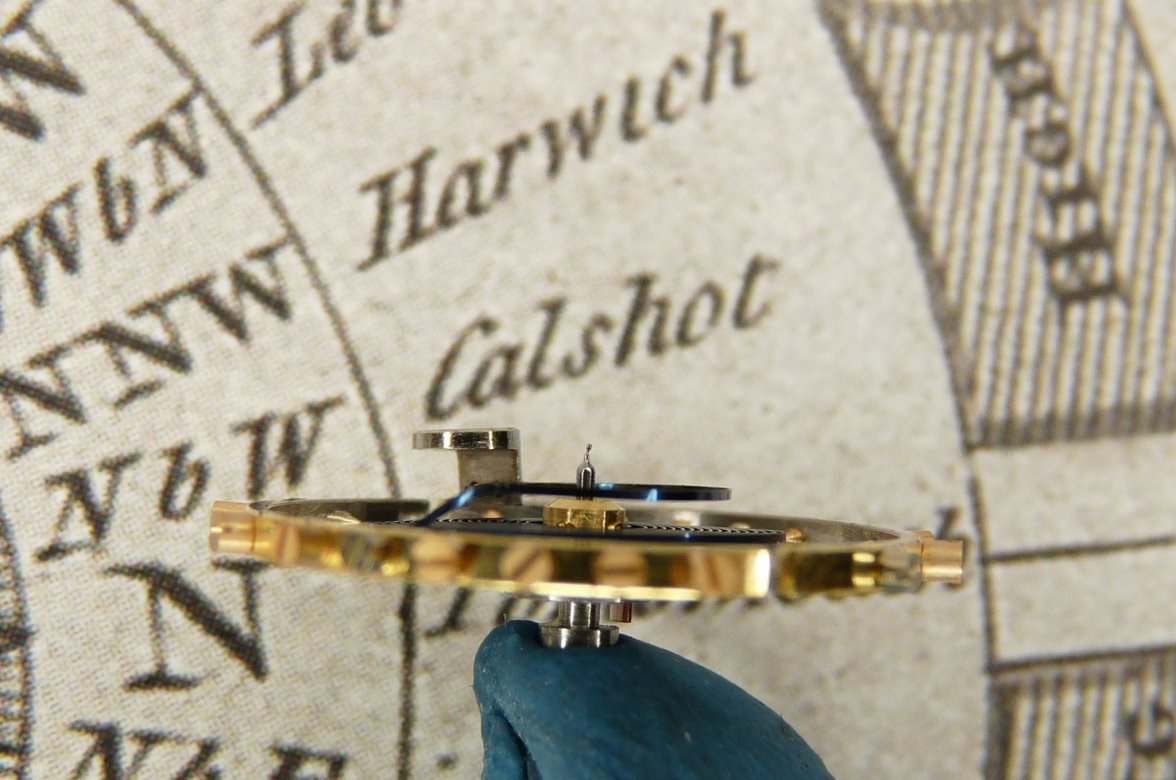
Have a look at this balance wheel. The watch did not get a service for years and was running very well.
I agree if we talk about common movements like a 7750 or a Seiko 5. But I strongly disagree if we talk about vintage watches. At least, a watchmaker should have a look after 5 to 10 years if it is not totally dry.
 
Posts
439
Likes
753
I have no doubt that parts can wear out beyond repair even, in a watch that is functioning properly. The question is how often does this happen (without some indication of a problem), how much ADDITIONAL expense is incurred from lack of service, and does that cost justify the cost of routine maintenance (which in many cases may be half or more of the value of the watch)?
It certainly makes sense to change the oil in your $50k car every six months or so at a cost of $100. Would you do it cost $20K?
 
Posts
29,246
Likes
75,644
I agree if we talk about common movements like a 7750 or a Seiko 5. But I strongly disagree if we talk about vintage watches.

Agreed - there is no "one size fits all" answer. In some cases I completely agree that letting it run until it breaks is not a bad thing - say for a modern watch that you will send to the service center anyway. For vintage watches, different story completely. Omega will not continue to make vintage parts for these movements forever, and many vintage movements already have substantial numbers of parts discontinued for them. The supply that remains will get smaller over time, so preserving the parts inside the watch would be a good strategy.

Even in cases where parts are still available (for now) there is a huge premium on parts costs for vintage. Here are two parts I replace often - the reversing wheels for an Omega Cal. 1120 (same as for 2500) and then for the 55X and 56X series on the right. Both are complex assemblies and both do a lot of work as the watch is being worn:


The 1120 on the left is $14 to replace, the 55X one on the right is $104, and there's no guarantee how long Omega will still supply the one on the right. I replace these all the time, so unlike the balance example this is not a rare thing at all. You can easily double the cost of a service with the parts needed on a 55X and 56X series watch, and these currently have all the parts available. For watches where the parts are not available, it gets worse in terms of costs.

People can do whatever they like with regards to servicing, but that doesn't change the facts.

Cheers, Al
 
Posts
1,175
Likes
4,202
I have no doubt that parts can wear out beyond repair even, in a watch that is functioning properly. The question is how often does this happen (without some indication of a problem),
very often. Many old watches run extremely well if there is no oil at all. But then they run to death.
Your car metaphore is not appropriate. According to your theory, you will not do a service and change the oil, sparks etc. of a car that is worth 1-2k?
 
Posts
439
Likes
753
Obviously, as parts become harder to source and their cost goes up, preventive maintenance makes more sense. But who knows if or when that will happen (I suspect there are individuals on this forum that have hoarded enough parts to keep all the rest of us supplied for many years). It also makes more sense if you have a particularly valuable watch with a rare movement, or one with sentimental value which far exceeds actual value. But to routinely service a $500 watch at a cost of $400 does not make sense. Wouldn't you be better off wearing it until there is a problem, then selling it for parts (especially as they become more valuable) and buying a new watch?
Of course you see these examples because you are a watch repairman and our problems go to you. And I respect your opinion. But how often out here in the rest of the world does irreparable damage occur, without prodromal symptoms? I don't know, but if it were common, I would expect to have read numerous post from collectors bemoaning some disaster which would have been prevented by a routine service. In my 30 year of collecting, I don't recall a single such post.
I definitely agree that you should do whatever you like with your own watch, and I think it boils down to this: If you are willing accept the risk of possible higher repair cost in the future, or even inability to have your watch repaired, the "If it ain't broke don't fit it" approach is perfectly reasonable.
 
Posts
439
Likes
753
very often. Many old watches run extremely well if there is no oil at all. But then they run to death.
Your car metaphore is not appropriate. According to your theory, you will not do a service and change the oil, sparks etc. of a car that is worth 1-2k?
Unless it has sentimental value beyond the actual value, and if it cost half the value of the car to service, no I would not. It makes better financial sense (to me) to run it to death and sell it for parts.
 
Posts
1,175
Likes
4,202
well, million people who need their cars think different.
But ok, it is your opinion and I certainly respect this.
However, we should tell people who do not know it that watches need to be serviced.
 
Posts
439
Likes
753
well, million people who need their cars think different.
But ok, it is your opinion and I certainly respect this.
However, we should tell people who do not know it that watches need to be serviced.
I'm not suggesting that you run your car to death and then walk. I'm suggesting that if the cost of service is very high (relative to value), then forego routine service, save your money, and if and when it dies, buy a new car.
And rather than tell people that there watch needs to be serviced, why not educate them as to the advantages/disadvantage of servicing and let them decide for themselves?
 
Posts
29,246
Likes
75,644
I think this really depends on your perspective. Many people practice breakdown maintenance rather than preventative maintenance, but in my time as a watchmaker and as the guy in charge of a preventative maintenance program at a large factory with hundreds of machine tools when I was an engineer years ago, I know there is a price to be paid for waiting. But yes we live is a rather disposable society, and lots of people don't want the burden of taking care of their possessions, and would rather wear it until it breaks and sell it. I always note those people and make sure I don't buy watches from them. 馃槈

But to routinely service a $500 watch at a cost of $400 does not make sense.

If your outlook as a collector is purely from a financial point of view, this may make sense to you. All I can say is that I regularly service watches that are worth far less than what I charge for my services, and the owners are all too happy to pay me for it. Often (but not always) these are family watches, so they have more meaning than just money.

Here's an example with an old Tissot that is a family watch:


As you can see, completely dry inside, but still running:


Not sure how since there were some worn parts certainly:


The barrel was also completely worn out between the arbor and barrel drum/lid, but the kicker was the main plate where the barrel arbor rode was worn heavily:


And the barrel bridge was as well:


Managed to find a new barrel and bridge, but a new main plate was very expensive, so I bushed it:


Even the cap jewels were worn from running dry:


Replaced those:


This watch is worth a fraction of my charges in terms of monetary value, but the owner was happy because everyone else he took it to said it was not worth fixing:


Wouldn't you be better off wearing it until there is a problem, then selling it for parts (especially as they become more valuable) and buying a new watch?

Once again if you are very focused on the money side of things, then certainly that is an option. But as I mentioned in another thread recently, donor movements don't tend to be very helpful for parts as the same parts usually wear out in the same movement. As I said in that thread I recently went through 10 donor movements I had looking for a specific part, and in all 10 movements that same part was worn as badly or worse than the one I was trying to replace. They have their place and I just bought 4 donor movements yesterday - paid $50 for 4 of them hoping to find one with a specific part that is not worn out completely, so the money they command is certainly not big.

Of course you see these examples because you are a watch repairman and our problems go to you. And I respect your opinion. But how often out here in the rest of the world does irreparable damage occur, without prodromal symptoms? I don't know, but if it were common, I would expect to have read numerous post from collectors bemoaning some disaster which would have been prevented by a routine service. In my 30 year of collecting, I don't recall a single such post.

I see watches that are "running fine" all the time and have worn parts inside - it's rare that a watch comes across my bench not needing any part replaced. To be quite frank, most people who are collectors know very little about the mechanics of watches, or how to know if a service has been done properly - it's not their fault and in fact it's the fault of the industry in a way. In general the industry wants to downplay the ongoing costs of ownership, so they can sell more new watches. Factory service centers build in costs to the service if it's needed or not, and if they lose money on one repair they know they will make it up on another - all they care about is averaging it out over the long term. That's why with modern watches, I can see the logic in letting it run until it dies, then sending it in, because you will most likely pay the same amount regardless. Where the brands reveal the true costs in servicing is what they charge for vintage watches - substantially more for Omega if you look at their prices. They know this is where they have to charge a lot because the costs are substantially higher, and there's more chance they will get burned and lose a ton of money once they get inside the watch.

When I service your watch you get a document where I explain everything I've done, shown you photos of the worn parts and shown why they need replacing - this is my way of educating people on what goes on inside their watches, plus what I post here and on other forums. Some will actually listen and try to understand what I'm saying, while others won't, and stick to their rigidly held beliefs no matter what. Those people I'll never convince so I really don't care about them - the people I worry about are those on the fence who read nonsense posted by others and take it to heart.

Very few watchmakers do this kind of educating, and as we've seen, some don't give the old parts back. How would the average person even know that there were worn parts inside when all they get is an invoice that says "service watch" with a cost beside it, and no old parts returned? The absence of evidence is not evidence of absence.

Cheers, Al
 
Posts
1,175
Likes
4,202
To be quite frank, most people who are collectors know very little about the mechanics of watches, or how to know if a service has been done properly
after several years of collecting: Absolutely right!
 
Posts
439
Likes
753
I think this really depends on your perspective. Many people practice breakdown maintenance rather than preventative maintenance, but in my time as a watchmaker and as the guy in charge of a preventative maintenance program at a large factory with hundreds of machine tools when I was an engineer years ago, I know there is a price to be paid for waiting. But yes we live is a rather disposable society, and lots of people don't want the burden of taking care of their possessions, and would rather wear it until it breaks and sell it. I always note those people and make sure I don't buy watches from them. 馃槈


If your outlook as a collector is purely from a financial point of view, this may make sense to you. All I can say is that I regularly service watches that are worth far less than what I charge for my services, and the owners are all too happy to pay me for it. Often (but not always) these are family watches, so they have more meaning than just money.

Here's an example with an old Tissot that is a family watch:


As you can see, completely dry inside, but still running:


Not sure how since there were some worn parts certainly:


The barrel was also completely worn out between the arbor and barrel drum/lid, but the kicker was the main plate where the barrel arbor rode was worn heavily:


And the barrel bridge was as well:


Managed to find a new barrel and bridge, but a new main plate was very expensive, so I bushed it:


Even the cap jewels were worn from running dry:


Replaced those:


This watch is worth a fraction of my charges in terms of monetary value, but the owner was happy because everyone else he took it to said it was not worth fixing:


Once again if you are very focused on the money side of things, then certainly that is an option. But as I mentioned in another thread recently, donor movements don't tend to be very helpful for parts as the same parts usually wear out in the same movement. As I said in that thread I recently went through 10 donor movements I had looking for a specific part, and in all 10 movements that same part was worn as badly or worse than the one I was trying to replace. They have their place and I just bought 4 donor movements yesterday - paid $50 for 4 of them hoping to find one with a specific part that is not worn out completely, so the money they command is certainly not big.


I see watches that are "running fine" all the time and have worn parts inside - it's rare that a watch comes across my bench not needing any part replaced. To be quite frank, most people who are collectors know very little about the mechanics of watches, or how to know if a service has been done properly - it's not their fault and in fact it's the fault of the industry in a way. In general the industry wants to downplay the ongoing costs of ownership, so they can sell more new watches. Factory service centers build in costs to the service if it's needed or not, and if they lose money on one repair they know they will make it up on another - all they care about is averaging it out over the long term. That's why with modern watches, I can see the logic in letting it run until it dies, then sending it in, because you will most likely pay the same amount regardless. Where the brands reveal the true costs in servicing is what they charge for vintage watches - substantially more for Omega if you look at their prices. They know this is where they have to charge a lot because the costs are substantially higher, and there's more chance they will get burned and lose a ton of money once they get inside the watch.

When I service your watch you get a document where I explain everything I've done, shown you photos of the worn parts and shown why they need replacing - this is my way of educating people on what goes on inside their watches, plus what I post here and on other forums. Some will actually listen and try to understand what I'm saying, while others won't, and stick to their rigidly held beliefs no matter what. Those people I'll never convince so I really don't care about them - the people I worry about are those on the fence who read nonsense posted by others and take it to heart.

Very few watchmakers do this kind of educating, and as we've seen, some don't give the old parts back. How would the average person even know that there were worn parts inside when all they get is an invoice that says "service watch" with a cost beside it, and no old parts returned? The absence of evidence is not evidence of absence.

Cheers, Al

You once again do a very nice job of making your point, and with superb pictures. There is almost nothing that you say that I would disagree with. There is a risk in not maintaining your watch. Things can wear out even if the watch is functioning properly. I get that.
For purposes of this discussion, I am speaking strictly from a financial standpoint.
As I said before, if we are talking about a rare and very valuable watch, or one with a great deal of sentimental value, by all means service away. The watches I am primarily referring to are the $400 run of the mill Seamasters which some newbie buys off eBay that is working just fine. He posts it here and seven members tell immediately tell him if he even puts it on his wrist without a service it will probably spontaneously combust. Given the relative costs, this is not likely to be a good fiscal decision.
 
Posts
29,246
Likes
75,644
For purposes of this discussion, I am speaking strictly from a financial standpoint.

And I think this is where many here would differ in their perspectives. I don't think the vast majority here look at watches from a purely financial perspective as you are doing. But even if they did, it wasn't that long ago that a "run of the mill" Speedmaster wasn't a lot of money to purchase, and is now worth much more (many multiples in some cases), so predicting future value and treating today's run of the mill watch as if it will always be run of the mill might not be the best approach long term.

When I have this discussion it often comes down to defining when a watch needs service, and what does the word "need" in this context really mean. Above you said that the $400 run of the mill Seamaster in your example is "working just fine" but what does that really mean? Does it keep time within Omega specs? Does it have the proper power reserve? Are the oils inside dry? Is damage being done? You appear to draw the line at a different place than others would, and are fine with the watch chewing itself up until it stops. Certainly your right to have that stance with your own watches, but I'm not sure that because you believe it's okay that most would call it "perfectly reasonable" as an approach.

I haven't seen anyone suggest that a watch will spontaneously combust, but most people buy a watch with the intent to keep it for a time. If it hasn't been serviced and you continue to wear it, damage will be done and when it does finally stop, it may cost more to service than if you had done so initially. For the most part time = wear, and wear = money. If you are content with wearing it for however long it lasts, and when it stops you just sell it on, well that's your choice, but the people I typically deal with are a bit more attached to their watches and would not treat them, that way typically.

As I said above and have said for years, the key take away from these discussions is that there is no one size fits all answer. When someone asks me how often to service a watch, my answer is always the same...it depends.

Cheers, Al
 
Posts
1,698
Likes
1,653
Unless it has sentimental value beyond the actual value, and if it cost half the value of the car to service, no I would not. It makes better financial sense (to me) to run it to death and sell it for parts.

If you think of the watch in purely financial terms, sell it while it's still working. You'd get a lot more money. Buy a quartz for $100 and it'll probably work for 5-10 years, maybe longer.
 
Posts
1,531
Likes
1,087
Clearly I do not think about watch from a financial point of view - if I did, I would only own my old quartz Swatch... From any kind of collector point of view, I think wearing a watch until the movement dies is nonsense, even if it is not a rare or precious watch.

Moreover, I would not like to wear a watch that is not working properly. To me, good working order is part of the interest in mechanical watches. If you only want to have something giving you time, you shall not buy a mechanical watch in the first place!

By the way, "good working order" is a relative concept: it cannot mean the same thing for a 70 years old watch and for a recent one, for a Patek and for a Timex - well, not sure if the latter can really be in good working order! But I like to have watches that are at the best of their respective capacities.
 
Posts
439
Likes
753
So you don't consider cost when purchasing a watch? Of course you do. So while it may not be the major factor, it is something you consider, just as you should consider the relative value of having it serviced. And if you like your watches in perfect running order at all times, then have is serviced as often as you like.
But the knee-jerk reaction that any watch with an unknown service history needs to be serviced, without regard to value or the owners plans for the watch, just does not make sense.
 
Posts
1,175
Likes
4,202
But the knee-jerk reaction that any watch with an unknown service history needs to be serviced, without regard to value or the owners plans for the watch, just does not make sense.
nobody said that.
All we are saying is that if somebody buys a watch, he is wise to ask a watchmaker about the condition of the movement. If it hasn't been serviced for years and the buyer wants to wear it, then he should think about a service as parts for vintage watches become scarce. Sure, this does not hold for every watch as I pointed out above (7750 etc.)
 
Posts
1,531
Likes
1,087
But the knee-jerk reaction that any watch with an unknown service history needs to be serviced, without regard to value or the owners plans for the watch, just does not make sense.

I do not think anyone said that in this post. Al (@Archer ) made a nice post about this topic, offering a qualified position which distinguishes between various cases. You should read it if you have not yet.

As far as I am concerned, I gave a personal opinion. Actually I think it may be the way many collectors feel. But, of course, how to factor the service costs is up to anyone!