Universale genève compur

Posts
12
Likes
2
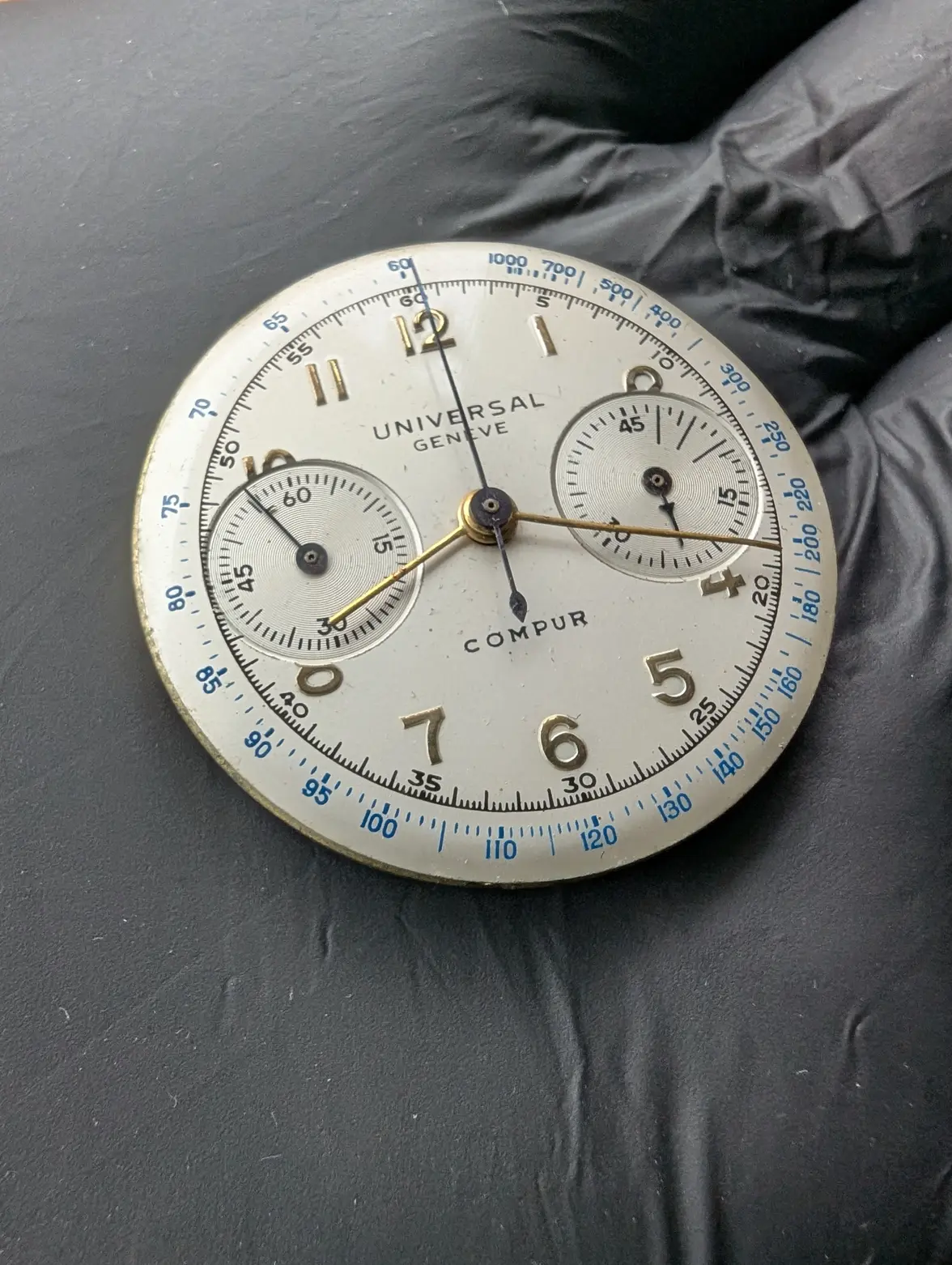
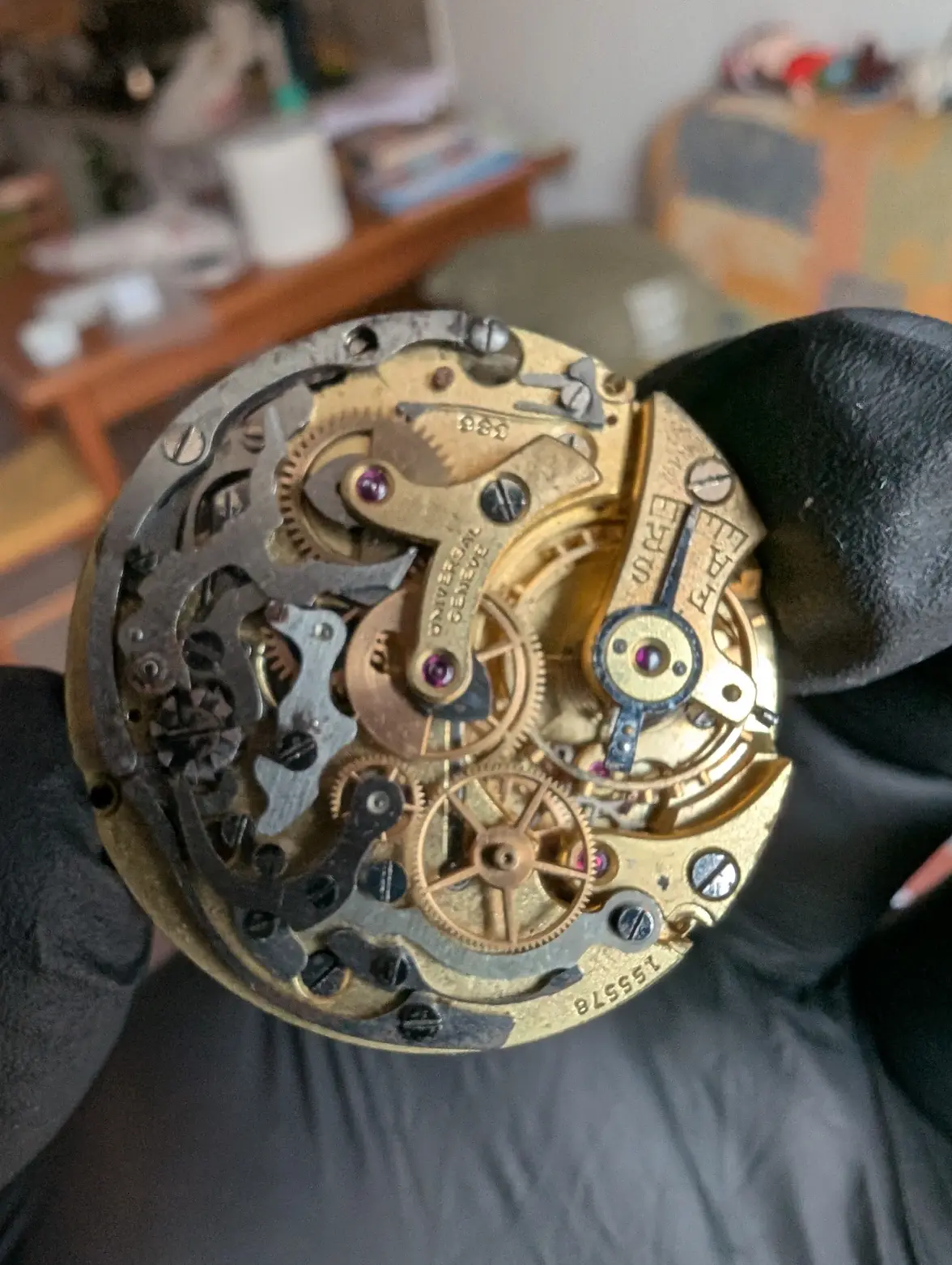
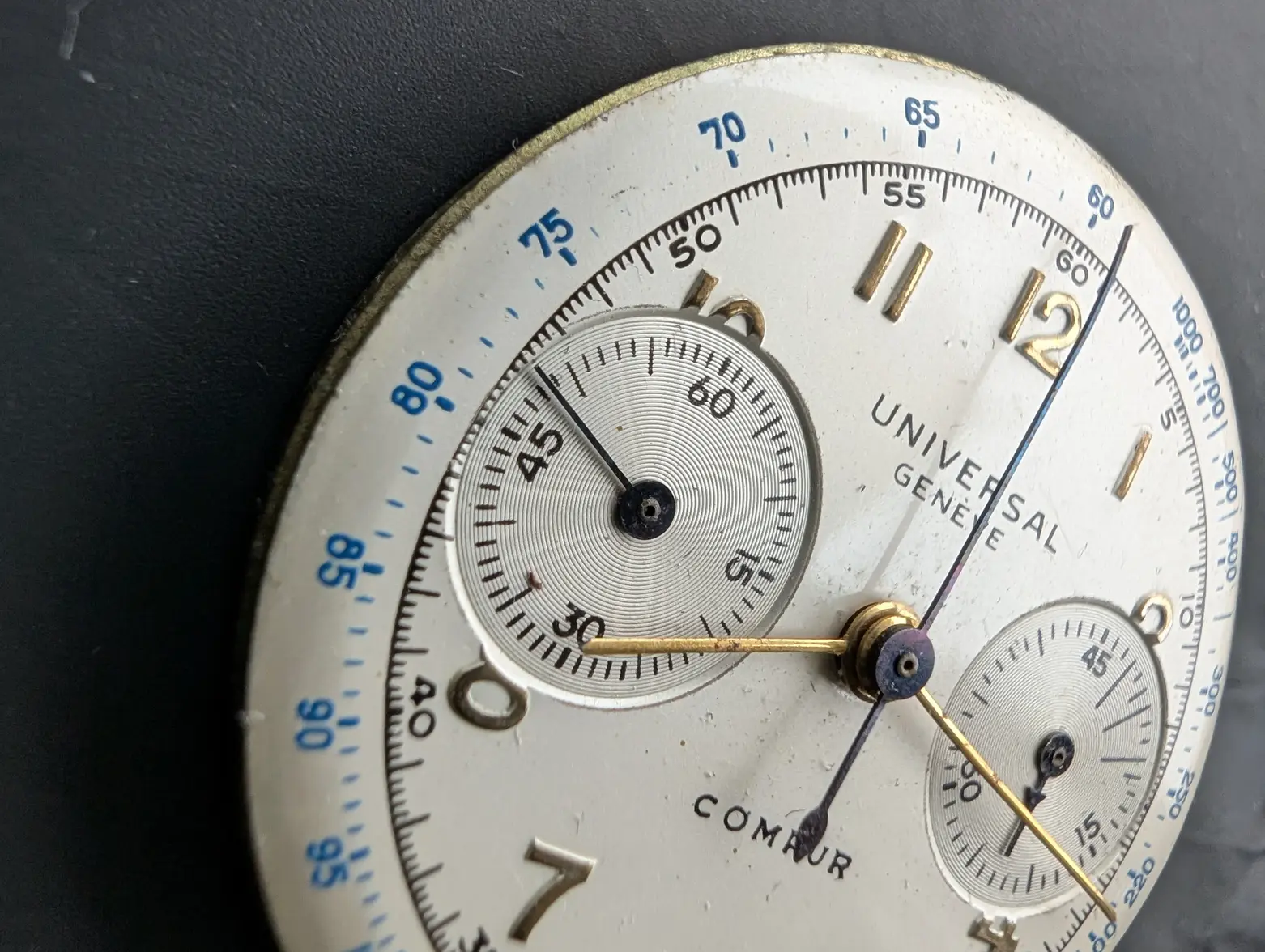
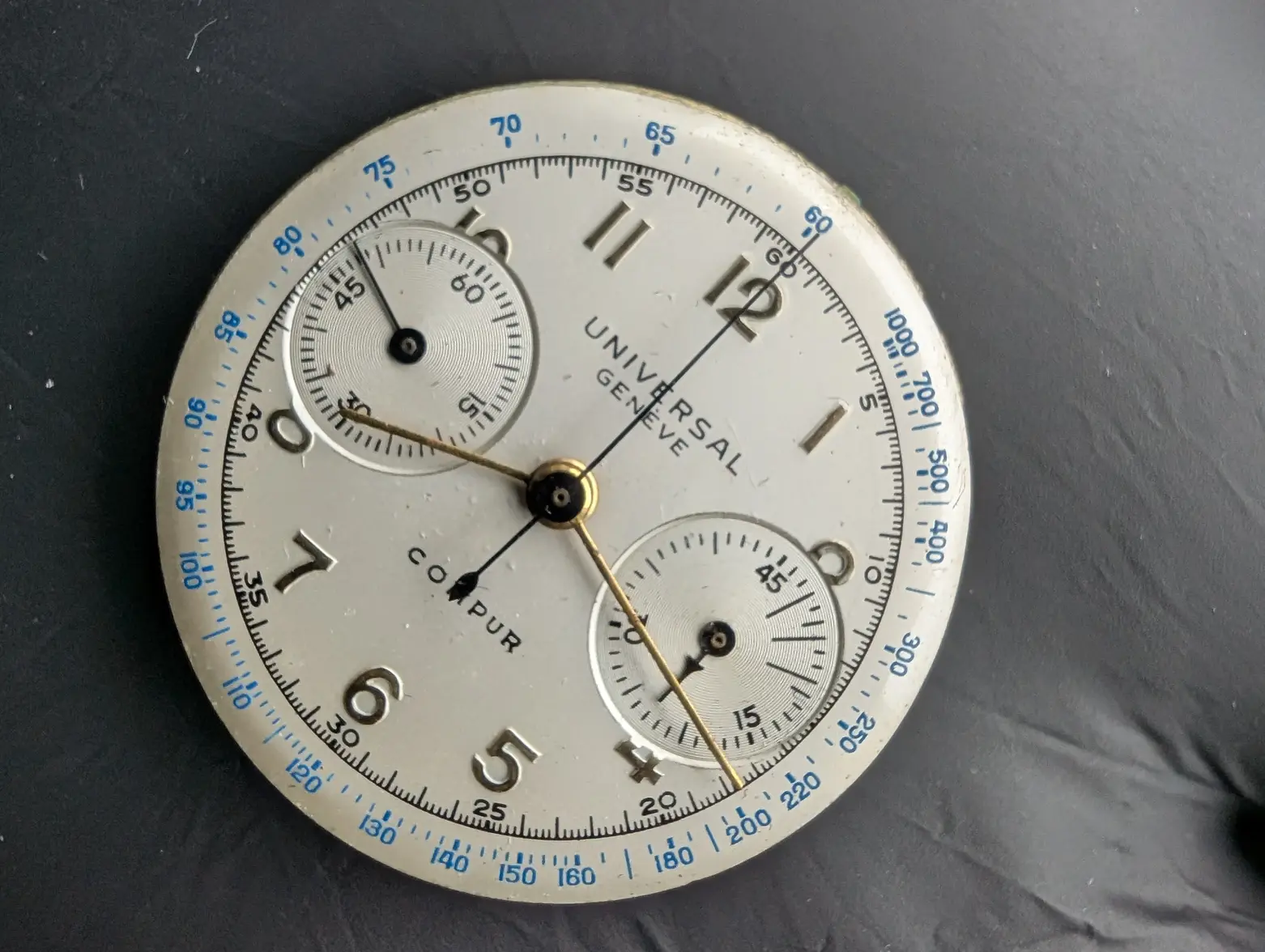
Salve vorrei chiedere se questro orologio è da sistemare e quanto può costare.
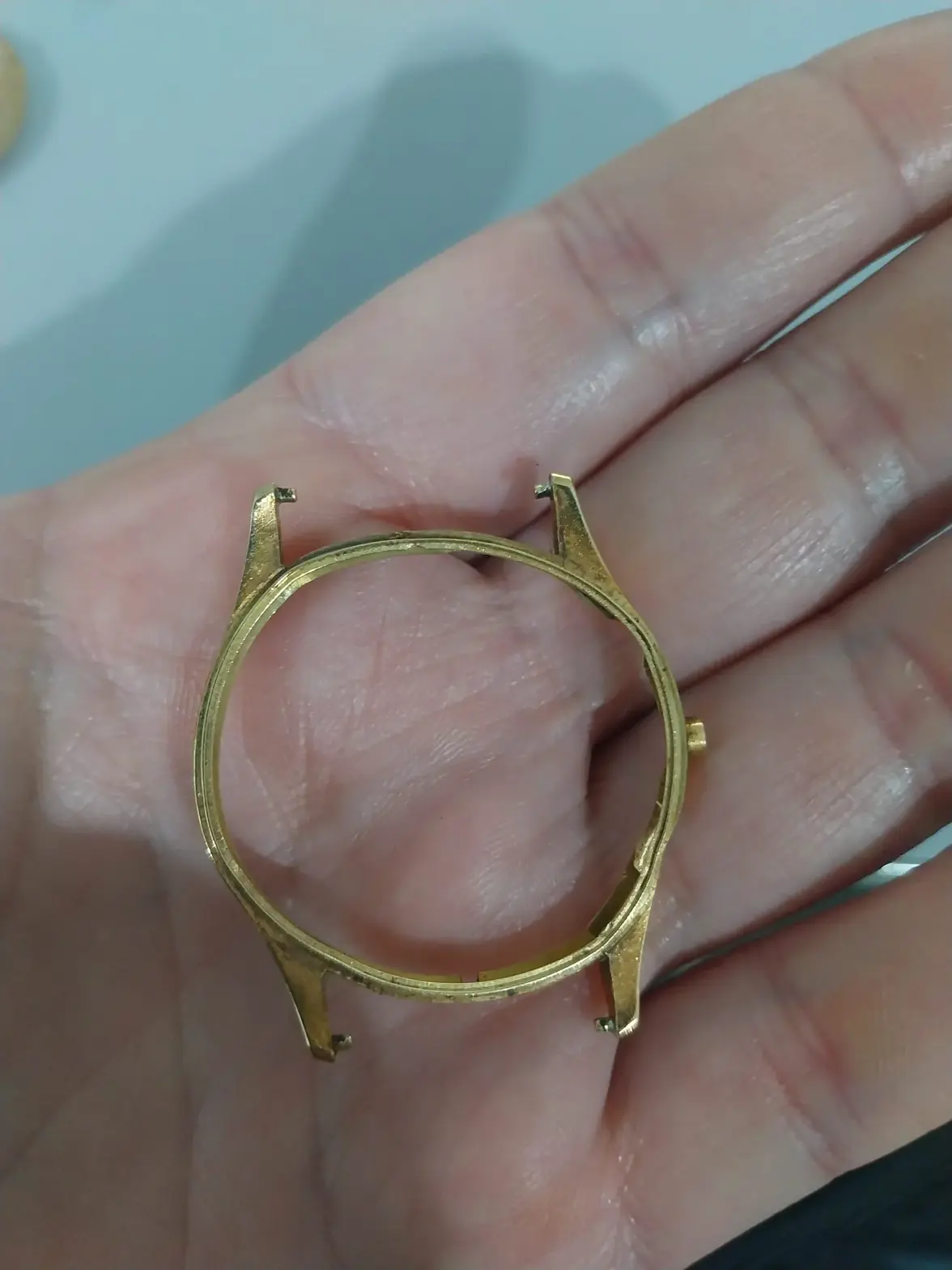
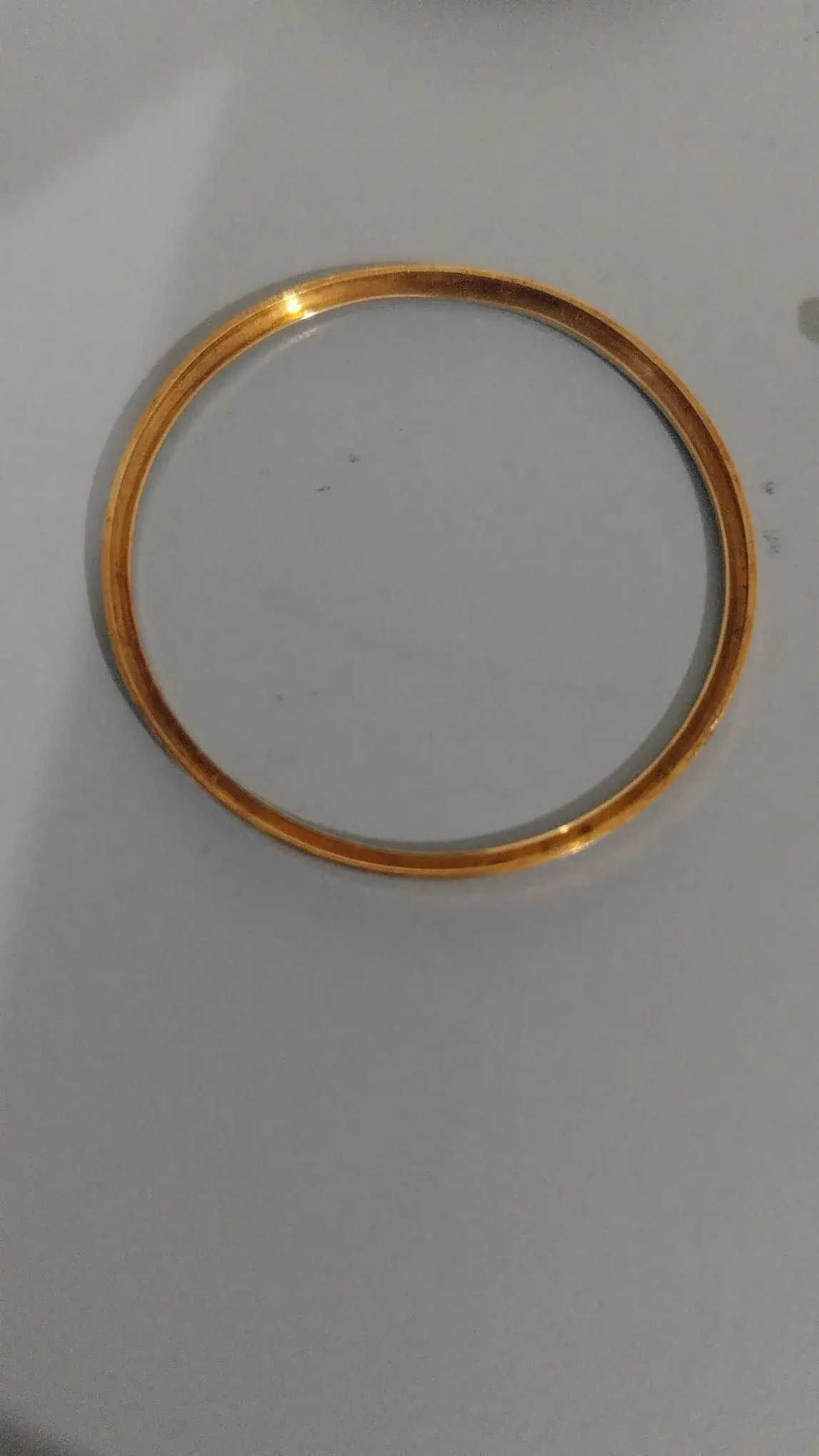
Ho acquistato il movimento e il quadrante del proprietario successivamente mi ha contattato dicendo di aver ritrovato il resto dell'OROLOGIO la parte oro.
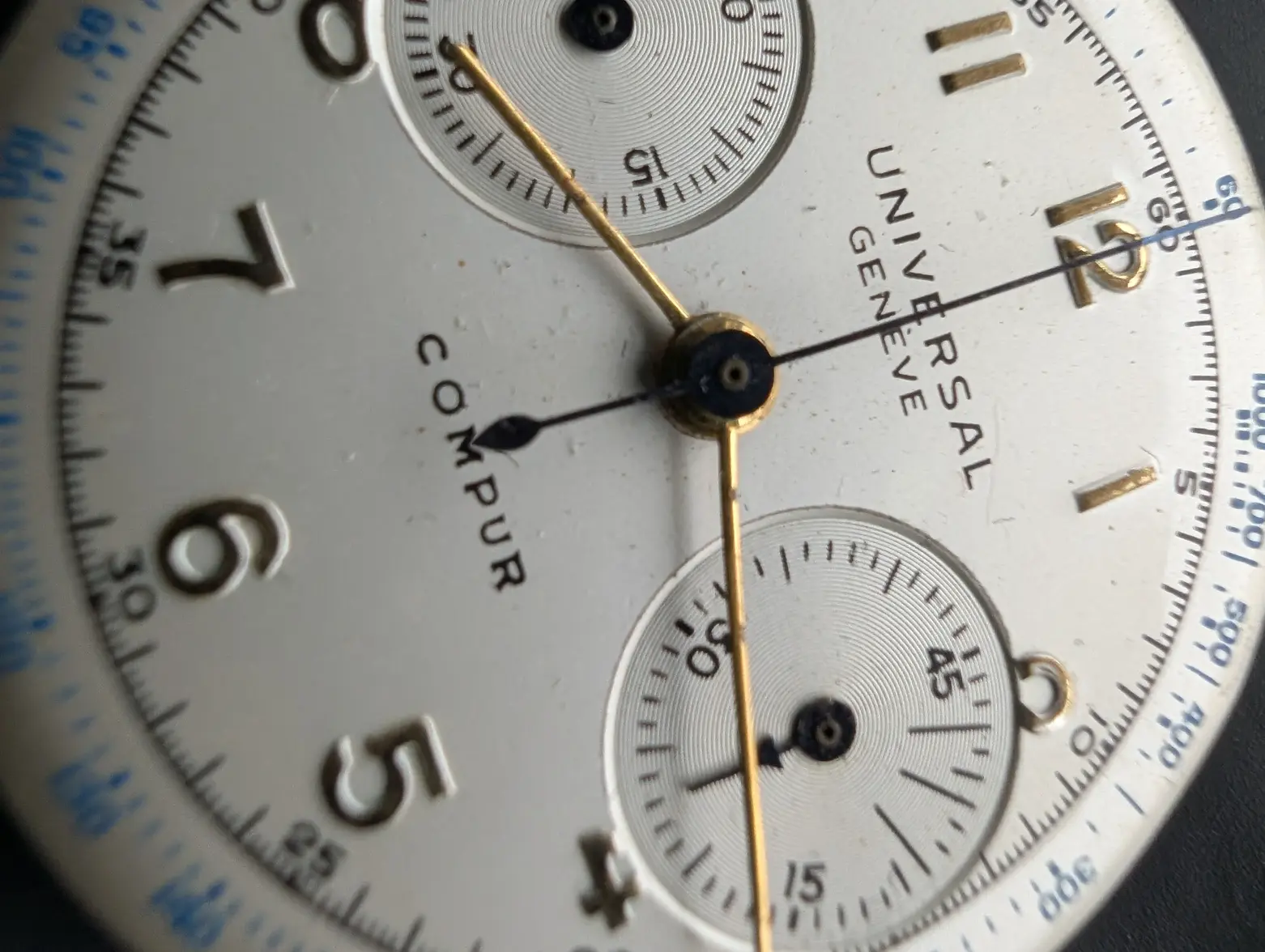
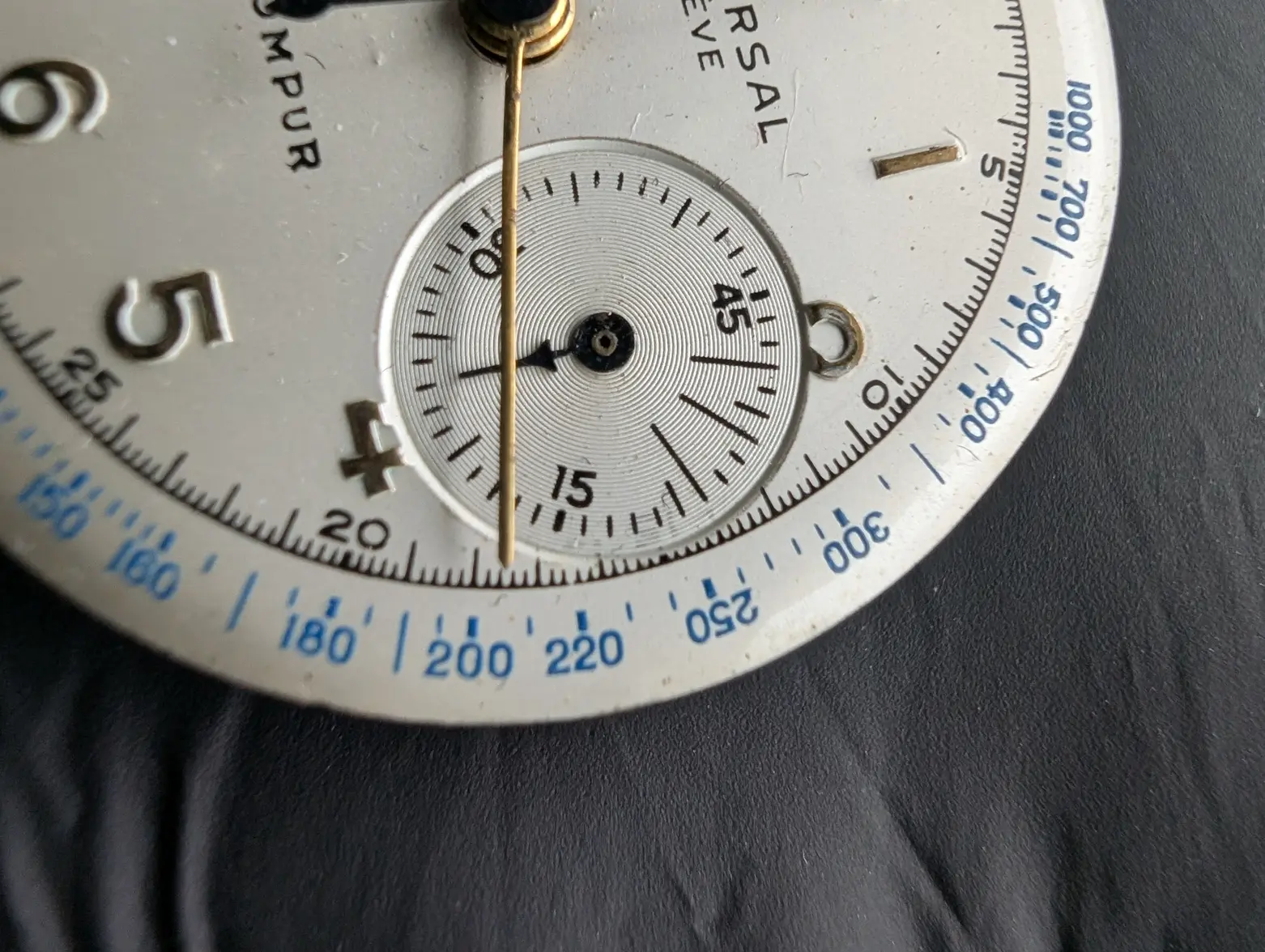
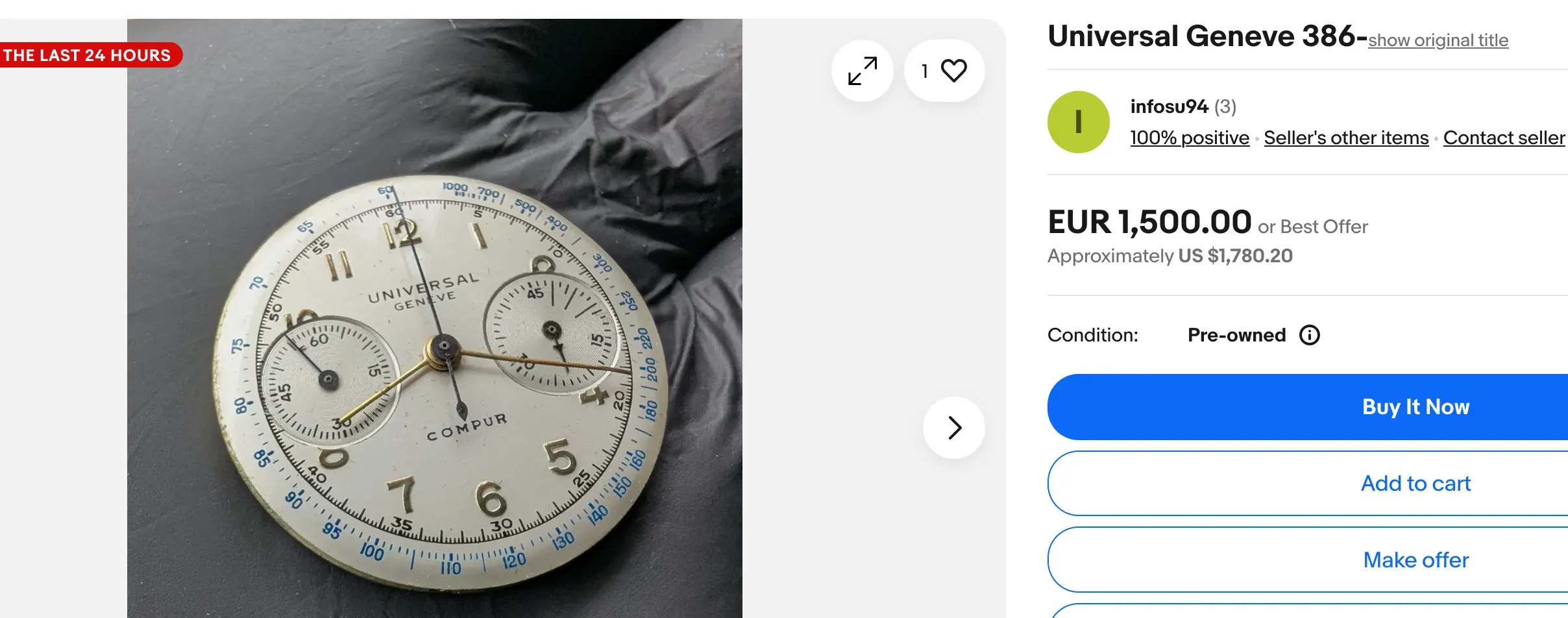
l.movimebto sembra funzionare bene e il quadrante è in condizioni splendide. Ma è originale?

 
Posts
3,542
Likes
8,179
The dial has been reprinted, I would not bother trying to do anything with these parts.
 
Posts
12
Likes
2
P
Il quadrante è stato ristampato, non mi prenderei la briga di provare a fare qualcosa con queste parti.
Posso capire da cosa lo individua?
 
Posts
6,427
Likes
10,051
You are looking for a 12445 case ;-)
 
Posts
12
Likes
2
Stai cercando un caso 12445 ;-)
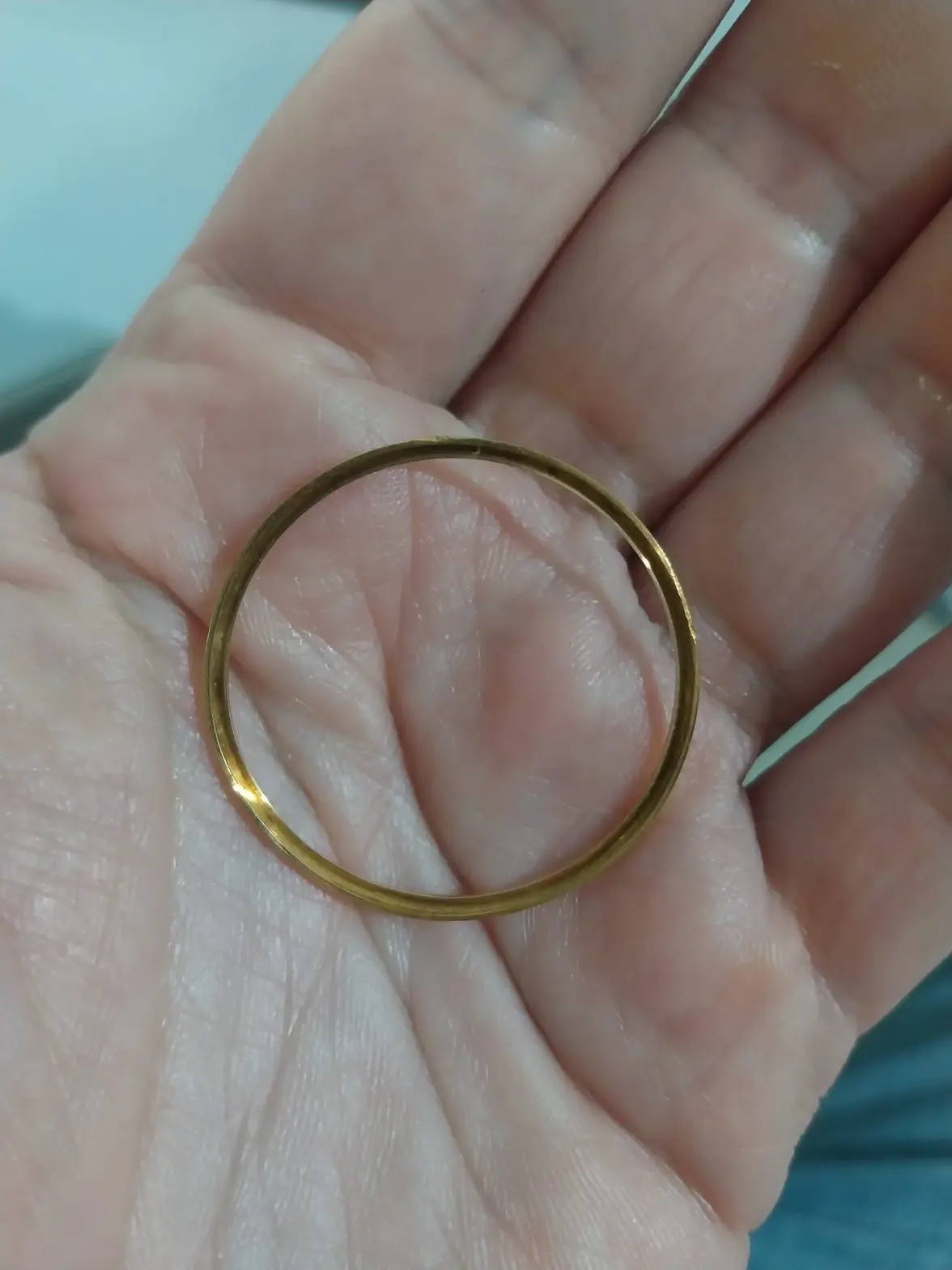
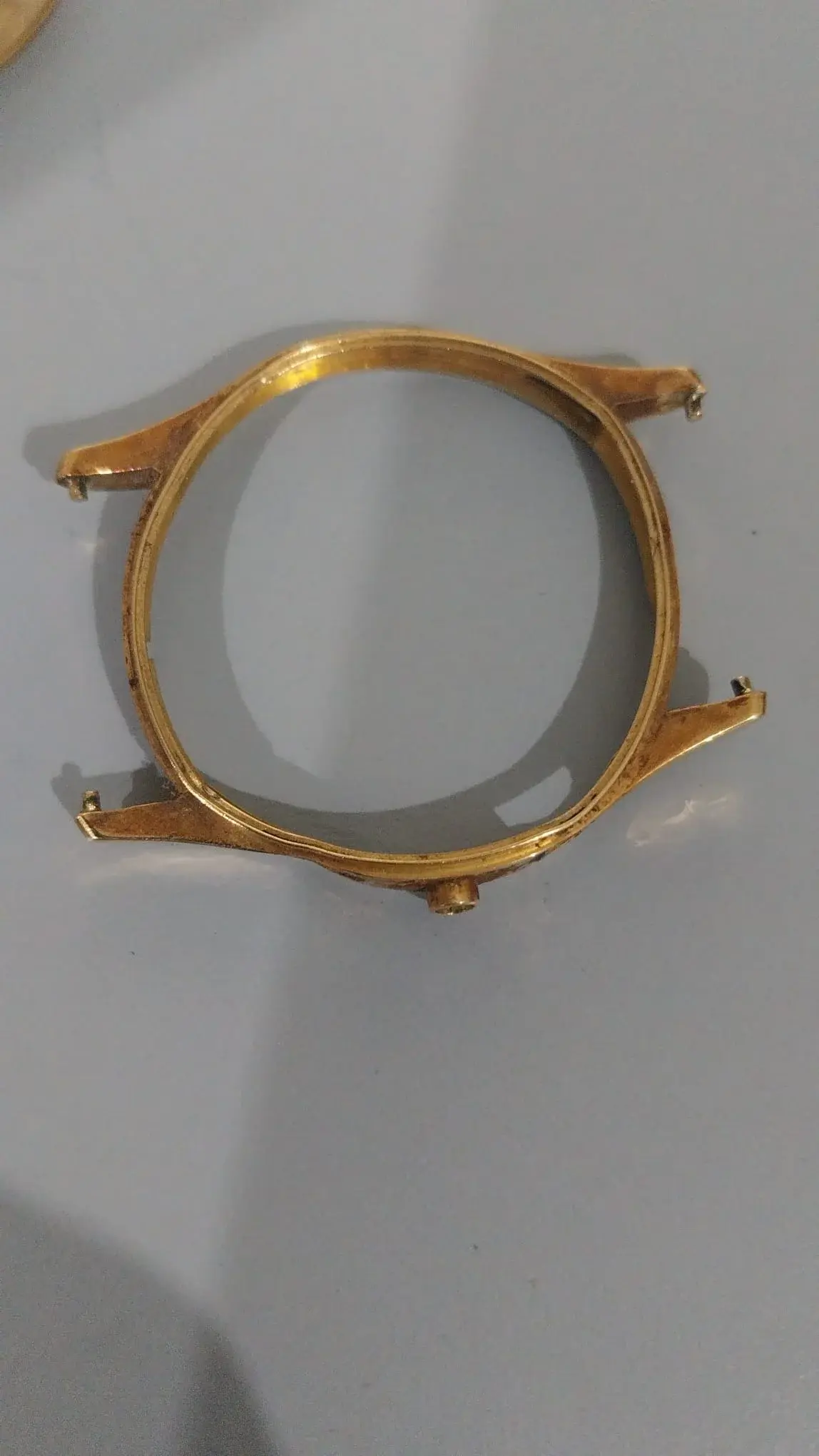
È quella della foto la cassa sua originale.
Non capisco solo se il quadrante è originale oppure no.
Nel fondello sono incisi io numero 126 o 128 poi il marchio ug e i simboli dell'oro con Minerva e il 750.
 
Posts
1,076
Likes
3,847
Andrea in questo forum si comunica in inglese
ti scrivo qui in italiano poi tradurrò per gli altri, poi ti prego di comunicare in inglese: il quadrante è una vecchia ristampa, la cassa è devastata, non è un orologio che ha un valore diverso da quello dell'oro e qualcosa per il movimento.
Il consiglio è totalmente quello di lasciar perdere.


Andrea in this forum we have to talk in english.
Please talk in english from now on.
Dial was reprinted in the past, the case is in shitty condition, its value is gold parts plus something for the caliber.
No need to spend time and money to fix this item.
 
Posts
12
Likes
2
I apologize for speaking Italian. I would like to understand how to identify a redial (or reprint). I am not an expert, but I am eager to learn. Furthermore, I would like to know the value of the movement, dial, hands, crown, pushers, and crystal that I already have in my possession. Thank you all.
 
Posts
1,076
Likes
3,847
cristal = zero euro
movement = 250 euro (if balance is ok)
dial= zero euro

If you want to study UG watches the best thing you can do is to buy new Sala's book about this nice brand. You'll find a lot of watches to study and you'll have a bigger culture about UG dials.

It's not easy to spot reprinted dials because there's no a classic rule to say about them. You know the original one, and you see that others are weird, ugly, with wrong fonts, with wrong paints etc
 
Posts
23,904
Likes
53,113
With experience, you will recognize the fonts and level of precision expected in an original dial.
 
Posts
6,427
Likes
10,051
È quella della foto la cassa sua originale.
Non capisco solo se il quadrante è originale oppure no.
Nel fondello sono incisi io numero 126 o 128 poi il marchio ug e i simboli dell'oro con Minerva e il 750.

The case in the photo is the original.
I just don't know if the dial is original or not.
The case back is engraved with the number 126 or 128, then the UG mark and the gold symbols with Minerva and 750.

If it is not marked 12445 it is not original 😇
 
Posts
88
Likes
193
Let me speak highly about Sala's book as the starting point before looking for a UG chrono.
 
Posts
13,626
Likes
53,304
This watch is garbage … good only for parts that can be saved and melt …
 
Posts
12
Likes
2
Ciao a tutti,


Scrivo questo post per condividere i risultati tecnici oggettivi ottenuti da un'analisi microscopica del mio Universal Genève Compur. Questi dettagli confermano lo stato di "originale di fabbrica" del quadrante, nonostante un livello di conservazione che potrebbe apparire "troppo bello per essere vero" a chi non ha familiarità con le specifiche tecniche di produzione degli anni '40 di Stern Frères.


Ecco i punti chiave da discutere:


1. La prova schiacciante: "Zapon Pooling" (il fenomeno degli indici "sporchi")


Ciò che spesso viene scambiato per sporco o residui di vernice ai bordi degli indici in oro è, in realtà, un segno distintivo dell'originalità della fabbrica. Negli anni '40, il produttore di quadranti Stern Frères applicò uno strato protettivo finale di lacca Zapon (una vernice trasparente alla nitrocellulosa) sul quadrante completamente assemblato. A causa della tensione superficiale e dell'azione capillare, questa lacca liquida tendeva ad accumularsi ( formando pozze ) alla base degli indici in oro applicati. Oltre 80 anni dopo, questa lacca organica cristallizza e diventa marrone o nera, spesso intrappolando particelle o reagendo a fattori ambientali. In un quadrante moderno, gli indici vengono in genere rimossi e riapplicati su una base pulita, con il risultato di un aspetto "asciutto" e innaturalmente lucido. La presenza di questi residui organici granulari è la prova fisica che questi indici non sono mai stati toccati.


2. Font forensics: "Coat Hanger 4" e crenatura


Nel contatore dei 45 minuti, il numero 4 è un caratteristico "4 aperto" (noto anche come stile " appendiabiti "). Questo font specifico è una firma dei cliché di stampa originali utilizzati da Stern Frères per Universal Genève tra il 1938 e il 1942. I moderni contatori utilizzano quasi esclusivamente font digitali standard in cui il 4 è "chiuso". Inoltre, ad alto ingrandimento, la crenatura in "GENEVE" mostra la spaziatura precisa e stretta caratteristica della stampa galvanica originale, piuttosto che della tampografia manuale.


3. Errori di profondità e registrazione di Azurage


Le micro-scanalature concentriche nei quadranti secondari ( azzurraggio ) sono nitide, profonde e riflettono la luce radialmente. Qualsiasi processo di ricomposizione "conservativo" - come la verniciatura a spruzzo di vernice fresca su una vecchia base - inevitabilmente "ostruirebbe" o livellerebbe queste scanalature, facendole apparire visivamente piatte o "sporche" sotto una lente d'ingrandimento.


Inoltre, il leggero disallineamento della scala tachimetrica blu rispetto alla minuteria è un classico "errore di registrazione" della stampa multicolore dell'epoca. Le scale venivano spesso stampate su fogli di metallo prima del processo di stampaggio finale, il che ha portato alle asimmetrie millimetriche che i restauratori moderni "correggono" artificialmente.


4. Coerenza dell'insieme (coevalità storica)


L'orologio mostra una coerenza cronologica impeccabile che sfida la logica del "Frankenwatch":


  • Movimento Cal una rara variante a spirale piatta della famiglia delle 14 linee.[1, 2]
  • Cassa in oro 18 carati il numero di serie 793XXX data la produzione esattamente al 1940-1941 . Il numero di riferimento segue la codifica scientifica Universal: "1" per oro 18 carati, "2" per cronografo e "4" specificamente per la famiglia di calibri 285/385/386 .

In conclusione, il "residuo" alla base degli indici, che gli osservatori meno esperti scambiano per un difetto di restauro, è in realtà la prova chimica che si tratta di un raro esemplare "sopravvissuto" intatto.

 
Posts
6,427
Likes
10,051
This is what Deepl makes of it. No clue where this is about

Hello everyone, I am writing this post to share the objective technical findings obtained from a microscopic analysis of my Universal Genève Compur. These details confirm the “factory original” status of the dial, despite a level of preservation that might seem “too good to be true” to those unfamiliar with the technical production specifications of Stern Frères in the 1940s. Here are the key points to discuss: 1. The overwhelming evidence: “Zapon Pooling” (the phenomenon of “dirty” indices) What is often mistaken for dirt or paint residue on the edges of the gold indices is, in fact, a hallmark of factory originality. In the 1940s, dial manufacturer Stern Frères applied a final protective layer of Zapon lacquer (a transparent nitrocellulose varnish) to the fully assembled dial. Due to surface tension and capillary action, this liquid lacquer tended to accumulate (forming pools) at the base of the applied gold indices. Over 80 years later, this organic lacquer crystallizes and turns brown or black, often trapping particles or reacting to environmental factors. In a modern dial, the indices are typically removed and reapplied to a clean base, resulting in a “dry” and unnaturally shiny appearance. The presence of these granular organic residues is physical evidence that these indices have never been touched. 2. Font forensics: “Coat Hanger 4” and crenation In the 45-minute counter, the number 4 is a distinctive “open 4” (also known as the “coat hanger” style). This specific font is a signature of the original printing clichés used by Stern Frères for Universal Genève between 1938 and 1942. Modern counters almost exclusively use standard digital fonts in which the 4 is “closed.” Furthermore, under high magnification, the kerning in “GENEVE” shows the precise, tight spacing characteristic of the original galvanic printing, rather than manual pad printing. 3. Azurage depth and registration errors The concentric micro-grooves in the subdials (azurage) are sharp, deep, and reflect light radially. Any “conservative” recomposition process—such as spray painting fresh paint over an old base—would inevitably ‘clog’ or level these grooves, making them appear visually flat or “dirty” under a magnifying glass. Furthermore, the slight misalignment of the blue tachymeter scale with the minute track is a classic “registration error” of the multicolor printing of the era. Scales were often printed on metal sheets prior to the final stamping process, which led to millimeter asymmetries that modern restorers artificially “correct.” 4. Overall consistency (historical co-evolution) The watch displays impeccable chronological consistency that defies the logic of the “Frankenwatch”:

Cal movement, a rare flat-spiral variant of the 14-line family. [1, 2]

18-karat gold case with serial number 793XXX, dated to production in exactly 1940-1941. The reference number follows the Universal scientific coding: “1” for 18-karat gold, ‘2’ for chronograph, and “4” specifically for the 285/385/386 caliber family.

In conclusion, the “residue” at the base of the hour markers, which less experienced observers mistake for a restoration defect, is actually chemical evidence that this is a rare “survivor” that has remained intact.