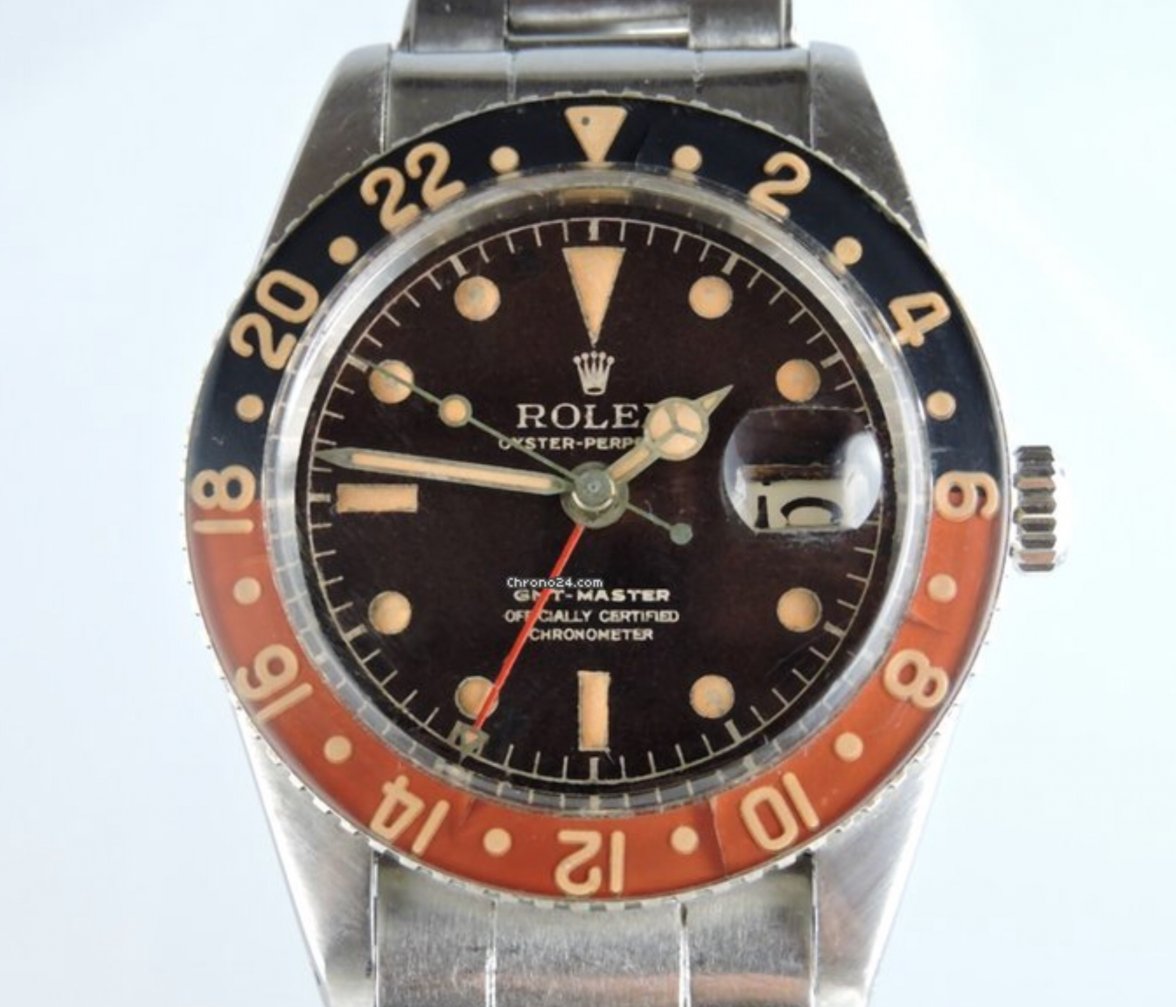
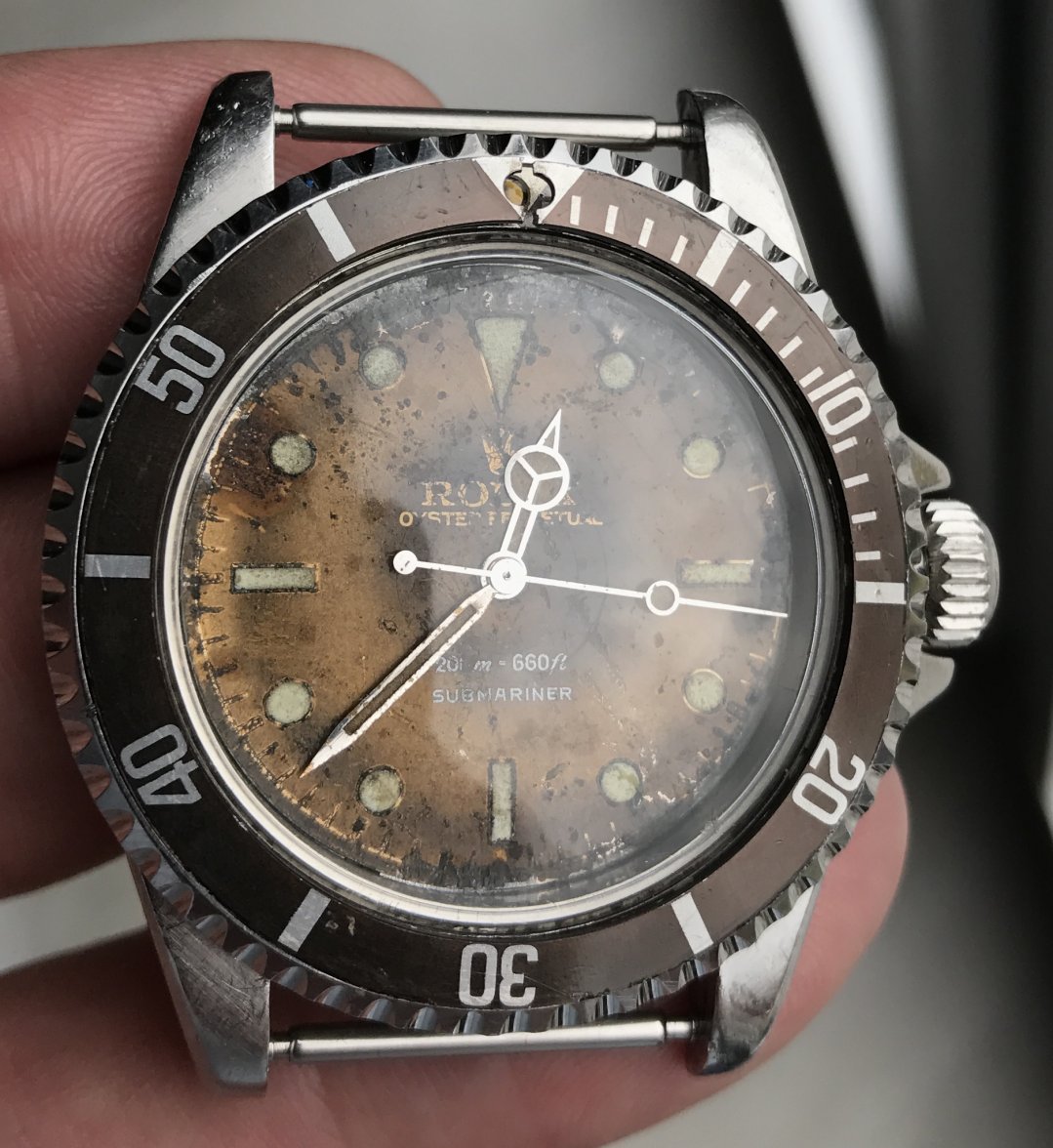
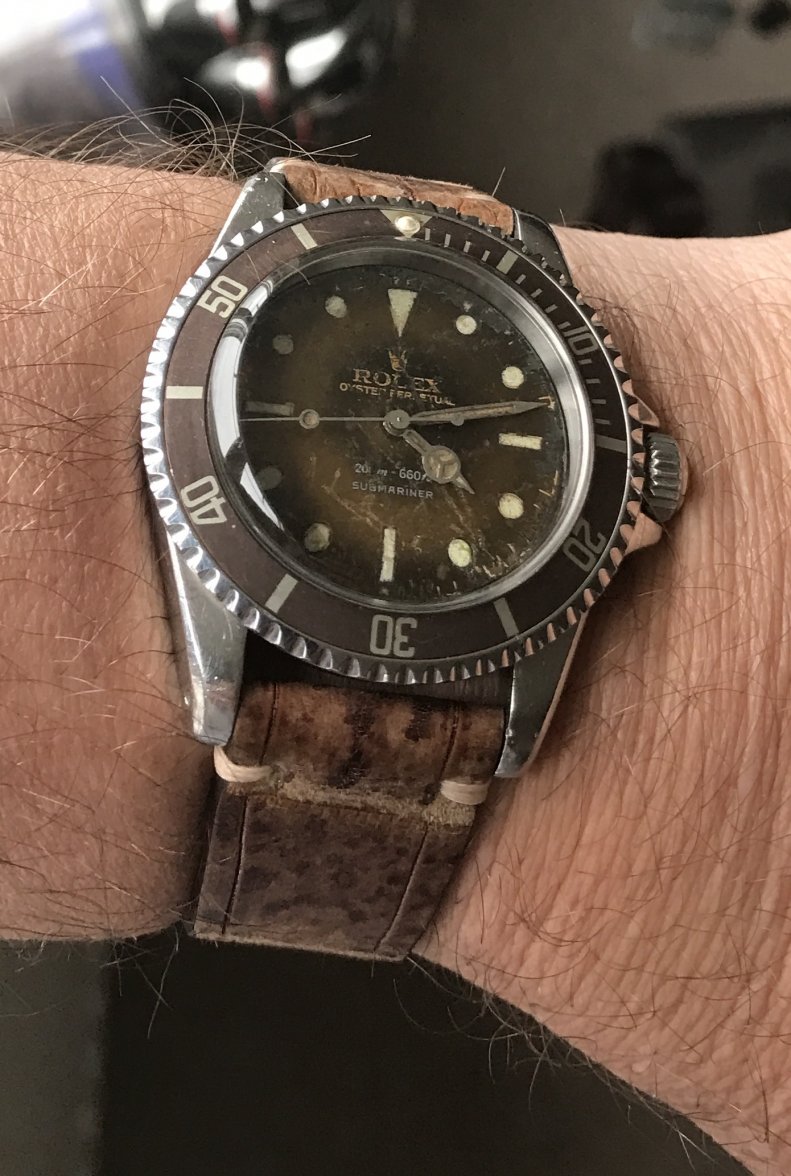
as I stated, its a flaw in the material used. There are know references from a specific period that are known to turn tropical. This is a true tropical dial. A one off dial that was abused is not a true tropical dial.
Defining "abuse" can be difficult. What about a particular reference that was known to have bad pusher gaskets? Where there is nothing wonky in the chemistry of the dial finish, just larger than normal instances of water/moisture ingress for a given model or serial range.
And ...where the watch is not "abused" as such, just lived with, worn in mild rain, in a muggy climate, etc.
Isn't this, in fact, what we see with many early
Tropical Speedsters? Just poorly waterproofed watches exposed to moisture - be it from the climate or otherwise.
RE: misuse of the term "Tropical", perhaps not coincidentally the very seller of this watch put it like this back in 2012, in a similar thread on another forum, when opinions collided on what exactly defines it:
It's a combination of long time sun and water exposure. Sometimes more sun... sometimes more water. I've talked to Vietnam vets that have sold me their watches. They complained that sometimes some of the watches would fog up during the war... they would hang them in the tent to dry them out with the crown open and leave them in the sun. Opening a crown in a super humid country unfortunately lets a little moisture into the watch. Over 50-60 years that moisture will effect the watch.
Also some of the manufacturers that made dials for Rolex such as Bayer and Singer created pigmentation and color formulas that over time naturally changed colors due to the molecular bonds degrading over time. Unstable original formulas = fantastic color changes.
For example... red is an unstable color. Most older red cars have faded from sun exposure... and most of the fade is uneven. Different body panels look different. Yes some are flooded with water and have been damaged but realistically before any of this was hype we started to use the word tropical to describe both brown and beautiful dials AND damaged dials using the word tropical. It is a light hearted nickname... not meant to trick anyone or cheat them. I see thousands of watches a year... honestly the normal stuff is just normal to me... I enjoy the crackle, brown color, damage... more then I enjoy clean perfect pieces. It's just a matter of taste. And what makes this hobby and market fun is that we are all free to decide what we want to collect.
To complicate things. There is probably a useful distinction to be made between "Tropical" and what we often hear referred to as "Chocolate". Where the former is caused by UV/Moisture exposure (AKA "damage"), and originates from something that happened to the dial in possession of the owner. And the latter being a chemical process in the dial itself, and originates from how it was manufactured. These terms are interchanged sometimes, and that probably isn't helpful.
But there are many gray areas here. Good times.