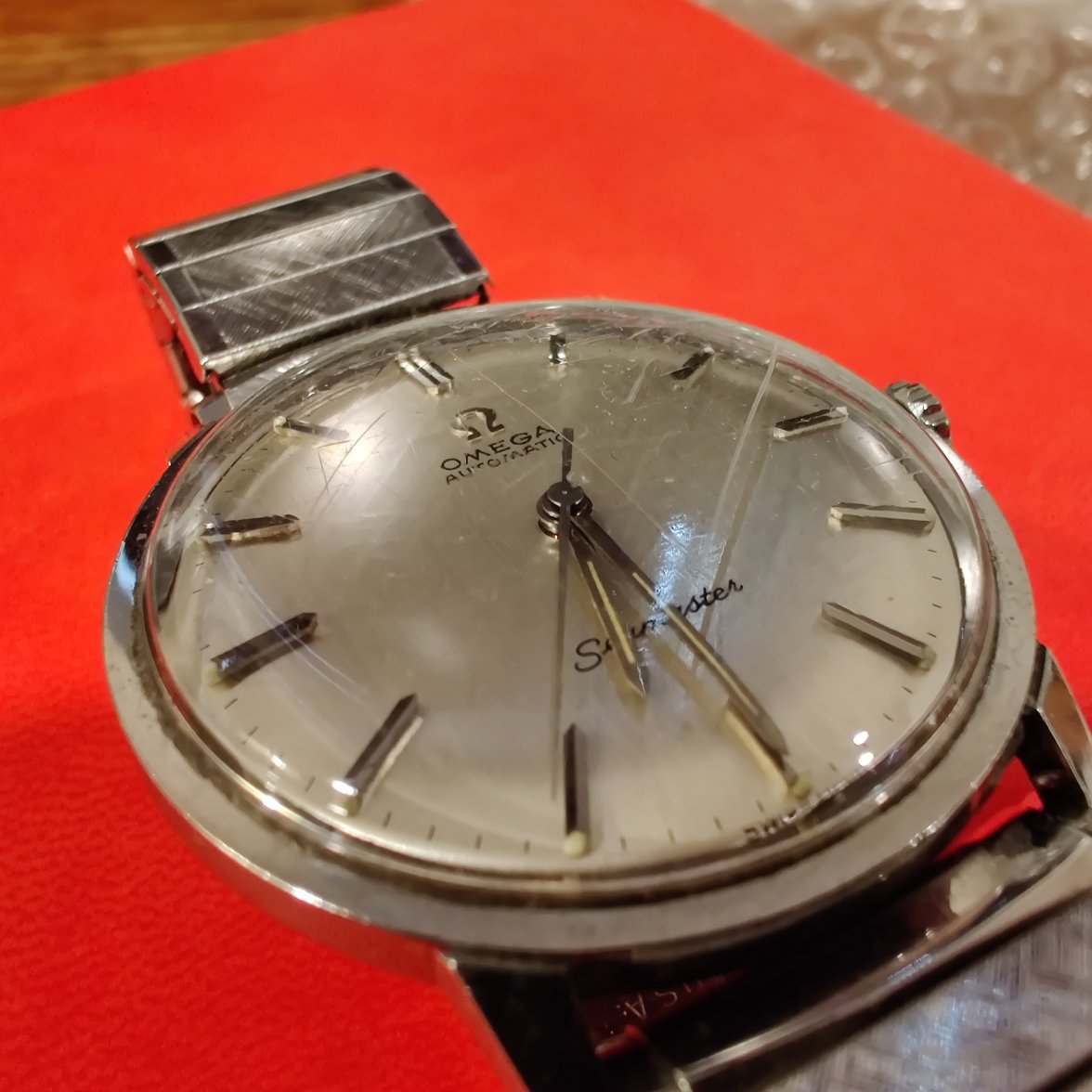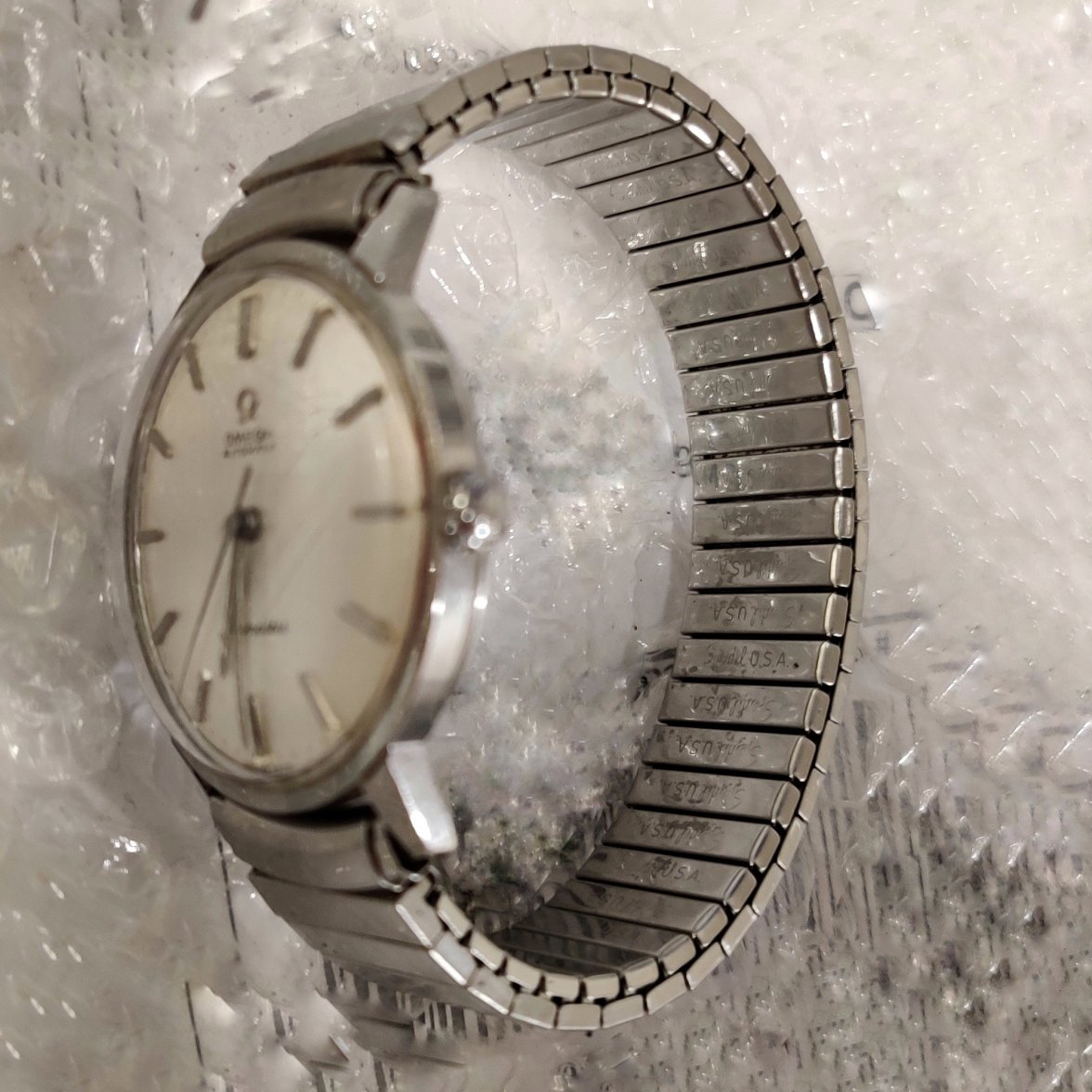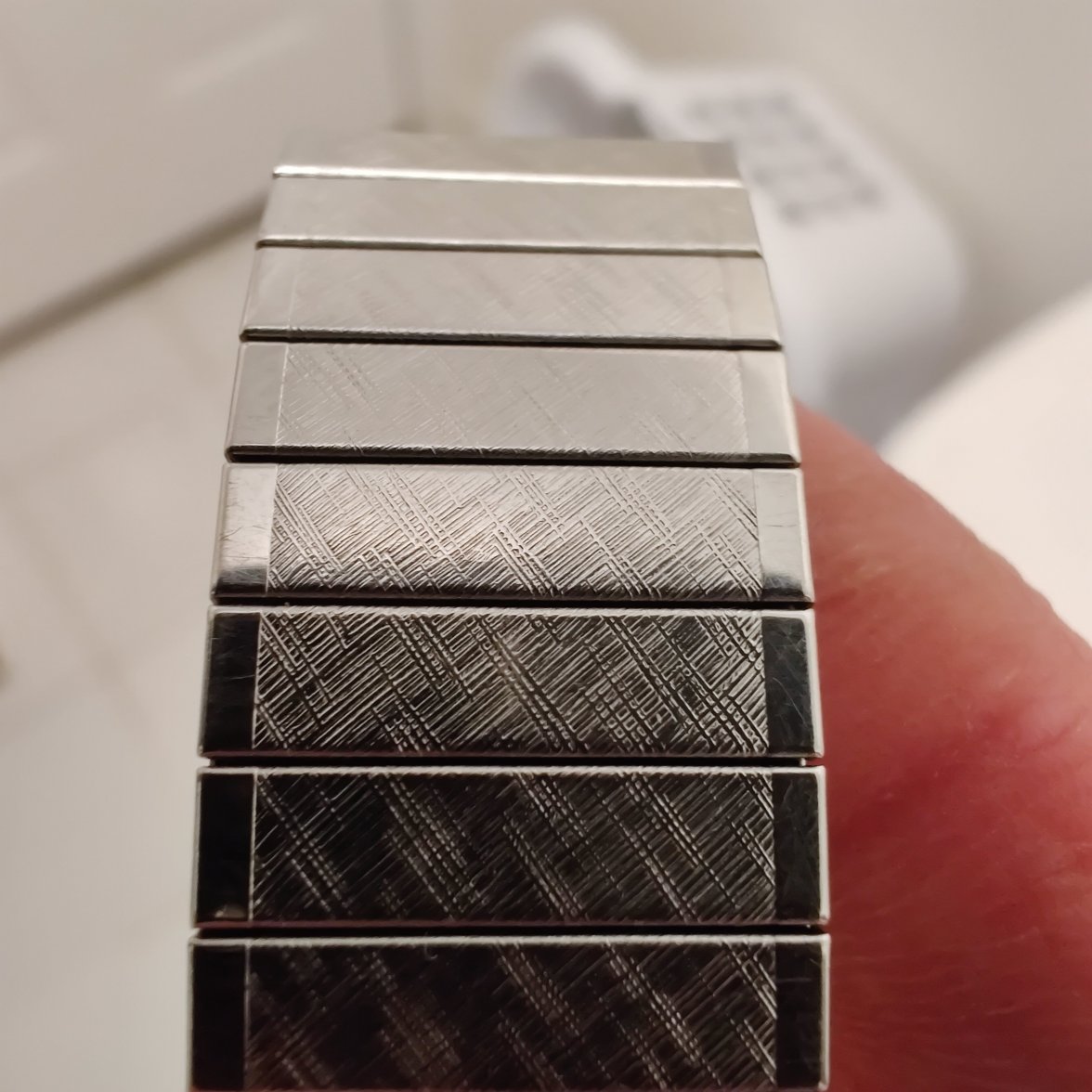
Twistoflex - why? Still relevant?

Posts
349
Likes
228
Totally made up stat: 75% of barn find omegas on eBay have a twistoflex fitted, half of those have appreciable lug damage, and the other 25% are cleaned up watches sold by flipper dealers that recently removed twistoflex bands.

So my questions:

1. Why were they so incredibly popular until the last 20 years or so? It was even popular to put a cheap plated twistoflex on solid 18k gold watches, they got so popular.

2. Why are they no longer so popular? Speidel still makes them, but I don't see anyone under about 60 actually wearing them these days. At least not in my area. Why?

3. Does anyone here still use them? If so, why? And do you worry at all about their effects on your watch lugs?

4. The only twistoflex bands I find intriguing, personally, are the ones with integrated calendar winders. These I actually get, though I don't think you can get inserts anymore - anyone know differently?

5. For the hairy dudes - does the pinchomatic quality of these bracelets factor in to why you don't rock them?

Pics or it never happened.... I have no photos to share.
 
Posts
4,711
Likes
23,795
I can't tell you why. But I know my 1962 Seamaster came with a Speidel on it, along with some worn out inner lugs lol.
I'm sure my grandfather put it on there because it was practical, and probably more durable.
 
Posts
2,636
Likes
5,378
I'm sure my grandfather put it on there because it was practical, and probably more durable.

I think this probably sums it up.

My grandfather wore his 9 karat Genève on a Speidel bracelet for 20 years, or more.
Fortunately, the lugs remained undamaged.
 
Posts
29,664
Likes
76,817
I'm sure my grandfather put it on there because it was practical, and probably more durable.

These are incredibly popular with “older folks” still, and you are exactly correct that they were considered very durable bracelets in their time. I remember pretty much every jewelry store having the rotating display full of these bracelets back in the day. Brands like Speidel were considered to be good quality.
 
Posts
2,011
Likes
3,396
I still have one in use on my father’s watch from the 60s, I left it on as it is exactly what he wore. I guess the ease of use and the prevailing fashion at the time are the main reasons why so many watches of the period have them fitted. Most people wouldn’t even notice the damage to the lugs, and probably wouldn’t care much if they did. Watches were just jewellery.
 
Posts
349
Likes
228
Watches were just jewellery.

I would argue they are more jewelry today than they ever were in the 1960's. Back in the day, you wore a watch as the only reliable means to tell the time for many people, and sometimes to know the date if you signed a lot of stuff. Nobody had smart phones, ipods, fitness trackers, etc. and most people were not lucky enough to have an office window opening on a public clock tower or whatever. If a house had a clock in it, it was often on the kitchen wall and was the only clock in the usual living spaces of the home. The wrist watch was indeed a tool watch in those times, more so than today. Watches like the memomatic even became popular because many people didn't yet own a reliable alarm clock, or preferred a wristwatch alarm and slept with their watches on.

Now for OEM bracelets, there were decent ones available at the time. I think of the bracelets like the Omega 1118, the 1181, or the 1036 BOR... all would hold up well to bracelets today, apart from having stamped clasps vs machined ones. Certainly they were better than a speidel according to modern sensibilities, and yet many of them were taken off watches, put in drawers, and ultimately lost, so a twistoflex could be fitted.

I don't really know why, but people seem to have preferred the Speidel offerings to the vintage bracelets we covet today. They must have been seen as "better" at the time - perhaps because of how convenient they are to put on? And yet today, a twistoflex is still a $20 bracelet, while a vintage 1036 BOR is a $500 part - go figure.

Of course, I don't know what a speidel cost in 1960 compared to an Omega offering, so some of what we see was likely people wanting a bracelet, buying a cheaper leather strap watch, and then putting a "nice" bracelet on at their local retailer. But they are so ubiquitous, that I think a lot of OEM bracelets were also swapped out.
 
Posts
349
Likes
228
interestingly, Speidel DOES make ONE model of fixed curved end twistoflex now that would not damage watch lugs. It's really only the universal fit "16-22mm" bracelet with spring-loaded end links that eat lugs.

This fixed link model would not damage your watch, but it still isn't something I relish putting on my wrist.

SPEIDEL_7963131633_1200x.jpg
 
Posts
3,785
Likes
20,205
My just turned 29 year old son ABSOLUTELY prefers expandable bracelets. I buy them cheap off of eBay.

I've got one on a Geneve Admiralty and like it as well as on a couple of Bulovas (these too, and Tissot are what the kid likes) and they're comfortable. That said I've just gotten to prefer heavy link bracelets.
 
Posts
116
Likes
66
I would argue they are more jewelry today than they ever were in the 1960's. Back in the day, you wore a watch as the only reliable means to tell the time for many people, and sometimes to know the date if you signed a lot of stuff. Nobody had smart phones, ipods, fitness trackers, etc. and most people were not lucky enough to have an office window opening on a public clock tower or whatever. If a house had a clock in it, it was often on the kitchen wall and was the only clock in the usual living spaces of the home. The wrist watch was indeed a tool watch in those times, more so than today. Watches like the memomatic even became popular because many people didn't yet own a reliable alarm clock, or preferred a wristwatch alarm and slept with their watches on.

Now for OEM bracelets, there were decent ones available at the time. I think of the bracelets like the Omega 1118, the 1181, or the 1036 BOR... all would hold up well to bracelets today, apart from having stamped clasps vs machined ones. Certainly they were better than a speidel according to modern sensibilities, and yet many of them were taken off watches, put in drawers, and ultimately lost, so a twistoflex could be fitted.

I don't really know why, but people seem to have preferred the Speidel offerings to the vintage bracelets we covet today. They must have been seen as "better" at the time - perhaps because of how convenient they are to put on? And yet today, a twistoflex is still a $20 bracelet, while a vintage 1036 BOR is a $500 part - go figure.

Of course, I don't know what a speidel cost in 1960 compared to an Omega offering, so some of what we see was likely people wanting a bracelet, buying a cheaper leather strap watch, and then putting a "nice" bracelet on at their local retailer. But they are so ubiquitous, that I think a lot of OEM bracelets were also swapped out.

Spot on. OEM bracelets were not particularly robust and as a watch was very much a tool, you didn't want the clasp to continually flip open, the spring links to fail etc etc. Most only had one watch so there was none of this wearing for display or swapping every other day. You had one and it had better work. Aftermarket bands and bracelets were generally better than the OEM which accounts for their popularity. It can also be a bit misleading commenting on yesterdays decisions when some just can't quite get the situation in which those decisions were made and why.
 
Posts
316
Likes
287
Back in the day, Speidel was a higher end company. They made zillions of these, advertised on television, and their bracelets were seen as a more reliable and classy upgrade to most OEM bracelets.

I once found and bought a Speidel salesman’s sample case. It was about the size of an older iPad, had two layers - one for steel bracelets, the other for gold plated. Nice leatherette covering, plushy heavy card stock to attach the bracelets. Impressive.

I sold this some years ago and sadly don’t have pictures. But it was definitely cool, and I could imagine the guy trotting around to jewellers and writing up the orders.

Meanwhile, I’ve had dozens of watches and bags that had too many of these to count. Kept a few interesting ones and chucked the rest. I’ve heard that if you can accumulate enough of the gold plated ones, some scrappers will buy them.
 
Posts
16,307
Likes
44,994
My brother is in town with his family (wife and 4 kids- all boosted and tested prior to their arrival as were we). My sister-in-law saw us with our “fancy” watches and mentioned that we should look for a watch for her while she was in town (she has a g-shock she wears for working out- her only watch). My wife brought down her watch box and immediately my sister in law grabbed for an older quartz 34mm “military” style Bulova I had given her on a Speidel (my wife didn’t care for this watch). Sister in law, who is not a watch person, remarked immediately on how comfortable it was and how easily it went on and came off. The watch is hers now.
That right there, from a non-watch person, is exactly why they were so popular. Comfy, didn’t wear out like a strap, looked like a nice bracelet (jewelry). We are far more fussy about originality and fit and finishes than they were back then. And to most people, comfort and ease is far more desirable than period correct or better quality.
 
Posts
13,696
Likes
53,497
Hell .. I had one on my Bulova back in HS. Easy on/of and they wore well.
 
Posts
1,827
Likes
12,428
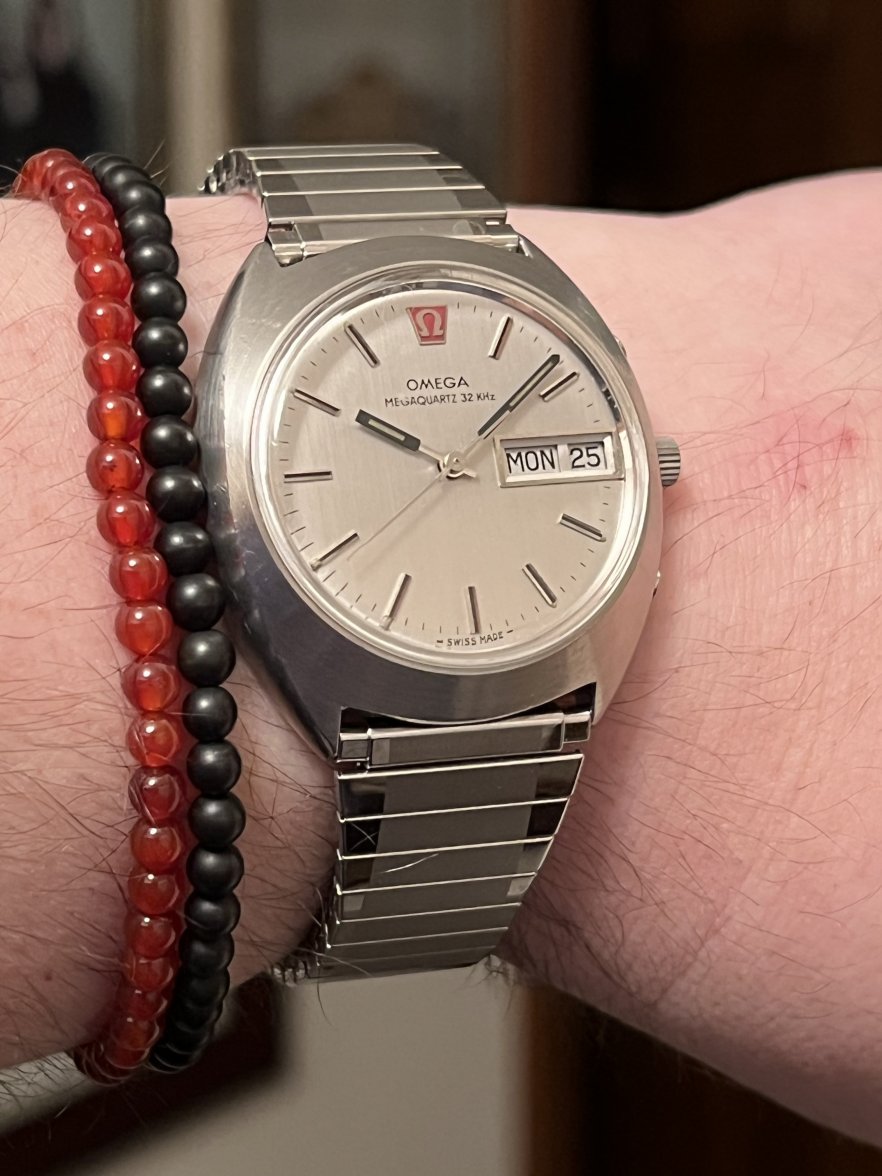
I deliberately put one on a Megaquartz 32 that a friend gave me (as a parts watch, but I had it serviced and it came back from the dead) just for the proper period look. I'm still looking for an Omega 2045 bracelet for it, but those seem to have all been sucked up by Electrogolf owners.

I had them on all my watches as a kid and teen in the 80s. As stated above, they're comfortable and easy to put on and remove.

 
Posts
2,011
Likes
3,396
I would argue they are more jewelry today than they ever were in the 1960's. Back in the day, you wore a watch as the only reliable means to tell the time for many people, and sometimes to know the date if you signed a lot of stuff. Nobody had smart phones, ipods, fitness trackers, etc. and most people were not lucky enough to have an office window opening on a public clock tower or whatever. If a house had a clock in it, it was often on the kitchen wall and was the only clock in the usual living spaces of the home. The wrist watch was indeed a tool watch in those times, more so than today. Watches like the memomatic even became popular because many people didn't yet own a reliable alarm clock, or preferred a wristwatch alarm and slept with their watches on.

Now for OEM bracelets, there were decent ones available at the time. I think of the bracelets like the Omega 1118, the 1181, or the 1036 BOR... all would hold up well to bracelets today, apart from having stamped clasps vs machined ones. Certainly they were better than a speidel according to modern sensibilities, and yet many of them were taken off watches, put in drawers, and ultimately lost, so a twistoflex could be fitted.

I don't really know why, but people seem to have preferred the Speidel offerings to the vintage bracelets we covet today. They must have been seen as "better" at the time - perhaps because of how convenient they are to put on? And yet today, a twistoflex is still a $20 bracelet, while a vintage 1036 BOR is a $500 part - go figure.

Of course, I don't know what a speidel cost in 1960 compared to an Omega offering, so some of what we see was likely people wanting a bracelet, buying a cheaper leather strap watch, and then putting a "nice" bracelet on at their local retailer. But they are so ubiquitous, that I think a lot of OEM bracelets were also swapped out.

Good points. I understand that watches were important as a main way of telling the time, I was suggesting that the ease of use of the stretch bracelet was probably preferable to having the correct, period bracelet or a fiddly leather strap, etc. Most people wouldn’t be checking the state of the lugs. I’ll check with some older relatives to get their take on this 😉
 
Posts
88
Likes
74
Love these bands. The wider profile of most of them look better than what was available in the 60's and 70's.

I wear out a strap in less than a year. Leather looks best, but these are more comfortable and last forever.
 
Posts
963
Likes
1,251
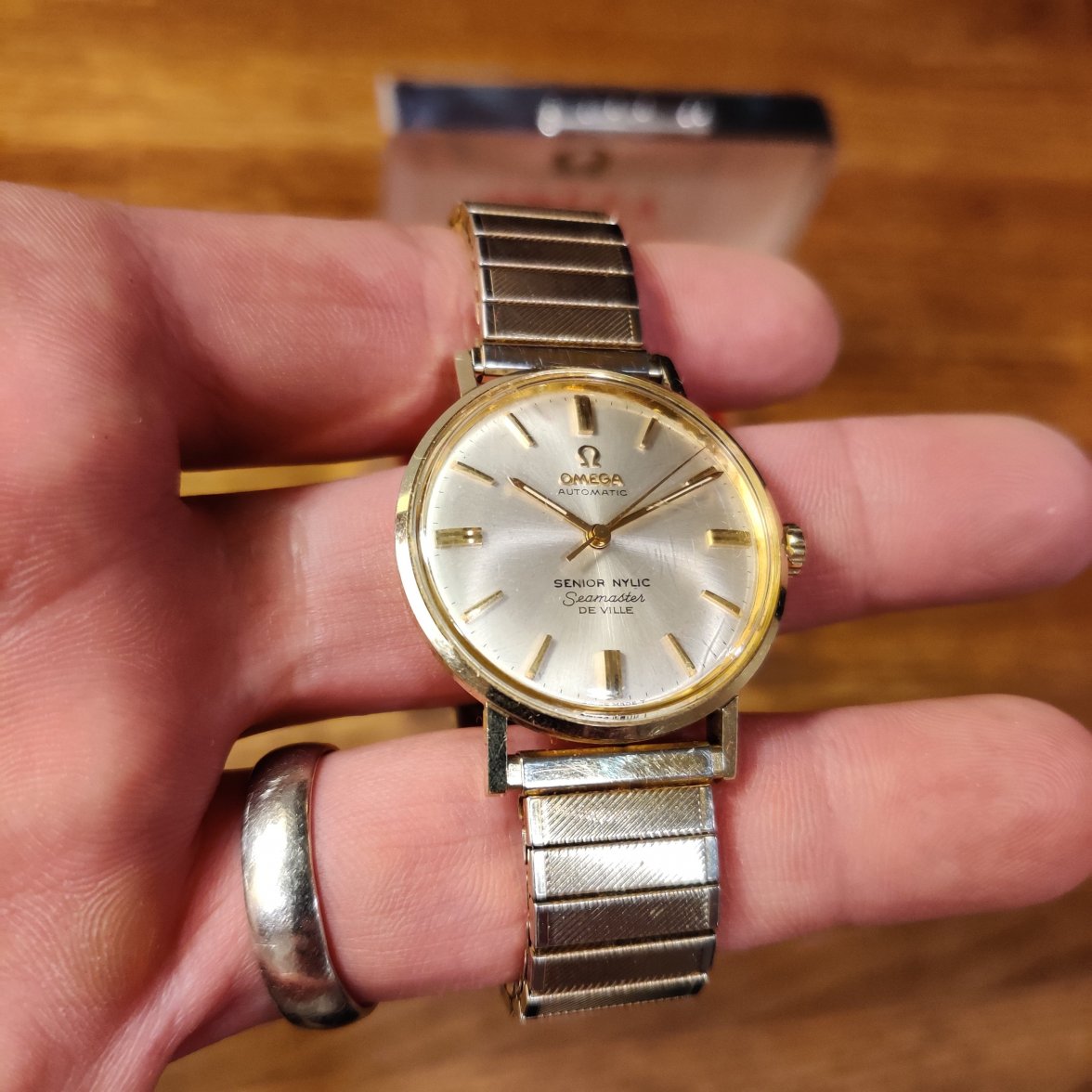
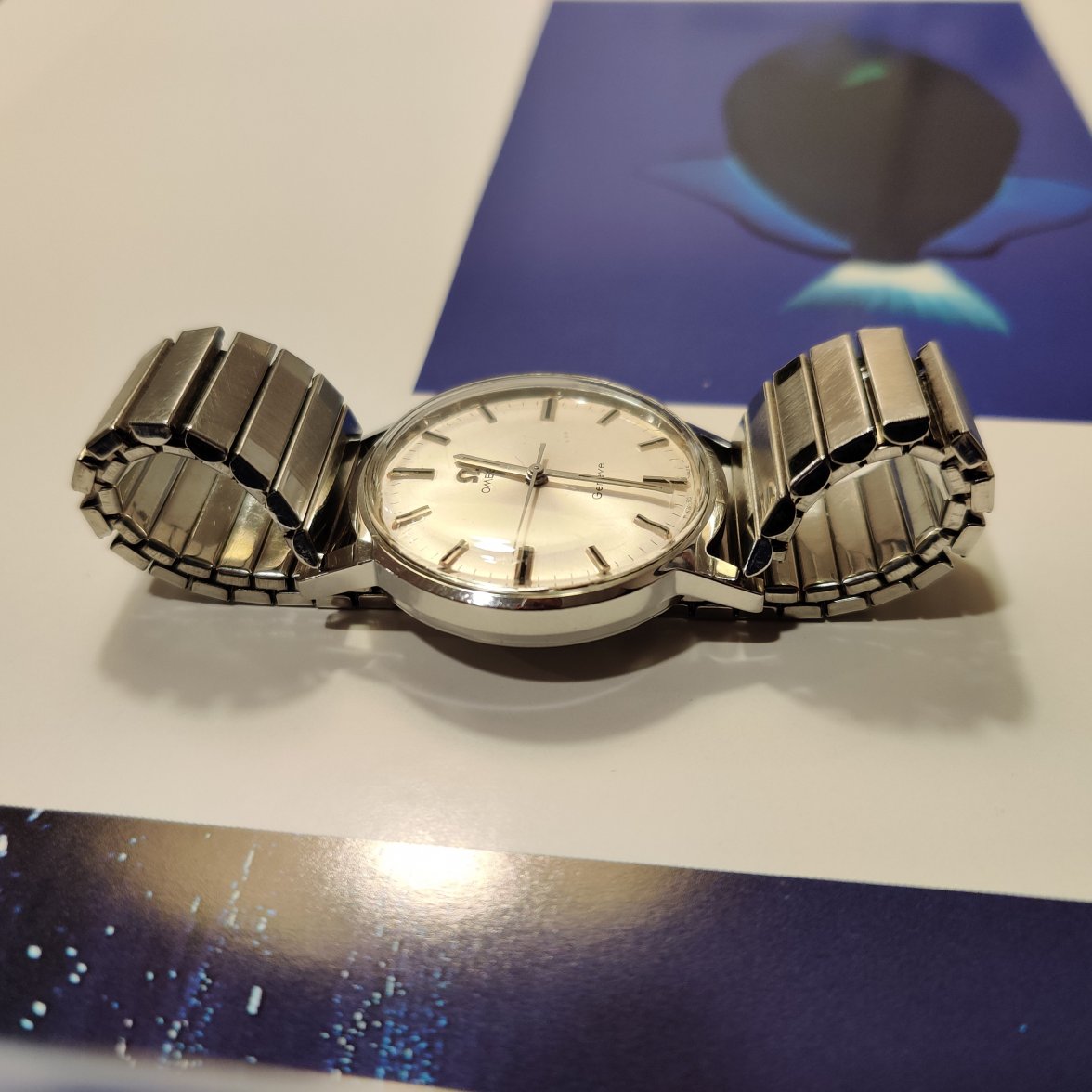
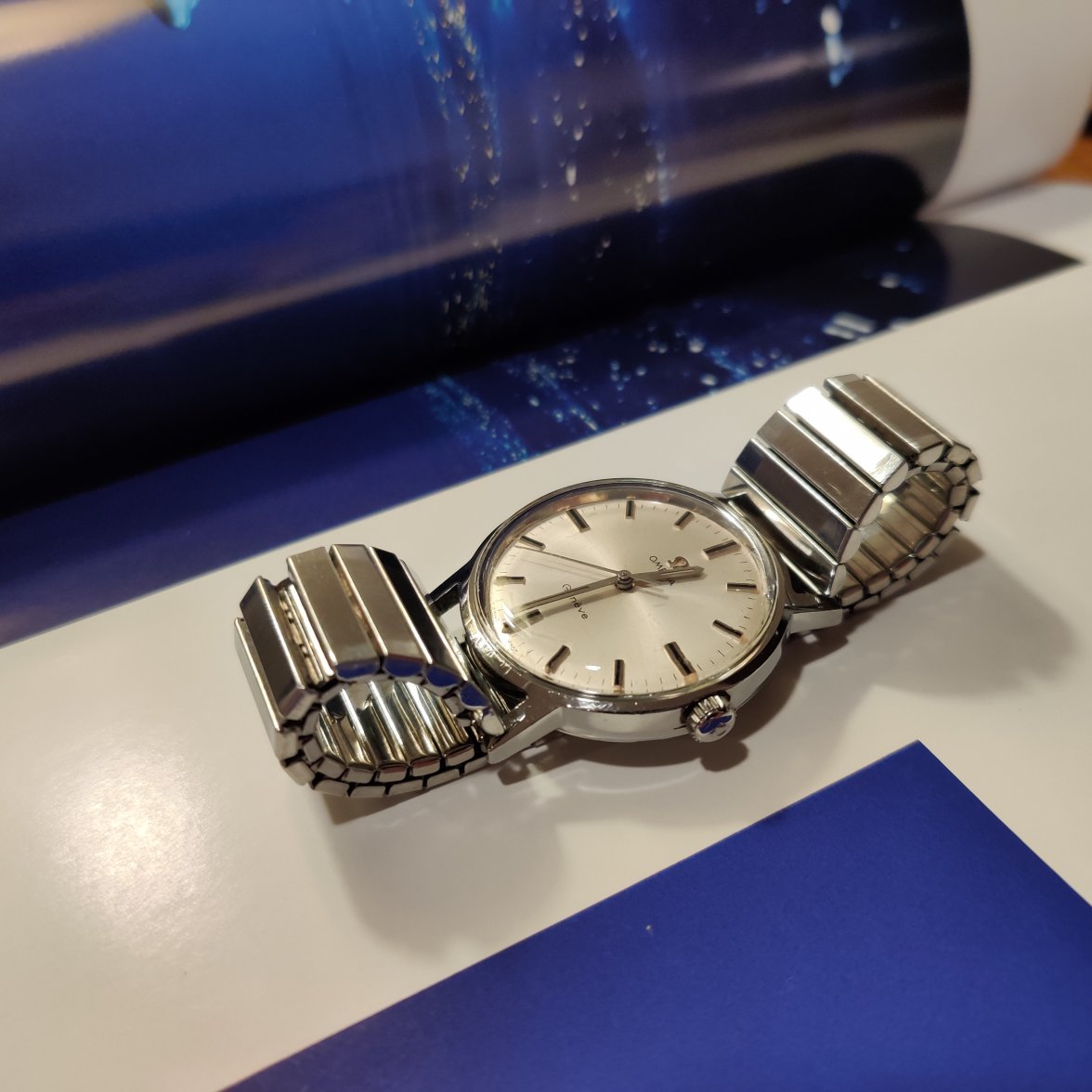
USA flex bracelet, ca. 1960s:


Made in Thailand, ca. (1970s? 80s?):


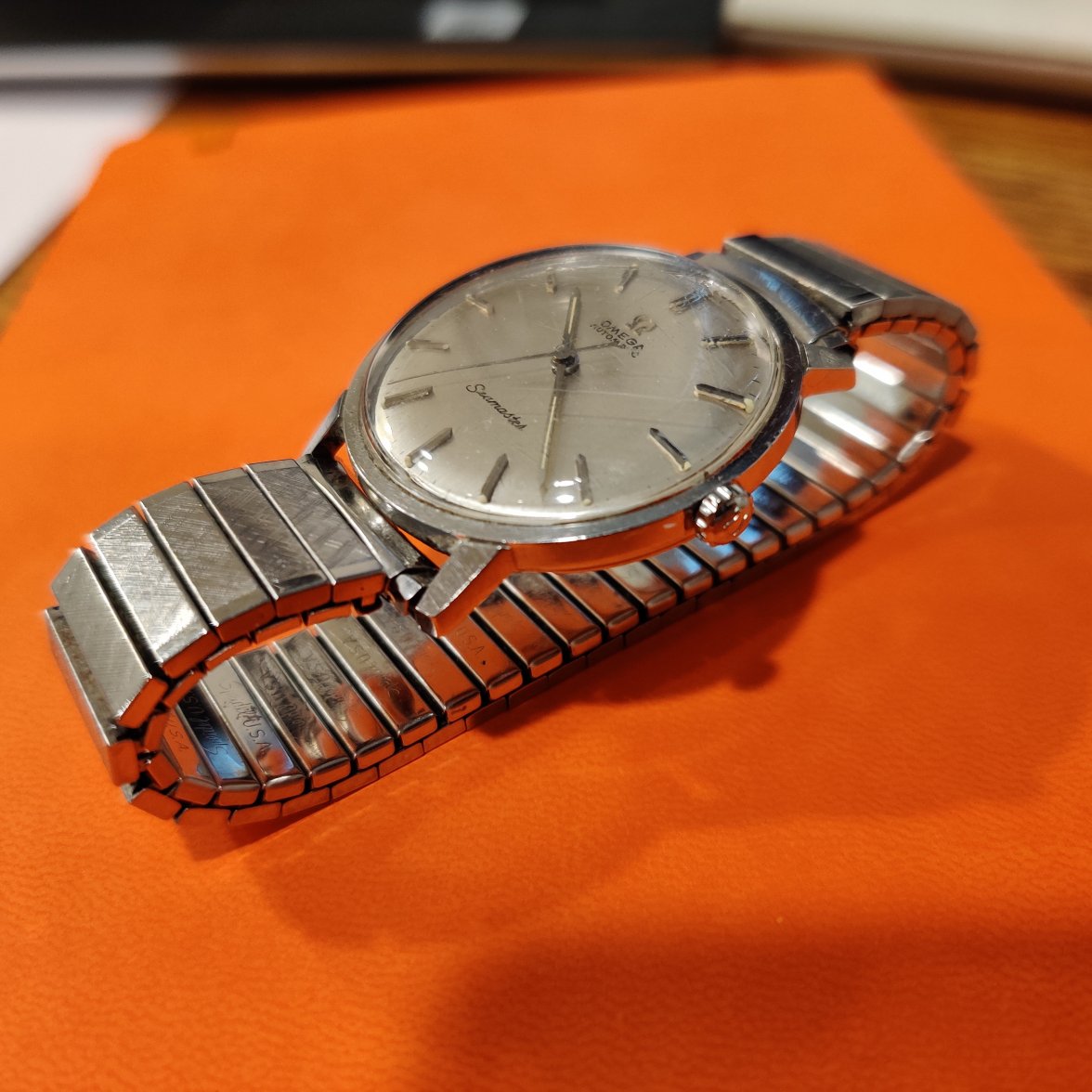
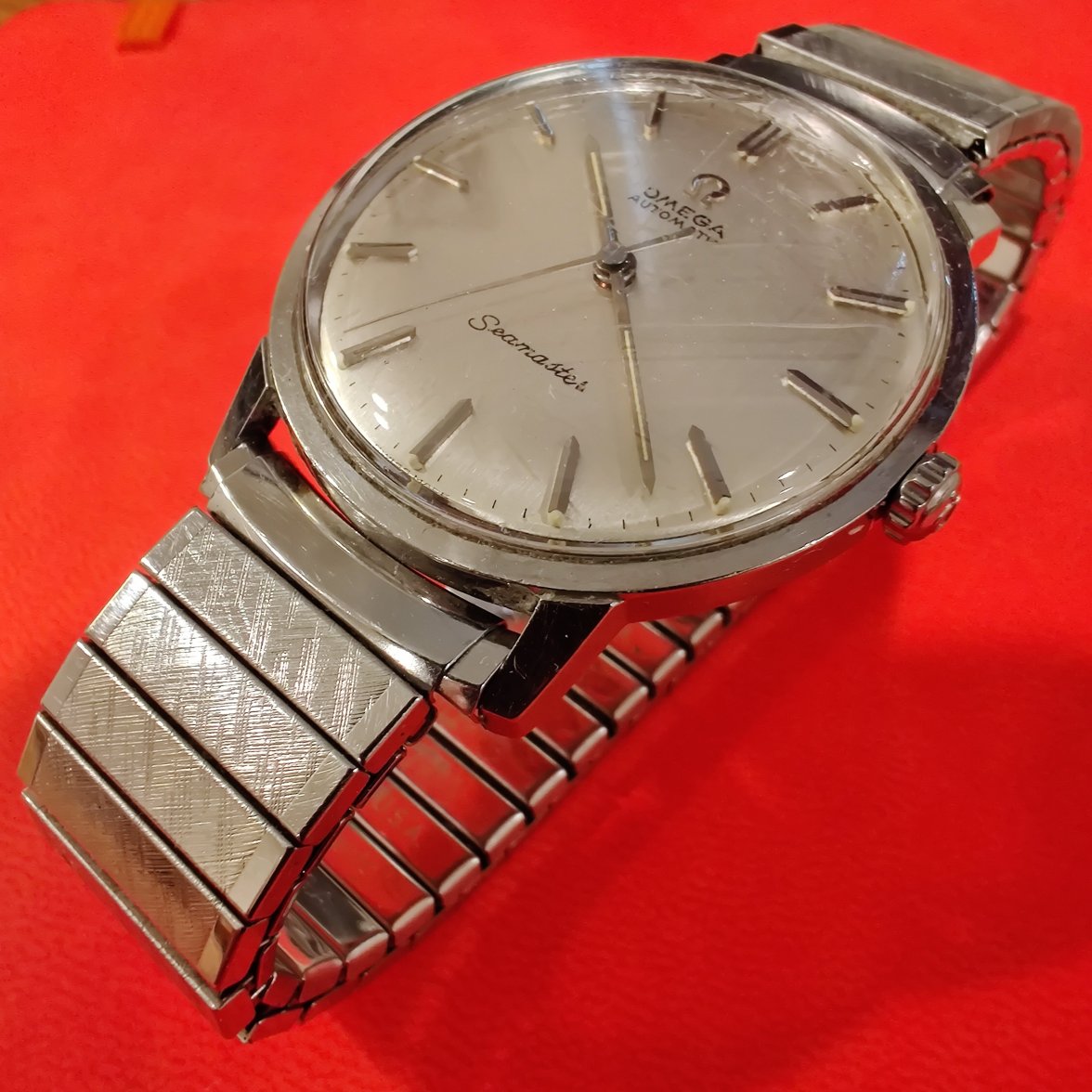
Speidel made in USA, ca. 1960s:


The 1960s USA made bracelets are entertaining. When laying on its side, the watch stands up in a predictable fashion. When placed dial up, the band can carry the watch head in the air. They're springy, and fun. I would put a band like this on a watch if not for the lug destruction.

The one in the middle flattens, folds and collapses, and isn't any fun. It doesn't do the tricks the older ones do.
 
Posts
2,978
Likes
8,727
USA flex bracelet, ca. 1960s:


This is how I remember my fathers, uncles and grandfathers Omegas from the 60s-70s. I have my grandfathers Geneve unfortunately without the flex bracelet.
 
Posts
963
Likes
1,251
This is how I remember my fathers, uncles and grandfathers Omegas from the 60s-70s. I have my grandfathers Geneve unfortunately without the flex bracelet.

Some watchmakers have a box of them and are giving them away, doesn't hurt to ask. Get the ones stamped USA on the underside.
 
Posts
349
Likes
228
Umm... FWIW, if you get a used one, also buy an ultrasonic cleaner, elsewise... ewww.