Timing against Atomic Clock - wear or set-aside ?

Posts
42
Likes
41
Advice appreciated.....
Want to check timekeeping prior to visiting watchmaker.
1- Is it best to wear OR put-aside for a 24/48hr period when comparing against Atomic Clock?

2- Do the mechanisms have much ‘adjustment’ capability (believe from advice it is a 752 movement, will finally know once watchmaker removes backcase ).
TIA, Tony
 
Posts
5,525
Likes
9,444
The allowable timing variation is over multiple positions, so setting it down in one position for 24-48 hours is not going to tall you the full story.

Looks like a very nice specimen!
 
Posts
42
Likes
41
The allowable timing variation is over multiple positions, so setting it down in one position for 24-48 hours is not going to tall you the full story.

Looks like a very nice specimen!
Thanks, seems best to wear it then
 
Posts
42
Likes
41
Hi Guys,
Based on the timings I’ve recorded below, seems
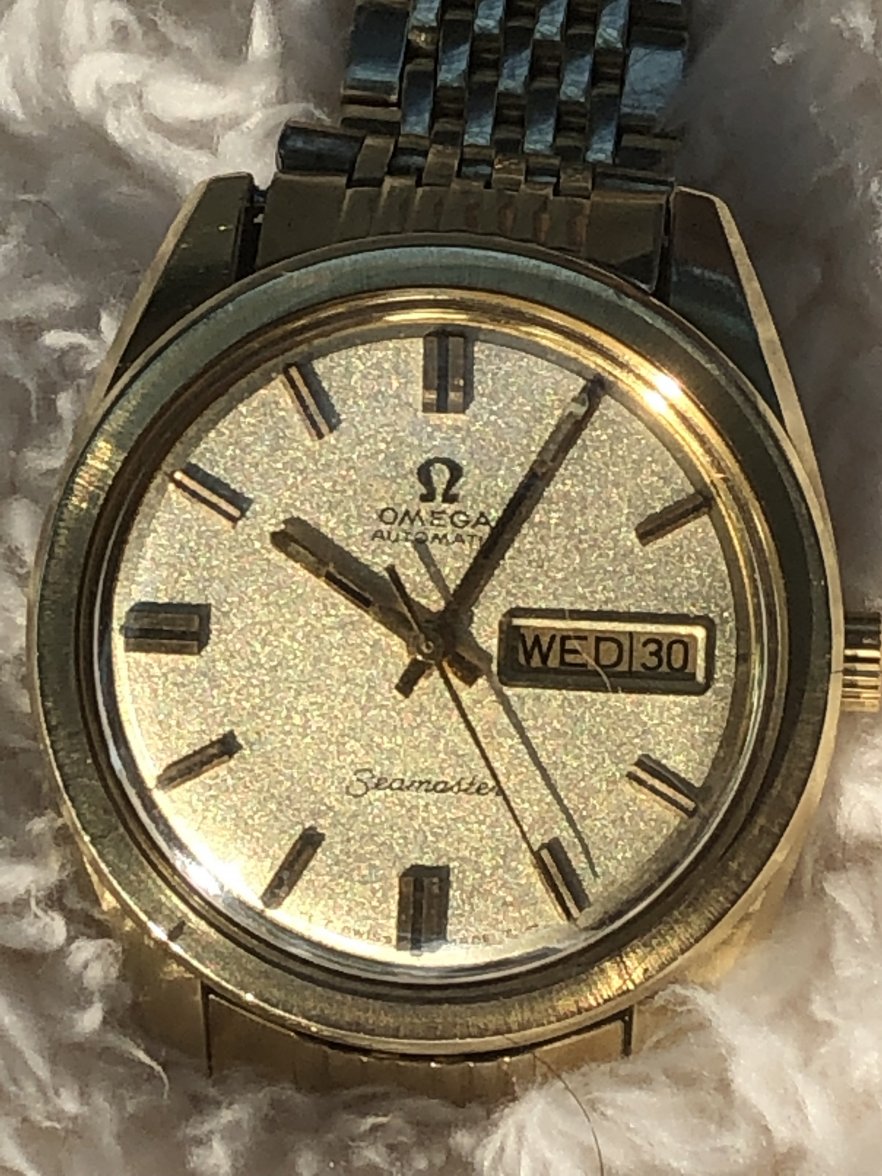
my ‘sparkle’ currently loses circa 16s per 24hrs if worn, circa 6s per 24hrs if laid aside flat.
Will continue to monitor it but ideally prefer adjustment as using as my daily wearer.
Do you think able to finely adjust a 75x movement?
Any other/better suggestions to measure this?

Expect to see watchmaker within few weeks and he is very competent experienced guy.

TIMINGS
Wed 7th to Thur 8th@9pm- 16 secs slow Vs Atomic Clock. Manually corrected to Atomic Clock.
By Tue 12th@9pm- 1m 18s slow vs Atomic Clock. 78s/5=Ave 15.6s per 24 hrs.
Wed 13th@9pm- now 1m 23s slow vs Atomic Clock. So 5s slow last 24h whilst laid flat vs 15.6s slow if worn?
 
Posts
17,969
Likes
37,559
When was it last serviced (I mean a service with factual evidence, not the word of someone)?

If you don't know when that was, have your watchmaker service it, he will regulate/adjust timing as part of the service.
 
Posts
42
Likes
41
Just prior to my purchase, so couple of weeks ago. Waiting to get the requested full ticket info.
 
Posts
1,162
Likes
6,031
Sounds like it keeps good time for a cal. 750 or 752. My watchmaker told me that I should wear the watch at least a month before seeing if any fine tuning is needed after a service. I would give it a couple more weeks and have the watchmaker who serviced it check it out.
 
Posts
1,162
Likes
6,031
Also appreciate its circa 60y old, but presume these movements are still pretty reliable?
The cal 75x movements are day date variants of the cal. 5xx movements, and are said to be some of the best movements ever made. I would be very happy with plus or minus 20 seconds a day on a serviced movement. The chronometer grade cal. 751 would have better tolerances.
 
Posts
42
Likes
41
Sounds like it keeps good time for a cal. 750 or 752. My watchmaker told me that I should wear the watch at least a month before seeing if any fine tuning is needed after a service. I would give it a couple more weeks and have the watchmaker who serviced it check it out.

Sounds sensible, presume logic is that components, oil spread, etc settle into regular rhythm and pattern.
I’ll therefore monitor for several more weeks and defer returning to watchmaker (originally just to get photo’s of opened case/mechanism for knowledge/insurance purposes).

Thanks for the insight.
 
Posts
29,705
Likes
76,893
Sounds sensible, presume logic is that components, oil spread, etc settle into regular rhythm and pattern.

That doesn't actually make a lot of sense. A watch is not a gearbox - you don't want oils to spread, you want them to stay where they are applied, and they do so mostly through capillary action, and if the service was done to modern standards, through the use of specific surface treatments. If any "settling in" is going to happen, it will happen in the first 24 hours of running after the service - often the balance amplitude will come up a bit in this time period.

The timekeeping specs for the 752 are as follows:

Non chronometer, so only measured over 3 positions (dial up, crown down, and crown left).

Average daily rate should be between -1 and +16 seconds per day.

Delta at full wind is allowed to be 25 seconds, and at 24 hours after full wind, that can increase to 35 seconds.

You should ask your watchmaker if the watch met these specifications after the service. Hope this helps.

Cheers, Al
 
Posts
42
Likes
41
That doesn't actually make a lot of sense. A watch is not a gearbox - you don't want oils to spread, you want them to stay where they are applied, and they do so mostly through capillary action, and if the service was done to modern standards, through the use of specific surface treatments. If any "settling in" is going to happen, it will happen in the first 24 hours of running after the service - often the balance amplitude will come up a bit in this time period.

The timekeeping specs for the 752 are as follows:

Non chronometer, so only measured over 3 positions (dial up, crown down, and crown left).

Average daily rate should be between -1 and +16 seconds per day.

Delta at full wind is allowed to be 25 seconds, and at 24 hours after full wind, that can increase to 35 seconds.

You should ask your watchmaker if the watch met these specifications after the service. Hope this helps.

Cheers, Al
 
Posts
42
Likes
41
Thanks Al.
Will take to watchmaker along with timing measurements, get service ticket and find out what he can assess.