Third Party Authentication Certificates (TPAs)

Posts
9,596
Likes
27,705
What is truly telling about our hobby is that even in @Spacefruit's example of a TPA, the state of the entire movement is only granted a single line.

Hard wear on hard-to-find parts, faulty or incorrect parts, performance, mangled screws = poor to fine.

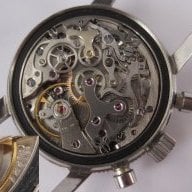
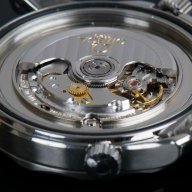
I am not passing judgement on this as I am pretty much the same (remove the case back and give the moving bits a good, hard look and then putting the back on again), but it is an interesting aspect of the hobby that the parts of interest (and therefore value) are the cosmetic parts that are easily evaluated without having watchmaking credentials and access to specialist equipment.

Only a comment.
 
Posts
5,071
Likes
15,650
What is truly telling about our hobby is that even in @Spacefruit's example of a TPA, the state of the entire movement is only granted a single line.

Hard wear on hard-to-find parts, faulty or incorrect parts, performance, mangled screws = poor to fine.

I am not passing judgement on this as I am pretty much the same (remove the case back and give the moving bits a good, hard look and then putting the back on again), but it is an interesting aspect of the hobby that the parts of interest (and therefore value) are the cosmetic parts that are easily evaluated without having watchmaking credentials and access to specialist equipment.

Only a comment.

A comment to your comment: how many watchmakers that service watches even look for/look at/address such things? Just because our residents (who use their skills as a form of advertising and education, and rightly so) do and highlight them pictographically, doesn’t mean all do. In fact, I am going to go on a limb here, and guess that the majority of watchmakers do the barest of bare necessities (if something is wrong) only. They charge a fixed price for a service usually, and its in their best interest to get that done in as timeous a manner as possible : if they add 2 extra days to correct some such issues (which might only appear to affect the accuracy by a second or 3 a day for the next X years) they will not be able to charge their customers 2 extra days wage (most people will refuse to pay double or tripple the service cost) even though they should imho, and very few watchmakers will actually spend the extra time as such for no extra compensation. Not intending to derail the topic. I agree with your points...
 
Posts
5,071
Likes
15,650
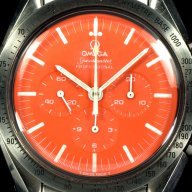
I guess this now goes into 'dismantling the movement' territory ... and we get to e.g. Omegas 'COA' and Rolex has the same I guess (and certainly others too), where one can also opt for a service. So then, why should a 3rd party do a half-assed job at this, when the manufacturers can do a full job...why would a third party add more value than the manufacturer itself? Again, using 'Rolex' as an example, but if a vintage Rolex was sold with a certificate from rolex stating all the virtues and condition and originality of a watch, surely that will be worth more than from any 3rd party?
Edited:
 
Posts
625
Likes
999
I guess this now goes into 'dismantling the movement' territory ... and we get to e.g. Omegas 'COA' and Rolex has the same I guess (and certainly others too), where one can also opt for a service. So then, why should a 3rd party do a half-assed job at this, when the manufacturers can do a full job...why would a third party add more value than the manufacturer itself? Again, using 'Rolex' as an example, but if a vintage Rolex was sold with a certificate from rolex stating all the virtues and condition and originality of a watch, surely that will be worth more than from any 3rd party?

I think it is very likely that this will be the way it will go.

It is a good way to cash in on their heritage and see an income from the increasing prices of vintage watch values. I also think that if the COA is for collectors who are not as familiar with the watch world, then they will prefer a letter from Omega, rather than a letter from Moonwatch only.
 
Posts
5,071
Likes
15,650
I think it is very likely that this will be the way it will go.

It is a good way to cash in on their heritage and see an income from the increasing prices of vintage watch values. I also think that if the COA is for collectors who are not as familiar with the watch world, then they will prefer a letter from Omega, rather than a letter from Moonwatch only.

But using MWO as a comparison vs Omega COA is only maybe valid for Speedmasters/Flightmasters (a very small segment of watches). What about other Omega watches/older Omega watches/other watch brands? All due respect to the MWO, but I don’t think they are an authority on all watches of all brands and all movement parts over all history etc. which is what this service would need to cover...heck even most brands heritage departments have holes.
Edited:
 
Posts
7,175
Likes
23,246
heck even most brands heritage departments have holes.

Yes. I experienced this first-hand when I made an historical inquiry to the Rally Strap Company...
 
Posts
1,072
Likes
1,482
I will pass on TPA. I don't want someone giving me the answers to the test. I don't want to lessen the emotional thrills
of this hobby. I don't want to monitize this hobby more than it already is. I want to keep making some mistakes, it's how I grow.

When the uninformed (everyone other than us) start using TPA, the unique comaraderie of our hobby ends.
Imagine a TPA score to pick our spouses?

In a word........YUK. (am I shouting)?
 
Posts
448
Likes
845
I think it is important that we have a great general framework. It is really nice that William implements his experience from another category to watches. Many thanks for that!!! This one pager according to my personal opinion could be useful as a general framework. When parts cause adding or distracting value to a watch it is very important to state the conditions and describe the peculiarities of these parts with a more extensive description than only one grade. So dial with hands deserve more than this grade. Movement needs more. Don't we need to add criteria considering box papers (many times not original to the watch for instance...) and proof of provenance (think of letters or pictures or whatever) since those can be really important for adding value?

What I love about the grading from Antiquorum is the uniformity and that it goes really deep since it tends to be quite specific. Perhaps also sometimes too extensive and therefore not all possible conditions are used. It is only to the associate or auctioneer to vet the piece and be honest about it.....

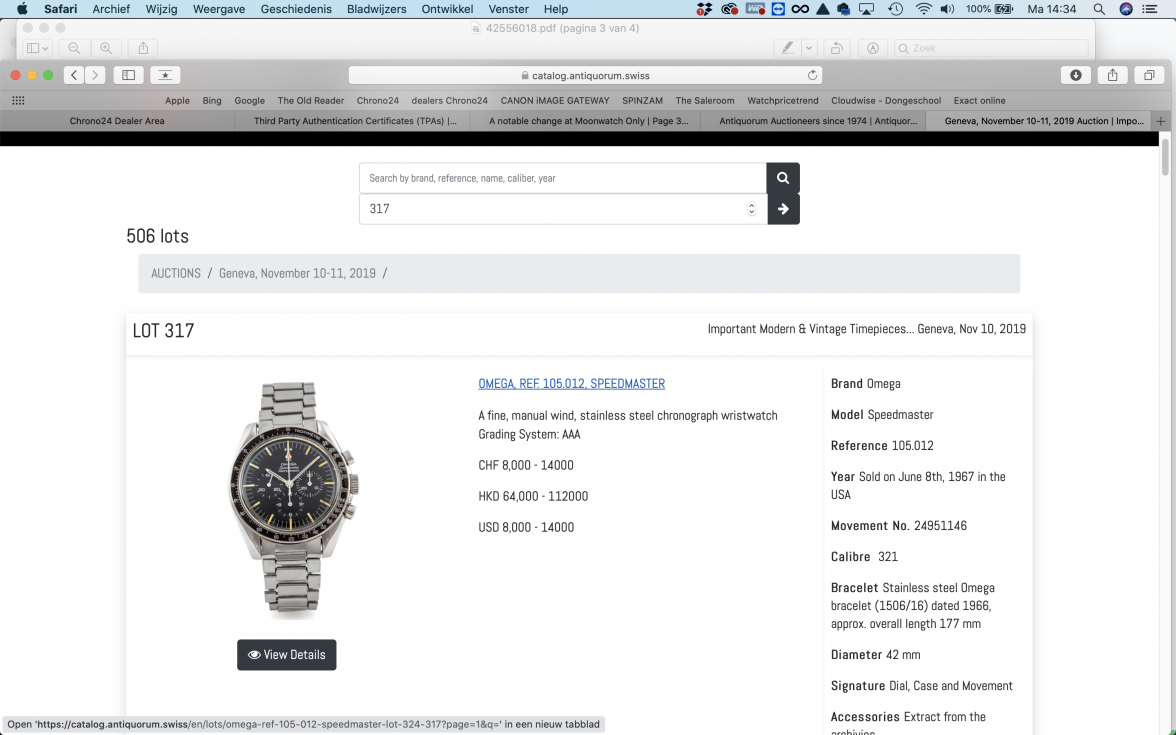
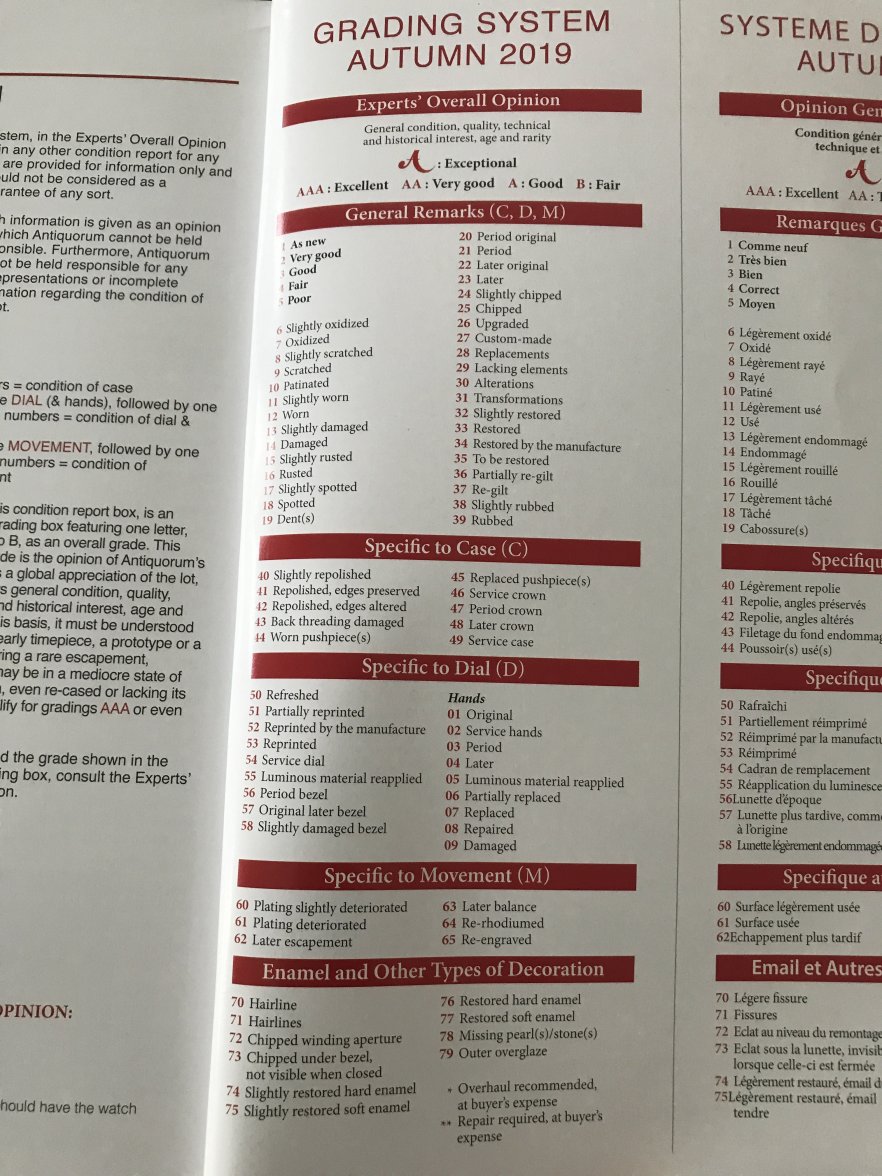
I think the grading on the description page in the Antiquorum catalogue lacks legibility since you have to read a grading for instance lot 317 https://catalog.antiquorum.swiss/en/auctions/geneva-2019-11-10/lots?utf8=✓&q=&goto=317 has the line in their paper catalogue added : C3-8 D 3-01 M3* AAA and you have to go back to one of the last pages of the catalogue (see attached picture) to see what the coding means what you only tend to do when you dive deep. But I think it is way better to make it more easy to navigate for a potential buyer. so that they don't have to turn pages etc. People want to check their things preferable on a one pager and have the option to go for a long read. What I like is that they have a more in depth way to describe the most important parts of a watch into detail. For instance they have nine different kind of categories to describe the hands:

Experts overall option:

Antiquroum Logo: exceptional, AAA: excellent AA: very good A: good B:fair

General remarks:
6 slightly oxidized 7 oxidized 8 scratched 10 patinated 11 slightly worn 14 damaged 15 slightly rusted 16 rusted 17 slightly spotted 18 spotted 19 dents 20 period original 21 period 22 later original 23 later 24 slightly chipped 25 chipped 26 upgraded 27 custom-made 28 replacements 29 lacking elements 30 alterations 31 transformations 32 slightly restored 33 restored 34 restored by the manufacture 35 to be restored 36 partially re-gilt 37 re-gilt 38 slightly rubbed 39 rubbed

Case:

40 slightly repolished 41 repolished, edges preserved, 42 replenished edges altered 43 back treading damaged 44 worn pushpiece(S) 45 replace puspiece(s) 46 service crown 47 period crown 48 later crown 49 service case

Hands:

01 original 02 service 03 period 04 later 05 luminous material reapplied 06 partially replaced 07 replaced 08 repaired 09 damaged.

Dial:

50 refreshed 51 partially reprinted 52 reprinted by the manufacture 53 reprinted 54 service dial 55 luminous material re-applied period bezel 57 original later bezel 58 slightly damaged bezel

Movement:

60 plating slightly deteriorated 61plating deteriorated 62later escapement 63 later balance 64 re-rhodiumed 65 re-engraved


Considering adaptation of a TPA or framework some additional thoughts:
As a quite new kid on the block I tend to take a lot of time and effort in try my best to make descriptions as informative possible for first time buyers as well as seasoned collectors. This is a very time consuming process but in the end it helps selling pieces. Sometimes I even made too long descriptions also due to the lack of a framework.
Personally I don't think many old school dealers would even care about it. People are afraid from change. I have worked in many organizations and people tend to freak out when they mitigate into a new way or working or OS. You have to get a support base from platforms such as C24, Chronext or big time dealers such as Watchbox and Luxury bazar. Those are the pure players and people that are making big momentum and benefit to adopt such a kind of system since they often use well organized kind of operational procedures. Perhaps also from Phillips since they are on top of their GAME and highly influential and benefit from best practices in the industry.
I think as a dealer I am not very interested in an independent TPA since it makes completely no sense to spend all that kind of money. That would only make sense if you are trying to sell a 100K piece at auction, think about auction fees shipping etc. A collector who consigns a piece might even think: "....and why should I get a TPA if I have to pay those auctioneers to sell, my item. They have to do their bloody work!"

Whatever who wants to adopt and participate I don't care actually, since I will use such a framework anyways.
Edited:
 
Posts
6,667
Likes
11,570
@Spacefruit this is an interesting idea. I have some friends who have done this for comic books and now its become a standard way to grade /value books. You have to mail them the book and they grade it/seal it in a tamper proof case, and then return the book. For the big ticket books (ie detective comics 27 - 1st batman appearance) normally they are recieved/ delivered in person at comic cons which happen all across the country in the US.
I think shipping / delivering the watches would be a hindrance. Who wants to ship a 20k+ watch just to get it assessed?
Maybe a video /zoom assessment ?
But biggest difference is the comic books are sealed once grade is stamped. These watches can still be tampered with after so the certification could be rendered meaningless once a don bezel or parts are swapped out.

One of the things they also had to struggle with initially was they were/are collectors themselves. How will you remain impartial given you have vested interests in the condition on some of these watches given the fact you are a world renowned collector?

These are just some of my thoughts. If you want to get in touch with my guys at CGC or CBCS for ideas pm me.

I agree with the comic book analogy. Every single comic book of value sold today is professionally graded compared to say 20 years ago where the seller put forth a subjective and mostly biased grade which led to a lot of disappointment and buyers remorse.
 
Posts
29,666
Likes
76,824
A comment to your comment: how many watchmakers that service watches even look for/look at/address such things? Just because our residents (who use their skills as a form of advertising and education, and rightly so) do and highlight them pictographically, doesn’t mean all do. In fact, I am going to go on a limb here, and guess that the majority of watchmakers do the barest of bare necessities (if something is wrong) only. They charge a fixed price for a service usually, and its in their best interest to get that done in as timeous a manner as possible : if they add 2 extra days to correct some such issues (which might only appear to affect the accuracy by a second or 3 a day for the next X years) they will not be able to charge their customers 2 extra days wage (most people will refuse to pay double or tripple the service cost) even though they should imho, and very few watchmakers will actually spend the extra time as such for no extra compensation. Not intending to derail the topic. I agree with your points...

The question is really, how many collectors are going to pay for every single little thing to be repaired, when people on here often post that anything over $300 for a service (or whatever similar price you want to pick) is some sort of highway robbery?

I can tell you in all seriousness, I have never had a collector or customer of any kind ask me to replace/polish all the gouged up screws in a watch. I'm usually the one that decides a screw is "too far gone" and replaces it, as no one ever asks me to do that. If they did I would inform them that I can either replace every single screw in the watch and give them a price, or if they want the "original" screws they would all have to be polished for an even higher price. I very much doubt I would get many takers for either scenario.

Yes I could build it into my pricing, but then we are back to the highway robbery scenario. I can tell you that most watchmakers I know are very detailed and would love to do the best work possible, if only people would pay for it...

Just a perspective from the other side...

Cheers, Al
 
Posts
6,187
Likes
21,181
@Archer
This is similar to houses. I heard over and over again, "they sure don't build them like they used to", to which I would respond, "yes, we do, it's just that people don't want to pay for quality. "
 
Posts
384
Likes
446
A watch has a speedmaster101 TPA listing all the parts as original. It sell at auction for a premium. The high selling price brings attention to the watch. Someone comes forward as a previous owner of the watch. That person has pictures showing that the bezel has been swapped. What happens then?
 
Posts
870
Likes
2,386
A watch has a speedmaster101 TPA listing all the parts as original. It sell at auction for a premium. The high selling price brings attention to the watch. Someone comes forward as a previous owner of the watch. That person has pictures showing that the bezel has been swapped. What happens then?

This is why the Gems to watches comparison is an apple / oranges for me. The watch will change after the TPA depending on its usage (dings/dents) and service. If there's a central database of what that watch looked like and documented with detailed photos- it may also contribute to collectors not wanting a watch that's been denuded & pinned up for all to see.

The other thing I'm thinking is why would an AH drive this? What do they gain out of standardizing this- they won't be able to hide flaws and upsell shady watches any longer and it would add to their overhead. For Comics - this was not something championed by Auction Houses- this was something that came from a group of super-nerd collectors with extensive collections who collectively turned the market to these cased grading systems. It wasn't something that was driven by the AH but something the AH had to adapt to once these guys built and hustled their business idea.

If the AH had two watches of the same condition- the one with the paper will only sell if someone gives a damn about what that paper says. It would take a group of powerful collectors galvanizing and convincing other collectors that their paper means something. Isn't this why the topic was broached by a well respected/big time collector- not a question Christies or Phillips posed on the forums to trump up interest?
 
Posts
7,899
Likes
35,849
A certificate of graded condition for a watch is great on the day that it has been graded and produced. Also possibly useful for a watch about to get sold and I can imagine it having a carry on value in the gem world. But watches are different to gems being made up of many interchangeable parts. What happens when the unscrupulous switch some parts out and the watch is then resold? Any future buyer who uses the certificate to guide his purchase and purchase price could then be in serious trouble. A buyer would still need to be doing just as much due diligence and maybe even more for a highly graded watch that started out with parts in top condition.

As was mentioned above regarding comic books hermetic sealing after grading/certificating seems a pretty foolproof way of ensuring that a certificated item is still as it was when certificated further down the line. But watches are to be touched, handled and worn so I can't imagine that will ever take off, who wants a watch in a sealed plastic bubble?

The older the certificate, the less carry on value it would hold as a watch that has not been hermetically sealed immediately after certifying has very likely been worn and therefore runs a risk that some parts are now either damaged or worn. So really a year or two down the line the certificate will need re-certifying if it is to be kept relevant and up to date, is that the idea?

Without the proof that nothing has been changed or tampered with since the original certifying process took place it seems to me to be an expensive and pointless way of certificating that a watch was in a certain state of condition on a certain date in time.

The certificate also cannot address what has happened to the watch during the years between production and certification. So if I was to buy a nasty beater, replace the case, dial and hands with correct and better parts and then have it certified what have I now created? In my mind I'd be legitimising a previous complete restoration without actually saying so.
Edited:
 
Posts
5,316
Likes
24,321
Actually this is already an issue. Currently the hot topic in gemstones is heat treatment in rubies and sapphires, and more difficult oiling in emeralds.

the oiling in emeralds is especially problematic as unscrupulous dealers oil the stones after a certification of “no Oil”

we come full circle - to the idea that you still need a brain to be in any arena where you are laying down significant sums. And here is the thing, the significant amount of money for me, needing my scrutiny and knowledge to secure, may not be a significant amount for someone else, who glances at a paper and think that looks ok.

to address the specific issue raised above:

A watch has a speedmaster101 TPA listing all the parts as original. It sell at auction for a premium. The high selling price brings attention to the watch. Someone comes forward as a previous owner of the watch. That person has pictures showing that the bezel has been swapped. What happens then?


I do not see an issue here.

The term “original”, when I use it, means (to me) that the bezel or hand or whatever, is correct specification and raises no concerns that it has been added, although that is always a possibility. It looks commensurate with the watch. So there is no reason to think it did not leave the factory on the watch.

the term “correct” is used when the item is original specification, but something suggests it has been added after the watch has left the factory.

this kind of subtle assessment is exactly the kind of process that must remain the responsibility of the purchaser to take responsibility for, and make an informed decision on.

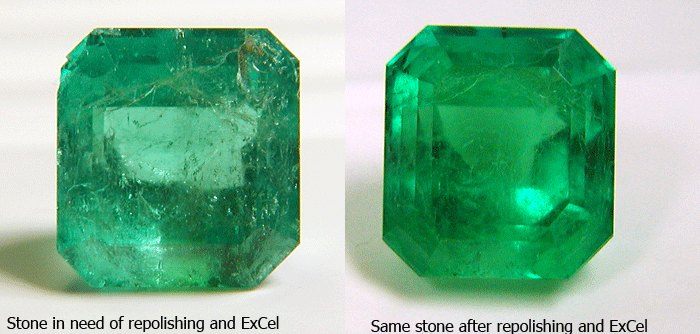
I can’t tell you the number of hours I have wasted with my loupe and an emerald with three “no-oil” certificates staring at a tiny fissure with what I think is foreign material. Don’t get me started on epoxy....that does this:


(Not my photo)

so what the unscrupulous do is send the stone on the left to a lab, and get a no oil paper, then treat it and sell it as no oil

TPA’s will not address the swapping of parts, but it will reduce it, and I think that a lot of watches will fail, thus making the good ones even more valuable.

and here we stray, as the auction houses want us to, into looking at watches as high value wealth storage.

im off to buy a Timex and a Prim
Edited:
 
Posts
16,862
Likes
47,901
I agree with the comic book analogy. Every single comic book of value sold today is professionally graded compared to say 20 years ago where the seller put forth a subjective and mostly biased grade which led to a lot of disappointment and buyers remorse.

But now every single comic book of value is never opened and treated as a value instead of a Comic Book 👎
 
Posts
384
Likes
446
I do not see an issue here.

The term “original”, when I use it, means (to me) that the bezel or hand or whatever, is correct specification and raises no concerns that it has been added, although that is always a possibility. It looks commensurate with the watch. So there is no reason to think it did not leave the factory on the watch.

the term “correct” is used when the item is original specification, but something suggests it has been added after the watch has left the factory.

this kind of subtle assessment is exactly the kind of process that must remain the responsibility of the purchaser to take responsibility for, and make an informed decision on.

The issue is there no way to prove that the watch left the factory that way. You say there is no reason to think it didn't. I say the profit to be made is all the reason needed. If original really doesn't mean original then the benefit of the certificate is reduced in my opinion. In your gen example it is reasonable to assume that there were no oils at the time the certificate was issued. No matter when the watch is examined there is not way to truly certify it as original.
 
Posts
2,504
Likes
7,579
Actually this is already an issue. Currently the hot topic in gemstones is heat treatment in rubies and sapphires, and more difficult oiling in emeralds.

the oiling in emeralds is especially problematic as unscrupulous dealers oil the stones after a certification of “no Oil”

we come full circle - to the idea that you still need a brain to be in any arena where you are laying down significant sums. And here is the thing, the significant amount of money for me, needing my scrutiny and knowledge to secure, may not be a significant amount for someone else, who glances at a paper and think that looks ok.

to address the specific issue raised above:


I do not see an issue here.

The term “original”, when I use it, means (to me) that the bezel or hand or whatever, is correct specification and raises no concerns that it has been added, although that is always a possibility. It looks commensurate with the watch. So there is no reason to think it did not leave the factory on the watch.

the term “correct” is used when the item is original specification, but something suggests it has been added after the watch has left the factory.

this kind of subtle assessment is exactly the kind of process that must remain the responsibility of the purchaser to take responsibility for, and make an informed decision on.

I can’t tell you the number of hours I have wasted with my loupe and an emerald with three “no-oil” certificates staring at a tiny fissure with what I think is foreign material. Don’t get me started on epoxy....that does this:


(Not my photo)

so what the unscrupulous do is send the stone on the left to a lab, and get a no oil paper, then treat it and sell it as no oil

TPA’s will not address the swapping of parts, but it will reduce it, and I think that a lot of watches will fail, thus making the good ones even more valuable.

and here we stray, as the auction houses want us to, into looking at watches as high value wealth storage.

im off to buy a Timex and a Prim
So, at the end of the long day; the service to which you are suggesting would make good ones be valued more... And the less correct ones to be valued less?
 
Posts
6,667
Likes
11,570
But now every single comic book of value is never opened and treated as a value instead of a Comic Book 👎

Yes. An uncle who owns many valuable books switched to collecting original comic book art with an emphasis on covers about 20 years ago because he wanted to continue to be able to hold the art in this hands. Also he reasoned there was only 1 of the artwork as opposed to several of the comic books.