The OF Clubhouse Water Cooler

Posts
3,572
Likes
24,117
Thanks! Luckily, I got a 5 in AP calc many years ago, so... I think I get it, sort of!

Thanks again! So, in essence: does the horn provide an example of how the math, though technically correct and logical, is clearly describing something that can't happen in reality? i.e. you end up with an object that is infinitely long, with infinite surface area, yet is restricted to infinitely close to pi in volume.
 
Posts
3,572
Likes
24,117
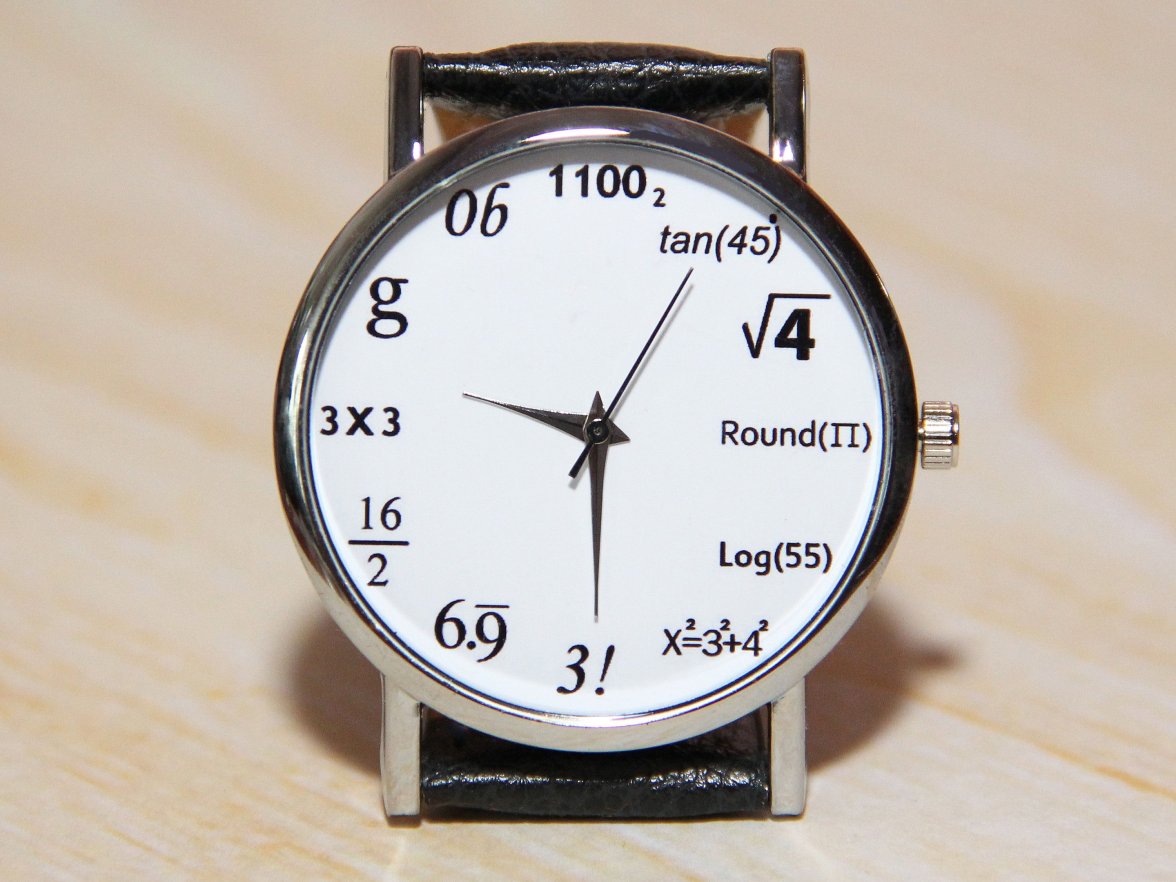
Unrelated: I had a new stress dream last night. My 6-year-old let all his school friends into our house when I wasn't home and they took all my watches and ran off into the woods with them. And my insurance refused to pay because it doesn't cover acts of children.

I woke in a state of panic. Someone please give me a bad psychoanalytic reading regarding this.
 
Posts
4,602
Likes
23,479
Unrelated: I had a new stress dream last night. My 6-year-old let all his school friends into our house when I wasn't home and they took all my watches and ran off into the woods with them. And my insurance refused to pay because it doesn't cover acts of children.

I woke in a state of panic. Someone please give me a bad psychoanalytic reading regarding this.

What if you come to find out it was a premonition?
 
Posts
3,572
Likes
24,117
What if you come to find out it was a premonition?

Maybe I should call my insurer and double-check my policy.
 
Posts
2,555
Likes
3,675
I'm firmly in the camp that math is invented by humans. It is a model of reality, not reality itself. Look up Gabriel's Horn paradox or the Banach-Tarski paradox.

Gabriel's Horn is a particular infinitely long straight trumpet and it is possible to prove that it has finite volume but infinite surface area. It requites an infinite amount of paint to paint the outer or inner surfaces of the horn (it has no thickness). However, because the volume is finite, it is possible to fill the horn with paint. Once you dump out the paint, have you not painted the inner surface?

The Banach-Tarski Paradox says that it is possible to take a solid sphere, break it up into parts, and then reassemble them into two solid spheres of the exact same size as the original. It is possible to prove this without much difficulty, but one cannot do this in reality because the disassembly would require an unaccountably infinite number of impossibly complex cuts.

Also, many aspects of mathematics are arbitrary, it could have been invented in other ways. Although the differences would mostly be inconsequential.

And people wonder why I drink
 
Posts
1,078
Likes
1,630
I tend to believe that math is discovered, not invented.

1 + 1 = 2 Is a basic truth. We certainly attached a language to it, but only to describe it.

Consider the sum of consecutive odd numbers. The result is always a perfect square. How can that be invented?

edited to correct a knuckleheaded mistake..
Edited:
 
Posts
4,758
Likes
12,041
I tend to believe that math is discovered, not invented.

1 + 1 = 2 Is a basic truth. We certainly attached a language to it, but only to describe it.

Consider the sum of consecutive odd numbers. The result is always a prime number. How can that be invented?

Can't it be both. We invent the notion of numbers and make basic assumptions like 1+1=2 and then discover patterns that result from those basic axioms. Also, the point of the Banach-Tarski paradox is that sometimes 1+1 can equal 1, see the video above.

You must have messed up something in your claim that the sum of consecutive odd numbers is always prime because it is not correct. The numbers 1 and 3 are consecutive odd numbers, but their sum 4 is not prime because 4 = 2 x 2. In fact the sum of any two odds is always an even number and therefore not prime, with the exception of 1+1 which equals 2 the only even prime.
 
Posts
1,078
Likes
1,630
You must have messed up something in your claim that the sum of consecutive odd numbers is always prime because it is not correct. The numbers 1 and 3 are consecutive odd numbers, but their sum 4 is not prime because 4 = 2 x 2. In fact the sum of any two odds is always an even number and therefore not prime, with the exception of 1+1 which equals 2 the only even prime.

Oops, I erred. Post corrected.
 
Posts
4,758
Likes
12,041
Oops, I erred. Post corrected.

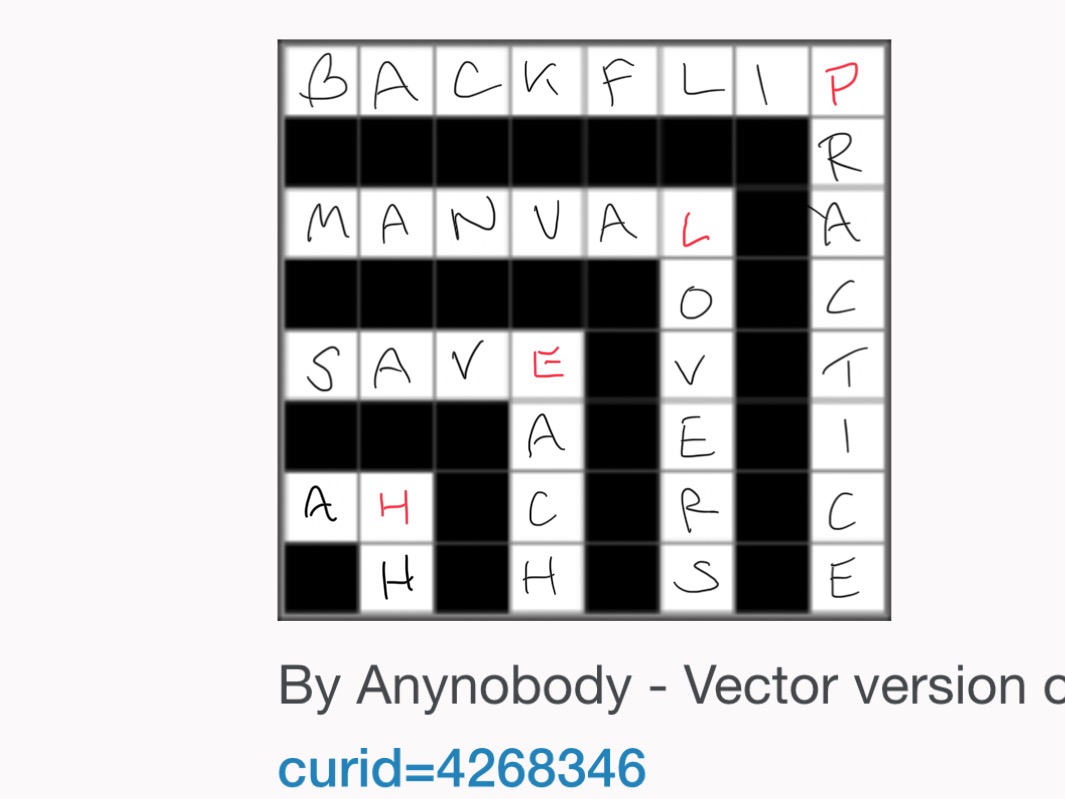
I think you mean that the sum of the first n odd numbers is a perfect square for any n. The sum of two consecutive odd numbers is not always a perfect square, for example 5+7=12 is not a perfect square. This picture demonstrates that the sum of the first n odds is a perfect square. Start at the lower left: 1 black square, plus the 3 white squares, plus the 5 black squares, and so on. It is pretty clear you get a perfect square.

170px-Proofwithoutwords.svg.png
By Anynobody - Vector version of Image😜roofwithoutwords.png, CC BY-SA 3.0, https://commons.wikimedia.org/w/index.php?curid=4268346
Edited:
 
Posts
2,779
Likes
14,818
Happy international womens day everybody.

Transphobic much
Just a joke, nobody get excited. A Chappelle moment
 
Posts
23,465
Likes
52,155
Gabriel's Horn is a particular infinitely long straight trumpet and it is possible to prove that it has finite volume but infinite surface area. It requites an infinite amount of paint to paint the outer or inner surfaces of the horn (it has no thickness). However, because the volume is finite, it is possible to fill the horn with paint. Once you dump out the paint, have you not painted the inner surface?
Conceptually, the Gabriel's Horn problem is an example with many practical applications in real-world physics. There are a variety of physical phenomena that converge in 3-dimensions but diverge with increasing system size in lower dimensions. The logarithmic divergence in 2D is particularly common, e.g. in the physics of liquid crystals.
 
Posts
4,758
Likes
12,041
Conceptually, the Gabriel's Horn problem is an example with many practical applications in real-world physics. There are a variety of physical phenomena that converge in 3-dimensions but diverge with increasing system size in lower dimensions. The logarithmic divergence in 2D is particularly common, e.g. in the physics of liquid crystals.

I'd like to hear more detail of one of these examples and its practical implications. I would love to give a more detailed account of the phenomenon to my Calculus students. I happy to do some reading myself if you point me in the right direction.
 
Posts
1,778
Likes
4,266
Here's a question-

Mathematics; invented or discovered?

@arturo7 Are you happy with what you have done?
There is no room around the Watercooler, it’s crowded with mathematicians speaking in tongues and a couple of Meatloaf fans.

I wanted to know if anyone else is enjoying the new Shogun series but no one listens to me.
 
Posts
1,070
Likes
5,849
And people wonder why I drink
I read it twice and calculated that drinking is of no use in understanding this. Mary Jane on the other hand will give you a fairly cosmic grip, I think....
 
Posts
1,778
Likes
4,266
I think you mean that the sum of the first n odd numbers is always a perfect square for any n. The sum of two consecutive odd numbers is not always a perfect square, for example 5+7=12 is not a perfect square. This picture demonstrates that the sum of the first n odds is a perfect square. Start at the lower left: 1 black square, plus the 3 white squares, plus the 5 black squares, and so on. It is pretty clear you get a perfect square.

170px-Proofwithoutwords.svg.png
By Anynobody - Vector version of Image😜roofwithoutwords.png, CC BY-SA 3.0, https://commons.wikimedia.org/w/index.php?curid=4268346


Worst crossword ever, stick to maths.

 
Posts
3,664
Likes
7,777
I wonder what the thought process of geometry is, discovered or invented? Are we inventing the relationship between the radius, circumference, and area via π? Was π invented to make these have a relationship, or did we discover that π makes these things relate?
 
Posts
1,761
Likes
11,266
All this math stuff makes me glad I paint with words. My brain just doesn’t work like that. I wrote the damn book on a specialized CAD program and till the end I had trouble with translating 2D into 3D.
 
Posts
3,798
Likes
10,386
Yeah there are quite a few. @Dan S is an engineering prof. What discipline do you work in @CBM1590 and @Waltesefalcon, if you don't mind me asking?
History, specializing in American Indian tribes of the Southern Plains.

I actually started off studying structural engineering, and I earned a 'D' in calculus. So I am a bit of an expert on engineering and math as well.
Edited: