The 12 hour recorder on the Omega 321 and its problems

Posts
618
Likes
928
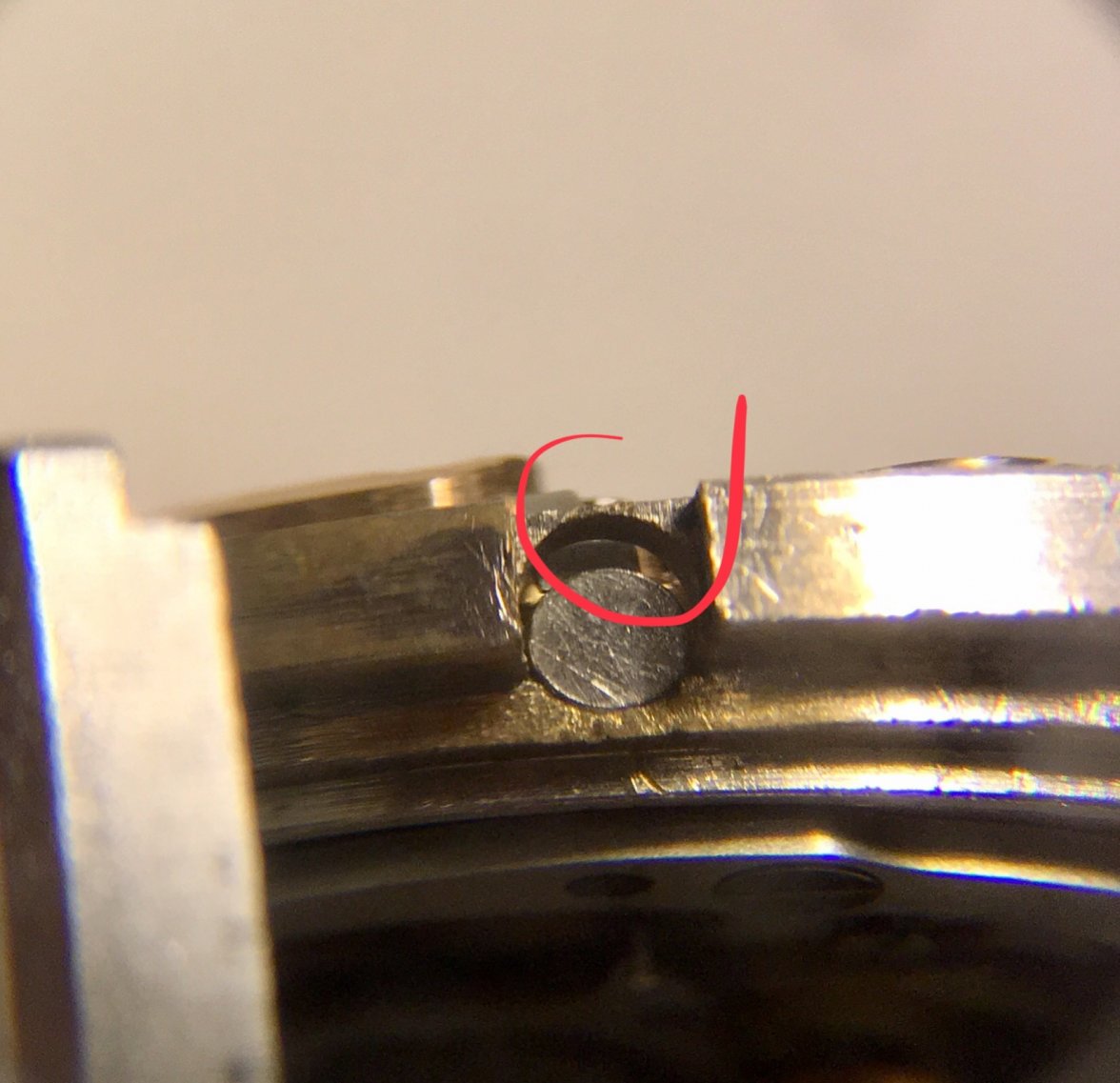
Just wanted to add that the movement holder can also affect the reset setting :


As you can see the hole for the pusher is not in a circle shape => the lever in charge to release the hour recording hammer can not be pushed correctly. I answer late to this post because I just met this problem !!
 
Posts
1,642
Likes
5,189
Great thread!
I have a problem, maybe someone here can help.

The Problem: The reset of the chronograph is often very stiff, like if there is too much friction or if something is blocking/rubbing. Sometimes the pressure to reset the chronograph is normal (lightweight).

The Reset function:
As far as i understand there are basicaly 2 things affected when resetting the chronograph.
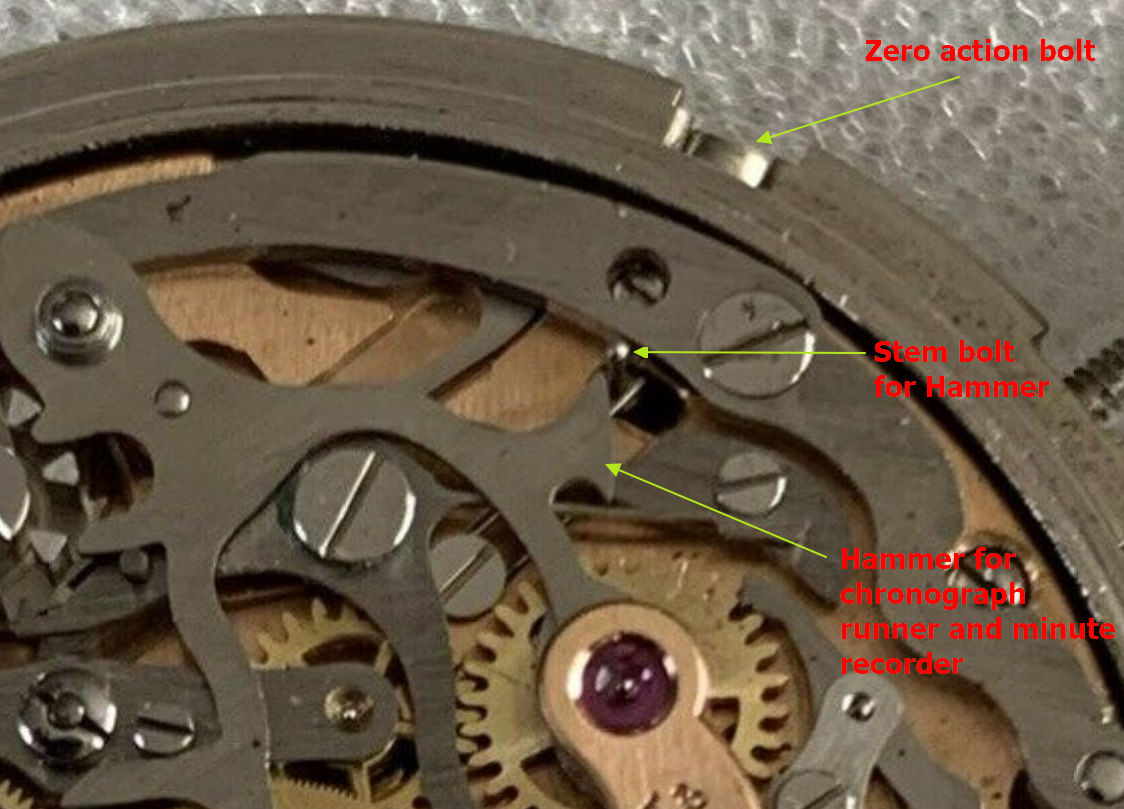
1) Caseback side: The pin (that holds back the hammer) slides out of the way and the hammer drops.
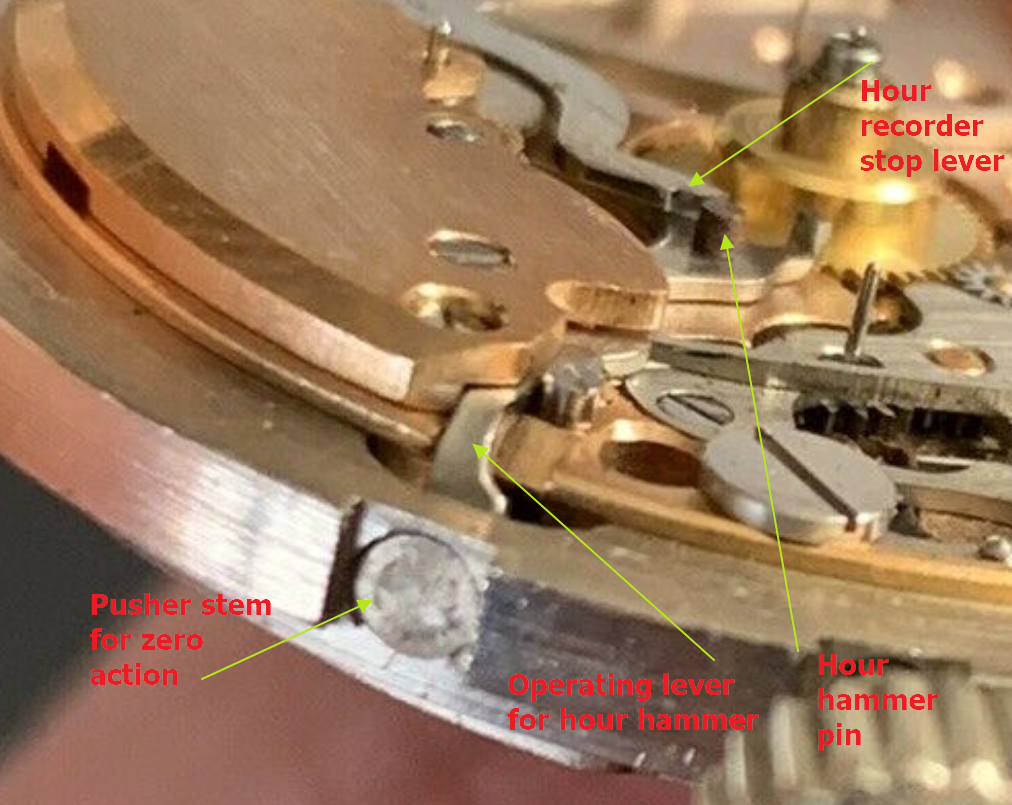
2) Dial side: the pusher stem for zero action is pushing the operating lever to the hour hammer, the pin slides by the hour recorder stop lever, pushing it out of the way and resetting the hour recording runner.

1)

2)


As far as i undersand, worn out hour recorder stop lever or the hour hammer pin woud cause the "lazy reset", so those would be not the reason for a stiff reset. Somhow doubt that the friction is cause by the sliding action from stem bolt releasing the chronograph runner (caseback side).
Here was mentioned that the cause could be worn movement holder ring like in the post above (which is not the case here).

So my guess would be, the problem is somewhere around the operating lever for the hour hammer. Like here mentioned: worn at either interface, slightly bent, chipped or the wrong type for the case.
Or like Archer wrote somewhere: "burr on the movement spacer making the operating lever difficult to move, or a bent stem bolt for hammer".
Would this be a correct assumption? Does anybody have any additional thoughts?

Thank you!

Edited:
 
Posts
1,642
Likes
5,189
ok, while writing a long question, i think i might have found a few informations during research here, so i guesss no more answers are needed.
OF is full of info, one just has to dig deep enough. 👍
 
Posts
20
Likes
9
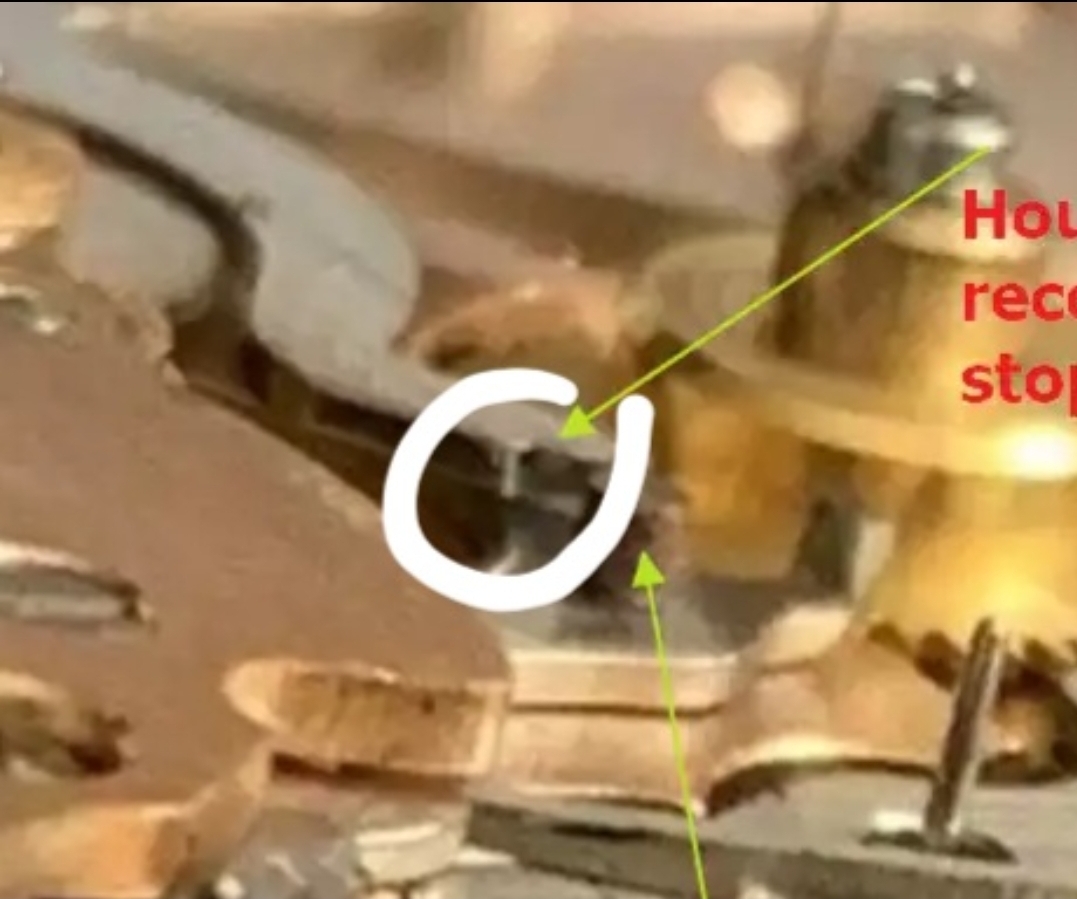
This is an 861, but the same issues with the hole in the main plate where the hour recorder wheel locates is common on 321's also - you can see there is a burr there and the hole is slightly oval:
Hi Archer
I have disturbed you many times recently because I am very interested in the restoration of these movements.
When you encounter a problem with the hole in this position, what approach do you take? It seems to me that it cannot be repaired
 
Posts
618
Likes
928
Hi!

When a reset is too hard I usually slight polish the angle if the stop lever which is in contact with the pin of the hammer. Then with a proper lubrification everything get smooth.


If the movement holder holes are ovalized there is only 2 options : repair by bushing or replacing by a new one (the 861's holder are compatible).
 
Posts
20
Likes
9
Hi!

When a reset is too hard I usually slight polish the angle if the stop lever which is in contact with the pin of the hammer. Then with a proper lubrification everything get smooth.


If the movement holder holes are ovalized there is only 2 options : repair by bushing or replacing by a new one (the 861's holder are compatible).
Hi
Are you sure it can be repair by bushing? There is almost no space in this hole. For watchmakers, this accuracy may not reach their limit.😀
 
Posts
618
Likes
928
Hi
Are you sure it can be repair by bushing? There is almost no space in this hole. For watchmakers, this accuracy may not reach their limit.😀

Lol I was talking for the movement holder pusher holes 😀
 
Posts
29,212
Likes
75,487
Hi Archer
I have disturbed you many times recently because I am very interested in the restoration of these movements.
When you encounter a problem with the hole in this position, what approach do you take? It seems to me that it cannot be repaired

Other than to remove any burrs, there’s not much else you can do. Not enough room to install a bushing. Fortunately it’s rare that it gets to that stage.
 
Posts
20
Likes
9
Other than to remove any burrs, there’s not much else you can do. Not enough room to install a bushing. Fortunately it’s rare that it gets to that stage.
We can only accept that it grows old
 
Posts
302
Likes
1,185
Thx. I grabbed 5 chronographs out of the safety dep box yesterday. 3 Speedies. One a -67 (321) and the 12 hour recorder does not move. I knew that when I purchased it a few years ago and have never chased the problem myself. I like knowing the ins and outs of chronographs but have learned they have so much more going on with them than I know how to repair. You guys who do work on them have studied them, and more importantly, have gone down all the dark alleys that repairing them leads you down and I appreciate threads like these where you share those learned lessons.
 
Posts
520
Likes
677
To me this is one of the surest signs that the movement in question needs a service. You see, what generally causes it is not an incorrect adjustment of the hour recorder brake but rather a lack of lubrication in the clutch mechanism situated on top of the barrel. Too little lubrication = too much friction. Even with the hour wheel brake fully on (think parking brake or e brake in your car) the power from the mainspring is enough to turn it.

Usually the creep is solved simply by servicing the watch - no adjustment of the stop lever is required. If the driving pinion and friction spring are providing too much drive to the hour recorder wheel, no amount of adjusting the stop lever will prevent the creep. Lubrication is the most common reason for this, but also people not paying enough attention to the friction spring that connects the pinion to the barrel is also a fairly common thing in my experience, and this causes too much friction no matter how it's lubricated. The spring often gets worn where it rides on the drive pinion, and when it's replaced you need to check that the friction is not too great or too little:

Amazing info guys! Just one question: can the clutch mechanism be lubricated without a full overhaul? I only ask because this is happening to my recently assembled 105.012-65, whose movement reportedly had a service within the past couple of years, so I’d rather not have to give it a full overhaul now unless completely necessary...
 
Posts
1,645
Likes
5,119
Very educational thread, guys! I have had many cal 321/861s and never had this issue, but now I know why some have.
 
Posts
29,212
Likes
75,487
Amazing info guys! Just one question: can the clutch mechanism be lubricated without a full overhaul? I only ask because this is happening to my recently assembled 105.012-65, whose movement reportedly had a service within the past couple of years, so I’d rather not have to give it a full overhaul now unless completely necessary...
Well, how confident of there actually being a recent service are you? Many times sellers say this but the watch hasn't been serviced in a verry long time - the only way I typically trust this claim is there is evidence provided. Also, if it has this problem after a recent service, I'm not sure how good that service was.

The hour recorder parts can be accessed through the dial side, but at a minimum the hands and dial must be removed, and the bride for the hour recorder also. If the barrel is the issue, then it becomes difficult to fix this without taking the rest of the movement apart. I doubt many watchmakers who would agree to try to fix this without doing a full service...
 
Posts
520
Likes
677
Well, how confident of there actually being a recent service are you? Many times sellers say this but the watch hasn't been serviced in a verry long time - the only way I typically trust this claim is there is evidence provided. Also, if it has this problem after a recent service, I'm not sure how good that service was.

The hour recorder parts can be accessed through the dial side, but at a minimum the hands and dial must be removed, and the bride for the hour recorder also. If the barrel is the issue, then it becomes difficult to fix this without taking the rest of the movement apart. I doubt many watchmakers who would agree to try to fix this without doing a full service...
Fair. Out of curiosty, if the movement was sitting uncased for a couple of years after the service, could that have accelerated the lubricant degradation? Either way, what would you say the urgency is? If I wanted to enjoy it for a couple of months before doing the full overhaul, would I be risking much? Thanks,
 
Posts
29,212
Likes
75,487
Fair. Out of curiosty, if the movement was sitting uncased for a couple of years after the service, could that have accelerated the lubricant degradation? Either way, what would you say the urgency is? If I wanted to enjoy it for a couple of months before doing the full overhaul, would I be risking much? Thanks,
Sorry, my crystal ball is out for calibration. 😉

Really I have no way of knowing what issues the watch might have aside from this, so I can't say what the risk is...