- Posts
- 759
- Likes
- 804
masteroftime
·Over the years, I've seen people talk about "washed" dials--specifically, dials without any lume. I've seen some claims that this was done by Omega when a watch was previously sent in for service. I've owned two 321 Speedmaster Pros (105.012-66HF and a 145.012-67) with washed dials and the dials were perfect in every respect, but had no lume.
Does anyone know any more about this practice? Were dials actually submerged in water and "washed" of the lume? or did they just have the lume scraped off?
I have a dial with bits of old lume that would benefit if the remaining lume was removed, but want to learn more about the practice before considering attempting it.
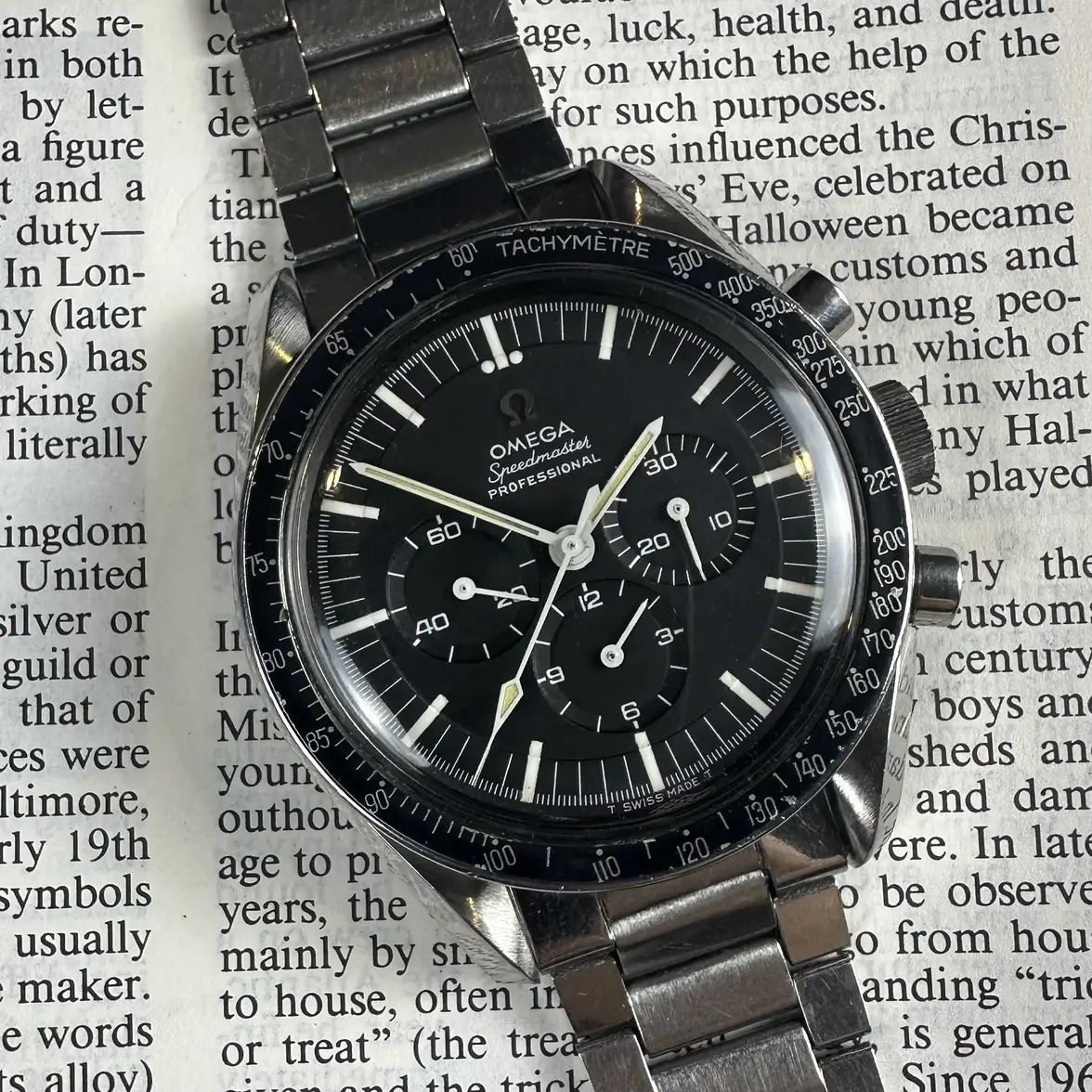
Here is an example:
Does anyone know any more about this practice? Were dials actually submerged in water and "washed" of the lume? or did they just have the lume scraped off?
I have a dial with bits of old lume that would benefit if the remaining lume was removed, but want to learn more about the practice before considering attempting it.
Here is an example: