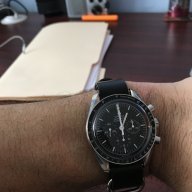
SM300 Master Co-Axial bracelet re-size/thread lock question...

Posts
29,754
Likes
77,017
Some came out moderately easy ... others seem impossible
I am going to get the big daddy torch out tomorrow...

Torch is fine, but it doesn't have to be big - localized heat is better...


In this case removing an HEV, so if this is enough to break the Loctite bond for that, it's plenty for a bracelet screw...

Cheers, Al
 
Posts
2,477
Likes
3,862
Pro-tip for newbies in or near major metropolitan cities: go to your local Omega Boutique and they will size it for you for free, even if you didn't buy the watch from them. Don't risk damage if you don't have to!
 
Posts
6
Likes
2
SCREW M1.40 ØH1.9 L1.8 STEEL

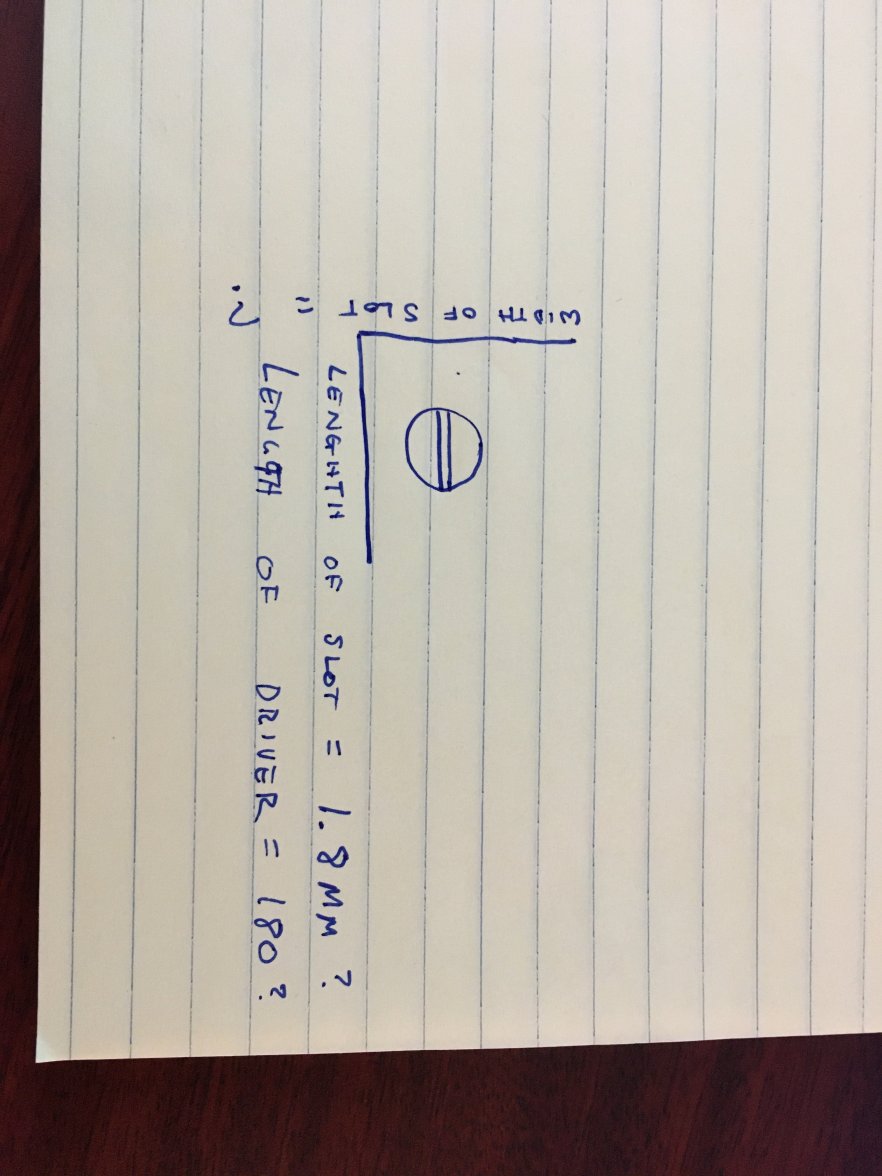
Head diameter = slot length, so 1.8 would be appropriate here. Make sure the screwdriver blade is properly fitted to the slot...

Cheers, Al
SCREW M1.40 ØH1.9 L1.8 STEEL

Head diameter = slot length, so 1.8 would be appropriate here. Make sure the screwdriver blade is properly fitted to the slot...

Cheers, Al
Thank you, Archer, as always. I understand that 1.8mm driver will work. I also understand that the driver needs to be the size of the slot length. How do I ensure this when purchasing from Esslinger? What denotes the length of the blade? Do you have a favored blade (that may need to be dressed) for the 124ST3307 | SCREW M1.40 ØH1.9 L1.8 STEEL screws?
 
Posts
29,754
Likes
77,017
Thank you, Archer, as always. I understand that 1.8mm driver will work. I also understand that the driver needs to be the size of the slot length. How do I ensure this when purchasing from Esslinger? What denotes the length of the blade? Do you have a favored blade (that may need to be dressed) for the 124ST3307 | SCREW M1.40 ØH1.9 L1.8 STEEL screws?

The screwdriver will be a 180 for 1.8 mm.
 
Posts
6
Likes
2
The screwdriver will be a 180 for 1.8 mm.

Okay ... I remain confused. If 1.8mm is the length of the screw slot, how does one determine the size of the width of the slot and ergo which size screw driver to use?

Hear me out, please: could we not have a driver with a width of 1.8mm but a length of 15mm? I know that doesn't happen, but if one were working with a different screw that had a slot width of 1.8mm but a slot length of 3.mm, how would I determine what sort of blade I should be using. Can you direct me to a resource? If my question is not making sense, I am happy to take it elsewhere so as not to has it out here.

Perhaps better asked in other words: is 180 a size designation that denotes the length of the screw slot? The length of the driver? Is 1.8mm the width of the slot?

Thank you.
 
Posts
29,754
Likes
77,017
Perhaps better asked in other words: is 180 a size designation that denotes the length of the screw slot?.

As I’ve already said...and you have already quoted me saying...

SCREW M1.40 ØH1.9 L1.8 STEEL

Head diameter = slot length, so 1.8 would be appropriate here. Make sure the screwdriver blade is properly fitted to the slot...

Cheers, Al

So you buy a 180 screwdriver, and fit it yourself from there.
 
Posts
6
Likes
2
As I’ve already said...and you have already quoted me saying...


So you buy a 180 screwdriver, and fit it yourself from there.

Sorry, man. Not clicking. I may need question elsewhere where I can discuss in person with someone.

Could one not have a 180 screwdriver with a blade that is 4mm (in which case I would dress or "fit the 4mm to fit the width of my screw slot?)? Or does a 180 screwdriver inherently have a driver width of 1.8mm.

Thanks again.
 
Posts
6
Likes
2
Okay, now I get it. I think I figured it out: 180 denotes the length of the blade. I adjust the width of that blade myself by dressing or "fitting." Thanks. I had to figure it out myself.
 
Posts
29,754
Likes
77,017
Okay, now I get it. I think I figured it out: 180 denotes the length of the blade. I adjust the width of that blade myself by dressing or "fitting." Thanks. I had to figure it out myself.

Yep...not complicated...
 
Posts
12
Likes
7
If you know how to use it, Loctite is perfectly appropriate here. Please do not use it if you don't know how to use it properly...

@Archer , what number/ type loctite should be used for bracelet screws? Thanks, as always.
 
Posts
47
Likes
37
As someone who just messed with this, remember that if one side is particularly sticky/resistant to being unscrewed, try the opposite side. If you can get just one off you can tap and jiggle the bracelet to get the pin to fall out and separate the link. I went WAY to far down the road trying to get one really stubborn screw out and chewed up a couple screwdriver tips and dinged the screw head a bit when all I had to do is unscrew the opposing side and tap out the pin. I had good success with most of the screws with just a little hairdryer heat, a couple needed some careful pressure, but a few weren't coming out no matter what (probably need a hot water soak or some chemical treatment).
 
Posts
12
Likes
7
@Archer , what number/ type loctite should be used for bracelet screws? Thanks, as always.

@Archer following up re number/ type of Loctite best used for bracelet screws. Thanks. Happy Thanksgiving.
 
Posts
17
Likes
24
@Archer following up re number/ type of Loctite best used for bracelet screws. Thanks. Happy Thanksgiving.

I know you aren't asking me, but Loctite 222 or 221 is what Rolex uses and what I have always used. The two are very similar. 221 is going to be very hard to find in the US, 222 is more commonly available. I always try to apply the loctite (a tiny amount) to the female threads in the link, not the male threads in the screw. If you put it on the screw and then slide it through the link, it can smear throughout the hole in the link and lead to links that do not articulate freely. Also, take the time to use a toothpick to clean out as much of the old loctite as possible before applying the new stuff. The old stuff will look like whitish "threads" almost.
 
Posts
12
Likes
7
I know you aren't asking me, but Loctite 222 or 221 is what Rolex uses and what I have always used. The two are very similar. 221 is going to be very hard to find in the US, 222 is more commonly available. I always try to apply the loctite (a tiny amount) to the female threads in the link, not the male threads in the screw. If you put it on the screw and then slide it through the link, it can smear throughout the hole in the link and lead to links that do not articulate freely. Also, take the time to use a toothpick to clean out as much of the old loctite as possible before applying the new stuff. The old stuff will look like whitish "threads" almost.

Thank you very much, @HiBoost. And thanks, @Archer for the thumbs up. Nice holidays, all.
 
Posts
7,181
Likes
23,271
Place a small amount on the first couple of threads, then screw the screw all the way in, unscrew it all the way out, and then screw it down. If you read and follow Loctite instructions, this is how they tell you to use it. Cheers, Al
Thanks, Al. I'm guessing you are referring to the threads on the screw, not the threads in the bracelet, is that correct?
I always try to apply the loctite (a tiny amount) to the female threads in the link, not the male threads in the screw. If you put it on the screw and then slide it through the link, it can smear throughout the hole in the link and lead to links that do not articulate freely. .

Best on the screw threads, the hole threads, or it really doesn’t matter? Loctite seems to believe that in open bottom thread holes, like in bracelets with tubes, the material should go on the screw threads.
 
Posts
106
Likes
145
New screws from Omega are about $7 Usd, ask me how I know?

Ps- “No I didn’t do that” and “Can they be replaced?”