Runs and then stops

Posts
16,307
Likes
44,994
From an investor’s standpoint I would think they would agree with you, better to spend on a more valuable watch. But this hobby is highly subjective so ROI is not the only thing one thinks about. The aforementioned chrono I bought that has issue is only “worth” what I paid for it-about $400. If I find it needs $400 worth of work to get it back up to snuff, it wouldn’t make any financial sense, but I would still pay for it becuase I have emotion involved now (I reeeeeally love it and it’s so cool!). I know it uses a common Landeron movement, so parts are common and a whole donor movement can be sourced cheaply enough to make it whole again for not more than the cost of service if it came to that (well, watchmaker would have to disassemble one to rebuild the other so double the time basically) . If we were talking about a Universal Tri-compax that took a shit, we are in a different world of hurt for parts.

I think having an understanding of what your watchmaker can and can’t do, and what they typically charge for a CLA (3-hand vs. chrono) will give you a baseline of investment value before you bid. I will buy cool cheap watches with a “runs then stops” disclosure- under $500 and I really have to want it. Over that I consider real money and would rather buy from a trusted seller.l like here on the forums.
 
Posts
807
Likes
2,108
It depends on what the purpose of buying the watch is...

If you are trying to buy watches cheap, fix them up and flip them for profit, then yes the cost of service is going to be a smaller overall percentage of the outlay for a more expensive watch, and will have a much smaller impact on the ability to sell the watch at a profit. So for example if you buy a Speedmaster reduced, service it for $750, and try to get your money out of it after service, you may not be making any money. If you buy a 2915, service it and flip it, the cost of the service is not going to be huge in relation to the dollars (pounds, euros, or whatever) that are going to be changing hands.

If you are buying the watch to keep and enjoy it, and are less concerned with what you have into it and how that relates to the market value, the only thing that is important is if the final price is something you feel is worthwhile for the watch you want.

I have no idea what camp you fall into - one or the other or somewhere in between.
Somewhere in between. I'd like to know that I can get most, if not all, of my investment back from the watch after wearing it for a while. Flipping would be nice, but I don't think I know enough at this point to spot that kind of deal.
 
Posts
16,307
Likes
44,994
Somewhere in between. I'd like to know that I can get most, if not all, of my investment back from the watch after wearing it for a while. Flipping would be nice, but I don't think I know enough at this point to spot that kind of deal.
I always feel breaking even is winning when it comes to hobbies, sometimes we score big (even a blind squirrel sometimes finds a nut) sometimes we lose big, the hope is that it all even out in the end.
From when I was buying/ repairing/ selling audio equipment, I had customers that would buy a piece of equipment on the “cheap”, bring it to me to fix, pay my fee and then try to flip it. 99% of the time they either made only $20 or lost money (the rare exception was big dollar gear and even then it was hard for them to sell it as they had no credibility in the community and the enthusiasts can smell a flipper).
The only reason I was able to make money doing it was that I bought cheaply (generally not working and paid pennies on the dollar), repaired it myself (I had a deep cache of parts for vintage gear and the expertise to do it), and had a network by which I could broker the sale or sold in forums (I never sold that kind of gear on eBay).
Unless you really want to get down into the weeds, it’s best to be a spectator and enjoy the game than try to play and get injured.
 
Posts
807
Likes
2,108
I always feel breaking even is winning when it comes to hobbies, sometimes we score big (even a blind squirrel sometimes finds a nut) sometimes we lose big, the hope is that it all even out in the end.
From when I was buying/ repairing/ selling audio equipment, I had customers that would buy a piece of equipment on the “cheap”, bring it to me to fix, pay my fee and then try to flip it. 99% of the time they either made only $20 or lost money (the rare exception was big dollar gear and even then it was hard for them to sell it as they had no credibility in the community and the enthusiasts can smell a flipper).
The only reason I was able to make money doing it was that I bought cheaply (generally not working and paid pennies on the dollar), repaired it myself (I had a deep cache of parts for vintage gear and the expertise to do it), and had a network by which I could broker the sale or sold in forums (I never sold that kind of gear on eBay).
Unless you really want to get down into the weeds, it’s best to be a spectator and enjoy the game than try to play and get injured.
I understand completely, having been there with old books and cameras. I still have the best of the books, but they just sit on shelves while I can wear and admire the watches over and over. Don't even get me started on how many cameras I have sitting around. 😀
 
Posts
16,307
Likes
44,994
I understand completely, having been there with old books and cameras. I still have the best of the books, but they just sit on shelves while I can wear and admire the watches over and over. Don't even get me started on how many cameras I have sitting around. 😀
Right there with you. I’m a pro and have kept the best of my collection over the years (all I have made money with). Who needs 5 Leica’s and 3 Hasselblads?!?!
I had a great tech who serviced my photo gear for years but has now retired (don’t they all). That’s one hobby you never make money on...just spend, spend, spend.
 
Posts
543
Likes
1,899
Service costs are going to vary based on a number of factors.

Let's say you have a time only watch that's running but needs a service, no replacement parts. I've paid ~$200 for that. I've also happily paid ~$400 for that. A bit is of that depends on the individual watchmaker's skill, how fast you want it, and at least for me the quality of the watch in question. I have a few different watchmakers I use. I'm not going to take a $500 watch to my $400 service guy. And I'm not going to take something like my gilt 1016 to the $200 guy. So depending on the watch it's about finding the watchmaker who is the right fit for the project. If I need something simple, I have a guy I can go to who will take care of most small issues while I wait for a low cost. If I'm overhauling a 321 movement, that's a different guy.

Then if service parts are required, a lot is going to depend on how hard those parts are to get and specifically what needs to be replaced. Something with an ETA movement is going to be easier/cheaper than something from a more niche. Ive had watches where it made more sense to swap in a donor movement than to fix what was wrong with it.

But to somewhat answer your question:

If I'm buying a vintage time-only watch that's running with no service history, I assume I'll spend between ~$200-300 (more if it's an expensive watch that I'd take to a different watchmaker). If the seller says it's not running or running and stopping, I assume those numbers are now minimums and I'll likely exceed them.

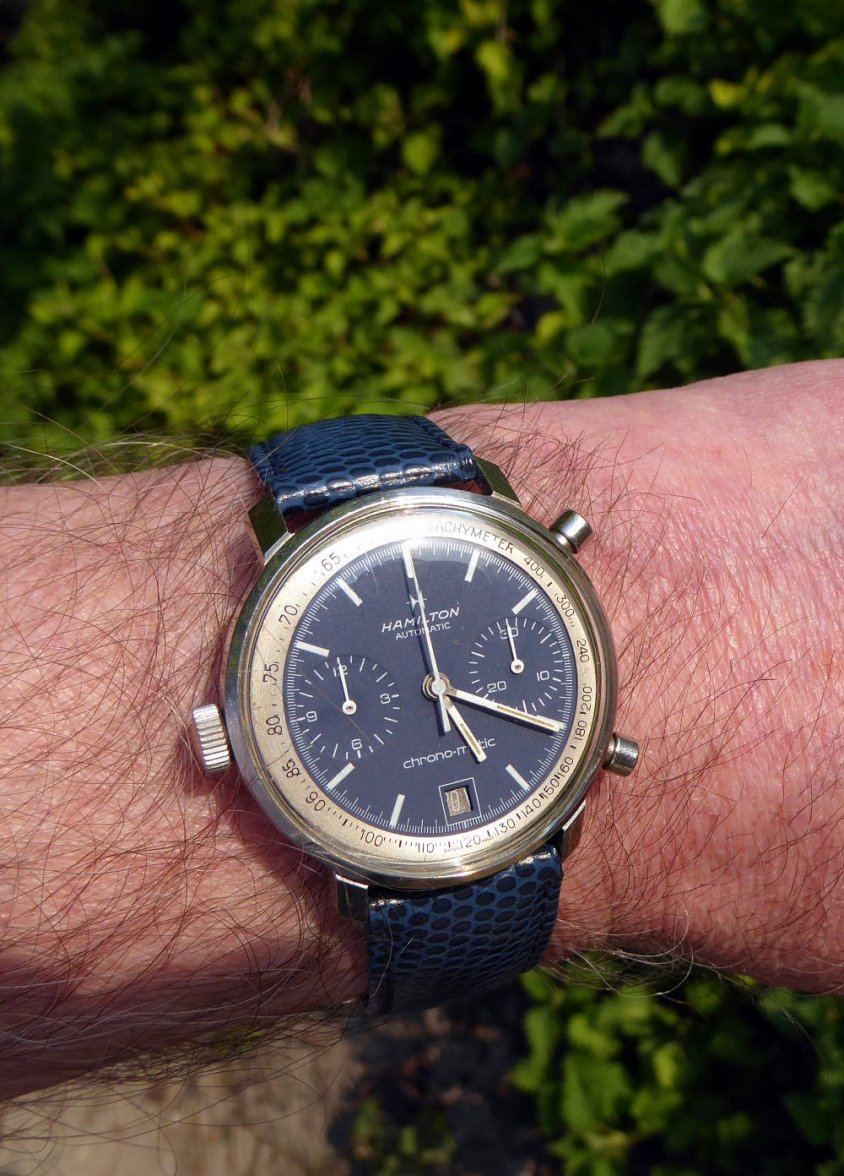
For a chronograph that's running with no service history I assume I'll spend ~$400-500, unless it's something particularly rare or notoriously difficult to service. Which is another instance where doing your research is really important. Having a passing familiarity with the reference and the movement it has is important. Otherwise you'll buy an old Hamilton Chronomatic expecting a ~$400 service and instead it's going to cost you a grand.
 
Posts
3,535
Likes
8,863
Otherwise you'll buy an old Hamilton Chronomatic expecting a ~$400 service and instead it's going to cost you a grand.

Hmmmm. A Hamilton crono-matic (sic) service was about half your cost when mine was done a couple of years ago. That included sourcing some parts too.

 
Posts
543
Likes
1,899
Interesting. I've never owned one myself but have heard from multiple dealers that they're particularly costly to service. And I guess that's the point for OP. You could have gotten lucky. Or I could be wrong. But if I were considering buying one, I'd do that research in advance before pulling the trigger.
 
Posts
807
Likes
2,108
Interesting. I've never owned one myself but have heard from multiple dealers that they're particularly costly to service. And I guess that's the point for OP. You could have gotten lucky. Or I could be wrong. But if I were considering buying one, I'd do that research in advance before pulling the trigger.
I learned a lot from this thread, although I know I irritated some watchmakers along the way. Fortunately Archer has patience to match his knowledge. It certainly helped me get a better idea of what a watch will ultimately cost before buying it. It turned out that my analogy wasn't so great because, while the watch is modularized to some degree, any part anywhere can have the same effect on performance.
 
Posts
1,790
Likes
2,002
Expensive brands cost more than cheaper brands to service.
As an example, I had a Zenith time only MW serviced at the same time as a Citizen Leopard X DD auto.
Citizen cost $300, Zenith $400. They were both working fine at time of servicing.