Rolex chronometer

Posts
15,482
Likes
45,856
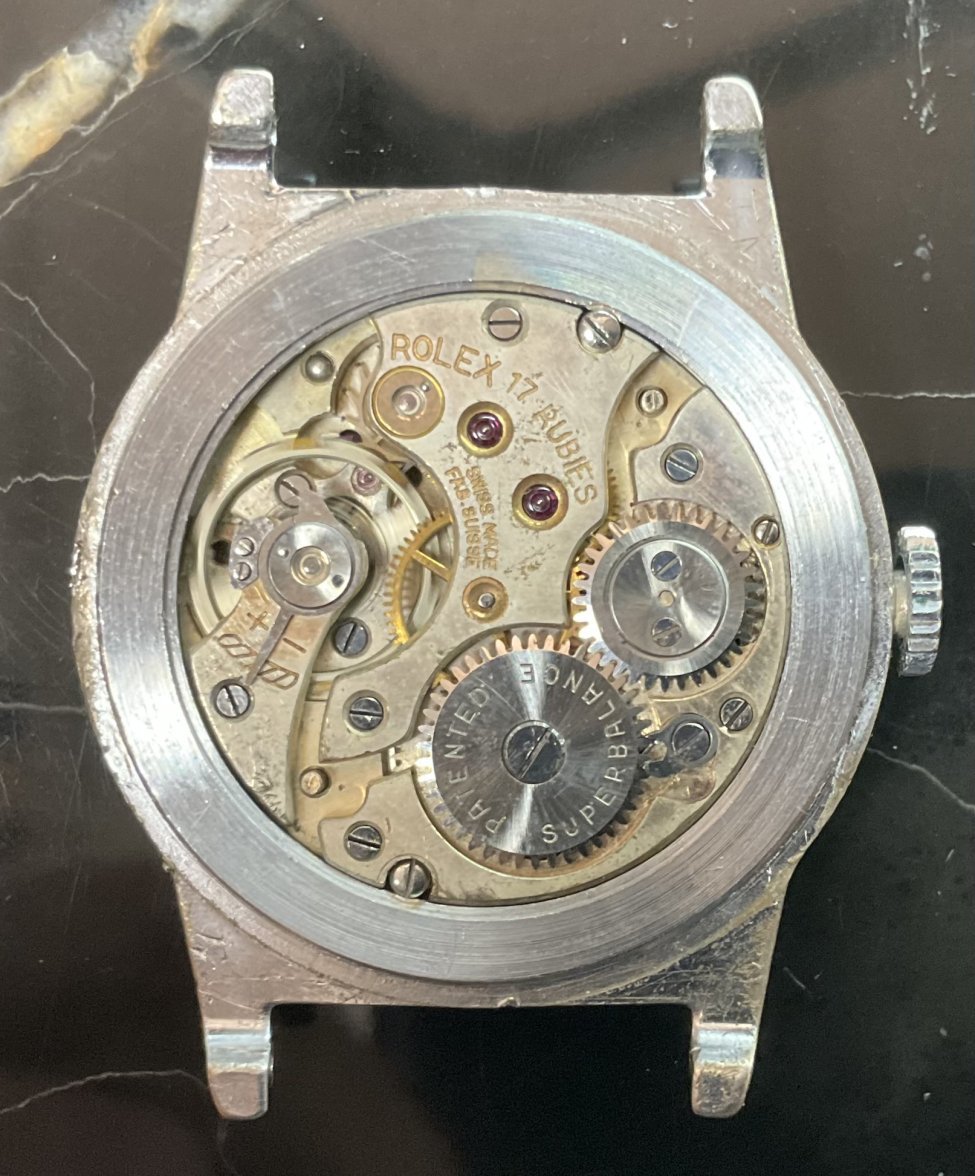
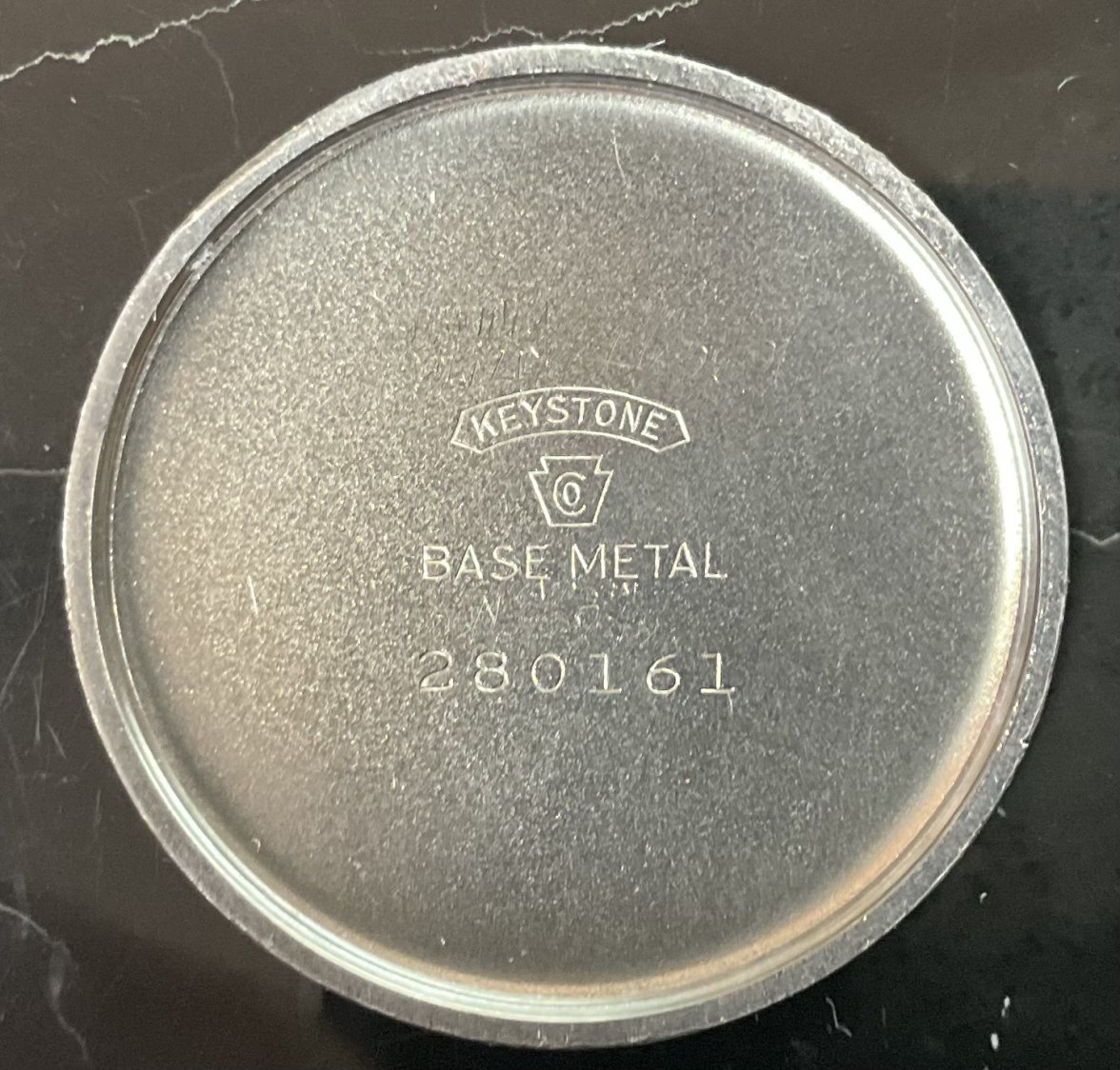
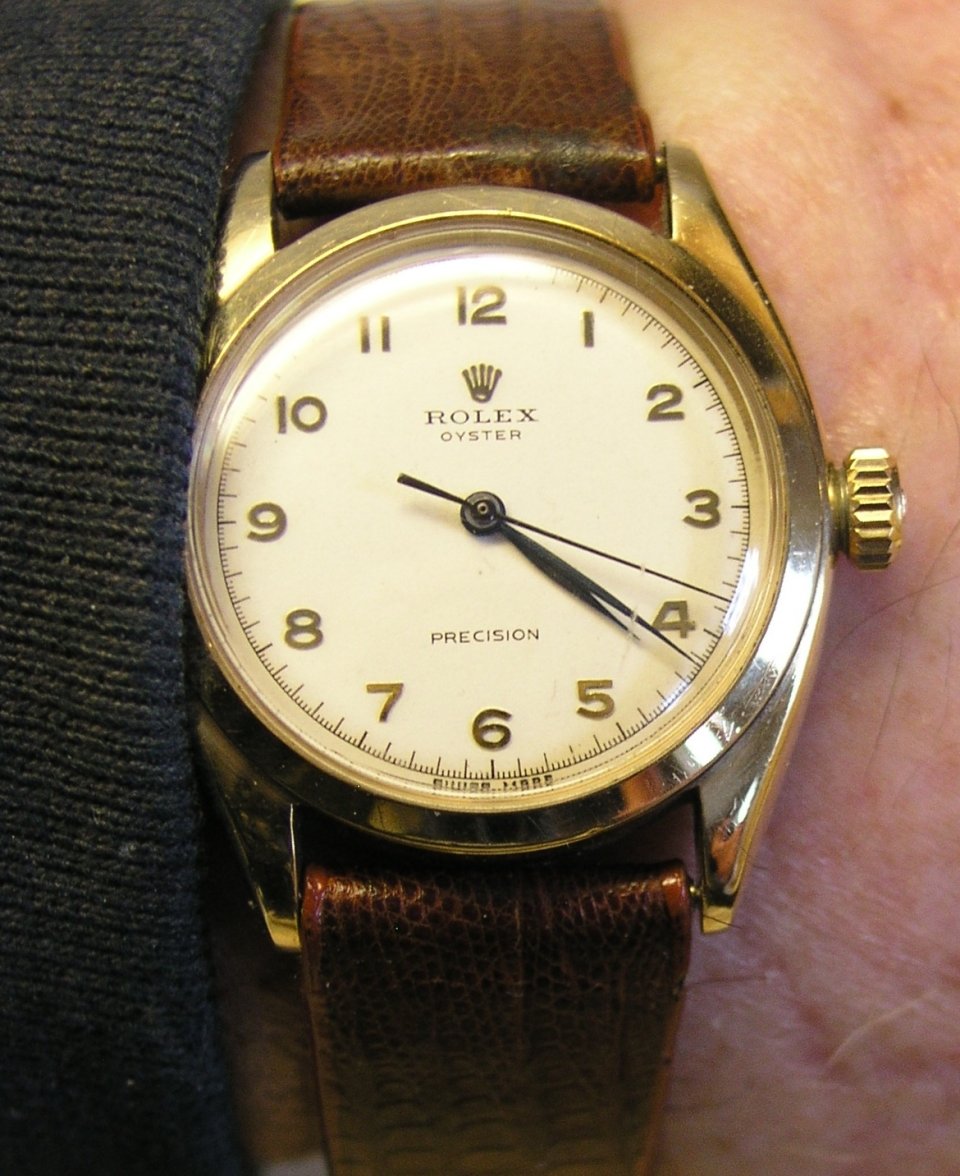
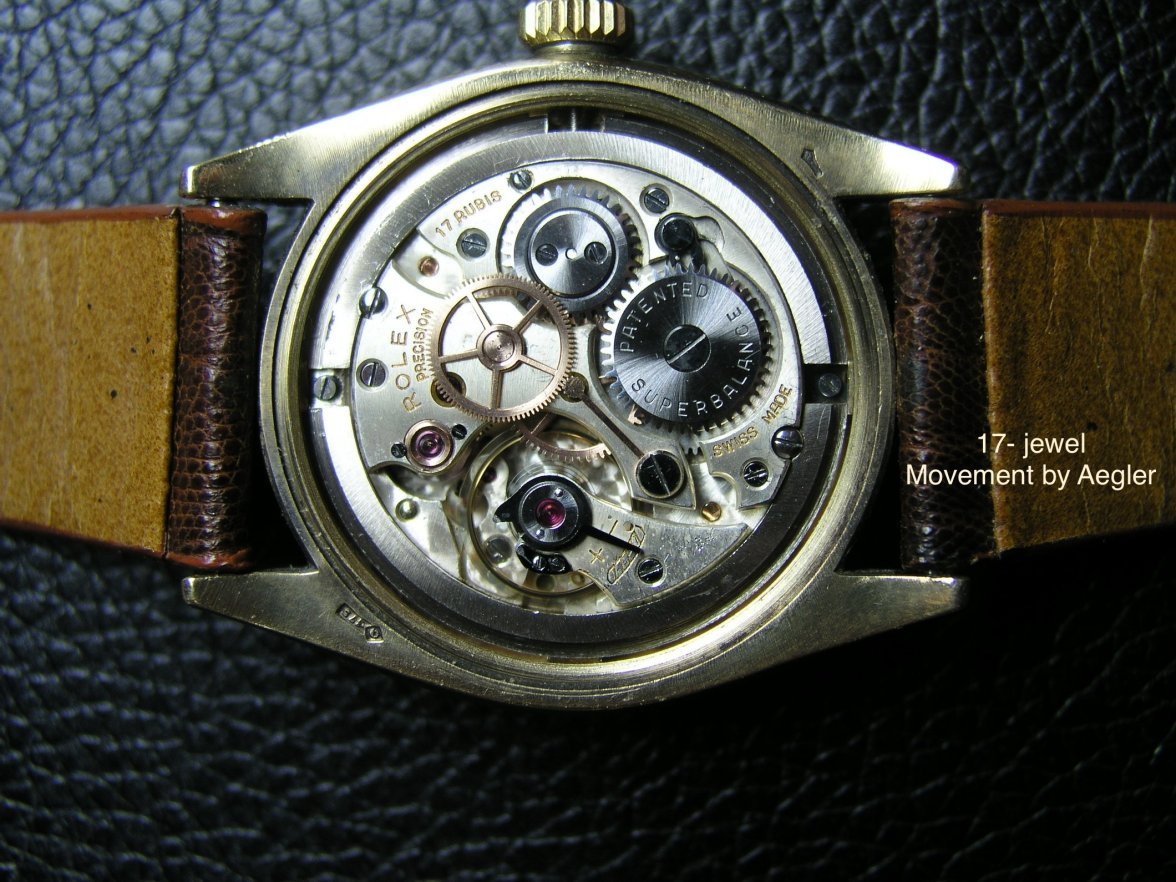
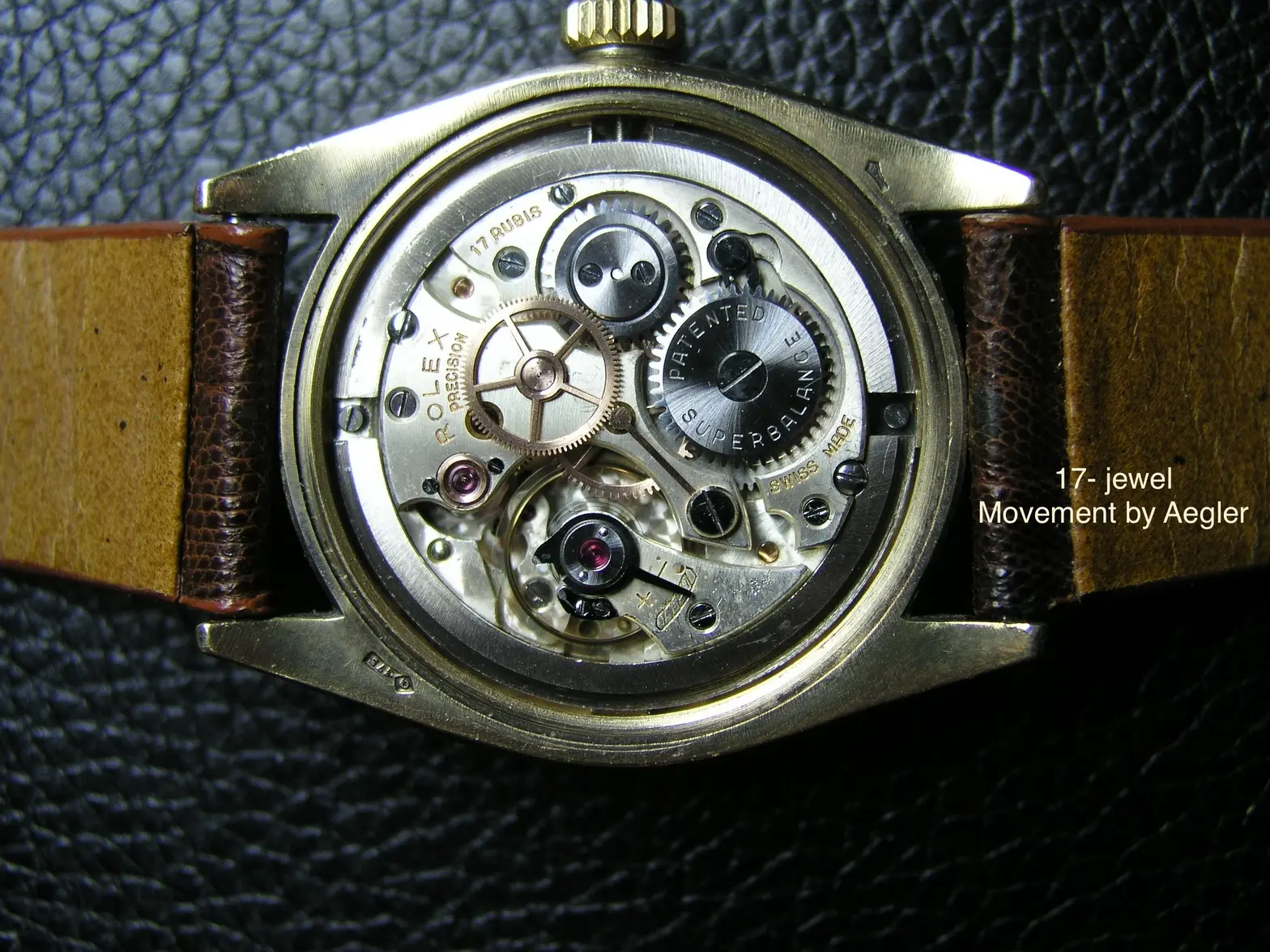
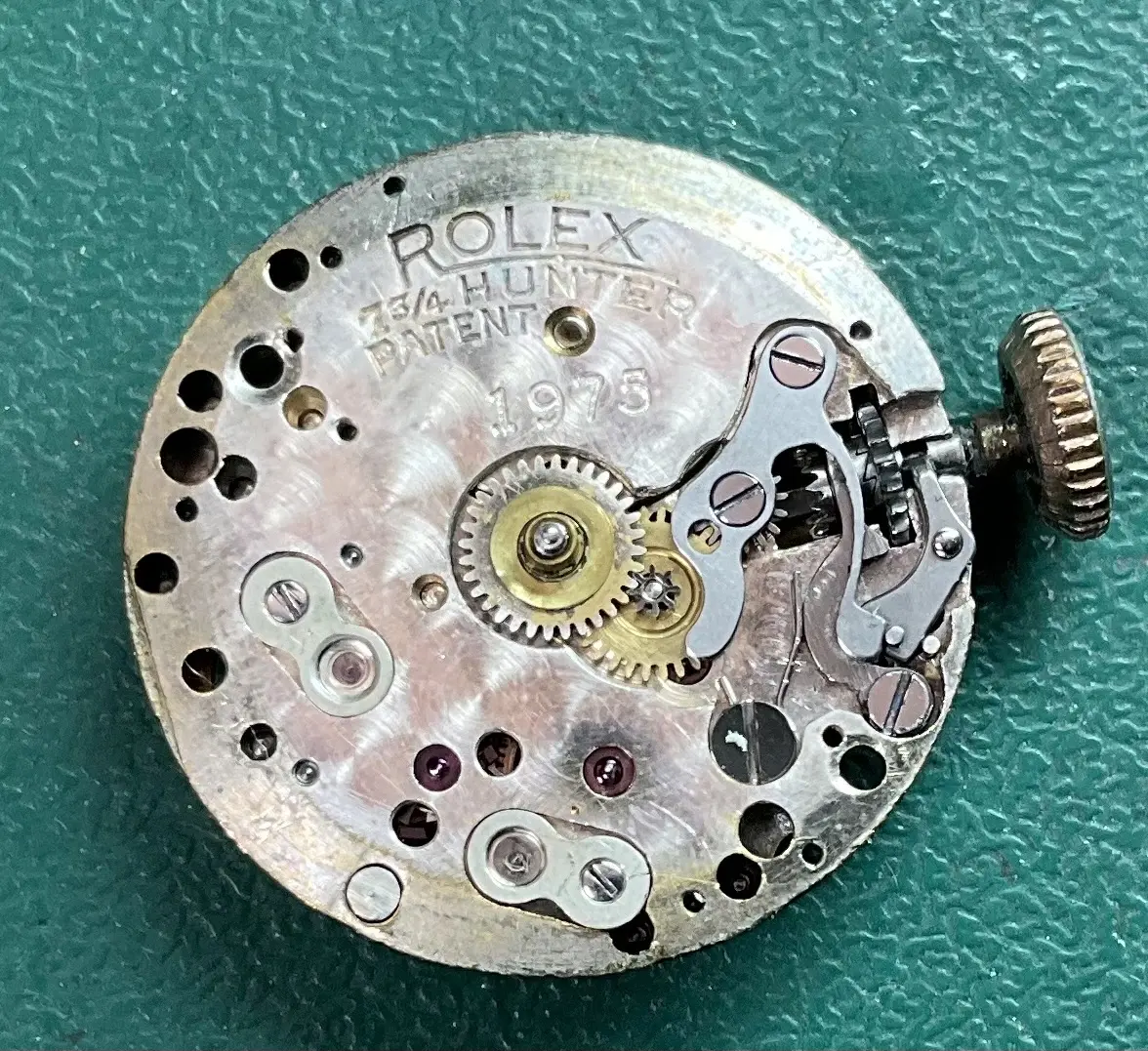
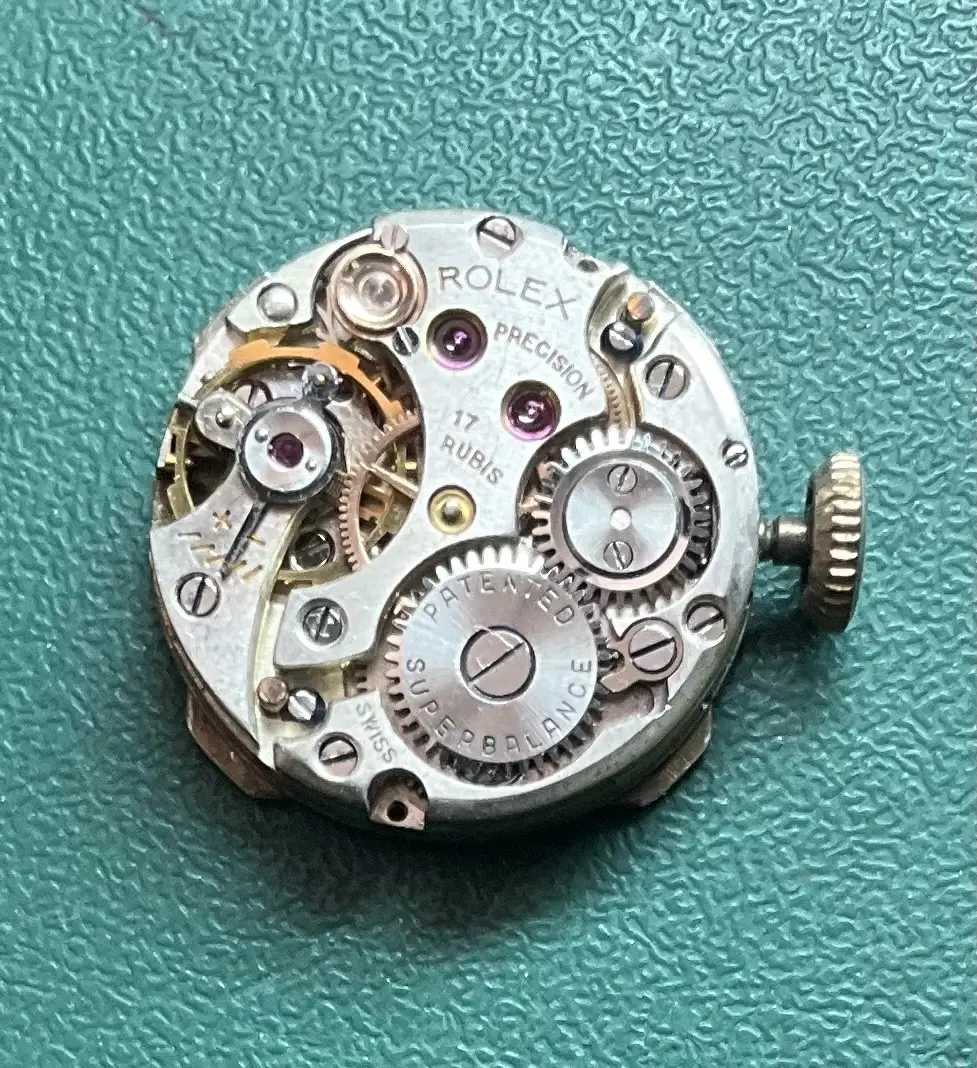
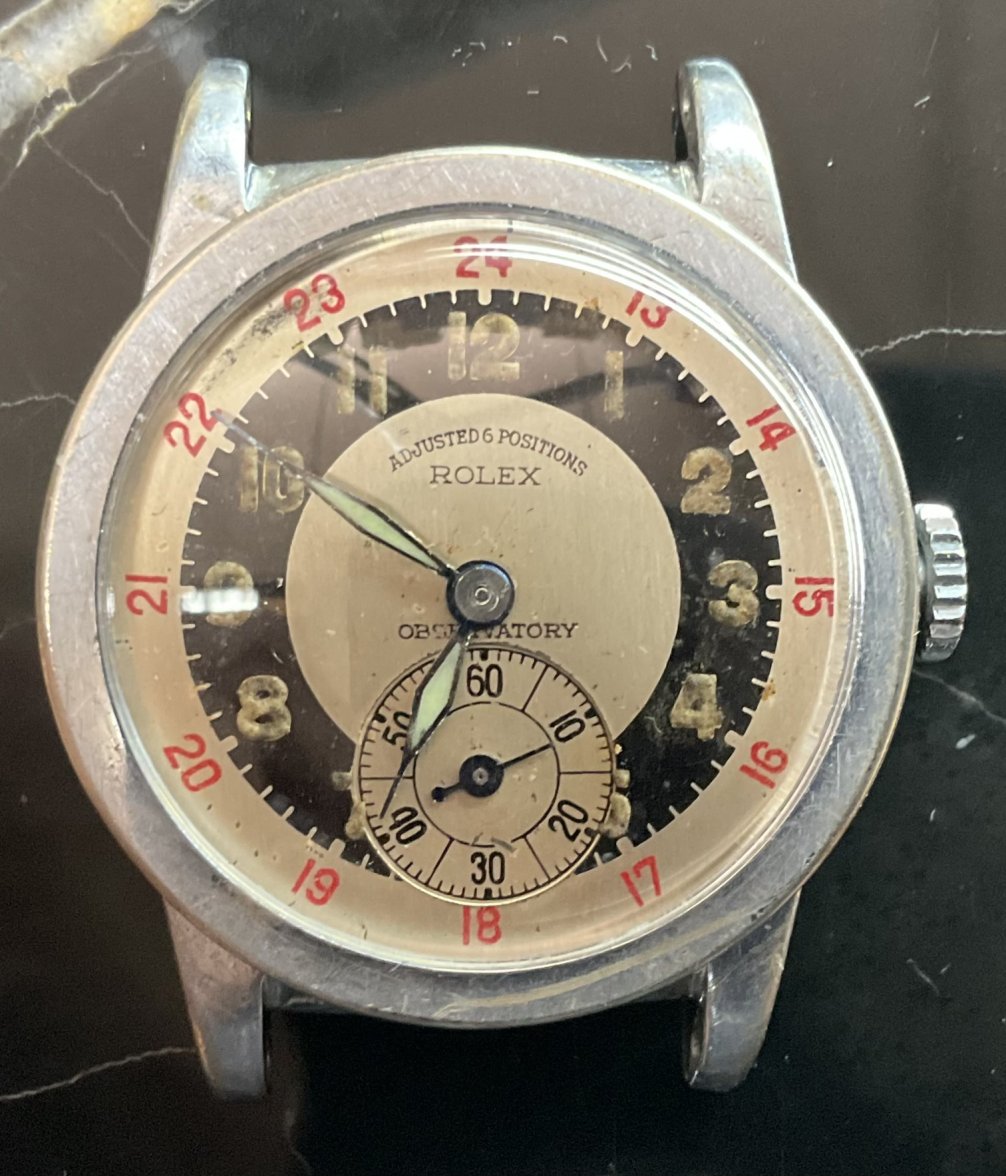
I was recently sent this watch with a request for an opinion. Visually, it appeared to have a badly discoloured dial. I removed the crystal to find it was an opaque brown colour, likely radium burns. The dial you see was hidden behind that disgusting crystal. The luminous paint in the hands was badly deteriorated, and the hands were very rusty. I replaced the luminous paint in the hands after de-rusting them, and ultrasonically cleaning them. I replaced the crystal with a low profile acrylic crystal. You may notice the dial is marked adjusted 6 positions, Rolex, Observatory (as in “chronometer”). The movement is a 10 1/2 ligne, Hunter grade, calibre 700, 17-jewels. The serial number is behind the dial, on the pillar plate. The movement is fitted with the patented Rolex ‘Super balance”. The movement was made for Rolex by Aegler who was associated both with Rolex and Gruen. I have one of these movements in my collection. The difference between the two movements is that the movement in my watch is actually marked 6-positions, and this one is not! I find that odd. My estimate on the age is circa late 1930s. The Keystone (non-Oyster) case has a steel bezel and back, and the mid case is chrome plated. The 24-hour dial has luminous numerals 1 thru 12. I found it interesting.
 
Posts
13,698
Likes
53,501
Interesting bit of history. I love it. I’m certain the owner is happy.
 
Posts
869
Likes
3,632
Thanks for sharing, looks really nice. Is the case size around 30mm? Do you have any before photos?
 
Posts
773
Likes
1,373
The difference between the two movements is that the movement in my watch is actually marked 6-positions, and this one is not! I find that odd.

As I understand it, imported chronometer movements (back then) was taxed at a higher duty rate than non-adjusted movements. Mind you, I don't see any import code on the movement...
 
Posts
15,482
Likes
45,856
As I understand it, imported chronometer movements (back then) was taxed at a higher duty rate than non-adjusted movements. Mind you, I don't see any import code on the movement...

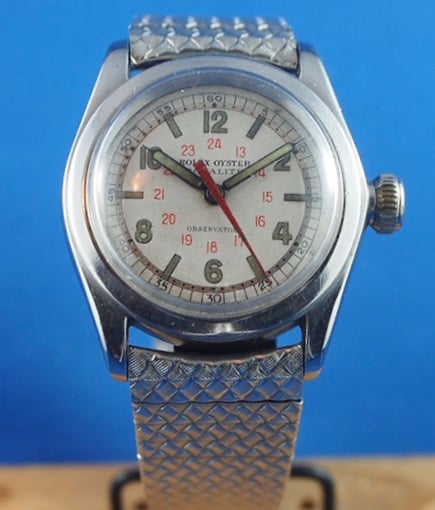
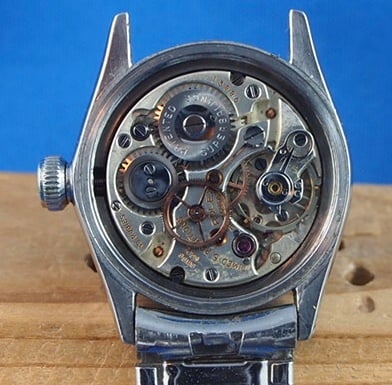
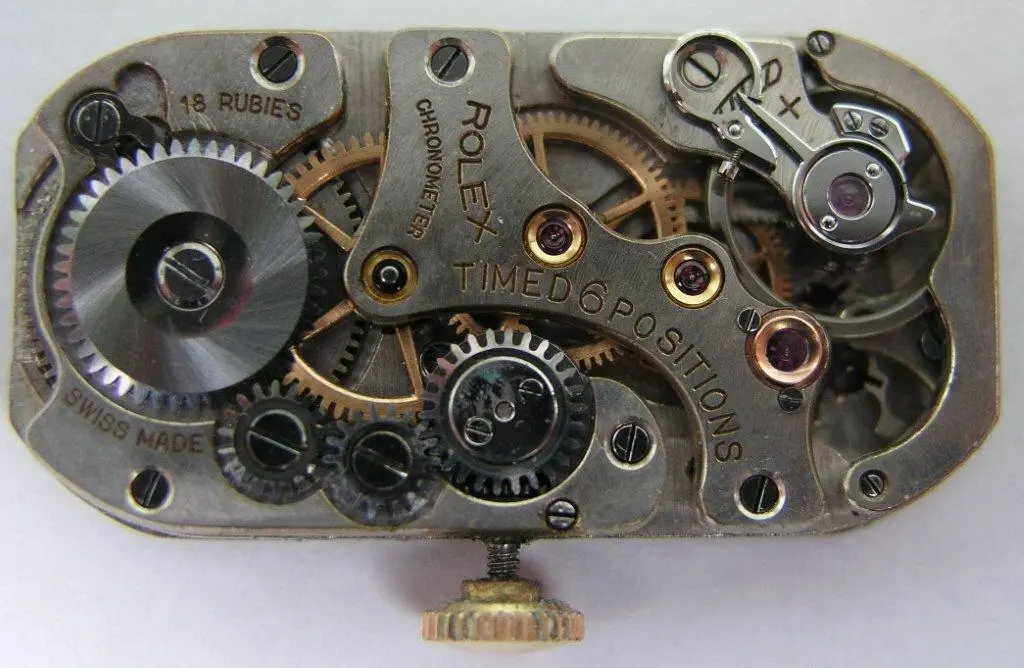
In my post, I mentioned that I have Rolex Royalite chronometer of about the same vintage in my collection. It is basically the same movement, except for the fact that it has a sweep seconds hand. In the picture, you will see this one is marked timed in 6 positions which the subject watch was not. This one doesn’t have an import code on it, either. One other significant factor is the Rolex Royalite is in a Swiss made Rolex Oyster case, while the subject watch is in an American made (Keystone), non Oyster case.


I have another Rolex with the same movement, with a sweep seconds hand. This one is not marked as Observatory or chronometer.
This one doesn’t have an import code on it either.
 
Posts
42
Likes
21
US import codes were introduced only in 1935. If your movement was imported before that it would be strange to have import code.
 
Posts
15,482
Likes
45,856
In light of the fact that Aegler (the maker of the above Rolex movements) was part of Rolex, would the import codes be essential on these movements? I don’t recall ever seeing an import codes on a Rolex movement. Unless the movement was (for example) an FHF movement as found on some domestic Rolex watches from this era.
 
Posts
42
Likes
21
In light of the fact that Aegler (the maker of the above Rolex movements) was part of Rolex, would the import codes be essential on these movements? I don’t recall ever seeing an import codes on a Rolex movement. Unless the movement was (for example) an FHF movement as found on some domestic Rolex watches from this era.
Looking at Rolex 400 photo with ROW on it...
 
Posts
15,482
Likes
45,856
Looking at Rolex 400 photo with ROW on it...
Well, how’s this? Not a picture of a Rolex calibre 400 movement with ROW on it, but a REAL Rolex calibre 400 movement which does NOT have an import code on it! Neither view shows an import code! So the question must be asked as to why some Rolex movements have an import code, while others don’t. I don't recall ever seeing a Rolex (or Aegler, or Rebberg) movement behind a Rolex dial that had an import code on it! The calibre 400 Rolex 7 3/4 ligne movement was made by Aegler.

The calibre 700 Rolex movement shown earlier in this thread, also doesn’t have an import code on it. Nor does my Rolex Prince Observatory movement from 1930. (Calibre 300). These two movements also by Aegler for Rolex. For good measure, I have included another Rolex movement by Aegler which likewise has no import mark on it. What does this all prove? Maybe the odd one has an import code, but I’ve never seen one.

Earlier in this thread I showed the movement in my Rolex Oyster Royalite chronometer, also by Aegler. In this thread I have shown 4 Rolex movements by Aegler, none of which have an import code!
Edited:
 
Posts
17,942
Likes
37,520
So the question must be asked as to why some Rolex movements have an import code,
Import codes were only applicable to watches/movements imported into the USA, so if your examples arrived in Canada via a traveller's wrist, or via a local company, there would be no need for import codes.
 
Posts
15,482
Likes
45,856
Import codes were only applicable to watches/movements imported into the USA, so if your examples arrived in Canada via a traveller's wrist, or via a local company, there would be no need for import codes.
The origins of two of the four Rolex watches I referenced are known. The calibre 700 in the 9-karat gold case is in a Swiss made Oyster case with English hallmarks. Strangely, a 9-karat case, and a 10-karat case back. So, the case back is marked with both the 9 karat and 10 karat marks, and this back was made in Switzerland. The calibre 300 Rolex Prince Observatory, I am the second owner of. My late father bought it in Saskatoon, Saskatchewan (Canada) brand new, circa early 1930s. The calibre 400, 7 3/4 ligne was orphaned when the elaborate, Swiss hallmarked, Swiss made rose gold case and bracelet was melted. The Rolex Oyster Royalite, I acquired from a Canadian source, but it has had numerous previous owners. So that one is without the import code, but where it originally was sold, I have no idea. But no import code on any of the four. I also have another calibre 400 in an English 9-karat case, and no import code. So I feel it is incorrect to say that Rolex movements have import codes on them. However, I do have a Rolex calibre 59 (basically and FHF Swiss movement) which does have an import code. That one originated in Canada during the 1940s.
 
Posts
42
Likes
21
Some have import codes some - don't. I don't understand what's so strange about that, given that import codes were requirement for limited amount of time to imported watches in US.
 
Posts
15,482
Likes
45,856
I was replying to your comment that you were looking at a photograph of a Rolex 400 which had the import code ROW on it. You were perhaps suggesting that a Rolex without the ROW import code was an anomaly?
Some have import codes some - don't. I don't understand what's so strange about that, given that import codes were requirement for limited amount of time to imported watches in US.
 
Posts
42
Likes
21
I was replying to your comment that you were looking at a photograph of a Rolex 400 which had the import code ROW on it. You were perhaps suggesting that a Rolex without the ROW import code was an anomaly?
No, I was replying to the comment bellow, when someone said that never saw import codes on Rolex movement 😀
I don’t recall ever seeing an import codes on a Rolex movement. Unless the movement was (for example) an FHF movement as found on some domestic Rolex watches from this era.