For the record I had nothing to do with the raising of the age of consent topic!
😁
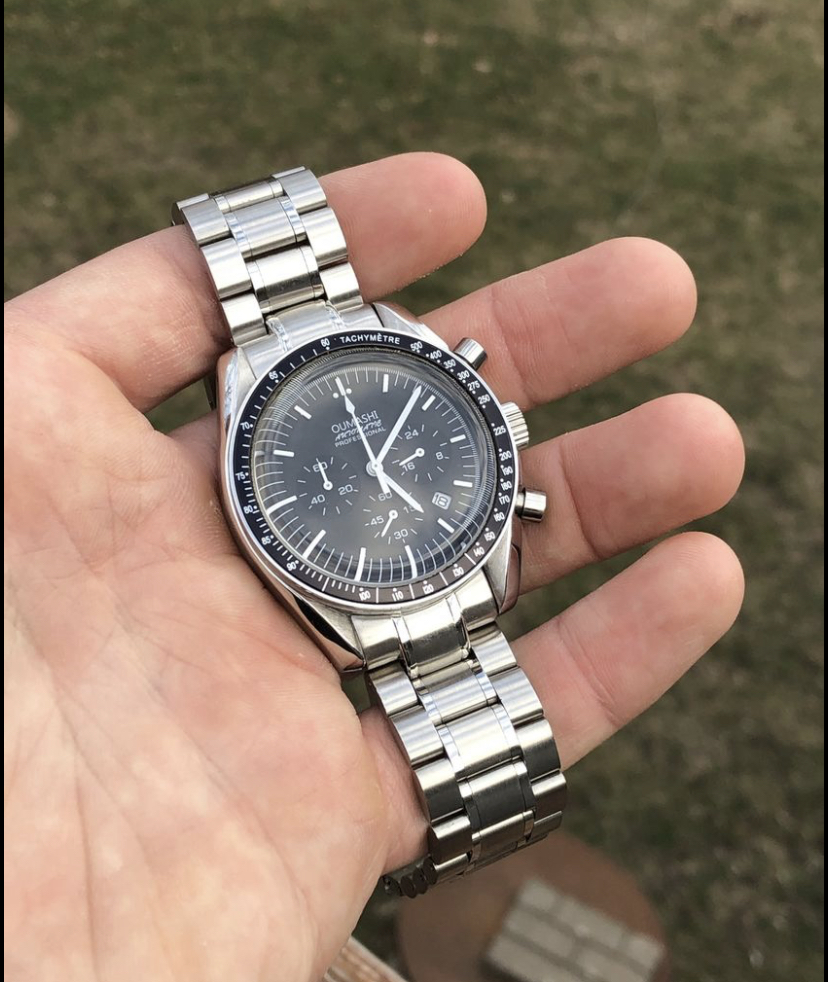
Without context it's impossible to say what this is actually trying to say...is there a design patent, or copyright of some kind that is being violated?
Again, I don’t understand and am pretty uninterested in the instinctive retreat to whether a law is violated as being proof of anything decisive. But maybe that’s because I’m professionally and academically trained in the origins, utility, policy rationales, and failings, of “the law.”
In the rest of your life, the law infrequently provides *the* decisive guide - or any guide whatsoever - for whether you find an act permissible or blameworthy.
(But to answer your question, essentially the same laws apply to furnishings and other products as do watches, in these matters.)
I tend to look at it as do unto others as well. What Rolex does as a business is hardly, shall I say it, charitable? Karma is a bitch I guess.
If “retribution” factors into your value decision in this way, then so be it. I don’t view myself as an agent of karma, but clearly lots of the world enjoys that excuse - just like the kids who think stealing from Amazon is permissible because Bezos is a corporate overlord.
To be fair to you, I don’t think you deep down are motivated by retribution, so much as you’re in this thread merely searching for ways to try and take me down a notch with whatever quips available.
So "homage" watches are really illegal, but since it would be too difficult to enforce those laws, the authorities have decided just to let it slide?
Well, you’re doing some odd equivocation around the word “illegal” there obviously, but setting that oddity aside:
Yes, the body of laws around TM/patent/copyright are informed by a host of considerations that are merely pragmatic in source and limitations. To put it mildly, they are attempting to provide merely certain bumpers to a marketplace, while at the same time anticipating that marketplaces react and adapt to the application of bumpers - so there are choices made about the best of bad grey lines.
These are essentially
commercial laws, attempting in the main to achieve certain
commercial ends, as best as laws are capable of doing within a marketplace - and by necessity are forced to draw some imperfect distinctions, due to pragmatic considerations, countervailing issues of unintended consequences, etc.
Which is all to say: often “the law” has little to do with what is right or wrong (is a 20% tax more or less wrong that a 21% tax?), and in any event
should have little to do with what you find right or wrong (I think you shouldn’t sleep with your best friend’s wife).
Frankly, the retreat into asserting that (especially commercial) laws are in any way informative of laudable behavior is a retreat that only someone without an understanding of “the law” would continue pushing, over and over - unless of course that person were really just looking to @ me in another sort of gaslighting exchange.
You have effectively staked out your moral ground and signaled your virtues - I think with all the threads you have participated in, and the one very cringeworthy one you created on this subject, we all pretty much know where you stand. For a subject you are happy is not discussed here much, you do write a lot about it.
A rather ironic and self-indicting thing to say, given your tireless and perfect record of not only participating in those discussions, but - like this thread - being the one to @ me repetitively to draw me out, while repeating your own contrary views.
To set the record straight: **I entered this thread by explicitly admitting that the underlying moral/taste decision is personal, while instead being interested in a few ancillary (in my view) errors employed when discussing the topic (e.g., the term “homage,” hiding behind “the law” as informative to the matter, and the onslaught of “arguments by exception”).
I didn’t start this thread, but have every right to participate in it.
I didn’t speak to you, but when poked on the shoulder by you am compelled to answer.