Recent Omega Negativity

Posts
1,970
Likes
2,130
50m of water resistance is 50m of resistance. That said, you find me anything close to 50m underwater, its probably because I have concrete shoes, at which point my watch's water reistance isn't on my mind.

Side note: I swim with my bracelet speedmasters: Omega promises that 50m is 50m.
 
Posts
3,862
Likes
8,353
50ATM on a non‑dive watch

Begging your pardon- and I am indeed begging your pardon with this response- but this idea that 50 meters is not enough (and I'm assuming you meant 5 atmospheres) is absolutely bogus.

Omega tests their water resistance for activity to the depth rating. And, like any good depth rating, Omega tests to a +20-30% margin of depth
on that depth rating.

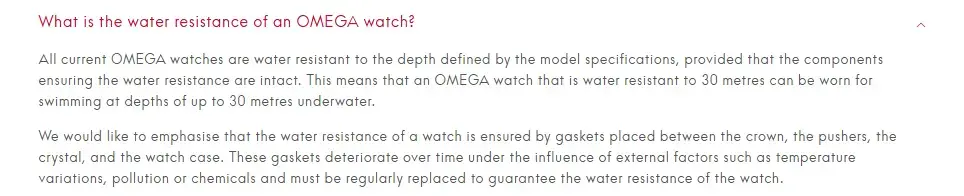
Directly from Omega's site:


found here:

https://www.omegawatches.com/en-us/customer-service/faq/using-your-omega-watch


This "concept" that 50 meteres is inadequate for a modern Omega is the most irritating and most pseudoscientific garbage that gets spread around the watch community today. INDEED- this does not apply to vintage pieces. INDEED- water ratings may not always be consistently applied. But there you have it, from Omega.

You want to talk about the pushers not being used underwater- now we're into the realm of "handling real life."

Bottom, real-world line: the best way to prevent water damage is not to buy more water resistance than is necessary. The best way is to have your water resistance checked semi-regularly if water exposure is regularly occuring.
Edited:
 
Posts
20
Likes
8
I was salivating over a moon phase the other day, and my wife looked over my shoulder and said, "it's just a speedmaster, you haven't liked any of the speedmasters you've owned or worn enough to hang on to them."

And yet... boy is that ever a Speedmaster i like
That is one watch I would genuinely upgrade my 2‑Dial Racing to. I very nearly bought the Moonphase back then and honestly I regret not doing it - they were only about £200 apart at the time. My hesitation was the date layout, I didn’t like the "every other day" numbers above the moon disc. But looking at it now, I think I could live with that.

What I don’t understand is this - the Moonphase is identical to my Racing. Same movement, same case, same pushers, same crown, same thickness. The Moonphase complication literally runs off the same mechanism that drives my date - it’s just a different way of displaying it.

Yet mine is rated to 50 ATM and the Moonphase is rated to 100ATM. What exactly makes the Moonphase 100ATM?!
 
Posts
2,835
Likes
4,524
Omega has so many watches is the collectors who buy 100 watches, I doubt Omega really counts on people filling a drawer full of just Omegas.
🤣🤣🤣

Of course mine are vintage and probably half of them in pieces. So does not really apply here.

Thirty some years ago when I started collecting rolex already had a parts moratorium. SMH at the time did not. Even now if one is patient and perseveres it is not difficult to acquire parts and junked vintage for the cost of a dine out meal. Or skip filling the gas (petrol) tank and not drive for a while.

Such is impossible with rolex. They are not hobby friendly. So this still makes rolex irrelevant.
 
Posts
20
Likes
8
Begging your pardon- and I am indeed begging your pardon with this response- but this idea that 50 meters is not enough (and I'm assuming you meant 5 atmospheres) is absolutely bogus.

Omega tests their water resistance for activity to the depth rating. And, like any good depth rating, Omega tests to a +20-30% margin of depth
on that depth rating.

Directly from Omega's site:


found here:

https://www.omegawatches.com/en-us/customer-service/faq/using-your-omega-watch


This "concept" that 50 meteres is inadequate for an Omega is the most irritating and most pseudoscientific garbage that gets spread around the watch community today. INDEED- this does not apply to vintage pieces. INDEED- water ratings may not always be consistently applied. But there you have it, from Omega.

You want to talk about the pushers not being used underwater- now we're into the realm of "handling real life."
Well truth to be told, I think my watch is defective, so perhaps my experience with 50m rating on Omega is not representative.

I always thought it is impossible that my brand new Omega gets wet if I just look too long at water, but it does not help that when I ask exactly that question nobody responds...

 
Posts
3,862
Likes
8,353
Yet mine is rated to 50 ATM and the Moonphase is rated to 100ATM. What exactly makes the Moonphase 100ATM?!

In case this is not a typo- 10 ATM is equal to 100 meters of resistance. 5ATM is equal to 50.

Roughly.

As far as the water resistance being greater/lower amongst the Speedmasters is concerned, some of them outside of the 861, 1861, 3861, and derivatives have 100 meters. I think it's related to case design, but you'd have to ask either an Omega watchmaker like @Archer or perhaps a collector of some of those watches.
And my harsh responses aside- it's the propagation of this misunderstanding that irritates me so greatly, not you personally.

EDIT: Just saw your linked post. I understand the frustration; hopefully you get some traction in helpful responses but ultimately, I hope Omega is able to correct this issue for you.
 
Posts
20
Likes
8
🤣🤣🤣

Of course mine are vintage and probably half of them in pieces. So does not really apply here.

Thirty some years ago when I started collecting rolex already had a parts moratorium. SMH at the time did not. Even now if one is patient and perseveres it is not difficult to acquire parts and junked vintage for the cost of a dine out meal. Or skip filling the gas (petrol) tank and not drive for a while.

Such is impossible with rolex. They are not hobby friendly. So this still makes rolex irrelevant.
I think you missed my point. I’m not talking about collectors with drawers full of watches - Omega doesn’t build its catalogue for people who buy 100s Omegas (although it is possible to argue that their limited editions, like Olympics, Snoopy, Bond etc. are for those collectors).

I’m talking about the typical first‑time luxury buyer, someone 35–45 years old with ~$8,000 to spend, who wants one good watch they will wear for the next decade. That’s the core Omega/Rolex demographic. It is most likely the only watch they ever buy, maybe 2 in their lifetime.

Omega’s strategy is simple - give that buyer as many options as possible so the watch they eventually choose ends up being an Omega.

They are not expecting anyone to buy 100 variations of same watch, they just want to make sure the one watch that person buys is somewhere in their catalogue. In other words - Omega has a big catalogue because they want to maximise the chance that a first‑time buyer picks an Omega. And that is why I think it is not an issue.

Parts availability, vintage collecting, and hobby tinkering have nothing to do with why Omega’s modern catalogue is broad. That’s a completely separate topic.
 
Posts
20
Likes
8
In case this is not a typo- 10 ATM is equal to 100 meters of resistance. 5ATM is equal to 50.

Roughly.

As far as the water resistance being greater/lower amongst the Speedmasters is concerned, some of them outside of the 861, 1861, 3861, and derivatives have 100 meters. I think it's related to case design, but you'd have to ask either an Omega watchmaker like @Archer or perhaps a collector of some of those watches.
And my harsh responses aside- it's the propagation of this misunderstanding that irritates me so greatly, not you personally.

EDIT: Just saw your linked post. I understand the frustration; hopefully you get some traction in helpful responses but ultimately, I hope Omega is able to correct this issue for you.
That was a typo, yes - meant 50m and 100m, not 50ATM and 100ATM.
 
Posts
29,652
Likes
76,783
Well truth to be told, I think my watch is defective, so perhaps my experience with 50m rating on Omega is not representative.

I always thought it is impossible that my brand new Omega gets wet if I just look too long at water, but it does not help that when I ask exactly that question nobody responds...

No one can say what’s wrong with your watch just based on a couple of photos.

But I think it would be wise to differentiate between an individual example that has a defect, as it appears your watch might have, and what the watches generally are designed and manufactured to withstand.

There is a lot of misinformation out there on watch forums on the subject of water resistance, and you should always default to what the actual brand says, and in this case all of Omega’s water resistance ratings are for the actual depth you can take them to with no restrictions on the activity. Not every brand does this, and I for one appreciate that Omega makes this clear rather than many who tell you that a 50m depth rating is only splash proof.
 
Posts
1,721
Likes
3,362
50ATM on a non‑dive watch is not "50 metres" - I’m sure that’s not news to anyone.

Let’s take a simple hypothetical. It’s a perfect sunny summer afternoon, you are walking along the coastline, wearing your prized Speedy. The sea looks amazing. You weren’t planning to swim, but now you are tempted.

What do you do? Do you take off a £5k–£10k watch and leave it in your shoe on the beach, or do you anxiously bite your tongue and swim with it in a hope the 50-100m rating will be just about enough?! If it doesn’t, you are greeted with a steamed‑up dial and a £900 service bill.

And this isn’t paranoia - anyone who has ever left a watch on the shore knows exactly how uncomfortable that feels. Getting mugged is one thing, voluntarily leaving a luxury watch unattended on a public beach is another. Most people would rather keep it on their wrist if they can.
So what’s the practical solution?

You end up with a two‑watch Omega setup - Speedmaster for the iconic looks + Seamaster for actual everyday usability. That is £11k at the absolute minimum (38mm Speedy + basic Diver 300M).
Realistically, once you are at the Sapphire Sandwich and a nicer Seamaster, you are closer to £14k mark.

...or you buy a £9,800 Submariner and it works for all occasions without thinking about it. Not having to plan your day around your watch is a form of luxury in its own right. For me, I’m allergic to being disrespected, so I went with the two‑watch combo. But I completely understand the people who would rather wait for the one watch they never have to worry about.

This is why "just don't swim with it" isn't good enough for a practical everyday luxury watch, it needs to handle real life, not just washing hands.
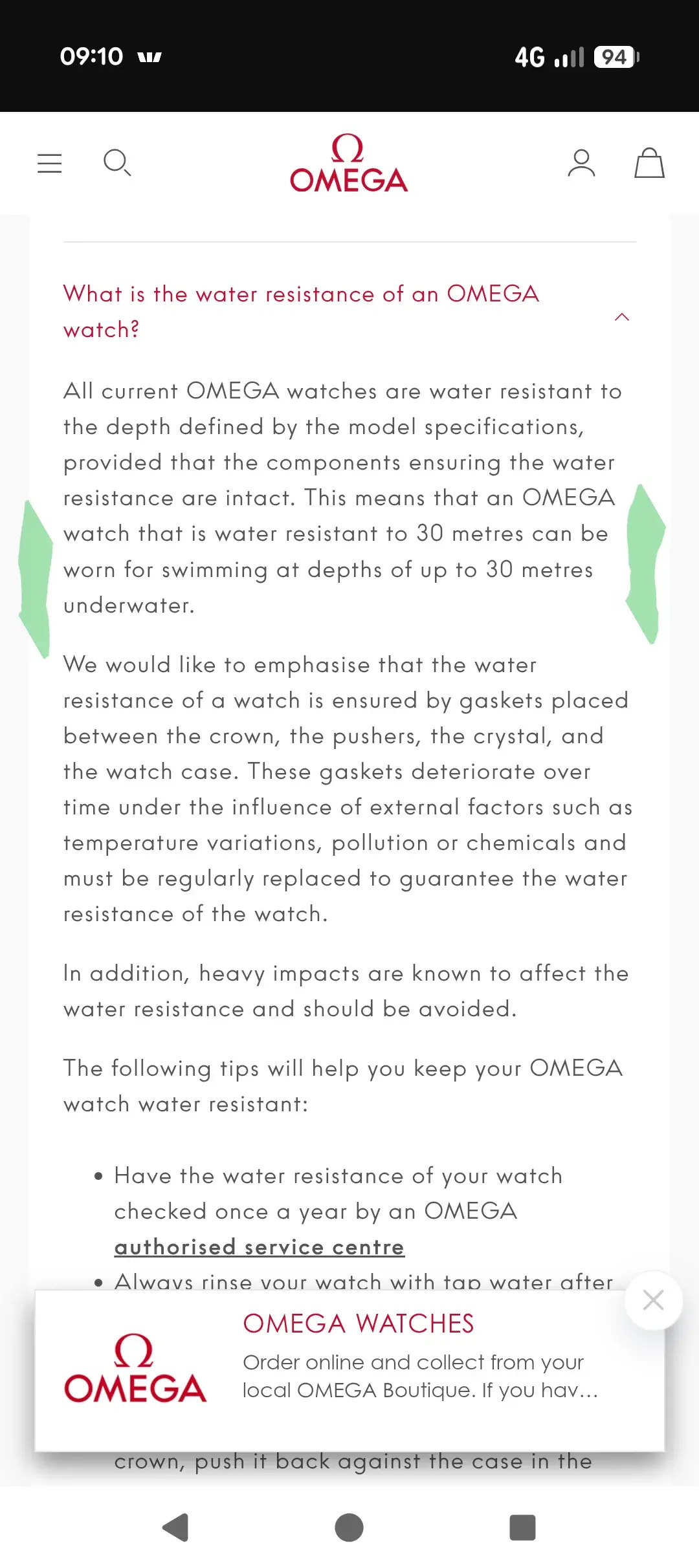
With regards to water resistance Omega states on their website that if one of their watches is water resistant to 30m, it means that you can actually take it to a depth of 30m:
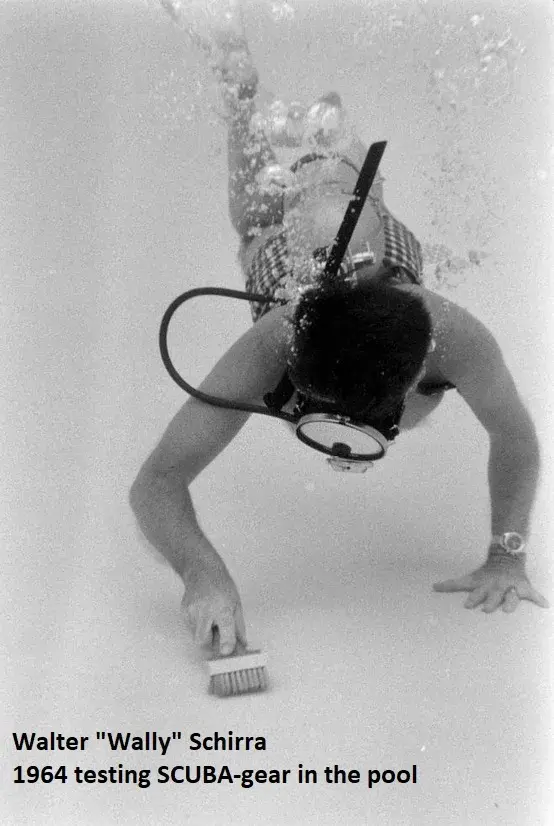
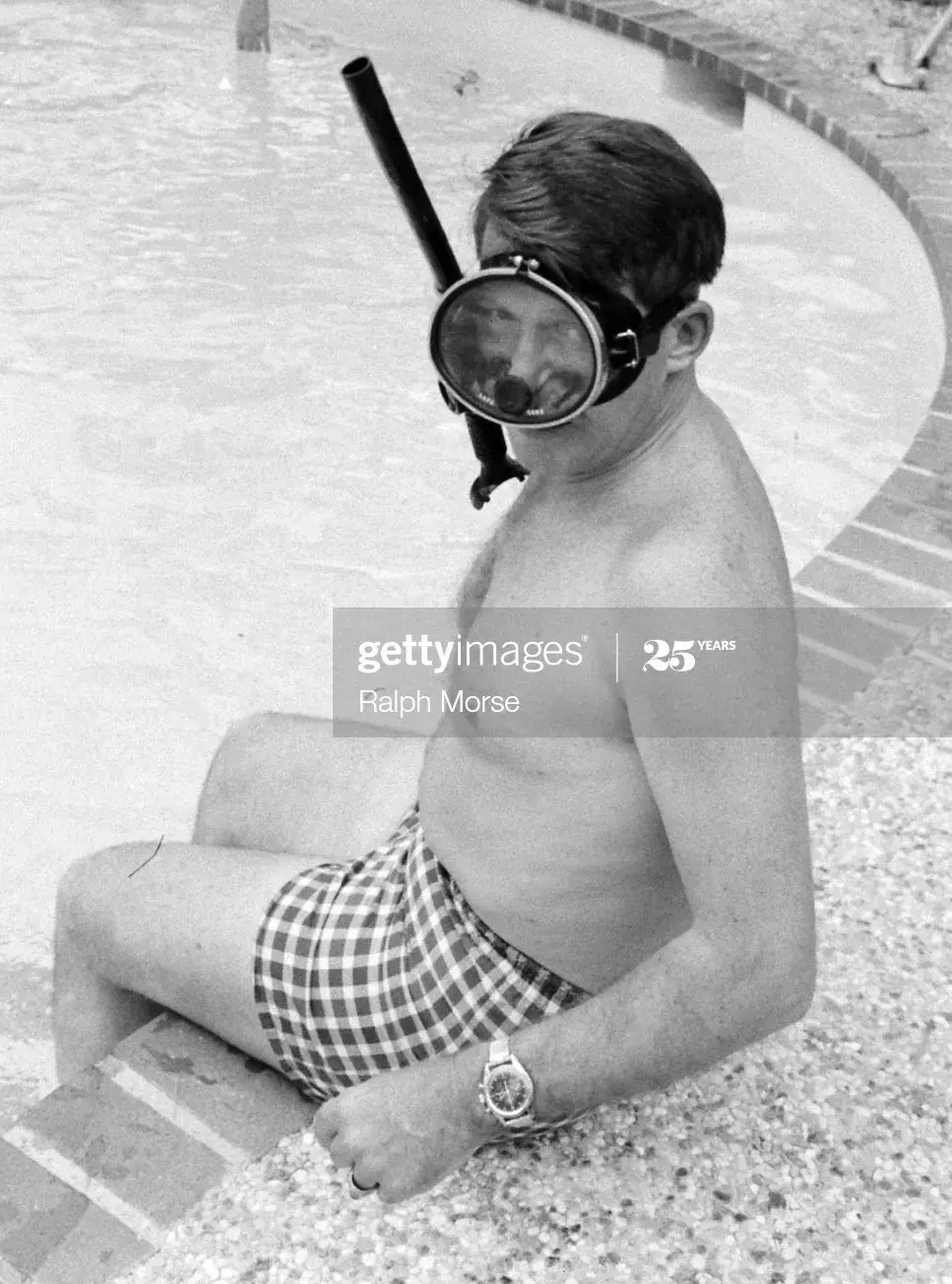
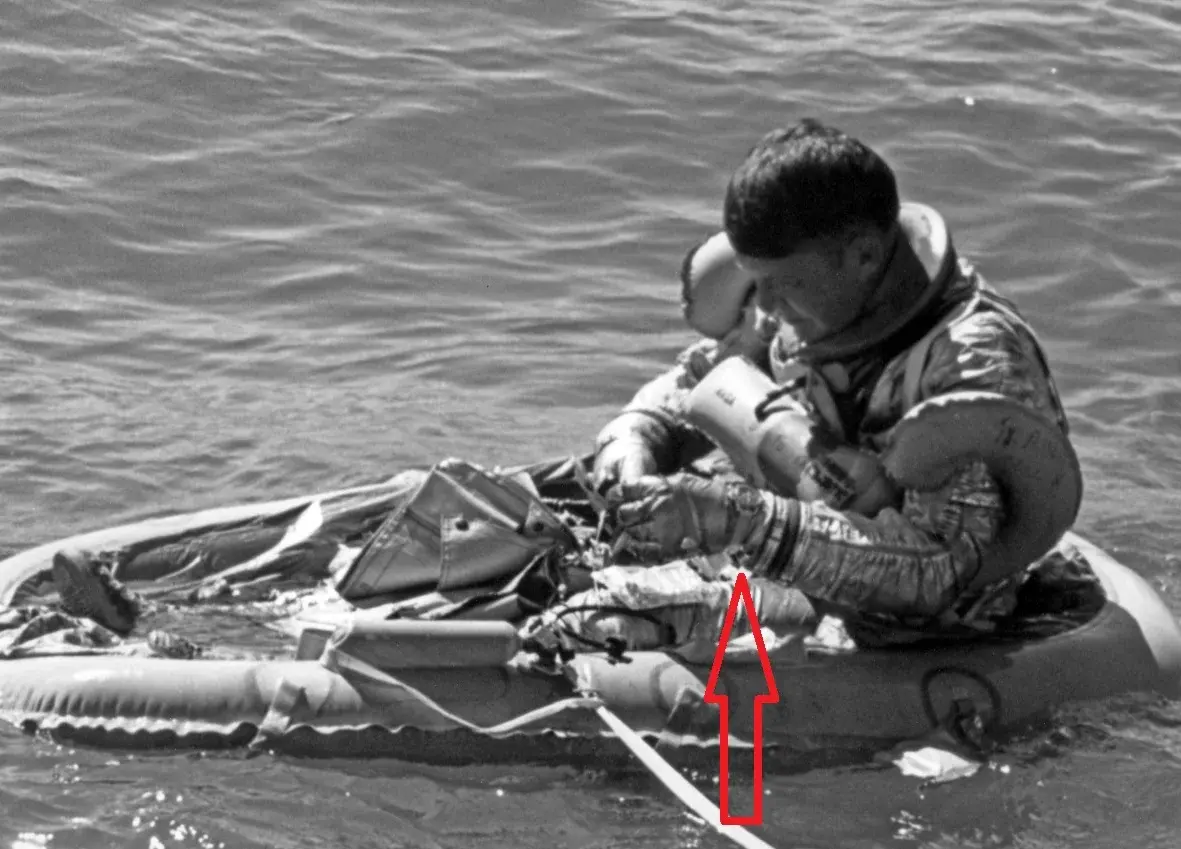
Given that most people don't scuba dive to a depth of more than about 20m, you could theoretically swim with a Speedmaster that has a depth rating of 50m without any worries. To reinforce this, here's NASA astronaut Wally Schirra in his swimming pool and doing training at sea with his Speedmaster ref CK2998 strapped to his wrist:


Edit: Didn't see the other earlier posts re water resistance, but you get my drift.
Edited:
 
Posts
60
Likes
56
The 32xx issue is an interesting lesson in Rolex’s marketing genius.

After 30 years of the workhorse 31xx movement, in 2015, Rolex introduced the 32xx movement in response to improving market standards set by other manufacturers (led by Omega) with respect to power reserve, anti-magnetism, and overall efficiency. Many feel the main improvement of the 32xx over the 31xx was increasing the power reserve from 48 hours to 70 hours.

Beginning with the Day Date in 2015, the 32xx rollout across all Rolex models was completed for the most part by 2020 (with some lesser models upgrading in 2021-23).

Reports of Rolex 32xx series movement problems, primarily regarding low amplitude, inconsistent timekeeping, and slow running, surged in the early 2020s, with many users reporting issues appearing 2–5 years after purchase.

Modern wearing habits where watch owners have many watches, require the regular resetting of watches that are worn for shorter periods making the long-term accuracy of watches harder to detect, in contrast to when people only own one watch where long-term accuracy is easier to measure.

Given these circumstances, issues with the 32xx started to become discussed/known around 2020-21. At that time, Rolex was selling over a million watches a year; demand was high and during COVID people had money and a pent up desire to spend.

An admission of a design/mechanical problem would have been devastating to their reputation, and a recall might have been very costly to implement.

What did Rolex do? They made their watches scarce.

Coinciding with the beginning of the 32xx problems, they made their watches extremely hard to get at the AD level, yet very available on the grey market at substantial premiums. Watch buyers became grateful to get a Rolex at MSRP and asking questions about rumored problems did not help in “establishing a relationship”.

Buyers chose allocation over accuracy.

Modern wearing habits made the 32xx issue hard to detect for many enthusiasts and Rolex handled these issues quietly without admitting the problem or announcing a fix or solution. Personally, I am fearful of buying a 32xx, especially if the recently introduced 71xx becomes the new standard.

W&W 2026 will be very interesting.

The lesson here is: Rolex made lemonade out of lemons.

Omega has a worthy competitor.

This is complete nonsense!!! Yes 32xx had some issues in the beginning but Rolex has rectified issues and the same thing happened with early versions of Omega's coaxial movements which were a nightmare hence, you had different versions of the same movement.

Also, Rolex makes around 1 million watch a year and since this movement was first introduced in 2015, it is safe to say there are at least 5 million watches with this new movement yet how many customers came forward with issue only a fraction, while based on volume produced you should have tens of thousands of complaints all over the news.

Finally, I have 5 Rolex watches that I purchased with the new movement, oldest being 2020, none of which reported any issues so far.
 
Posts
20
Likes
8
No one can say what’s wrong with your watch just based on a couple of photos.

But I think it would be wise to differentiate between an individual example that has a defect, as it appears your watch might have, and what the watches generally are designed and manufactured to withstand.

There is a lot of misinformation out there on watch forums on the subject of water resistance, and you should always default to what the actual brand says, and in this case all of Omega’s water resistance ratings are for the actual depth you can take them to with no restrictions on the activity. Not every brand does this, and I for one appreciate that Omega makes this clear rather than many who tell you that a 50m depth rating is only splash proof.
That is more or less what Omega AD told me tough... they didn't say it is "splash-proof", they said you can swim with it, maybe snorkel carefully, but by all means never jump into water with it.

Also, just to be clear my watch was never even 1m UNDER water... maybe like 30cm underwater if that, the second time it got wet I was LITERALLY cycling and it started raining... and that was all it too for the watch to steam up.

I do not expect anyone to tell what is wrong with my watch from photos (photos are just for reference, maybe comment on "oxidised dial and hands"), but I would expect somebody to say whenever the story makes sense i.e. watch gos back for warranty 3 times and no issue is found... 5 month after warranty end there is stem damage... yet "passes test".
 
Posts
3,862
Likes
8,353
Also, just to be clear my watch was never even 1m UNDER water... maybe like 30cm

If your water resistance is shot, the depth of exposure doesn't matter.
 
Posts
20
Likes
8
If your water resistance is shot, the depth of exposure doesn't matter.
That much I understand. My point is different - how would anyone know they have a compromised watch when they only have one example to work with? I never took my 1998 Moonwatch near water, my Seamaster is fine (as it should be - it’s a dive watch), so with the experience most owners have, it’s completely reasonable to be confused. It’s not like you can "borrow" a friend’s watch to compare.

Back to the main topic - 50m is an issue in real‑world. You can believe 50m = 50m, but it still leaves ambiguity, it should be fine, but it may not be fine, because it is not a dive watch, most people simply won’t risk it. A Submariner’s 300m rating removes all doubt - you never have to think about it... unless you have concrete block strapped to your feet, but as somebody already said - you likely have bigger issues to worry about in such case.

Omega internally sees the Seamaster as its Submariner equivalent, but most buyers don’t think that way. They see Omega = Moonwatch, Rolex = Submariner, IWC = Pilot, AP = Royal Oak, PP = Nautilus.

Omega does a much better job competing with the Daytona, but in my opinion, they still don’t have an acceptable answer to the Submariner in terms of iconic, worry‑free, water-resistant (well... it is much more than just "resistant") everyday watch.
 
Posts
29,652
Likes
76,783
That is more or less what Omega AD told me tough... they didn't say it is "splash-proof", they said you can swim with it, maybe snorkel carefully, but by all means never jump into water with it.

Also, just to be clear my watch was never even 1m UNDER water... maybe like 30cm underwater if that, the second time it got wet I was LITERALLY cycling and it started raining... and that was all it too for the watch to steam up.

I do not expect anyone to tell what is wrong with my watch from photos (photos are just for reference, maybe comment on "oxidised dial and hands"), but I would expect somebody to say whenever the story makes sense i.e. watch gos back for warranty 3 times and no issue is found... 5 month after warranty end there is stem damage... yet "passes test".
The AD is not Omega.

I have serviced a lot of watches that have leaked. None of them leaked at some incredible depth, or even in a swimming pool. They leaked most often when the owner was washing their hands…so not even submerged.

If the hands or markers on the dial are water damaged, what is it that you are asking us to comment on?

And yes, I’ve had the occasional watch in that has water damage, but passes the pressure testing on my initial inspection. It doesn’t seem to make sense, but it happens.

I don’t think anyone is saying you shouldn’t be upset by what has happened to your watch. But again you are not separating an issue with a single watch with what the watch is designed for.

Back to the main topic - 50m is an issue in real‑world. You can believe 50m = 50m, but it still leaves ambiguity, it should be fine, but it may not be fine, because it is not a dive watch, most people simply won’t risk it. A Submariner’s 300m rating removes all doubt - you never have to think about it... unless you have concrete block strapped to your feet, but as somebody already said - you likely have bigger issues to worry about in such case.
You appear to have fallen for all the misinformation out there. That’s fine, you aren’t the first and won’t be the last…
 
Posts
3,862
Likes
8,353
Back to the main topic - 50m is an issue in real‑world

No, it isn't. Not for Omega.

but it still leaves ambiguity,


I specifically posted what Omega has to say about their water ratings. There is no remaining ambiguity; I am not capable, nor should I be required, to provide any sort of additional information that would convince you. Your belief is yours to deal with, however inaccurate it may have been shown to be.

but in my opinion, they still don’t have an acceptable answer to the Submariner in terms of iconic, worry‑free, water-resistant

To risk hyperbole, there are no watches as iconic as the Speedmaster or the submariner. That does not mean, however, that there are not other iconic watches. There are- and the Seamaster Professional is, on a measurable basis, iconic.
Edited:
 
Posts
1,970
Likes
2,130
If your watch has a defect, or expired gaskets, there is no difference between a 5m or a 5000m depth rating. So the idea that a sub or seamaster is any better at depth than a DeVille at 29m, is absolute nonsense.

Depth failures tend to be catestrophic in practice. It is "crystal folks onwards and shattered", or "caseback pressed so hard it cracked the plate".

I differentiate those from gasket failures, which allow leaks, and are the result age/degredation. The gasket material on your submariner or deepsea, or speedmaster are identical, so leaks in them that happen, could happen to every one.
 
Posts
2,835
Likes
4,524
I think you missed my point. I’m not talking about collectors with drawers full of watches
I thought that was the point. Omega does not care.
 
Posts
20
Likes
8
The AD is not Omega.

I have serviced a lot of watches that have leaked. None of them leaked at some incredible depth, or even in a swimming pool. They leaked most often when the owner was washing their hands…so not even submerged.

If the hands or markers on the dial are water damaged, what is it that you are asking us to comment on?

And yes, I’ve had the occasional watch in that has water damage, but passes the pressure testing on my initial inspection. It doesn’t seem to make sense, but it happens.

I don’t think anyone is saying you shouldn’t be upset by what has happened to your watch. But again you are not separating an issue with a single watch with what the watch is designed for.


You appear to have fallen for all the misinformation out there. That’s fine, you aren’t the first and won’t be the last…
Seems to me that having this discussion on the other thread would make more sense.

I’m also not sure what “misinformation” I’m supposed to have fallen for. The problem is that if someone reads this thread or the other one, the picture they get is all over the place "Omega says 50m = 50m, some say I swim with mine all the time, others say don’t take it near water, some ADs say surface swimming is fine, others say only splash‑proof, some owners say "salt water is dangerous and you are stupid if you swim with it”

So what does that do? It creates ambiguity. There is no exact line which you need to cross "if you follow these steps, you will be fine, but this is forbidden". I’m confused because people here say it should be fine, yet my watch literally fogged on a rainy day. I’m not a watchmaker, I haven’t seen hundreds of these, so I have no baseline. If there was no ambiguity, I would have pushed Omega hard the first time it happened. But because there is ambiguity, I’m only asking questions five years later - when Omega suddenly discovers “crown stem tube damage.”

Compare that to a Submariner. If it leaks, it’s either user error (crown not screwed down) or some “cool story” about someone taking it saturation diving and popping the crystal. And the owner usually knows it’s their fault and happily pays for the rebuild. There’s no ambiguity - the watch either works or you made an obvious mistake, and likely knew it before it even happened.

With the Speedmaster, the real‑world experience just doesn’t match the marketing. Omega may well have engineered and tested it for 50m of real depth, but there are hundreds of threads of people having water‑resistance issues. That’s not misinformation - that’s lived experience.

And yes, maybe my watch was defective. But how would I know that? How does anyone know that? When the community itself can’t agree on whether a 50m watch is “fine for swimming” or “barely splash‑proof”, it becomes impossible for a normal owner to tell the difference between a defect and “normal behaviour”. Same for this context - any normal buyer would be worried when buying Speedmaster... the worry they don't have when buying Submariner.
If your watch has a defect, or expired gaskets, there is no difference between a 5m or a 5000m depth rating. So the idea that a sub or seamaster is any better at depth than a DeVille at 29m, is absolute nonsense.

Depth failures tend to be catestrophic in practice. It is "crystal folks onwards and shattered", or "caseback pressed so hard it cracked the plate".

I differentiate those from gasket failures, which allow leaks, and are the result age/degredation. The gasket material on your submariner or deepsea, or speedmaster are identical, so leaks in them that happen, could happen to every one.
My watch was brand new. Omega checked it three separate times and found no defects. Only now, after the warranty has expired, they suddenly say “damage to crown tube.”

My point is simple - if you buy a brand‑new Submariner today, you can jump into a pool or the sea with zero worries for years... maybe a decade. As long as the crown is screwed down there is nothing to worry about. If it fogs, you check the crown. If the crown was screwed down, then it’s a defect. End of story, there’s no ambiguity.

Same true for Seamaster, by my argument is - Seamaster is not as iconic as Submariner, only Speedmaster is, but Speedmaster has WR issue...

It’s obviously not a dive watch, but the exact do’s and don’ts are not clear. The limits are not clear. The messaging is inconsistent. So when it gets wet, it’s not obvious who is at fault. Is it a defect? Did I “swim incorrectly”? Did I move my hand through the water too fast? Was it rain? Humidity? A splash? That’s the whole problem - the ambiguity. With a Submariner, the line is clear. With a Speedmaster, it isn’t.
 
Posts
3,862
Likes
8,353
Compare that to a Submariner. If it leaks, it’s either user error (crown not screwed down) or some “cool story” about someone taking it saturation diving and popping the crystal

Only two possibilities? Surely you are not asserting that a Rolex watch is simply incapable of having a seal wear out? That would be.... psychotic.