Rate My Omega Collection: Vintage Cal. 565 and NTTD

Posts
2,318
Likes
10,890
Omg hey bestie, I am literally, like, high-key holding so much space for you right now and I need to radically step into my truth to profusely apologize from the absolute bottom of my authentic soul for the total vibe shift that occurred, which was honestly so not aligned with my personal brand or our collective workspace synergy. I am so, so, so validly sorry if my actions manifested any toxic energy or disrupted your manifestation journey, because at the end of the day, it really is what it is, and I want to proactively circle back, do a deep dive, and unpack this entire narrative with a total growth mindset so we can organically optimize our forward-facing trajectory. Per my previous vibes, my emotional bandwidth was just completely maxed out due to some unprecedented internal shifts, but that is totally a me-problem and not a you-problem, and I am literally so obsessed with taking massive accountability for how this impacted your personal ecosystem. Please know that I am actively learning and unlearning in this space, leveraging this disruptive moment as a teachable milestone, and I really hope we can touch base offline to organically pivot toward a place of mutual empowerment and holistic healing, because honestly, our vibe is just too iconic to not be dynamically maximized.
What you said. Perhaps it's time for cats?
Edited:
 
Posts
8,786
Likes
62,296
Omg hey bestie, I am literally, like, high-key holding so much space for you right now and I need to radically step into my truth to profusely apologize from the absolute bottom of my authentic soul for the total vibe shift that occurred, which was honestly so not aligned with my personal brand or our collective workspace synergy. I am so, so, so validly sorry if my actions manifested any toxic energy or disrupted your manifestation journey, because at the end of the day, it really is what it is, and I want to proactively circle back, do a deep dive, and unpack this entire narrative with a total growth mindset so we can organically optimize our forward-facing trajectory. Per my previous vibes, my emotional bandwidth was just completely maxed out due to some unprecedented internal shifts, but that is totally a me-problem and not a you-problem, and I am literally so obsessed with taking massive accountability for how this impacted your personal ecosystem. Please know that I am actively learning and unlearning in this space, leveraging this disruptive moment as a teachable milestone, and I really hope we can touch base offline to organically pivot toward a place of mutual empowerment and holistic healing, because honestly, our vibe is just too iconic to not be dynamically maximized.
Indeed correct.

So, translating OP's comments and subsequent replies to Real World Texan, BULLSHIT IN, BULLSHIT OUT.

Excuse my French.

 
Posts
13
Likes
9
Hello everyone,
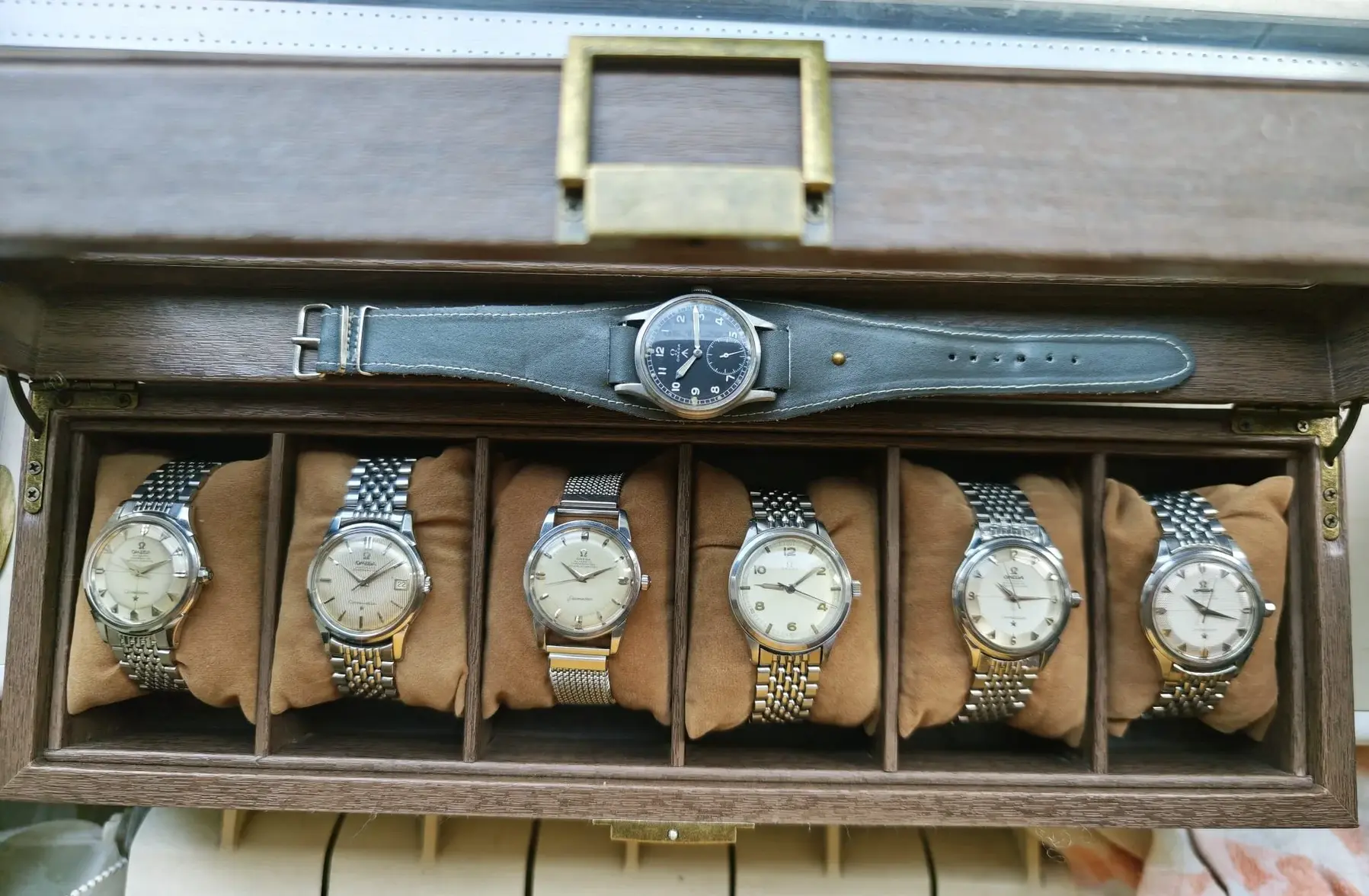
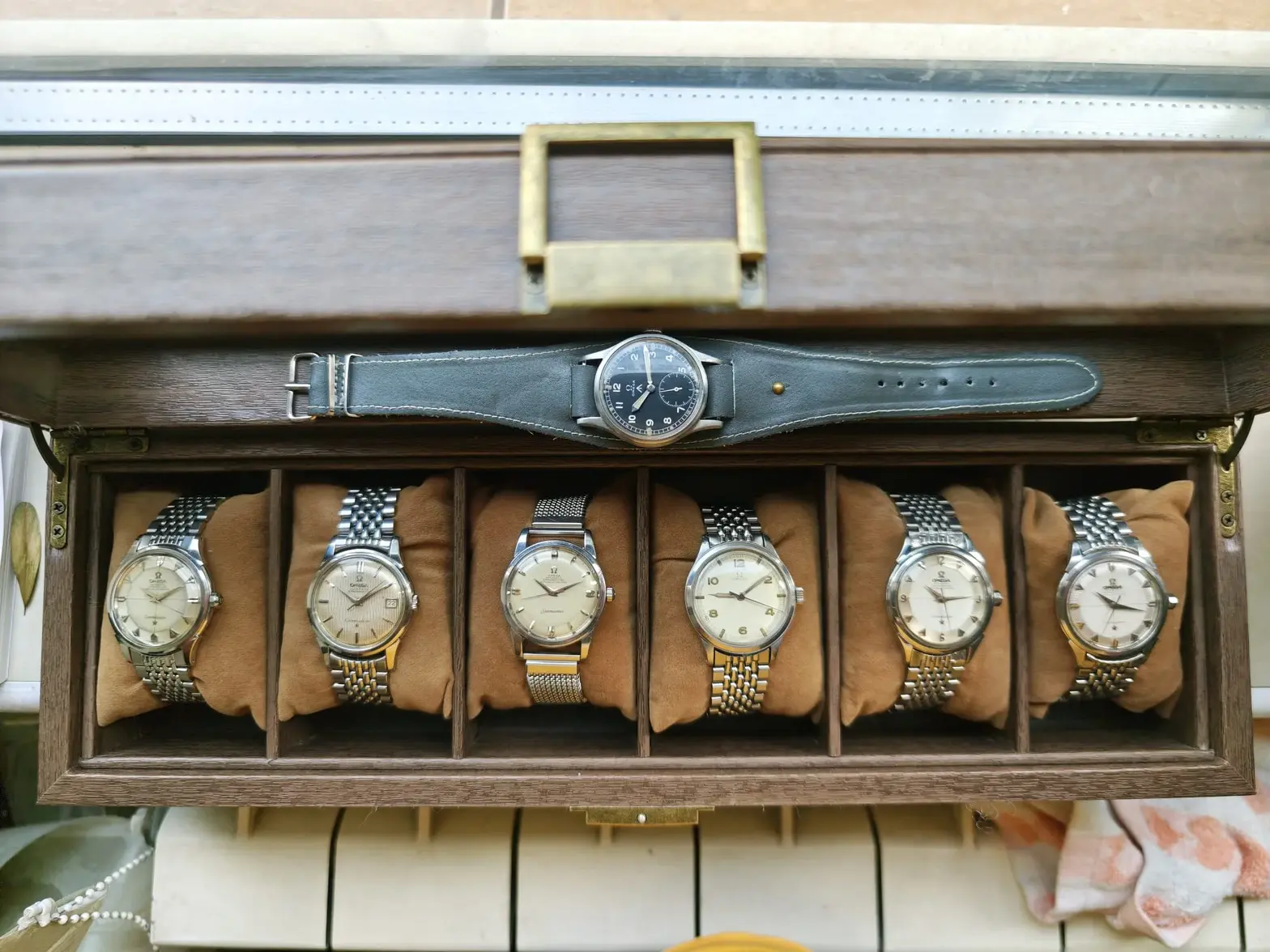
I would love to hear your honest thoughts and evaluation on my current Omega collection. Here are the details of my three pieces:
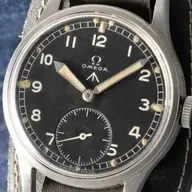
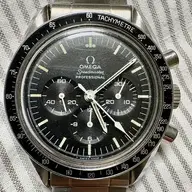
1. Vintage Seamaster
  • Reference No: ST166.0067
  • Caliber: 565
  • Serial No: 31480834
  • Bracelet/End Links: ST1037 / 614
2. Seamaster Diver 300M Co-Axial Master Chronometer 42MM
  • Reference No: 210.90.42.20.01.001 (No Time To Die edition)
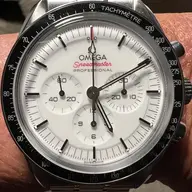
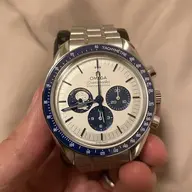
3. Speedmaster "Silver Snoopy Award" 50th Anniversary 42MM
  • Reference No: 310.32.42.50.02.001
  • Note: This is a rare "Button Suit" error dial variant manufactured in the first half of 2025. I have also swapped the original strap for the current-generation Moonwatch stainless steel bracelet.
Please let me know what you think about this trio, the vintage correctness of the Seamaster, and especially the Snoopy error dial with the modern steel bracelet modification!
Thank you!

 
Posts
29
Likes
7
今、気付きましたが、わざわざ英語にする意味がないですね。皆さん翻訳をお願いします。
ミッション トゥ ザ ムーン 1969の転売の話が出ていますが、大変もったいないですね。
私も応募しましたが、落ちてしまいました。
応募にあたり、クォーツだったので、壊れた後どうして所有し続けるか悩んで応募したのを覚えています。
時計の価値がわからない人が購入して、転売するのは大変遺憾です。
 
Posts
265
Likes
418
With all due respect, I created this thread because I believed Omega Forums would be the best place to find knowledgeable insights about Omega watches. However, looking at this and other threads, I notice a lot of replies that do not offer actual answers or opinions related to the initial questions.
To be clear, I do not need replies that sound like discomfort, petty arguments, or irrelevant objections in my thread. If you want to engage in that kind of behavior, please create your own thread and do it there.
With all due respect, I completely agree. This is, after all, an extremely serious watch forum, and nothing is more important than ensuring that every single response is scientifically relevant to the original question.

Personally, I was deeply concerned that someone might accidentally make a joke, express an unrelated opinion, or heaven forbid, enjoy themselves.

I therefore fully support the establishment of a highly regulated discussion environment where all posts must first be inspected by three Swiss watchmakers, two certified chronometer inspectors, and a small committee of people who have never laughed.

Please continue to police the thread accordingly. I, for one, will make absolutely certain that my next contribution is both completely irrelevant and unnecessarily long.

Thank you for maintaining the intellectual purity of the Omega Forums.

Kind regards
 
Posts
8,786
Likes
62,296
Completely, and half-heartily agree with reservations, objections aside and to be noted.
 
Posts
429
Likes
2,950
With all due respect

Upon thy words, my soul doth fix its seal,
And all thy thought my yielding mind doth wed;
No variance from thy judgment do I feel,
In total bond with what thy tongue hath said.
Thy proffer’d view, so passing fair and bright,
With mine own sense doth match in perfect frame;
As Phœbus lends the stars their borrowed light,
Our single thoughts do burn with equal flame.
I yield assent, sans doubt or slow delay,
And with thy speech my heart doth well accord;
What thou hast spoken on this present day,
Is truth absolute, my most honor’d lord.
No schism stands betwixt our spirits twain,
I do concur, and thus I shall remain.

Did anyone notice the above is in iambic pentameter? It took AI about 7 seconds to write it all.
Edited:
 
Posts
29
Likes
7
Even though I own a Speedmaster, I never really understood how the tachymeter actually worked, so I decided to do some research.
How to use it #1: Measuring a car's "speed" (km/h)

The tachymeter calculates average speed based on how many seconds it takes to travel exactly 1 km. You can easily measure this on the highway using the 1 km distance markers.
  • START: The moment your car passes the "0 km marker" (the starting point), press the upper chronograph button at the 2 o'clock position.
  • STOP: The exact moment the car passes the "1 km marker," press the upper button again.
  • READ THE VALUE: Look at the number on the bezel where the central chronograph second hand has stopped—that number is your car's average speed in km/h.
📌 Example of the second hand position and speed:
If it takes 30 seconds to travel 1 km ➡️ The second hand will point to the "6 o'clock position," which corresponds to the number "120" on the bezel (meaning a speed of 120 km/h).
 
Posts
29
Likes
7
How to use it #2: Measuring "hourly productivity" (workload)
Beyond just measuring speed, the tachymeter can also calculate how many times a specific task can be completed in one hour based on how many seconds a single task takes.
  • Example: Measuring the time it takes to pack a single product
    Start the chronograph right as the task begins. Stop it the exact moment the single item is packed (for example, after 45 seconds).
    If you look at the bezel at the 45-second mark (the 9 o'clock position), the number is "80."
    This shows you at a single glance that, "If you continue working at this exact pace, you can pack 80 items in one hour."
 
Posts
29
Likes
7
Why is it on the Speedmaster?
The Speedmaster wasn't originally created for space. It was actually born in 1957 as a watch for car racing. Back then, tachymeter scales were usually printed very small inside the dial. The Speedmaster made history by being the first watch in the world to move that scale onto the outer bezel in a bold, large format. This allowed racing drivers to glance down and instantly check their speed even during intense driving, cementing the Speedmaster as an absolute masterpiece in watchmaking history.
 
Posts
29
Likes
7
There are two very logical reasons why the Speedmaster's tachymeter (including the Snoopy model) starts at "500" (or 400). In short, any speed faster than that is impossible for human reflexes to measure manually, and there is physically no space on the bezel to engrave markers for under one second.
 
Posts
29
Likes
7
The Cockpit Reality: Why Drivers Needed Wristwatches
To put it simply, vintage race cars did have gauges, but speedometers were either nonexistent or completely ignored. In the 1950s, the tachometer (RPM gauge) ruled the cockpit, making a tachymeter wristwatch absolutely essential for tracking speed.
Here is how it worked:
1. Why Speedometers Were Useless on the Track
  • The Priority: Drivers didn't care about their exact speed. They needed to monitor the redline and shift points to maximize acceleration.
  • The Flaw: Mechanical speedometers calculated speed from tire rotation. Whenever tires spun or broke traction, the gauge gave completely false readings.
  • The Result: Dashboards only featured engine-management gauges like tachometers, oil pressure, and water temperature.
2. How Drivers Actually Tracked Their Average Speed
This is exactly where a chronograph like the Speedmaster saved the day during test runs and rallies:
  • The Setup: Teams placed markers at exact 1 km (or 1 mile) intervals along the track.
  • The Action: The driver or co-driver started the chronograph at the first marker and stopped it at the next.
  • The Readout: A quick glance at the bezel told them their true average speed (e.g., "Ah, we are averaging 210 km/h with this setup").
Essentially, because cars lacked reliable speedometers, the chronograph on the wrist served as the driver's external dashboard.
 
Posts
8,786
Likes
62,296
With all due respect

Upon thy words, my soul doth fix its seal,
And all thy thought my yielding mind doth wed;
No variance from thy judgment do I feel,
In total bond with what thy tongue hath said.
Thy proffer’d view, so passing fair and bright,
With mine own sense doth match in perfect frame;
As Phœbus lends the stars their borrowed light,
Our single thoughts do burn with equal flame.
I yield assent, sans doubt or slow delay,
And with thy speech my heart doth well accord;
What thou hast spoken on this present day,
Is truth absolute, my most honor’d lord.
No schism stands betwixt our spirits twain,
I do concur, and thus I shall remain.

Appears the lord cut you in on the Grift
 
Posts
8,786
Likes
62,296
The Cockpit Reality: Why Drivers Needed Wristwatches
To put it simply, vintage race cars did have gauges, but speedometers were either nonexistent or completely ignored. In the 1950s, the tachometer (RPM gauge) ruled the cockpit, making a tachymeter wristwatch absolutely essential for tracking speed.
Here is how it worked:
1. Why Speedometers Were Useless on the Track
  • The Priority: Drivers didn't care about their exact speed. They needed to monitor the redline and shift points to maximize acceleration.
  • The Flaw: Mechanical speedometers calculated speed from tire rotation. Whenever tires spun or broke traction, the gauge gave completely false readings.
  • The Result: Dashboards only featured engine-management gauges like tachometers, oil pressure, and water temperature.
2. How Drivers Actually Tracked Their Average Speed
This is exactly where a chronograph like the Speedmaster saved the day during test runs and rallies:
  • The Setup: Teams placed markers at exact 1 km (or 1 mile) intervals along the track.
  • The Action: The driver or co-driver started the chronograph at the first marker and stopped it at the next.
  • The Readout: A quick glance at the bezel told them their true average speed (e.g., "Ah, we are averaging 210 km/h with this setup").
Essentially, because cars lacked reliable speedometers, the chronograph on the wrist served as the driver's external dashboard.


Appears you're pretty good at cuttin' and pastin' Ai output.


GOOD SHOW! You'll go far!
 
Posts
37
Likes
85
The Cockpit Reality: Why Drivers Needed Wristwatches
To put it simply, vintage race cars did have gauges, but speedometers were either nonexistent or completely ignored. In the 1950s, the tachometer (RPM gauge) ruled the cockpit, making a tachymeter wristwatch absolutely essential for tracking speed.
Here is how it worked:
1. Why Speedometers Were Useless on the Track
  • The Priority: Drivers didn't care about their exact speed. They needed to monitor the redline and shift points to maximize acceleration.
  • The Flaw: Mechanical speedometers calculated speed from tire rotation. Whenever tires spun or broke traction, the gauge gave completely false readings.
  • The Result: Dashboards only featured engine-management gauges like tachometers, oil pressure, and water temperature.
2. How Drivers Actually Tracked Their Average Speed
This is exactly where a chronograph like the Speedmaster saved the day during test runs and rallies:
  • The Setup: Teams placed markers at exact 1 km (or 1 mile) intervals along the track.
  • The Action: The driver or co-driver started the chronograph at the first marker and stopped it at the next.
  • The Readout: A quick glance at the bezel told them their true average speed (e.g., "Ah, we are averaging 210 km/h with this setup").
Essentially, because cars lacked reliable speedometers, the chronograph on the wrist served as the driver's external dashboard.

 
Posts
29
Likes
7
Speaking of the 'Button Suit' dial, I actually found one currently listed for sale at a Japanese luxury watch dealer (WATCHNIAN).
Here is the link to the listing:

https://watchnian.com/shop/g/gik-00...omega_310.32.42.50.02.001&utm_id=kakaku_A0002
According to the dealer's specs, this specific piece comes with a manufacturer warranty stamped in December 2024. Just wanted to share this with you guys as a helpful data point for tracking which production batch these error dials belong to!