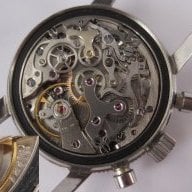
Radiation concerns.

Posts
1,565
Likes
3,672
I just want to add something that is, for me, very important. As I said before in the radium-containing 2998 thread, I am a researcher on actinides materials that are obviously (highly) radiotoxic (alpha, beta, gamma, X, neutron emitters depending upon the element and its isotopy).

A simple dose rate measurement has no real meaning because the unit (Sv) is directly related to the effect a radiation exposure has on a part of the organism. What I mean is that, because of the intrinsic different density/location in the body/"fragility" of every single organ, the dose integrated by a considered organ can be significantly different for a given radiation source.

For exemple, the soft tissues (blood vessels, skin, innards, eye lens, etc) are much more radiation-sensitive than other organs like, for instance, the bones.

The dose rates given by a measurement device are, to my knowledge, always the "most penalizing" values, i.e. that the dose rates given are for the soft tissues. What I want to say is that the "real" or "everyday life" dose rate of a normal use of a radium-containing watch is lower than those given by the measurement as your radium-containing dial/hand combo is not constantly in contact with a soft tissue. For me, the irradiation problem of radium-containing watches is not so problematic.

For me the real problem is contamination that is much more pernicious. If you open your watch, remove its dial/hands combo and handle them, you have a serious risk to me contaminated by radium that will, if you breath/ingest it, enter in you body and be placed in direct contact with soft tissues. Here, radium will have a much more significant effect on your body as it will irradiate all the organs surounding it. As any other internal contamination, radium will be naturally eliminated by your organism with time but still, during its transit in your body, it may cause damages.
I can only recommend to wear gloves (regular surgery/latex gloves), long-sleaves shirts, and at least a paper mask when you do handle these parts.
Once finished, you should clean your workplan with a wet tissue and clean your clothes to prevent contamination (especially if you have children that can play around).

Cheers.

Dr. R.
Edited:

 
Posts
946
Likes
2,077
I just want to add something that is, for me, very important. As I said before in the radium-containing 2998 thread, I am a researcher on actinides materials that are obviously (highly) radiotoxic (alpha, beta, gamma, X, neutron emitters depending upon the element and its isotopy).

A simple dose rate measurement has no real meaning because the unit (Sv) is directly related to the effect a radiation exposure has on a part of the organism. What I mean is that, because of the intrinsic different density/location in the body/"fragility" of every single organ, the dose integrated by a considered organ can be significantly different for a given radiation source.

For exemple, the soft tissues (blood vessels, skin, innards, eye lens, etc) are much more radiation-sensitive than other organs like, for instance, the bones.

The dose rates given by a measurement device are, to my knowledge, always the "most penalizing" values, i.e. that the dose rates given are for the soft tissues. What I want to say is that the "real" or "everyday life" dose rate of a normal use of a radium-containing watch is lower than those given by the measurement as your radium-containing dial/hand combo is not constantly in contact with a soft tissue. For me, the irradiation problem of radium-containing watches is not so problematic.

For me the real problem is contamination that is much more pernicious. If you open your watch, remove its dial/hands combo and handle them, you have a serious risk to me contaminated by radium that will, if you breath/ingest it, enter in you body and be placed in direct contact with soft tissues. Here, radium will have a much more significant effect on your body as it will irradiate all the organs surounding it. As any other internal contamination, radium will be naturally eliminated by your body with time but still, during its transit in your body, it may cause damages.
I can only recommend to wear gloves (regular surgery/latex gloves), long-sleaves shirts, and at least a paper mask when you do handle these parts.
Once finished, you should clean your workplan with a wet tissue and clean your clothes to prevent contamination (especially if you have children that can play around).

Cheers.

Dr. R.


now that was quick .... thx @Seaborg
 
Posts
251
Likes
312
For me the real problem is contamination that is much more pernicious. If you open your watch, remove its dial/hands combo and handle them, you have a serious risk to me contaminated by radium that will, if you breath/ingest it, enter in you body and be placed in direct contact with soft tissues. Here, radium will have a much more significant effect on your body as it will irradiate all the organs surounding it. As any other internal contamination, radium will be naturally eliminated by your body with time but still, during its transit in your body, it may cause damages.
I can only recommend to wear gloves (regular surgery/latex gloves), long-sleaves shirts, and at least a paper mask when you do handle these parts.
Once finished, you should clean your workplan with a wet tissue and clean your clothes to prevent contamination (especially if you have children that can play around).

Cheers.

Dr. R.

Could this perhaps be stickied somewhere as a Public Safety Announcement?
 
Posts
1,565
Likes
3,672
Could this perhaps be stickied somewhere as a Public Safety Announcement?

Actually, we have to admit that, nowadays, handling and working on radium-containing watches is really anecdotic as modern watches have no longer radioactive materials.
Maybe a watchmaker specialized in servicing very old watches should be considered as a nuclear worker...
 
Posts
2,598
Likes
5,660
Gases that are heavier than air certainly do settle as suggested. This is why for example confined spaces need to be tested before being entered to perform work, such as sewers. For radon this is one reason why the basement of a building is where the greatest risk is.

Sinn fills their watches with inert gas by "pouring" it into the cases...

Cheers, Al
I hadn’t really realized that Radon was so heavy relative to air, but I still reckon if I open my box outside and leave it there for a couple of minutes a lot of the Radon will clear. The boxes are shallow relative to the width and there will be some air turbulence outside to help clear that. I mean if opening a few windows can clear a room (when the windows are mounted high and radon theoretically would settle on the floor), then turbulence must have a big influence.

Sewers are deep, have a large volume, and a relatively small opening compared to the volume which is a bit different. The Sinn example’s really interesting, but still they’ll surely do the process in a deep tub where there’s a bottom layer of inert gases. Otherwise I would think the gas inside the case would get mixed too easily with regular air when it was sealed up.

But all the above is just an uneducated attempt to be realistic, and it’s guesswork. From now on I can happily tip my boxes upside down when I’m out on the balcony. And I’m going to buy a radon meter to take some of the guesswork away.
 
Posts
391
Likes
598
Is this why omega service costs are so high? Its danger money for watchmakers!
 
Posts
946
Likes
2,077
Is this why omega service costs are so high? Its danger money for watchmakers!
nope , it's because people ask such questions
 
Posts
8,097
Likes
28,526
Thank you, @Seaborg. Your post above is consistent with my growing understanding of the (very low) risks associated with wearing radium dialed watches. Servicing such watches, as you point out, is potentially a much more dangerous activity.
 
Posts
1,565
Likes
3,672
Tony, thanks for the prompt reply. My big concern is really this radon gas exposure, much more so than the particle risks of wearing the watch. I am hoping to learn more about how to mitigate radon accumulation. How best to store these, in a plastic bag, or open to the air? Etc. etc.

Concerning radon, it's a gas that is naturally generated by some rocks (containing uranium traces such as granite). The problem of radon is really serious in mines (especially uranium ore mines). As a gas, it will be easily "diluted" in an open area or with a normal ventilation. Do not forget radon isotopes (here 222Ra) have a really short half-life meaning that the radon "exposure" will be limited (especially because it's an alpha emitter).
I suggest to let your Ra-bearing watches open to the air for an optimal dilution. If you keep it in a closed plastic bag, you will simply create a massive Ra puff when you will open it...
 
Posts
29,672
Likes
76,830
I hadn’t really realized that Radon was so heavy relative to air, but I still reckon if I open my box outside and leave it there for a couple of minutes a lot of the Radon will clear. The boxes are shallow relative to the width and there will be some air turbulence outside to help clear that. I mean if opening a few windows can clear a room (when the windows are mounted high and radon theoretically would settle on the floor), then turbulence must have a big influence.

Sewers are deep, have a large volume, and a relatively small opening compared to the volume which is a bit different. The Sinn example’s really interesting, but still they’ll surely do the process in a deep tub where there’s a bottom layer of inert gases. Otherwise I would think the gas inside the case would get mixed too easily with regular air when it was sealed up.

But all the above is just an uneducated attempt to be realistic, and it’s guesswork. From now on I can happily tip my boxes upside down when I’m out on the balcony. And I’m going to buy a radon meter to take some of the guesswork away.

Well sewers is just one example - there are plenty of places that are smaller and low lying in various industrial environments for example where testing the atmosphere is required before entry - I used to do this often in my previous engineering life when managing projects that required confined space entry...

Plenty of gases are heavier than air - the soldiers in WWI knew that mustard gas was for example, and would settle in the trenches.

As for "pouring" out the radon gas, or "pouring" in the inert gasses in Sinn watches, you will notice the use of quotes...😉

Treat your radon concerns however you wish, but the main point I was making is with regards to pooling gases that are heavier than air.

Cheers, Al
 
Posts
603
Likes
2,567
In all the concern over radium / radon I'd also ask that we not forget the obvious environmental exposures known to increase one's cancer risk: smoking and sun exposure.

I can see the brewing logical inconsistency of someone being very careful in opening / storing their watches from now on ... followed by a quick smoke break or trip to the beach sans sunscreen.
 
Posts
1,294
Likes
2,299
This has been a very informative thread. My tentative conclusions are don't worry much about my 1st execution autavia or tudor gilt Submariner as I wear them once or twice a month at most. I keep both watches in a box (not together) in a large closet with normal ventilation and the boxes are opened regularly. I am probably not looking to add more radium dials but I probably had more risk walking around in the hot Greek sun all day today than I do with the watches....
 
Posts
1,565
Likes
3,672
In all the concern over radium / radon I'd also ask that we not forget the obvious environmental exposures known to increase one's cancer risk: smoking and sun exposure.

I can see the brewing logical inconsistency of someone being very careful in opening / storing their watches from now on ... followed by a quick smoke break or trip to the beach sans sunscreen.

So true.
 
Posts
1,455
Likes
2,054
I just want to add something that is, for me, very important. As I said before in the radium-containing 2998 thread, I am a researcher on actinides materials that are obviously (highly) radiotoxic (alpha, beta, gamma, X, neutron emitters depending upon the element and its isotopy).

A simple dose rate measurement has no real meaning because the unit (Sv) is directly related to the effect a radiation exposure has on a part of the organism. What I mean is that, because of the intrinsic different density/location in the body/"fragility" of every single organ, the dose integrated by a considered organ can be significantly different for a given radiation source.

For exemple, the soft tissues (blood vessels, skin, innards, eye lens, etc) are much more radiation-sensitive than other organs like, for instance, the bones.

The dose rates given by a measurement device are, to my knowledge, always the "most penalizing" values, i.e. that the dose rates given are for the soft tissues. What I want to say is that the "real" or "everyday life" dose rate of a normal use of a radium-containing watch is lower than those given by the measurement as your radium-containing dial/hand combo is not constantly in contact with a soft tissue. For me, the irradiation problem of radium-containing watches is not so problematic.

For me the real problem is contamination that is much more pernicious. If you open your watch, remove its dial/hands combo and handle them, you have a serious risk to me contaminated by radium that will, if you breath/ingest it, enter in you body and be placed in direct contact with soft tissues. Here, radium will have a much more significant effect on your body as it will irradiate all the organs surounding it. As any other internal contamination, radium will be naturally eliminated by your body with time but still, during its transit in your body, it may cause damages.
I can only recommend to wear gloves (regular surgery/latex gloves), long-sleaves shirts, and at least a paper mask when you do handle these parts.
Once finished, you should clean your workplan with a wet tissue and clean your clothes to prevent contamination (especially if you have children that can play around).

Cheers.

Dr. R.
To clarify it’s believed radiation damage per given dose is the same to all cells of the body. However the time for the damage effects to manifest varies depending on the type of tissue exposed. Tissue that have higher turnover such as that of the thyroid and testicles tend to exhibit outward effects sooner per given dose.
Edited:
 
Posts
1,694
Likes
7,356
I have actually been wrestling with this quite a bit over the past week or so (since the British journal posted its findings). I have four radium watches, which happen to be highly coveted and were all crown jewels in their own right when they were added to the collection (Rodania Geometer x2, 2998-3, 2913-3). As much as I love them, however, dealing with radon gas particles (and knowing that I have an eight month old son crawling around in our bedroom, where one of them is typically stored - the other three are in a poorly ventilated safety deposit box) makes me seriously consider simply selling them off and staring longingly at pictures of them for the years to come. This hobby is engrossing, fun, educational, and all the other adjectives in the world...but it's a hobby. No hobby is worth putting yourself or your family in danger.

Overreaction? Maybe. Probably. But there are so many tritium-based watches in the sea...still plenty of fun to have without the risk (whether simply perceived or real). Am I crazy? Someone talk me off the ledge!
 
Posts
8,097
Likes
28,526
I have actually been wrestling with this quite a bit over the past week or so (since the British journal posted its findings). I have four radium watches, which happen to be highly coveted and were all crown jewels in their own right when they were added to the collection (Rodania Geometer x2, 2998-3, 2913-3). As much as I love them, however, dealing with radon gas particles (and knowing that I have an eight month old son crawling around in our bedroom, where one of them is typically stored - the other three are in a poorly ventilated safety deposit box) makes me seriously consider simply selling them off and staring longingly at pictures of them for the years to come. This hobby is engrossing, fun, educational, and all the other adjectives in the world...but it's a hobby. No hobby is worth putting yourself or your family in danger.

Overreaction? Maybe. Probably. But there are so many tritium-based watches in the sea...still plenty of fun to have without the risk (whether simply perceived or real). Am I crazy? Someone talk me off the ledge!

Seems like an overreaction. First, it is doubtful that four watches would produce a tremendous amount of gas. Don't forget that the article that triggered the discussion was about 30 military watches kept in a small, poorly ventilated room. Night and day from your situation.

Secondly, why couldn't they be stored far away from the rooms that the baby typically occupies?

You could also borrow or rent (?) a device to measure the levels, and the results may also provide peace of mind.
 
Posts
7,177
Likes
23,253
I read this post with interest, particularly after the radon study from the UK hit the airwaves.

I have five high radiation watches, and numerous others with radium hands. I store them in my bedroom at times, so of course, I was interested in what my radon exposure could be.

So I coughed up the $200 and sprung for a Corentuim radon detector by Airthings, which gets fairly high accuracy ratings compared to the standard tests. The difference is, rather than having to send the specimen out for analysis, the detector gives you an on-going short, and long-term radon detection result.

As has been mentioned previously, the levels and exposure can vary significantly based on things like air-flow, time of year, and importantly, what floor you store them on, and spend most of your time in.

Closed windows tend to make the readings higher, and I just came back from a three-day weekend away where I had left them that way purposely, so I was curious what my levels would be like upon my return. To my surprise, they were around 0.21pCi/L. This is fairly low, and lower than the average outdoor level of .4pCi/L.

So, if this issue is of concern, and you have a large number of radium watches, it may be worth the investment for your peace of mind, or, in a worst-case scenario, it will assist you in sorting out how to mitigate the problem. I'd be interested in hearing back on your results when you do.