Quick patina progress

Posts
498
Likes
410
I was wondering today about how it’s important that nice examples of vintage watches are looked after well where possible. However I’m also of the opinion that these watches were designed to be worn and used and as such should be to some extent.

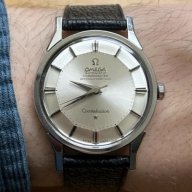
I’m fortunate to own a near pristine 14900 Constellation, but don’t find myself reaching for it that much for fear of it degrading (mainly the dial). I was wondering if anyone has anecdotes or experiences of buying a vintage watch in good condition and wearing it regularly, but finding that over the course of ownership patina started to develop (bubbling on the dial/spotting etc.).

 
Posts
9,550
Likes
52,725
If the case and crown have a good seal against moisture intrusion, wearing the watch isn’t going to expose the dial to anything but sunlight. If you want the watch to stay absolutely pristine, the only solution is to never wear it - and what’s the point in that?
 
Posts
498
Likes
410
Very true! I imagine when you say moisture intrusion you’re referring to unusually high humidity/splashes of water?
 
Posts
9,550
Likes
52,725
Very true! I imagine when you say moisture intrusion you’re referring to unusually high humidity/splashes of water?
Yes.
 
Posts
197
Likes
255
Just speaking in general, and understanding that there are a boatload of other variables to consider, but how much does sunlight exposure contribute to patina/aging of a dial? At least relative to the aforementioned humidity/moisture?
 
Posts
9,550
Likes
52,725
Just speaking in general, and understanding that there are a boatload of other variables to consider, but how much does sunlight exposure contribute to patina/aging of a dial? At least relative to the aforementioned humidity/moisture?
Well, considering what years of sun exposure can do to unprotected skin, automotive finishes, all plastics and any number of other things, there is certainly an effect, but not at the same level as prolonged exposure to moisture which is the beginning of the end for any watch dial.
 
Posts
7,580
Likes
13,991
Moisture is the big bugaboo in degradation of a vintage watch dial. Dials of yore didn't have the modern day materials and coating surfaces, and better protected cases, that we have today. Sunlight will have an effect on a dial, mostly fading, but less of a factor than moisture and humidity.
 
Posts
24
Likes
8
Is there a recommended level of humidity inside or anything you can do besides opening a window?
 
Posts
891
Likes
1,633
Is there a recommended level of humidity inside or anything you can do besides opening a window?
Store in a closed box with some desiccant or even a paper towel when not wearing.
 
Posts
446
Likes
374
Just speaking in general, and understanding that there are a boatload of other variables to consider, but how much does sunlight exposure contribute to patina/aging of a dial? At least relative to the aforementioned humidity/moisture?
Dials are painted and varnished. Sunlight is going to affect them depending upon the chemical make-up of the pigments, paint binder and the varnish. Its also well known that light exposure to varnishes and media can cause yellowing. On the other hand, keeping some binders, varnishes and plastics in the dark can induce yellowing which bleaches in light. (Rubens wrote to Philip II of Spain about this). The answer is that there is no simple answer. Preventative care means that you keep the watch in a stable temp and Relative humidty environment, but that's not easy to do if you wear them. Wear them and enjoy them. To quote Burt Lancaster in The Professionals: "Nothing is for always. Except death."