Hi,
Many thanks to the OP for the very interesting article about original loom on the SM 300.
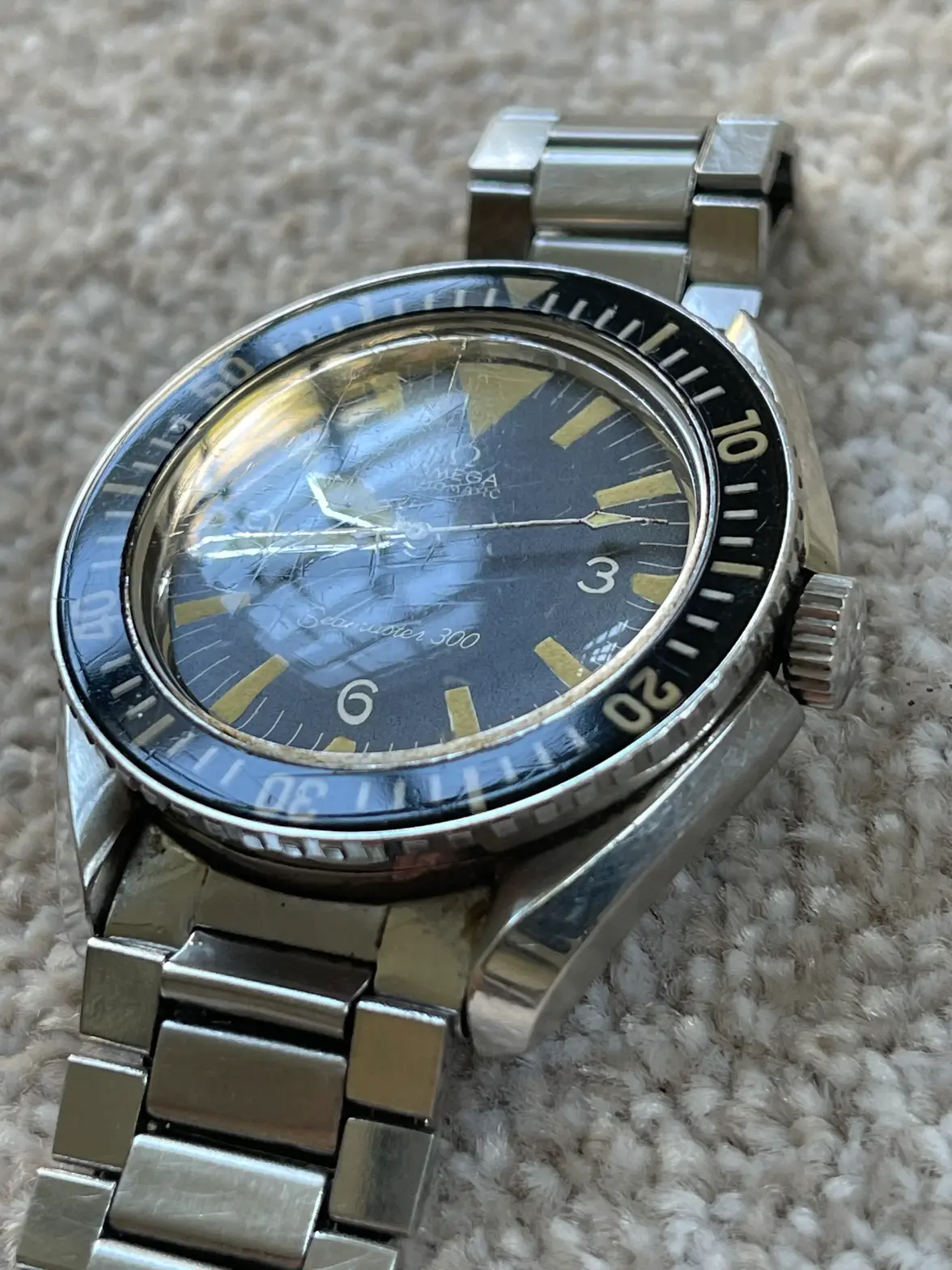
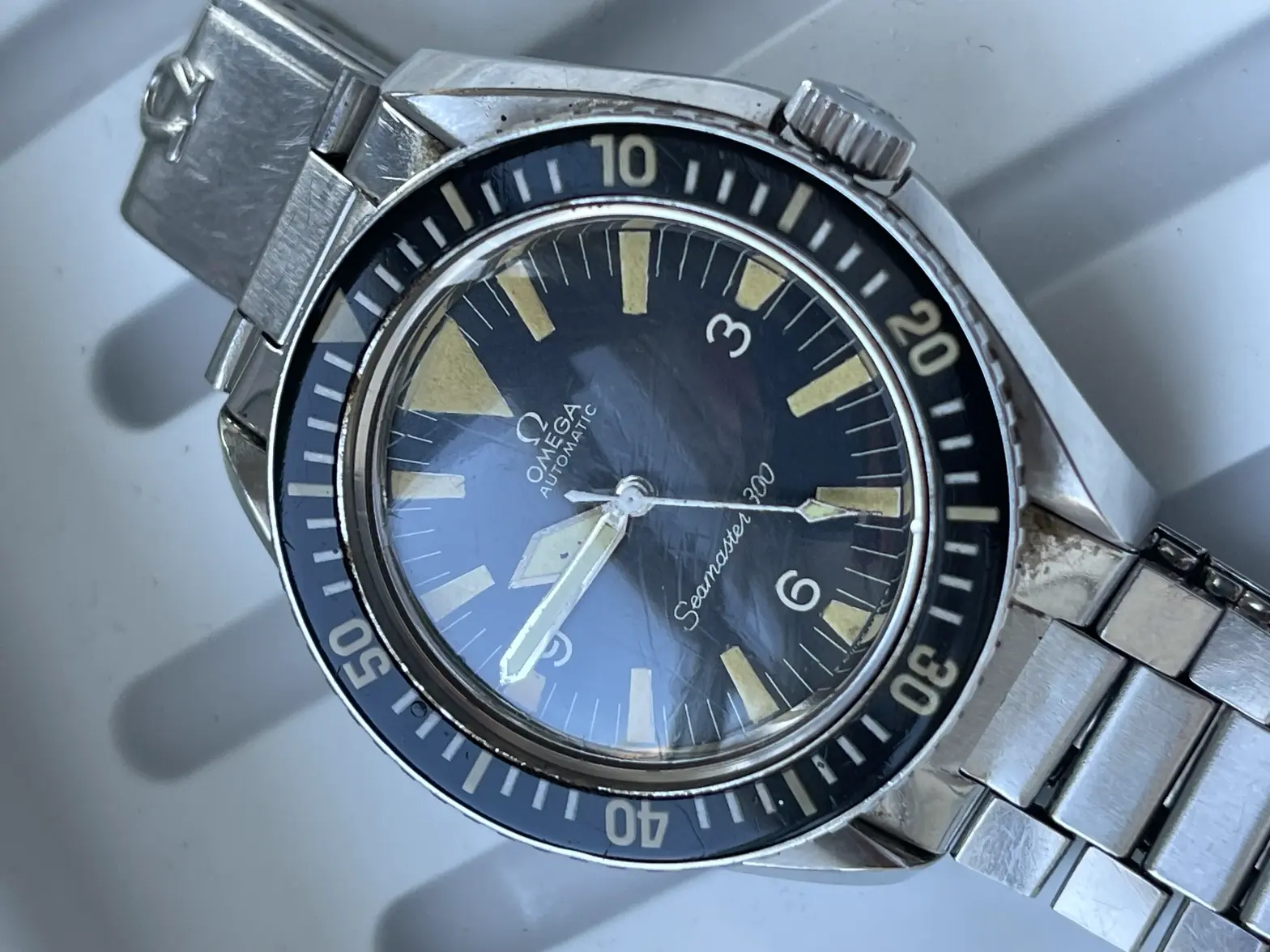
I have recently acquired a one owner SM300 165.024 Big Triangle No-Date, made in 1966, it is all original with it's original 1506/16 4/66 dated bracelet, on the dial I can't see the pinholes, however the lume is original.
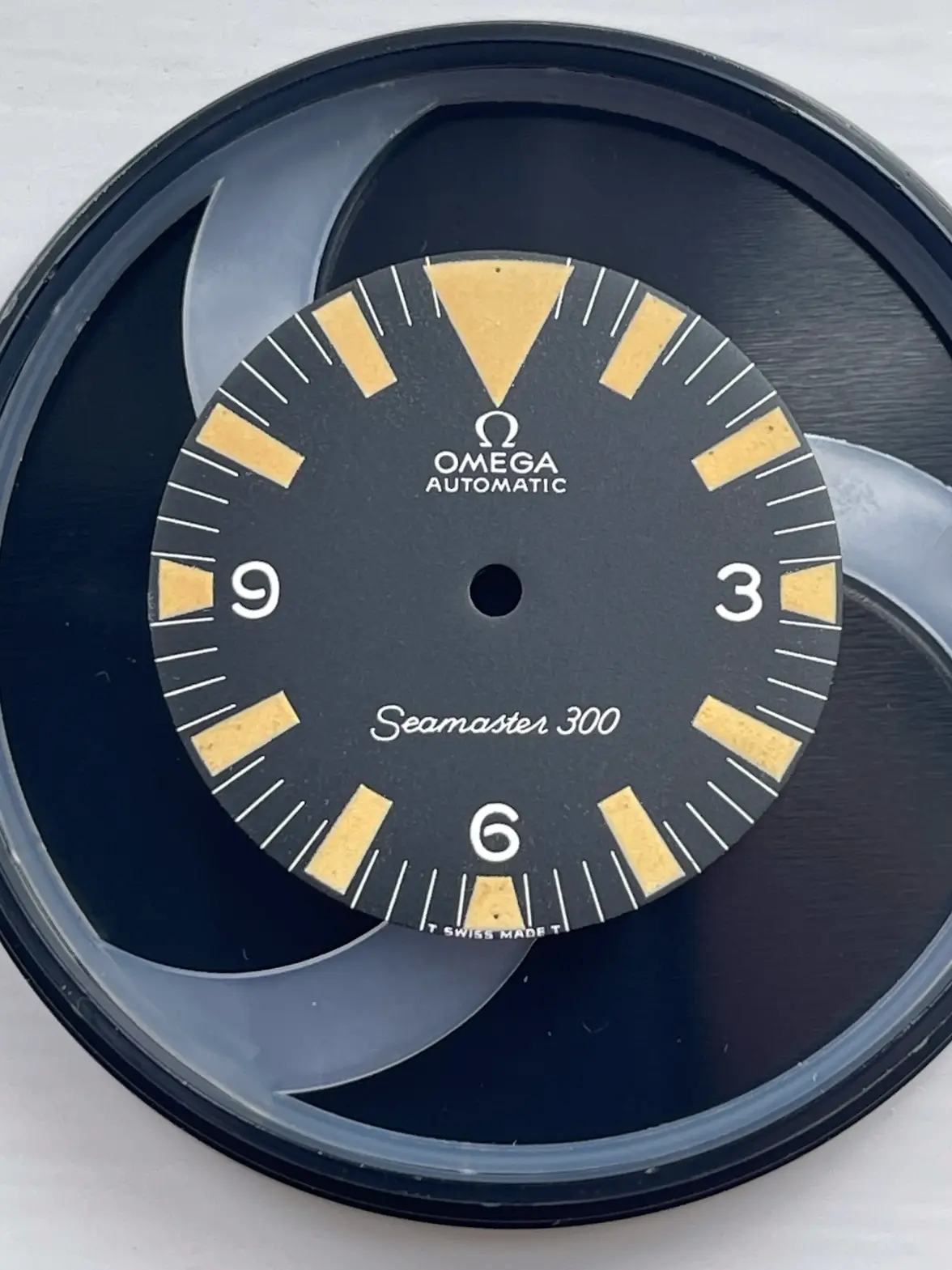
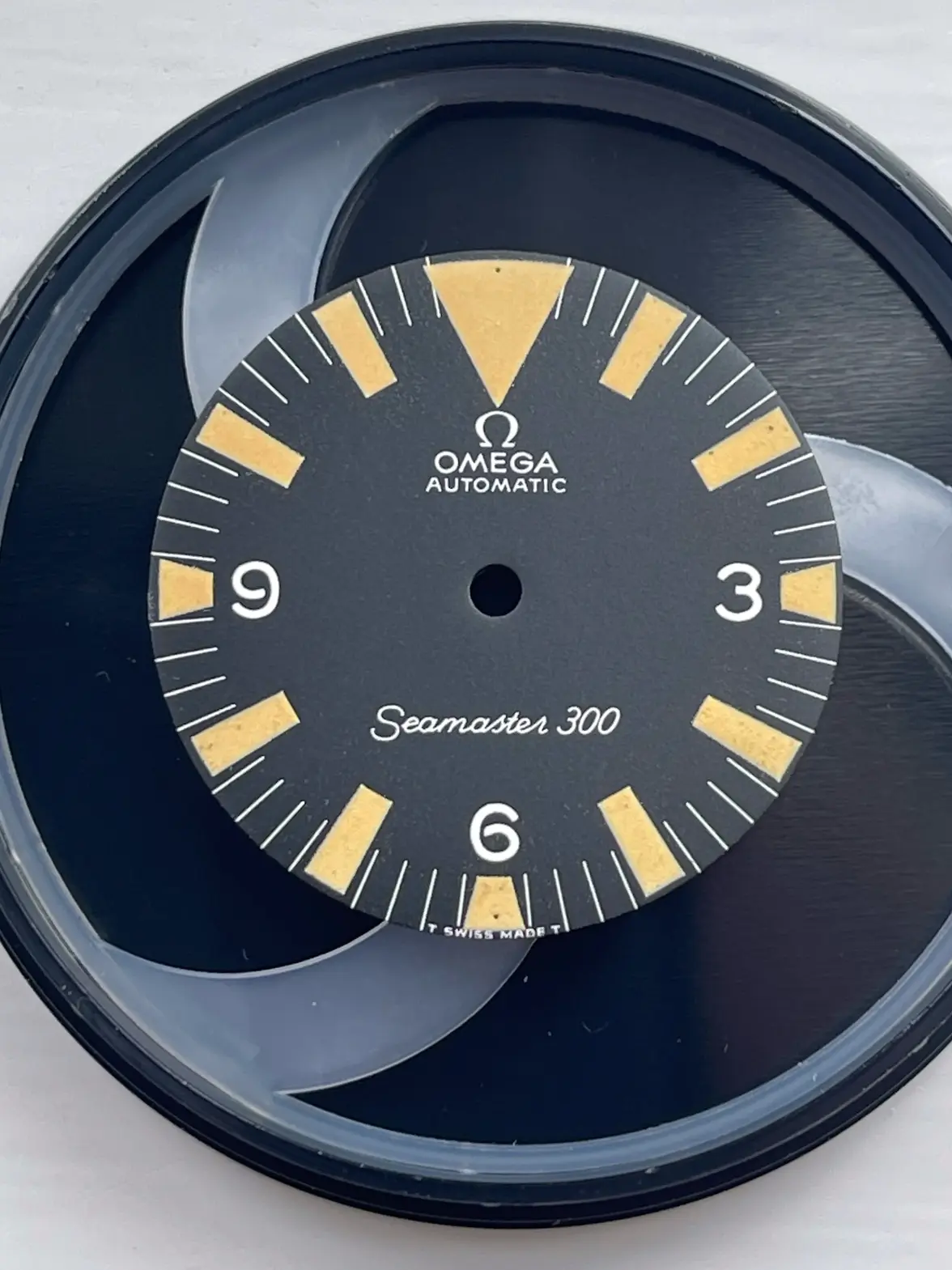
I also have an original NOS 1968 Big Triangle no date dial and hands set, that I acquired from a very nice gentleman who in turn had acquired these along with a job lot of various other makes of watch parts, an incredible find.
This NOS dial has the pin-holes at 12 and 6 and it is marked on the back 68*552.
When comparing the lume of these two dials I noticed :
The 1966 dial has a light sand coloured lume, I can't see pinholes and the lume is hand applied, quite imprecisely actually, and very similar to your (OP) dial that you have illustrated in the original post above.
The 1968 NOS dial has a darker sand coloured lume (as do the hands), there are pinholes in the dial at 12 & 6 and the lume is more precisely applied.
It looks like the lume was applied using a stencil?, and I'm guessing the pinholes were used to line up the stencil during application.
I'm not sure but I read somewhere that the Big Triangle No-Date dial was first available in 1966?
So I'm thinking that possibly the earlier production dials were hand applied, like mine and yours (OP) and later on in the production run they changed from hand applying the lume (time consuming and imprecise) to applying the lume using a stencil?
The lume on my 68 NOS dial is a darker sand colour, has the pinholes and the lume is more precisely applied.
I'm not sure if the darker sand colour lume only appears on the later produced dials, however my 68 dial certainly is a darker sand colour than the 66 dial.
Please have a look at my photos of the 66 dial and the NOS 68 dial, the differences in colour and the precision of the lume application is evident.
I have not removed the 66 dial from my watch to check if this dial has pinholes hidden by the lume.
So I'm supporting your theory that original lume doesn't have to always have the pin holes.
I would be very interested in your comments and opinions.
Kind regards,
Nick
(I'm in the UK)