Opinions on vintage 9CT gold signet ring / pinkie ring

Posts
33,439
Likes
38,148
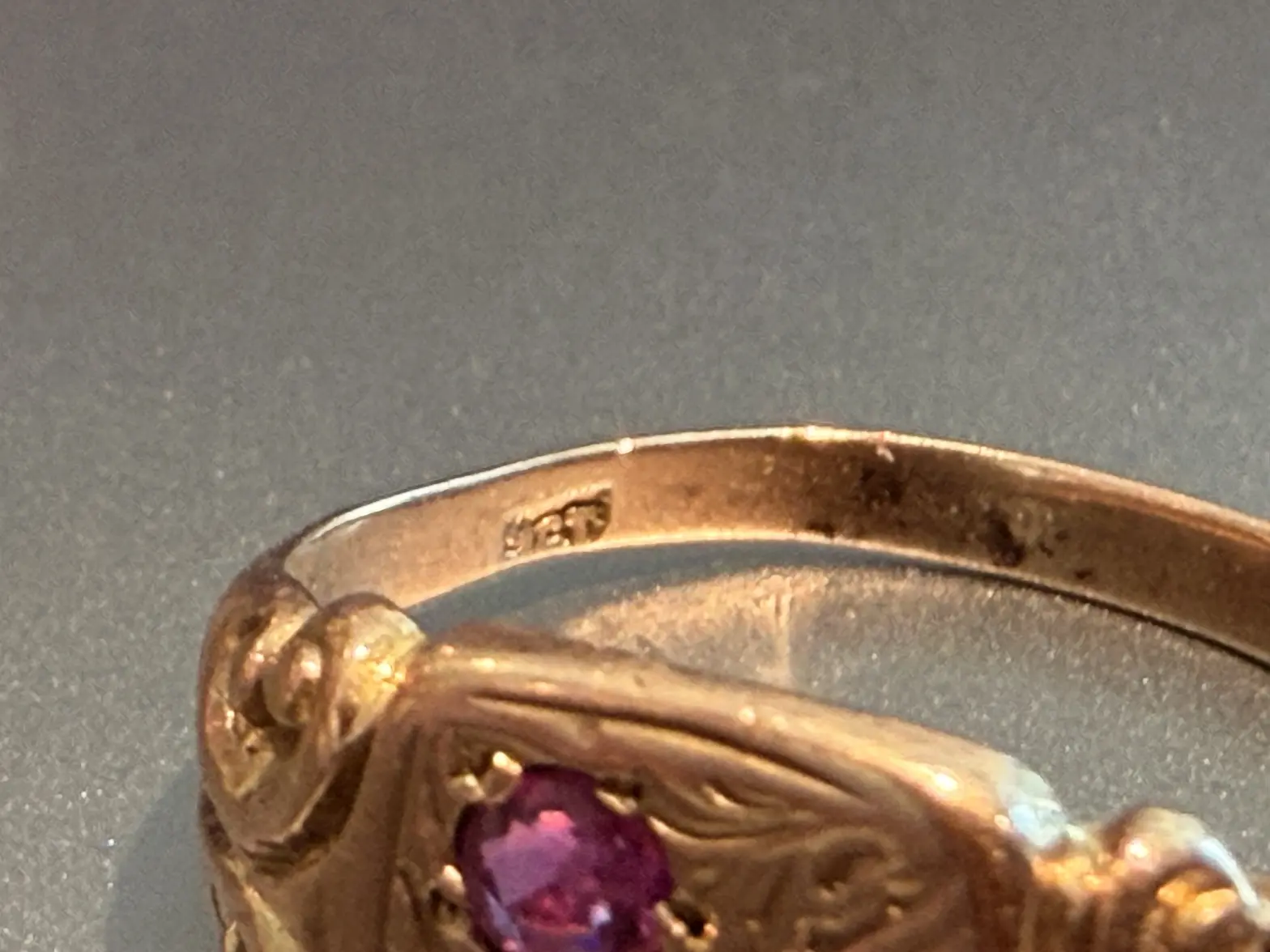
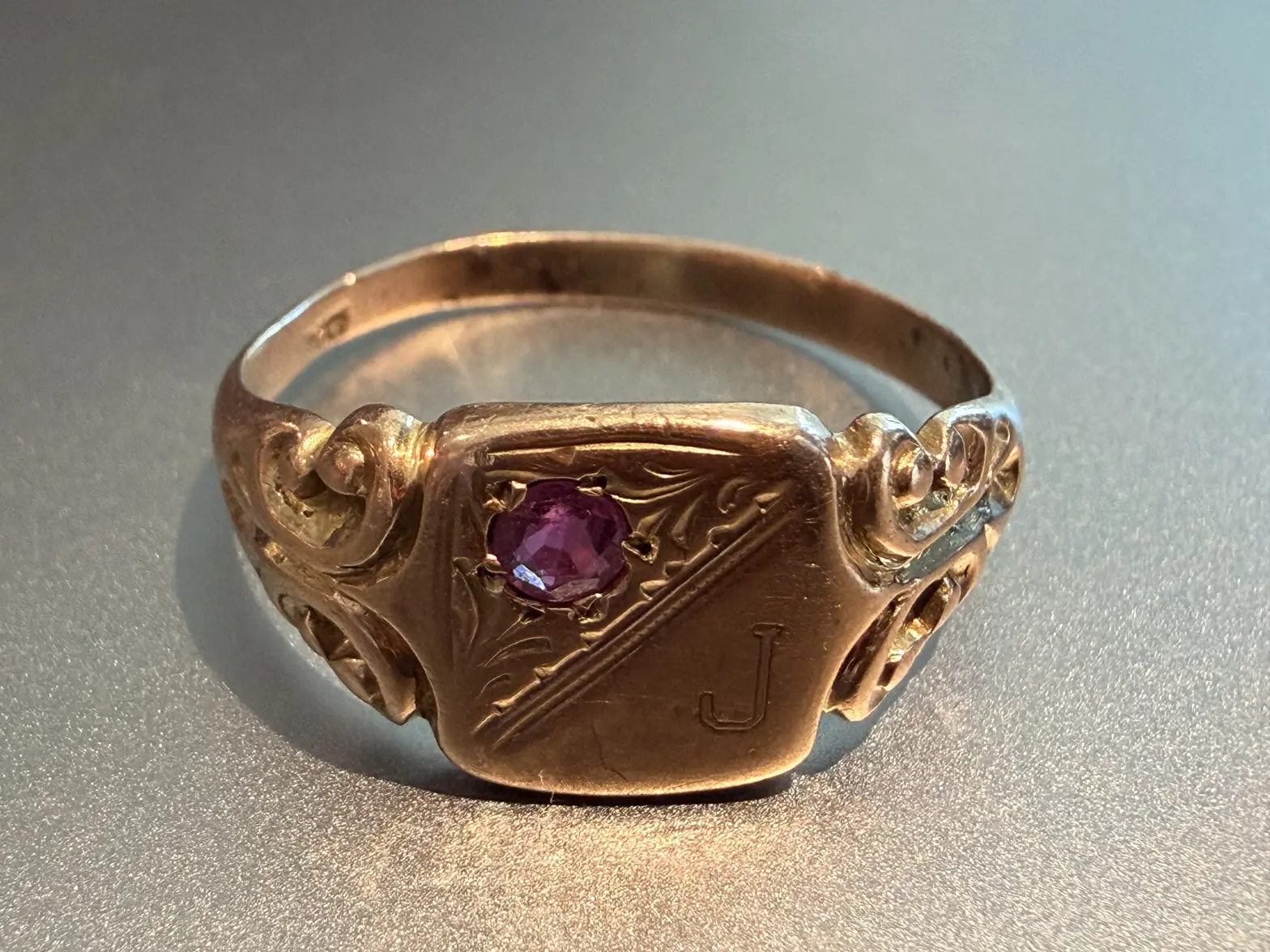
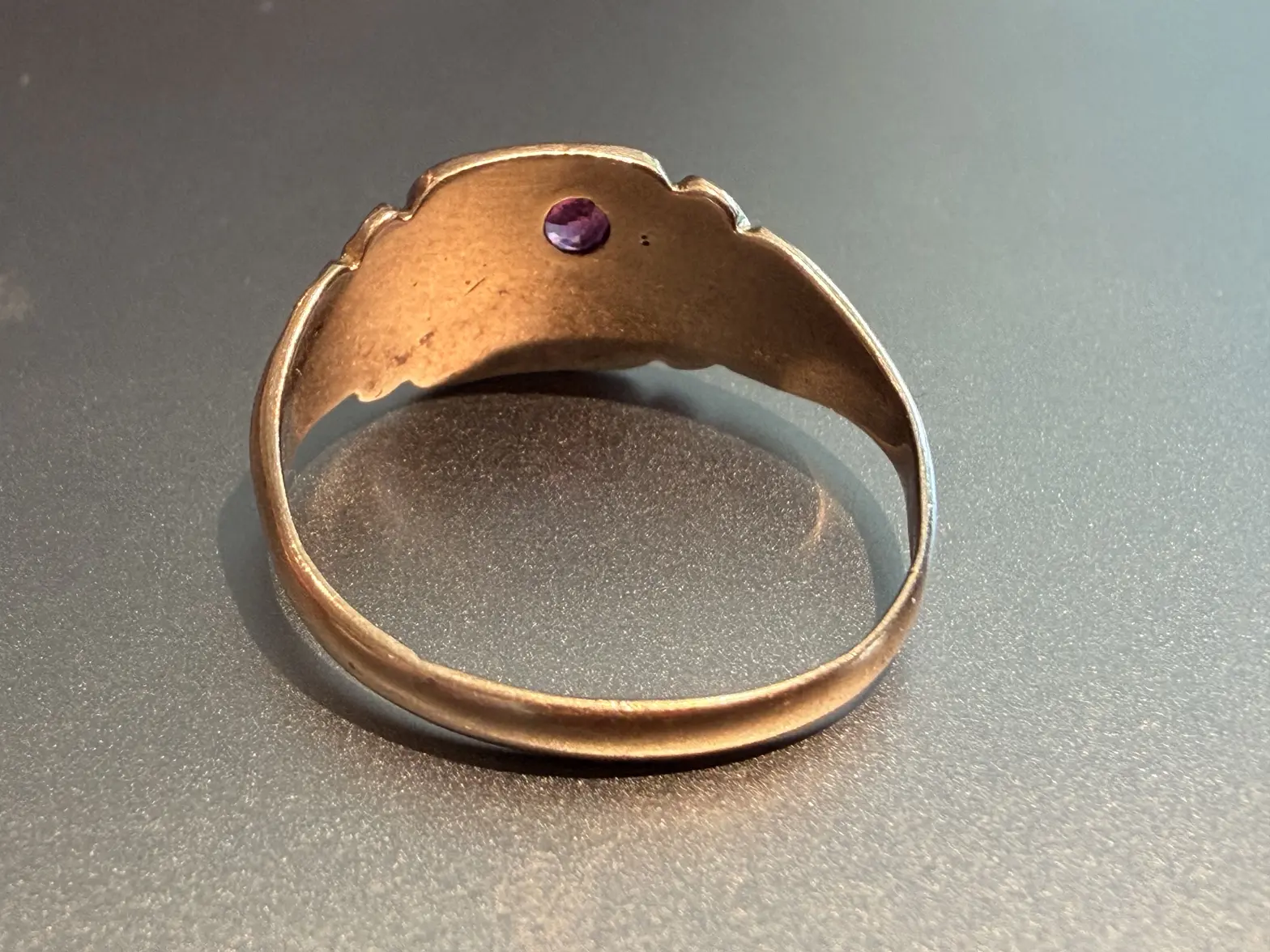
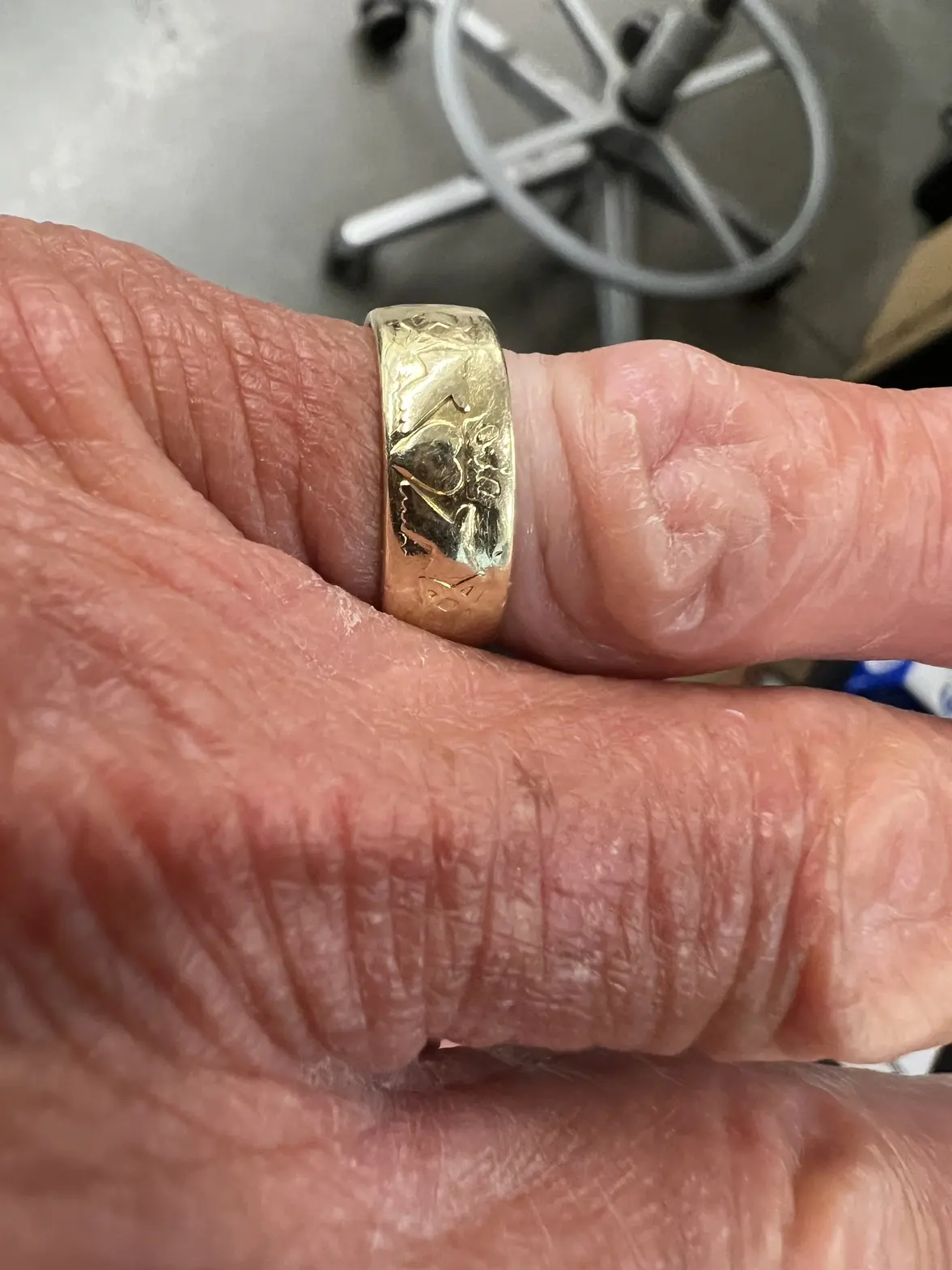
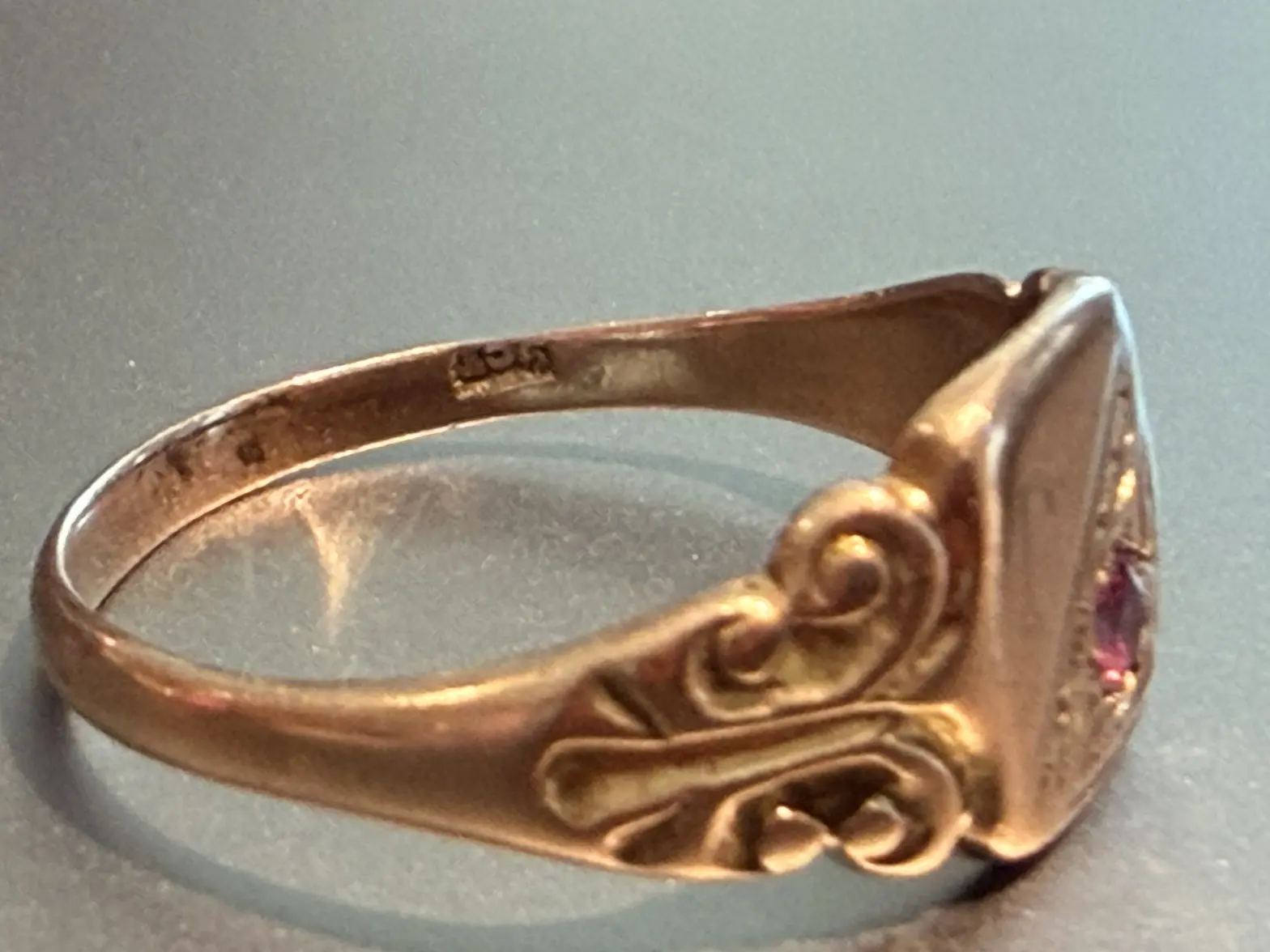
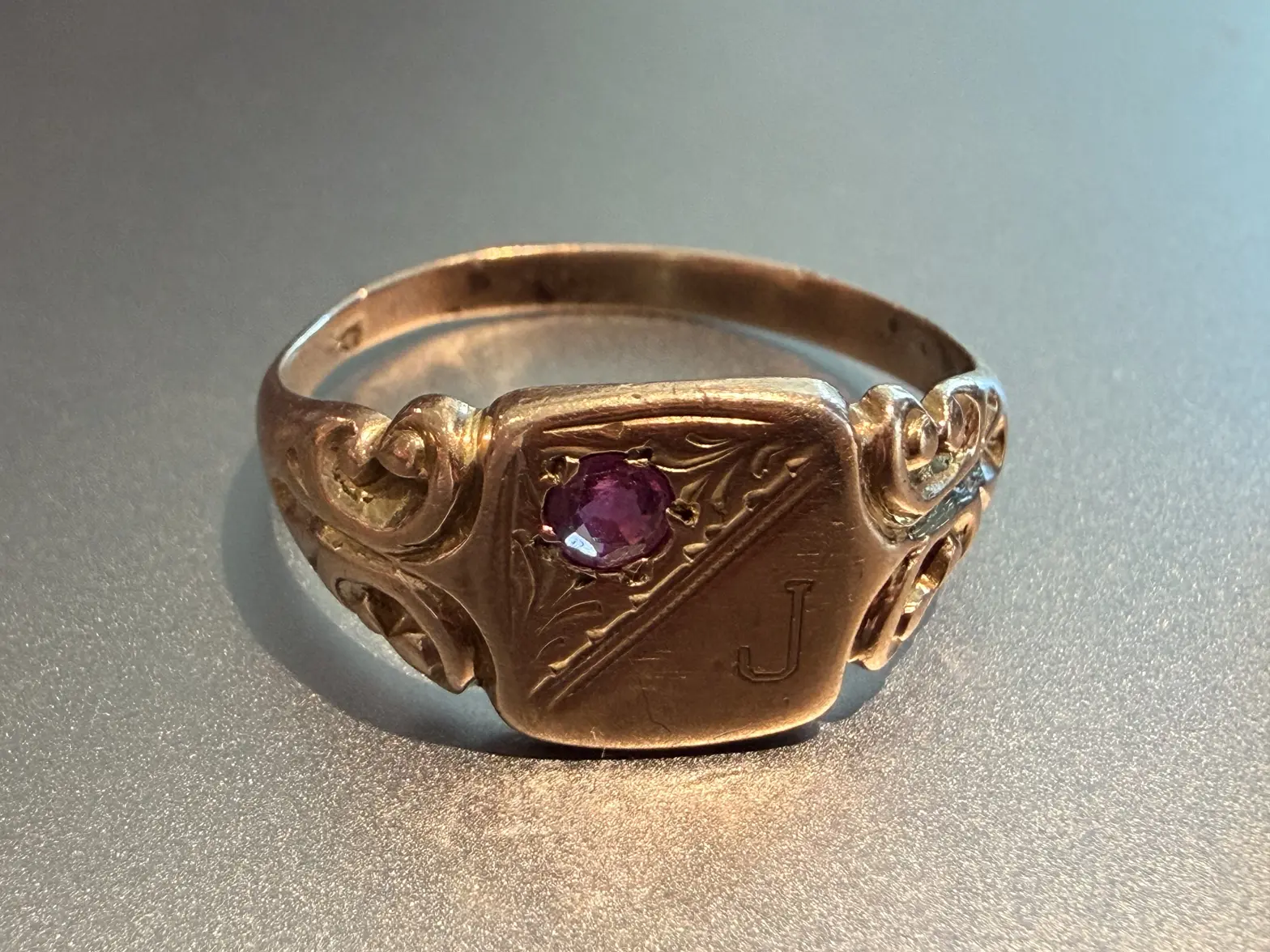
This tuned up amongst a relative’s belongings, apparently it was my great grandfather’s signet ring. It has 9CT stamped on one side, I can’t really read the other side, it’s clearly been polished a fair bit but isn’t too bad considering the age.

Is it possible to find out from the markings where it was made here in Australia or whether it came over from Ireland, and what does that stone in it look like?

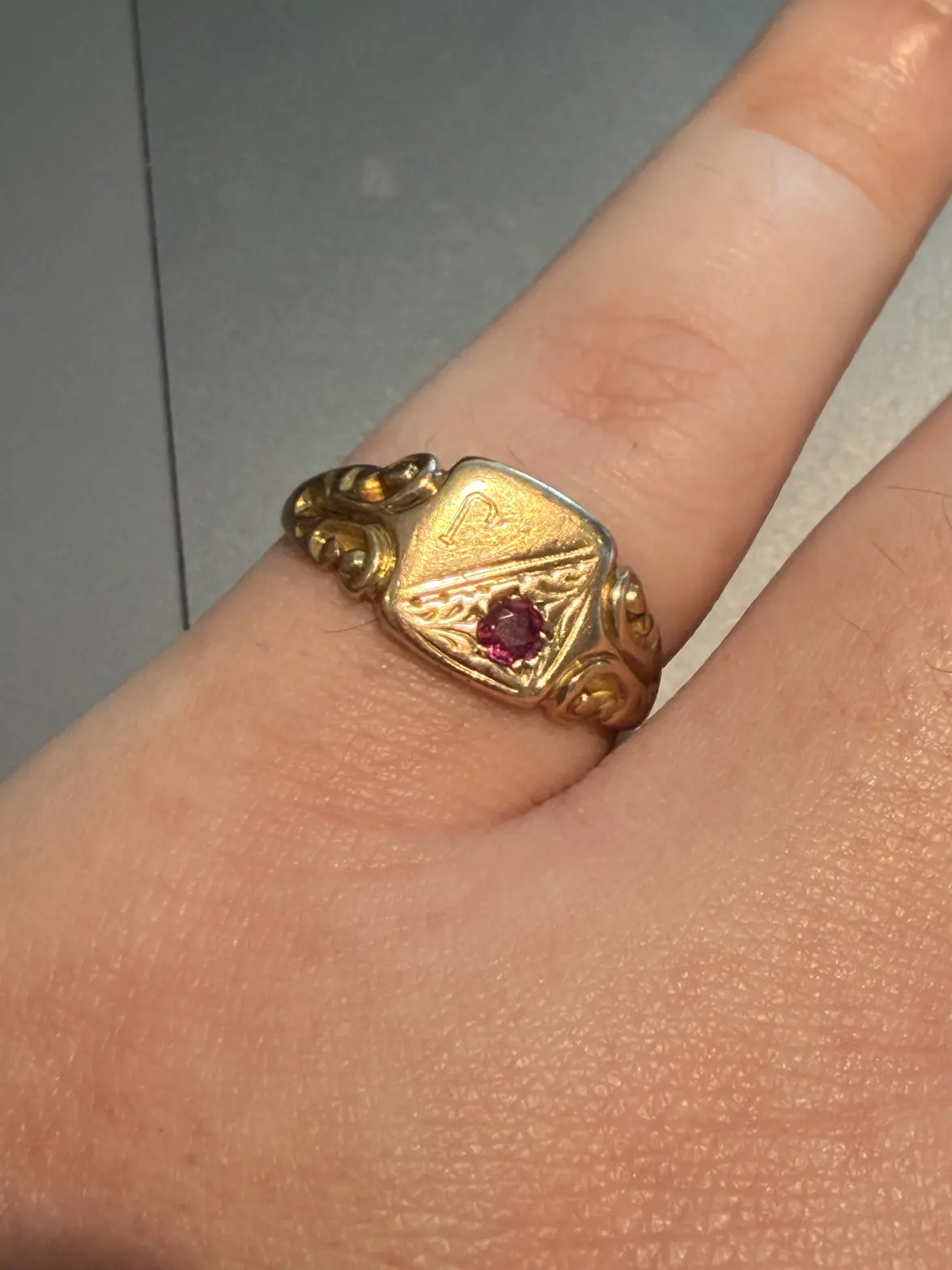
I’m not really into any jewellery other than watches so I’m not sure what to do with it. It’s about the right fit for my pinkie, and while my middle name is Joseph (after all the Joseph’s before me including the original owner)so the J signet works for me, a pinkie ring with a stone is a bit too much for me (maybe @ahartfie could make it work).
 
Posts
6,487
Likes
50,075
I’m not into mens jewelry either other than watches, however if I had such an heirloom I would be willing to dust it off and occasionally wear it. I’m hugely sentimental about having and using family heirloom stuff.
 
Posts
15,221
Likes
44,698
The stone is a natural ruby. 9 carat gold was only legal in Commonwealth countries (not in Canada). As to where it was made? The ring is stamped 9 ct (kt). Marking laws in commonwealth countries specify that, in order for the maker of the item to place a karat stamp on the item, that mark had to be accompanied by a registered trade mark. That trade mark would identify both the maker and the country of origin. If the karat of the item was less than indicated by the stamp, the owner of the reg’d trademark was in major trouble. Some latitude was granted for items that were gold soldered during manufacture. Some countries (Canada) have enacted legislation that no latitude is granted for karat stampings on items that have been soldered. If there is no identifiable trade mark, (or an indistinct trade mark), then it would be impossible to identify the country of origin. On gold items produced in the British Commonwealth, there should also be a hallmark, date letter, and a standard mark, as well. I don’t see any of these shown in your pictures. Probably your best bet would be to take the ring to a knowledgeable jeweller for an opinion.
 
Posts
33,439
Likes
38,148
The stone is a natural ruby. 9 carat gold was only legal in Commonwealth countries (not in Canada). As to where it was made? The ring is stamped 9 ct (kt). Marking laws in commonwealth countries specify that, in order for the maker of the item to place a karat stamp on the item, that mark had to be accompanied by a registered trade mark. That trade mark would identify both the maker and the country of origin. If the karat of the item was less than indicated by the stamp, the owner of the reg’d trademark was in major trouble. Some latitude was granted for items that were gold soldered during manufacture. Some countries (Canada) have enacted legislation that no latitude is granted for karat stampings on items that have been soldered. If there is no identifiable trade mark, (or an indistinct trade mark), then it would be impossible to identify the country of origin. On gold items produced in the British Commonwealth, there should also be a hallmark, date letter, and a standard mark, as well. I don’t see any of these shown in your pictures. Probably your best bet would be to take the ring to a knowledgeable jeweller for an opinion.
That's really cool thanks for that, I didn't think it would be a ruby given the light pink colour and it being something that looks a bit like fashion jewellery but I guess it was fashionable for a man to wear back then.
 
Posts
15,221
Likes
44,698
I have included a picture of an array of very old, loose, genuine ruby watch jewels that show the colour variations of ruby. General classification of ruby colours range from Burma (best), Siam (middle), and Ceylon (palest). In jewellery stores today, you may even see gems called “pink sapphire” which are simply very pale, lower grade rubies. Best colour ruby on the left, graduating toward the right with progressively paler rubies. There is a blue sapphire on the right end. Sapphire and ruby are both of the corundum family.

 
Posts
3,783
Likes
10,320
It's a cool heirloom. I'd save it for special occasions.

I have a silver and turquoise pinky ring I occasionally wear out (usually if I'm trying to impress a lady with my finery).
Edited:
 
Posts
348
Likes
1,759
Good news!
If it is a ruby, the ring is watch-related😉.
Wear it in good health and enjoy.
 
Posts
29,188
Likes
75,422
9 carat gold was only legal in Commonwealth countries (not in Canada).
It is "legal" in Canada...

https://competition-bureau.canada.c...detailed-requirements-marking-precious-metals

"To carry a quality mark, gold items must have a minimum quality of 9K and a maximum quality of 24K. They must also fall within the following tolerances:

  • No solder used (gold between 9K and 24K): 3 parts per 1,000 parts by weight.
  • Solder used (gold between 9K and 24K): 7 parts per 1,000 parts by weight.
  • Solder used (white gold 18K or more): 15 parts per 1,000 parts by weight.
Gold may be marked using any of the following quality indicators: karat (or Karat, Kt., K) or carat (or Carat, Ct., C). Alternatively, a decimal may be used: .375 (9K), .416 (10K), .583 (14K), .750 (18K), .916 (22K)."
 
Posts
3,578
Likes
8,160
Ash, please post a photo w/ pinky fully extended as you sip your "cuppa" !

Plus, please limit your watch selection to period correct, 9k, fashion watches..........no Ploprofs or Flavor-Flaves!
Edited:
 
Posts
15,221
Likes
44,698
It is "legal" in Canada...

https://competition-bureau.canada.c...detailed-requirements-marking-precious-metals

"To carry a quality mark, gold items must have a minimum quality of 9K and a maximum quality of 24K. They must also fall within the following tolerances:

  • No solder used (gold between 9K and 24K): 3 parts per 1,000 parts by weight.
  • Solder used (gold between 9K and 24K): 7 parts per 1,000 parts by weight.
  • Solder used (white gold 18K or more): 15 parts per 1,000 parts by weight.
Gold may be marked using any of the following quality indicators: karat (or Karat, Kt., K) or carat (or Carat, Ct., C). Alternatively, a decimal may be used: .375 (9K), .416 (10K), .583 (14K), .750 (18K), .916 (22K)."
But was 9 karat used in the manufacture of gold items in Canada?
 
Posts
29,188
Likes
75,422
But was 9 karat used in the manufacture of gold items in Canada?
Well, that's not the claim you made. But please do tell...
 
Posts
15,221
Likes
44,698
Well, that's not the claim you made. But please do tell...
Good to have you around to keep us all straight!
 
Posts
3,578
Likes
8,160
Ash, please post a photo w/ pinky fully extended as you sip your "cuppa" !

Plus, please limit your watch selection to period correct, 9k, fashion watches..........no Ploprofs or Flavor-Flaves!
I joke but you must be honored to wear, bet your heart warms every time you look at it!

It almost has a Regiment/Coat of Arms style about it?
 
Posts
29,188
Likes
75,422
Good to have you around to keep us all straight!
Apparently it is. 😉

I hear this claim often, that 9kt gold is somehow "illegal" but that's not true at all in reality. You won't, for example, get arrested for possession of 9kt gold. You might not legally be able to call it gold in some places, but it is not illegal in any real sense of the word.
 
Posts
1,755
Likes
11,145
Wear it! Jewelry is meant to be worn.
 
Posts
12,912
Likes
22,334
In the UK the requirement for a trademark or makers mark, along with decimal fineness and date stamp is a result of the hallmarking act 1973 which required items of precious metals to be independently assessed and hallmarked. Prior to this, gold jewellery in the UK was often stamped (not hallmarked) “9ct, 18ct, plat, pall” etc. with a full hallmark being optional for small items.

Given the 9CT stamp and the style of the ring, I’d say it’s likely British from around 1910
 
Posts
7,557
Likes
13,953
As far as the pinkie ring is concerned, I never think they look good on men. I think it's an old guy's look, especially Italian. If a man is going to wear a ring I think they look best on his ring finger. Just my opinion.

In this case you might as well keep the ring as a memento, the gold content and ruby value is nominal.

When we lived in Thailand 30 years ago my wife wanted some gold jewelry made, and the Thai's will copy anything. She had pics of a Tiffany 'x-stitch' bracelet, a pair of Cartier panther earrings, and a Cartier dome ring with a blue sapphire. No problem, they could do it. They said they would make a sapphire ring for me, too, to which I said I didn't want one. Went back a couple of weeks later, all done in 18k yellow gold, very heavy, and I even bought the sapphire ring they made for me. A few thousand dollars as I recall for everything. My wife seldom wore the Cartier earrings as they were too heavy, and the Tiffany bracelet sat in the jewelry box because she really doesn't like bracelets other than a watch. Anyway, two weeks ago we gathered the bracelet, earrings, and another 18k gold necklace that we have no idea where it came from, along with our sterling silver flatware that my MIL got in the 1950's by saving coupons that used to be on Betty Crocker (General Mills) products. Very basic, but marked Sterling. They verified the gold was 18k (it was stamped 750), weighed it up and paid the market value for it at 90% which leaves them a profit when they sell it to a refiner. Same for the flatware. Walked away with a nice check for $7,566 ($6,000 gold and $1,566 silver) which we will use for travel next year. I still occasionally wear the gold sapphire ring. With gold at $4,000 an oz it is a good time to clear out any old gold and silver jewelry and turn it into cash. The value adds up fast.
 
Posts
1,752
Likes
6,885
Not a fan of jewelry either, but I wear this 18kt claddagh ring because it was my mother’s. I’ve been wearing it since a couple minutes after she passed 25 years ago. Irish heritage for sure, her father's name was Flanagan.